2012 Hyundai Sonata Hybrid ECO mode
[x] Cancel search: ECO modePage 233 of 403
511
Driving your vehicle
R (Reverse)
Use this position to drive the vehicle
backward.N (Neutral)
The wheels and transaxle are not
engaged. The vehicle will roll freely even
on the slightest incline unless the parking
brake or service brakes are applied.
D (Drive)
This is the normal forward driving posi-
tion. The transaxle will automatically shift
through a 6-gear sequence, providing the
best fuel economy and power.
For extra power when passing another
vehicle or climbing grades, depress the
accelerator fully, at which time the
transaxle will automatically downshift to
the next lower gear.
✽ ✽
NOTICE
• Always come to a complete stop
before shifting into D (Drive).
• When you shift the transaxle D to N while decelerating, the surge may
occur in the vehicle.
This is normal situation when the
regenerative brake system stopped by
shifting to N while regenerative brake
system operation.
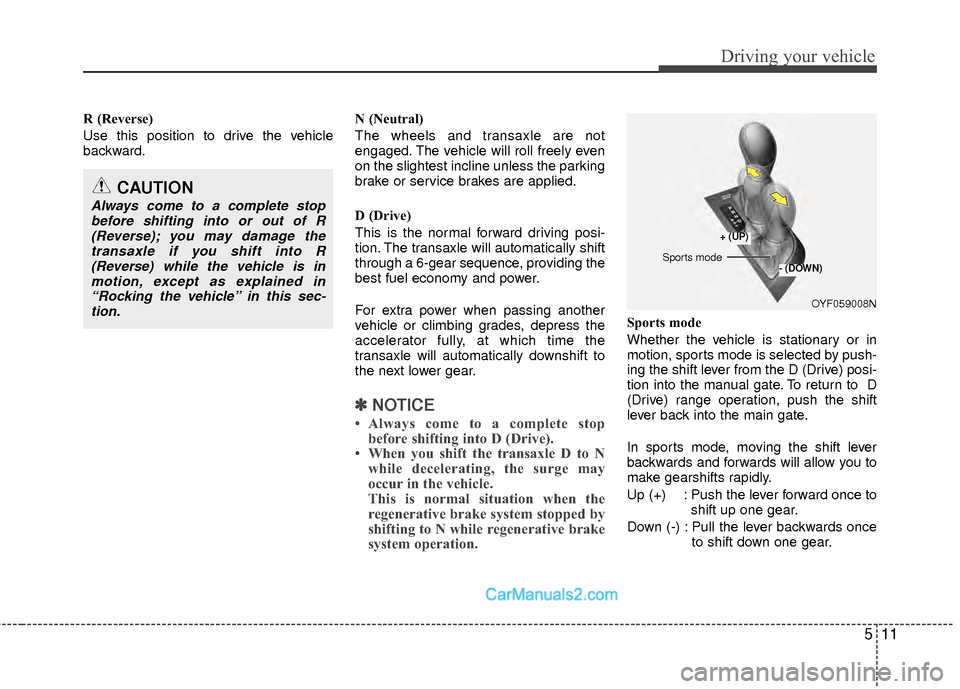
Sports mode
Whether the vehicle is stationary or in
motion, sports mode is selected by push-
ing the shift lever from the D (Drive) posi-
tion into the manual gate. To return to D
(Drive) range operation, push the shift
lever back into the main gate.
In sports mode, moving the shift lever
backwards and forwards will allow you to
make gearshifts rapidly.
Up (+) : Push the lever forward once to
shift up one gear.
Down (-) : Pull the lever backwards once to shift down one gear.
CAUTION
Always come to a complete stopbefore shifting into or out of R(Reverse); you may damage thetransaxle if you shift into R(Reverse) while the vehicle is in motion, except as explained in“Rocking the vehicle” in this sec-tion.
OYF059008N
+ (UP)
- (DOWN)Sports mode
Page 250 of 403
Driving your vehicle
28
5
Your vehicle's fuel economy depends
mainly on your style of driving, where you
drive and when you drive.
Each of these factors affects how many
miles (kilometers) you can get from a gal-
lon (liter) of fuel. To operate your vehicle
as economically as possible, use the fol-
lowing driving suggestions to help save
money in both fuel and repairs:
Drive smoothly. Accelerate at a moder-
ate rate. Don't make "jack-rabbit" starts
or full-throttle shifts and maintain a
steady cruising speed. Don't race
between stoplights. Try to adjust your
speed to that of the other traffic so you
don't have to change speeds unneces-
sarily. Avoid heavy traffic whenever
possible. Always maintain a safe dis-
tance from other vehicles so you can
avoid unnecessary braking. This also
reduces brake wear.
Drive at a moderate speed. The faster you drive, the more fuel your car uses.
Driving at a moderate speed, especial-
ly on the highway, is one of the most
effective ways to reduce fuel consump-
tion. Don't "ride" the brake pedal. This can
increase fuel consumption and also
increase wear on these components.
In addition, driving with your foot rest-
ing on the brake pedal may cause the
brakes to overheat, which reduces
their effectiveness and may lead to
more serious consequences.
Take care of your tires. Keep them inflated to the recommended pressure.
Incorrect inflation, either too much or
too little, results in unnecessary tire
wear. Check the tire pressures at least
once a month.
Be sure that the wheels are aligned correctly. Improper alignment can
result from hitting curbs or driving too
fast over irregular surfaces. Poor align-
ment causes faster tire wear and may
also result in other problems as well as
greater fuel consumption. Keep your car in good condition. For
better fuel economy and reduced
maintenance costs, maintain your car
in accordance with the maintenance
schedule in section 7. If you drive your
car in severe conditions, more frequent
maintenance is required (see section 7
for details).
Keep your car clean. For maximum service, your vehicle should be kept
clean and free of corrosive materials. It
is especially important that mud, dirt,
ice, etc. not be allowed to accumulate
on the underside of the car. This extra
weight can result in increased fuel con-
sumption and also contribute to corro-
sion.
Travel lightly. Don't carry unnecessary weight in your car. Weight reduces fuel
economy.
Don't let the engine idle longer than necessary. If you are waiting (and not
in traffic), turn off your engine and
restart only when you're ready to go.
ECONOMICAL OPERATION
Page 340 of 403
747
Maintenance
Cold Tire Pressure: The amount of
air pressure in a tire, measured in
pounds per square inch (psi) or kilo-
pascals (kPa) before a tire has built
up heat from driving.
Curb Weight: This means the weight
of a motor vehicle with standard and
optional equipment including the
maximum capacity of fuel, oil and
coolant, but without passengers and
cargo.
DOT Markings: A code molded into
the sidewall of a tire signifying that
the tire is in compliance with the U.S.
Department of Transportation motor
vehicle safety standards. The DOT
code includes the Tire Identification
Number (TIN), an alphanumeric des-
ignator which can also identify the
tire manufacturer, production plant,
brand and date of production.
GVWR: Gross Vehicle Weight Rating
GAWR FRT: Gross Axle Weight
Rating for the Front Axle.
GAWR RR: Gross Axle Weight
Rating for the Rear axle.Intended Outboard Sidewall
: The
side of an asymmetrical tire, that
must always face outward when
mounted on a vehicle.
Kilopascal (kPa): The metric unit for
air pressure.
Load Index: An assigned number
ranging from 1 to 279 that corre-
sponds to the load carrying capacity
of a tire.
Maximum Inflation Pressure : The
maximum air pressure to which a
cold tire may be inflated. The maxi-
mum air pressure is molded onto the
sidewall.
Maximum Load Rating : The load
rating for a tire at the maximum per-
missible inflation pressure for that
tire.
Maximum Loaded Vehicle Weight:
The sum of curb weight; accessory
weight; vehicle capacity weight; and
production options weight.
Normal Occupant Weight:The
number of occupants a vehicle is
designed to seat multiplied by 150
pounds (68 kg). Occupant Distribution
: Designated
seating positions.
Outward Facing Sidewall: The side
of a asymmetrical tire that has a par-
ticular side that faces outward when
mounted on a vehicle. The outward
facing sidewall bears white lettering
or bears manufacturer, brand, and/or
model name molding that is higher or
deeper than the same moldings on
the inner facing sidewall.
Passenger (P-Metric) Tire : A tire
used on passenger cars and some
light duty trucks and multipurpose
vehicles.
Recommended Inflation Pressure :
Vehicle manufacturer's recommend-
ed tire inflation pressure and shown
on the tire placard.
Radial Ply Tire : A pneumatic tire in
which the ply cords that extend to the
beads are laid at 90 degrees to the
centerline of the tread.
Rim: A metal support for a tire and
upon which the tire beads are seat-
ed.
Sidewall: The portion of a tire
between the tread and the bead.
Page 341 of 403
Maintenance
48
7
Speed Rating: An alphanumeric
code assigned to a tire indicating the
maximum speed at which a tire can
operate.
Traction: The friction between the
tire and the road surface. The
amount of grip provided.
Tr e a d : The portion of a tire that
comes into contact with the road.
Treadwear Indicators: Narrow
bands, sometimes called "wear
bars," that show across the tread of a
tire when only 2/32 inch of tread
remains.
UTQGS: Uniform Tire Quality
Grading Standards, a tire information
system that provides consumers with
ratings for a tire's traction, tempera-
ture and treadwear. Ratings are
determined by tire manufacturers
using government testing proce-
dures. The ratings are molded into
the sidewall of the tire.
Vehicle Capacity Weight : The num-
ber of designated seating positions
multiplied by 150 lbs. (68 kg) plus the
rated cargo and luggage load. Vehicle Maximum Load on the
Tire: Load on an individual tire due to
curb and accessory weight plus
maximum occupant and cargo
weight.
Vehicle Normal Load on the Tire
:
Load on an individual tire that is
determined by distributing to each
axle its share of the curb weight,
accessory weight, and normal occu-
pant weight and dviding by 2.
Vehicle Placard: A label permanent-
ly attached to a vehicle showing the
original equipment tire size and rec-
ommended inflation pressure.
All season tires
HYUNDAI specifies all season tires
on some models to provide good
performance for use all year round,
including snowy and icy road condi-
tions. All season tires are identified
by ALL SEASON and/or M+S (Mud
and Snow) on the tire sidewall. Snow
tires have better snow traction than
all season tires and may be more
appropriate in some areas. Summer tires
HYUNDAI specifies summer tires on
some models to provide superior
performance on dry roads. Summer
tire performance is substantially
reduced in snow and ice. Summer
tires do not have the tire traction rat-
ing M+S (Mud and Snow) on the tire
side wall. if you plan to operate your
vehicle in snowy or icy conditions.
HYUNDAI recommends the use of
snow tires or all season tires on all
four wheels.
Snow tires
If you equip your car with snow tires,
they should be the same size and
have the same load capacity as the
original tires. Snow tires should be
installed on all four wheels; other-
wise, poor handling may result.
Snow tires should carry 4 psi (28
kPa) more air pressure than the
pressure recommended for the stan-
dard tires on the tire label on the dri-
ver's side of the center pillar, or up to
the maximum pressure shown on the
tire sidewall, whichever is less.
Page 383 of 403
H2
Hyundai Hybrid Electric Vehicle (HEV)
uses a gasoline engine and an electric
motor for power. The electric motor is
run from a 280V high voltage HEV bat-
tery.
HEV computer decides according to
drive condition when to use engine
from when to use the electric motor or
even both at times.
Fuel is saved when the engine is not
running at idle at times or the vehicle
is driven by the electric motor from
the HEV battery.
The charge of the HEV battery has to
be maintained so at times the engine
becomes a generator which includes
when stopped at idle. Charging also
occurs when decelerating or by
regenerative braking.Display of Hybrid system
Many displays provide information about
the hybrid system, such as, ECO level
and ECO score.
Through the ECO LEVEL, the driver under-
stands the situation of economical driving.
If the driver drives the vehicle with eco-
nomical driving, the ECO LEVEL rises.
And it means the CO2 emission reduction.
In TOTAL ECO SCORE, when you get the
maximum step of ECO LEVEL, ECO sys-
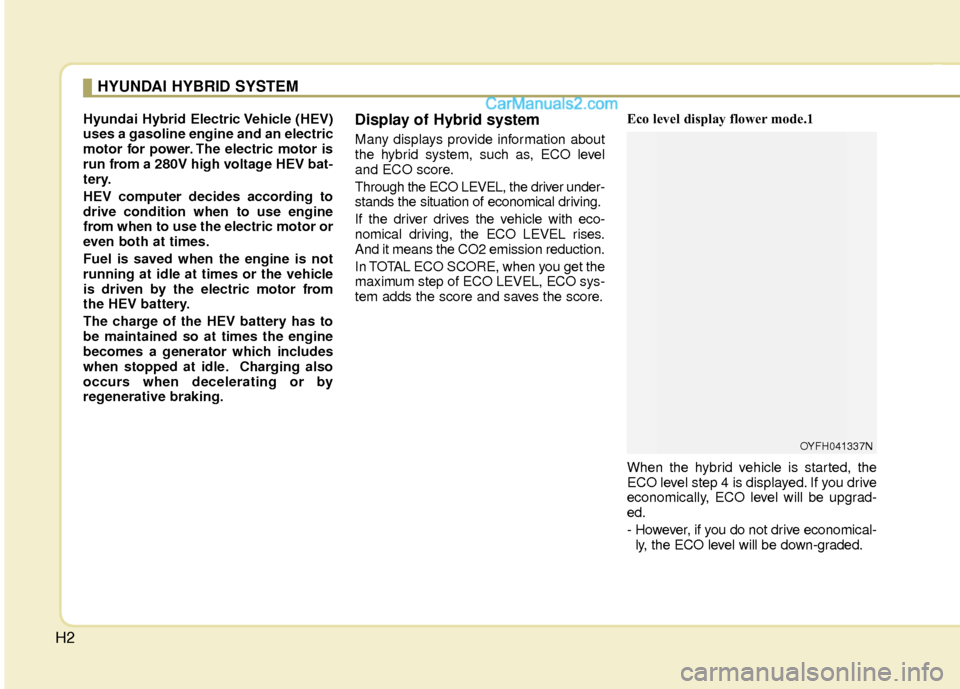
tem adds the score and saves the score.Eco level display flower mode.1
When the hybrid vehicle is started, the
ECO level step 4 is displayed. If you drive
economically, ECO level will be upgrad-
ed.
- However, if you do not drive economical-
ly, the ECO level will be down-graded.
HYUNDAI HYBRID SYSTEM
OYFH041337N
Page 384 of 403
H3
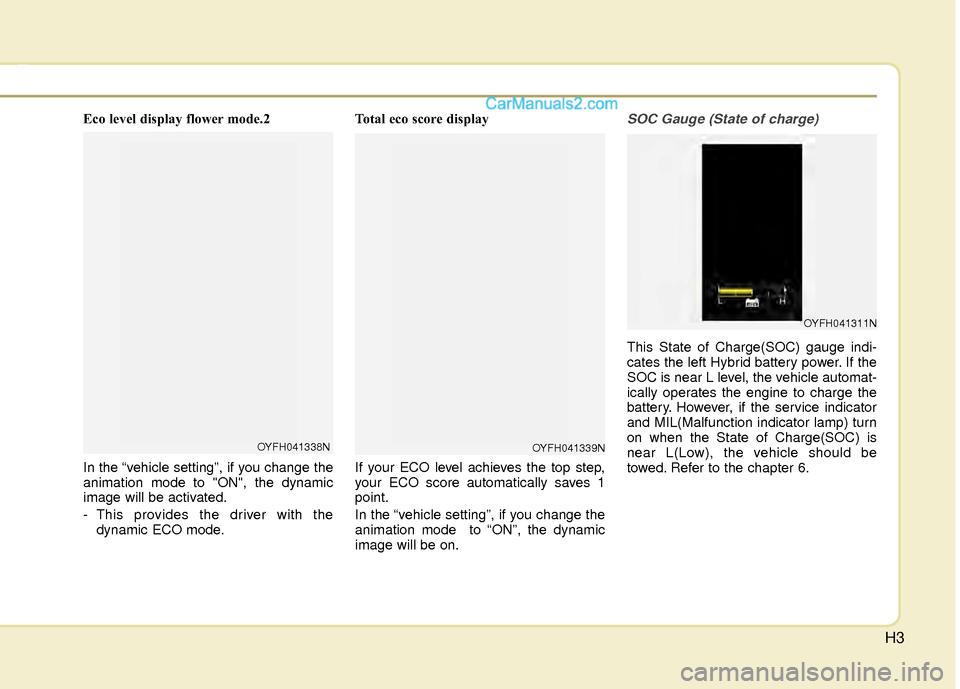
Eco level display flower mode.2
In the “vehicle setting”, if you change the
animation mode to "ON", the dynamic
image will be activated.
- This provides the driver with thedynamic ECO mode. Total eco score display
If your ECO level achieves the top step,
your ECO score automatically saves 1
point.
In the “vehicle setting”, if you change the
animation mode to “ON”, the dynamic
image will be on.SOC Gauge (State of charge)
This State of Charge(SOC) gauge indi-
cates the left Hybrid battery power. If the
SOC is near L level, the vehicle automat-
ically operates the engine to charge the
battery. However, if the service indicator
and MIL(Malfunction indicator lamp) turn
on when the State of Charge(SOC) is
near L(Low), the vehicle should be
towed. Refer to the chapter 6.
OYFH041338NOYFH041339N
OYFH041311N
Page 399 of 403

I5
Index
GaugeEngine temperature gauge··················\
··················\
·····4-42
Fuel gauge ··················\
··················\
··················\
···········4-43
Glass antenna ··················\
··················\
··················\
·········4-111
Glove box··················\
··················\
··················\
···············4-105
Hazard warning flasher··················\
··················\
··············4-68
Hazardous driving conditions ··················\
··················\
····5-30
Headlight bulb replacement ··················\
··················\
·······7-60
Headrest ··················\
··················\
··················\
············3-7, 3-11
Highway driving ··················\
··················\
··················\
······5-33
Homelink mirror, see the Electric chromic mirror (ECM) with HomeLink system ··················\
··················\
·········4-31
Hood··················\
··················\
··················\
··················\
·······4-21
Horn ··················\
··················\
··················\
··················\
·······4-30
How to use this manual ··················\
··················\
···············1-2
Hybrid HMC Hybrid system··················\
··················\
················H2
State of charge (SOC) ··················\
··················\
··············H3
Sonata hev energy flow ··················\
··················\
··H4, 4-45
The componets of hybrid vehicle ··················\
··············H7
The air intake of hybrid battery ··················\
···············H12
The READY indicator··················\
··················\
···········4-41
The ECO level··················\
··················\
················H2, 4-47\
The EV MODE ··················\
··················\
··················\
···4-53 The service indicator ··················\
··················\
·············4-53
The ECO GUIDE ··················\
··················\
··················\
4-43
Hybrid electric vehicle··················\
··················\
···············4-45
Immobilizer system ··················\
··················\
··················\
···4-7
Indicator symbols on the instrument cluster ··················\
·1-7
Indicators and warnings ··················\
··················\
·············4-53
Inside rearview mirror ··················\
··················\
···············4-31
Instrument cluster ··················\
··················\
··················\
····4-40 Engine temperature gauge··················\
··················\
·····4-42
Fuel gauge ··················\
··················\
··················\
···········4-43
Hybrid electric vehicle ··················\
··················\
··········4-45
Instrument panel illumination ··················\
·················4-41\
Odometer ··················\
··················\
··················\
·············4-41
Speedometer ··················\
··················\
··················\
········4-42
Trip computer ··················\
··················\
··················\
······4-44
Warning and indicators ··················\
··················\
·········4-53
Instrument panel fuse··················\
··················\
·················7-51\
Instrument panel illumination··················\
··················\
····4-41
Instrument panel overview ··················\
··················\
··········2-3
Interior care··················\
··················\
··················\
··············7-73
Interior features··················\
··················\
··················\
······4-106 Aux, USB and iPod port ··················\
··················\
·····4-110
Clothes hanger··················\
··················\
··················\
···4-109
Cup holder ··················\
··················\
··················\
·········4-106
Digital clock ··················\
··················\
··················\
······4-108
Floor mat anchor(s) ··················\
··················\
·············4-109
G
I
H
Page 402 of 403

Index
8I
Seatback pocket··················\
··················\
··················\
···3-10
Shift lock system ··················\
··················\
··················\
·····5-12
Side impact air bag ··················\
··················\
··················\
··3-52
Smart key ··················\
··················\
··················\
··················\
·4-3
Smooth cornering··················\
··················\
··················\
·····5-31
Snow tires ··················\
··················\
··················\
················5-34
Spare tire Compact spare tire ··················\
··················\
················6-14
Compact spare tire replacement ··················\
··············7-42
Removing and storing the spare tire ··················\
·······6-14
Special driving conditions ··················\
··················\
·········5-30 Driving at night ··················\
··················\
··················\
···5-31
Driving in flooded areas··················\
··················\
········5-32
Driving in the rain ··················\
··················\
·················5-32\
Hazardous driving conditions ··················\
·················5-30\
Highway driving··················\
··················\
··················\
··5-33
Rocking the vehicle··················\
··················\
···············5-30
Smooth cornering ··················\
··················\
··················\
5-31
Speedometer··················\
··················\
··················\
·············4-42
Sports mode ··················\
··················\
··················\
·············5-11
Starting difficulties, see engine will not start ··················\
6-3
Starting the hybrid system ··················\
··················\
···········5-6
Steering wheel···············\
··················\
··················\
·············4-29 Electric power steering··················\
··················\
··········4-29
Horn··················\
··················\
··················\
··················\
···4-30
Tilt steering ··················\
··················\
··················\
·········4-30
Steering wheel audio control ··················\
··················\
···4-111
Storage compartment ··················\
··················\
···············4-105 Center console storage ··················\
··················\
········4-105
Glove box ··················\
··················\
··················\
··········4-105
Multi box ··················\
··················\
··················\
···········4-106
Sunglass holder ··················\
··················\
··················\
·4-106
Sunglass holder ··················\
··················\
··················\
······4-106
Sunvisor ··················\
··················\
··················\
·················4-10\
7
Technical data (tire mobility kit) ··················\
·················6-26\
Tether anchor system ··················\
··················\
·················3-31\
Theft-alarm system ··················\
··················\
··················\
····4-9
Tilt steering ··················\
··················\
··················\
··············4-30
Tire chains··················\
··················\
··················\
················5-35
Tire pressure monitoring system (TPMS) ··················\
·····6-8
Tire specification and pressure label ··················\
·············8-8
Tires and wheels ··················\
··················\
··················\
······7-37 Checking tire inflation pressure ··················\
··············7-38
Compact spare tire replacement ··················\
··············7-40
Recommended cold tire inflation pressures ··············7-37
Tire care··················\
··················\
··················\
···············7-37
Tire maintenance ··················\
··················\
··················\
·7-42
Tire replacement ··················\
··················\
··················\
··7-39
Tire rotation ··················\
··················\
··················\
·········7-38
Tire sidewall labeling ··················\
··················\
············7-43
Tire traction ··················\
··················\
··················\
·········7-43
Wheel alignment and tire balance ··················\
···········7-40
Wheel replacement ··················\
··················\
················7-42
T