Page 182 of 406
170 3-1. Using the air conditioning system and defogger
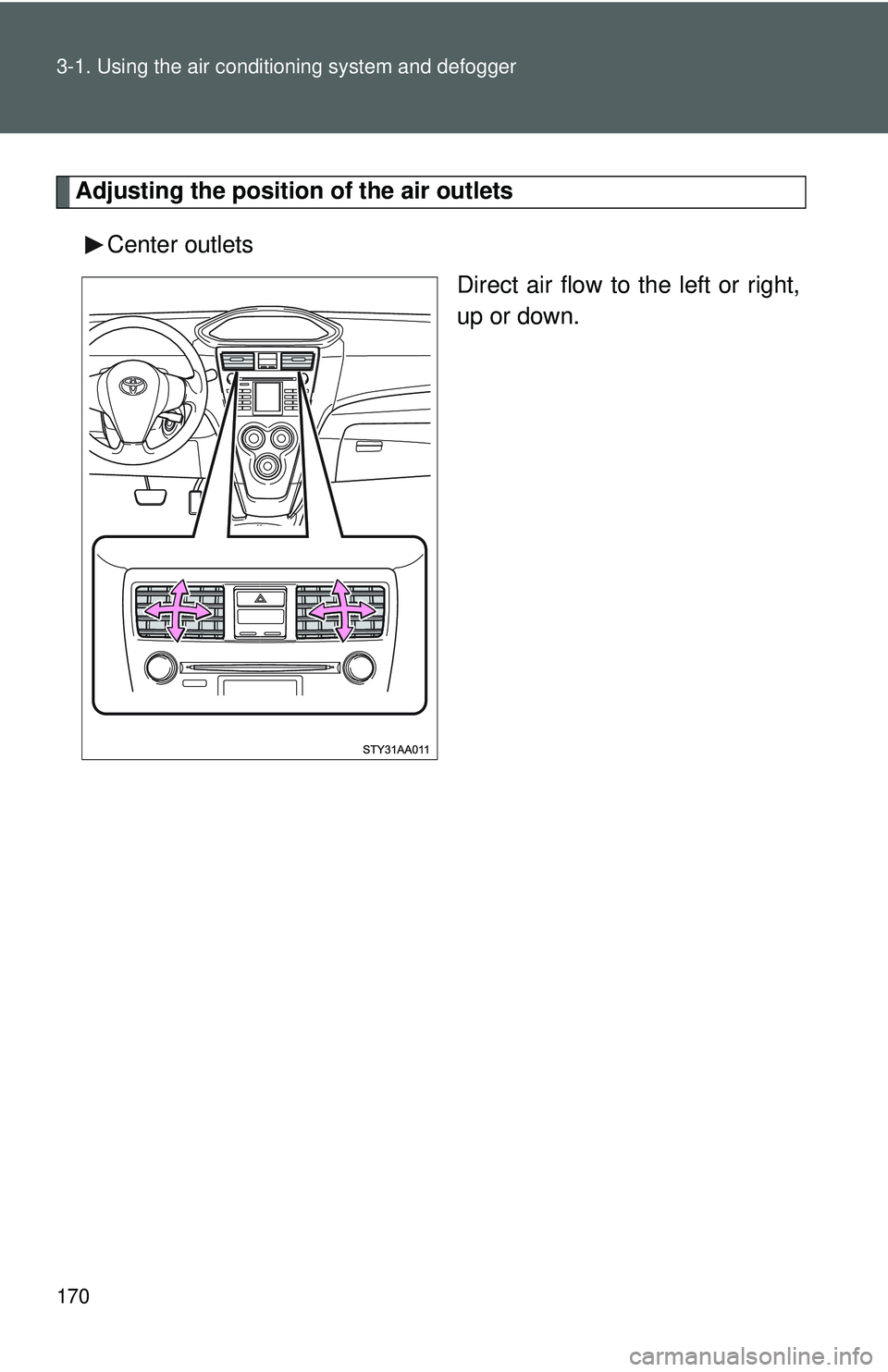
Adjusting the position of the air outlets
Center outlets Direct air flow to the left or right,
up or down.
Page 183 of 406
171
3-1. Using the air conditioning system
and defogger
3
Interior features
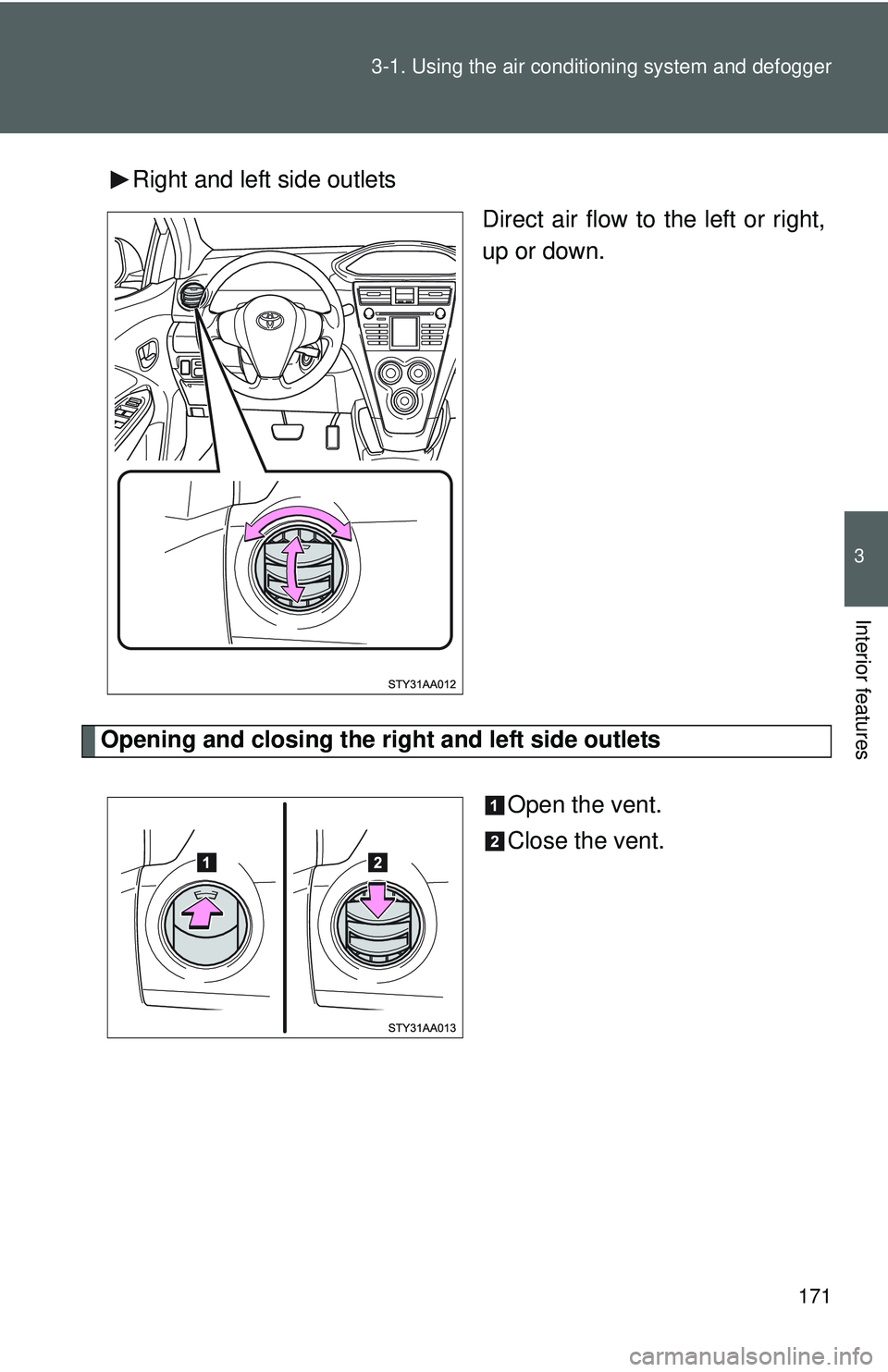
Right and left side outlets
Direct air flow to the left or right,
up or down.
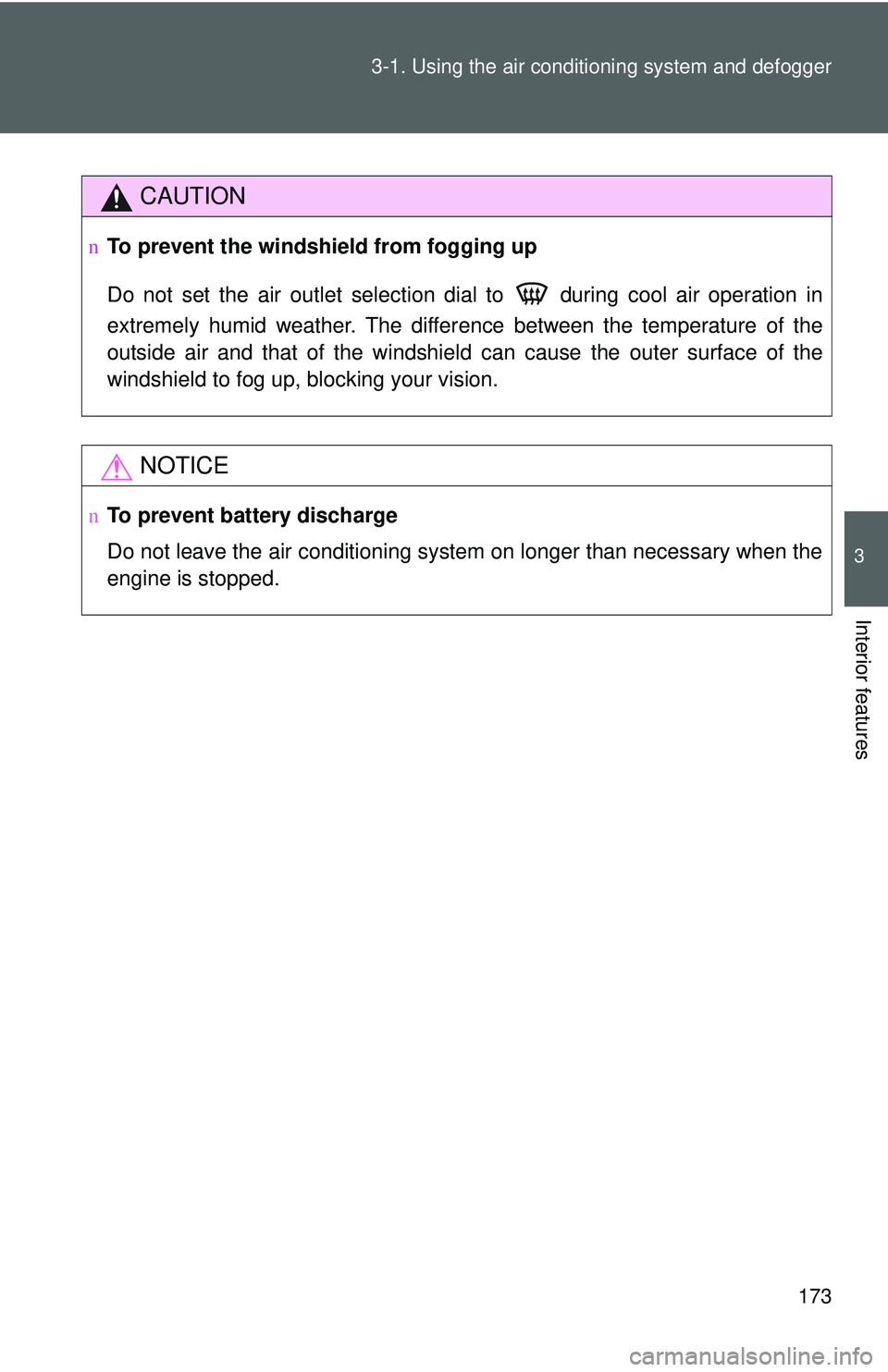
Opening and closing the right and left side outlets
Open the vent.
Close the vent.
Page 184 of 406
172 3-1. Using the air conditioning system and defogger
nFor quick cooling (vehicles wi th air conditioning system)
Turn the temperature control dial to the “MAX A/C” position and select the
recirculated air mode.
n For quick clearing of th e windshield and side windows (vehicles with
air conditioning system)
Press
to turn the air conditioning on.
n Using the system in recirculated air mode
The windows will fog up more easily if the recirculated air mode is used for
an extended period.
n When outside air temperature approach es 32°F (0°C) (vehicles with air
conditioning system)
The air conditioning system may not operate even when
is pressed.
n When
is selected for the air outlets used
For your driving comfort, air flowing to the feet may be warmer than air flow-
ing to the upper body depending on the position of the temperature adjust-
ment dial.
n Air conditioning odors
lDuring use, various odors from inside and outside the vehicle may enter
into and accumulate in the air conditioning system. This may then cause
odor to be emitted from the vents.
l To reduce potential odors from occurring:
It is recommended that the air conditioning system be set to outside air
mode prior to turning the vehicle off.
Page 185 of 406
173
3-1. Using the air conditioning system
and defogger
3
Interior features
CAUTION
nTo prevent the windshield from fogging up
Do not set the air outlet selection dial to during cool air operation in
extremely humid weather. The difference between the temperature of the
outside air and that of the windshield can cause the outer surface of the
windshield to fog up, blocking your vision.
NOTICE
nTo prevent battery discharge
Do not leave the air conditioning system on longer than necessary when the
engine is stopped.
Page 186 of 406
174
3-1. Using the air conditioning system and defogger
Rear window and outside rear view mirror defoggers∗
∗: If equipped
nThe rear window and outside rear vi ew mirror defoggers can be oper-
ated when
The engine switch is in the ON position.
n Outside rear view mirror defoggers (vehicles with outside rear view
mirror defoggers)
Turning the rear window defogger on will turn the outside rear view mirror
defoggers on.
CAUTION
n When the outside rear view mirror defoggers are on (vehicles with out-
side rear view mirror defoggers)
Do not touch the rear view mirror surfaces, as they can become very hot and
burn you.
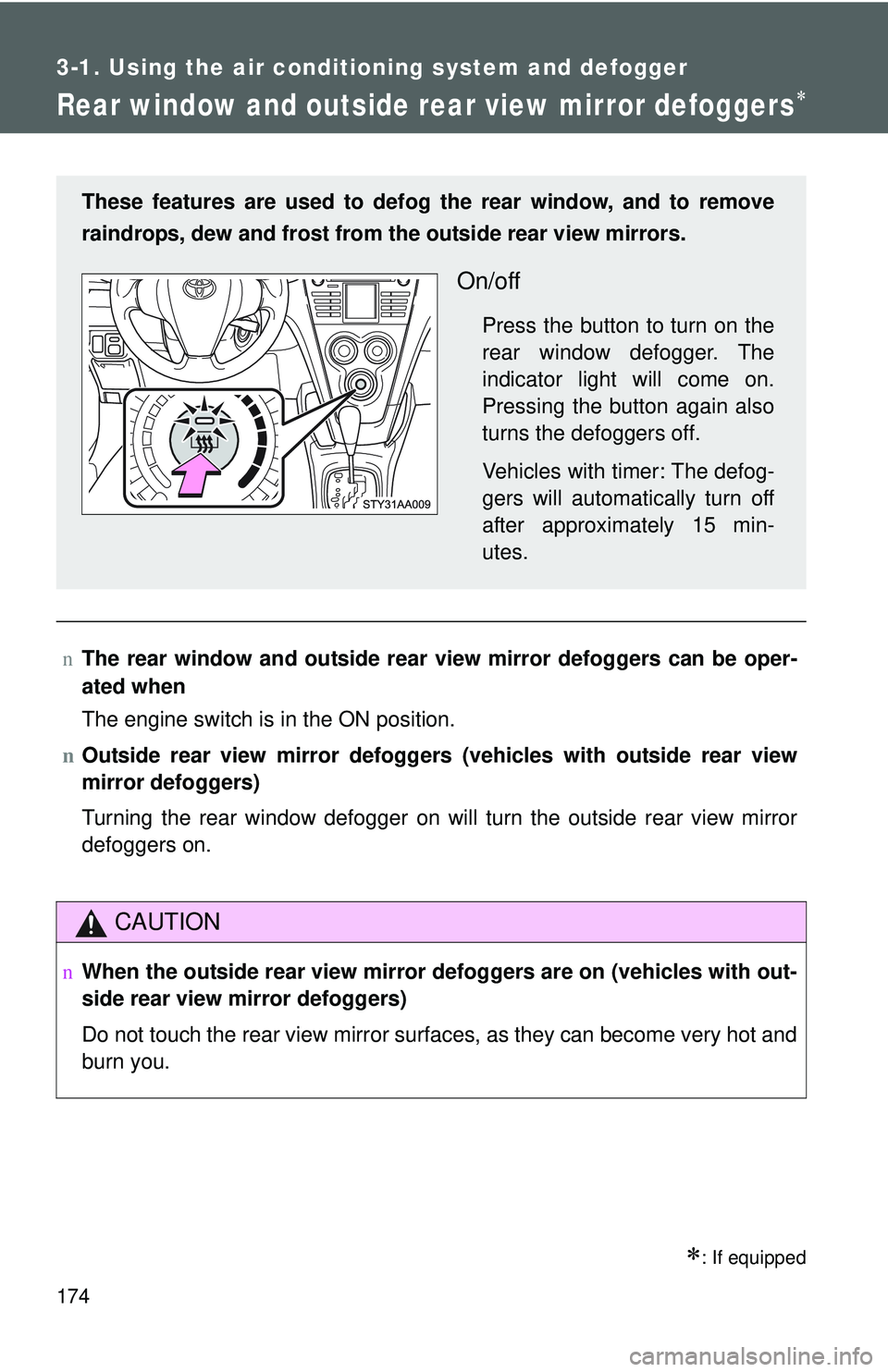
These features are used to defog the rear window, and to remove
raindrops, dew and frost from the outside rear view mirrors.
On/off
Press the button to turn on the
rear window defogger. The
indicator light will come on.
Pressing the button again also
turns the defoggers off.
Vehicles with timer: The defog-
gers will automatically turn off
after approximately 15 min-
utes.
Page 187 of 406
175
3-1. Using the air conditioning system
and defogger
3
Interior features
NOTICE
nTo prevent battery discharge
Do not leave the rear window defogger on longer than necessary when the
engine is stopped.
Page 244 of 406
233
4-3. Do-it-yourself maintenance
4
Maintenance and care
CAUTION
The engine compartment contains many mechanisms and fluids that may
move suddenly, become hot, or become electrically energized. To avoid death
or serious injury observe the following precautions.
■
When working on the engine compartment
●Keep hands, clothing, and tools away from the moving fan and engine
drive belt.
● Be careful not to touch the engine, radiator, exhaust manifold, etc. right
after driving as they may be hot. Oil and other fluids may also be hot.
● Do not leave anything that may burn easily, such as paper or rags, in the
engine compartment.
● Do not smoke, cause sparks or expose an open flame to fuel or the bat-
tery. Fuel and battery fumes are flammable.
● Be extremely cautious when working on the battery. It contains poisonous
and corrosive sulfuric acid.
● Take care because brake fluid can harm your hands or eyes and damage
painted surfaces.
If fluid gets on your hands or in your eyes, flush the affected area with
clean water immediately.
If you still experience discomfort, see a doctor.
■ When working near the electric cooling fan or radiator grille
Be sure the engine switch is off.
With the engine switch on, the electric cooling fan may automatically start to
run if the air conditioning is on and/or the coolant temperature is high.
■ Safety glasses
Wear safety glasses to prevent flying or falling material, fluid spray, etc. from
getting in the eyes.
Page 266 of 406
255
4-3. Do-it-yourself maintenance
4
Maintenance and care
NOTICE
■Repairing or replacing tires, wheels, tire pressure warning valves,
transmitters and tire valve caps (vehicles with a tire pressure warn-
ing system)
●When removing or fitting the wheels, tires or the tire pressure warning
valve and transmitter, contact your Toyota dealer as the tire pressure
warning valve and transmitter may be damaged if not handled cor-
rectly.
●When replacing tire valve caps, do not use tire valve caps other than
those specified. The cap may become stuck.
■To avoid damaging the tire pressure warning valves and transmit-
ters (vehicles with a tire pressure warning system)
Do not use liquid sealants on flat tires.
■Driving on rough roads
Take particular care when driving
on roads with loose surfaces or pot-
holes.
These conditions may cause losses in tire inflation pressure, reducing
the cushioning ability of the tires. In addition driving on rough roads may
cause damage to the tires themselves, as well as the vehicle’s wheels
and body.
■If tire inflation pressures become low while driving
Do not continue driving, or your tires and/or wheels may be ruined.