2011 CADILLAC STS instrument panel
[x] Cancel search: instrument panelPage 352 of 528

Black plate (2,1)Cadillac STS Owner Manual - 2011
Section 6 Service and Appearance Care
Tire Pressure Monitor System . . . . . . . . . . . . . . . . . 6-60
Tire Pressure Monitor Operation . . . . . . . . . . . . . . . 6-62
Tire Inspection and Rotation . . . . . . . . . . . . . . . . . . . 6-65
When It Is Time for New Tires . . . . . . . . . . . . . . . . . 6-67
Buying New Tires . . . . . . . . . . . . . . . . . . . . . . . . . . . . . . 6-67
Different Size Tires and Wheels . . . . . . . . . . . . . . . 6-70
Uniform Tire Quality Grading . . . . . . . . . . . . . . . . . . . 6-71
Wheel Alignment and Tire Balance . . . . . . . . . . . . 6-72
Wheel Replacement . . . . . . . . . . . . . . . . . . . . . . . . . . . 6-72
Tire Chains . . . . . . . . . . . . . . . . . . . . . . . . . . . . . . . . . . . . 6-74
If a Tire Goes Flat . . . . . . . . . . . . . . . . . . . . . . . . . . . . . 6-74
Tire Sealant and Compressor Kit (WithoutSelector Switch) . . . . . . . . . . . . . . . . . . . . . . . . . . . . . 6-76
Tire Sealant and Compressor Kit (With Selector Switch) . . . . . . . . . . . . . . . . . . . . . . . . . . . . . . . . . . . . . . 6-85
Tire Sealant and Compressor Kit Storage . . . . . . 6-94
Changing a Flat Tire . . . . . . . . . . . . . . . . . . . . . . . . . . . 6-94
Removing the Spare Tire and Tools . . . . . . . . . . . . 6-96
Removing the Flat Tire and Installing the Spare Tire . . . . . . . . . . . . . . . . . . . . . . . . . . . . . . . . . . . 6-97
Storing a Flat or Spare Tire and Tools . . . . . . . . 6-103
Compact Spare Tire . . . . . . . . . . . . . . . . . . . . . . . . . . 6-105 Appearance Care
. . . . . . . . . . . . . . . . . . . . . . . . . . . . . . . . 6-106
Interior Cleaning . . . . . . . . . . . . . . . . . . . . . . . . . . . . . 6-106
Fabric/Carpet . . . . . . . . . . . . . . . . . . . . . . . . . . . . . . . . . 6-107
Leather . . . . . . . . . . . . . . . . . . . . . . . . . . . . . . . . . . . . . . . 6-108
Instrument Panel, Vinyl, and Other Plastic Surfaces . . . . . . . . . . . . . . . . . . . . . . . . . . . . . . . . . . . 6-108
Wood Panels . . . . . . . . . . . . . . . . . . . . . . . . . . . . . . . . . 6-109
Speaker Covers . . . . . . . . . . . . . . . . . . . . . . . . . . . . . . 6-109
Care of Safety Belts . . . . . . . . . . . . . . . . . . . . . . . . . . 6-109
Weatherstrips . . . . . . . . . . . . . . . . . . . . . . . . . . . . . . . . 6-109
Washing Your Vehicle . . . . . . . . . . . . . . . . . . . . . . . . 6-109
Cleaning Exterior Lamps/Lenses . . . . . . . . . . . . . 6-110
Finish Care . . . . . . . . . . . . . . . . . . . . . . . . . . . . . . . . . . . 6-110
Windshield and Wiper Blades . . . . . . . . . . . . . . . . . 6-111
Aluminum or Chrome-Plated Wheels and Trim . . . . . . . . . . . . . . . . . . . . . . . . . . . . . . . . . . . . 6-112
Tires . . . . . . . . . . . . . . . . . . . . . . . . . . . . . . . . . . . . . . . . . . 6-113
Sheet Metal Damage . . . . . . . . . . . . . . . . . . . . . . . . . 6-113
Finish Damage . . . . . . . . . . . . . . . . . . . . . . . . . . . . . . . 6-113
Underbody Maintenance . . . . . . . . . . . . . . . . . . . . . . 6-113
Chemical Paint Spotting . . . . . . . . . . . . . . . . . . . . . . 6-113
6-2
Page 362 of 528
Black plate (12,1)Cadillac STS Owner Manual - 2011
Checking Things Under
the Hood
{WARNING:
An electric fan under the hood can start up and
injure you even when the engine is not running.
Keep hands, clothing, and tools away from any
underhood electric fan.
{WARNING:
Things that burn can get on hot engine parts and
start a fire. These include liquids like fuel, oil,
coolant, brake fluid, windshield washer and other
fluids, and plastic or rubber. You or others could
be burned. Be careful not to drop or spill things
that will burn onto a hot engine.
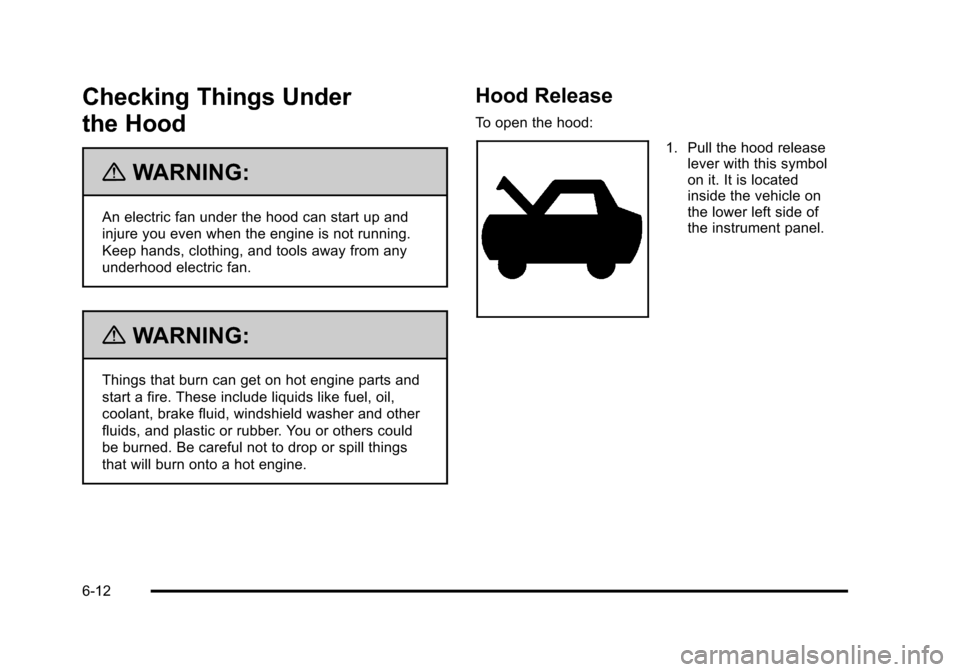
Hood Release
To open the hood:
1. Pull the hood releaselever with this symbol
on it. It is located
inside the vehicle on
the lower left side of
the instrument panel.
6-12
Page 380 of 528

Black plate (30,1)Cadillac STS Owner Manual - 2011
4. With the coolant surge tank pressure cap off, startthe engine and let it run until you can feel the
upper radiator hose getting hot. The upper radiator
hose is the largest of the hoses which comes out
of the radiator, on the passenger side of the
vehicle. Watch out for the engine cooling fans.
By this time, the coolant level inside the coolant
surge tank may be lower. If the level is lower, add
more of the proper mixture to the coolant surge
tank until the level reaches the FULL COLD/FROID
line on the side of the coolant surge tank.
5. Then replace the pressure cap. Be sure the pressure cap is hand-tight and fully seated.
Start the engine and allow it to warm up.
Engine Overheating
The vehicle has several indicators to warn of engine
overheating.
There are two engine hot messages that could be
displayed in the Driver Information Center (DIC). See
DIC Warnings and Messages
on page 4‑76DIC
Warnings and Messages for more information. If the engine is overheating, then you will find a coolant
temperature gauge and a coolant warning light on the
instrument panel. See
Engine Coolant Temperature
Gauge
on page 4‑61and Engine Coolant Temperature
Warning Lighton page 4‑61for more information.
You may decide not to lift the hood when this warning
appears, but instead get service help right away. See
Roadside Service on page 8‑8.
If you do decide to lift the hood , make sure the vehicle
is parked on a level surface.
Then check to see if the engine cooling fans are
running. If the engine is overheating, both fans should
be running. If they are not, do not continue to run the
engine and have the vehicle serviced.
Notice: Engine damage from running your engine
without coolant is not covered by the vehicle
warranty. See Overheated Engine Protection
Operating Mode for information on driving to a safe
place in an emergency.
Notice: If the engine catches fire while driving with
no coolant, the vehicle can be badly damaged. The
costly repairs would not be covered by the vehicle
warranty. See Overheated Engine Protection
Operating Mode
on page 6‑32for information on
driving to a safe place in an emergency.
6-30
Page 412 of 528

Black plate (62,1)Cadillac STS Owner Manual - 2011
Tire Pressure Monitor Operation
This vehicle may have a Tire Pressure Monitor System
(TPMS). The TPMS is designed to warn the driver when
a low tire pressure condition exists. TPMS sensors are
mounted onto each tire and wheel assembly, excluding
the spare tire and wheel assembly, if the vehicle has
one. The TPMS sensors monitor the air pressure in the
vehicle's tires and transmits the tire pressure readings
to a receiver located in the vehicle.
When a low tire pressure
condition is detected, the
TPMS illuminates the low
tire pressure warning light
located on the instrument
panel cluster.
If the warning light comes on, stop as soon as possible
and inflate the tires to the recommended pressure
shown on the tire loading information label. See
Loading the Vehicle on page 5‑23.
At the same time a message to check the pressure in a
specific tire appears on the Driver Information Center
(DIC) display. The low tire pressure warning light and
the DIC warning message come on at each ignition
cycle until the tires are inflated to the correct inflation
pressure. Using the DIC, tire pressure levels can be viewed by the driver. For additional information and
details about the DIC operation and displays see
DIC
Operation and Displays
on page 4‑70and DIC
Warnings and Messages on page 4‑76.
The low tire pressure warning light may come on in cool
weather when the vehicle is first started, and then turn
off as you start to drive. This could be an early indicator
that the air pressure in the tire(s) are getting low and
need to be inflated to the proper pressure.
A Tire and Loading Information label , attached to your
vehicle, shows the size of your vehicle's original
equipment tires and the correct inflation pressure for
your vehicle's tires when they are cold. See Loading the
Vehicle
on page 5‑23for an example of the Tire and
Loading Information label and its location on your
vehicle. Also see Inflation - Tire Pressure
on
page 6‑58.
Your vehicle's TPMS can warn you about a low tire
pressure condition but it does not replace normal tire
maintenance. See Tire Inspection and Rotation
on
page 6‑65and Tires on page 6‑50.
Notice: Using non‐approved tire sealants could
damage the Tire Pressure Monitor System (TPMS)
sensors. TPMS sensor damage caused by using an
incorrect tire sealant is not covered by the vehicle
warranty. Always use the GM approved tire sealant
available through your dealer.
6-62
Page 458 of 528

Black plate (108,1)Cadillac STS Owner Manual - 2011
If any of the soil remains, a commercial fabric cleaner
or spot lifter may be necessary. When a commercial
upholstery cleaner or spot lifter is to be used, test a
small hidden area for colorfastness first. If the locally
cleaned area gives any impression that a ring formation
may result, clean the entire surface.
After the cleaning process has been completed, a paper
towel can be used to blot excess moisture from the
fabric or carpet.
Leather
Leather, and lighter colored leather in particular, will
need more frequent cleaning to prevent the buildup of
dust, dirt, and colors transferred from other items so
that these do not become permanent stains.
To remove dust, a soft cloth dampened with water can
be used. If a more thorough cleaning is necessary, a
soft cloth dampened with a mild soap solution can be
used. Your dealer has a GM approved leather cleaner
available that provides superior cleaning performance
when used regularly on finished automotive leathers.
Allow the leather to dry naturally. Do not use heat,
steam, spot lifters or spot removers, or shoe polish on
leather. Many commercial leather cleaners and coatings
that are sold to preserve and protect leather may
permanently change the appearance and feel of theleather and are not recommended. Do not use silicone
or wax-based products, or those containing organic
solvents to clean the vehicle's interior because they can
alter the appearance by increasing the gloss in a
non-uniform manner
Instrument Panel, Vinyl, and Other
Plastic Surfaces
A soft cloth dampened with water may be used to
remove dust. If a more thorough cleaning is necessary,
a clean soft cloth dampened with a mild soap solution
can be used to gently remove dust and dirt. Never use
spot lifters or removers on plastic surfaces. Many
commercial cleaners and coatings that are sold to
preserve and protect soft plastic surfaces may
permanently change the appearance and feel of the
interior and are not recommended. Do not use silicone
or wax-based products, or those containing organic
solvents to clean the vehicle's interior because they
can alter the appearance by increasing the gloss in a
non-uniform manner.
Some commercial products may increase gloss on the
instrument panel. The increase in gloss may cause
annoying reflections in the windshield and even make it
difficult to see through the windshield under certain
conditions.
6-108
Page 464 of 528

Black plate (114,1)Cadillac STS Owner Manual - 2011
Vehicle Identification
Vehicle Identification Number (VIN)
This legal identifier is in the front corner of the
instrument panel, on the driver side. It can be seen
through the windshield from outside. The VIN also
appears on the Vehicle Certification and Service Parts
labels and certificates of title and registration.
Engine Identification
The eighth character in the VIN is the engine code. This
code identifies the vehicle's engine, specifications, and
replacement parts. See“Engine Specifications”under
Capacities and Specifications
on page 6‑128for the
vehicle's engine code.
Service Parts Identification Label
This label, on the spare tire cover, has the following
information:
.Vehicle Identification Number (VIN)
.Model designation
.Paint information
.Production options and special equipment
Do not remove this label from the vehicle.
Electrical System
Add-On Electrical Equipment
Notice: Do not add anything electrical to the vehicle
unless you check with your dealer first. Some
electrical equipment can damage the vehicle and
the damage would not be covered by the vehicle's
warranty. Some add-on electrical equipment can
keep other components from working as they
should.
Add-on equipment can drain the vehicle battery, even if
the vehicle is not operating.
6-114
Page 467 of 528

Black plate (117,1)Cadillac STS Owner Manual - 2011
The underhood fuse block is located in the front of the
engine compartment on the passenger side of the
vehicle. SeeEngine Compartment Overview
on
page 6‑13for more information on location and
removal procedure for the front compartment underhood
sights shields.
To access the fuses, push in the tabs located on each
side of the fuse block cover, then lift the cover off.
Notice: Spilling liquid on any electrical component
on the vehicle may damage it. Always keep the
covers on any electrical component.
Fuses JCase Usage
ABS MTR ABS Module- ABS Module-Stabilitrak AFS Active Front Steering
BLWR Blower Motor
FAN 1 Cooling Fan-Low Speed
FAN 2 Cooling Fan-High Speed
LPDB 1 Driver Side Rear Fuse Block
LPDB 2 Driver Side Rear Fuse Block
RPDB 1 Passenger Side Rear Fuse Block
RPDB 2 Passenger Side Rear Fuse Block
Fuses JCase Usage
SPARE Spare
SPARE Spare
STRTR Starter
Fuses MiniUsage
A/C CLTCH Air Conditioning Compressor Clutch
ABS ABS Module-Stabilitrak
ABS IGN Antilock Brake Controller
AUX OUTLET Rear Accessory Power Outlet BRK
VAC PUMP Brake Vacuum Pump
CCP Climate Control Panel
CCP/RLY COILS Climate Control Panel, Headlamp
Level Control, Active Cruise Control,
Relay Coils, Starter, Front Blower
ECM 1 Engine Control Module (ECM)
ECM/TCM BATT ECM, Transmission Control
Module (TCM)
ECM/TCM IGN ECM, TCM, Instrument Panel Cluster
6-117
Page 468 of 528

Black plate (118,1)Cadillac STS Owner Manual - 2011
Fuses MiniUsage
EKM/I/P MDLEasy Key Module (EKM), Instrument
Panel Module (I/P MDL)
EVEN COILS Even Ignition Coils, Even Fuel
Injectors
FOG LAMP Front Fog Lamps
FRT PWR OUTLET Front Accessory Power Outlet
FUEL COOL Fuel Cooling HORN Horn
HTD
WASH/AQS Heated Headlamp Washer, Air Quality
Sensor
HUD Heads-Up Display, Steering Column
Switch
I/BEAM IntelliBeam Relay
I/P MDL/ALDL Instrument Panel Module, Assembly
Line Data Link Connector
LIC DIM License Plate, Instrument Panel
Dimming
LT HI BEAM Driver Side High Beam Headlamp
LT LO BEAM Driver Side Low Beam Headlamp
Fuses Mini Usage
LT PRKDriver Side Park Lamp/Driver Side
Taillamp
ODD COILS Odd Ignition Coils, Odd Fuel Injectors
POST O2 SNSR Post Oxygen Sensor PRE O2 SNSR Pre Oxygen Sensor, CAM Sensors
RAIN
SNSR/TPM Rain Sensor, Relay Coil:
Headlamp Wash
RT HI BEAM Passenger Side High Beam
Headlamp
RT LO BEAM Passenger Side Low Beam Headlamp
RT PRK Passenger Side Park Lamp,
Passenger Side Taillamp
SPARE Spare
SPARE Spare
SPARE Spare
SPARE Spare
SPARE Spare
SPARE Spare
SPARE Spare
6-118