2011 AUDI S8 battery
[x] Cancel search: batteryPage 198 of 302

196 Intelligent technology
What you should know
The highest priority is given to maintaining
starting capability.
The battery is severely taxed in short-distance
driving, in city traffic and during the cold time
of year. Abundant electr ical energy is re
qu ired, but only a little is generated. It is also
cr itical if the e ngine is not run ning and elect ri
cal components a re turned on. In th is in
stance energy is being consumed but none is be ing generated .
I t is in precisely these situations that you w ill
notice energy managemen t actively regulat
ing the distrib ution of energy.
Vehicle stands for an ext ended period
If you do not drive your vehicle over a period
of severa l days or weeks, elect rical compo
nents are grad ually cu t back o r switched off .
This reduces energy co nsu mption and main
tains starting cap abili ty
over a longer period.
Be aware that when you unlock you r vehicle,
some of the conve nience funct ions may not
ope rate, such as the Convenience key , the re
mote cont ro l or the power seat adjustment .
The convenience functions will be availab le
aga in when you switch on the ignition and
start the engine .
With the engine turned off
If yo u lis ten to the radio, for example, with
the eng ine turned off or use othe r MM I fu nc
tions, the battery is being discharged .
I f sta rting capability is jeopa rdized due to e n
e rgy consumpt ion, the fo llow ing warning ap
pears in the MMI disp lay :
Please start th e engine soon or th e syst em
will be turned off .
The warning ind icates that the system will be
turned off automatically after 3 m inu tes .
If
you wish to cont inu e us ing the functions , you
have to start the engine.
With the engine running
Although e lec trical energy is generated when
the vehicle is being driven, the battery can be
come discharged. This happens mostly when
li ttle energy is being generated and a g reat
deal consumed and the battery's state of
charge is not optimal.
To b ring the energy ba lance back into equili
brium, consumers which req uire especially
l arge amounts of energy are temporar ily cut
back or sw itched off. Heat ing systems i n par
ticular require a great deal of energy. If you
notice , for example, that the heated seats* o r
the heated rear window are not heating, they have been temporarily cut back or sw itched
off . These systems w ill be available again as
soon as the ene rgy balance has been restored.
You w ill also notice that engi ne idle speed has
been increased slightly . Thi s is normal and not
a cause for con ce rn. By inc reas ing eng ine id le
speed the addi tional energy requ ired is gener
ated and the battery is charged.
Page 224 of 302

222 Checking and filling
Checking and filling Engine hood
Releasing the engine hood
The engine hood is released from inside the
vehicle .
Fig. 175 Driver foo twell: release lever
AUD I
Fig. 176 Rocker switch un der the hood
Make sure the wiper arms are not raised up
from the windshield. Otherwise the paint
could be damaged.
.,. Pull the lever under the instrument panel in
the direction of the arrow
¢ fig. 175.
.,. Raise the hood slightly¢,&. .
... Press the rocker switch under the hood up
ward ~
fig. 176. This releases the catch.
... Open the hood.
&_ WARNING
Hot engine coolant can burn you.
- To reduce the risk of being burned, never
open the hood if you see or hear steam
or coolant escaping from the engine compartment . Wait until no steam or
coolant can be seen or heard before care
fully opening the hood .
' Working in the engine compartment
Be especially careful whenever you work in
the engine compartment.
Whenever you must perform any work in the
engine compartment, for example checking
and filling different fluids, there is a risk of injury, burns and accidents. To prevent per
sonal injury always observe the following
WARNINGS. The engine compartment of any
vehicle is a hazardous area
¢ ,&. .
/n.. WARNING
To help avoid injury, before you check any
thing under the hood:
- Turn off the engine.
- Switch off the ignition .
- Apply the parking brake.
- Move selector lever to "P" (Park) .
- Always let the engine cool down. Hot
components will burn skin on contact.
- To reduce the risk of being burned, never
open the hood if you see or hear steam
or coolant escaping from the engine
compartment. Wait until no steam or
coolant can be seen or heard before care
fully opening the hood.
- Keep children away from the engine com
partment.
- Never spill fluids on hot engine compo
nents . They can cause a fire .
- Never touch the radiator fan. The auxili
ary electric fan is temperature controlled
and can switch on suddenly .
- Never open the coolant reservoir cap
when the engine is still warm . The cool
ant system is pressurized and hot cool
ant could spray out.
- Protect your face, hands and arm from
steam or hot engine coolant by placing a
thick rag over the cap when you open the
coolant reservoir.
- If work on the fuel system or the electri
cal system is necessary:
- Always disconnect the battery.
Page 225 of 302

-Never smoke or work near heate rs or
open flames. Fluids in the engine com
partment could start a fire.
- Keep an approved fire extinguisher im
mediately ava ilable.
- To avoid elect rical shock and persona l in
jury while the engine is running or be ing
started, never touch:
- I gnition cables
- Othe r components of the high voltage
e lectronic ignition system.
- If you must pe rform a check or repair
with the engine running:
- F irst, fully apply the pa rking brake,
move selector lever to "P" (Park) .
- Always use extreme caution to prevent
clothing, jewelry, or long hai r from get
ting caught in the radiator fan, V-belts
or other moving parts, or from contact ing hot parts. T ie back hair before
starting, and do not wear cloth ing that
will ha ng or droop into the eng ine.
- Min imize exposure to emission and
c h emical hazards
c:> &,.
A WARNING
California Propos ition 65 Warning:
- Engine exhaust, some of its constituents,
and certai n veh icle components co nta in
or em it chemicals known to the State of
Californ ia to cause cancer a nd b irth d e
fects a nd rep roduct ive ha rm. In addi tion,
c e rta in fluids cont ained in vehicle s and
c ertain p rod ucts of component wear con
tain or emit chemicals known to the
State of Ca lifo rnia to cause cancer and
birth defects or other reproductive harm.
- Battery posts, terminals and related ac
cessories contain lead and lead com-
Checkin g and fillin g 223
poun ds, c hemicals known to the State of
California to cause cancer and reproduc
tive harms. Wash hands after handling.
([) Note
When adding fluids, always make su re that
they are poured into the p roper conta iner
or fi ller opening, otherwise serious dam
age to vehicle systems w ill occur .
@ For the sake of the environment
To detect lea ks in time, inspect the vehicle
floor pan from underneath regular ly. If
you see spots from oil or other veh icle flu
i ds, have you r vehicle inspected by an au
thorized Audi dea ler.
Closing the engine hood
.. Pull the hood down until the pressure from
t he st ruts is reduced.
.. Let the hood
drop down a nd l atc h in pla ce.
Do not try to push it shut; it may fail to en
gage ~ A_.
A WARNING
-
A hood that is not completely latched
could fly up and block your view while dr iv
i ng.
- When you close the engine hood, chec k it
to make sure t he safety catch has prope r
ly engaged. The hood shou ld be flush
with the surround ing vehicle body parts .
- If you notice while driv ing that the hood
is not secured prope rly, stop at once and
close it. •
•
Page 235 of 302

@ For the sake of the environment
Because of the problem of proper disposa l
of brake fl uid as we ll as the special tools
requ ired and the necessary expert ise, we
recommend that you have t he brake fluid
changed by your author ized Audi dealer .
Battery
General information
Under normal operating conditions, the bat
tery in your Audi does not need any mainte
nance. With
high outside temperatures or
long daily dr ive s we recommend that you have
the electro lyte level checked by a service fa
cility . The electrolyte level shou ld a lso be
checked each time the battery is charged
¢ page 235.
Have the battery checked when you take your
ve hicle in for service . Yo u are well adv ised to
replace a battery that is older than 5 yea rs .
W ith certa in types of a irbag deployment, t he
b attery is d isconnected from the vehicle elec
tr ica l system for safety reasons¢.&.
in Re
pair, care and disposal of the airbags on
page 159.
Disconnecting the battery terminals
Some vehicle functions (power w indow regu
lators , for example) are lost if the battery ter
m inals a re d isconnected. These func tions have
to be re lea rned after the batte ry term inals a re
connected agai n. T o prevent this , the bat tery
should only be d isconnec ted from the vehicle
e lec tric al system when absolu tely necessa ry
for repairs .
Vehicles not driven for long periods
If you do not drive you r vehicle over a period
of severa l days or weeks, elec trical compo
nen ts are gr adually cut b ack o r swi tched off .
This redu ces energy cons umption and main
tains starting capab ility over a longer per io d
¢ page 195.
Be aw are tha t when you unlock yo ur vehicle ,
some of the conven ien ce f unct ions may no t
Checkin g and fillin g 233
opera te , such as the Conven ience key*, the re
mote control or the power seat adjustment .
T he convenience functions will be ava ilab le
again when you switch on the ign ition and
start the eng ine.
Winter operat ion
D uring the w inte r mon ths, bat tery capacity
tends to dec rease as temperatures drop . This
is beca use more power is a lso consumed wh ile
starting, and the headlights, rear window de
fogger, etc., are used more often.
Avoid unnecessary powe r consum ptio n, pa r
ticu lar ly in city traffic or when traveling only
short distances. Let your autho riz ed Audi
dealer check the capacity of the vehicle bat
te ry before w inter sets in¢
page 235 . A well
c h arged battery will not on ly prevent s tarti ng
problems w hen the weather is cold, but wi ll
also last longer.
(D Tips
If you r vehicle is left s tandi ng for seve ral
weeks at extremely low temperatures, the
vehicle ba ttery s hould be removed an d
s to red w here i t w ill not fr eeze . T his w ill
p revent it from be in g damaged and having
to be replaced.
Working on the battery
Be especially careful when working on or near
the bat tery.
T he battery is lo cated in the l uggage compa rt
ment unde r the floo r. B efo re you che ck a ny
thi ng in the luggage com partmen t,
read and
heed all WARNINGS
¢ .&, .
Alw ays heed t he safety warning s, when work
ing on the vehicle b atte ry or the vehicle e lec -
t rical system to prevent i njury. .,..
•
•
Page 236 of 302

234 Check ing and filling
Th e following WARNINGS are very
impo rtant when w ork ing on the b att ery :
Alwa ys hee d the fo llo w ing WARNING SYM
BOLS and safety precaution s when working
o n the battery .
®
@
®
Always w ear eye prot ection.
Batter y acid cont ain s sulfu ric acid.
Alwa ys wear glo ves and e ye p rote c
tion.
No
• sparks
-flames
- smoking.
When a batt ery is charged, it produ
ces hydrog en ga s whi ch i s e xplo sive
a nd could cau se p ers on al injury .
Always keep the battery well out of reach of children .
.8, WARNING
Whenever working on the battery or on
the electrical system, there is the r is k of
inju ry, acc ident and even fire. Read and
heed the following WARNINGS:
- Always wea r eye protection. Do not let
battery acid or any lead particles get on
yo ur skin or clothing. Shield your eyes.
Explosive gases can cause blindness or
other injury .
- Battery acid contains sulfuric acid. Sulfu
ric acid can cause blindness and severe
burns.
- Always wear gloves and eye p rotection .
Do not tilt the battery because ac id
could lea k out of the vent ilation open
ings.
- I f you get battery acid in your eyes or
on your sk in , immediately rinse with
cold water for severa l m inutes and get
medical attention.
- If you should ingest any battery acid ,
seek medical attention immediately .
- Do not expose the battery to an open
flame, electric sparks or an open light .
- Do not smoke. -
Do not interchange the positive and neg
ative cables.
- When working on the battery, be s ure
not to short-circu it the terminals with
too ls or other metal objects. This would
cause the battery to heat up very quickly,
which could lead to damage or explosion and pe rsonal injury.
- When a battery is charged, it produces
hydrogen gas which is explosive and
could cause personal in jury.
-Always keep the battery well out of the reach of children .
- Before work is done on the electrical sys
tem, disconnect the negat ive ground ca
b le .
- Before performing any work on the e lec
tr ical system, switch off the engine and
ignit ion as well as any electrical equip
ment. The negative cable on the battery
m ust be disconnected.
If yo u are just go
ing to replace a light bulb, then it is
enough to switch off the lights .
- Before disconnec ting the bat tery, switch
off the anti -theft alarm system! Other
wise you wi ll set off the alarm.
- When disconnecting the battery, f irst
disconnect the negative cab le and then
the positive cab le .
- Before reconnecting the batte ry, ma ke
sure all e lectr ica l consumers are sw itch
ed off . Reconnect the positive cable first
and then the negative cable . Never inter
change the cables - this could start a fire!
- Never charge a frozen or a thawed-out
battery . It could exp lode! If a battery has
frozen, then it must be replaced. A dis
charged batte ry can freeze over at 32 °F
(0 °() .
-Make sure the vent hose is always attach
ed to the opening on the s ide of the bat
tery .
- Never use batteries which are damaged.
There is the danger of an explosion! Al ways rep lace a damaged battery .
Page 237 of 302

_& WARNING
California Proposition 65 Warning:
- Battery posts, terminals and related ac
cessories contain lead and lead com
pounds, chemicals known to the State of
California to cause cancer and reproduc
t ive p roblems. Wash hands afte r han
dling.
(D Note
- Do not d isconnect the vehicle battery
when the ignition is on or when the en
gine is running, otherwise, you will dam
age electron ic components in the elect ri
c al system.
- If your vehicle is going to stand for a
l ong pe riod of time wi thout bei ng d riven,
protect the battery from "freezing", oth
erwise it wil l be damaged and w ill then
have to be replaced.
Battery charging
Starting the engine requires a well charged
battery.
F ig . 182 Eng ine compartment : connecto rs for a cha rg
er and jump sta rt cab les
Alway s read and h eed all WARNINGS be low
¢ &. and
¢&. in Working on the ba ttery on
page 234.
• Switch off the ignit ion and a ll electrica l con
s u mers.
• Make sure the are a is well vent ilated when
you charge the battery.
• Open the engine hood
¢page 222.
• Remove the cover @ by press ing on the ar
row ¢
fig. 182.
Checkin g and fillin g 235
• Open the cover @on the pos itive termina l.
• Connect the charge r co nnectors according to
the instruct ions to the
jump sta rt bolts.
(Bo lts under the red cover= "positive", Bo lts
w ith hex head= "negative").
• On ly now plug the mains lead for the charg
ing equ ipment into the wall outlet and turn
iton ¢_& .
• Make sure the charging rate is not over
30 amp s/14.8 V olt .
• W hen the battery is fully charged: T urn the
charging equipment off and remove the
mains lead from the wall out let.
• Now remove the clamps for the charging
equipment.
• Close the red cover on the positive pole.
• Close the hood ¢
page 223.
A discharged battery can freeze at tempera
tures of only 32 F
0 (0 °C). Allow a frozen bat
tery to thaw completely before attempting to
charge it ¢ Ii::,. . However, we recommend not
us ing a thawed batte ry aga in because the bat
te ry casing can be c racked due to i ce fo rma
t ion and can leak ba ttery a cid.
Battery charging (Maximum charging rate
of 30 amps /14.8 Volt )
When charg ing at low vo ltages (e.g. wi th a
trickl e charger ), the batte ry cables do no t
have to be dis conne cted firs t. T he bat tery
caps should
not be opened when charg ing a
batte ry .
It is no t necessa ry to remove the battery from
t he luggage compartmen t, a nd it is a lso not
necessary to d isconnect the cab les.
Fast charging the battery (charging rate
above 14 .8 Volts)
Fo r tec hni cal re asons do not use a battery
c h arger that uses voltage g reater than 14.8
Volts to charge yo ur vehicle's battery.
A WARNING
Charging a battery can be dangero us.
- Always follow the operating instructions
provided by the battery charger manu
facturer when charging your battery.
Page 238 of 302
236 Checking and filling
-Never charge a frozen battery. It may ex
plode because of gas trapped in the ice.
Allow a frozen battery to thaw out first.
- Do not reuse batteries which were fro
zen. The battery housing may have cracked and weakened when the battery
froze .
- Charge the battery in a well ventilated
area . Keep away from open f lame or elec
trical spark . Do not smoke. Hydrogen gas
generated by the battery is exp losive.
- To reduce the danger of explosion, never
connect or disconnect charger cables
wh ile the charger is operating.
- Fast charg ing a battery is dangerous and
should only be attempted by a compe
tent technician with the proper equip
ment.
- Battery acid that may spill during charg
ing should be washed
off with a solution
of warm water and bakin g soda to neu
tralize the acid.
Never use a fast charger as a booster to
start the engine. This will se riously dam
age sensitive electronic components, such
as control units, relays, radio, etc., as we ll
as the battery charger .
Battery replacement
The new battery must have the same specifi
cations and dimensions as the original equip
ment battery.
I ntell igent energy management in your vehi
cle is respo nsible for distributing the electr i
cal energy throughout your vehicle
c::> page 195. The intelligent energy manage
ment system wi ll keep the engine battery
charged better than vehicles without this sys
tem. To make sure the additional electrical en
ergy is available once again after you have
changed the battery, we recommend that you install batte ries of the same type and man u
facture only (the same as those installed at
the time your vehicle was delivered). Specifi- cations are listed on the
battery housing. Your
authorized dealer must code the battery in
the energy management system to enab le you
to use the energy management functions cor
rectly after replacing the battery.
T he new battery must have the same capacity,
voltage (12 volts), amperage, construction and plug sealing .
When installing the battery, make sure the ig
nition and all electrical consumers are switch
ed off.
(D Note
Make sure the ventilation hose on the side
of the battery is connected, otherwise
fumes or battery acid can leak out .
@ For the sake of the environment
Because of the prob lem of proper disposal
of a battery, we recommend your author
i zed Audi dealer change the battery for
you. Batteries contain sulfuric acid and
lead and must always be disposed of prop
erly in compliance with a ll environmental
regulations. Disposing of veh icle batter ies
improperly is very dangerous to the envi
ronment .
Windshield/headlight
washer container
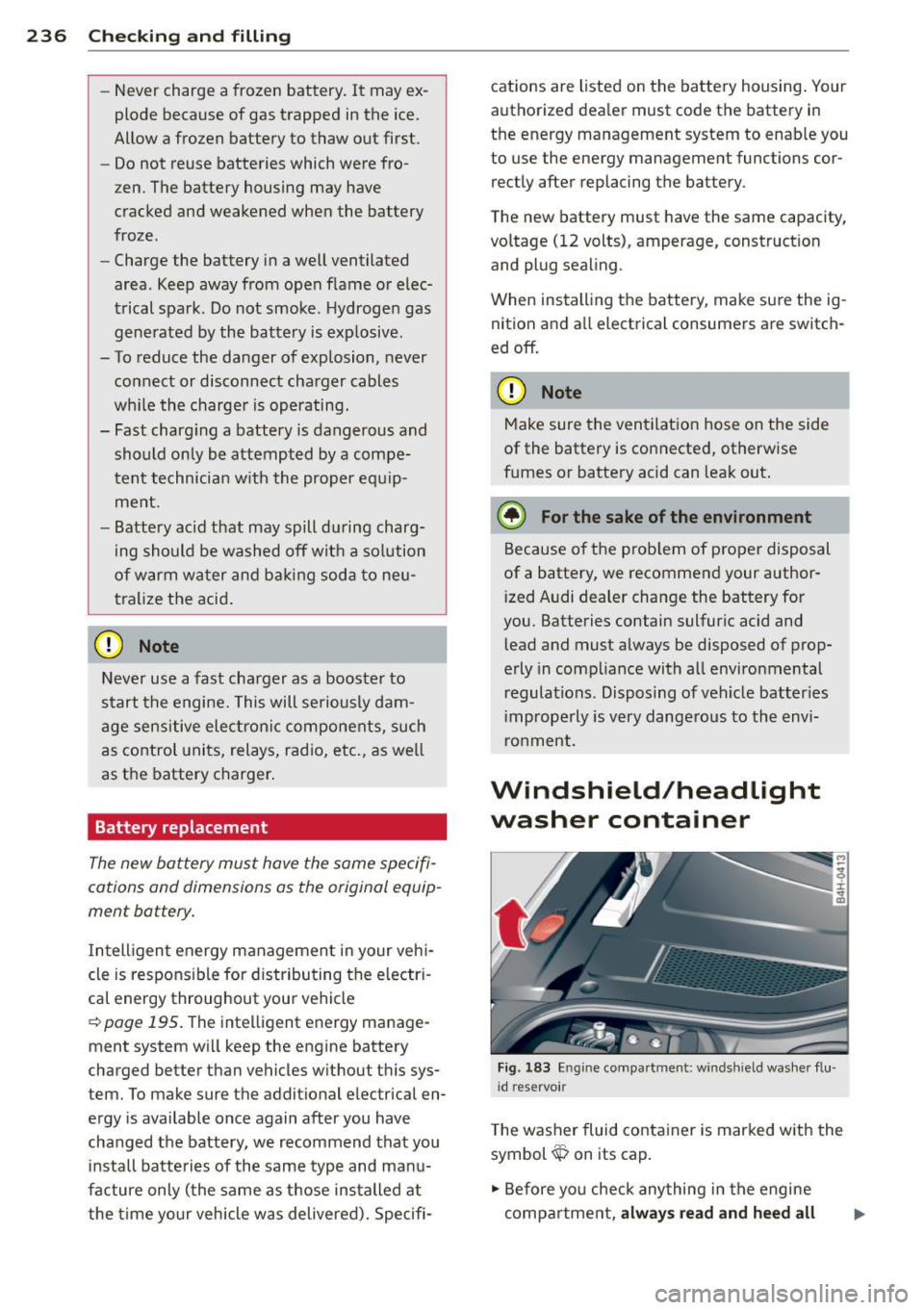
Fig. 183 En g in e compa rtm ent: w indshi eld washe r flu
i d reservo ir
T he washer fluid conta iner is marked w ith the
symbol~ on its cap .
.,. Before you check anything in the engine
compartment,
always read and heed all
Page 275 of 302

Emergency situations
General
This chapter i s intended for trained emer
gency crews and working personnel who have the necessary tools and equipment to
perform these operations.
Starting by pushing or
towing
CD Note
Ve hicles w ith an automatic tra nsmission
cannot be started by pus hing o rtowi ng.
Starting with jumper
cables
If necessary, the engine can be started by
connecting it to the battery of another vehi
cle.
If the engine shou ld fail to start because of a
discha rged o r wea k battery, the battery can be
connected to the battery o f
another vehicle,
using a
pair of jumper cables to start the en
g ine.
Jumper c ables
Use only jumper cables of sufficiently la rge
c ross section to carry the starter c urrent safe
l y . Refer to the man ufacturer's specifications.
Use only jumper cables with
insulated te rm i
na l clamps wh ic h are d istinctly mar ked:
plus(+) cable in mos t cases co lore d red
minus (-) cable
in most cases colored black .
A WARNING
Batterie s contain e lec tricity, ac id, an d gas.
Any of these can cause ve ry ser io us or fatal
inju ry. Follow the ins tructions below f or
safe han dling of your veh icle's b attery .
- Alway s sh ield you r eye s and avoid lean
i n g over the bat te ry w henever possib le.
- A dis ch arged battery c an free ze at tem
pera tures ju st below 3 2 °F ( 0 °C ). Befo re
Emergency situations 273
connecting a jumpe r cab le, you must
thaw the fr ozen battery c omp lete ly, ot h
erwise it could explode.
- Do not allow battery acid to contact eyes
or skin. Fl ush any contacted area with
wate r immediately .
- Improper use of a booster battery to start a vehicle may cause an explosion.
- Vehicle batter ies genera te exp losive gas
es. Keep spar ks, flame and lighted c iga
rettes away from batte ries.
- Do not try to jump start any ve hicle w ith
a low ac id leve l in the battery.
- The vo ltage of the booste r batte ry m ust
a lso have a 12-Vol t rating. T he capacity
(Ah) of the booster battery sho uld not be
lowe r tha n that of the discharged bat
tery . U se of batte rie s of d iffe ren t voltage
or substantially d iffe rent "Ah" rat ing
may c au se an exp losion and persona l in
Ju ry.
- N ever cha rge a fro zen battery. Gas tr ap
pe d in the i ce m ay cause a n ex plosion.
- Never cha rge or use a batte ry tha t h as
been fr ozen . T he battery case may have
be weakened.
- Us e of batter ies of differe nt voltage or
sub stant ia lly diffe ren t ca pa city (Ah) rat
i ng may c ause an exp losion an d injury .
Th e capac ity (Ah) of the booster bat tery
should not be lower than that of the dis
charged batte ry .
- Before you chec k any thing in the engine
compa rtment, always read and hee d all
WARNINGS
¢page 216, Engine com
partment.
CD Note
- App lying a higher voltage booster ba t
tery will cause expens ive damage to se n
sit ive e lectronic components, such as
cont rol units, relays, rad io , etc.
- There must be no electrical contact be
tween the vehicles as otherwise current
cou ld already start to f low as soon as the
posit ive(+) term inals a re connected. ..,. •
•