2011 AUDI S8 ECU
[x] Cancel search: ECUPage 142 of 302
140 Safety belts
Important safety instructions about
safety belts
Safety belts must always be correctly posi
tioned across the strongest bones of your
body.
,.. Always wear safety belts as illustrated and
described in this chapter.
,.. Make sure that your safety belts are always
ready for use and are not damaged.
A WARNING
Not wearing safety belts or wearing them
improperly increases the risk of serious
personal injury and death. Safety belts can
work only when used correctly .
- Always fasten your safety belts correctly
before driving
off and make sure all pas
sengers are correctly restrained.
- For maximum protection, safety belts must always be positioned properly on
the body .
- Never strap more than one person , in
cluding small children, into any belt.
- Never place a safety belt over a child sit ting on your lap.
- Always keep feet in the footwell in front
of the seat while the vehicle is being driv
en .
- Never let any person ride with their feet on the instrument panel or sticking out
the window or on the seat .
- Never remove a safety belt while the ve
hicle is moving. Doing so will increase
your risk of be ing injured or killed.
- Never wear belts twisted.
- Never wear belts over rigid or breakable
objects in or on your clothing, such as
eye glasses, pens, keys, etc., as these
may cause injury.
- Never allow safety belts to become dam
aged by being caught in door or seat
hardware .
- Do not wear the shoulder pa rt of the belt
under your arm or otherwise out of pos i
tion . -
Several layers of heavy clothing may in
terfere with correct positioning of belts
and reduce the overall effectiveness of
the system .
- Always keep belt buckles free of anything
that may prevent the buckle from latch
ing securely .
- Never use comfort clips or devices that
create slack in the shoulder belt . Howev
er, special clips may be required for the
proper use of some child restraint sys
tems .
- Torn or frayed safety belts can tear, and
damaged belt hardware can break in an
accident. Inspect belts regularly .
If web
bing, bindings, buck les, or retractors are
damaged, have belts replaced by an au
thorized Audi dealer or qualified work
shop.
- Safety belts that have been worn and
loaded in an accident must be replaced
with the correct replacement safety belt
by an authorized Audi dealer . Replace
ment may be necessary even if damage
cannot be clearly seen . Anchorages that
were loaded must also be inspected.
- Never remove, modify, disassemble, or
try to repair the safety belts yourself.
- Always keep the belts clean. Dirty belts
may not work properly and can impair
the function of the inert ia reel
¢ page 216, Safety belts .
Safety belts
Fastening safety belts
Seat first -everybody buckle up!
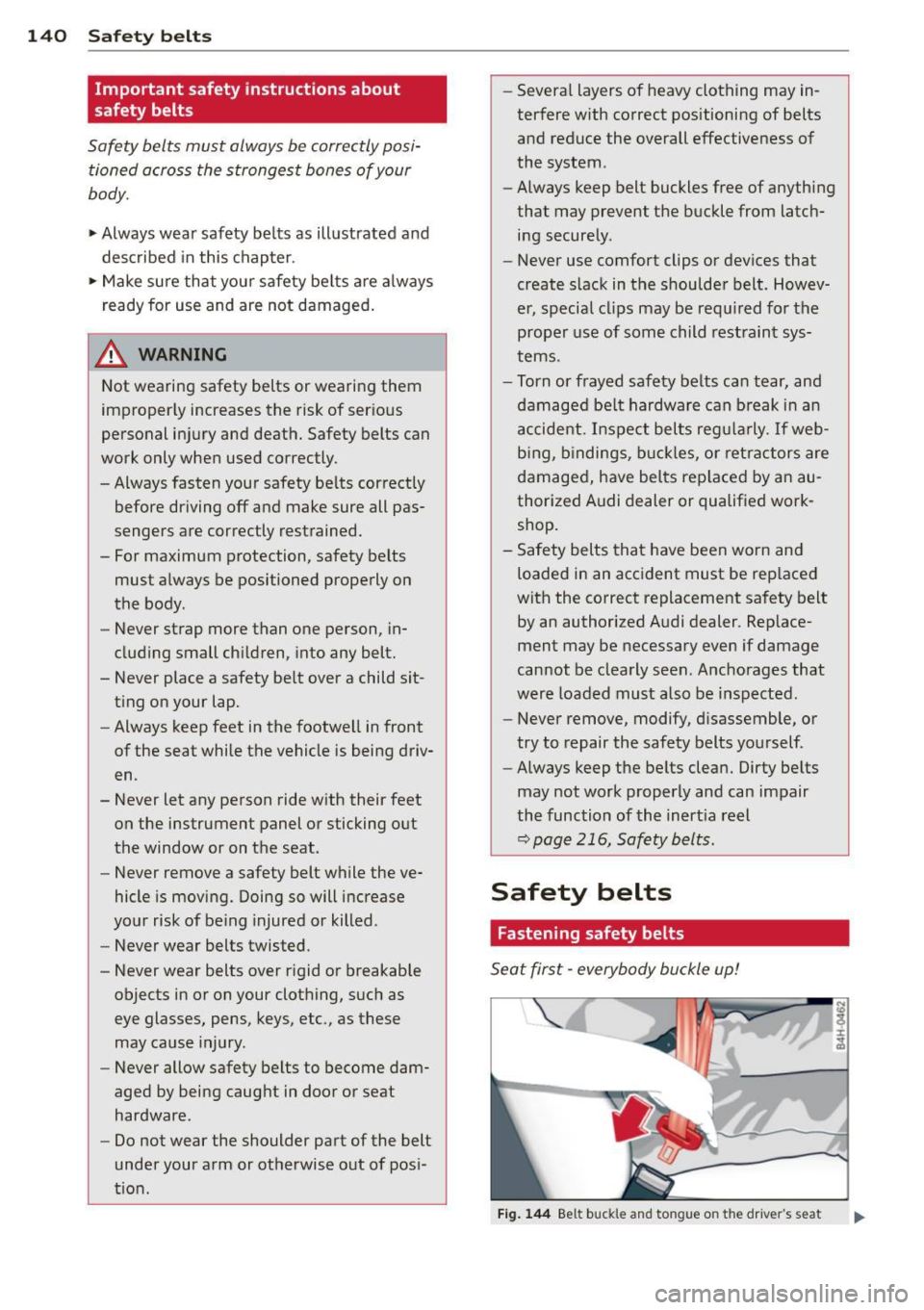
Fig. 144 Be lt buck le and to ngue o n the drive r's se at
Page 143 of 302

To provide maximum protection, safety belts
must always be positio ned cor rectly on the
wearer's body .
... Adjus t the front seat and head restraint
properly
c::> page 54, General recommenda
tions .
... Hold the be lt by the tongue and pull it even
ly across the chest and pelvis
c::> &,. .
""Insert the tongue into the correct buckle of
you r seat until you hear it latch securely
c::> fig. 144 .
""Pull on the belt to make su re that it is se-
c u rely latched in the buckle .
Automatic safety belt retractor s
Every safety belt is equipped with an automat
ic belt retractor on the shoulder belt. Th is fea
ture locks the belt when the belt is pulled out
fast, dur ing hard braking and in an accident .
The belt may also lo ck when you drive up or
down a steep hill or through a sharp curve .
During normal driving the belt le ts you
move
freely.
Safety belt pretensione rs
The safety belts are equipped with a belt p re
tensioner that helps to t igh ten the safety belt
and remove s lack when the pretensione r is ac
tivated
c::> page 143. The function of the pre
tensioner is monitored by a warning light
c::> page 18 .
Switchable locking f eature
Every safety belt except the one on the driver
seat is eq uipped w ith a switchable locking fea
ture that
mu st be used when the safety belt is
used to attach a child seat. Be sure to read the important information about this feature
c:;,page 178.
A WARNING
Improperly positioned safety belts can
cause serious injury in an accident
c::> page 141, Safety belt position .
-Safety belts offer optimum protection
only when the seatback is upright and
belts are properly positioned on the
body.
-
Safety belts 141
- Never attach the safety belt to the buck
le for another seat. Attaching the belt to
the wrong buckle will reduce safety belt
effectiveness and can cause serious per
sonal injury .
- A passenger who is not properly restrain
ed can be seriously injured by the safety
be lt itself when it
moves from the stron
ge r parts of the body into critical ar eas
like the abdomen.
- Always lock the convertible locking re
tracto r when you are secu ring a child
se at in the veh icle
c::>page 180.
@ Tips
For informat ion on safety belt pretension
e rs, refer to
c::> page 143 .
Safety belt position
Correct belt position is the key to getting
maximum protection from safety belts .
Fig. 14 S Head restra int and safety belt positio n as
see n from the side
Use the height adjustment to change the posi
t ion of the shoulder belt of the front safety
belts.
A WARNING
-Imp roperly posit ioned safety be lts can
cause ser ious perso na l inju ry in an a cc i
dent.
- The s hou lde r belt port io n of the safety
be lt must be posi tioned over the midd le
of the occupant's shoulder and never
across the neck or throat.
-
Page 144 of 302

142 Safety belts
-The safety belt must lie flat and snug on
the occupant's upper body¢
fig. 145.
Pull on the belt to tighten if necessary.
- The lap belt portion of the safety belt
must be positioned as low as possible
across pelvis and never over the abdo
men . Make sure the belt lies flat and
snug ¢
fig. 145 . Pull on the belt to tight
en if necessary.
- A loose-fitting safety belt can cause seri
ous injuries by shifting its position on
your body from the strong bones to more
vulnerable, soft tissue and cause serious
injury .
- Always read and heed all WARNINGS and
other important information
¢ page 140.
Pregnant women must also be correctly
restrained
The best way to protect the fetus is to mak e
sure that expectant mothers always wear
saf ety belts correctly -throughout the preg
nancy .
Fig. 146 Safety be lt pos it ion during p regnancy
To provide maximum protection, safety belts
must always be positioned correctly on the
wearer's body¢
page 141.
.,. Adjust the front seat and head restraint cor
rectly ¢
page 54, General recommenda
tions .
.,. Hold the belt by the tongue and pull it even
ly
across the chest and pelvis ¢ fig. 146,
¢ ,&. .
.,. Insert the tongue into the correct buckle of
your seat until you hear it latch securely
¢ page 140, fig. 144.
.,. Pull on the belt to make sure that it is se
curely latched in the buckle.
A WARNING
-
Improperly positioned safety belts can
cause serious personal injury in an acci
dent.
- Expectant mothers must always wear the
lap portion of the safety belt as low as
possible across the pelvis and below the rounding of the abdomen .
- Always read and heed all WARNINGS and
other important information¢
A in Fas
tening safety belts on page 141.
Unfastening safety belts
Unbuckle the safety bel t wi th the red release
button only after the vehicle has stopped .
Fig. 147 Releas ing the tong ue from the bu ckle
.,. Push the red release button on the buckle
¢
fig. 147 . The belt tongue will spring out
of the buckle ¢ ,&. .
0 ,._
9 r ... a,
.,. Let the belt wind up on the retractor as you
guide the belt tongue to its stowed position.
A WARNING
Never unfasten safety belt while the vehi
cle is moving . Doing so will increase your
risk of being injured or killed.
Adjusting safety belt height
You can adjust the height of the driver's and
front passenger's safe ty bel ts .
The safety belt height adjusters for the front
seats can be used to adjust the height of the .,..
Page 180 of 302

178 Child Safety
the child's body and the front of the passen
ger compartment, the airbag can inflate comp lete ly and provide supp lemental protection
in certain fronta l collisions .
A WARNING
Not using a booster seat, us ing the boos
ter seat improperly, incorrect ly install ing a
booster seat or using the vehicle safety
belt improperly increases the risk of seri
ous personal injury and death in a col lision
or other eme rgency s ituation. To help re
duce the risk of ser ious persona l injury
and/or death:
- Always make su re to position the should
er portion of the three -point belt over
the midd le of child's sho ulder.
- Never le t the shoulder port ion of the belt
rest against or across the neck, face,
chin, or throat of the child.
- Always make su re the lap belt portion of
the three-po int be lt is worn sn ug and
passes as low as possib le across the
child's pelvis. Never let the belt pass over
the soft abdomen.
- Failure to properly route safety belts
over a ch ild's body will cause severe inju
ries in an acc ident or other emergency
situation
c;,page 137.
-Children on the front seat of any car,
even w ith Advanced A irbags, can be seri
ous ly injured or even killed when an a ir
bag inflates.
- Never let a child stand or knee l on any
seat, for example the front seat.
- Never let a child ride in the cargo area of
your vehicle.
- Always remember that a ch ild lean ing
forward, sitt ing s ideways or out of posi
t ion i n any way during an acc ident can be
struck by a deploying airbag . This will re
sult in serious personal injury o r death.
- If you must install a booster seat on the
front passenger seat because of excep
tional circumstances the
PASSENGER
AIR BAG OFF
light must come on and
stay on, whenever the ignition is sw itch
ed on .
-
-If the PASSENGER AIR BAG OF F light
does not come on and stay on, perform
the checks described
c;, page 156, Moni
toring the Advanced Airbag System.
- Take the child restraint off the front pas
senger seat and install it properly at one
of the rear seat positions if the
PA SSEN
GER AIR BAG OFF
light does not stay on
whenever the ignit ion is switched on.
- Always read and heed all WARNINGS
whenever us ing a child restrained in ave
hicle is being used
¢ page 137, Safety
belts,
c;, page 145, Airbag system and
c;, page 169, Important things to know.
Installing a child safety
seat
· Securing a child safety seat using a
safety belt
Safety belts for the rear seats and the front
passenger can be locked with the convertible locking retractor to properly secure child
safety seats.
The safety belts emergency locking retractors
for the rear seats safety belts and for the
front passenger's seat safety be lt have a con
vertib le locking retractor for child restraints .
The safety belt must be locked so that be lt
webbing cannot unreel. The retractor can be
activated to lock the safety belt and prevent
the safety belt webbing from loosening up
during normal dr iving . A child safety seat can
o n ly be properly instal led when the safety belt
is locked so that the chi ld and child safety
seat w ill stay in place .
Always remember : Even though your vehicle is
equipped with an Advanced Airbag system, all
child ren, especially those 12 years and young
er, shou ld always r ide in the back seat prope r
ly restrained for the ir age and size.
A WARNING
Improperly installed chi ld safety seats in
crease the risk of serious personal injury
and death in a co llision. -
Page 181 of 302

-Always make sure that the safety belt re
tractor is locked when installing a child
safety seat. An unlocked safety belt re
tractor cannot hold the child safety seat
in place during normal driving or in a
crash .
- Always buckle the child safety seat firmly
in place even if a child is not sitting in it.
A loose child safety seat can fly around
during a sudden stop or in a collision.
- Always make sure that the rear seat
backrest to which the center rear safety
belt is attached is securely latched when
ever the rear center safety belt is being
used to secure a child restraint.
- If the backrest is not securely latched,
the child and the child restraint will be
thrown forward together with the back
rest and will strike parts of the vehicle
interior. The child can be seriously in
jured or killed.
- Never install rear-facing child safety
seats or infant carriers on the front pas
senger seat. A child will be seriously in
jured and can be killed when the passen ger airbag inflates .
- The inflating airbag will hit the child
safety seat or infant carrier with great
force and will smash the child safety seat
and child against the backrest, center
armrest, door or roof.
- Always install rear-facing child safety
seats or infant carriers on the rear seat.
- Forward-facing child safety seats or in
fant carriers installed on the front pas
senger's seat may interfere with the de
ployment of the airbag and cause serious
injury to the child.
- It is safer to install a forward-facing
child safety seat on the rear seat.
- Always read and heed all WARNINGS
whenever using a child restrained in ave
hicle is being used
¢page 169. Special
precautions apply when installing a child
safety seat on the front passenger seat
¢ page 147, Child restraints on the front
seat -some important things to know.
Child Safety 1 79
A WARNING
-
Always take special precautions if you
must install a forward or rearward -facing
child restraint on the front passenger's
seat in exceptional situations:
- Whenever a forward or rearward -facing
child restraint is installed on the front
passenger seat, the
PASSENGER AIR
BAG OFF
light must come on and stay on
whenever the ignition is switched on.
- If the
PASSENGER AIR BAG OFF light
does not come on and stay on, perform
the checks described
¢page 156, Moni
toring the Advanced Airbag System.
- Take the child restraint off the front pas
senger seat and install it properly at one
of the rear seat positions if the
PASSEN
GER AIR BAG OFF
light does not stay on
whenever the ignition is switched on.
- Improper installation of child restraints
can reduce their effectiveness or even
prevent them from providing any protec
tion.
- An improperly installed child restraint
can interfere with the airbag as it de
ploys and seriously injure or even kill the
child .
- Always carefully follow the manufactur
er's instructions provided with the child
safety seat or carrier .
- Never place additional items on the seat
that can increase the total weight regis
tered by the weight-sensing mat and can
cause injury in a crash.
A WARNING
Forward-facing child restraints:
- Always make sure the forward-facing
seat has been designed and certified by
its manufacturer for use on a front seat
with a passenger front and side airbag.
- Never put the forward-facing child re
straint up, against or very near the in
strument panel.
- Always move the passenger seat into its
rearmost position in the seat's fore and
aft adjustment range, as far away from •
•
Page 183 of 302

-Always buckle the child safety seat firmly
in place even if a child is not sitting in it.
A loose child safety seat can fly around during a sudden stop or in a crash.
- Always make sure the seat backrest to
which the child restraint is installed is in
an upright position and securely latched
into place and cannot fold forward. Oth
erwise, the seatback with the child safety
seat attached to it could fly forward in
the event of an accident or other emer gency situation.
- Always read and heed all WARNINGS
whenever using a child restrained in ave
hicle is being used
Q page 169. Special
precautions apply when installing a child
safety seat on the front passenger seat
Q page 147, Child restraints on the front
seat -some important things to know.
Deactivating the convertible locking
retractor
The convertible locking retractor for child re
straints will be deactivated automatically when the belt is wound all the way back into
the retractor .
.. Press the red button on the safety belt buck
le . The belt tongue will pop out of the buck
le.
.. Guide the safety belt all the way back into
its stowed position.
Always let the safety belt retract completely into its stowed position. The safety belt can
now be used as an ordinary safety belt with
out the convertible locking retractor for child
restraints.
If the convertible locking retractor should be
activated inadvertently, the safety belt must
be unfastened and guided completely back in
to its stowed position to deactivate this fea
ture. If the convertible locking retractor is not
deactivated, the safety belt will gradually be
come tighter and uncomfortable to wear.
Child Safety 181
A WARNING
Improperly installed child safety seats in
crease the risk of serious personal injury
and death in a collision.
- Never unfasten the safety belt to deacti
vate the convertible locking retractor for
child restraints while the vehicle is mov ing. You would not be restrained and
could be seriously injured in an accident.
- Always read and heed all WARNINGS
whenever using a child restrained in ave
hicle is being used¢
page 169. Special
precautions apply when installing a child
safety seat on the front passenger seat
¢ page 147, Child restraints on the front
seat -some important things to know.
LATCH Lower
anchorages and tethers
for children
Child Restraint System anchors and how
are they related to child safety
To provide a simpler and more practicable way
to attach the child restraint on the vehicle
seat, Federal regulations require special lower
anchorages in vehicles and devices on new
child restraints to attach to the vehicle ancho
rages .
The combination of the tether anchorages and
the lower anchorages is now generally called
the
LATCH system for " Lower Anchorages and
Tethers for Children."
Forward-facing child restraints manufactured
after September 1, 1999, are required by U.S.
federal regulations to comply with new child
head movement performance requirements .
These new performance requirements make a
tether necessary on most new child seats.
Installing a child restraint that requires a top
tether without one can seriously impair the
performance of the child restraint and its abil
ity to protect the child in a collision. Installing
a child restraint that requires a top tether ..,. •
•
Page 185 of 302
Lower ancho rag es
The lower anchorage attachment points are
located between the rear seatback and rear
seat c ushion
¢ fig. 164.
Lower anchorages secure the child restraint in
the seat witho ut using the vehicle 's safety
be lts . Anchorages provide a secure and easy
to- use attachment and minimize the possibili
ty of improper chi ld restraint installation.
All ch ild restra ints man ufact ured after Sep
tember 1, 2002, must have lower anchorage
attachments for the
LATCH system.
Remembe r that the lowe r anchorage points
are only intended for i nstallation and attach
ment of child restraints specifical ly certified
for use with
LATCH l ower anchorages . Child
restra ints that are not equipped with the low
er anchorage attachments can still be instal led in compliance with the c hild restra int
manufacturer's instruct ions on using vehicle
safety belts .
_&, WARNING
Improper use of LATCH lower anchorages
can cause serious personal i njury in an ac
cident .
- Always carefully fo llow the ch ild re
straints manufacturer's inst ruct ions for
proper installation of the child restra in t
and proper use of the lower anchorages
or safety belts in your vehicle .
- Never secure o r attach any l uggage or
other items to the
LATCH lower ancho
rages.
- Always read and heed the important in
formation about child restra ints in this
chapter and WARNINGS
¢ page 169,
Child Safety .
Child Safety 183
Guidance fixtures for lower anchorages
Special guidance fixtures increase the conven
ience of the lower anchorages and ore ovoilo
ble from your authorized Audi dealer .
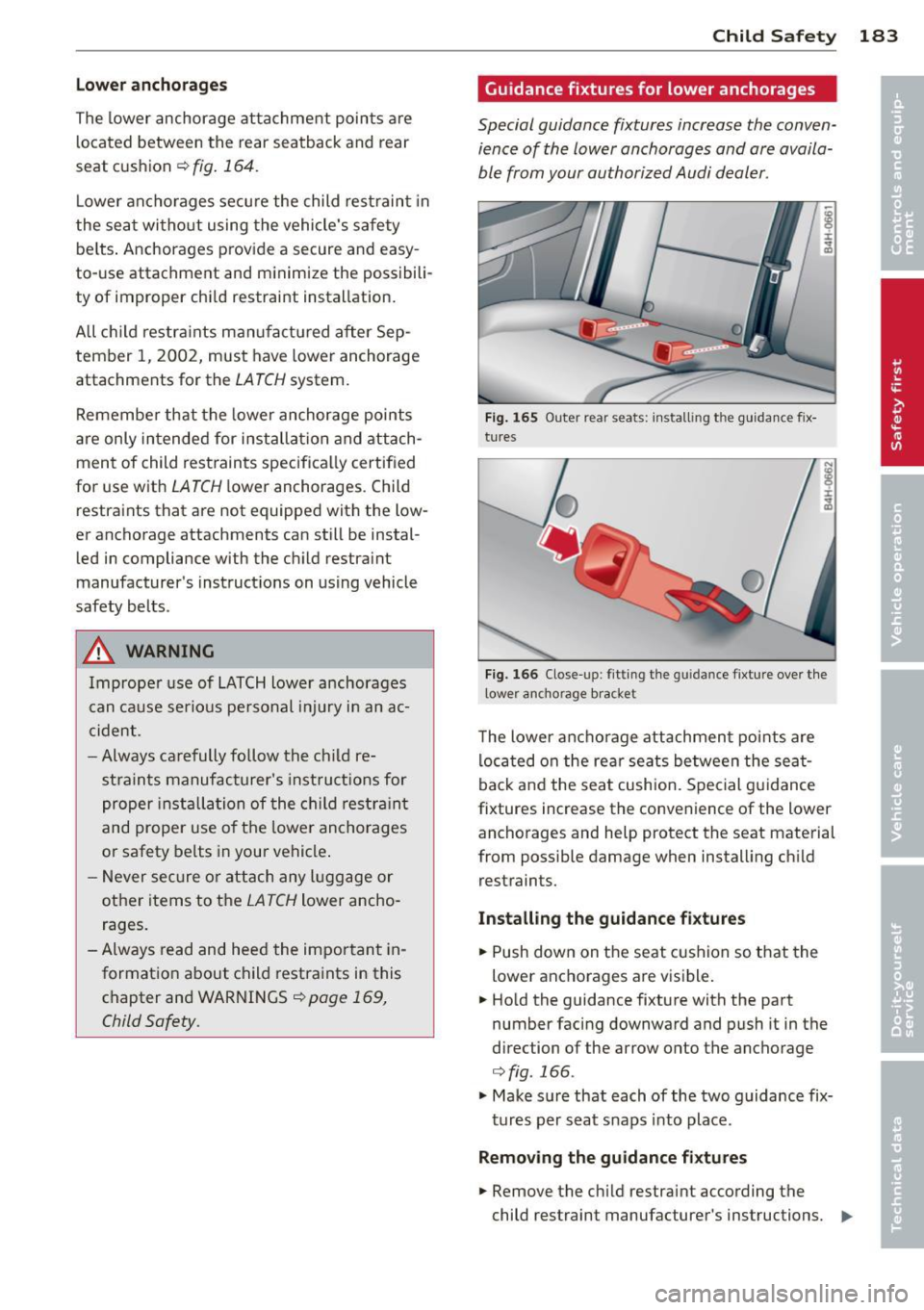
Fig . 1 65 Outer r ear seats : inst alling the gu idanc e fix
t u res
8 ± ... a,
Fig . 1 66 Close-up: fitt ing t he g uida nce fixture over the
l ower ancho rage bracket
T he lower ancho rage attachment poi nts are
located on the rear seats between the seat
back and the seat cushion. Special guidance
fixtures increase the convenience of the lower
anchorages and help protect the seat material
from possible damage when install ing ch ild
restraints.
Installing the guidanc e fixture s
.,. Push down on the seat cushion so that the
lower anchorages are visible .
.,. Ho ld the guidance fixture with the part
number facing downward and push it in the
direction of the arrow onto the anchorage
¢ fig . 166 .
.,. Make su re that each of the two guidance fix
tures per seat snaps into place .
Removing the gu idance fixtures
.,. Remove the ch ild restraint according the
child restraint manufacturer's instructions. .,..
Page 186 of 302

184 Child Safet y
• Push down on the seat cushion so that the
lower anchorages are visib le.
• Pull
off the guidance fixtures from the lower
anchorages.
• Always remove the guidance fixtures and
keep them in a safe place when not in use.
You may find it easier to install child re
straints equipped with hooks attached to
straps without the guidance fixtures in place.
If this is the case, remove the guidance fix
tures by pull ing them
off the anchorages .
H oweve r, the guidance fixtu res can he lp you
to locate the
LATCH ancho rages.
.&_ WARNING
Imprope r use of tether anchorages or low
er anchorages ca n cause serious persona l
injury in a crash .
- Always carefully fo llow the child re
straint manufacturer 's instructions for
proper insta llation and use of child re
straint systems .
- Never use the
LATCH or tethe r anchorag
es to attach safety belts or other kinds of
occupant restraints.
- Child restraint tether attachments and
lower attachments are only des igned to
secure a child restraint t hat has been
equipped to use these anchorages.
- Tether anchorages and lower anchorages
are designed to withstand only those
loads imposed by correctly fitted ch ild
restraints. Under no circumsta nces can
they be used safely for adu lt or chi ld
safety belts o r harnesses.
- Never mou nt more than one ch ild re
stra in t to a sing le tether or to a low er an
c ho rage poin t. Attac hing two chi ld re
st rain ts to a sing le anchor age poi nt can
cause the anchorage to fail and cause se
rious persona l injury in a crash .
0 Note
- Remove the guidan ce fixt ures before
fo ld ing t he rear sea tba ck t o preven t
dam aging the seat c ushion . -
To attach the ch ild restraint sec urely, the
seat must be moved to the farthest rear
posit ion, the seat height set to the low
est position and t he head restraint must
be adjusted to the vertical position
¢page 57.
-If you leave the guidance f ixtures instal
led for several days , they could leave a
mark on the upholstery on the seat cush
ion and back rest in the area that the
guidance fixtures were installed . T he up
holste ry wou ld al so be pe rmanen tly
stretched aro und the gui dance fix tures.
Th is ap plies especia lly to lea ther seats .
Installing a child restraint with LATCH
lower anchorages
Whenever you install a child restraint always
follow the child restraint manufacturer's in
structions.
F ig. 167 Lowe r a nchorages: proper mount ing
Mounting
• Make sure the seatback of the rear seat
bench is in the upright posit ion and securely
latched in place .
• Attach bo th hook-on connectors with the
spring catch release on the child safety seat
on to the LATCH lower anchorage so that the
connecto rs lock into place
¢ fig. 167.
•Pullon the connector attachments to make
sure they are proper ly attached to the LATCH
lower anchorage .
• Pull straps tight following the child restraint
manufacturer's instruct io ns. .,,.