2009 Seat Ibiza SC ignition
[x] Cancel search: ignitionPage 207 of 257

If and when205
Safety First
Controls and equipment
Practical tips
Technical Data
Tyre repair
The following sections describe the procedures for repairing
a tyre.Using the sealing compound
– The instructions on the container give detailed information on
how to use the sealing compound.
Inflating the tyre.
– Remove the air compressor and hose from the container.
– Screw the retaining nut onto the valve.
– Plug the compressor cable into a 12 volt power point.
– Turn on compressor and monitor the pressure shown on the pres- sure gauge.
Completing the repair
– Remove the compressor hose from the valve.
– Fit the valve cap.
– Unplug the compressor from the socket.
– Return all tools to their proper storing location.
NoteThe compressor should never be allowed to run for longer than 6 minutes.
FusesChanging a fuse
Blown fuses must be replacedFuse cover
– Switch off the ignition and its failed electrical component.
– Identify the fuse corresponding to the damaged electric consumer ⇒page 206.
– Take the plastic clip from inside the fuse cover, fit it onto the blown fuse and pull the fuse out.
– Replace the blown fuse (which will have a melted metal strip) with a new fuse of the same ampere rating.
Fig. 129 Fuses in the
dash panel
IbizaSC_EN.book Seite 205 Mittwoch, 16. September 2009 12:11 12
Page 221 of 257

If and when219
Safety First
Controls and equipment
Practical tips
Technical Data
Jump leads
Jump leads must comply with the standard
DIN 72553 (see manufacturer's
documentation). The wire cross section must be at least 25 mm
2 for petrol
engines and at least 35 mm
2 for diesel engines.
Note
•The vehicles must not touch each other, otherwise electricity could flow as
soon as the positive terminals are connected.•The discharged battery must be properly connected to the vehicle elec-
trical system.How to jump start: description⇒ fig. 151 shows a flat battery and a charged battery. Jump lead terminal connections
– Switch off the ignition in both vehicles
⇒.
1. Connect one end of the red jump lead to the positive ⇒fig. 151
terminal of the vehicle with the flat battery ⇒.
2. Connect the other end of the red jump lead to the positive terminal in the vehicle providing assistance.
3. Connect one end of the black jump lead to the negative terminal on the battery of the vehicle providing assistance.
4. Connect the other end of the black jump lead to a solid metal component which is bolted on to the engine block, or onto the
engine block itself of the vehicle with the flat battery. Do not
connect it to a point near the battery ⇒.
5. Position the leads in such a way that they cannot come into contact with any moving parts in the engine compartment.
Starting
6. Start the engine of the vehicle with the boosting battery and let it run at idling speed.
7. Start the engine of the car with the flat battery and wait one or two minutes until the engine is “running”.
Removing the jump leads
8. Before you remove the jump leads, switch off the headlights (if they are switched on).
9. Turn on the heater blower and rear window heater in the vehicle with the flat battery. This helps minimise voltage peaks which are
generated when the leads are disconnected.
Fig. 151 How to connect
the jump leads
AA
AB
A+
A+
A-
AX
IbizaSC_EN.book Seite 219 Mittwoch, 16. September 2009 12:11 12
Page 223 of 257

If and when221
Safety First
Controls and equipment
Practical tips
Technical Data
Towing and tow-startingTo w - s t a r t i n g *
The use of jump leads is pr eferable to tow-starting.We recommend that you do not tow-start your vehicle. Jump-starting
is preferable ⇒page 218.
However, if your vehicle has to be tow-started:
– Engage the 2
nd or the 3
rd gear.
– Keep the clutch pressed down.
– Switch the ignition on.
– Once both vehicles are moving, release the clutch.
– As soon as the engine starts, press the clutch and move the gear lever into neutral. This helps to prevent driving into the towing
vehicle.
WARNING
The risk of accidents is high when tow-starting. The vehicle being towed
can easily collide with the towing vehicle.
Caution
When tow-starting, fuel could enter the catalytic converter and damage it.
CommentsPlease observe the following po ints if you use a tow-rope:
Notes for the driver of the towing vehicle
– Drive slowly at first until the tow-rope is taut. Then accelerate gradually.
– Begin and change gears cautiously. If you are driving an auto- matic vehicle, accelerate gently.
– Remember that the brake servo and power steering are not working in the vehicle you are towing. Brake earlier than you
would normally, but with a more gentle pressure on the brake.
Notes for the driver of the towed vehicle
– Ensure that the tow-rope remains taut at all times when towing.Tow-rope or tow-bar
It is easier and safer to tow a vehicle with a tow-bar. You should only use a
tow-rope if you do not have a tow-bar.
A tow-rope should be slightly elastic to reduce the loading on both vehicles.
It is advisable to use a tow-rope made of synthetic fibre or similarly elastic
material.
Attach the tow-rope or the tow-bar only to the towing eyes provided or a
towing bracket.
Driving style
Towing requires some experience, especially when using a tow-rope. Both
drivers should be familiar with the technique required for towing. Inexperi-
enced drivers should not attempt to tow-start or tow away another vehicle.
IbizaSC_EN.book Seite 221 Mittwoch, 16. September 2009 12:11 12
Page 224 of 257
If and when
222Do not pull too hard with the towing vehicle and take care to avoid jerking the
tow-rope. When towing on an unpaved road, there is always a risk of over-
loading and damaging the anchorage points.
The ignition of the vehicle being towed must be switched on to prevent the
steering wheel from locking and also to allow the use of the turn signals,
horn, windscreen wipers and washers.
As the brake servo does not work if the engine is not running, you must apply
considerably more pressure to the brake pedal than you normally would.
As the power assisted steering does not work if the engine is not running, you
will need more strength to steer than you normally would.
Towing vehicles with an automatic gearbox•Put the selector lever into position “N”.•Do not drive faster than 50 km/h when towing a vehicle.•Do not tow further than 50 km.•If a breakdown vehicle is used, the vehicle must be towed with the front
wheels raised.Note
•Observe legal requirements when towing or tow-starting.•Switch on the hazard warning lights of both vehicles. However, observe
any regulations to the contrary.•For technical reasons, vehicles with an automatic gearbox must not be
tow-started.•If damage to your vehicle means that there is no lubricant in the gearbox,
you must raise the drive wheels while the vehicle is being towed.•If the vehicle has to be towed more than 50 km, the front wheels must be
raised during towing, and towing should be carried out by a qualified person.•The steering wheel is locked when the vehicle has no electrical power. The
vehicle must then be towed with the front wheels raised. Towing should be
carried out by a qualified person.
•The towing eye should always be kept in the vehicle.Trailer eyesFitting the towing eye
– Take the towing ring from the onboard tool set.
– Remove the front cover by pressing down on its left-hand side. For FR finishes, press down and pu ll outwards. For the rest of the
Sport finishes, remove the cover by inserting a screwdriver into
the lower slot and levering gently.
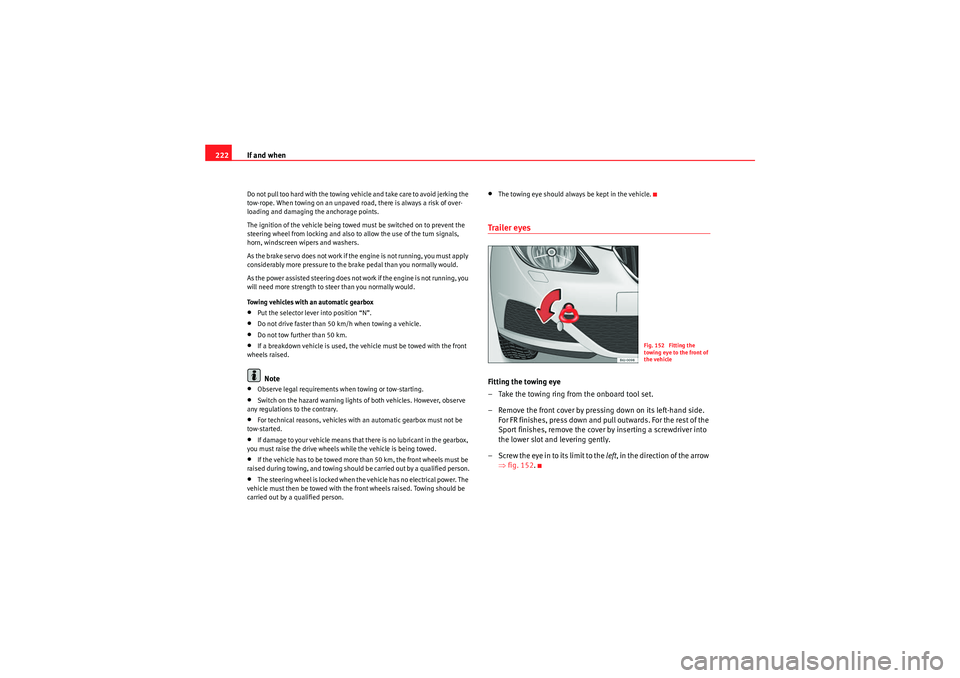
– Screw the eye in to its limit to the left, in the direction of the arrow
⇒ fig. 152 .
Fig. 152 Fitting the
towing eye to the front of
the vehicle
IbizaSC_EN.book Seite 222 Mittwoch, 16. September 2009 12:11 12
Page 252 of 257

Index
250Front ashtray . . . . . . . . . . . . . . . . . . . . . . . . . . . 110
Front cup holder* . . . . . . . . . . . . . . . . . . . . . . . 109
Front interior light . . . . . . . . . . . . . . . . . . . . . . . . 92
Front passenger airbag deactivation . . . . . . . . . 36
Front reading light . . . . . . . . . . . . . . . . . . . . . . . . 93
Front seat adjustment
Lumbar support . . . . . . . . . . . . . . . . . . . . . . 103
Frontal airbags Operation . . . . . . . . . . . . . . . . . . . . . . . . . . . . 29
safety notes . . . . . . . . . . . . . . . . . . . . . . . . . . 30
Fuel Diesel . . . . . . . . . . . . . . . . . . . . . . . . . . . . . . 175
Petrol . . . . . . . . . . . . . . . . . . . . . . . . . . . . . . 174
Fuel level Indicator . . . . . . . . . . . . . . . . . . . . . . . . . . . . . 50
Fuel reserve . . . . . . . . . . . . . . . . . . . . . . . . . . . . . 62
Fuel Tank Opening the fuel tank flap . . . . . . . . . . . . . 173
Fuel tank See Fuel reserve . . . . . . . . . . . . . . . . . . . . . . 62
Fuel: Save . . . . . . . . . . . . . . . . . . . . . . . . . . . . . 154
Fuses . . . . . . . . . . . . . . . . . . . . . . . . . . . . . . . . . 205GG 12 . . . . . . . . . . . . . . . . . . . . . . . . . . . . . . . . . . 183
Gear shift pattern . . . . . . . . . . . . . . . . . . . . . . . 131
General overview of the engine compartment 230
Glove compartment . . . . . . . . . . . . . . . . . . . . . . 106
Glow plug system . . . . . . . . . . . . . . . . . . . . . . . 130 warning lamp . . . . . . . . . . . . . . . . . . . . . . . . . 58 GRA . . . . . . . . . . . . . . . . . . . . . . . . . . . . . . . . . . . 143
HHandbrake . . . . . . . . . . . . . . . . . . . . . . . . . . . . . 139
Warning lamp . . . . . . . . . . . . . . . . . . . . 61, 140
Hazard warning lights . . . . . . . . . . . . . . . . . . . . . 90
head restraints Adjusting . . . . . . . . . . . . . . . . . . . . . . . 101, 102
adjustment of the head restraint angle . . . 102
Removing . . . . . . . . . . . . . . . . . . . . . . . . . . . 102
Headlight flashers . . . . . . . . . . . . . . . . . . . . . . . . 91
Headlight range control . . . . . . . . . . . . . . . . . . . 87
Headlights Driving abroad . . . . . . . . . . . . . . . . . . . . . . . 156
Fog lights . . . . . . . . . . . . . . . . . . . . . . . . . . . . 86
Washer system . . . . . . . . . . . . . . . . . . . . . . . 97
Heated front seats . . . . . . . . . . . . . . . . . . . . . . . 104
Heated wing mirrors* . . . . . . . . . . . . . . . . . . . . . 98
Heating . . . . . . . . . . . . . . . . . . . . . . . . . . . . . . . 115
Heating system . . . . . . . . . . . . . . . . . . . . . . . . . 116
High pressure cleaners . . . . . . . . . . . . . . . . . . . 161
Hill-start assist . . . . . . . . . . . . . . . . . . . . . . . . . 141
Horn . . . . . . . . . . . . . . . . . . . . . . . . . . . . . . . . . . . 47
How to jump start description . . . . . . . . . . . . . 219IIdentification number . . . . . . . . . . . . . . . . . . . . 226
Ignition key . . . . . . . . . . . . . . . . . . . . . . . . . . . . 128
Ignition lock . . . . . . . . . . . . . . . . . . . . . . . . . . . . 128 Indicators . . . . . . . . . . . . . . . . . . . . . . . . . . . . . . . 91
indication lamp . . . . . . . . . . . . . . . . . . . . . . . 64
Warning lamp . . . . . . . . . . . . . . . . . . . . . . . . 91
Instrument and switch lighting . . . . . . . . . . . . . 87
Instrument lighting . . . . . . . . . . . . . . . . . . . . . . . 47
Instrument panel . . . . . . . . . . . . . . . . . . . . . . . . . 47
Instruments . . . . . . . . . . . . . . . . . . . . . . . . . . . . . 49
Interior monitor and anti-towing alarm* Activation . . . . . . . . . . . . . . . . . . . . . . . . . . . . 78
Intermittent wipe, windscreen . . . . . . . . . . . . . . 94
ISOFIX system . . . . . . . . . . . . . . . . . . . . . . . . . . . 43
JJump leads . . . . . . . . . . . . . . . . . . . . . . . . . . . . . 218
Jump-starting . . . . . . . . . . . . . . . . . . . . . . . . . . . 218KKeys . . . . . . . . . . . . . . . . . . . . . . . . . . . . . . . . . . . 74LLeather cleaning . . . . . . . . . . . . . . . . . . . . . . . . 166
Lights . . . . . . . . . . . . . . . . . . . . . . . . . . . . . . . . . . 86
Load compartment in the boot See Luggage compartment . . . . . . . . . . . . . 15
Locks . . . . . . . . . . . . . . . . . . . . . . . . . . . . . . . . . 163
Luggage compartment . . . . . . . . . . . . . . . . . . . . 15 See also Luggage compartment . . . . . . . . . 15
IbizaSC_EN.book Seite 250 Mittwoch, 16. September 2009 12:11 12