Page 44 of 388
44 1-3. Adjustable components (seats, mirrors, steering wheel)
CAUTION
■Seat adjustment
●Do not recline the seat more than necessary when the vehicle is in motion
to reduce the risk of sliding under the lap belt. If the seat is too reclined,
the lap belt may slide past the hips and apply restraint forces directly to the
abdomen or your neck may contact the shoulder belt, increasing the risk of
death or serious injury in the event of an accident.
● After adjusting the seat, make sure that the seat is locked in position.
■ After returning the seatback to the upright position
Observe the following precautions. Failure to do so may result in death or
serious injury.
● Make sure that the seatback is securely locked in position by lightly rock-
ing it back and forth.
● Check that the seat belts and buckles are not twisted or caught under the
seat.
● Arrange the seat belts in the proper positions for ready use.
NOTICE
■Stowing the seat belts
The seat belts and the buckles must be stowed before you fold down the
rear seat backs.
■ When returning the seatback to the upright position
Do not pull the pocket that stores the seat belt comfort guide.
Page 45 of 388
45
1
1-3. Adjustable components (seats, mirrors, steering wheel)
Before driving
Head restraints
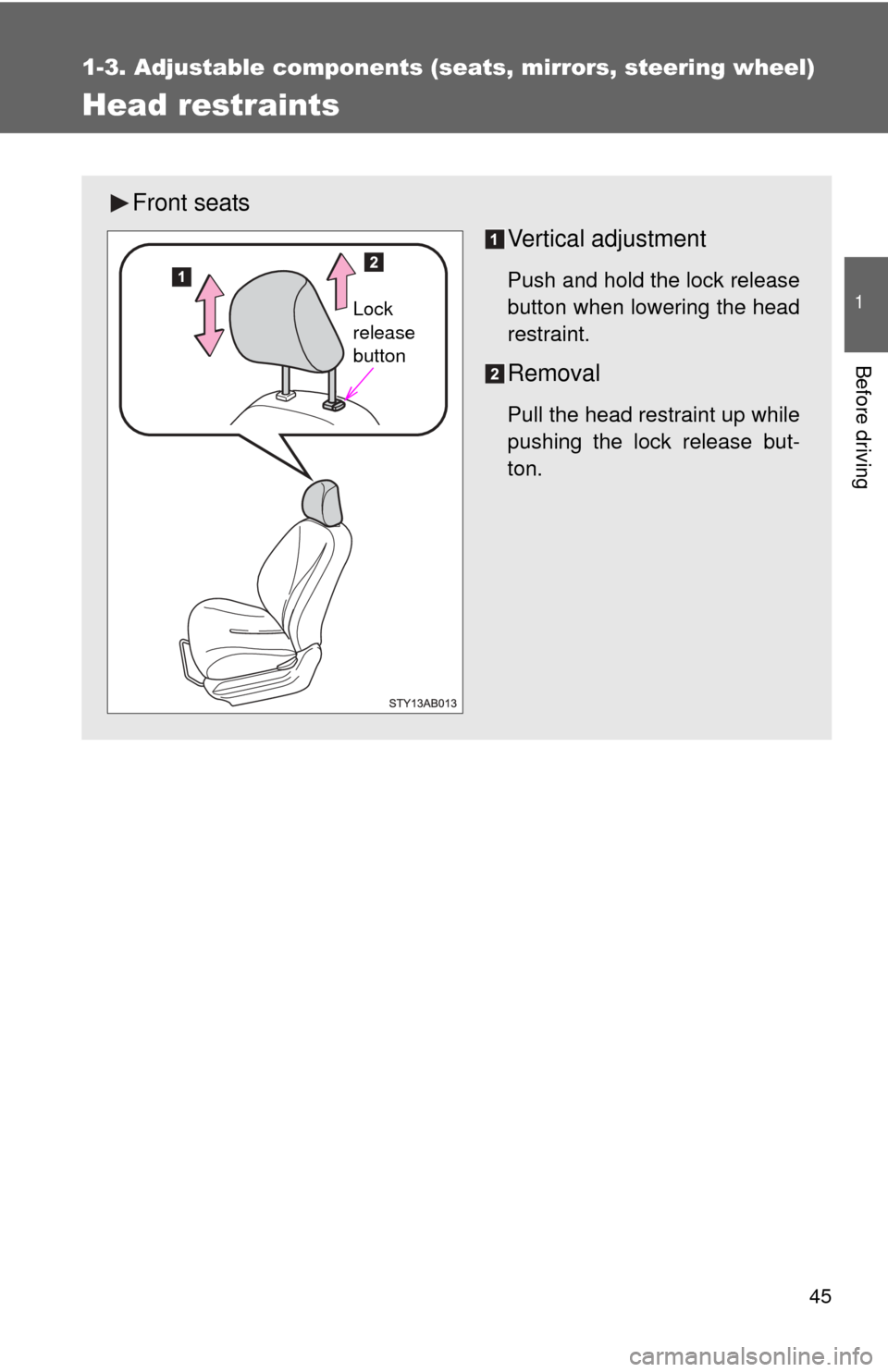
Front seatsVertical adjustment
Push and hold the lock release
button when lowering the head
restraint.
Removal
Pull the head restraint up while
pushing the lock release but-
ton.
Lock
release
button
Page 46 of 388
46 1-3. Adjustable components (seats, mirrors, steering wheel)
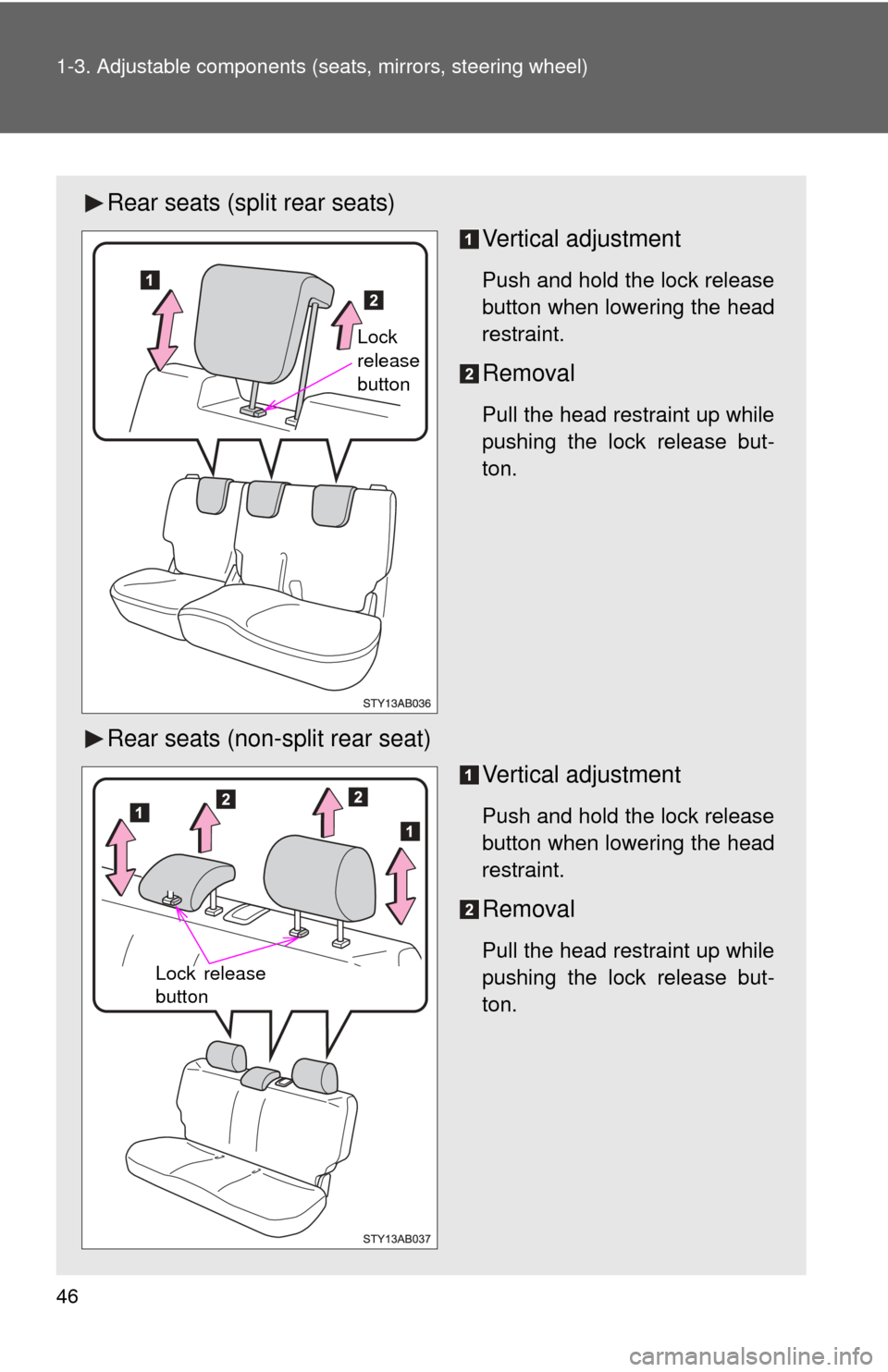
Rear seats (split rear seats)
Vertical adjustment
Push and hold the lock release
button when lowering the head
restraint.
Removal
Pull the head restraint up while
pushing the lock release but-
ton.
Rear seats (non-split rear seat)
Vertical adjustment
Push and hold the lock release
button when lowering the head
restraint.
Removal
Pull the head restraint up while
pushing the lock release but-
ton.
Lock
release
button
Lock release
button
Page 48 of 388
48
1-3. Adjustable components (seats, mirrors, steering wheel)
Seat belts
Make sure that all occupants are wearing their seat belts before driv-
ing the vehicle.
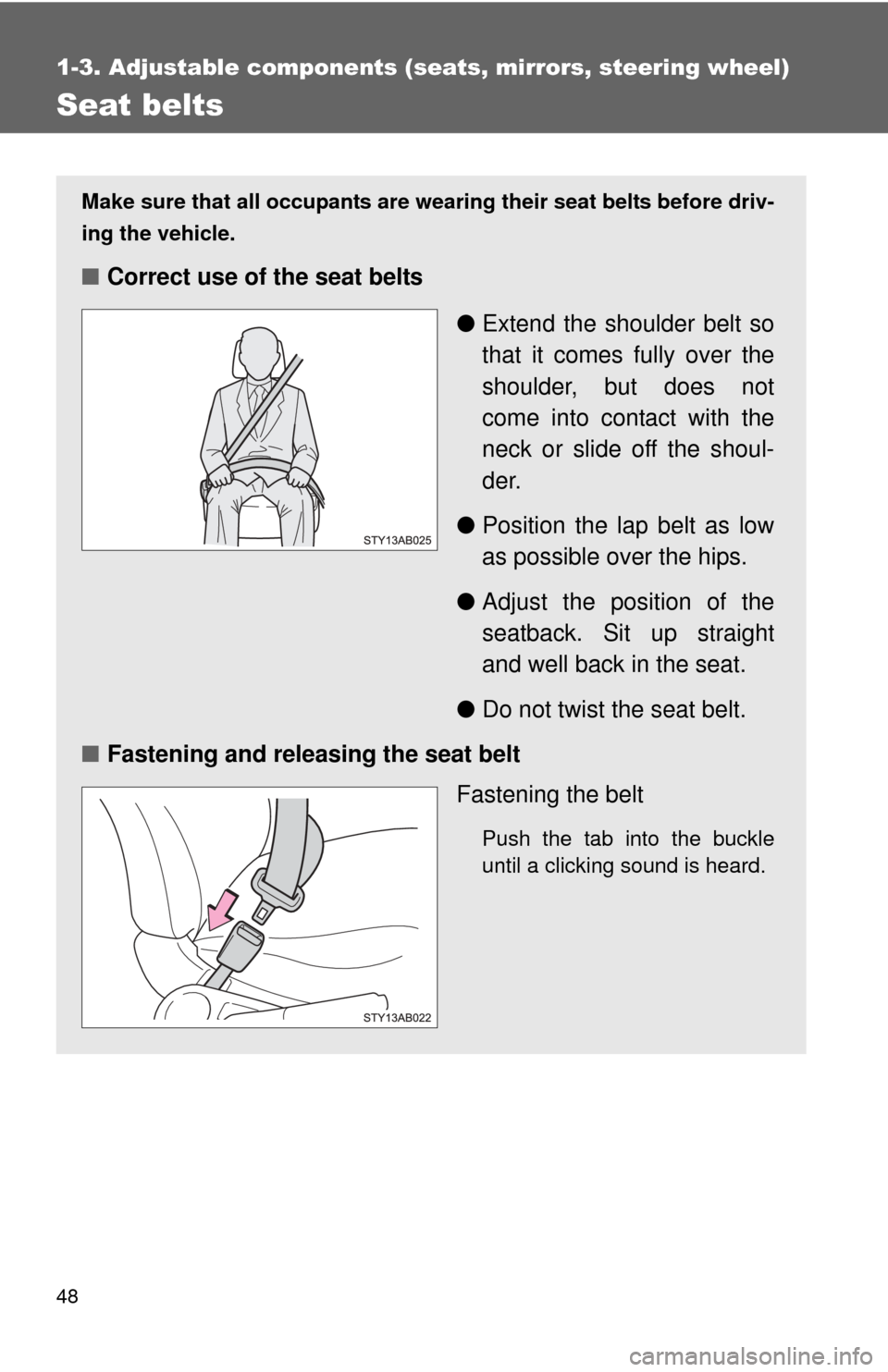
■Correct use of the seat belts
●Extend the shoulder belt so
that it comes fully over the
shoulder, but does not
come into contact with the
neck or slide off the shoul-
der.
● Position the lap belt as low
as possible over the hips.
● Adjust the position of the
seatback. Sit up straight
and well back in the seat.
● Do not twist the seat belt.
■ Fastening and releasing the seat belt
Fastening the belt
Push the tab into the buckle
until a clicking sound is heard.
Page 50 of 388
50 1-3. Adjustable components (seats, mirrors, steering wheel)
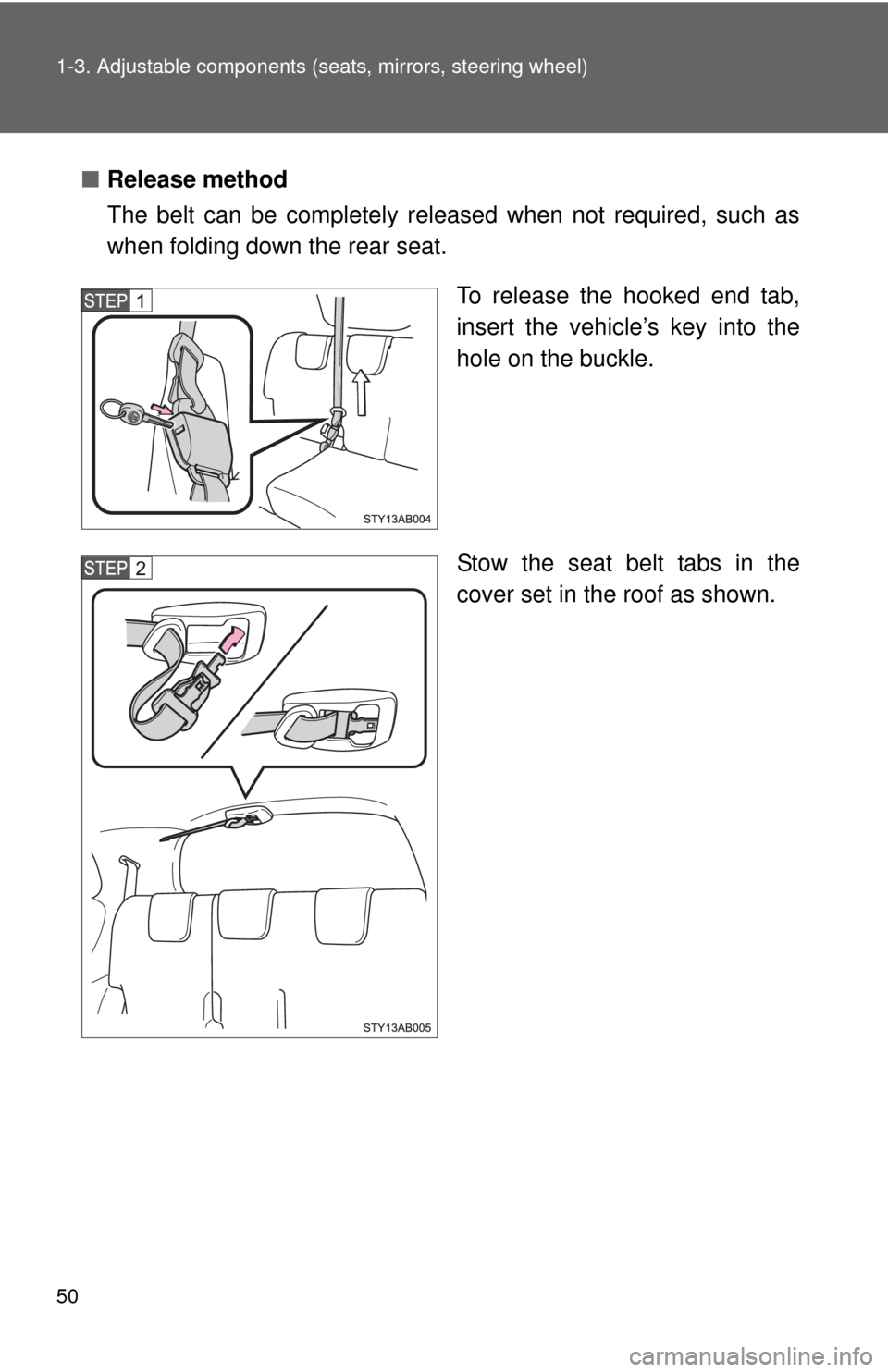
■Release method
The belt can be completely released when not required, such as
when folding down the rear seat.
To release the hooked end tab,
insert the vehicle’s key into the
hole on the buckle.
Stow the seat belt tabs in the
cover set in the roof as shown.
Page 51 of 388
51
1-3. Adjustable components (s
eats, mirrors, steering wheel)
1
Before driving
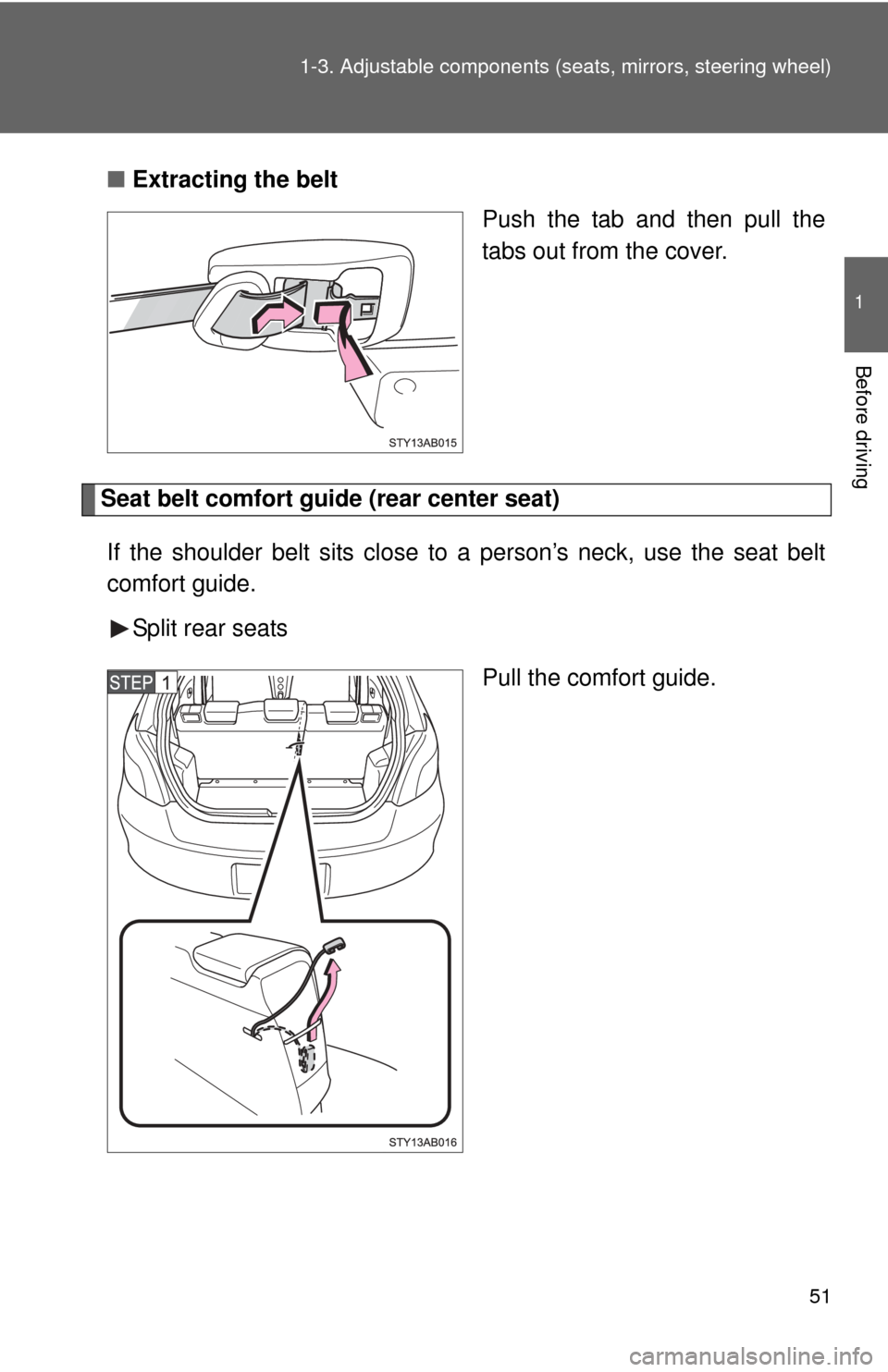
■Extracting the belt
Push the tab and then pull the
tabs out from the cover.
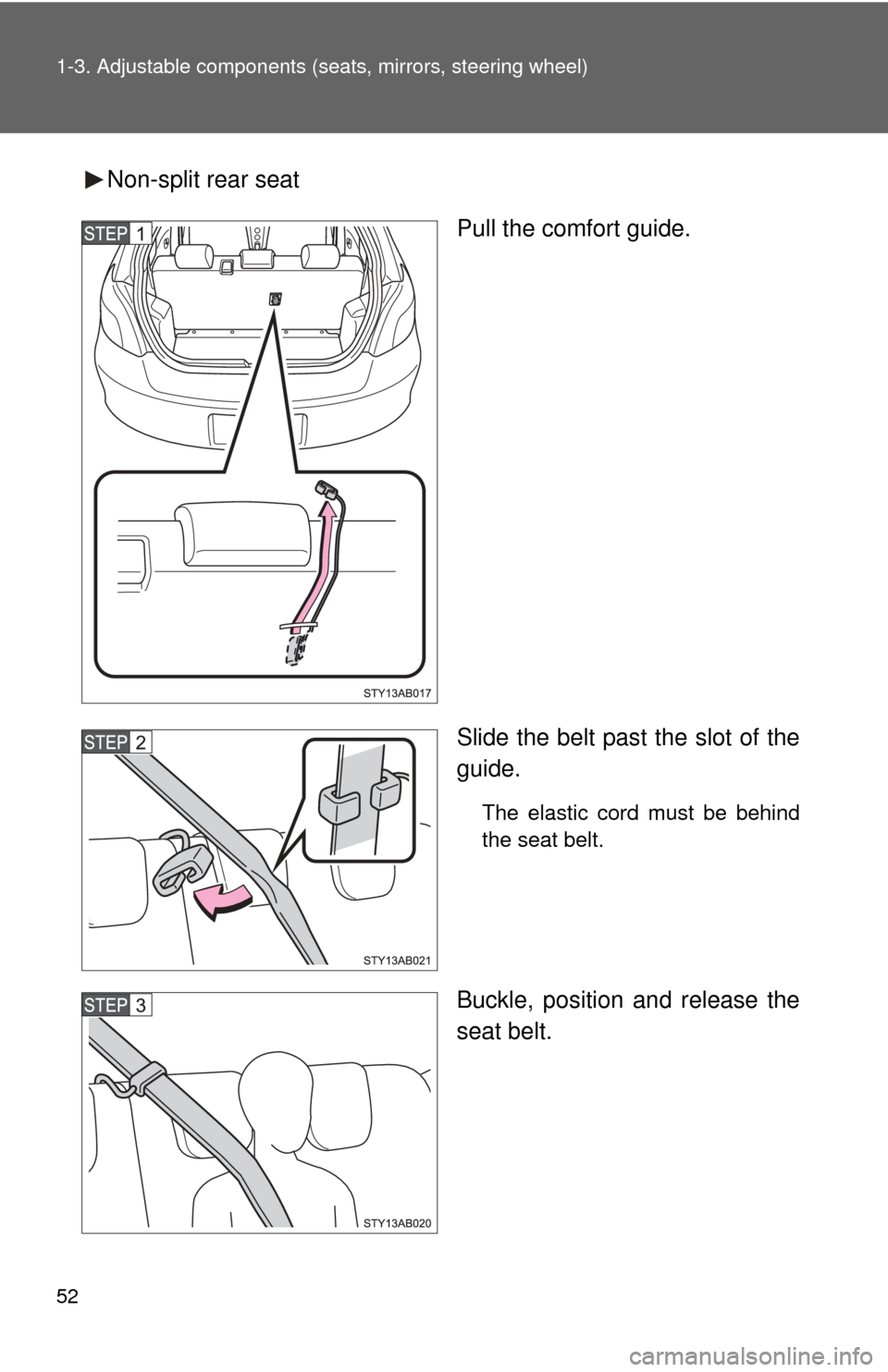
Seat belt comfort guide (rear center seat)
If the shoulder belt sits close to a person’s neck, use the seat belt
comfort guide.
Split rear seats
Pull the comfort guide.
Page 52 of 388
52 1-3. Adjustable components (seats, mirrors, steering wheel)
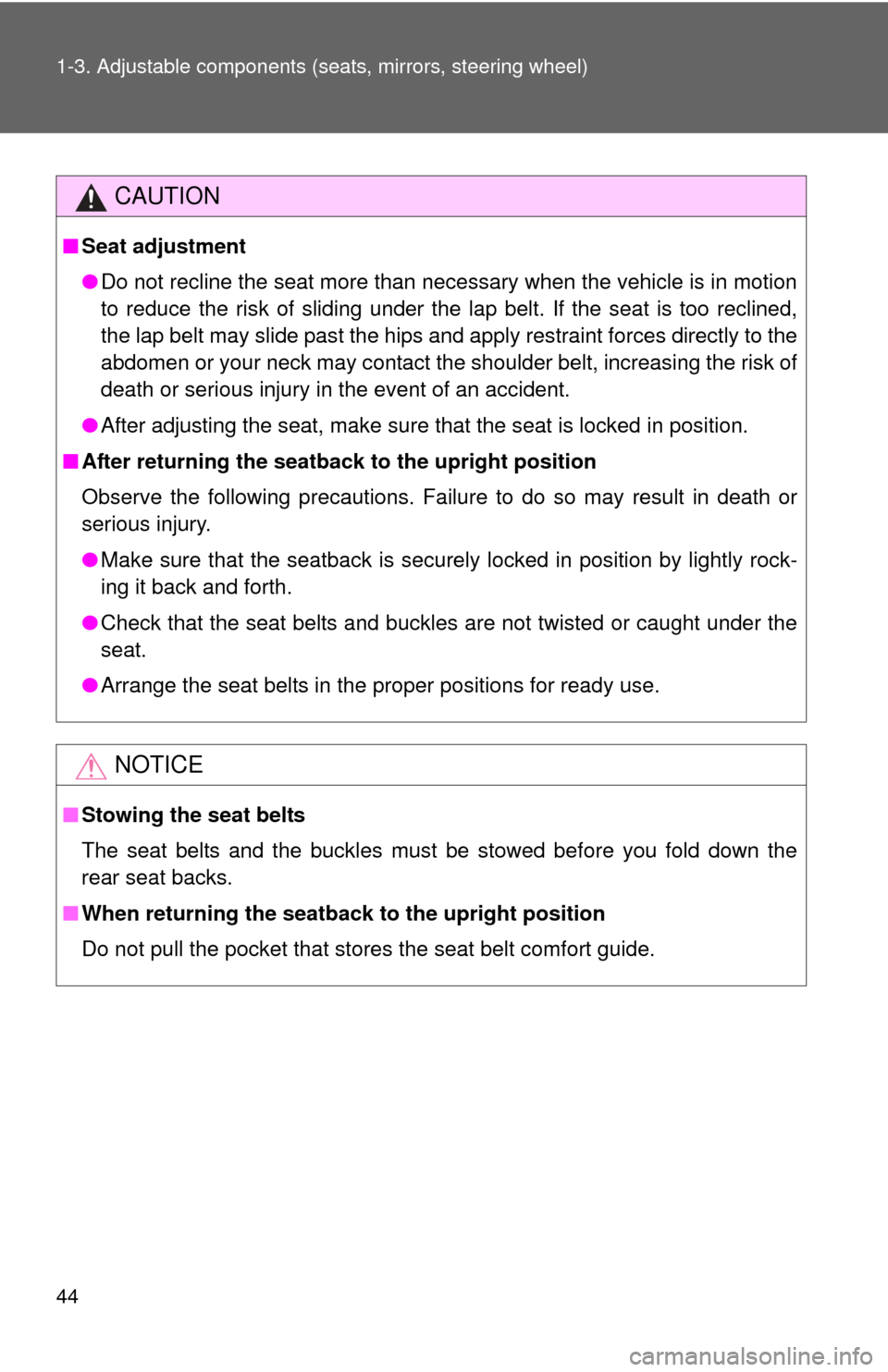
Non-split rear seat
Pull the comfort guide.
Slide the belt past the slot of the
guide.
The elastic cord must be behind
the seat belt.
Buckle, position and release the
seat belt.
Page 53 of 388
53
1-3. Adjustable components (s
eats, mirrors, steering wheel)
1
Before driving
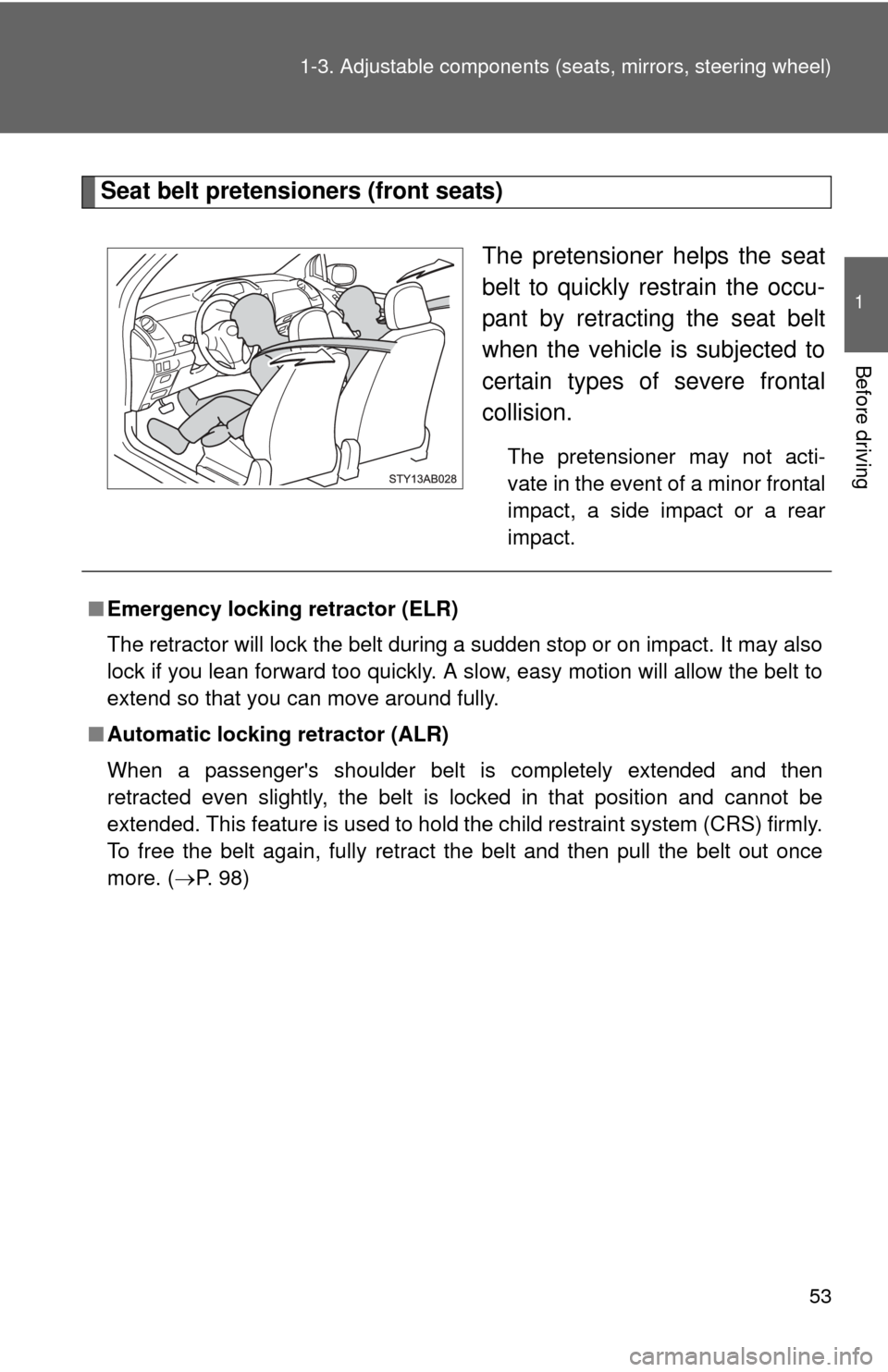
Seat belt pretensioners (front seats)
The pretensioner helps the seat
belt to quickly restrain the occu-
pant by retracting the seat belt
when the vehicle is subjected to
certain types of severe frontal
collision.
The pretensioner may not acti-
vate in the event of a minor frontal
impact, a side impact or a rear
impact.
■Emergency locking retractor (ELR)
The retractor will lock the belt during a sudden stop or on impact. It may also
lock if you lean forward too quickly. A slow, easy motion will allow the belt to
extend so that you can move around fully.
■ Automatic locking retractor (ALR)
When a passenger's shoulder belt is completely extended and then
retracted even slightly, the belt is locked in that position and cannot be
extended. This feature is used to hold the child restraint system (CRS) firmly.
To free the belt again, fully retract the belt and then pull the belt out once
more. ( P. 98)