Page 194 of 303

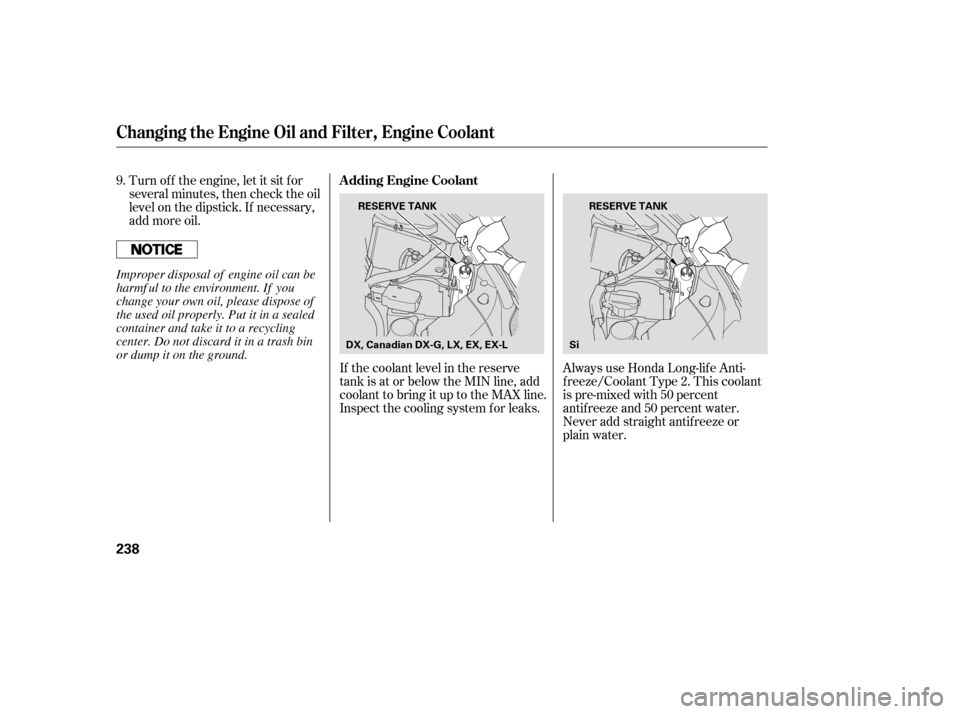
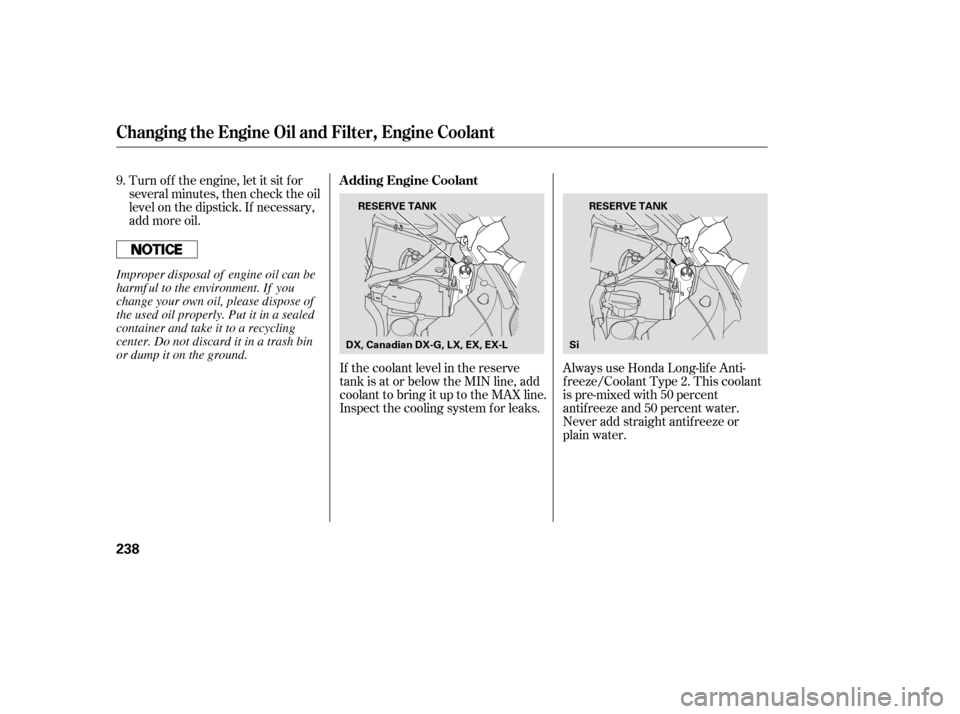
Do this if pushing on the brake pedal
and pressing the release button does
not shif t the transmission out of
Park:Set the parking brake.
Remove the key from the ignition
switch.
Put a cloth on the edge of the shif t
lock release slot cover. Using a
small f lat-tipped screwdriver or a metal f ingernail f ile, caref ully pry
on the edge of the cover to remove
it.
Insert the key in the shift lock
release slot.
If you need to use the shif t lock
release, it means your vehicle is
developing a problem. Have it
checked by your dealer.Remove the key from the shift
lock release slot, then install the
cover. Make sure the notch on the
cover is on the rear.
Return the key to the ignition
switch, press the brake pedal, and
restart the engine.
Push down on the key while you
pressthereleasebuttononthe
f ront of the shif t lever and move
the shift lever out of Park to
neutral.
1. 2. 3.
4. 5.6.
Automatic Transmission
Shif t L ock Release
Driving
211
COVER
SHIFT LOCK RELEASE SLOTRELEASE BUTTON
�����—�����—�
�
�y�
���������
���y���
�(�+���������y�����
���y
Page 196 of 303

Your vehicle is equipped with f ront
disc brakes. The brakes on the rear
wheels may be disc or drum,
depending on the model. A power
assist helps reduce the ef f ort needed
on the brake pedal. The anti-lock
brake system (ABS) helps you retain
steering control when braking very
hard.The hydraulic system that operates
the brakes has two separate circuits.
Each circuit works diagonally across
the vehicle (the lef t-f ront brake is
connected with the right-rear brake,
etc.). If one circuit should develop a
problem, you will still have braking
at two wheels.
If the brake pads need replacing, you
will hear a distinctive, metallic
screeching sound when you apply
the brake pedal. If you do not have
the brake pads replaced, they will
screech all the time. It is normal f or
the brakes to occasionally squeal or
squeak when you apply them.
Check the brakes after driving
through deep water. Apply the
brakes moderately to see if they f eel
normal. If not, apply them gently and
f requently until they do. Be extra
cautious in your driving.
Constant application of the brakes
when going down a long hill builds
up heat and reduces their ef f ective-
ness. Use the engine to assist the
brakes by taking your f oot of f the
accelerator and downshif ting to a
lower gear.
On vehicles with vehicle stability
assist (VSA) system, the emergency
brake assist system increases the
stopping f orce when you depress the
brake pedal hard in an emergency
situation.
Resting your f oot on the pedal keeps
the brakes applied lightly, builds up
heat, and reduces their ef f ectiveness
and reduces brake pad life. In
addition, f uel economy can be
reduced. It also keeps your brake
lights on all the time, conf using
drivers behind you.
Braking System
Braking System Design
Brake Pad Wear Indicators
Driving
213
�����—�����—�
�
�y�
�������������y���
�(�+���������y�����
���y
Page 201 of 303

When the low tire pressure indicator
is on, one or more of your tires is
signif icantly underinf lated. You
should stop and check your tires as
soon as possible, and inf late them to
the proper pressure as indicated on
the vehicle’s tire inf ormation placard.
If you think you can saf ely drive a
short distance to a service station,
proceed slowly, and inf late the tire to
the recommended pressure shown
on the driver’s doorjamb.
If the tire is f lat, or if the tire
pressure is too low to continue
driving, replace the tire with the
compact spare tire (see page ).
If you cannot make the low tire
pressure indicator go out af ter
inf lating the tires to the specif ied
values, have your dealer check the
system as soon as possible.Driving on a signif icantly under-
inf lated tire causes the tire to
overheat and can lead to tire failure.
Under-inf lation also reduces f uel
efficiency and tire tread life, and may
af f ect the vehicle’s handling and
stopping ability.
Becausetirepressurevariesby
temperature and other conditions,
the low tire pressure indicator may
come on unexpectedly.
Your vehicle is equipped with a tire
pressure monitoring system (TPMS)
that turns on every time you start the
engine and monitors the pressure in
your tires while driving.
Each tire has its own pressure
sensor (not including the spare tire).
If the air pressure of a tire becomes
signif icantly low while driving, the
sensor in that tire immediately sends
a signal that causes the low tire
pressure indicator to come on.
271
U.S. models onlyLow Tire Pressure
Indicator
Tire Pressure Monitoring System (TPMS)
218
�����—�
���—�����y�
�������������y���
�(�+���������y���������y
Page 211 of 303
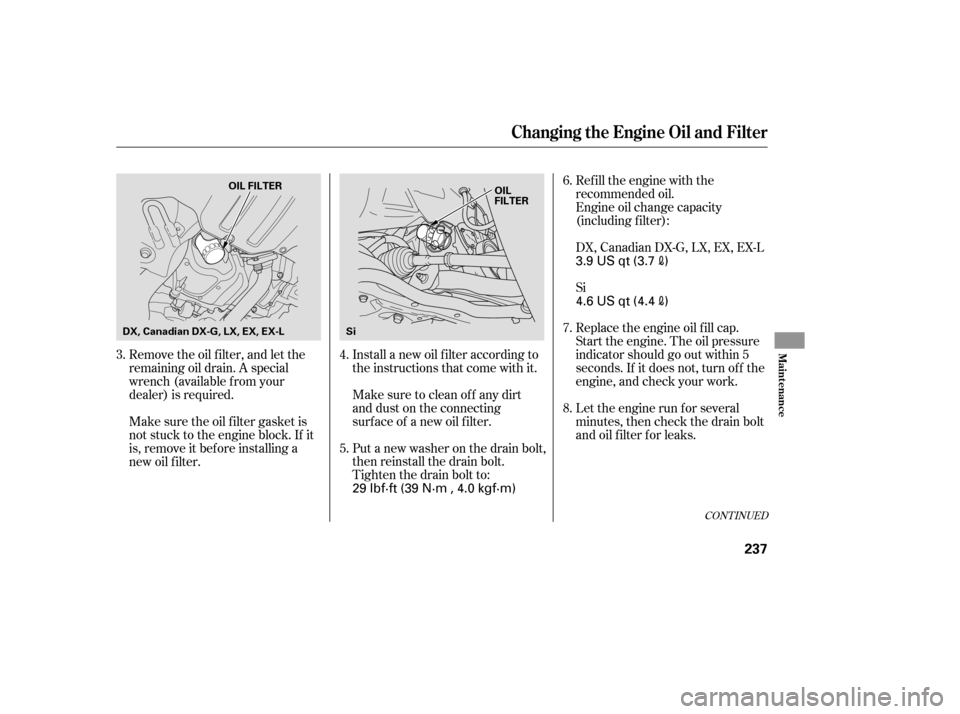
Remove the oil f ilter, and let the
remaining oil drain. A special
wrench (available from your
dealer) is required.Refill the engine with the
recommended oil.
Engine oil change capacity
(including f ilter):
Replace the engine oil f ill cap.
Start the engine. The oil pressure
indicator should go out within 5
seconds. If it does not, turn of f the
engine, and check your work.
Let the engine run f or several
minutes, then check the drain bolt
and oil f ilter f or leaks.
Install a new oil f ilter according to
the instructions that come with it.
Make sure to clean of f any dirt
and dust on the connecting
surf ace of a new oil f ilter.
Put a new washer on the drain bolt,
then reinstall the drain bolt.
Tighten the drain bolt to:
Make sure the oil f ilter gasket is
not stuck to the engine block. If it
is, remove it bef ore installing a
new oil f ilter.
5. 6. 7. 8.
3.
4. Si
DX, Canadian DX-G, LX, EX, EX-L
CONT INUED
Changing the Engine Oil and Filter
Maint enance
237
OIL FILTER
Si
DX, Canadian DX-G, LX, EX, EX-L OIL
FILTER
3.9 US qt (3.7)
29 lbf·ft (39 N·m , 4.0 kgf·m) 4.6 US qt (4.4
)
�����—�����—�
�
�y�
������
������y���
�(�+���������y���������y
Page 212 of 303
Always use Honda Long-lif e Anti-
f reeze/Coolant Type 2. This coolant
is pre-mixed with 50 percent
antif reeze and 50 percent water.
Never add straight antifreeze or
plain water.
If the coolant level in the reserve
tank is at or below the MIN line, add
coolant to bring it up to the MAX line.
Inspect the cooling system f or leaks.
Turn of f the engine, let it sit f or
several minutes, then check the oil
level on the dipstick. If necessary,
add more oil.
9.
A dding Engine Coolant
Changing the Engine Oil and Filter, Engine Coolant
238
DX, Canadian DX-G, LX, EX, EX-L SiRESERVE TANK RESERVE TANK
Improper disposal of engine oil can be
harmf ul to the environment. If you
change your own oil, please dispose of
the used oil properly. Put it in a sealed
container and take it to a recycling
center. Do not discard it in a trash bin
or dump it on the ground.
�����—�����—�
�
�y�
������
������y���
�(�+���������y���������y
Page 213 of 303
Always use Honda Long-lif e Anti-
f reeze/Coolant Type 2. This coolant
is pre-mixed with 50 percent
antif reeze and 50 percent water.
Never add straight antifreeze or
plain water.
If the coolant level in the reserve
tank is at or below the MIN line, add
coolant to bring it up to the MAX line.
Inspect the cooling system f or leaks.
Turn of f the engine, let it sit f or
several minutes, then check the oil
level on the dipstick. If necessary,
add more oil.
9.
A dding Engine Coolant
Changing the Engine Oil and Filter, Engine Coolant
238
DX, Canadian DX-G, LX, EX, EX-L SiRESERVE TANK RESERVE TANK
Improper disposal of engine oil can be
harmf ul to the environment. If you
change your own oil, please dispose of
the used oil properly. Put it in a sealed
container and take it to a recycling
center. Do not discard it in a trash bin
or dump it on the ground.
�����—�����—�
�
�y�
������
������y���
�(�+���������y���������y
Page 214 of 303
If Honda antif reeze/coolant is not
available, you may use another
major-brand non-silicate coolant as a
temporaryreplacement.Makesureit
is a high-quality coolant
recommended f or aluminum engines.
Continued use of any non-Honda
coolant can result in corrosion,
causing the cooling system to
malf unction or f ail. Have the cooling
system f lushed and ref illed with
Honda antif reeze/coolant as soon as
possible.
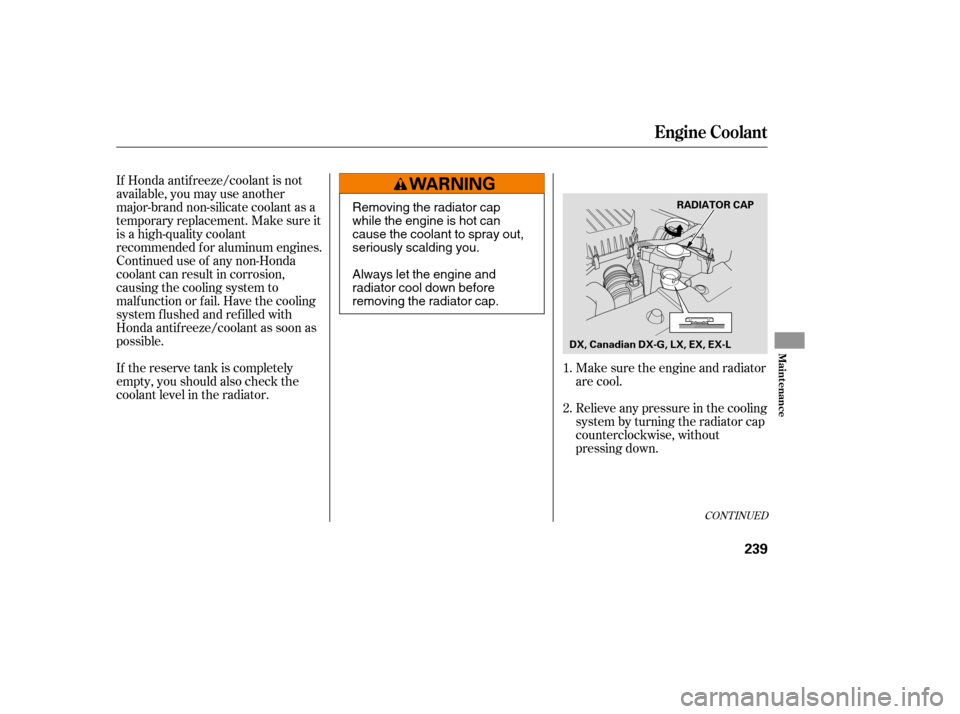
If the reserve tank is completely
empty, you should also check the
coolant level in the radiator.Make sure the engine and radiator
are cool.
Relieve any pressure in the cooling
system by turning the radiator cap
counterclockwise, without
pressing down.
1. 2.
CONT INUED
Engine Coolant
Maint enance
239
RADIATOR CAP
DX, Canadian DX-G, LX, EX, EX-LRemoving the radiator cap
while the engine is hot can
cause the coolant to spray out,
seriously scalding you.
Always let the engine and
radiator cool down before
removing the radiator cap.
�����—�����—�
�
�y�
������
������y���
�(�+���������y���������y
Page 216 of 303
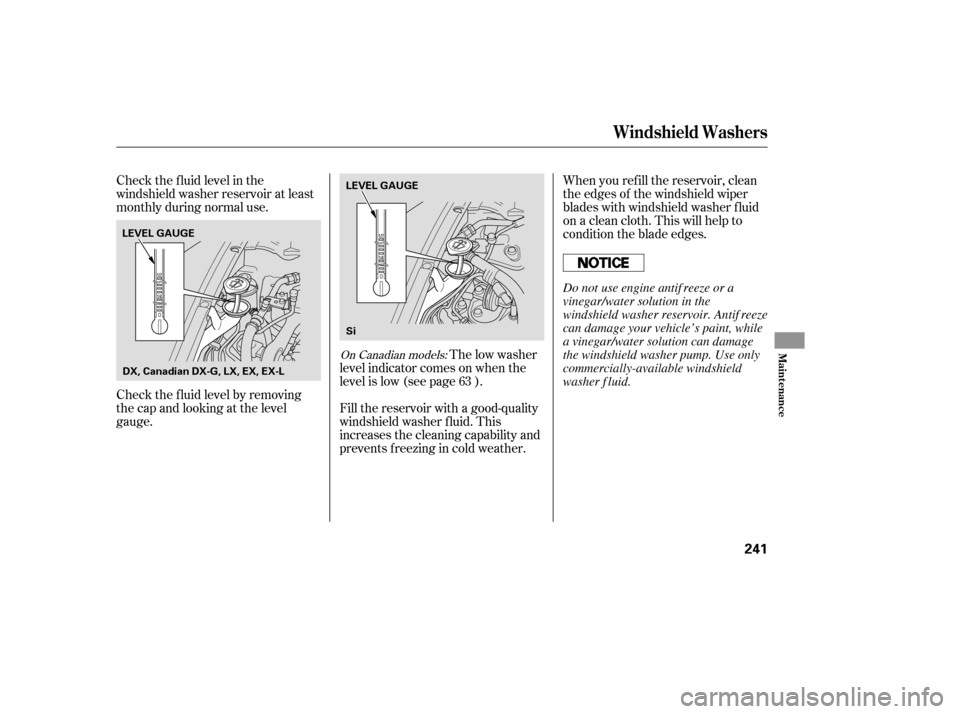
Check the f luid level in the
windshield washer reservoir at least
monthly during normal use.When you ref ill the reservoir, clean
the edges of the windshield wiper
blades with windshield washer f luid
on a clean cloth. This will help to
condition the blade edges.
Fill the reservoir with a good-quality
windshield washer f luid. This
increases the cleaning capability and
prevents f reezing in cold weather. The low washer
level indicator comes on when the
level is low (see page ).
Check the f luid level by removing
the cap and looking at the level
gauge. 63
On Canadian models:
Windshield Washers
Maint enance
241
LEVEL GAUGELEVEL GAUGE Si
DX, Canadian DX-G, LX, EX, EX-L
Do not use engine antif reeze or a
vinegar/water solution in the
windshield washer reservoir. Antif reeze
can damage your vehicle’s paint, while
a vinegar/water solution can damage
the windshield washer pump. Use only
commercially-available windshield
washer f luid.
�����—�����—�
�
�y�
������
������y���
�(�+���������y���������y