2006 VOLKSWAGEN GOLF PLUS luggage compartment
[x] Cancel search: luggage compartmentPage 35 of 541
In this sec tion find informa tion on th e
key s . . . . . . . . . . . . . . . . .
. . . 3 5
Indicator
. . . . . . 36
R ep lacing the battery . . . . . . . . . . . . . . . . . . . . 36
Synchronizing the . . . . . . . . . . . 3 7
More information:
Se tting s in the Volk s wa gen In fo rm ation Sys te m page21
p age 38
Start ing a nd stopping the page 172
Co nsumer pag e
Em erge ncy clo sin g and page 322
Imprope r u se of vehi cle keys can r esult in riou s personal injury.
Always tak e th e key with you wh en you lea ve
th e vehicle. It ca n b e use d to start th e e ngine and operate ve hicl e sys te m s s uch as th e po wer
keys
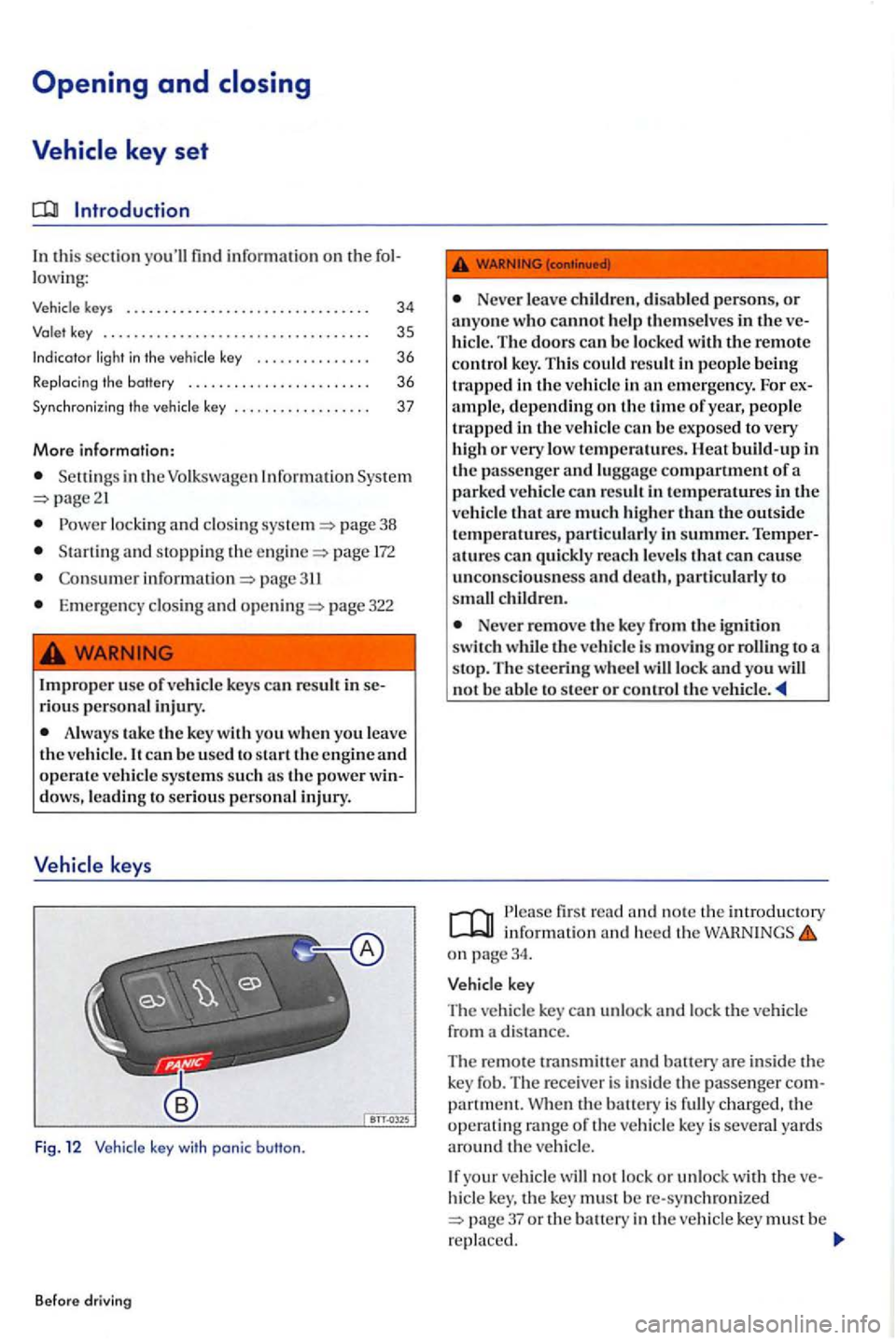
Fig. 1 2 Vehicl e key with panic button.
B efo re drivin g
Neve r leave childr en , di sabl ed p ersons, or a nyo ne wh o cannot help the m se lves in the hicle. The doors ca n b e lo ck ed with the remote
contro l k ey. Thi s could result in pe ople bein g
trapp ed in the ve hicl e in em erg en cy . F or depending on th e tim e of year, p eopl e
trapp ed in the ve hicl e can be ex po sed to very
hi gh or very low temperatures. Heat build -up in
th e passe nger and luggage compartment of a
p a rk ed ve hicle can res ult in temperatures in the
ve hicl e th at are much higher th an th e outside temperatures, part ic ul arl y in summer. atures can qui ckly reac h leve ls that can unco nsciou sn ess and death, particul arl y to c hildr en.
Never remove the key fro m the ig niti on switch th e vehicl e is moving or ro lling to a
s top. The s tee rin g w heel will lock and yo u no t be able to steer o r co ntro l th e veh icle.
fir s t r ead and no te th e in troduc tory in fo rm ation and heed the on page34.
key
The vehicle key can unl ock and lock th e vehicl e
from a di stance.
The remo te tran sm itte r
and batt ery are inside th e
k ey fo b. Th e receiver i s in side the passe nge r
hicle key , th e key mu st b e re-sy nchro ni ze d 37 or the battery in the vehicle key must b e
r epla ced.
Page 46 of 541
Rear hatch
this sectio n you'll find information on the following:
Warning light .............................. .
th e rear hatch .......•......... ......
Closing the rear hatch
More information:
Powe r loc kin g system page 38
page 137
Emergency closing and page 322
46
46
47
Improper or unsupervised unlocking, opening or closing of the rear hatch can cause accidents and severe injuries.
Never close the rear hatch by pushin g on the rear window with your hand. The rear window
could break and cause injuries.
After closing the rear hatch, always make sure that it is properly closed and locked so that it cannot open suddenly when the vehicle is moving. The closed rear hatch must be flu sh
with the surrounding auto body parts.
A lways keep the rear hatch closed while
driving to help keep poisonous exhaust gas from being drawn into the vehicle.
and closing
Never open the rear hatch when a luggage
rack is installed and load ed. for example,
there are bicycle s on a carrier on the rear it is possible that the rear hatch will not be able
to open automatically. An open rear hatch may fall on its own b eca use of the additional weight. The open rear hatch must be supported or the weight must be removed from the lu ggage rack
first.
Never leave your vehicle unattended or let
children play around your vehicle, especially
with the rear hatch left open. A child could crawl
into the vehicle and pull the rear hatch shut, becoming trapped and unable to get out. A closed vehicle can become very hot or very cold, depending on the season. in the summer, heat build-up in the passenger and luggage compartment of parked ve hicle can result in temperatures in the vehicle that are much higher than the outside temperatures. Temperatures can quickly reach levels that can cause unconsciousn ess and death, particularly
to small children.
Never leave children or anyone who cannot help themselves behind in the vehicle. They may lock the vehicle with the vehicle key or the power locking switch and lock themselves in.
Note
Before opening or closing the rear hatch, make sure there is enough room to do as for example when the vehicle has a trailer or is in a garage.
44 45
Page 48 of 541
Improper and unsuperv ised unl ockin g or openin g of the rear h atc h ca n cause severe ries.
bicycle or luggage rack is ins talle d on the rear hatc h , it may be h ard to se c that th e rear hatch I s unl atc h ed. An unlatch ed rear hatc h may
s ud whe n th e ve hicle Is
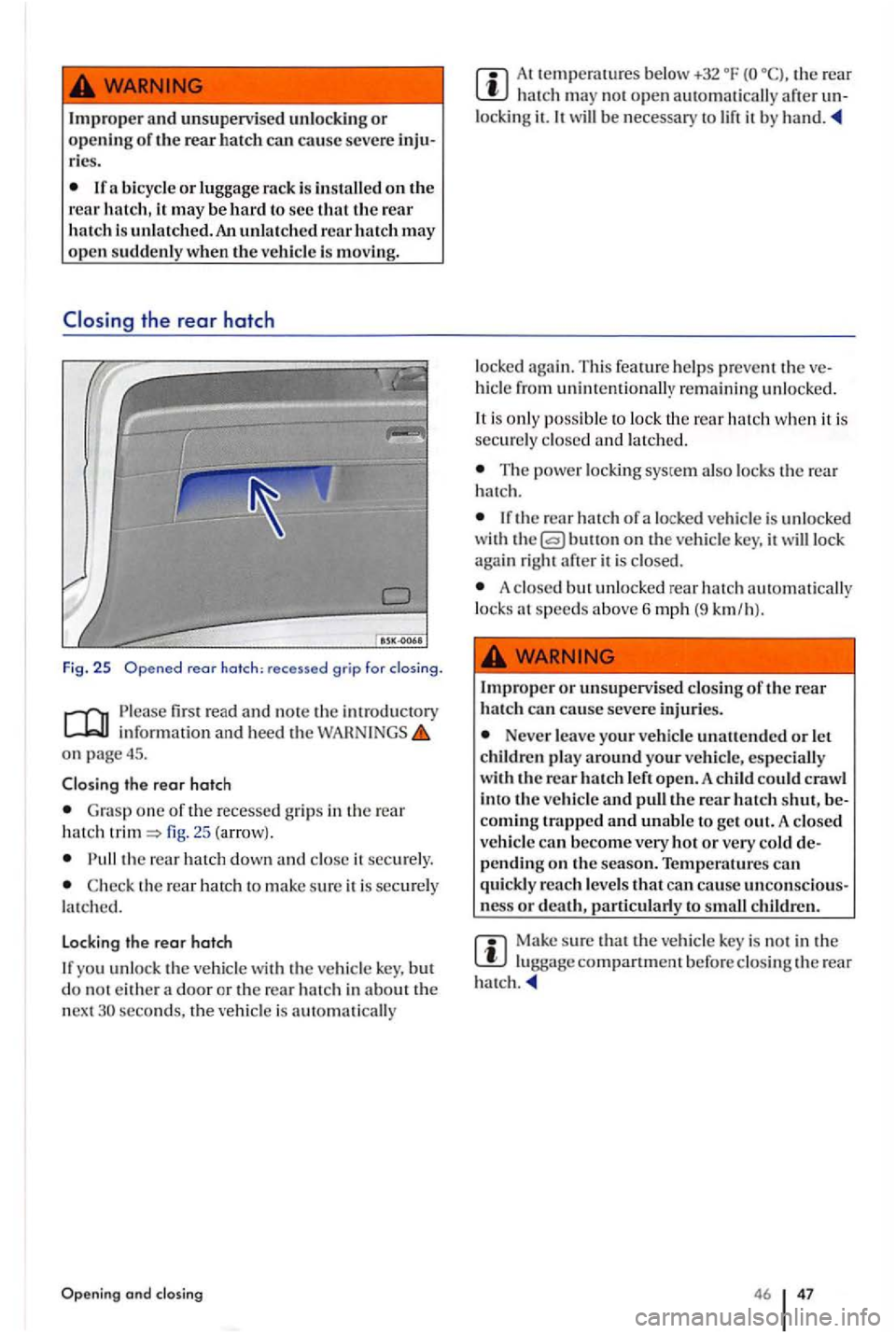
first read and note the introdu ctory informa tion and heed the WARNINGS on page 45.
Closin g t he rear hatc h
Grasp one of th e recessed grips in the rear h atc h fig. 25 (a rrow}.
th e rear hatch down and close it securely.
second s, the vehicle is au tomatically
and closing
At t emperatu res below +32 the rear hatch no t o pen automatically after
locked again. Thi s feature helps prevent the hicle from unintentionally re m ain ing unlocke d.
It is onl y poss ible to lock th e rea r hatc h when it is
secur ely closed and latche d.
The power locking system also locks the rear
h atc h.
If th e rear hatch of a locked vehicle is unlocked
w ith button on th e veh icle key, it will lock
agai n right after it is clo sed.
A closed b ut unlocked rear hatch automatically
l ocks at speed s above 6mph (9 k m lh}.
Impro pe r o r unsupervi sed clos ing o f th e rear
h a tc h ca n ca use seve re injuri es.
Never leave your ve hicle unan ended or l et
c h ildren pl ay around your ve hicle, especially
w ilh the re ar ha tc h l eft open. A child could crawl into the ve hicl e and pull the rear h atc h shut,
pending o n the season. Tempe ra tu res can
quickl y re ac h l evels that can ca use unco nscious-ness or death, to sm all child ren.
Make sure tha t compartment b e for e clo sing the rear
46 47
Page 119 of 541
Securing a restraint with the Top Tether strap
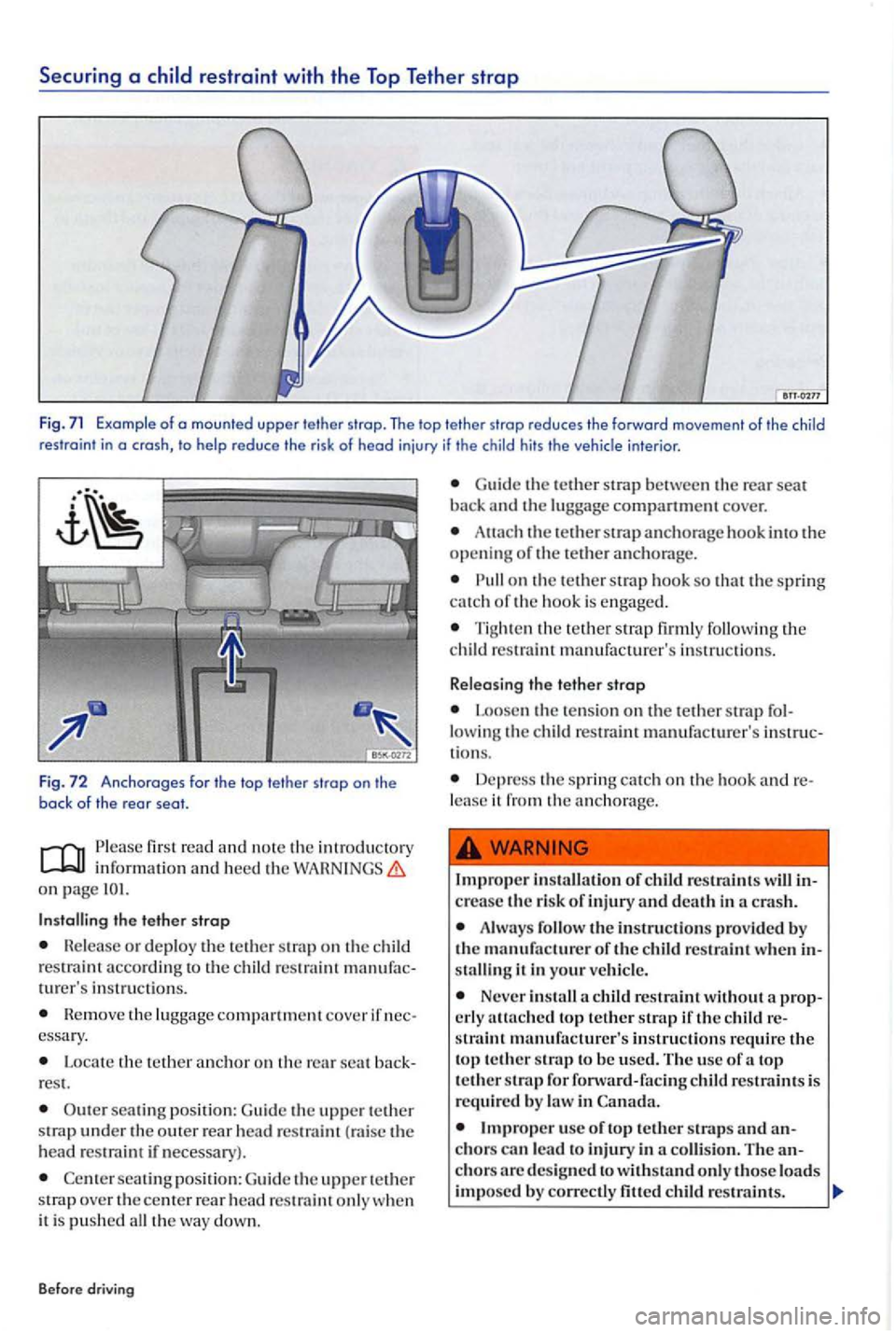
Fig . 71 Example of a mounted upper tether strop . The tether strop reduces the forward movement of the child
restraint in a crash, the
tether strop on the bock of the rear
first read and note the int roductory information and heed the WAR N INGS on page
R e le ase o r deploy the te th er stra p o n the child res traint a ccord ing to th e child restraint turer's instru ctio ns.
Remove the lu ggage cover if essary.
Locate the tether anchor on th e rear seat
Outer seatin g positi on: G uide the upper tethe r
s trap under th e outer rear head restraint (raise the
head restraint if necessary).
seatin g position: Gu ide the upper te th er
s trap over the center rear head restra int only w hen it is push ed all the way down.
Before driving
Guide the tether strap b e tween th e rear seat back and the luggage compartment cove r.
A ttach the tether strap anchorage hook into the opening of the te ther anchorage.
o n th e tether strap hook so that the s pri ng of the hook is e ngage d.
Tight en the tether strap firml y fo llo win g the
c hild restraint manufacturer's in stru ctions.
Releasing the tether strop
Loosen the tension on the tether strap lo w ing the child restraint manufacturer's tions.
Depress th e spring catch on the hook and it from the anchorage.
Improper in sta llation of ch ild restraints will crease the risk of injury and death in a crash.
Alway s follow the instruct ions provided by the manufacturer of the c hild res traint when
Never install erl y attached top tether strap if th e c hild straint manufacturer's instructions require the top tether strap to be used. The usc o f top tethe r strap for fo rward-fa cing chi ld restraints is
r equi re d by Jaw in
co llision. The c h o rs arc d es igned to withstand only those loads imposed b y correctly fitted child restraints .
Page 138 of 541
Transporting
Driving tips
In this sec tion yo u'll find informatio n on th e fol
l o w ing:
obj ects in th e luggage m ent and make su re
the vehic le lo ad, as well how it is di stributed, can vehicle hand ling and
page 45
F o lding th e pa sse nger backrest forward
page
Lugg age page
pag e
Trail er pag e
Tires and 27 6
Transporting
Uns ecured or in correc tly s tow ed item s can fly
through the vehicl e, causing serious personal injury during hard braking or sharp s teering or in an a cci dent. Loose items can also be s truck
a nd throw n through the passenge r compartment by an airbag if it infl ate s. To help reduce
the risk of inju ry:
all objects secure ly in the vehicl e. Always keep storage compartments closed dri vin g. Do not stow hard , heavy, or sharp objects in open bins in the ve hicl e or on top of the instrument panel.
A lways secure objects properly with s uitabl e
s traps so that th ey
Always secure objects in the passenger compartment properly so th at they cannot com e
int o the deploy ment area of a sid e or front airbag w hen the vehi cle is m ov ing.
Always keep stora ge compartments closed
w hil e dri ving.
A lways make sure th at the re is nothin g on the front passe nge r sca t w hen the backres t is fo lded forward. When the backres t is folded for ward,
eve n light objects could be pushed int o the scat
c ushion and cau se the we ight- sensin g mat in
th e seat to registe r e n o ugh weig ht to turn th e airbagon.
Always make su re that the AIR BAG
must n eve r assume an incorrec t seating positi on becaus e of objects stow ed in th e vehicle_
No person should ev er sit in a seat that is
blocked by objec ts s towe d in the vehicle.
136 137
Page 139 of 541
Heavy loads innuence th e way your vehicle handles and increa se stopping distances. Heavy
load s that arc not properly stowed or secured can cause los s of contro l and serious injury . Always remember when transporting heavy
objects that a change in the center of gravity also
changes the way your vehicle handles:
- Always dis tribute the load as evenly as
possib le. -heavy objects properly as far forward
in th e luggage compa rtme nt as possible.
- Always tie down heavy items secure ly using
th e tiedowns provided and suitable straps.
Never exceed th e Gross Axle Weight Rating or the Gross Vehicle Weight Rating on the safety compliance sticker on the left door jamb. Excee
ding permissible weight can cause the vehicle to
skid and handl e diff erentl
y.
Always adapt your speed and driving to th e
heavi er load and the we ight distribution in the
vehicl e. Take road, weathe r, and visibility
cond itions into acco unt as we ll.
Stowing
on page 137.
Always stow all luggage securely in the vehicle
Distribut e loads in the vehicle, on th e roof and the trail er as even ly as possible.
Secu re lu ggage in the luggag e compartment with suit able tightening strap s to the tie-down page 142.
Adjust the headli ght page
Before driving
Drive especia lly carefully and accelerate
gently.
Avoid sudden braking and driving maneu
ve rs.
Brake earlie r than yo u would if you were not driving a loaded
tire pressure. Heed the information on the tir e pressure page 276.
sure Monitor ing Syste m, the system may need to
be adjusted for the new page
CD Note
The heating wires in the rear window can be se
vere ly damaged by hard or sharp things on the sh elf below the rear window.
review inf ormation about loading a page 152 and a roof rack 149.
Page 140 of 541
Driving with an open rear hatch
P lease read and not e the introd uctory information and hee d the on pag e 137.
Driv in g w ith an open rear hatch ca n lead to seriou s
perso nal injury. I f yo u have to drive w ith an op en
rear h a tch, make sure that objects an d th e hatch itse lf are properly secured and take appropria te
m easures to keep tox ic exhaust fumes from te rin g th e vehicle .
Driving w
itJ1 an unlatc hed o r open rear hatch
ca n l ead to seriou s pe rso nal injury.
Always driv e witJ1 the rear hatch closed to
h elp kee p poisonou s ex hau st gas from being
drawn into the ve hicle.
Never transport objec ts lar ger than those fittin g co mpletely int o the lu ggage area, beca use then the rear hatch cannot be full y clo sed.
Always stow all objects secu re ly in the
Dr ive care fully; a ntic ipat e what otJ1er driver s will do.
Avoid abrupt o r sudden driv in g or braking maneuv ers, as unla tch ed rear hatch can move suddenly .
A lways mark obje cts sti cking out from the lu ggage compartment clear ly for others to see .
Ob e applicabl e req uirements.
Transporting
Neve r u se the rear ha tc h t o or ob jec ts protruding from the luggage ment.
Alway s remove any lugga ge rack or other
rack mounte d on tJ1e rea r hatch (along with an y
l uggage on th e rack) befor e driving with an ope n
r ea r h atch .
Driving w
ith an open rear hatch can cause sonous carbon mon oxide in the en g in e exhaust
to get into the passe nger compartment.
monoxide cau ses drow sin ess,
inatt enti veness , poison ing , and loss of scio u snes s. can lead to accid ents and seve re
perso na l in juri es.
Always kee p th e rear hat ch closed whil e
driving to help keep poi sonous exha ust fum es
from b ein g drawn into the ve hicl e.
Neve r tran sport obj ec ts that are to o large
t o fit completely int o the lu ggage area, beca use
th en the rear hatch cannot be full y closed.
yo u abso lutely mus t driv e w ith open rea r h atch, do th e
all windows and the powe r sunro of.
- Switc h off the climat e
control sys te m's a ir
recirculation feature.
-
Open all air vents in the in strument pa nel.
- Se t th e fres h air fa n t o th e hi ghest speed.
Note
T he ope n rear hatc h ch anges th e ve hicle's lengt h and he ight .
138 139
Page 141 of 541
Driving a
first read and note the introductory informat io n and heed the WARNINGS on page 137.
F
or good h andli ng w he n driving a loa ded ve hicl e,
please observe the following:
Secure ly stow page 138.
Dr ive especially caref ully and acce le rate gently.
Avoid sudd en braking and driv ing man eu ve rs.
Brake earlier than you wou ld if yo u were not
drivi ng a loa ded vehicle.
page 152.
If applicabl e, observe information rega rdin g driv in g w ith roof page 149.
Weights and
firs t read and no te the introductory information and heed the WARNINGS o n page 137.
The gross weight of any vehicle depends on its en gin e, basic equipment, an y factory- in stalled
optional equipment for the given model, and any retrofitted accessories. T he gross vehicle weig ht
rat ing
catio n Label loca ted on the door pillar of the dri ver
door.
The gross vehicl e we ight rating includ es the
weight of the ve hicle itself w ith of its tank of gaso line, the
Before driving
lo ads can ch ange the way your vehicle
h andles and incre ase stop ping dista nces. loads that are not properly sto wed or secured can shift suddenly, causing loss of co ntrol and serio us injury.
the load prope rly to keep it from
shifting.
A lways remember w hen tra nsp o rtin g
h eavy obje cts th at th ey vehicle's cente r of gravity and also the way it handles.
- Always dis
tribute the load as eve nly as
possible. -h eavy obj ec ts as far forward in
th e luggage compartment as poss ible. -If your ve hicle has tie-downs in the
Always tie down heavy items securely wit h
s uitable straps.
Secure ly latch th e rear backrest in the upright position .
Never excee d th e Gross Axle Weight Ratin g
o r the Gross Weight Ratin g on the safe ty compliance sti cker on the left door jamb. Exceeding permissi b le weight ca n ca use the
ve hicl e to skid and ha ndl e diff erently.
Always adapt speed and drivi ng to th e
h ea vie r load and th e we ight di stribution in the vehicle.
Always accelerate gently and avo id
s udd en braking an d drivin g maneuvers.
Always brake ea rlier than yo u wo uld if you were not drivin g a loaded ve hicle .
engine oil and coola nt, lbs/68 kg per seatin g position ) and ca rgo .
T
he gross axle weig ht ra tin gs sp ec ify th e imum allowab le load for ax le.
The cargo payload may not be increased by using
a roof rack without commen surat ely reducing th e
we ig ht from vehicle Dete rmin ing
th e gross vehicle weight page 276.
pay load cons is ts of th e co mbin ed w eight of th e following:
Passe ngers.
Tota l luggage and othe r ca rgo .
Roof load including the roof rack system.
Tong ue weig ht for trailer towing.