2005 VOLKSWAGEN GOLF brake
[x] Cancel search: brakePage 213 of 444
and Equipment
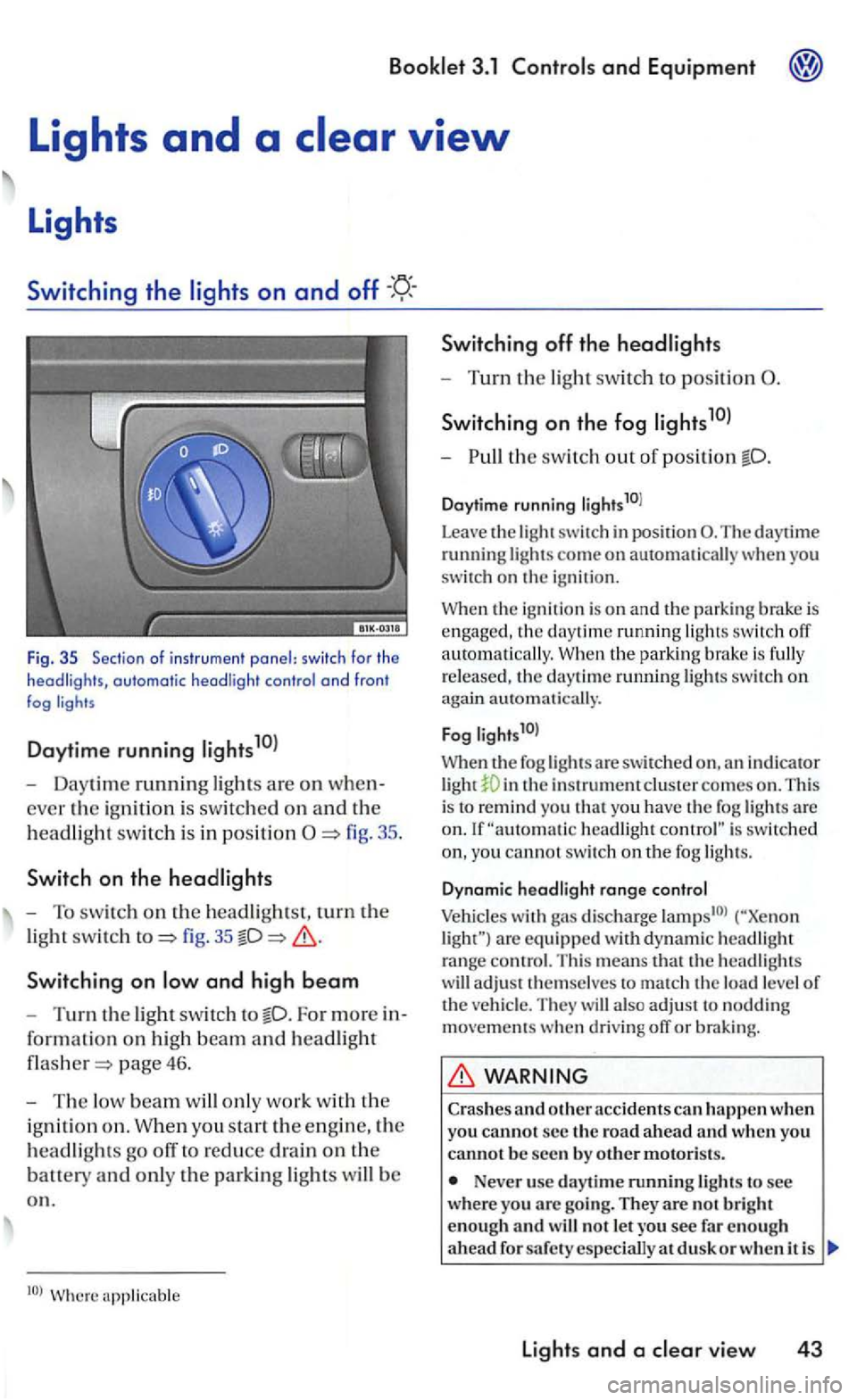
Fig . 35 Sec tio n of i nstr u m ent panel: switc h fo r th e headligh ts, automatic headli ght contro l a nd fron t fog
Daytime running
- Daytime running ligh ts are on when
ever the ig ni tio n i s sw itc hed on an d th e
h
eadlig ht swit c h i s in positi on
fig. 35
Switchin g on
For more in
for ma
tion on hig h beam an d headlight
page 46.
-The low beam w ill only work w it h th e
i g ni
tion o n . W hen you sta rt the e ngin e, the
h
eadlights go off to reduce drain on the
batt ety an d only th e parkin g lights will b e
o n .
Switching off th e headlights
- Turn the light swit ch to position
S wi tch ing on the fog
-th e switch out o f position
Daytime running li g hts10l
Leave
the light switch in posit ion The daytime running lights come on automatically you
switch on the igni tio n.
the ignition is o n and the parking brake is engaged , the daytime running ligh ts switch off
a uto m atically. the park in g bra ke is fully
r e leased , th e daytime ru nning lights swit c h on again automati cally.
F
og l ights1 0l
When th e fog lights a re swit ch ed in th e instrument clus te r comes on . This
i s to remind you t h at yo u have the fog lights are headlight is switc hed
yo u cannot switc h on th e fog ligh ts.
D ynam ic hea d light range co ntrol
Vehicles with gas discharge are eq uip ped w ith d yn am ic headlig h t range contro l. T his means that th e headlig hts
w ill adjust t hemselves to match th e load level of the ve hicl e. They will also ad ju st to noddin g movements when d riving off or braking.
WARNING
Crashes and o ther acc idents can h appen when you cannot s e c the ro a d a head and w hen you canno t b e seen by o th er motoris ts.
Never use day tim e running lights to see wher e you arc goi ng. They are no t b rig h t
enough an d w ill not le t you see fa r en o ug h
a head d usk o r w hen i t is
lights and a vie w 43
Page 215 of 444
3.1
Emergency switch
Use the eme1gency flasher del ete space to attention
your icle in cas e of an emerge ncy.
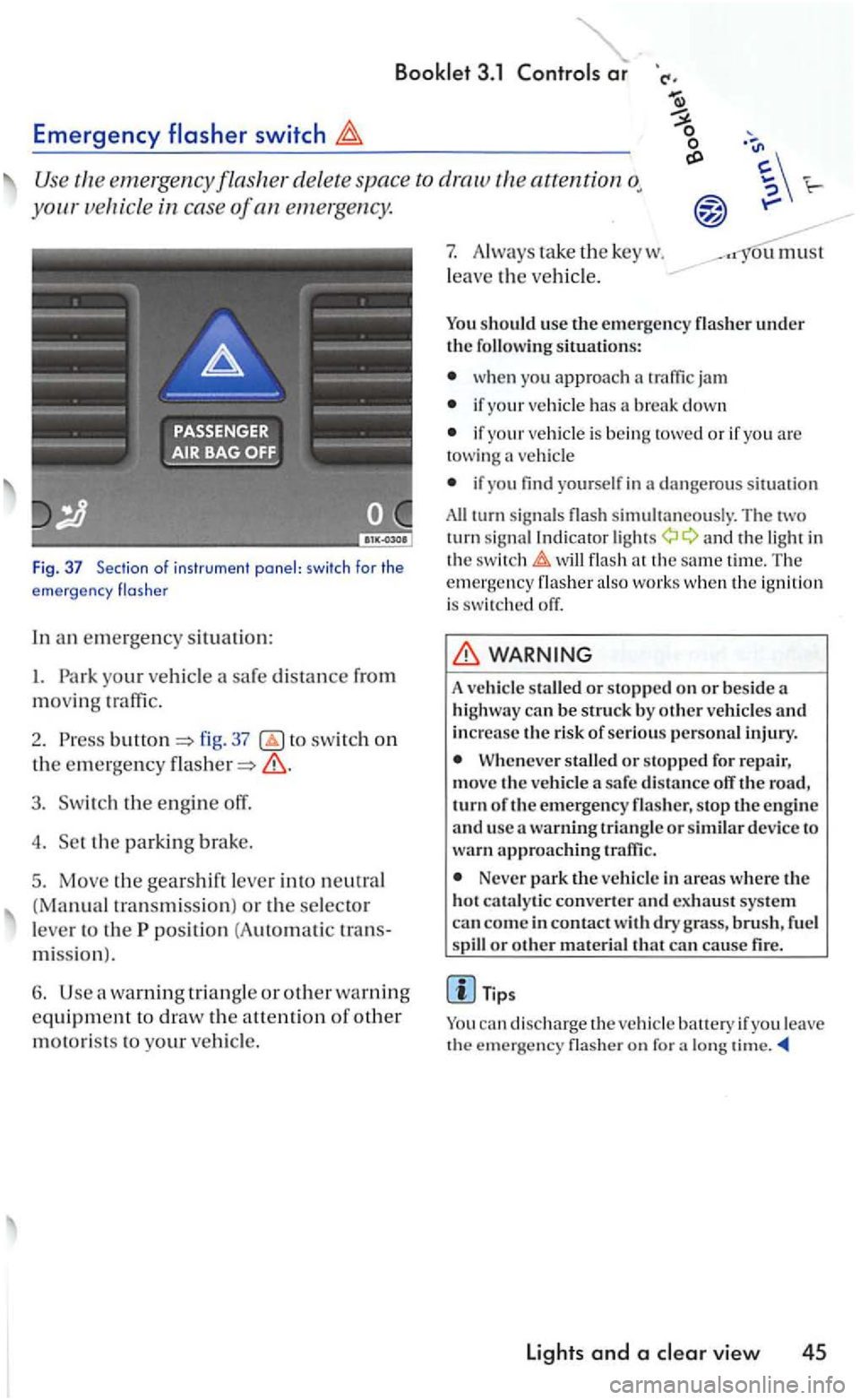
Fig. 37 Section o f ins trume nt panel: swi tch for the
e mergency flas he r
In an em ergen cy situation:
I. Park your vehicl e
fig. 37 switch on
the emergency
3. Switch the engine off.
4. Set the parkin g brake.
5. Move the gea rshift lever into neutral
(Manual tra nsmiss ion ) or the selector
l e ve r to the
position (A uto m ati c tran s
mi ssio n
).
6. Use warning tria ng le or other warning
equipme nt to draw the a uention of other
motorists to your vehicl e.
7. Always ta ke the key w .
l
eave the ve hicl e.
ou must
You should use th e e mergency
wh en you approach
if your vehicle has a break down
if your vehicle is bein g towed or if yo u are towing vehicl e
if yo u find yourself in dange ro us s ituation
All turn sig nal s simultaneously. Th e tw o
turn sig nal Indi cator a nd the light in
the t im e. Th e emergency also wo rk s w he n th e ig n ition is switch ed off.
WARNING
A vehicle staUed or stopp ed on or bes ide a
hi ghway can b e struck by o ther ve hicle s and increase the risk of se rious pe rso nal injury.
When eve r stalled or stopped for re pair,
mov e th e vehicle a safe dis ta n ce off the road, turn o f th e emerg ency flas her, s top the e n gin e
a nd usc a warning triangl e or similar device to wa rn ap proac hing traffic .
Never park the ve hicle in areas where the
hot cat a ly tic converter and exhaust syste m
can co me in contact dry grass , brush , f uel or othe r mate rial that can cause fire.
a lo ng
lights and a
Page 236 of 444
and Equipment
Other storage areas
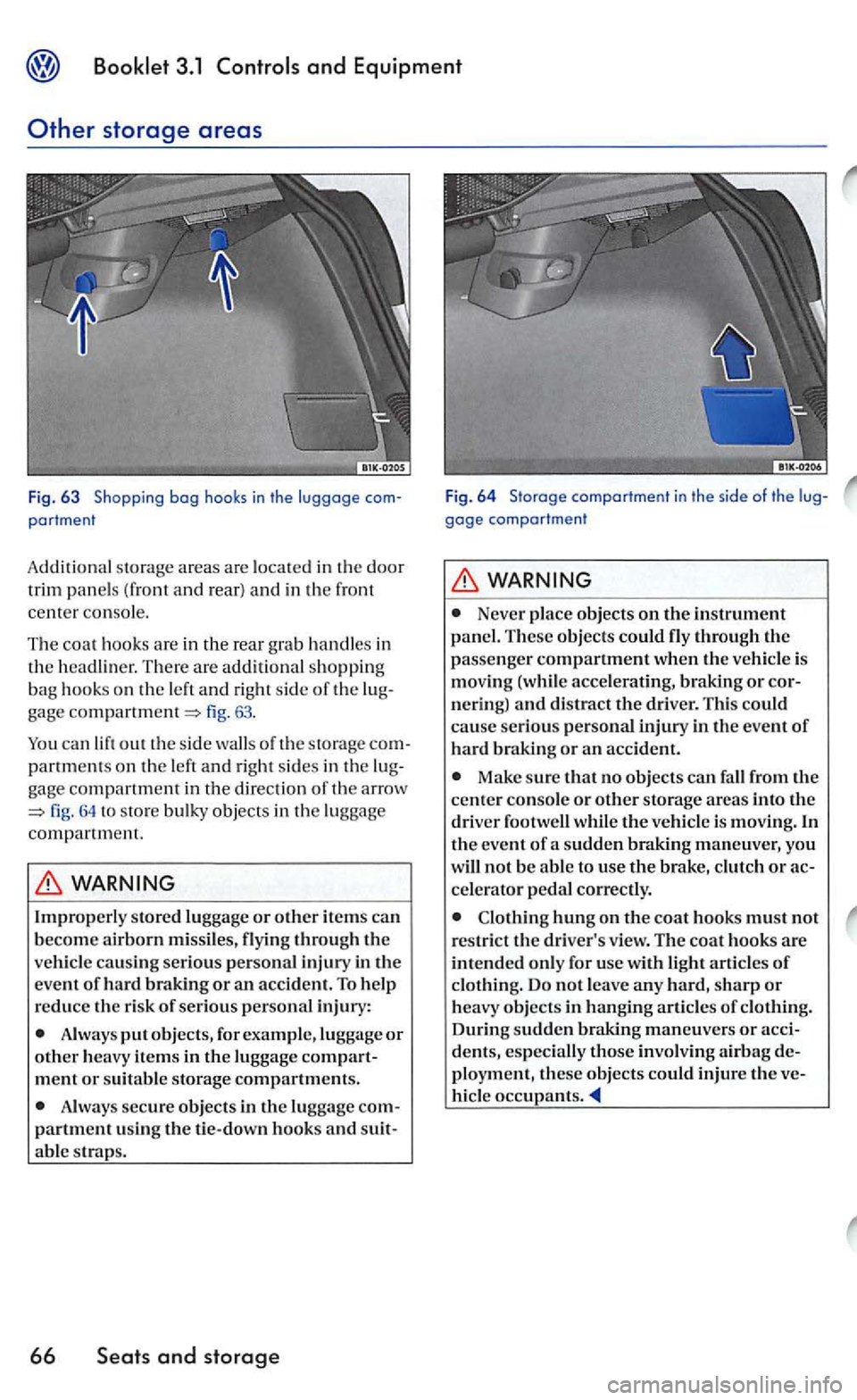
Fig. 63 Shopping bog hooks in the luggage portment
Additiona l s torage areas are located in the door
trim panel s (f ront and rear ) and in the front
center console.
The coat hooks are
in the rear grab hand le s in th e There are add itional shopping
bag hook s on the and right side of the fig. 63.
out the s ide of the storage partm ent s on the and right sides in the
fig. 64 store bulky objects in the luggage
com partm ent.
Always put objects, for example, lug gage or other heavy items in the luggag e compartment or suitabl e storage compartments.
Always secure objects in the lu ggage partment using the tie-down hooks and able straps.
66
gage comportment
Never place objects on the instrument
panel. These objects could fly through the
passeng er compartm ent when th e is mov ing (w hile acce lerating, braking or n ering) and
Make sure that no objects fall from the cente r console o r other sto rage areas into the
dri ver footwell while the is m ov ing. In the event of a sudden brakin g maneuver, you
w ill not be able to usc tl1e brake,
hung on tl1e coat hooks must not rest rict the dri ver's view . The coat hooks arc intended only for usc with light of
of During sudden braking maneuvers or acci-
d e nts, especially those inv olv in g airbag de
ployment , these objects could inj ure the ve-occupants.
Page 237 of 444
Booklet 3.1 Controls and Equipment
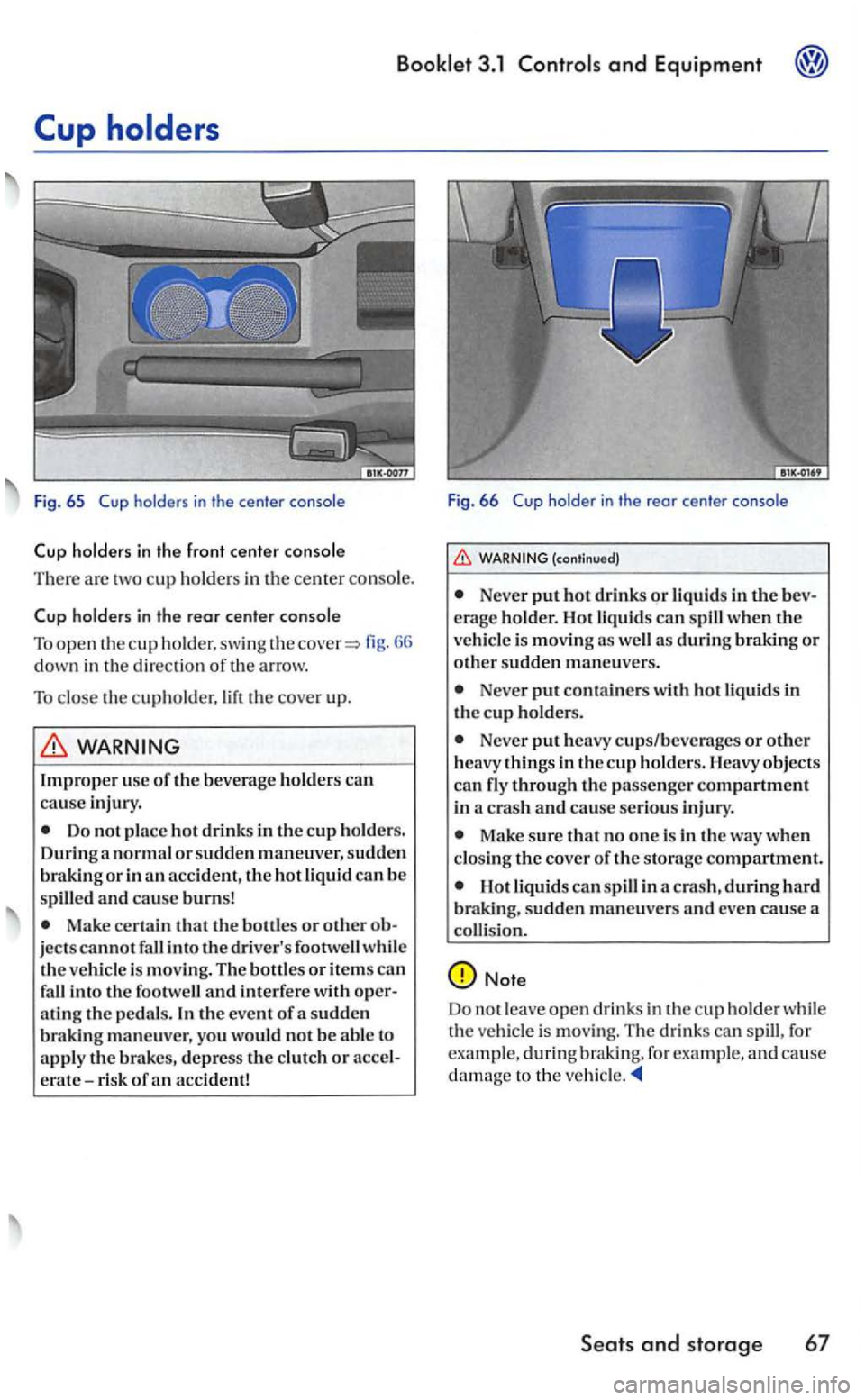
Fig . 6 5 holder s in the center console
66 down in th e dir ection of th e arrow.
To close the cupholder, lift the cove r up.
WARNING
Improper use of the be verage holders can
caus e injury .
Do not place hot drinks in the cup holders.
During a normal or sudden maneuver, s udd en
brakin g or in an accident , th e hot liquid can b e
s p ill ed and ca use burns!
Make certain that the bottles or other ject s cannot fall into tl1e driver 's footw ell whil e the vehicle is moving . The bottles or items can fall into the footwell and interfere with ating the ped als. In the event of a sudden
braking maneuve r, you would not be ab le to
apply the brakes, depres s the clutch or
(con tinued)
Neve r put hot drinks or liquid s in the era ge holder. Hot liquid s can spill when the
ve hicl e is moving as well as during brakin g or other sudden maneuver s.
Never put contai ners witl1 hot liquid s in
th e cup hold ers.
Neve r put heavy cups /b everages or ot her
h eavy things in the cup holders. Heavy objects
ca n fly through the passe nger compartment in a cra sh and cause serio us injury.
Make sure d1at no one is in the way when closing the cover of the storage compartment.
Hot liquid s ca n spill in a crash, during hard
Page 255 of 444
Booklet 3.1 and Equipment
Applies to
The ig nition key be removed from the ignition lock only with the selector
th e position.
Afte r th e ignition is sw itch ed move the key if the selecto r lever for the ma tic tran smissio n is in pos ition P . Afte r th e nitio n key is removed , th e sele ctor lever i s
l ocked. order to remove the ignition key from
the ig n it ion lock on vehicles equipped with
tomati c transm iss io n. the ig nition must switched off an d th e selecto r lever mus t b e in the posit ion . O nce you have rem ove d th e ig ni tio n
key. the sel ector lever be locke d. be
s ure to ap ply th e park ing brake whenever you move the key from the
immobilizer help s to prevent
ac tivates the immobilizer w hen you put the key into the ignition lock .
The e lec troni c immobilizer is automatica lly tivated when you the key out oft h e igni tion
l oc k. The
en gine
can only be started usin g key.
co rrect ly
code d genuine key . You may have prob le m s s tarting the vehicle if a genuine and
correc tly code d
with o gasoline engine
Starting the engine
only be started (manual transmission ) or brake
pedal
transmission. ) is fully depressed using a coded Volkswag en
maste r key.
Manual transmiss ion
-Move th e gearshif t leve r into neutral.
- Depress the clutch p edal full y and hold
it d epressed.
-Turn th e ign itio n key to position
page 84, fig. to start the e n gin e.
- Rel
ease th e ig nition key when the
gin e starts. Do not le t th e starter to
tinue to run.
Automatic transmissio n
Move the selector lever toP
page 88.
-
Turn th e ignition key to position
fig . start th e en g in e.
-
the ignition key when the
tinue to run. When starting a hot en g in e.
yo u
need to press th e accelerator
briefly .
Driv ing 85
Page 256 of 444
and Equipment
sta rtin g a co ld engin e, it may be a little
n o isy for the first few seconds until oil pressure has built up i n the hydraulic va lve lift ers . T his is normal and n o cause for concern.
I f
the engine does no t sta rt after seconds. switch off the ig niti on, wait seconds, then try
again.
I f yo u
have problem s booklet 3.2 and ch apter
g in e.
Never sta rt or le t the e ng in e run in fin ed or e n closed area. Exhaust from the poi so no us,
co lorless and odorless gas. Carbon can cause unco nsciou sness and death.
Never leave the ve hicl e unatt ended wit h the eng in e runnin g. The vehi cle could move
suddenly or an unus u a l o pe ra tin g condition
Switching off the engine
-Let the vehicle com e to a comple te sto p.
- T
urn th e ig nit ion key to pos iti on @
- Be sure to apply the par k in g brake
w he neve r yo u r
emove the key from the
nition.
Af te r the en gi ne is switched off the rad iator fan
m ay cont inu e to run for up co
Never sw itch off the engine before the vehicle
has com e to a complete stop. can lose tro l of the vehicle , crash and be seriou sly jured.
86 Driving
Neve r u sc "startin g assist fluid s." They are potentially explo sive and can cause a ve hicle cond it ion.
Note
can damage the engin e if you d rive hig h
e ngin e speeds, at full thro ttle or by over- loading
t h e e ngi ne whe n the engine is cold.
T he cann ot be sta rt ed usin g
To avoid the sta rt er, re lease the nition key as soon as the engin e starts.
For the sake of environment
Do not warmup the engine by running it w ith the ve hicle standing s till. Drive off as soon as yo u
s tart the engine. This help s the e ngine reac h
WARN ING (continued )
The airbag s and sa fety belt prc te n si one rs
will not work w hen th e ig n itio n is s wit ch ed off.
The brake booster does not wo rk w hen th e
engi ne is turned off. A lo t more brake pedal press ure will be necessa ry to sto p the vehicle.
T he power steering syste m does not work
whe n the eng in e is turned o ff and you w ill
need m ore force to s teer the vehicl e.
the ke y is remove d , the steerin g
wheel column will lock up and you will not be able to s teer th e ve hicle.
Neve r park whe re th e hot exhaust system could ignite flammable mate ria ls, su ch as brus h , leaves, dry grass, spilled fue l e tc.
Note
If the engine has been dri ven hard for a lo ng riod, th e engine co uld over hea t when it is
switched off. To reduce th e risk of eng ine damage. be sure co Ieee h e e ng in e idl e for about
2 min ute s befo re yo u sw itch it
Page 259 of 444
3.1
Applies to
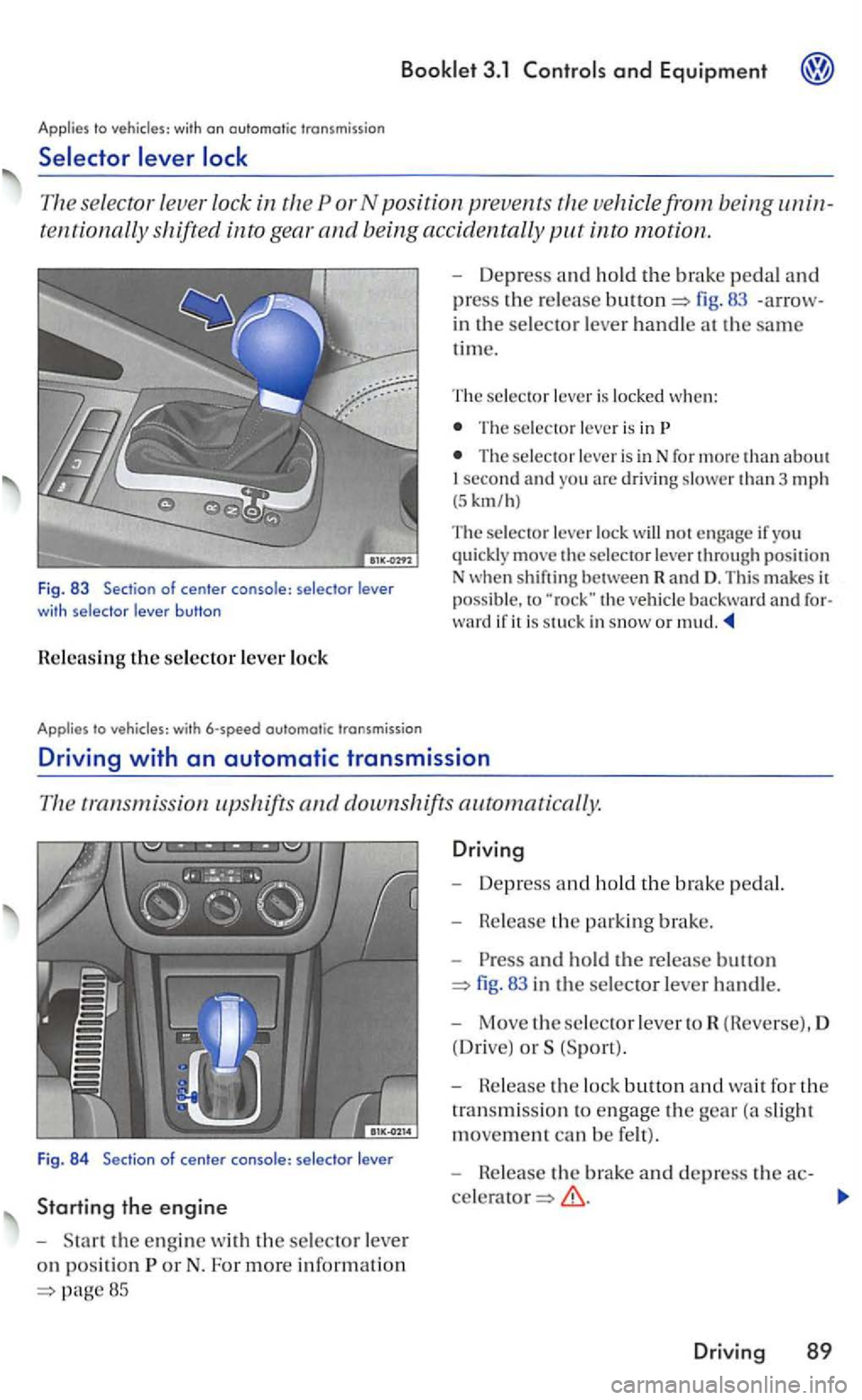
111e selec tor leve r lock in vehicle from bein g unin
tent iona.ll y shifted into gear and being accidentally
to vehi cles: with 6-speed outomotic transmission
-Depress and h o ld the brake pedal and
p ress the re lease button !1g. 83 -arrow
in
the selector lever handle a t the same
time.
The selector lever is lo cked when:
The selector lever is inN for more tha n about I second and you arc driving slower tha n 3 mph (5 km/h l
The selector lever lo ck not engage if you quickly move the selector lever through pos iti on
N when shifting between Rand D . This makes it possible, to the vehicle backward and
transmis sion upshifts
For more information
85
Driving
- Depre ss and hold the brake pedal.
- Re l
ease the parkin g brake.
- Press a
nd hold the release button
83 in the selector le ver handl e.
- Mo ve the
selec tor leve r toR (Reverse), D
( Dri
ve) or S (Sp ort).
- Relea
se the lock button and wa it for the
tran smi ssion
engage the gear (a slight
movement ca n b e felt) .
-
Release th e brake and depress the ac-
cele rator=>
Driving 89
Page 260 of 444
and Equipment
Stopping
-Alw ays use the foot brake to prevent the
vehicle from creeping forward , for
do not need to
move the selector leve r to (Park) or N
(Ne
utra l).
- Do not depress the accele rator.
Parking
- Depress and hold the brake pedal until
the vehicl e comes to a
- App ly the parking brake firmly
94.
- Mo ve th e
selector lever with
lease butto n pressed.
Driving dow n
-the position.
-
the lever to
-
- Do not try to stop the veh icle from
by increa sing the revs
w hen a
gear is
Moving a way on an
- W ith a gear engaged, tak e your foo t
f r o m
the brake and depress the
ator.
Th e stee per the grade, the lower the you will need. This increases the brakin g gine. For examp le, yo u sh ould drive down a very
s teep slop e in 3rd gear.lfthe engine brake is not s uffi cient. the vehicl e will gain spe ed . Th e tran smis sion automati cally up shift s
t o preve nt the engin e from the
foot brake to reduce speed and ch a nge into 3rd gear usin g 'Tiptronic®"
vehicl e has Automatic Sh if t Loc k (ASI.l that locks the selec tor lever in
must depre ss the brake pedal
t o move the selec tor lever out or N. Thi s
ally moved into a driving positi on result ing in unwante d ve hicle movement.
A lw a
ys ho ld th e vehicle with the foot if you
s top while driv in g up a hill to preve nt it fro m
rollin g backwa rd.
T he ig niti on
key ca nnot be remo ved unless the
s el ec tor lever is in
rious personal injury .
Never get out of the dri ver's seat when th e engin e is running, especially when it is in gear. If yo u must leave your vehicl e with the engine running, always set the parking brake and move the se lec tor lever (Pa rk).
When the engine is running with (Dri ve). (Sport) orR (Ileve rse ) a lways depress hold the brake pedal to keep th e ve hicl e from
m ov ing. is trans m i!!ed to the w heels
w hen a driving pos ition is selected even at idle speed.
Never depress th e accelerator when moving the selecto r lever.
Never move the selector lever to
R (Reverse) or whe n the vehicle is
m ov ing.
Before you drive down a steep section of road, reduce speed and shift to a low er gear usin g for better engin e braking effect and to reduce the load on the brake
sys te m.
Do not rid e the brakes or apply the brake pedal too often or too long. Constant braking
causes the brakes to overheat and tially reduces braking performance, increases braking dis tance or causes complete failu re of
the brake sys tem.
Never switch ofT the engine before the vehicle
h as come to complete s top. ca n lose con-trol of the ve hicle , crash and be serious ly in -
jured.