2005 SKODA FABIA belt
[x] Cancel search: beltPage 6 of 260

Contents5
Contents
Layout of this Owner's Manual
(explanations)
. . . . . . . . . . . . . . . . . . .
Using the system . . . . . . . . . . . . . . .
Cockpit . . . . . . . . . . . . . . . . . . . . . . . . . . . . . . .
An overview . . . . . . . . . . . . . . . . . . . . . . . . . .
Instruments and Indicator/Warning LightsGeneral view of the instrument cluster . . . . . .
Engine revolutions counter . . . . . . . . . . . . . . .
Coolant temperature gauge . . . . . . . . . . . . . .
Fuel gauge . . . . . . . . . . . . . . . . . . . . . . . . . . .
Speedometer with counter for distance driven
Service Interval Display . . . . . . . . . . . . . . . . .
Digital clock . . . . . . . . . . . . . . . . . . . . . . . . . .
Multi-functional indicator* (onboard computer)
Information display* . . . . . . . . . . . . . . . . . . . .
Auto Check Control . . . . . . . . . . . . . . . . . . . .
Warning lights . . . . . . . . . . . . . . . . . . . . . . . . .
Unlocking and locking . . . . . . . . . . . . . . . . . .
Keys . . . . . . . . . . . . . . . . . . . . . . . . . . . . . . . .
Locking . . . . . . . . . . . . . . . . . . . . . . . . . . . . . .
Child safety locks . . . . . . . . . . . . . . . . . . . . . .
Central locking system* . . . . . . . . . . . . . . . . .
Remote control* . . . . . . . . . . . . . . . . . . . . . . .
Anti-theft alarm system* . . . . . . . . . . . . . . . . .
Power windows* . . . . . . . . . . . . . . . . . . . . . . .
Electric sliding/tilting roof* . . . . . . . . . . . . . . .
Lights and Visibility. . . . . . . . . . . . . . . . . . . . .
Lights . . . . . . . . . . . . . . . . . . . . . . . . . . . . . . .
Interior lighting . . . . . . . . . . . . . . . . . . . . . . . .
Visibility . . . . . . . . . . . . . . . . . . . . . . . . . . . . . Windshield wiper and wash system . . . . . . . .
Rear-view mirror . . . . . . . . . . . . . . . . . . . . . .
Seats and Stowage . . . . . . . . . . . . . . . . . . . .
Front seats . . . . . . . . . . . . . . . . . . . . . . . . . . .
Head restraints . . . . . . . . . . . . . . . . . . . . . . . .
Middle rear head restraint* . . . . . . . . . . . . . . .
Heating the front seats* . . . . . . . . . . . . . . . . .
Rear seats . . . . . . . . . . . . . . . . . . . . . . . . . . .
Pedals . . . . . . . . . . . . . . . . . . . . . . . . . . . . . .
Luggage compartment . . . . . . . . . . . . . . . . . .
Net partition (Estate)* . . . . . . . . . . . . . . . . . . .
The roof luggage rack system* . . . . . . . . . . .
Drinks can holder* . . . . . . . . . . . . . . . . . . . . .
Rear drinks can holder * . . . . . . . . . . . . . . . .
Note holder . . . . . . . . . . . . . . . . . . . . . . . . . .
Ashtray at the front* . . . . . . . . . . . . . . . . . . . .
Ashtray at the rear* . . . . . . . . . . . . . . . . . . . .
Cigarette lighter* and power socket* . . . . . . .
Storage compartments . . . . . . . . . . . . . . . . . .
Heating and air conditioning system . . . . .
Heating . . . . . . . . . . . . . . . . . . . . . . . . . . . . . .
The air conditioning system* . . . . . . . . . . . . .
Starting-off and Driving. . . . . . . . . . . . . . . . .
Setting steering wheel position* . . . . . . . . . . .
Ignition lock . . . . . . . . . . . . . . . . . . . . . . . . . .
Starting engine . . . . . . . . . . . . . . . . . . . . . . . .
Switching the engine off . . . . . . . . . . . . . . . . .
Shifting (manual gearbox) . . . . . . . . . . . . . . .
Handbrake . . . . . . . . . . . . . . . . . . . . . . . . . . .
Parking aid* . . . . . . . . . . . . . . . . . . . . . . . . . .
Cruise control system (CCS)* . . . . . . . . . . . .
Automatic gearbox*. . . . . . . . . . . . . . . . . . . .
4-speed automatic gearbox . . . . . . . . . . . . . .
Communication . . . . . . . . . . . . . . . . . . . . . . .
Universal telephone connection* . . . . . . . . . .
Mobile phones and two-way radio systems . .
The CD changer* . . . . . . . . . . . . . . . . . . . . . .
Safety. . . . . . . . . . . . . . . . . . . . . . . . . . . . . .
Passive Safety . . . . . . . . . . . . . . . . . . . . . . . .
Basic information . . . . . . . . . . . . . . . . . . . . . .
Correct seated position . . . . . . . . . . . . . . . . .
Seat belts. . . . . . . . . . . . . . . . . . . . . . . . . . . . .
Why seat belts? . . . . . . . . . . . . . . . . . . . . . . .
The physical principle of a frontal collision . .
Important safety information regarding the use
of seat belts . . . . . . . . . . . . . . . . . . . . . . . . . .
How are seat belts correctly fastened? . . . . .
Belt tensioners . . . . . . . . . . . . . . . . . . . . . . . .
Airbag system. . . . . . . . . . . . . . . . . . . . . . . . .
Description of the airbag system . . . . . . . . . .
Front airbags . . . . . . . . . . . . . . . . . . . . . . . . .
Side airbags* . . . . . . . . . . . . . . . . . . . . . . . . .
Deactivating an airbag . . . . . . . . . . . . . . . . . .
Transporting children safely . . . . . . . . . . . .
What you should know about transporting
children! . . . . . . . . . . . . . . . . . . . . . . . . . . . . .
Child seat . . . . . . . . . . . . . . . . . . . . . . . . . . . .
Attaching a child seat using the “ISOFIX”*
system . . . . . . . . . . . . . . . . . . . . . . . . . . . . . .
8
9
11
11
13
13
14
14
14
15
16
17
18
22
24
28
38
38
40
41
41
46
49
50
52
55
55
60
62 63
66
67
67
69
70
70
71
74
74
79
81
83
83
84
84
85
85
87
93
93
96
102
102
103
104
105
106
107
108
109 11 2
11 2 11 7
11 7
11 8
11 9
123
123
123
125
129
129
130
131
132
135
137
137
139
141
144
147
147
151
155
sqc.1.book Seite 5 Mittwoch, 13. April 2005 1:09 13
Page 30 of 260

Instruments and Indicator/Warning Lights29
Using the systemSafetyDriving TipsGeneral MaintenanceBreakdown assist-
anceTechnical DataFabia Praktik
WARNING
•If you do not pay attention to the warning lights coming on and
the corresponding descriptions and warning notes, this may result
in severe body injuries or major vehicle damage.
•The engine compartment of your car is a hazardous area. There
is a risk of injuries, scalding, acci dents and fire when working in the
engine compartment, e.g. inspecti ng and replenishing oil and other
fluids. It is also essential to observe all warnings ⇒page 191.
Note
•Arrangement of the indicator lights depends on the model and model
version. The symbols shown in the following functional description are to
be found as indicator lights in the instrument cluster.
•Operational faults are shown in the instrument cluster as red symbols
(priority 1 - danger) or yellow symbols (priority 2 - warning).
Turn signal system
Either the left or right indicator light flashes depending on the posi-
tion of the turn signal lever.
EPC fault light (petrol engine)⇒ page 31
Glow plug system (diesel engine)⇒page 31
Turn signal system for vehicles towing
a trailer*⇒page 31
Coolant temperature/coolant level⇒page 31
Electronic immobiliser⇒page 32
Fuel reserve⇒page 32
Engine oil⇒page 32
Brake pad wear*⇒page 33
Bulbs*⇒page 33
Open door*⇒page 34
Fluid level in windshield washer sys-
tem*⇒page 34
Boot lid*⇒page 34
Control system for exhaust⇒page 34
Traction control system (TCS)*⇒page 34
Electronic stability programme (ESP)*⇒page 35
Antilock brake system (ABS)*⇒page 35
Brake system⇒page 36
Airbag system⇒page 36
Seat belt warning light*⇒page 37
sqc.1.book Seite 29 Mittwoch, 13. April 2005 1:09 13
Page 38 of 260

Instruments and Indicator/Warning Lights37
Using the systemSafetyDriving TipsGeneral MaintenanceBreakdown assist-
anceTechnical DataFabia Praktik
There is a fault in the system if the warning light does not go out or comes
on or flashes while driving
⇒. This also applies if the warning light
does not come on when the ignition is switched on.
The following text will be displayed in the information display*:
AIRBAG FAULT
The functionality of the airbag system is also monitored electronically,
when one airbag has been switched off.
The passenger front airbag and also possibly the passenger side
airbag which have been switched off using the vehicle system tester:
•the warning light lights up for 3 seconds after switching on the igni-
tion and then flashes again for 12 seconds afterwards in 2 second inter-
vals.
The passenger front airbag and also possibly the passenger side
airbag which have been switched off using the switch (for switching
off airbags)* in the storage compartment on the front passenger
side:
•the warning light comes on for 3 seconds after the ignition has been
switched on.
•switching off airbags is indicated in the middle of the dash panel by the
lighting up of the indicator light (airbag switched off)
⇒ page 145.
WARNING
Have the airbag system checked immediately by a specialist
garage if a fault exists. Otherwise, there is a risk of the airbag not
being activated in the event of an accident.
Note
Further information about switching off airbags ⇒page 144, “Deactivating
an airbag”.
Seat belt warning light*
The warning light comes on for a few seconds after the ignition is
switched on as a reminder to fasten the seat belt.
If you do not fasten the seat belt, a long warning signal sounds for 6
seconds.
The following text will be displayed in the information display*:
FASTEN SEATBELT
For further information on the seat belts ⇒page 129, “Why seat belts?”.
sqc.1.book Seite 37 Mittwoch, 13. April 2005 1:09 13
Page 68 of 260

Seats and Stowage67
Using the systemSafetyDriving TipsGeneral MaintenanceBreakdown assist-
anceTechnical DataFabia Praktik
Seats and Stowage
Front seats
Basic information
The front seats have a wide range of different settings and can thus be
matched to the physical characteristics of the driver and front passenger.
Correct adjustment of the seats is particularly important for:
•safely and quickly reaching the controls,
•a relaxed, fatigue-free body position,
•achieving the maximum protection offered by the seat belts and
the airbag system.
The chapters which follow describe the procedure which you should adopt
for adjusting the seats.
WARNING
•Never transport more occupants than the maximum seating in
the vehicle.
•Each occupant must correctly fasten the seat belt belonging to
the seat. Children must be fastened ⇒page 147, “Transporting
children safely” with a suitable restraint system.
•The front seats and the head restraints must always be adjusted
to match the body size of the seat occupant as well as the seat belts
must always be correctly fastened in order to provide an optimal
protection for you and your occupants.
•Always keep your feet in the footwell when the car is being
driven - never place your feet on the instrument panel, out of the
window or on the surfaces of the seats. This is particularly impor- tant for the front seat passenger. You will be exposed to increased
risk of injury if it becomes necessary to apply the brake or in the
event of an accident. If an airbag is deployed, you may suffer fatal
injuries when adopting an incorrect seated position!
•It is important for the driver and front passenger to maintain a
distance of at least 25 cm from the steering wheel or dash panel.
Not maintaining this minimum distance will mean that the airbag
system will not be able to properl y protect you - hazard! The front
seats and the head restraints must always also be correctly
adjusted to match the body size of the occupant.
•Ensure that there are no objects in the footwell as any objects
may get behind the pedals during a driving or braking manoeuvre.
You would then no longer be able to operate the clutch, to brake or
accelerate.
WARNING (continued)
sqc.1.book Seite 67 Mittwoch, 13. April 2005 1:09 13
Page 69 of 260

Seats and Stowage
68
Adjusting the front seats
Adjusting a seat in a fo rward/back direction
– Pull the lever ⇒fig. 46 up and push the seat into the
desired position.
– Release the lever and push the seat further until the lock is heard to engage.
Adjusting height of seat*
– Lift the seat if required by pulling or pumping lever upwards.
– Lower the seat if required by pushing or pumping lever downwards. Adjusting angle of backrest
– Relieve any pressure on the backrest (do not lean on it) and
turn the handwheel to adjust the angle of the backrest.
The driver's seat should be adjusted in such a way that the pedals can be
pressed to the floor with slightly bent legs.
The backrest on the driver's seat should be adjusted in such a way that
the upper point of the steering wheel can be easily reached with slightly
bent arms.
WARNING
•Only adjust the driver seat when the vehicle is stationary - risk
of injury!
•Take care when adjusting the seat! Adjusting the seat without
care can lead to bruises or injuries.
•The backrests must not be angled too far back when driving
otherwise this will affect proper operation of the seat belts and of
the airbag system - risk of injury!
Fig. 46 Controls at
seat
A1
A1
A2
A2
A3
sqc.1.book Seite 68 Mittwoch, 13. April 2005 1:09 13
Page 70 of 260
Seats and Stowage69
Using the systemSafetyDriving TipsGeneral MaintenanceBreakdown assist-
anceTechnical DataFabia Praktik
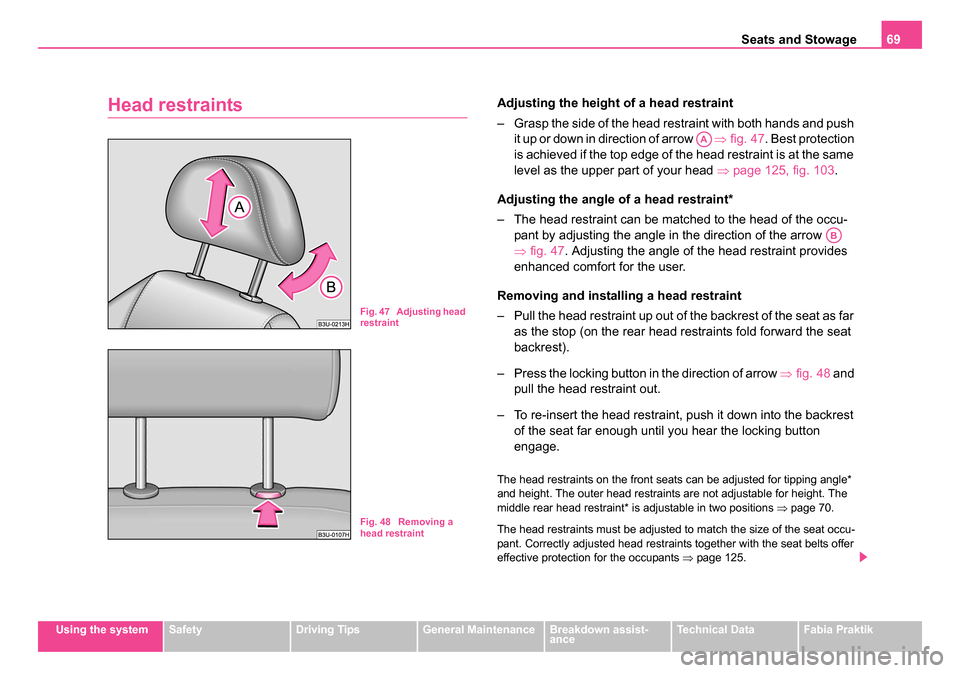
Head restraintsAdjusting the height of a head restraint
– Grasp the side of the head restraint with both hands and push it up or down in direction of arrow ⇒fig. 47. Best protection
is achieved if the top edge of the head restraint is at the same
level as the upper part of your head ⇒page 125, fig. 103 .
Adjusting the angle of a head restraint*
– The head restraint can be matched to the head of the occu- pant by adjusting the angle in the direction of the arrow
⇒fig. 47 . Adjusting the angle of the head restraint provides
enhanced comfort for the user.
Removing and installing a head restraint
– Pull the head restraint up out of the backrest of the seat as far as the stop (on the rear head restraints fold forward the seat
backrest).
– Press the locking button in the direction of arrow ⇒fig. 48 and
pull the head restraint out.
– To re-insert the head restraint, push it down into the backrest of the seat far enough until you hear the locking button
engage.
The head restraints on the front seats can be adjusted for tipping angle*
and height. The outer head restraints are not adjustable for height. The
middle rear head restraint* is adjustable in two positions ⇒page 70.
The head restraints must be adjusted to match the size of the seat occu-
pant. Correctly adjusted head restraints together with the seat belts offer
effective protection for the occupants ⇒page 125.
Fig. 47 Adjusting head
restraint
Fig. 48 Removing a
head restraint
AA
AB
sqc.1.book Seite 69 Mittwoch, 13. April 2005 1:09 13
Page 73 of 260

Seats and Stowage
72
The rear seats and the seat backrest can be folded forwards to
increase the volume of the luggage compartment ⇒page 73.
Both rear seats can be folded forward individually on vehicles
with divided rear seats*.
Folding the rear seat forwards
– In order to avoid causing any damage when folding the rear seat forward it is important to adjust the front seats so that no
damage can occur when this is done.
– Pull up the rear seats in the direction of arrow ⇒page 71,
fig. 51 and fold forwards in direction of arrow .
– Pull the unlocking knob and fold the rear seat backrest forwards ⇒page 71, fig. 52.
– Pull the head restraints out of the seat backrest.
– The head restraints can be inserted into the relevant holes of the folded forwards rear seats ⇒page 73, fig. 53 .
– Fold the seat backrest forwards completely.
Folding the rear seat back into position
– Install the head restraint in the partially lifted rear seat back- rest.
– Then push the seat backrest back into the upright position until it clicks into place - check by pulling on it.
– Make sure that the red part of the securing knob is not visible ⇒page 71, fig. 52 .
– Fold the rear seats back into its original position.
The rear seat is equipped with an audible signalling of the rear seat back-
rest securing system. If you unlock the rear seat backrest, the securing
knob ⇒page 71, fig. 52 pushes out from it with a red surface. If you
have correctly interlocked the rear seat backrest, the securing knob slides
back into the rear seat backrest and is no longer visible.
WARNING
•The belt lock and pelvic belt must be in their original position
after folding back the rear seats and seat backrest - they must be
ready to use.
•The seat backrests must be securely interlocked in position so
that no objects in the luggage compartment can slide forward if
there is sudden braking - risk of injury.
•Ensure that the seat backrest on the rear seats is securely inter-
locked in position when the vehicle is fitted with three-point safety
belts for the middle rear seat. It is only then that the three-point seat
belt can reliably fulfil its function.
A1
A2
AA
AA
AA
sqc.1.book Seite 72 Mittwoch, 13. April 2005 1:09 13
Page 81 of 260

Seats and Stowage
80
belts for the middle rear seat. It is only then that the three-point seat
belt can reliably fulfil its function.
•First check for yourself that the cross road is inserted into the
mounts in the front position!
Use behind the front seats
Unrolling
– Fold the rear seats forwards ⇒page 71
– Pull the net partiton net at the plate out of the housing ⇒fig. 63.
– Insert the cross rod into the mount first on the one side and push the cross rod forward.
– In the same way, fix the cross rod to the other side of the vehicle, mount .
Rolling up
– Pull the cross rod back slightly, first on the one side then on the other side and take the cross rod out of the mount
⇒fig. 64.
– Hold the cross rod in such a way that the net partition can roll
up slowily and without damage into housing .
WARNING (continued)
AC
Fig. 63 Unrolling net
partition
Fig. 64 Rolling up net
partition
AAAB
AC
AC
AC
AB
sqc.1.book Seite 80 Mittwoch, 13. April 2005 1:09 13