Page 212 of 238
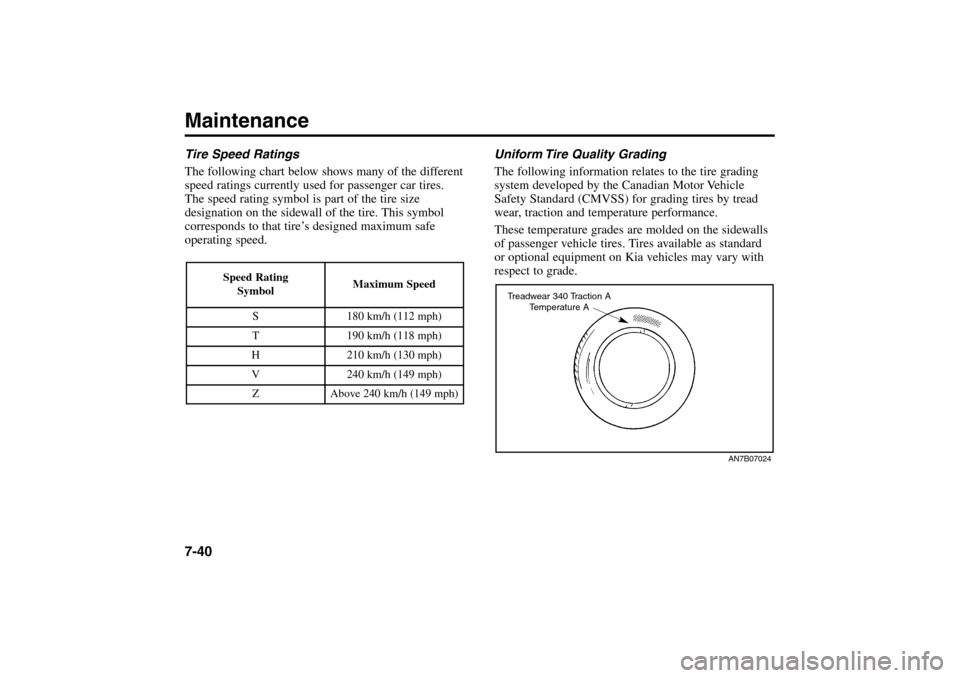
Uniform Tire Quality Grading
The following information relates to the tire grading
system developed by the Canadian Motor Vehicle
Safety Standard (CMVSS) for grading tires by tread
wear, traction and temperature performance.
These temperature grades are molded on the sidewalls
of passenger vehicle tires. Tires available as standard
or optional equipment on Kia vehicles may vary with
respect to grade.
Maintenance7-40Tire Speed Ratings
The following chart below shows many of the different
speed ratings currently used for passenger car tires.
The speed rating symbol is part of the tire size
designation on the sidewall of the tire. This symbol
corresponds to that tire’s designed maximum safe
operating speed.
Speed Rating
Symbol
Maximum Speed
S
180 km/h (112 mph)
T
190 km/h (118 mph)
H
210 km/h (130 mph)
V
240 km/h (149 mph)
Z
Above 240 km/h (149 mph)
AN7B07024
Treadwear 340 Traction A
Temperature A
RIO ENG CNA 7-2.qxd 7/29/05 5:18 PM Page 40
Page 213 of 238

Temperature – A, B and C
The temperature grades are A (the highest), B and C,
representing the tire’s resistance to generate heat and to
dissipate heat when tested under controlled conditions
on a specified indoor laboratory test wheel. Sustained
high temperatures can cause the material of the tire to
degenerate and reduce tire life, and excessive
temperature can lead to sudden tire failure. Grade C
corresponds to a level of performance that all
passenger vehicle tires must meet under the Canadian
Motor Vehicle Safety Standard No. 109. Grades A and
B represent higher levels of performance on the
laboratory test wheel than the maximum required by
law.
7-41
Tread Wear
The tread wear grade is a comparative rating based on
the wear rate of the tire when tested under controlled
conditions on a specified government test course. For
example, a tire graded 150 would wear one-and-a-half
times as well on the government course as a tire
graded 100.
The relative performance of tires depends upon the
actual conditions of their use. Variations in driving
habits, service practices and differences in road
characteristics and climate may significantly affect
performance.
Traction – A, B and C
The traction grades, from highest to lowest, are A, B
and C, and they represent the tire’s ability to stop on
wet pavement as measured under controlled conditions
on specified government test surfaces of asphalt and
concrete. A tire marked C may have poor traction
performance.
WARNING -Tire Temperature
The temperature grade for a tire is established
for a tire that is properly inflated and not
overloaded. Excessive speed, underinflation, or
excessive loading, either separately or in
combination, can cause heat build-up and
possible sudden tire failure. This can cause loss
of vehicle control and death or personal injury.
RIO ENG CNA 7-2.qxd 7/29/05 5:18 PM Page 41
Page 220 of 238

Maintenance7-48
Engine oil viscosity (thickness) has an effect on fuel
economy and cold weather operation (starting and oil
flow). Lower viscosity engine oils can provide better
fuel economy and cold weather performance, however,
higher viscosity engine oils are required for
satisfactory lubrication in hot weather. Using oils of
any viscosity other than those recommended could
result in engine damage.
When choosing an oil, consider the range of
temperature your vehicle will be operated in before the
next oil change. Then select the recommended oil
viscosity from the chart.
✻ ✻
NOTICE
Always be sure to clean the area around any filler
plug, drain plug, or dipstick before checking or
draining any lubricant. This is especially
important in dusty or sandy areas and when the
vehicle is used on unpaved roads. Cleaning the
plug and dipstick areas will prevent dirt and grit
from entering the engine and other mechanisms
that could be damaged.
Recommended SAE Viscosity Number
Temperature Range for SAE Viscosity Numbers
Temperature
Gasoline
Engine Oil°C
(°F)
-30 -20 -10 0 10 20 30 40 50
-10 0 20 40 60 80 100 120
10W-30
5W-20, 5W-30
RIO ENG CNA 7-2.qxd 7/29/05 5:18 PM Page 48
Page 223 of 238

7-51 Finish Damage Repair
Deep scratches or stone chips in the painted surface
must be repaired promptly. Exposed metal will quickly
rust and may develop into a major repair expense.Bright-Metal Maintenance To remove road tar and insects, use a tar remover,
not a scraper or other sharp object.
To protect the surfaces of bright-metal parts from
corrosion, apply a coating of wax or chrome
preservative and rub to a high luster.
During winter weather or in coastal areas, cover the
bright metal parts with a heavier coating of wax or
preservative. If necessary, coat the parts with non-
corrosive petroleum jelly or other protective
compound.
✻ ✻
NOTICE
If your vehicle is damaged and requires any metal
repair or replacement, be sure the body shop
applies anti-corrosion materials to the parts
repaired or replaced.
Underbody MaintenanceCorrosive materials used for ice and snow removal or
dust control may collect on the underbody. If these
materials are not removed, accelerated rusting can
occur on underbody parts, such as the fuel lines, frame,
floor pan and exhaust system, even though they have
been treated with rust protection.
Thoroughly flush the vehicle underbody and wheel
openings with lukewarm or cold water once a month
and especially at the end of each winter. Pay special
attention to these areas because it is difficult to see all
the mud and dirt. The lower edges of doors, rocker
panels, and frame members have drain holes that
should not be allowed to clog with dirt; trapped water
in these areas can cause rusting. It will do more harm
than good to wet down the road grime without
removing it.
RIO ENG CNA 7-2.qxd 7/29/05 5:18 PM Page 51
Page:
< prev 1-8 9-16 17-24