2005 FORD SUPER DUTY lock
[x] Cancel search: lockPage 14 of 72
the engine sound level will decrease due to the activation of
PCM-controlled sound reduction features.
If your vehicle is operated in a heavy snow storm or blowing snow
conditions, the engine air induction may become partially clogged with
snow and/or ice. If this occurs, the engine may experience a significant
reduction in power output. At the earliest opportunity, clear all the snow
and/or ice away from the air induction inlet.
Operation in snow
Vehicle operation in heavy snowfall or in dry loose snow that may swirl
around the front of the vehicle may feed excessive amounts of snow into
the air intake system. This could plug the air cleaner with snow and
cause the engine to stall and/or lose power.
Refer toAir filter restriction gaugeandEngine air filterin the
Instrumentationsection of this supplement for more information.
Operation in standing water
Ingestion of water into the diesel engine can result in immediate and
severe damage to the engine. If driving through water, slow down to
avoid splashing water into the intake. If the engine stalls, and ingestion
of water into the engine is suspected, do not try to restart the engine.
Consult your dealer for service immediately.
Engine block heater (if equipped)
Refer to theDrivingchapter in theOwner’s Guide.
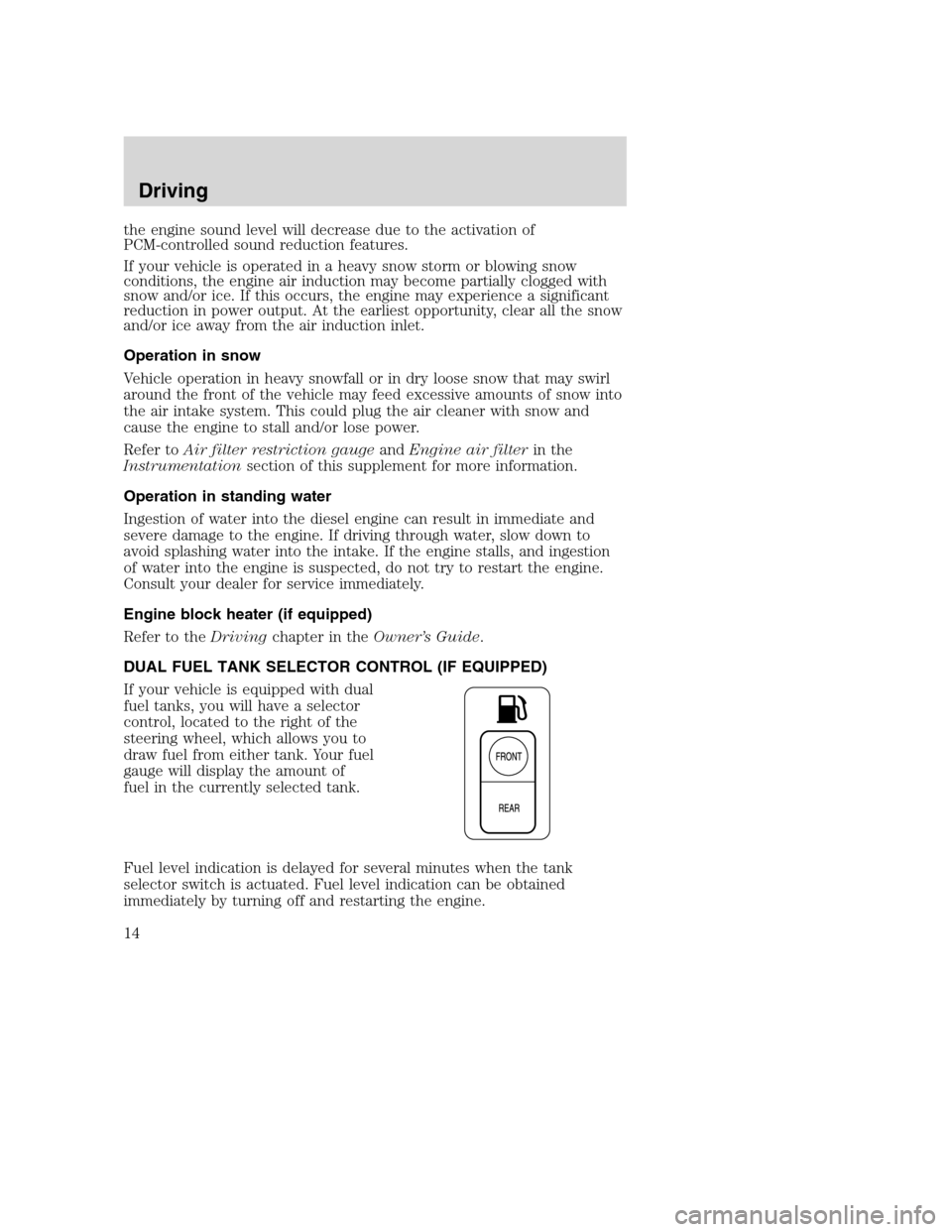
DUAL FUEL TANK SELECTOR CONTROL (IF EQUIPPED)
If your vehicle is equipped with dual
fuel tanks, you will have a selector
control, located to the right of the
steering wheel, which allows you to
draw fuel from either tank. Your fuel
gauge will display the amount of
fuel in the currently selected tank.
Fuel level indication is delayed for several minutes when the tank
selector switch is actuated. Fuel level indication can be obtained
immediately by turning off and restarting the engine.
Driving
14
Page 25 of 72
ENGINE
Engines are more efficient when they are clean because grease and dirt
buildup keep the engine warmer than normal. When washing:
•Take care when using a power washer to clean the engine. The
high-pressure fluid could penetrate the sealed parts and cause
damage.
•Do not spray a hot engine with cold water to avoid cracking the
engine block or other engine components.
•Spray Motorcraft Engine Shampoo and Degreaser (ZC-20) on all parts
that require cleaning and pressure rinse clean.
•Never wash or rinse the engine while it is running; water in the
running engine may cause internal damage.
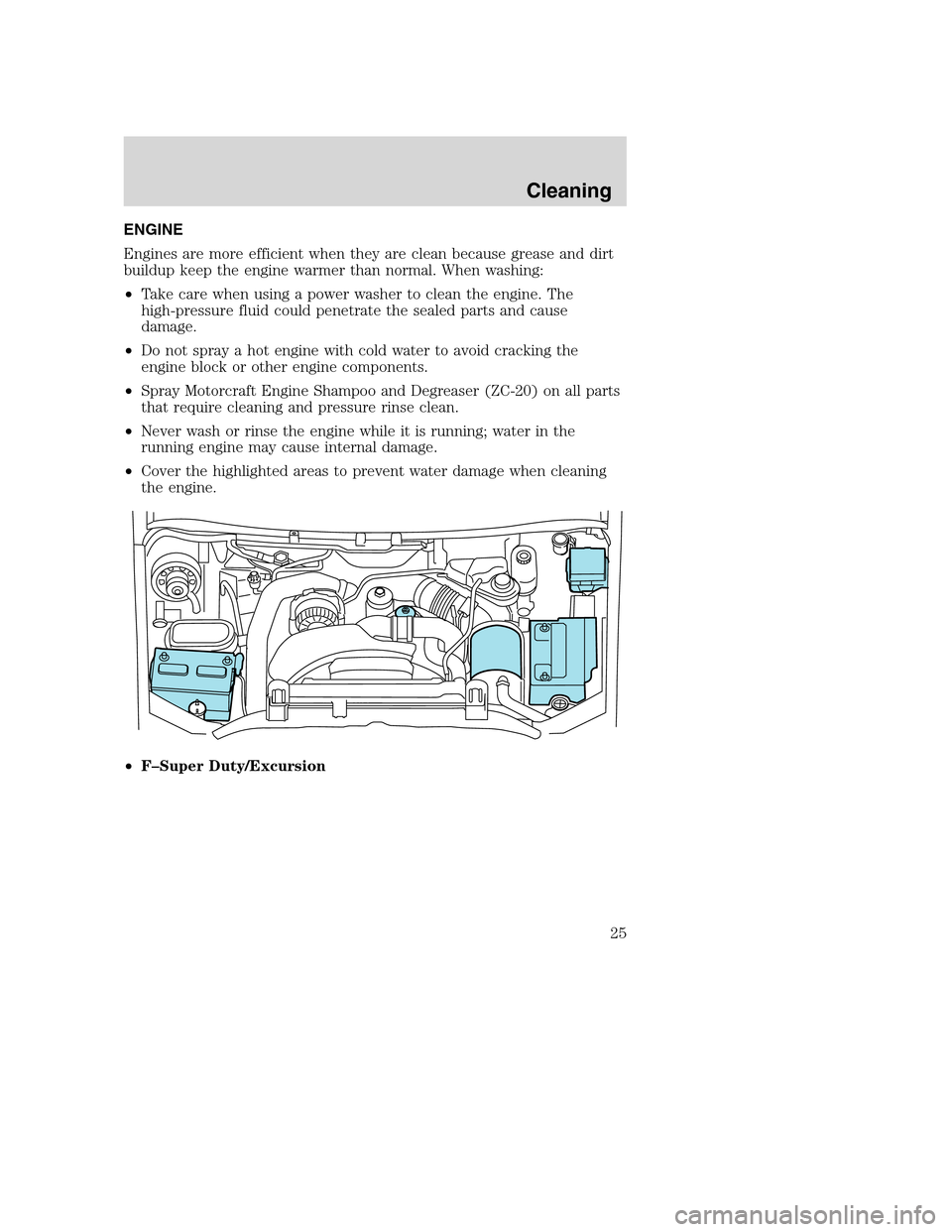
•Cover the highlighted areas to prevent water damage when cleaning
the engine.
•F–Super Duty/Excursion
Cleaning
Cleaning
25
Page 33 of 72
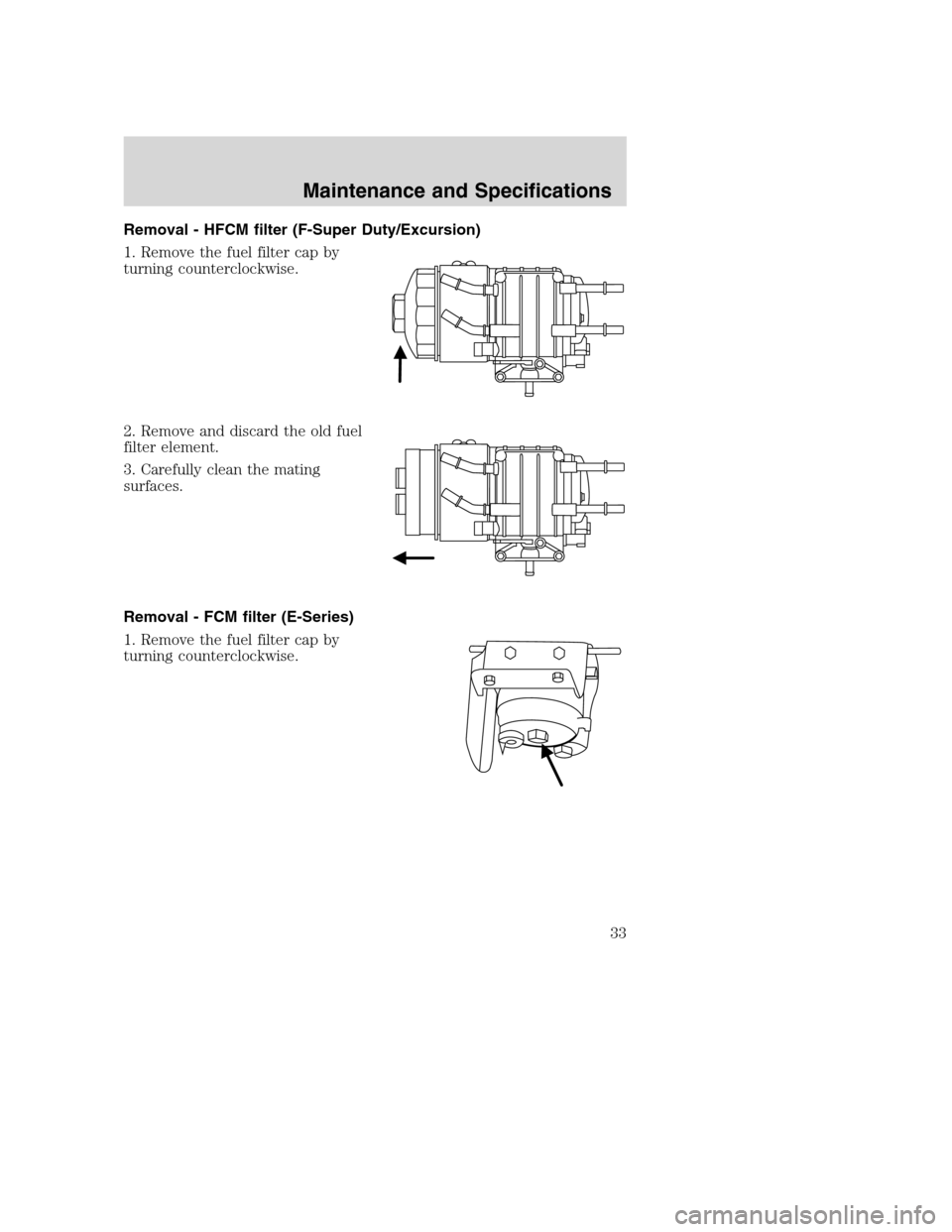
Removal - HFCM filter (F-Super Duty/Excursion)
1. Remove the fuel filter cap by
turning counterclockwise.
2. Remove and discard the old fuel
filter element.
3. Carefully clean the mating
surfaces.
Removal - FCM filter (E-Series)
1. Remove the fuel filter cap by
turning counterclockwise.
Maintenance and Specifications
33
Page 34 of 72
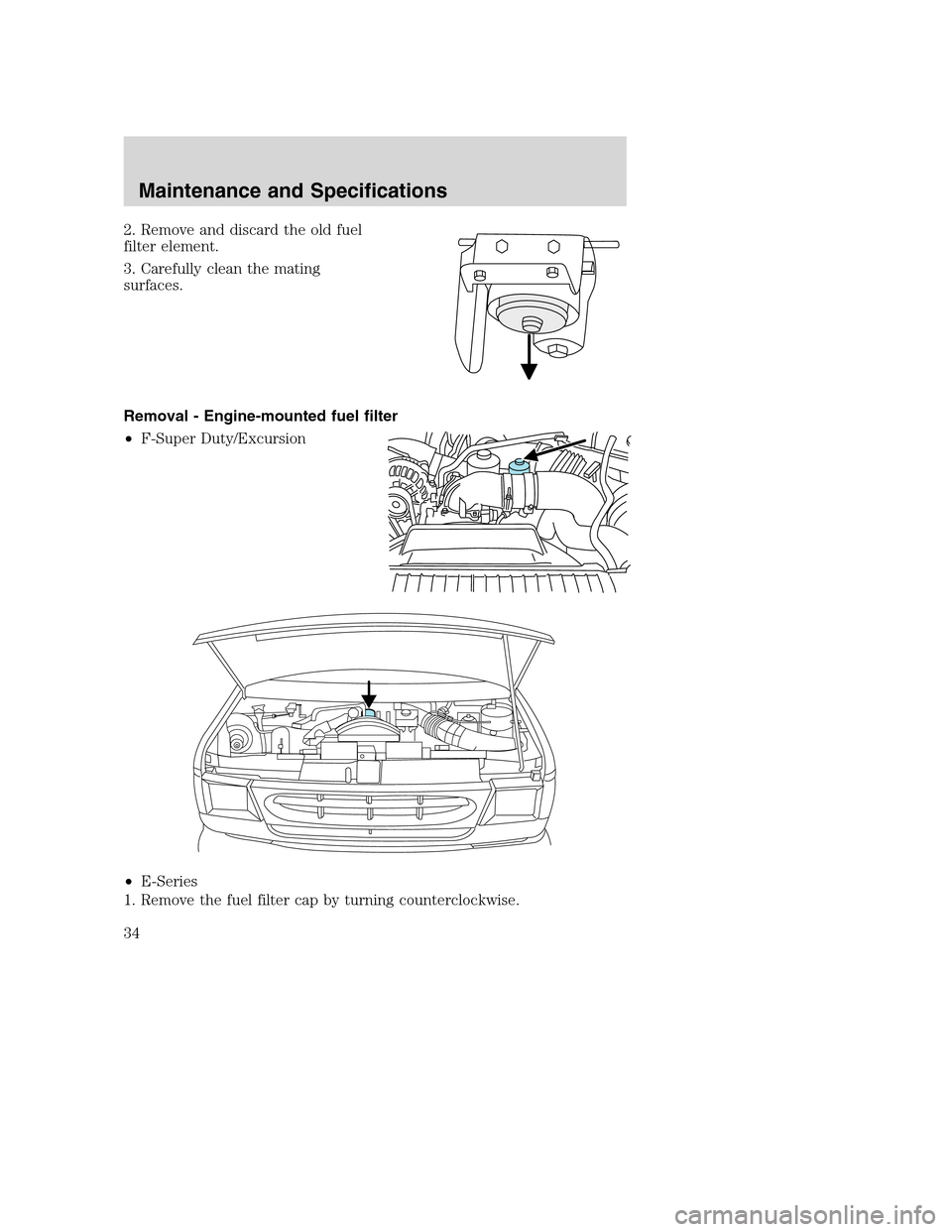
2. Remove and discard the old fuel
filter element.
3. Carefully clean the mating
surfaces.
Removal - Engine-mounted fuel filter
•F-Super Duty/Excursion
•E-Series
1. Remove the fuel filter cap by turning counterclockwise.
Maintenance and Specifications
34
Page 39 of 72
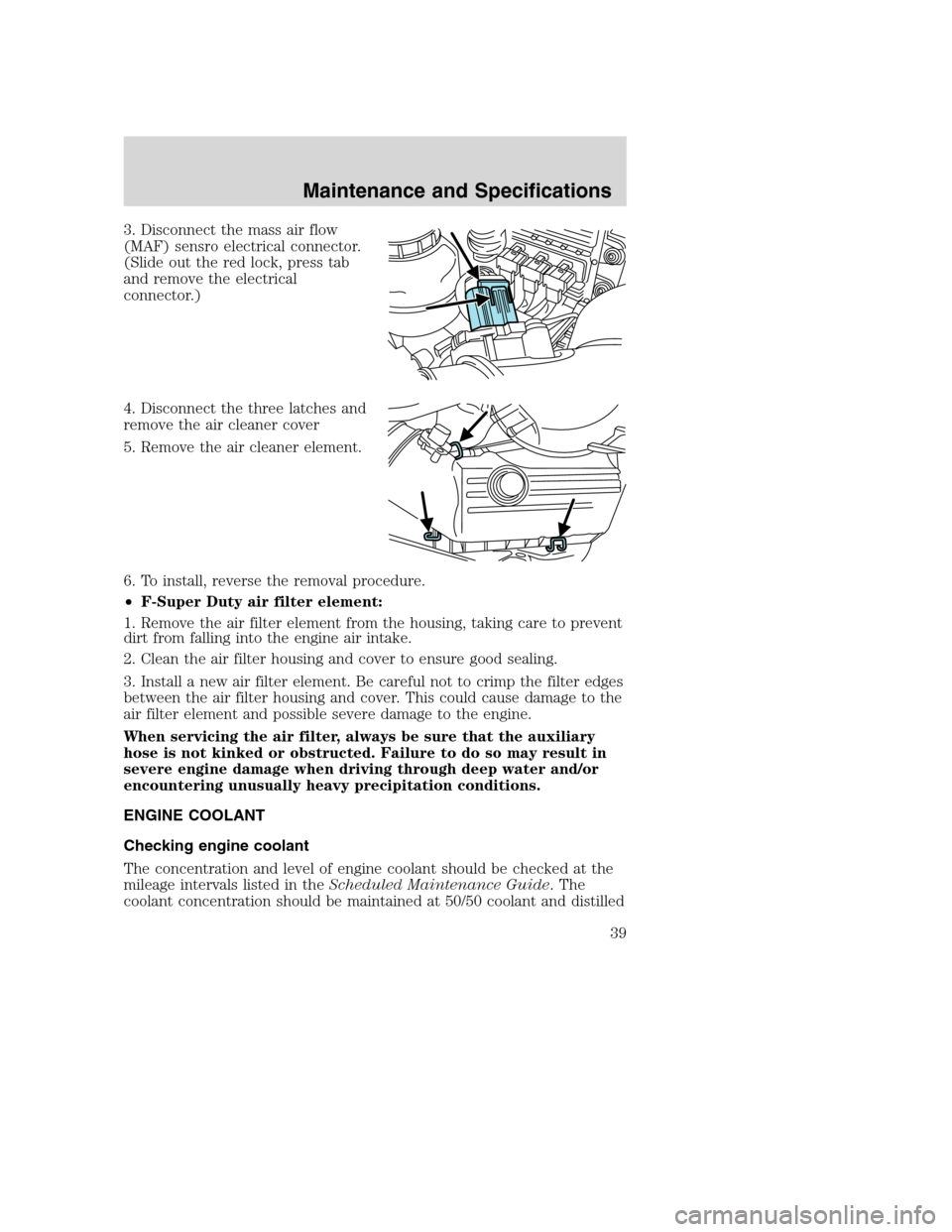
3. Disconnect the mass air flow
(MAF) sensro electrical connector.
(Slide out the red lock, press tab
and remove the electrical
connector.)
4. Disconnect the three latches and
remove the air cleaner cover
5. Remove the air cleaner element.
6. To install, reverse the removal procedure.
•F-Super Duty air filter element:
1. Remove the air filter element from the housing, taking care to prevent
dirt from falling into the engine air intake.
2. Clean the air filter housing and cover to ensure good sealing.
3. Install a new air filter element. Be careful not to crimp the filter edges
between the air filter housing and cover. This could cause damage to the
air filter element and possible severe damage to the engine.
When servicing the air filter, always be sure that the auxiliary
hose is not kinked or obstructed. Failure to do so may result in
severe engine damage when driving through deep water and/or
encountering unusually heavy precipitation conditions.
ENGINE COOLANT
Checking engine coolant
The concentration and level of engine coolant should be checked at the
mileage intervals listed in theScheduled Maintenance Guide. The
coolant concentration should be maintained at 50/50 coolant and distilled
Maintenance and Specifications
39
Page 42 of 72
remove the coolant pressure relief cap on the radiator of a vehicle with
an overflow system, follow these steps to add engine coolant.
To reduce the risk of personal injury, make sure the engine is
cool before unscrewing the coolant pressure relief cap. The
cooling system is under pressure; steam and hot liquid can come out
forcefully when the cap is loosened slightly.
1. Before you begin, turn the engine off and let it cool.
2. When the engine is cool, wrap a thick cloth around the coolant
pressure relief cap on the coolant reservoir (a translucent plastic bottle).
Slowly turn cap counterclockwise (left) until pressure begins to release.
3. Step back while the pressure releases.
4. When you are sure that all the pressure has been released, use the
cloth to turn it counterclockwise and remove the cap.
5. Fill the coolant reservoir slowly with the proper coolant mixture (see
above), to within the“COLD FILL RANGE”or the“FULL COLD”level on
the reservoir. If you removed the radiator cap in an overflow system, fill
the radiator until the coolant is visible and radiator is almost full.
6. Replace the cap. Turn until tightly installed. (Cap must be tightly
installed to prevent coolant loss.)
After any coolant has been added, check the coolant concentration (refer
toChecking engine coolant). If the concentration is not 50/50
(protection to–34°F/–36°C), drain some coolant and adjust the
concentration. It may take several drains and additions to obtain a 50/50
coolant concentration.
Whenever coolant has been added, the coolant level in the coolant
reservoir should be checked the next few times you drive the vehicle. If
necessary, add enough 50/50 concentration of engine coolant and
distilled water to bring the liquid level to the proper level.
If you have to add more than 1.0 quart (1.0 liter) of engine coolant per
month, have your dealer check the engine cooling system. Your cooling
system may have a leak. Operating an engine with a low level of coolant
can result in engine overheating and possible engine damage.
Recycled engine coolant
Ford Motor Company does NOT recommend the use of recycled engine
coolant in vehicles originally equipped with Motorcraft Premium Gold
Engine Coolant since a Ford-approved recycling process is not yet
available.
Maintenance and Specifications
42
Page 47 of 72
•Driving with frozen coolant.
•Sticking thermostat.
•Overloading or pulling heavy trailers during hot weather.
•Grill or radiator air blockage.
•Slipping or missing drive belt.
•Plugged or very dirty air cleaner element.
If fuses burn out
Burned-out or blown fuses usually indicate an electrical short-circuit,
although a fuse may occasionally burn out from vibration. Insert a second
fuse. If this fuse immediately burns out and you cannot locate the cause,
return your vehicle to your dealer for a circuit check.
Replacement fuses and circuit breakers must always be the same
rating as the original equipment shown. Never replace a fuse or
circuit breaker with one of a higher rating. Higher rated fuses or circuit
breakers could allow circuit overloading in the event of a circuit
malfunction, resulting in severe vehicle damage or personal injury due
to fire.
Refer to theOwner Guidefor replacement of fuses.
MOTORCRAFT PART NUMBERS
Item Ford Part Number
Engine Oil Filter (Use this filter
Only)3C3Z-6731–AA (FL–2016)
Air Filter–Super Duty
1FA-1746
Air Filter–E-series1FA-1769
Battery (2 Required) BXT-65-750
1Always use the authorized Motorcraft air filter listed.Failure to use
the correct air filter may result in severe engine damage.
Maintenance and Specifications
47
Page 53 of 72
•Check power steering fluid level
•Check washer spray, wiper operation and clean all wiper blades
(replace as necessary)
•Check parking brake for proper operation
•Check and lubricate all hinges, latches and outside locks
•Check and lubricate door rubber weatherstrips
•Check and clean body and door drain holes
•Check safety warning lamps (brake, ABS, air bag, safety belt) for
operation
•Check cooling system fluid level and coolant strength
•Check battery connections and clean if necessary
•Check clutch fluid level, if equipped
Multi-point Inspection
In order to keep your vehicle running right, it is important that you have
the systems on your vehicle checked regularly. This can help identify any
potential issue before there are any problems. Ford Motor Company
suggests the following multi-point inspection to be performed at every
scheduled maintenance as the way to ensure your vehicle keeps running
right.
Multi-point inspection - Recommended at every visit
•Check and top up fluid levels: brake, coolant recovery reservoir,
manual and automatic transmission, power steering and window
washer.
•Inspect tires for wear and check air pressure, including spare.
•Check exhaust system for leaks, damage, loose parts and foreign
materials.
•Check battery performance.
•Check operation of horn, exterior lamps, turn signals and hazard
warning lights.
•Check radiator, coolers and heater and air conditioning hoses.
•Inspect windshield washer spray and wiper operation.
•Check windshield for cracks, chips and pitting.
•Inspect for oil and fluid leaks.
•Inspect air cleaner filter.
General Owner’s Information
53