2005 CHEVROLET MALIBU stop start
[x] Cancel search: stop startPage 300 of 434
When You Are Ready to Leave After
Parking on a Hill
1. Apply your regular brakes and hold the pedal down
while you:
start your engine,
shift into a gear, and
release the parking brake.
2. Let up on the brake pedal.
3. Drive slowly until the trailer is clear of the chocks.
4. Stop and have someone pick up and store
the chocks.
Maintenance When Trailer Towing
Your vehicle will need service more often when you’re
pulling a trailer. Things that are especially important
in trailer operation are automatic transaxle uid (don’t
overll), engine oil, drive belt, cooling system and brake
system. Each of these is covered in this manual, and
the Index will help you nd them quickly. If you’re
trailering, it’s a good idea to review this information
before you start your trip.
Check periodically to see that all hitch nuts and bolts
are tight.
Engine Cooling When Trailer Towing
Your cooling system may temporarily overheat during
severe operating conditions. SeeEngine Overheating on
page 5-24.
4-44
Page 301 of 434
Service............................................................5-3
Doing Your Own Service Work.........................5-4
Adding Equipment to the Outside of Your
Vehicle......................................................5-5
Fuel................................................................5-5
Gasoline Octane............................................5-5
Gasoline Specications....................................5-5
California Fuel...............................................5-6
Additives.......................................................5-6
Fuels in Foreign Countries...............................5-7
Filling the Tank..............................................5-8
Filling a Portable Fuel Container.....................5-10
Checking Things Under the Hood....................5-10
Hood Release..............................................5-11
Engine Compartment Overview.......................5-12
Engine Oil...................................................5-15
Engine Oil Life System..................................5-18
Engine Air Cleaner/Filter................................5-20
Automatic Transaxle Fluid..............................5-21
Engine Coolant.............................................5-22
Coolant Surge Tank Pressure Cap..................5-24
Engine Overheating.......................................5-24
Cooling System............................................5-26
Windshield Washer Fluid................................5-30
Brakes........................................................5-32
Battery........................................................5-35
Jump Starting...............................................5-36Bulb Replacement..........................................5-41
Halogen Bulbs..............................................5-41
Headlamps..................................................5-41
Taillamps, Turn Signal, Stoplamps and
Back-up Lamps.........................................5-43
Replacement Bulbs.......................................5-45
Windshield Wiper Blade Replacement..............5-45
Tires..............................................................5-47
Tire Sidewall Labelling...................................5-48
Tire Terminology and Denitions.....................5-50
Ination - Tire Pressure.................................5-53
Tire Inspection and Rotation...........................5-54
When It Is Time for New Tires.......................5-55
Buying New Tires.........................................5-56
Uniform Tire Quality Grading..........................5-57
Wheel Alignment and Tire Balance..................5-58
Wheel Replacement......................................5-58
Tire Chains..................................................5-60
If a Tire Goes Flat........................................5-61
Changing a Flat Tire.....................................5-62
Removing the Spare Tire and Tools................5-63
Removing the Flat Tire and Installing the
Spare Tire................................................5-65
Storing a Flat or Spare Tire and Tools............5-70
Compact Spare Tire......................................5-73
Section 5 Service and Appearance Care
5-1
Page 309 of 434
{CAUTION:
If you spill fuel and then something ignites it,
you could be badly burned. Fuel can spray out
on you if you open the fuel cap too quickly.
This spray can happen if your tank is nearly
full, and is more likely in hot weather. Open
the fuel cap slowly and wait for any hiss noise
to stop. Then unscrew the cap all the way.
Be careful not to spill fuel. Do not top off or overll the
tank and wait a few seconds after you have nished
pumping before removing the nozzle. Clean fuel
from painted surfaces as soon as possible. See
Washing Your Vehicle on page 5-77.
When replacing the fuel cap, turn it clockwise until it
clicks. Make sure the cap is fully installed. The
diagnostic system can determine if the fuel cap has
been left off or improperly installed. This would allow fuel
to evaporate into the atmosphere. SeeMalfunction
Indicator Lamp on page 3-41.The CHECK GAS CAP message will be displayed on
the Driver Information Center (DIC) if the fuel cap is not
properly installed. SeeDIC Warnings and Messages
on page 3-52for more information.
{CAUTION:
If a re starts while you are refueling, do not
remove the nozzle. Shut off the ow of fuel by
shutting off the pump or by notifying the
station attendant. Leave the area immediately.
Notice:If you need a new fuel cap, be sure to get
the right type. Your dealer can get one for you.
If you get the wrong type, it may not t properly.
This may cause your malfunction indicator lamp to
light and may damage your fuel tank and emissions
system. SeeMalfunction Indicator Lamp on
page 3-41.
5-9
Page 339 of 434
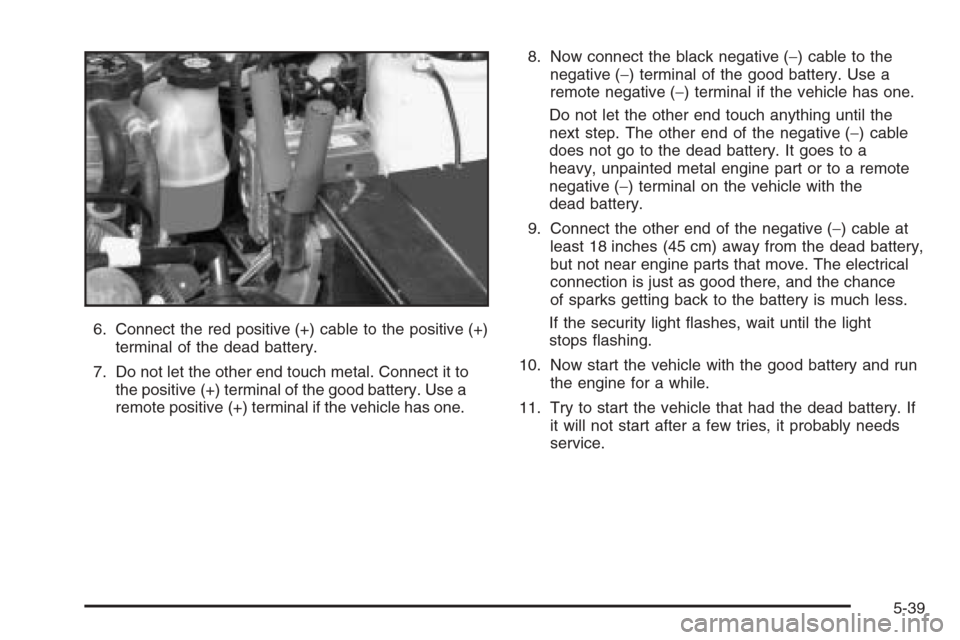
6. Connect the red positive (+) cable to the positive (+)
terminal of the dead battery.
7. Do not let the other end touch metal. Connect it to
the positive (+) terminal of the good battery. Use a
remote positive (+) terminal if the vehicle has one.8. Now connect the black negative (−) cable to the
negative (−) terminal of the good battery. Use a
remote negative (−) terminal if the vehicle has one.
Do not let the other end touch anything until the
next step. The other end of the negative (−) cable
does not go to the dead battery. It goes to a
heavy, unpainted metal engine part or to a remote
negative (−) terminal on the vehicle with the
dead battery.
9. Connect the other end of the negative (−) cable at
least 18 inches (45 cm) away from the dead battery,
but not near engine parts that move. The electrical
connection is just as good there, and the chance
of sparks getting back to the battery is much less.
If the security light ashes, wait until the light
stops ashing.
10. Now start the vehicle with the good battery and run
the engine for a while.
11. Try to start the vehicle that had the dead battery. If
it will not start after a few tries, it probably needs
service.
5-39
Page 432 of 434
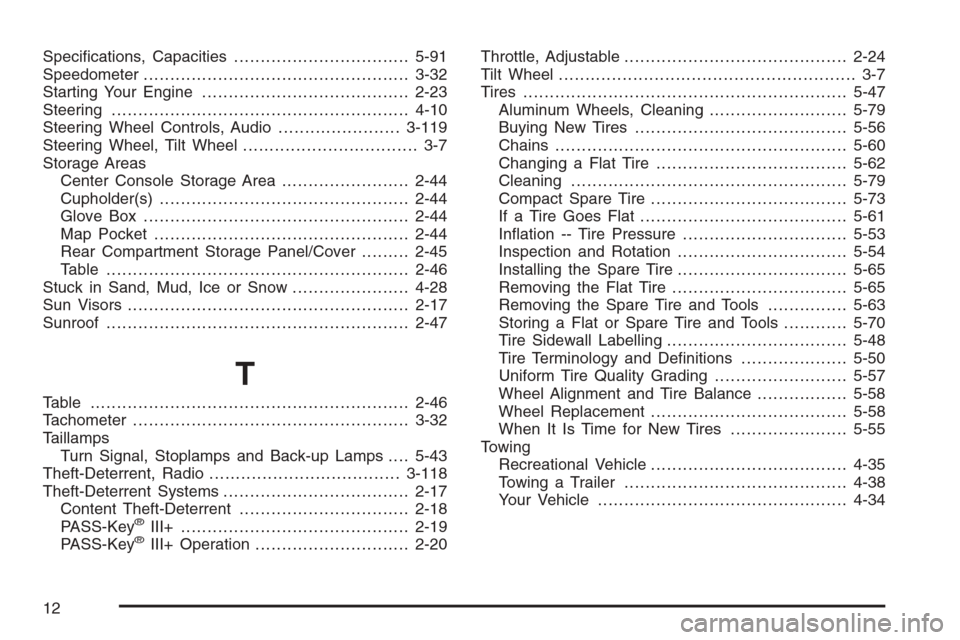
Specications, Capacities.................................5-91
Speedometer..................................................3-32
Starting Your Engine.......................................2-23
Steering........................................................4-10
Steering Wheel Controls, Audio.......................3-119
Steering Wheel, Tilt Wheel................................. 3-7
Storage Areas
Center Console Storage Area........................2-44
Cupholder(s)...............................................2-44
Glove Box..................................................2-44
Map Pocket................................................2-44
Rear Compartment Storage Panel/Cover.........2-45
Table.........................................................2-46
Stuck in Sand, Mud, Ice or Snow......................4-28
Sun Visors.....................................................2-17
Sunroof.........................................................2-47
T
Table............................................................2-46
Tachometer....................................................3-32
Taillamps
Turn Signal, Stoplamps and Back-up Lamps....5-43
Theft-Deterrent, Radio....................................3-118
Theft-Deterrent Systems...................................2-17
Content Theft-Deterrent................................2-18
PASS-Key
®III+...........................................2-19
PASS-Key®III+ Operation.............................2-20Throttle, Adjustable..........................................2-24
Tilt Wheel........................................................ 3-7
Tires.............................................................5-47
Aluminum Wheels, Cleaning..........................5-79
Buying New Tires........................................5-56
Chains.......................................................5-60
Changing a Flat Tire....................................5-62
Cleaning....................................................5-79
Compact Spare Tire.....................................5-73
If a Tire Goes Flat.......................................5-61
Ination -- Tire Pressure...............................5-53
Inspection and Rotation................................5-54
Installing the Spare Tire................................5-65
Removing the Flat Tire.................................5-65
Removing the Spare Tire and Tools...............5-63
Storing a Flat or Spare Tire and Tools............5-70
Tire Sidewall Labelling..................................5-48
Tire Terminology and Denitions....................5-50
Uniform Tire Quality Grading.........................5-57
Wheel Alignment and Tire Balance.................5-58
Wheel Replacement.....................................5-58
When It Is Time for New Tires......................5-55
Towing
Recreational Vehicle.....................................4-35
Towing a Trailer..........................................4-38
Your Vehicle...............................................4-34
12