2005 CHEVROLET CLASSIC warning
[x] Cancel search: warningPage 241 of 320
Uniform Tire Quality Grading
Quality grades can be found where applicable on the
tire sidewall between tread shoulder and maximum
section width. For example:
Treadwear 200 Traction AA Temperature A
The following information relates to the system
developed by the United States National Highway
Traffic Safety Administration, which grades tires by
treadwear, traction and temperature performance. (This
applies only to vehicles sold in the United States.)
The grades are molded on the sidewalls of most
passenger car tires. The Uniform Tire Quality Grading
system does not apply to deep tread, winter-type
snow tires, space-saver or temporary use spare tires,
tires with nominal rim diameters of 10 to 12 inches
(25 to 30 cm), or to some limited-production tires.
While the tires available on General Motors passenger
cars and light trucks may vary with respect to these
grades, they must also conform to federal safety
requirements and additional General Motors Tire
Performance Criteria (TPC) standards.
Treadwear
The treadwear grade is a comparative rating based on
the wear rate of the tire when tested under controlled
conditions on a specified government test course.
For example, a tire graded 150 would wear one and
a half (1.5) times as well on the government course as
a tire graded 100. The relative performance of tires
depends upon the actual conditions of their use,
however, and may depart significantly from the norm
due to variations in driving habits, service practices and
differences in road characteristics and climate.
Traction – AA, A, B, C
The traction grades, from highest to lowest, are AA, A,
B, and C. Those grades represent the tire’s ability
to stop on wet pavement as measured under controlled
conditions on specified government test surfaces of
asphalt and concrete. A tire marked C may have poor
traction performance. Warning: The traction grade
assigned to this tire is based on straight-ahead braking
traction tests, and does not include acceleration,
cornering, hydroplaning, or peak traction characteristics.
5-57
Page 242 of 320
Temperature – A, B, C
The temperature grades are A (the highest), B, and C,
representing the tire’s resistance to the generation
of heat and its ability to dissipate heat when tested
under controlled conditions on a specified indoor
laboratory test wheel. Sustained high temperature can
cause the material of the tire to degenerate and
reduce tire life, and excessive temperature can lead to
sudden tire failure. The grade C corresponds to a
level of performance which all passenger car tires must
meet under the Federal Motor Vehicle Safety Standard
No. 109. Grades B and A represent higher levels of
performance on the laboratory test wheel than the
minimum required by law.
Warning: The temperature grade for this tire is
established for a tire that is properly inflated and not
overloaded. Excessive speed, underinflation, or
excessive loading, either separately or in combination,
can cause heat buildup and possible tire failure.
Wheel Alignment and Tire Balance
The wheels on your vehicle were aligned and balanced
carefully at the factory to give you the longest tire life
and best overall performance.If you notice unusual tire wear or your vehicle pulling
one way or the other, the alignment may need to
be reset. If you notice your vehicle vibrating when driving
on a smooth road, your wheels may need to be
rebalanced.
Wheel Replacement
Replace any wheel that is bent, cracked or badly rusted
or corroded. If wheel nuts keep coming loose, the
wheel, wheel bolts and wheel nuts should be replaced.
If the wheel leaks air, replace it (except some
aluminum wheels, which can sometimes be repaired).
See your dealer if any of these conditions exist.
Your dealer will know the kind of wheel you need.
Each new wheel should have the same load-carrying
capacity, diameter, width, offset and be mounted
the same way as the one it replaces.
If you need to replace any of your wheels, wheel
bolts or wheel nuts, replace them only with new GM
original equipment parts. This way, you will be sure to
have the right wheel, wheel bolts and wheel nuts
for your vehicle.
5-58
Page 244 of 320
If a Tire Goes Flat
It is unusual for a tire to blowout while you’re driving,
especially if you maintain your tires properly. If air goes
out of a tire, it is much more likely to leak out slowly.
But if you should ever have a blowout, here are a
few tips about what to expect and what to do:
If a front tire fails, the flat tire will create a drag that
pulls the vehicle toward that side. Take your foot off the
accelerator pedal and grip the steering wheel firmly.
Steer to maintain lane position, and then gently brake to
a stop well out of the traffic lane.
A rear blowout, particularly on a curve, acts much like a
skid and may require the same correction you would;
use in a skid. In any rear blowout, remove your foot from
the accelerator pedal. Get the vehicle under control
by steering the way you want the vehicle to go. It may
be very bumpy and noisy, but you can still steer. Gently
brake to a stop, well off the road if possible.{CAUTION:
Lifting a vehicle and getting under it to do
maintenance or repairs is dangerous without
the appropriate safety equipment and training.
The jack provided with your vehicle is
designed only for changing a at tire. If it is
used for anything else, you or others could be
badly injured or killed if the vehicle slips off
the jack. Use the jack provided with your
vehicle only for changing a at tire.
If a tire goes flat, the next part shows how to use your
jacking equipment to change a flat tire safely.
Changing a Flat Tire
If a tire goes flat, avoid further tire and wheel damage
by driving slowly to a level place. Turn on your vehicle’s
hazard warning flashers. SeeHazard Warning Flashers
on page 3-6for more information.
5-60
Page 255 of 320
Appearance Care
Cleaning products can be hazardous. Some are toxic.
Other cleaning products can burst into flames if a match
is struck near them or if they get on a hot part of the
vehicle. Some are dangerous if their fumes are inhaled
in an enclosed space. When anything from a container
is used to clean the vehicle, be sure to follow the
manufacturer’s warnings and instructions. Always open
the doors or windows of the vehicle when cleaning
the inside.
Never use these to clean the vehicle:
•Benzene
•Naphtha
•Carbon Tetrachloride
•Acetone
•Paint Thinner
•Turpentine
•Lacquer Thinner
•Nail Polish Remover
They can all be hazardous — some more than
others — and they can all damage the vehicle, too.Do not use any of these products unless this manual
says you can. In many uses, these will damage
the vehicle:
•Alcohol
•Laundry Soap
•Bleach
•Reducing Agents
Fabric/Carpet
Use a vacuum cleaner often to get rid of dust and loose
dirt. Wipe vinyl, leather, plastic, and painted surfaces
with a clean, damp cloth.
GM-approved cleaning products can be obtained from
your dealer.
Here are some cleaning tips:
•Always read the instructions on the cleaner label.
•Clean up stains as soon as you can before they set.
•Carefully scrape off any excess stain.
•Use a clean cloth or sponge, and change to a clean
area often. A soft brush may be used if stains are
stubborn.
•To avoid forming a ring on the fabric after spot
cleaning, clean the entire area immediately or it
will set.
5-71
Page 309 of 320
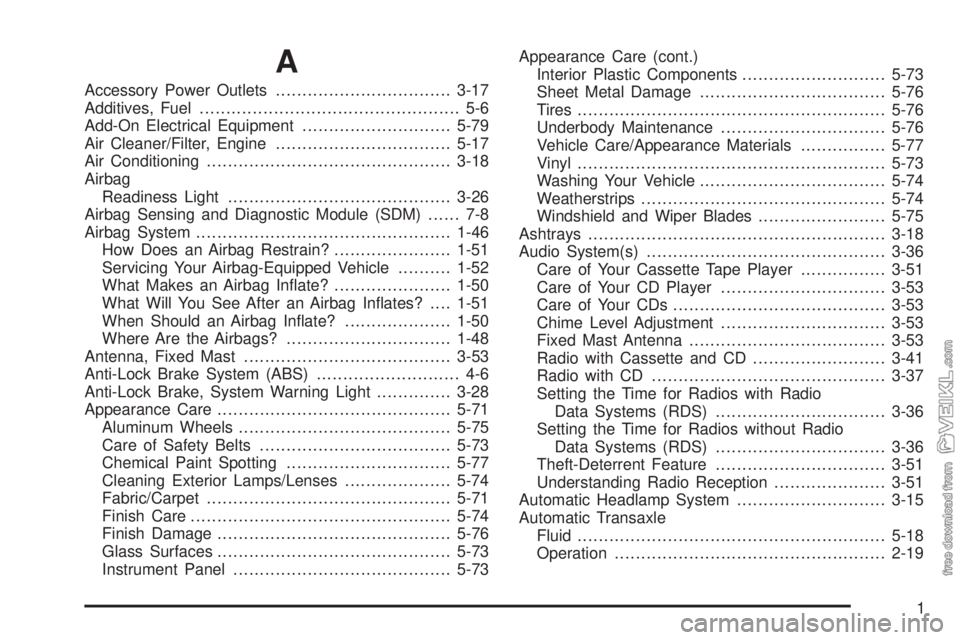
A
Accessory Power Outlets.................................3-17
Additives, Fuel................................................. 5-6
Add-On Electrical Equipment............................5-79
Air Cleaner/Filter, Engine.................................5-17
Air Conditioning..............................................3-18
Airbag
Readiness Light..........................................3-26
Airbag Sensing and Diagnostic Module (SDM)...... 7-8
Airbag System................................................1-46
How Does an Airbag Restrain?......................1-51
Servicing Your Airbag-Equipped Vehicle..........1-52
What Makes an Airbag Inflate?......................1-50
What Will You See After an Airbag Inflates?....1-51
When Should an Airbag Inflate?....................1-50
Where Are the Airbags?...............................1-48
Antenna, Fixed Mast.......................................3-53
Anti-Lock Brake System (ABS)........................... 4-6
Anti-Lock Brake, System Warning Light..............3-28
Appearance Care............................................5-71
Aluminum Wheels........................................5-75
Care of Safety Belts....................................5-73
Chemical Paint Spotting...............................5-77
Cleaning Exterior Lamps/Lenses....................5-74
Fabric/Carpet..............................................5-71
Finish Care.................................................5-74
Finish Damage............................................5-76
Glass Surfaces............................................5-73
Instrument Panel.........................................5-73Appearance Care (cont.)
Interior Plastic Components...........................5-73
Sheet Metal Damage...................................5-76
Tires..........................................................5-76
Underbody Maintenance...............................5-76
Vehicle Care/Appearance Materials................5-77
Vinyl..........................................................5-73
Washing Your Vehicle...................................5-74
Weatherstrips..............................................5-74
Windshield and Wiper Blades........................5-75
Ashtrays........................................................3-18
Audio System(s).............................................3-36
Care of Your Cassette Tape Player................3-51
Care of Your CD Player...............................3-53
Care of Your CDs........................................3-53
Chime Level Adjustment...............................3-53
Fixed Mast Antenna.....................................3-53
Radio with Cassette and CD.........................3-41
Radio with CD............................................3-37
Setting the Time for Radios with Radio
Data Systems (RDS)................................3-36
Setting the Time for Radios without Radio
Data Systems (RDS)................................3-36
Theft-Deterrent Feature................................3-51
Understanding Radio Reception.....................3-51
Automatic Headlamp System............................3-15
Automatic Transaxle
Fluid..........................................................5-18
Operation...................................................2-19
1
Page 310 of 320
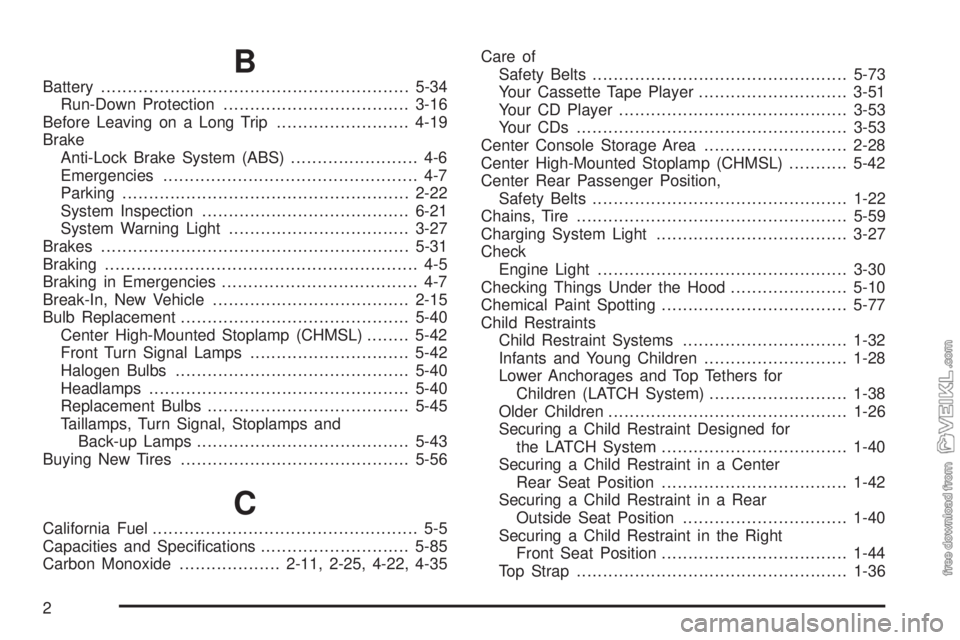
B
Battery..........................................................5-34
Run-Down Protection...................................3-16
Before Leaving on a Long Trip.........................4-19
Brake
Anti-Lock Brake System (ABS)........................ 4-6
Emergencies................................................ 4-7
Parking......................................................2-22
System Inspection.......................................6-21
System Warning Light..................................3-27
Brakes..........................................................5-31
Braking........................................................... 4-5
Braking in Emergencies..................................... 4-7
Break-In, New Vehicle.....................................2-15
Bulb Replacement...........................................5-40
Center High-Mounted Stoplamp (CHMSL)........5-42
Front Turn Signal Lamps..............................5-42
Halogen Bulbs............................................5-40
Headlamps.................................................5-40
Replacement Bulbs......................................5-45
Taillamps, Turn Signal, Stoplamps and
Back-up Lamps........................................5-43
Buying New Tires...........................................5-56
C
California Fuel.................................................. 5-5
Capacities and Specifications............................5-85
Carbon Monoxide...................2-11, 2-25, 4-22, 4-35Care of
Safety Belts................................................5-73
Your Cassette Tape Player............................3-51
Your CD Player...........................................3-53
Your CDs ...................................................3-53
Center Console Storage Area...........................2-28
Center High-Mounted Stoplamp (CHMSL)...........5-42
Center Rear Passenger Position,
Safety Belts................................................1-22
Chains, Tire...................................................5-59
Charging System Light....................................3-27
Check
Engine Light...............................................3-30
Checking Things Under the Hood......................5-10
Chemical Paint Spotting...................................5-77
Child Restraints
Child Restraint Systems...............................1-32
Infants and Young Children...........................1-28
Lower Anchorages and Top Tethers for
Children (LATCH System)..........................1-38
Older Children.............................................1-26
Securing a Child Restraint Designed for
the LATCH System...................................1-40
Securing a Child Restraint in a Center
Rear Seat Position...................................1-42
Securing a Child Restraint in a Rear
Outside Seat Position...............................1-40
Securing a Child Restraint in the Right
Front Seat Position...................................1-44
Top Strap...................................................1-36
2
Page 311 of 320
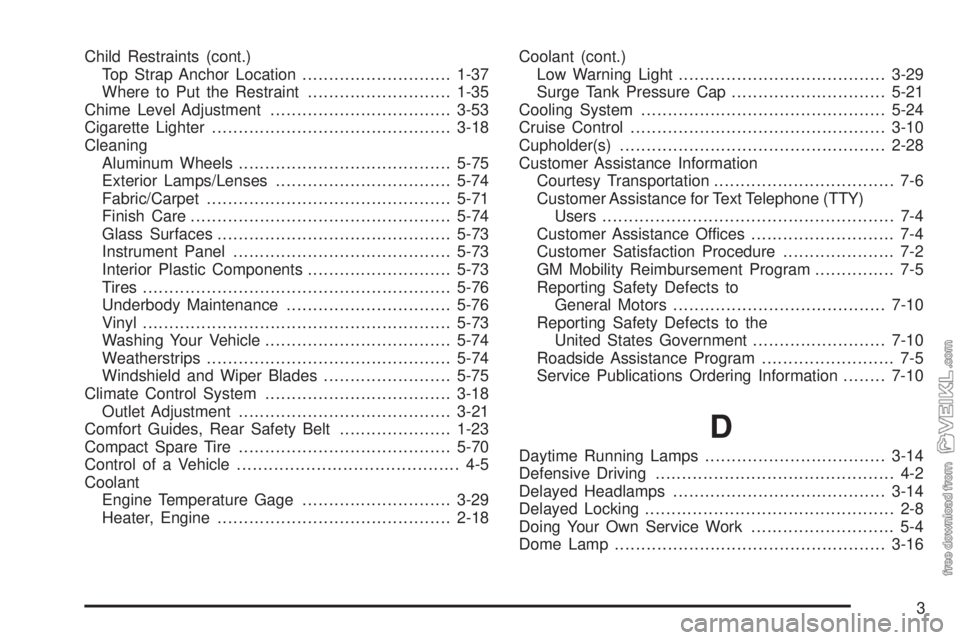
Child Restraints (cont.)
Top Strap Anchor Location............................1-37
Where to Put the Restraint...........................1-35
Chime Level Adjustment..................................3-53
Cigarette Lighter.............................................3-18
Cleaning
Aluminum Wheels........................................5-75
Exterior Lamps/Lenses.................................5-74
Fabric/Carpet..............................................5-71
Finish Care.................................................5-74
Glass Surfaces............................................5-73
Instrument Panel.........................................5-73
Interior Plastic Components...........................5-73
Tires..........................................................5-76
Underbody Maintenance...............................5-76
Vinyl..........................................................5-73
Washing Your Vehicle...................................5-74
Weatherstrips..............................................5-74
Windshield and Wiper Blades........................5-75
Climate Control System...................................3-18
Outlet Adjustment........................................3-21
Comfort Guides, Rear Safety Belt.....................1-23
Compact Spare Tire........................................5-70
Control of a Vehicle.......................................... 4-5
Coolant
Engine Temperature Gage............................3-29
Heater, Engine............................................2-18Coolant (cont.)
Low Warning Light.......................................3-29
Surge Tank Pressure Cap.............................5-21
Cooling System..............................................5-24
Cruise Control................................................3-10
Cupholder(s)..................................................2-28
Customer Assistance Information
Courtesy Transportation.................................. 7-6
Customer Assistance for Text Telephone (TTY)
Users....................................................... 7-4
Customer Assistance Offices........................... 7-4
Customer Satisfaction Procedure..................... 7-2
GM Mobility Reimbursement Program............... 7-5
Reporting Safety Defects to
General Motors........................................7-10
Reporting Safety Defects to the
United States Government.........................7-10
Roadside Assistance Program......................... 7-5
Service Publications Ordering Information........7-10
D
Daytime Running Lamps..................................3-14
Defensive Driving............................................. 4-2
Delayed Headlamps........................................3-14
Delayed Locking............................................... 2-8
Doing Your Own Service Work........................... 5-4
Dome Lamp...................................................3-16
3
Page 313 of 320
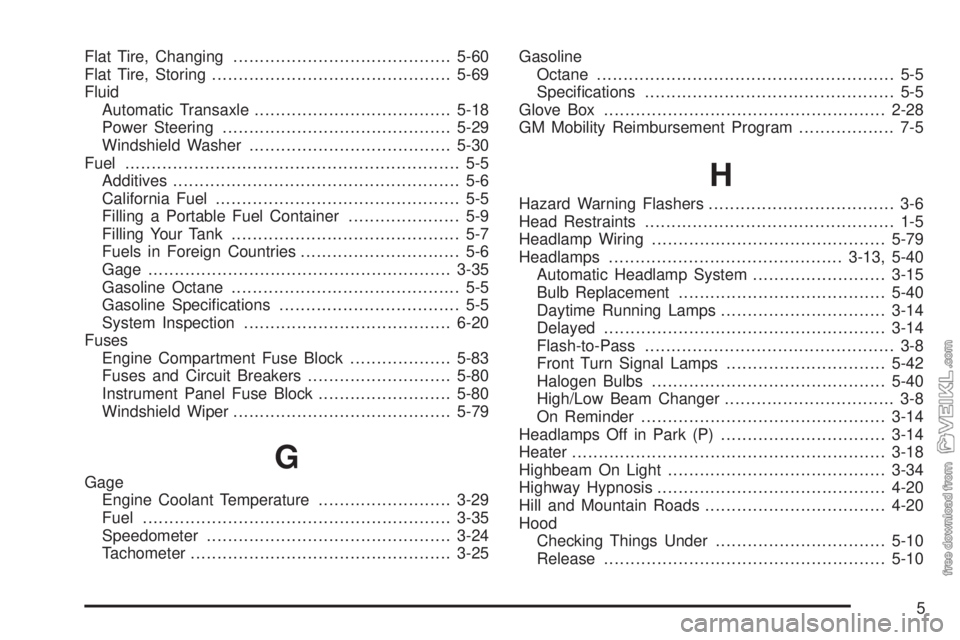
Flat Tire, Changing.........................................5-60
Flat Tire, Storing.............................................5-69
Fluid
Automatic Transaxle.....................................5-18
Power Steering...........................................5-29
Windshield Washer......................................5-30
Fuel............................................................... 5-5
Additives...................................................... 5-6
California Fuel.............................................. 5-5
Filling a Portable Fuel Container..................... 5-9
Filling Your Tank........................................... 5-7
Fuels in Foreign Countries.............................. 5-6
Gage.........................................................3-35
Gasoline Octane........................................... 5-5
Gasoline Specifications.................................. 5-5
System Inspection.......................................6-20
Fuses
Engine Compartment Fuse Block...................5-83
Fuses and Circuit Breakers...........................5-80
Instrument Panel Fuse Block.........................5-80
Windshield Wiper.........................................5-79
G
Gage
Engine Coolant Temperature.........................3-29
Fuel..........................................................3-35
Speedometer..............................................3-24
Tachometer.................................................3-25Gasoline
Octane........................................................ 5-5
Specifications............................................... 5-5
Glove Box.....................................................2-28
GM Mobility Reimbursement Program.................. 7-5
H
Hazard Warning Flashers................................... 3-6
Head Restraints............................................... 1-5
Headlamp Wiring............................................5-79
Headlamps............................................3-13, 5-40
Automatic Headlamp System.........................3-15
Bulb Replacement.......................................5-40
Daytime Running Lamps...............................3-14
Delayed.....................................................3-14
Flash-to-Pass............................................... 3-8
Front Turn Signal Lamps..............................5-42
Halogen Bulbs............................................5-40
High/Low Beam Changer................................ 3-8
On Reminder..............................................3-14
Headlamps Off in Park (P)...............................3-14
Heater...........................................................3-18
Highbeam On Light.........................................3-34
Highway Hypnosis...........................................4-20
Hill and Mountain Roads..................................4-20
Hood
Checking Things Under................................5-10
Release.....................................................5-10
5