2005 BUICK LACROSSE ABS
[x] Cancel search: ABSPage 260 of 410
Remember, unless you have ABS, if you brake so hard
that your wheels stop rolling, you will just slide. Brake
so your wheels always keep rolling and you can
still steer.
Whatever your braking system, allow greater
following distance on any slippery road.
Watch for slippery spots. The road might be ne
until you hit a spot that is covered with ice. On
an otherwise clear road, ice patches may appear in
shaded areas where the sun cannot reach, such
as around clumps of trees, behind buildings,
or under bridges. Sometimes the surface of a curve
or an overpass may remain icy when the
surrounding roads are clear. If you see a patch of
ice ahead of you, brake before you are on it. Try not
to brake while you are actually on the ice, and
avoid sudden steering maneuvers.
If You Are Caught in a Blizzard
If you are stopped by heavy snow, you could be in a
serious situation. You should probably stay with
your vehicle unless you know for sure that you are near
help and you can hike through the snow. Here are
some things to do to summon help and keep yourself
and your passengers safe:
Turn on your hazard ashers.
Tie a red cloth to your vehicle to alert police that
you have been stopped by the snow.
Put on extra clothing or wrap a blanket around you.
If you do not have blankets or extra clothing, make
body insulators from newspapers, burlap bags,
rags, oor mats — anything you can wrap around
yourself or tuck under your clothing to keep warm.
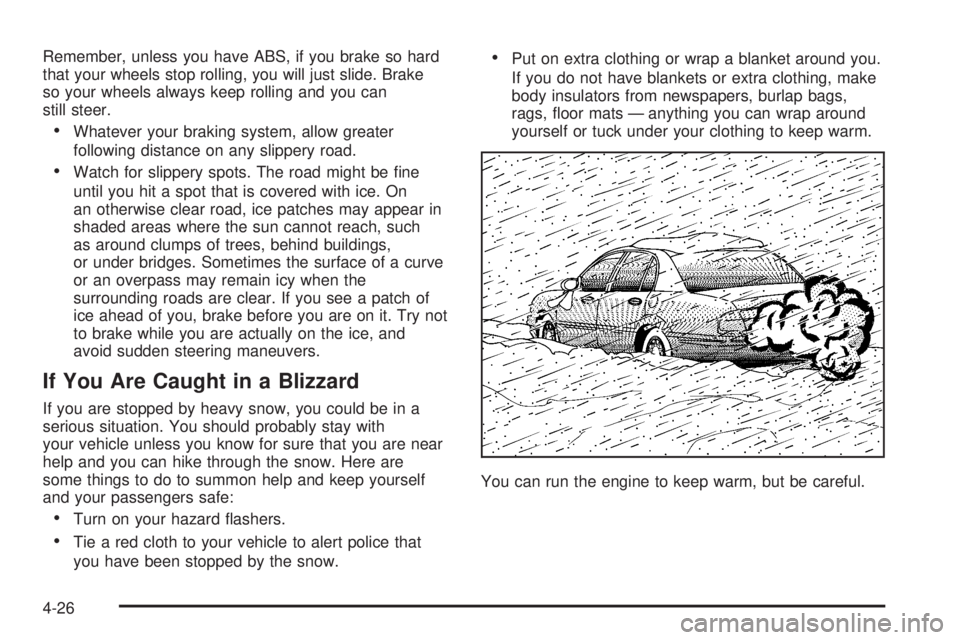
You can run the engine to keep warm, but be careful.
4-26
Page 274 of 410
Driving On Grades
Reduce speed and shift to a lower gearbeforestarting
down a long hill or steep downgrade. If the vehicle
is not shifted down, the brakes might have to be
used so much that they would get hot and no longer
work well.
On a long uphill grade, shift down and reduce the
vehicle’s speed to around 45 mph (70 km/h) to reduce
the possibility of engine and transaxle overheating.
If towing a trailer, you may want to drive in THIRD (3)
instead of AUTOMATIC OVERDRIVE (D). Shift to
a lower gear as needed.
Parking on Hills
{CAUTION:
You really should not park your vehicle, with a
trailer attached, on a hill. If something goes
wrong, your rig could start to move. People
can be injured, and both your vehicle and the
trailer can be damaged.
But if the rig ever has to be parked on a hill, here is
how to do it:
1. Apply the regular brakes, but do not shift into
PARK (P) yet.
2. Have someone place chocks under the
trailer’s wheels.
3. When the wheel chocks are in place, release the
regular brakes until the chocks absorb the load.
4. Reapply the regular brakes. Then apply the parking
brake, and shift to PARK (P).
5. Release the regular brakes.
4-40
Page 296 of 410
When to Inspect the Engine Air
Cleaner/Filter
Inspect the air cleaner/lter at the MaintenanceII
intervals and replace at the rst oil change after
50,000 miles (83 000 km). SeeScheduled Maintenance
on page 6-4for more information. If you are driving
in dusty/dirty conditions, inspect the lter at each engine
oil change.
How to Inspect the Engine Air
Cleaner/Filter
To inspect the air cleaner/lter, remove the lter from
the vehicle and lightly shake the lter to release
loose dust and dirt. If the lter remains caked with dirt, a
new lter is required.
To inspect or replace the engine air cleaner/lter do the
following:
1. Lift the lter cover tabs on top of the engine air
cleaner/lter housing.
2. Push the lter cover housing toward the engine.
3. Pull out the lter.
4. Inspect or replace the engine air cleaner/lter. See
Normal Maintenance Replacement Parts on
page 6-13.5. To reinstall the cover, position the tabs through the
slots on the housing. A notch on the sides of the
lter cover will indicate the correct engagement.
6. Push the cover tabs on top of the housing to lock
the cover in place.
{CAUTION:
Operating the engine with the air cleaner/lter
off can cause you or others to be burned. The
air cleaner not only cleans the air; it helps to
stop ame if the engine backres. If it is not
there and the engine backres, you could
be burned. Do not drive with it off, and be
careful working on the engine with the air
cleaner/lter off.
Notice:If the air cleaner/lter is off, a backre can
cause a damaging engine re. And, dirt can
easily get into your engine, which will damage it.
Always have the air cleaner/lter in place when you
are driving.
5-20
Page 397 of 410
A
Accessory Power Outlets.................................3-20
Adding Equipment to Your Airbag-Equipped
Vehicle.......................................................1-64
Additives, Fuel................................................. 5-6
Add-On Electrical Equipment............................5-87
Air Cleaner/Filter, Engine.................................5-19
Air Conditioning......................................3-21, 3-24
Airbag
Passenger Status Indicator...........................3-34
Readiness Light..........................................3-33
Airbag Sensing and Diagnostic Module (SDM)...... 7-9
Airbag System................................................1-51
Adding Equipment to Your Airbag-Equipped
Vehicle...................................................1-64
How Does an Airbag Restrain?......................1-57
Passenger Sensing System...........................1-60
Servicing Your Airbag-Equipped Vehicle..........1-64
What Makes an Airbag Inate?......................1-57
What Will You See After an Airbag Inates?....1-58
When Should an Airbag Inate?....................1-56
Where Are the Airbags?...............................1-53
Antenna, Backglass.......................................3-120
Anti-Lock Brake System (ABS)........................... 4-6
Anti-Lock Brake, System Warning Light..............3-37Appearance Care............................................5-78
Aluminum or Chrome-Plated Wheels..............5-83
Care of Safety Belts....................................5-81
Chemical Paint Spotting...............................5-84
Cleaning Exterior Lamps/Lenses....................5-81
Fabric/Carpet..............................................5-78
Finish Care.................................................5-82
Finish Damage............................................5-84
Glass Surfaces............................................5-80
Instrument Panel.........................................5-80
Interior Plastic Components...........................5-80
Leather......................................................5-80
Sheet Metal Damage...................................5-84
Tires..........................................................5-83
Underbody Maintenance...............................5-84
Vehicle Care/Appearance Materials................5-85
Vinyl..........................................................5-80
Washing Your Vehicle...................................5-81
Weatherstrips..............................................5-81
Windshield and Wiper Blades........................5-82
Audio System(s).............................................3-79
Audio Steering Wheel Controls....................3-118
Backglass Antenna.....................................3-120
Care of Your CD Player..............................3-119
Care of Your CDs......................................3-119
Chime Level Adjustment.............................3-120
1
Page 398 of 410

Audio System(s) (cont.)
Radio with CD............................3-79, 3-84, 3-92
Radio with Six-Disc CD..............................3-105
Setting the Time..........................................3-79
Theft-Deterrent Feature...............................3-117
Understanding Radio Reception...................3-119
Automatic Transaxle
Operation...................................................2-24
Automatic Transmission
Fluid..........................................................5-21
B
Backglass Antenna........................................3-120
Battery..........................................................5-38
Exterior Lighting Battery Saver......................3-15
Run-Down Protection...................................3-18
Before Leaving on a Long Trip.........................4-21
Brake
Anti-Lock Brake System (ABS)........................ 4-6
Emergencies................................................ 4-8
Parking......................................................2-27
System Warning Light..................................3-36
Brakes..........................................................5-35
Braking........................................................... 4-5
Braking in Emergencies..................................... 4-8
Break-In, New Vehicle.....................................2-21Bulb Replacement...........................................5-45
Fog Lamps.................................................5-48
Front Turn Signal and Parking Lamps.............5-47
Halogen Bulbs............................................5-45
Headlamp Aiming........................................5-43
Replacement Bulbs......................................5-50
Taillamps, Turn Signal, Sidemarker,
Stoplamps, and Back-Up Lamps.................5-48
Buying New Tires...........................................5-62
C
California Fuel.................................................. 5-6
Canadian Owners................................................ ii
Capacities and Specications............................5-92
Carbon Monoxide...................2-13, 2-30, 4-24, 4-35
Care of
Safety Belts................................................5-81
Your CD Player.........................................3-119
Your CDs .................................................3-119
Center Console Storage Area...........................2-41
Center Front Passenger Position, Safety Belts....1-24
Center Seat..................................................... 1-7
Chains, Tire...................................................5-66
Charging System Light....................................3-35
2