2004 FORD EXPLORER warning
[x] Cancel search: warningPage 262 of 296
edge of the driver’s door. The cold inflation pressure should never be set
lower than the recommended pressure on the label.
Note:You may not find this information on all tires because it is not
required by federal law.
The tire suppliers may have additional markings, notes or warnings such
as standard load, radial tubeless, etc.
Additional information contained on the tire sidewall for “LT” type
tires
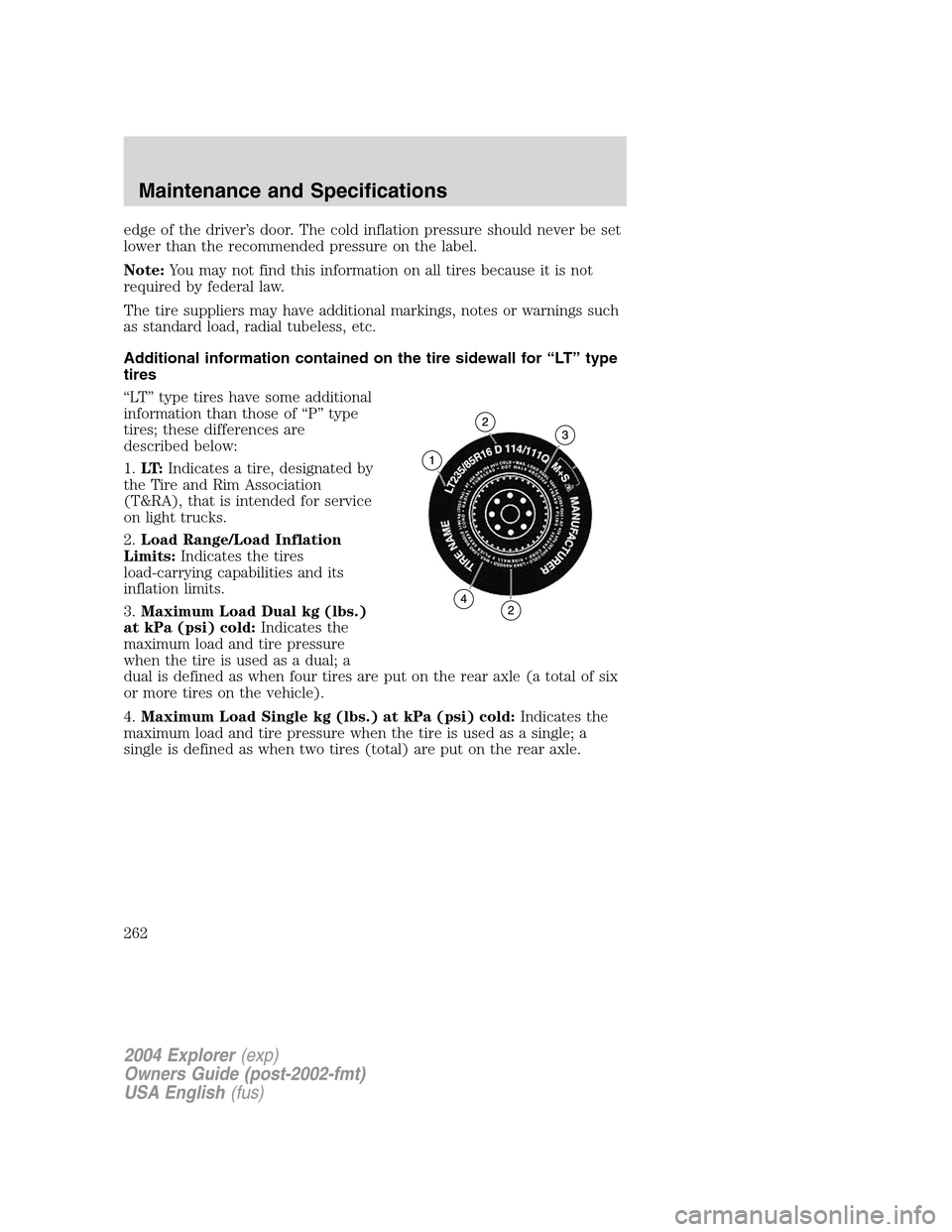
“LT” type tires have some additional
information than those of “P” type
tires; these differences are
described below:
1.LT:Indicates a tire, designated by
the Tire and Rim Association
(T&RA), that is intended for service
on light trucks.
2.Load Range/Load Inflation
Limits:Indicates the tires
load-carrying capabilities and its
inflation limits.
3.Maximum Load Dual kg (lbs.)
at kPa (psi) cold:Indicates the
maximum load and tire pressure
when the tire is used as a dual; a
dual is defined as when four tires are put on the rear axle (a total of six
or more tires on the vehicle).
4.Maximum Load Single kg (lbs.) at kPa (psi) cold:Indicates the
maximum load and tire pressure when the tire is used as a single; a
single is defined as when two tires (total) are put on the rear axle.
2004 Explorer(exp)
Owners Guide (post-2002-fmt)
USA English(fus)
Maintenance and Specifications
262
Page 265 of 296
6. Visually inspect the tires to make sure there are no nails or other
objects embedded that could poke a hole in the tire and cause an air
leak.
7. Check the sidewalls to make sure there are no gouges, cuts, bulges or
other irregularities.
Tire inflation information
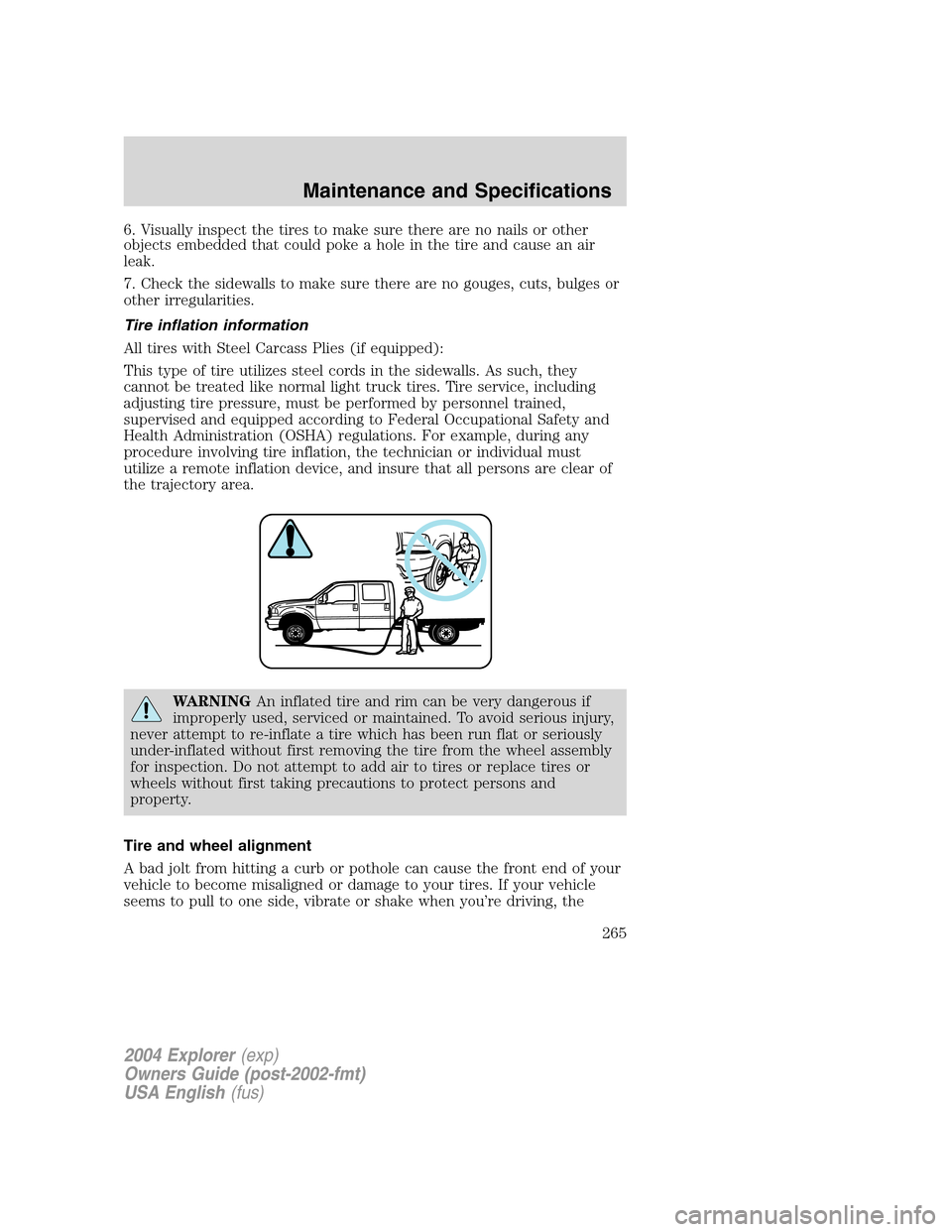
All tires with Steel Carcass Plies (if equipped):
This type of tire utilizes steel cords in the sidewalls. As such, they
cannot be treated like normal light truck tires. Tire service, including
adjusting tire pressure, must be performed by personnel trained,
supervised and equipped according to Federal Occupational Safety and
Health Administration (OSHA) regulations. For example, during any
procedure involving tire inflation, the technician or individual must
utilize a remote inflation device, and insure that all persons are clear of
the trajectory area.
WARNINGAn inflated tire and rim can be very dangerous if
improperly used, serviced or maintained. To avoid serious injury,
never attempt to re-inflate a tire which has been run flat or seriously
under-inflated without first removing the tire from the wheel assembly
for inspection. Do not attempt to add air to tires or replace tires or
wheels without first taking precautions to protect persons and
property.
Tire and wheel alignment
A bad jolt from hitting a curb or pothole can cause the front end of your
vehicle to become misaligned or damage to your tires. If your vehicle
seems to pull to one side, vibrate or shake when you’re driving, the
2004 Explorer(exp)
Owners Guide (post-2002-fmt)
USA English(fus)
Maintenance and Specifications
265
Page 269 of 296
closest safe area out of traffic. This may further damage the flat tire, but
your safety is more important.
If you feel a sudden vibration or ride disturbance while driving or you
suspect your tire or vehicle has been damaged, immediately reduce your
speed. Drive with caution until you can safely pull off the road. Stop and
inspect the tire for damage. If the tire is under-inflated or damaged,
deflate it, remove wheel and replace it with your spare tire and wheel. If
you cannot detect a cause, have the vehicle towed to the nearest repair
facility or tire dealer to have the vehicle inspected.
Tire pressure monitoring system (TPMS)(if equipped)
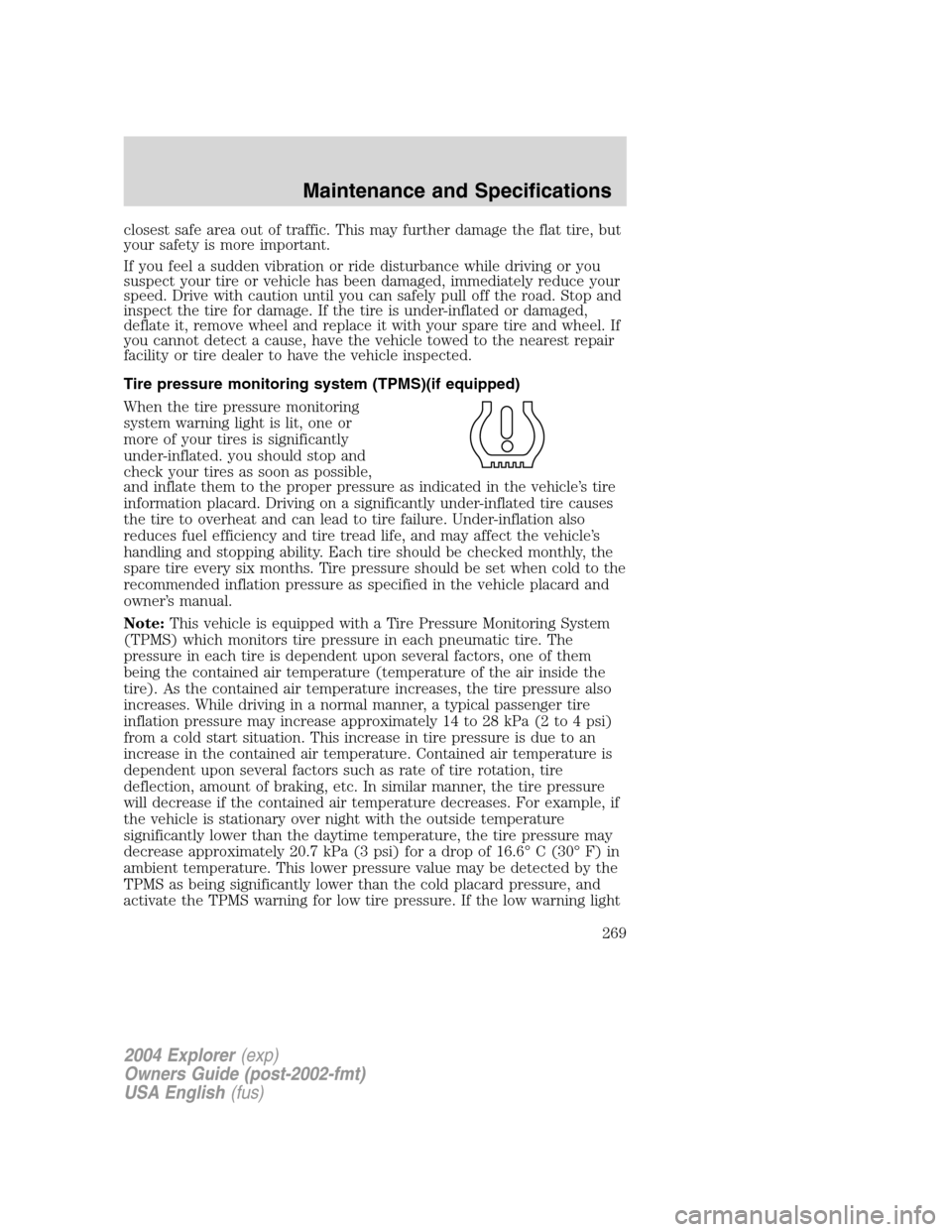
When the tire pressure monitoring
system warning light is lit, one or
more of your tires is significantly
under-inflated. you should stop and
check your tires as soon as possible,
and inflate them to the proper pressure as indicated in the vehicle’s tire
information placard. Driving on a significantly under-inflated tire causes
the tire to overheat and can lead to tire failure. Under-inflation also
reduces fuel efficiency and tire tread life, and may affect the vehicle’s
handling and stopping ability. Each tire should be checked monthly, the
spare tire every six months. Tire pressure should be set when cold to the
recommended inflation pressure as specified in the vehicle placard and
owner’s manual.
Note:This vehicle is equipped with a Tire Pressure Monitoring System
(TPMS) which monitors tire pressure in each pneumatic tire. The
pressure in each tire is dependent upon several factors, one of them
being the contained air temperature (temperature of the air inside the
tire). As the contained air temperature increases, the tire pressure also
increases. While driving in a normal manner, a typical passenger tire
inflation pressure may increase approximately 14 to 28 kPa (2 to 4 psi)
from a cold start situation. This increase in tire pressure is due to an
increase in the contained air temperature. Contained air temperature is
dependent upon several factors such as rate of tire rotation, tire
deflection, amount of braking, etc. In similar manner, the tire pressure
will decrease if the contained air temperature decreases. For example, if
the vehicle is stationary over night with the outside temperature
significantly lower than the daytime temperature, the tire pressure may
decrease approximately 20.7 kPa (3 psi) for a drop of 16.6° C (30° F) in
ambient temperature. This lower pressure value may be detected by the
TPMS as being significantly lower than the cold placard pressure, and
activate the TPMS warning for low tire pressure. If the low warning light
2004 Explorer(exp)
Owners Guide (post-2002-fmt)
USA English(fus)
Maintenance and Specifications
269
Page 270 of 296
is on, visually check each tire to verify that no tire is flat. If one or more
tires are flat, repair of fix as necessary. If all tires appear to be inflated,
carefully drive the vehicle to the nearest location where air can be added
to the tires. Turn the ignition to the “off” position. Inflate all the tires to
the recommended cold pressure.
The system uses radio-frequency to monitor the tire pressure on all tires
excluding the spare tire. The sensors transmit the tire pressure readings
to the receiver module located in the vehicle. The receiver module then
electronically transmits the status to the message center. For more tire
warning information, refer to theMessage Centerin theDriver controls
chapter.
This device complies with part 15 of the FCC rules and with RS-210 of
Industry Canada. Operation is subject to the following two conditions:
(1) This device may not cause harmful interference, and (2) This device
must accept any interference received, including interference that may
cause undesired operation.
The tire pressure monitoring system is NOT a substitute for
manually checking tire pressure. The tire pressure should be
checked periodically (at least monthly) using a tire gauge, see
Checking the tire pressurein this chapter. Failure to properly
maintain your tire pressure could increase the risk of tire failure, loss
of control, vehicle rollover and personal injury.
Changing tires with TPMS
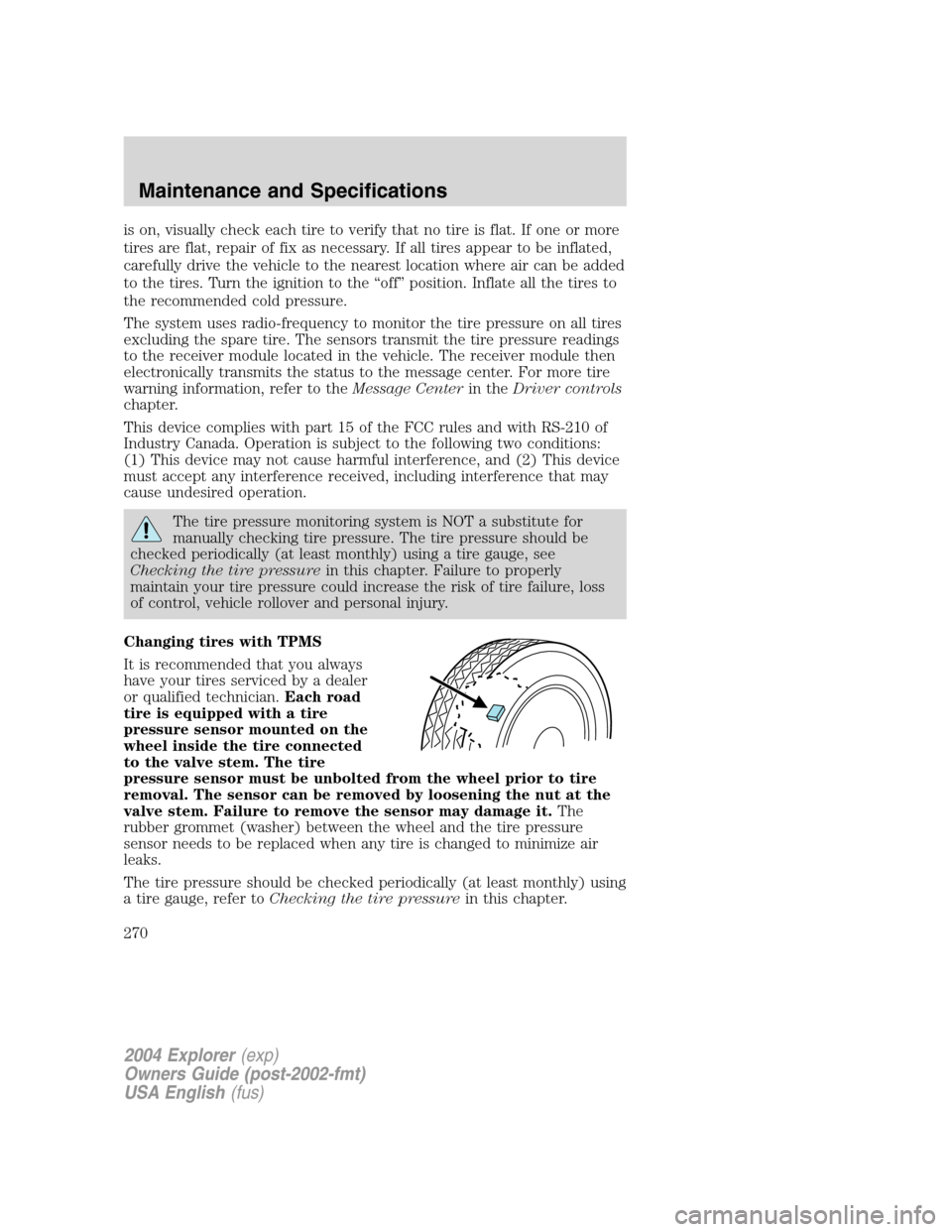
It is recommended that you always
have your tires serviced by a dealer
or qualified technician.Each road
tire is equipped with a tire
pressure sensor mounted on the
wheel inside the tire connected
to the valve stem. The tire
pressure sensor must be unbolted from the wheel prior to tire
removal. The sensor can be removed by loosening the nut at the
valve stem. Failure to remove the sensor may damage it.The
rubber grommet (washer) between the wheel and the tire pressure
sensor needs to be replaced when any tire is changed to minimize air
leaks.
The tire pressure should be checked periodically (at least monthly) using
a tire gauge, refer toChecking the tire pressurein this chapter.
2004 Explorer(exp)
Owners Guide (post-2002-fmt)
USA English(fus)
Maintenance and Specifications
270
Page 285 of 296
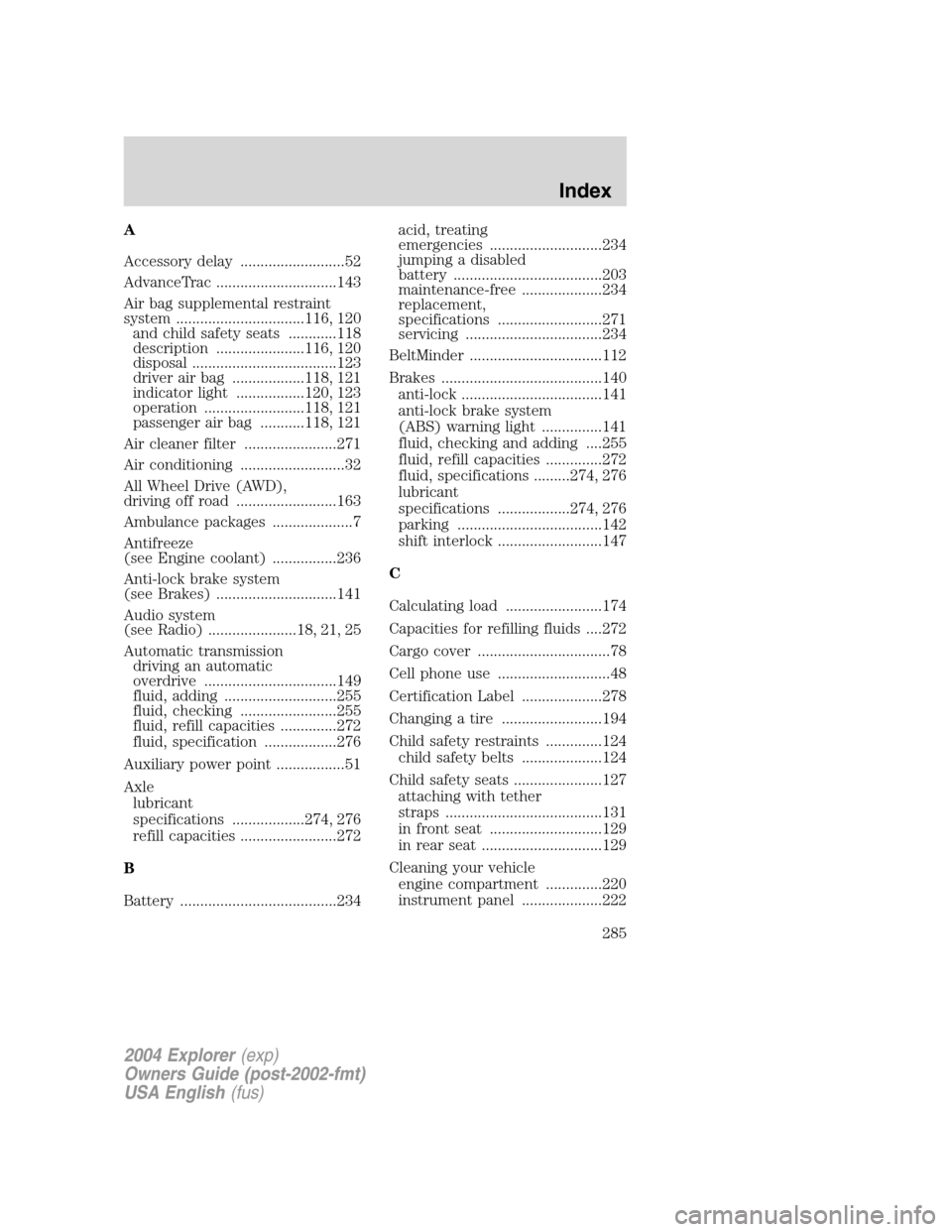
A
Accessory delay ..........................52
AdvanceTrac ..............................143
Air bag supplemental restraint
system ................................116, 120
and child safety seats ............118
description ......................116, 120
disposal ....................................123
driver air bag ..................118, 121
indicator light .................120, 123
operation .........................118, 121
passenger air bag ...........118, 121
Air cleaner filter .......................271
Air conditioning ..........................32
All Wheel Drive (AWD),
driving off road .........................163
Ambulance packages ....................7
Antifreeze
(see Engine coolant) ................236
Anti-lock brake system
(see Brakes) ..............................141
Audio system
(see Radio) ......................18, 21, 25
Automatic transmission
driving an automatic
overdrive .................................149
fluid, adding ............................255
fluid, checking ........................255
fluid, refill capacities ..............272
fluid, specification ..................276
Auxiliary power point .................51
Axle
lubricant
specifications ..................274, 276
refill capacities ........................272
B
Battery .......................................234acid, treating
emergencies ............................234
jumping a disabled
battery .....................................203
maintenance-free ....................234
replacement,
specifications ..........................271
servicing ..................................234
BeltMinder .................................112
Brakes ........................................140
anti-lock ...................................141
anti-lock brake system
(ABS) warning light ...............141
fluid, checking and adding ....255
fluid, refill capacities ..............272
fluid, specifications .........274, 276
lubricant
specifications ..................274, 276
parking ....................................142
shift interlock ..........................147
C
Calculating load ........................174
Capacities for refilling fluids ....272
Cargo cover .................................78
Cell phone use ............................48
Certification Label ....................278
Changing a tire .........................194
Child safety restraints ..............124
child safety belts ....................124
Child safety seats ......................127
attaching with tether
straps .......................................131
in front seat ............................129
in rear seat ..............................129
Cleaning your vehicle
engine compartment ..............220
instrument panel ....................222
2004 Explorer(exp)
Owners Guide (post-2002-fmt)
USA English(fus)
Index
Index
285
Page 288 of 296
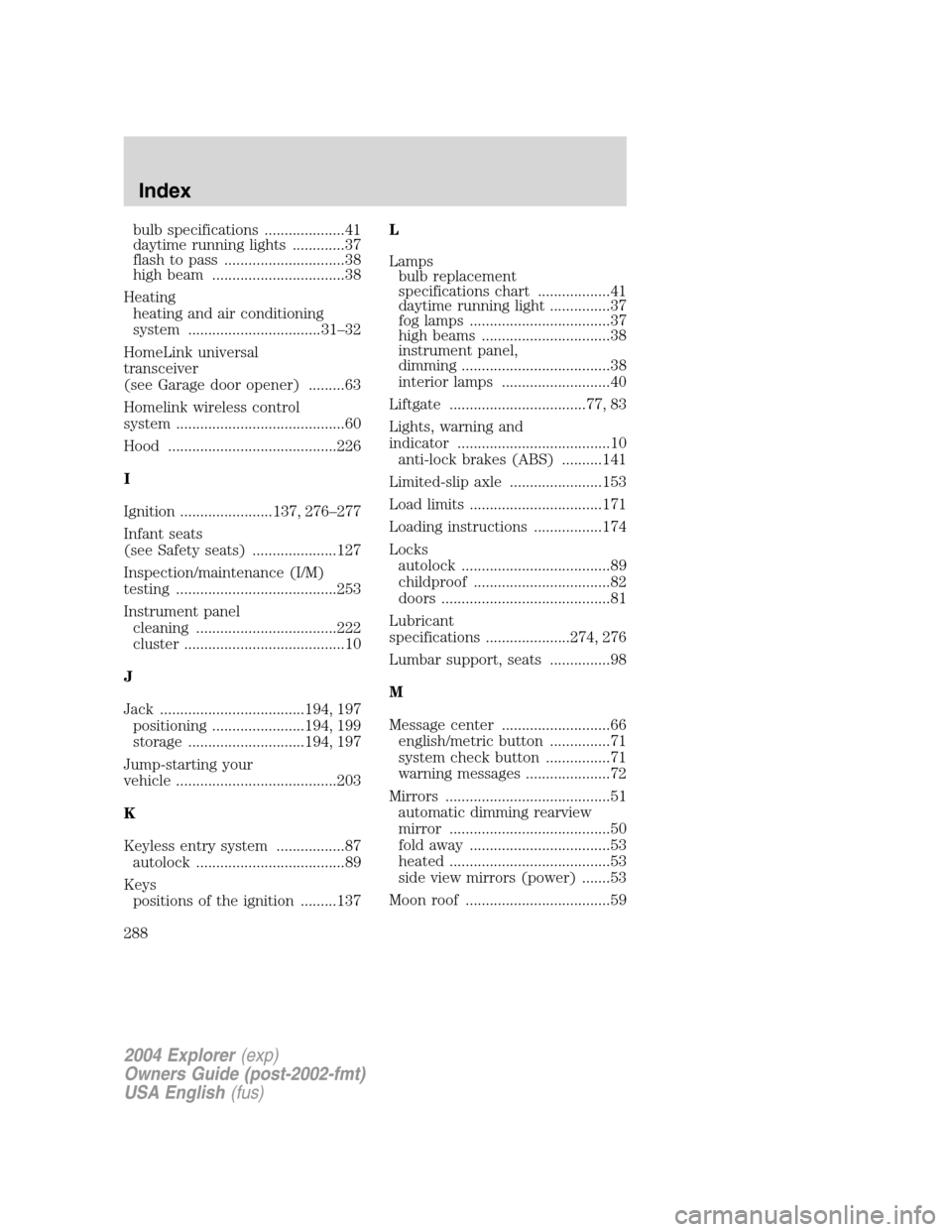
bulb specifications ....................41
daytime running lights .............37
flash to pass ..............................38
high beam .................................38
Heating
heating and air conditioning
system .................................31–32
HomeLink universal
transceiver
(see Garage door opener) .........63
Homelink wireless control
system ..........................................60
Hood ..........................................226
I
Ignition .......................137, 276–277
Infant seats
(see Safety seats) .....................127
Inspection/maintenance (I/M)
testing ........................................253
Instrument panel
cleaning ...................................222
cluster ........................................10
J
Jack ....................................194, 197
positioning .......................194, 199
storage .............................194, 197
Jump-starting your
vehicle ........................................203
K
Keyless entry system .................87
autolock .....................................89
Keys
positions of the ignition .........137L
Lamps
bulb replacement
specifications chart ..................41
daytime running light ...............37
fog lamps ...................................37
high beams ................................38
instrument panel,
dimming .....................................38
interior lamps ...........................40
Liftgate ..................................77, 83
Lights, warning and
indicator ......................................10
anti-lock brakes (ABS) ..........141
Limited-slip axle .......................153
Load limits .................................171
Loading instructions .................174
Locks
autolock .....................................89
childproof ..................................82
doors ..........................................81
Lubricant
specifications .....................274, 276
Lumbar support, seats ...............98
M
Message center ...........................66
english/metric button ...............71
system check button ................71
warning messages .....................72
Mirrors .........................................51
automatic dimming rearview
mirror ........................................50
fold away ...................................53
heated ........................................53
side view mirrors (power) .......53
Moon roof ....................................59
2004 Explorer(exp)
Owners Guide (post-2002-fmt)
USA English(fus)
Index
288
Page 289 of 296
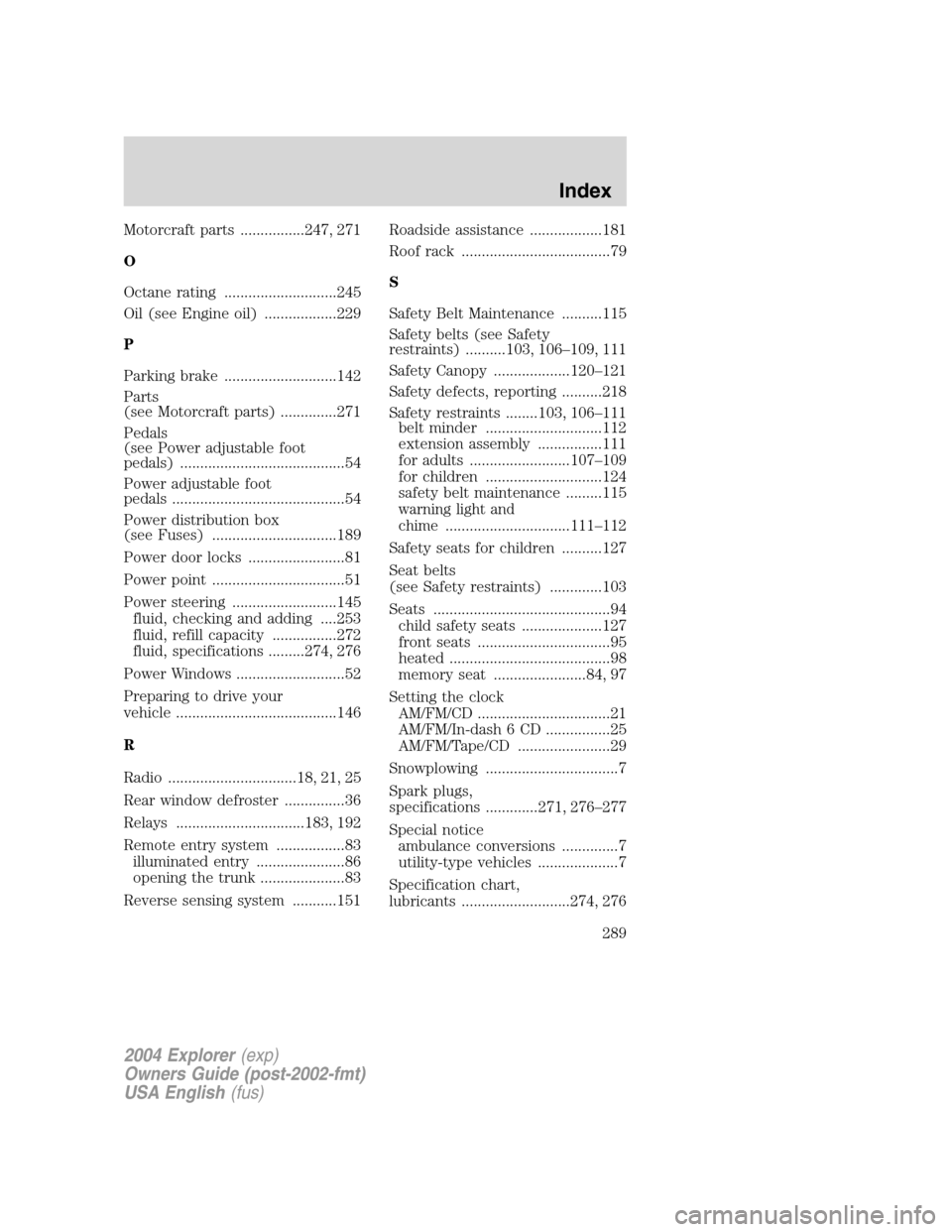
Motorcraft parts ................247, 271
O
Octane rating ............................245
Oil (see Engine oil) ..................229
P
Parking brake ............................142
Parts
(see Motorcraft parts) ..............271
Pedals
(see Power adjustable foot
pedals) .........................................54
Power adjustable foot
pedals ...........................................54
Power distribution box
(see Fuses) ...............................189
Power door locks ........................81
Power point .................................51
Power steering ..........................145
fluid, checking and adding ....253
fluid, refill capacity ................272
fluid, specifications .........274, 276
Power Windows ...........................52
Preparing to drive your
vehicle ........................................146
R
Radio ................................18, 21, 25
Rear window defroster ...............36
Relays ................................183, 192
Remote entry system .................83
illuminated entry ......................86
opening the trunk .....................83
Reverse sensing system ...........151Roadside assistance ..................181
Roof rack .....................................79
S
Safety Belt Maintenance ..........115
Safety belts (see Safety
restraints) ..........103, 106–109, 111
Safety Canopy ...................120–121
Safety defects, reporting ..........218
Safety restraints ........103, 106–111
belt minder .............................112
extension assembly ................111
for adults .........................107–109
for children .............................124
safety belt maintenance .........115
warning light and
chime
...............................111–112
Safety seats for children ..........127
Seat belts
(see Safety restraints) .............103
Seats ............................................94
child safety seats ....................127
front seats .................................95
heated ........................................98
memory seat .......................84, 97
Setting the clock
AM/FM/CD .................................21
AM/FM/In-dash 6 CD ................25
AM/FM/Tape/CD .......................29
Snowplowing .................................7
Spark plugs,
specifications .............271, 276–277
Special notice
ambulance conversions ..............7
utility-type vehicles ....................7
Specification chart,
lubricants ...........................274, 276
2004 Explorer(exp)
Owners Guide (post-2002-fmt)
USA English(fus)
Index
289
Page 290 of 296
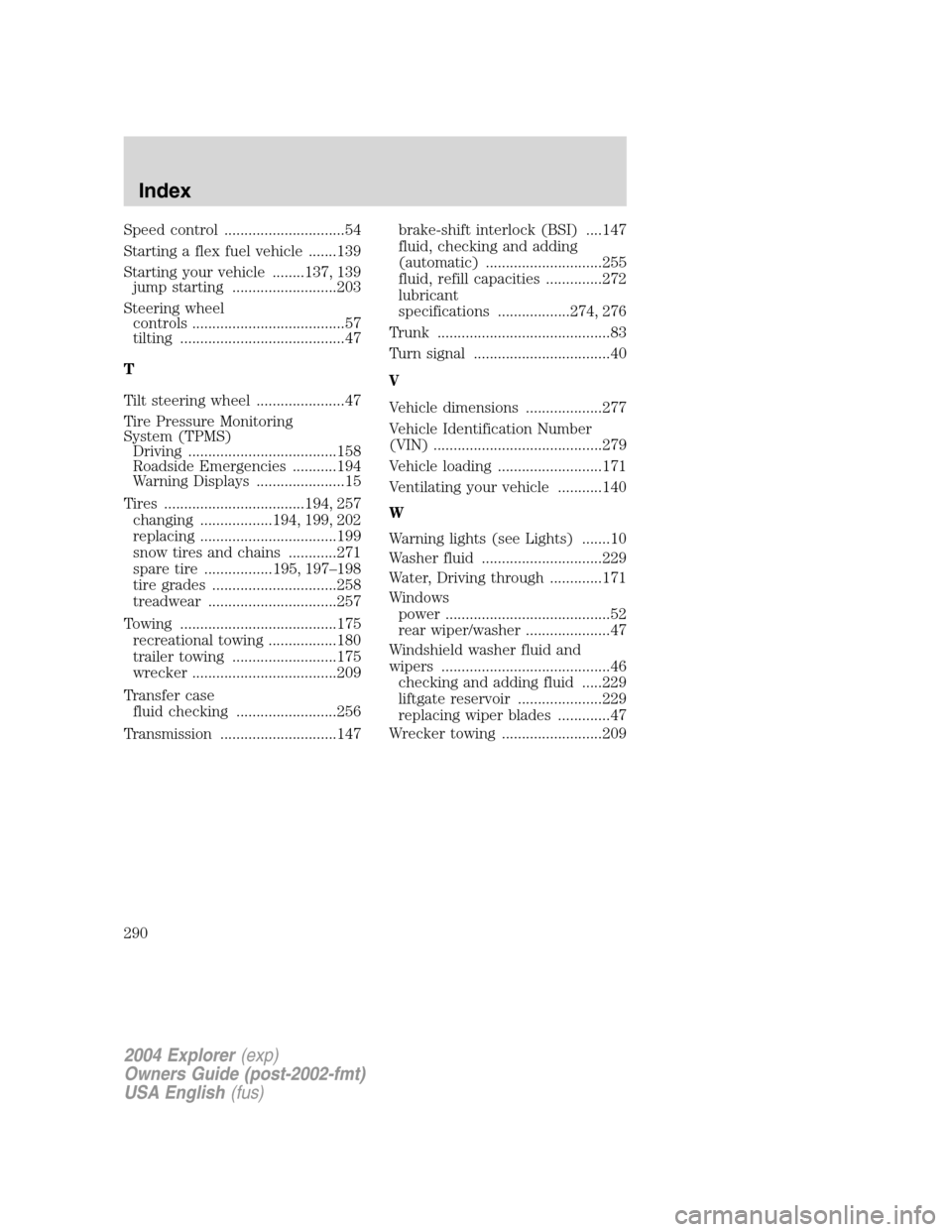
Speed control ..............................54
Starting a flex fuel vehicle .......139
Starting your vehicle ........137, 139
jump starting ..........................203
Steering wheel
controls ......................................57
tilting .........................................47
T
Tilt steering wheel ......................47
Tire Pressure Monitoring
System (TPMS)
Driving .....................................158
Roadside Emergencies ...........194
Warning Displays ......................15
Tires ...................................194, 257
changing ..................194, 199, 202
replacing ..................................199
snow tires and chains ............271
spare tire .................195, 197–198
tire grades ...............................258
treadwear ................................257
Towing .......................................175
recreational towing .................180
trailer towing ..........................175
wrecker ....................................209
Transfer case
fluid checking .........................256
Transmission .............................147brake-shift interlock (BSI) ....147
fluid, checking and adding
(automatic) .............................255
fluid, refill capacities ..............272
lubricant
specifications ..................274, 276
Trunk ...........................................83
Turn signal ..................................40
V
Vehicle dimensions ...................277
Vehicle Identification Number
(VIN) ..........................................279
Vehicle loading ..........................171
Ventilating your vehicle ...........140
W
Warning lights (see Lights) .......10
Washer fluid ..............................229
Water, Driving through .............171
Windows
power .........................................52
rear wiper/washer .....................47
Windshield washer fluid and
wipers ..........................................46
checking and adding fluid .....229
liftgate reservoir .....................229
replacing wiper blades .............47
Wrecker towing .........................209
2004 Explorer(exp)
Owners Guide (post-2002-fmt)
USA English(fus)
Index
290