2004 CHEVROLET MALIBU child lock
[x] Cancel search: child lockPage 1 of 426
Seats and Restraint Systems........................... 1-1
Front Seats
............................................... 1-2
Rear Seats
............................................... 1-7
Safety Belts
.............................................1-10
Child Restraints
.......................................1-31
Air Bag Systems
......................................1-52
Restraint System Check
............................1-60
Features and Controls..................................... 2-1
Keys
........................................................ 2-3
Doors and Locks
......................................2-10
Windows
.................................................2-16
Theft-Deterrent Systems
............................2-18
Starting and Operating Your Vehicle
...........2-22
Mirrors
....................................................2-35
OnStar
®System
......................................2-38
HomeLink®Transmitter
.............................2-40
Storage Areas
.........................................2-44
Sunroof
..................................................2-48
Instrument Panel............................................. 3-1
Instrument Panel Overview
.......................... 3-4
Climate Controls
......................................3-21
Warning Lights, Gages, and Indicators
........3-31Driver Information Center (DIC)
..................3-45
Audio System(s)
.......................................3-52
Driving Your Vehicle....................................... 4-1
Your Driving, the Road, and Your Vehicle
..... 4-2
Towing
...................................................4-31
Service and Appearance Care.......................... 5-1
Service
..................................................... 5-3
Fuel
......................................................... 5-5
Checking Things Under the Hood
...............5-12
Bulb Replacement
....................................5-45
Windshield Wiper Blade Replacement
.........5-49
Tires
......................................................5-50
Appearance Care
.....................................5-78
Vehicle Identication
.................................5-86
Electrical System
......................................5-87
Capacities and Specications
.....................5-96
Maintenance Schedule..................................... 6-1
Maintenance Schedule
................................ 6-2
Customer Assistance and Information.............. 7-1
Customer Assistance and Information
........... 7-2
Reporting Safety Defects
...........................7-11
Index................................................................ 1
2004 Chevrolet Malibu Owner ManualM
Page 30 of 426
The best way to protect the fetus is to protect the
mother. When a safety belt is worn properly, it’s more
likely that the fetus won’t be hurt in a crash. For
pregnant women, as for anyone, the key to making
safety belts effective is wearing them properly.
Right Front Passenger Position
To learn how to wear the right front passenger’s safety
belt properly, seeDriver Position on page 1-16.
The right front passenger’s safety belt works the same
way as the driver’s safety belt – except for one thing.
If you ever pull the shoulder portion of the belt out all the
way, you will engage the child restraint locking feature.
If this happens, just let the belt go back all the way
and start again.
Rear Seat Passengers
It’s very important for rear seat passengers to buckle
up! Accident statistics show that unbelted people in the
rear seat are hurt more often in crashes than those
who are wearing safety belts.
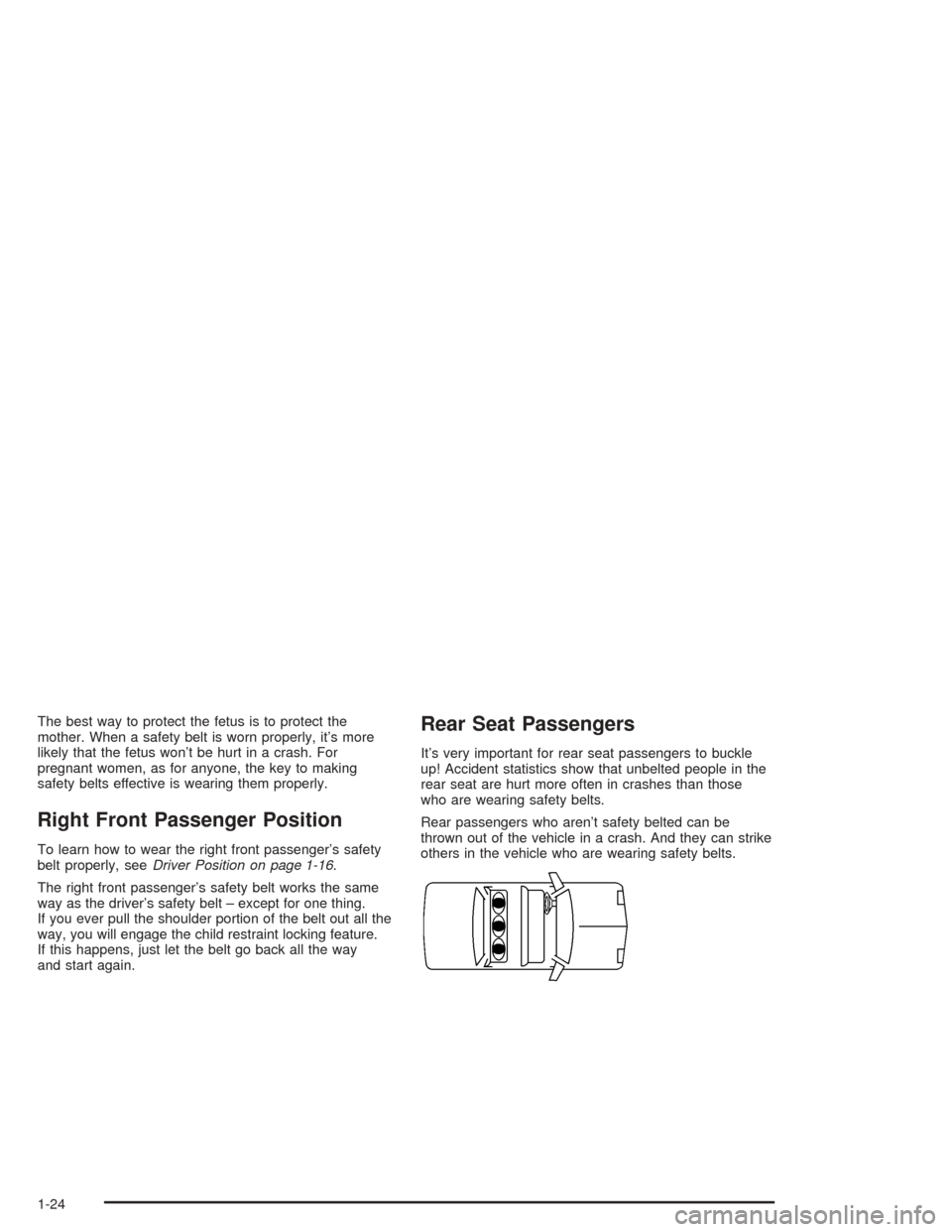
Rear passengers who aren’t safety belted can be
thrown out of the vehicle in a crash. And they can strike
others in the vehicle who are wearing safety belts.
1-24
Page 54 of 426
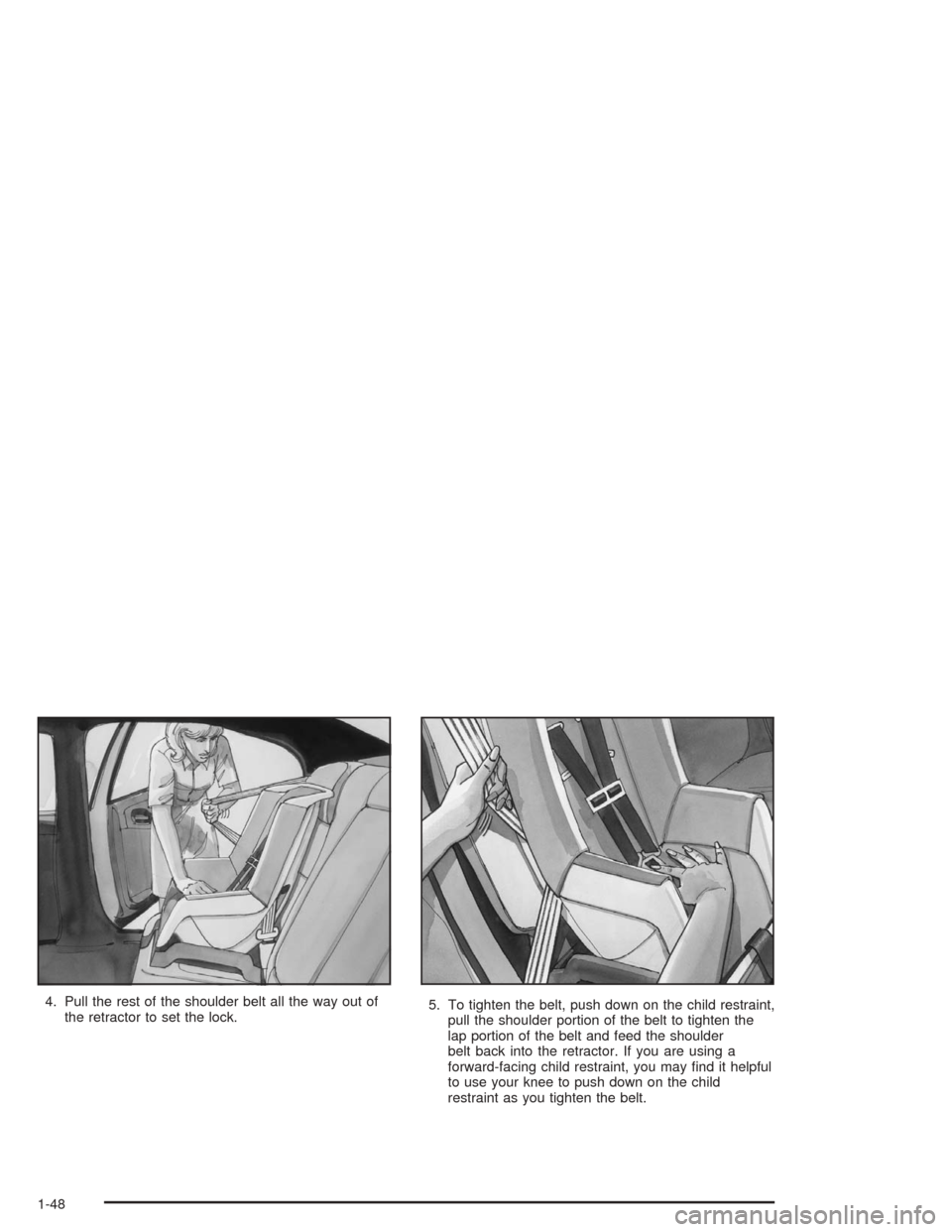
4. Pull the rest of the shoulder belt all the way out of
the retractor to set the lock.5. To tighten the belt, push down on the child restraint,
pull the shoulder portion of the belt to tighten the
lap portion of the belt and feed the shoulder
belt back into the retractor. If you are using a
forward-facing child restraint, you may nd it helpful
to use your knee to push down on the child
restraint as you tighten the belt.
1-48
Page 57 of 426
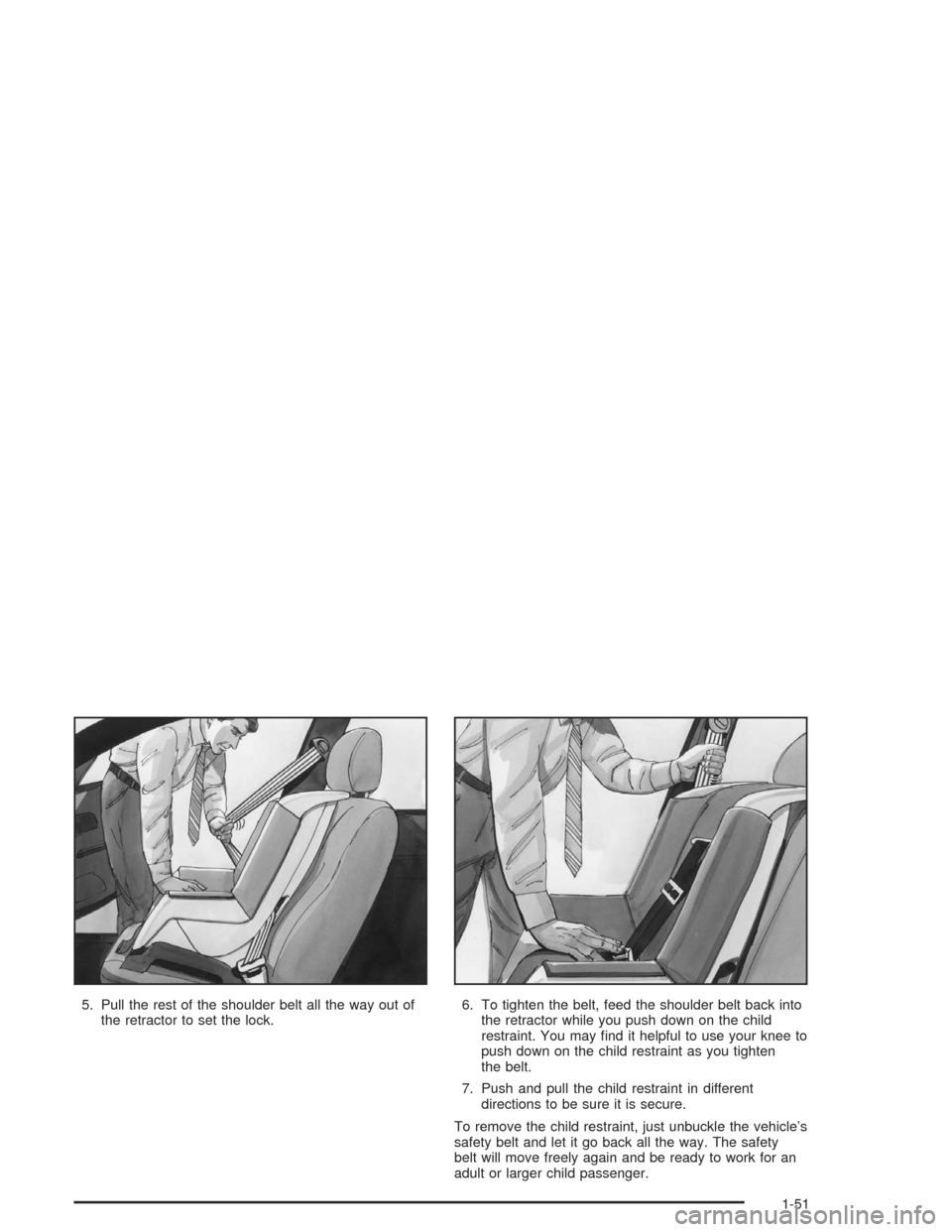
5. Pull the rest of the shoulder belt all the way out of
the retractor to set the lock.6. To tighten the belt, feed the shoulder belt back into
the retractor while you push down on the child
restraint. You may nd it helpful to use your knee to
push down on the child restraint as you tighten
the belt.
7. Push and pull the child restraint in different
directions to be sure it is secure.
To remove the child restraint, just unbuckle the vehicle’s
safety belt and let it go back all the way. The safety
belt will move freely again and be ready to work for an
adult or larger child passenger.
1-51
Page 78 of 426
When you enter the vehicle during a remote start, turn the
key to the on position to start the engine and drive.
If the vehicle is left running it will automatically shut off
after 10 minutes unless a time extension has been
done. To manually shut off a remote start, do any of the
following:
Aim the remote keyless entry transmitter at the
vehicle and press the remote start button until
the parking lamps turn off.
Turn on the hazards warning ashers.
Turn the ignition switch on and then off.
Doors and Locks
Door Locks
{CAUTION:
Unlocked doors can be dangerous.
Passengers — especially children — can
easily open the doors and fall out of a
moving vehicle. When a door is locked, the
handle will not open it. You increase the
chance of being thrown out of the vehicle
in a crash if the doors are not locked. So,
wear safety belts properly and lock the
doors whenever you drive.
Young children who get into unlocked
vehicles may be unable to get out. A child
can be overcome by extreme heat and can
suffer permanent injuries or even death
from heat stroke. Always lock your vehicle
whenever you leave it.
CAUTION: (Continued)
2-10
Page 248 of 426
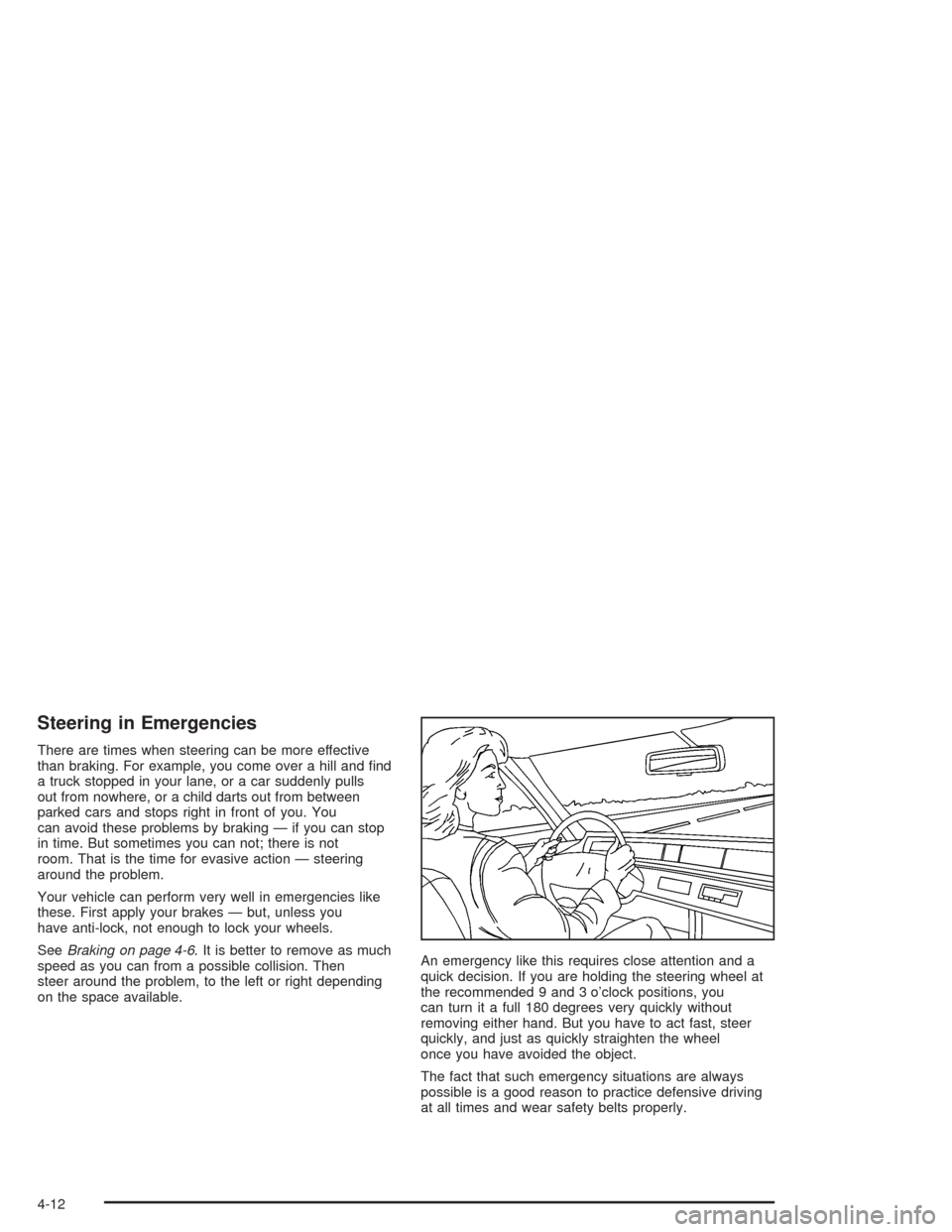
Steering in Emergencies
There are times when steering can be more effective
than braking. For example, you come over a hill and nd
a truck stopped in your lane, or a car suddenly pulls
out from nowhere, or a child darts out from between
parked cars and stops right in front of you. You
can avoid these problems by braking — if you can stop
in time. But sometimes you can not; there is not
room. That is the time for evasive action — steering
around the problem.
Your vehicle can perform very well in emergencies like
these. First apply your brakes — but, unless you
have anti-lock, not enough to lock your wheels.
SeeBraking on page 4-6. It is better to remove as much
speed as you can from a possible collision. Then
steer around the problem, to the left or right depending
on the space available.An emergency like this requires close attention and a
quick decision. If you are holding the steering wheel at
the recommended 9 and 3 o’clock positions, you
can turn it a full 180 degrees very quickly without
removing either hand. But you have to act fast, steer
quickly, and just as quickly straighten the wheel
once you have avoided the object.
The fact that such emergency situations are always
possible is a good reason to practice defensive driving
at all times and wear safety belts properly.
4-12
Page 418 of 426
Instrument Panel
Cluster.......................................................3-32
Overview..................................................... 3-4
Instrument Panel Brightness.............................3-19
Instrument Panel Fuse Block............................5-89
Interior Lamps................................................3-19
J
Jump Starting.................................................5-39
K
Keyless Entry System....................................... 2-5
Keys............................................................... 2-3
L
Lamps
Exterior......................................................3-14
Interior.......................................................3-19
Lap-Shoulder Belt...................................1-16, 1-25
LATCH System
Child Restraints...........................................1-44
Securing a Child Restraint Designed for the
LATCH System........................................1-46Leaving Your Vehicle.......................................2-13
Leaving Your Vehicle With the Engine Running......2-31
Liftgate..........................................................2-15
Liftgate Rack System
Table.........................................................2-47
Light
Air Bag Readiness.......................................3-34
Anti-Lock Brake System Warning...................3-37
Brake System Warning.................................3-36
Charging System.........................................3-35
Cruise Control.............................................3-43
Engine Coolant Temperature Warning.............3-38
Enhanced Traction System (ETS) Active Light....3-38
Enhanced Traction System (ETS) Warning
Light......................................................3-37
Malfunction Indicator....................................3-39
Oil Pressure...............................................3-42
Safety Belt Reminder...................................3-34
Security.....................................................3-43
Service Vehicle Soon...................................3-44
Loading Your Vehicle.......................................4-34
Lockout Protection..........................................2-13
Locks
Delayed Locking..........................................2-12
Door..........................................................2-10
Leaving Your Vehicle....................................2-13
Lockout Protection.......................................2-13
8
Page 420 of 426
O
Odometer......................................................3-33
Off-Road Recovery..........................................4-13
Oil
Engine.......................................................5-17
Pressure Light.............................................3-42
Older Children, Restraints................................1-31
Online Owner Center........................................ 7-4
OnStar
®Personal Calling.................................2-39
OnStar®Services............................................2-38
OnStar®System.............................................2-38
Operation......................................................3-21
Operation Tips................................................3-30
Other Warning Devices...................................... 3-7
Outlet Adjustment............................................3-30
Outside
Convex Mirror.............................................2-37
Power Heated Mirrors..................................2-37
Power Mirrors.............................................2-37
Overseas – Customer Assistance........................ 7-5
Owner Checks and Services.............................. 6-9
Owners, Canadian............................................... ii
Owner’s Information........................................7-13
P
Parental Control..............................................3-96
Park (P)
Shifting Into................................................2-30Park (P) (cont.)
Shifting Out of............................................2-32
Parking
Brake........................................................2-29
Over Things That Burn.................................2-32
Parking on Hills..............................................4-46
Passing.................................................4-13, 4-44
PASS-Key
®III+..............................................2-20
PASS-Key®III+ Operation................................2-20
Personalization...............................................3-47
Plan Ahead When Possible................................ 7-8
Playing a Cassette Tape..................................3-78
Playing a CD.........................3-56, 3-67, 3-80, 3-91
Playing a Specic Loaded CD..........................3-92
Playing the Radio...................3-53, 3-59, 3-70, 3-83
Power............................................................. 1-3
Accessory Outlets........................................3-20
Door Locks.................................................2-11
Electrical System.........................................5-87
Windows....................................................2-17
Power Lift Seat................................................ 1-2
Power Steering...............................................4-11
Pretensioners, Safety Belt................................1-30
Primary Radio Controls..................................3-111
Programmable Automatic Door Locks.................2-12
Programming the HomeLink
®Transmitter...........2-41
10