Page 224 of 384
You can be temporarily blinded by approaching
headlamps. It can take a second or two, or even several
seconds, for your eyes to readjust to the dark. When
you are faced with severe glare (as from a driver
who does not lower the high beams, or a vehicle with
misaimed headlamps), slow down a little. Avoid
staring directly into the approaching headlamps.
Keep your windshield and all the glass on your vehicle
clean — inside and out. Glare at night is made much
worse by dirt on the glass. Even the inside of the glass
can build up a film caused by dust. Dirty glass makes
lights dazzle and flash more than clean glass would,
making the pupils of your eyes contract repeatedly.
Remember that your headlamps light up far less of a
roadway when you are in a turn or curve. Keep
your eyes moving; that way, it is easier to pick out dimly
lighted objects. Just as your headlamps should be
checked regularly for proper aim, so should your eyes
be examined regularly. Some drivers suffer from
night blindness — the inability to see in dim light — and
are not even aware of it.Driving in Rain and on Wet Roads
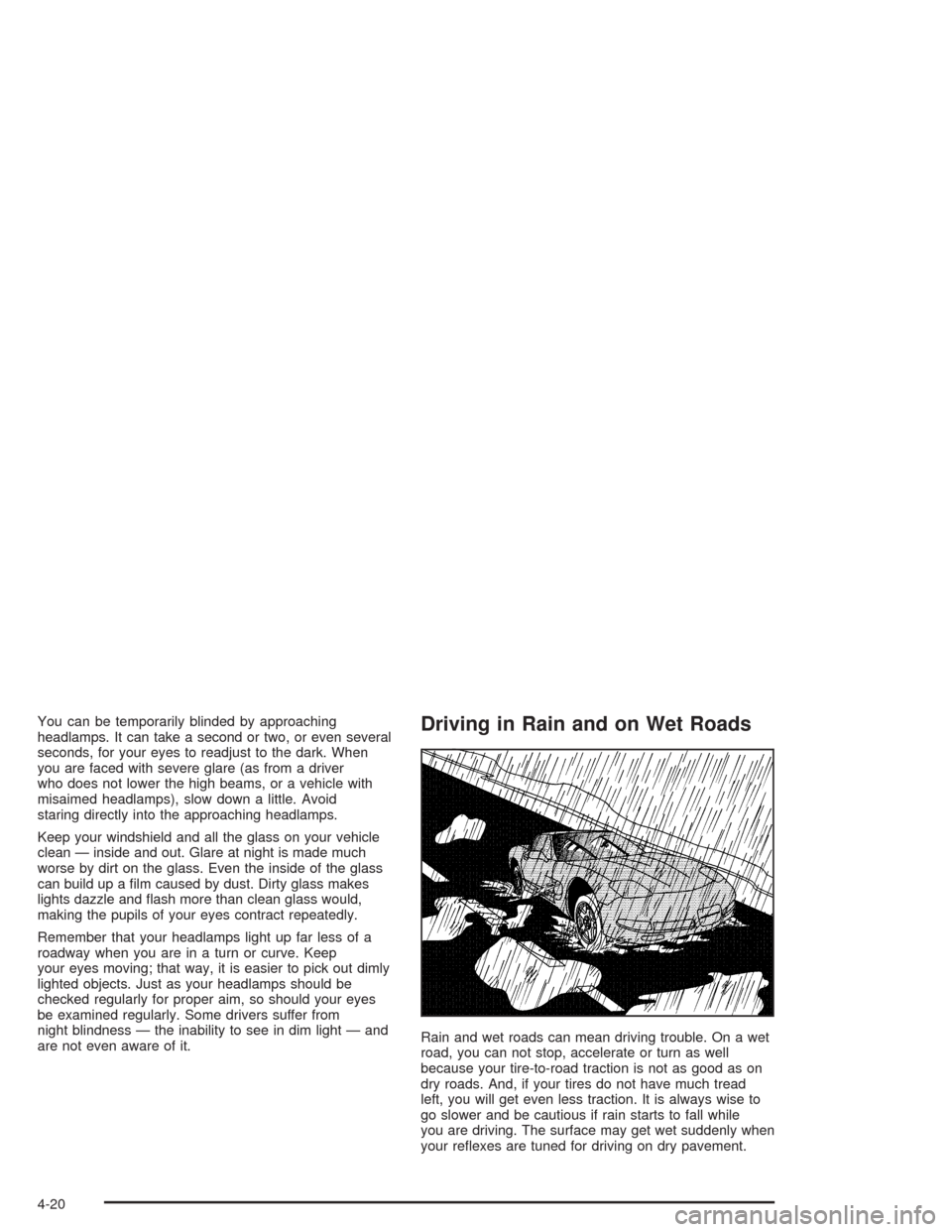
Rain and wet roads can mean driving trouble. On a wet
road, you can not stop, accelerate or turn as well
because your tire-to-road traction is not as good as on
dry roads. And, if your tires do not have much tread
left, you will get even less traction. It is always wise to
go slower and be cautious if rain starts to fall while
you are driving. The surface may get wet suddenly when
your reflexes are tuned for driving on dry pavement.
4-20
Page 265 of 384
How to Check and Add Fluid
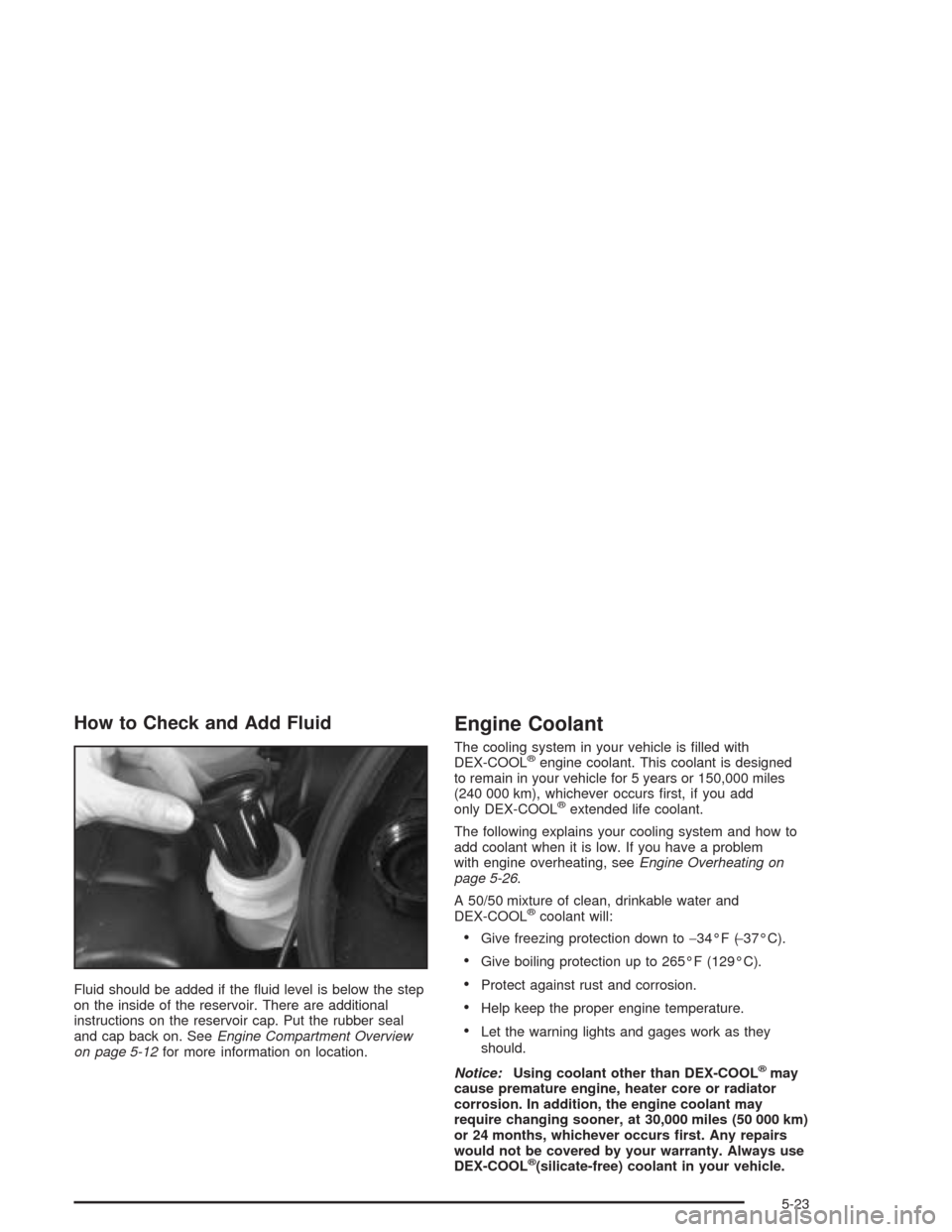
Fluid should be added if the fluid level is below the step
on the inside of the reservoir. There are additional
instructions on the reservoir cap. Put the rubber seal
and cap back on. SeeEngine Compartment Overview
on page 5-12for more information on location.
Engine Coolant
The cooling system in your vehicle is filled with
DEX-COOL®engine coolant. This coolant is designed
to remain in your vehicle for 5 years or 150,000 miles
(240 000 km), whichever occurs first, if you add
only DEX-COOL
®extended life coolant.
The following explains your cooling system and how to
add coolant when it is low. If you have a problem
with engine overheating, seeEngine Overheating on
page 5-26.
A 50/50 mixture of clean, drinkable water and
DEX-COOL
®coolant will:
•Give freezing protection down to−34°F (−37°C).
•Give boiling protection up to 265°F (129°C).
•Protect against rust and corrosion.
•Help keep the proper engine temperature.
•Let the warning lights and gages work as they
should.
Notice:Using coolant other than DEX-COOL
®may
cause premature engine, heater core or radiator
corrosion. In addition, the engine coolant may
require changing sooner, at 30,000 miles (50 000 km)
or 24 months, whichever occurs rst. Any repairs
would not be covered by your warranty. Always use
DEX-COOL
®(silicate-free) coolant in your vehicle.
5-23
Page 383 of 384
Transmission
Fluid, Automatic...........................................5-20
Fluid, Manual..............................................5-21
Transmission Operation, Automatic....................2-25
Transmission Operation, Manual........................2-28
Transportation Options...................................... 7-8
Trunk/Hatch...................................................2-11
Trunk-Mounted CD Changer.............................3-81
Turn and Lane-Change Signals.......................... 3-7
Turn Signal/Multifunction Lever........................... 3-6
Twilight Sentinel
®(Optional in United States,
Standard in Canada)....................................3-16
U
Understanding Radio Reception........................3-88
Uniform Tire Quality Grading............................5-67
United States – Customer Assistance.................. 7-4
Unlocking the Theft-Deterrent Feature After a
Power Loss................................................3-87
V
Vehicle
Control........................................................ 4-6
Damage Warnings........................................... ivVehicle (cont.)
Loading......................................................4-33
Parking Your...............................................2-35
Symbols......................................................... iv
Vehicle Data Collection and Event Data
Recorders.................................................... 7-9
Vehicle Identification
Number (VIN).............................................5-91
Service Parts Identification Label...................5-92
Vehicle Personalization
Memory.....................................................2-57
Vehicle Storage..............................................5-41
Ventilation Adjustment......................................3-31
Visors...........................................................2-15
Voltmeter Gage..............................................3-37
W
Warning Lights, Gages and Indicators................3-32
Warnings
DIC Warnings and Messages........................3-58
Hazard Warning Flashers............................... 3-4
Other Warning Devices.................................. 3-5
Safety and Symbols......................................... iii
Vehicle Damage.............................................. iv
Washing Your Vehicle......................................5-85
What Kind of Engine Oil to Use........................5-14
13