Page 153 of 219
²Do not work on a vehicle with
the engine running in an
enclosed space, unless you are
sure you have enough
ventilation.
²Keep all lit cigarettes, open
flames and other lit material
away from the battery and all
fuel related parts.
If you disconnect the battery, the
engine must ªrelearnº its idle
conditions before your vehicle will
drive properly, as explained in
Batteryin this chapter.
Working with the engine off
²Automatic transmission:
1. Set the parking brake fully and
ensure the gearshift is securely
latched in P (Park).
2. Turn off the engine and remove
the key.
3. Block the wheels to prevent the
vehicle from moving unexpectedly.
²Manual transmission:
1. Set the parking brake, depress
the clutch and place the gearshift
in 1 (First).
2. Turn off the engine and remove
the key.
3. Block the wheels to prevent the
vehicle from moving unexpectedly.
Maintenance and care
153
Page 156 of 219
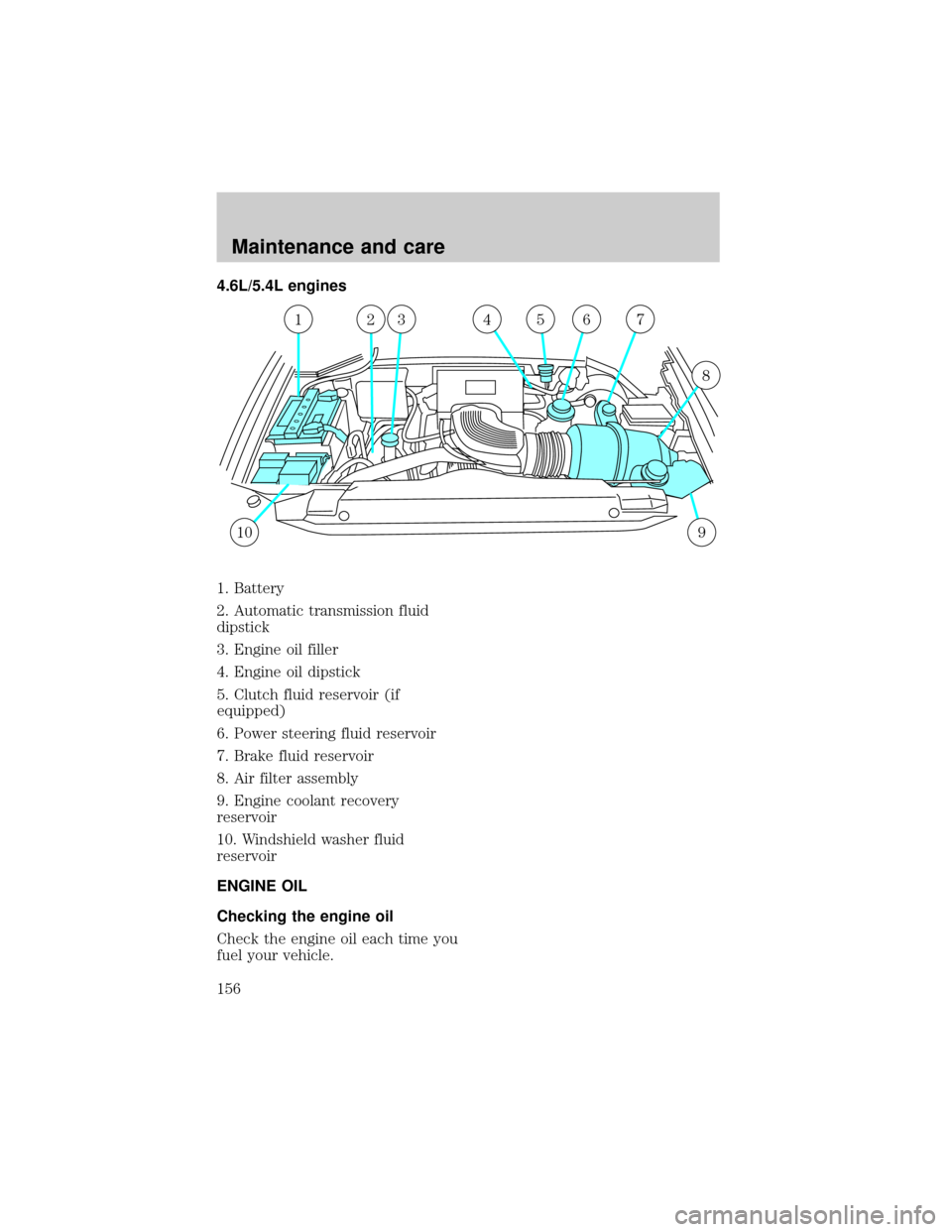
4.6L/5.4L engines
1. Battery
2. Automatic transmission fluid
dipstick
3. Engine oil filler
4. Engine oil dipstick
5. Clutch fluid reservoir (if
equipped)
6. Power steering fluid reservoir
7. Brake fluid reservoir
8. Air filter assembly
9. Engine coolant recovery
reservoir
10. Windshield washer fluid
reservoir
ENGINE OIL
Checking the engine oil
Check the engine oil each time you
fuel your vehicle.
109
1234657
8
Maintenance and care
156
Page 158 of 219
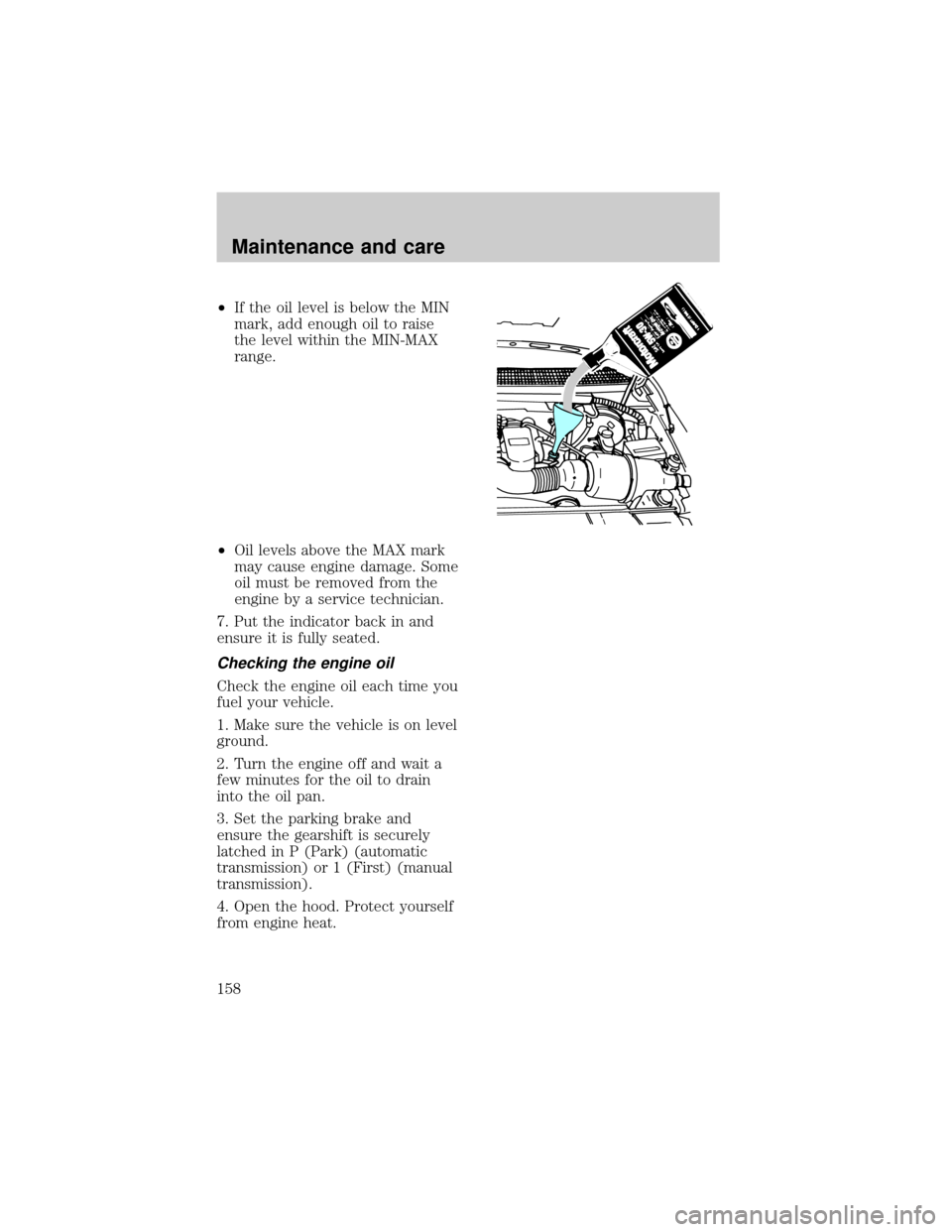
²If the oil level is below the MIN
mark, add enough oil to raise
the level within the MIN-MAX
range.
²Oil levels above the MAX mark
may cause engine damage. Some
oil must be removed from the
engine by a service technician.
7. Put the indicator back in and
ensure it is fully seated.
Checking the engine oil
Check the engine oil each time you
fuel your vehicle.
1. Make sure the vehicle is on level
ground.
2. Turn the engine off and wait a
few minutes for the oil to drain
into the oil pan.
3. Set the parking brake and
ensure the gearshift is securely
latched in P (Park) (automatic
transmission) or 1 (First) (manual
transmission).
4. Open the hood. Protect yourself
from engine heat.
Maintenance and care
158
Page 164 of 219
WINDSHIELD WASHER FLUID
Checking and adding washer
fluid
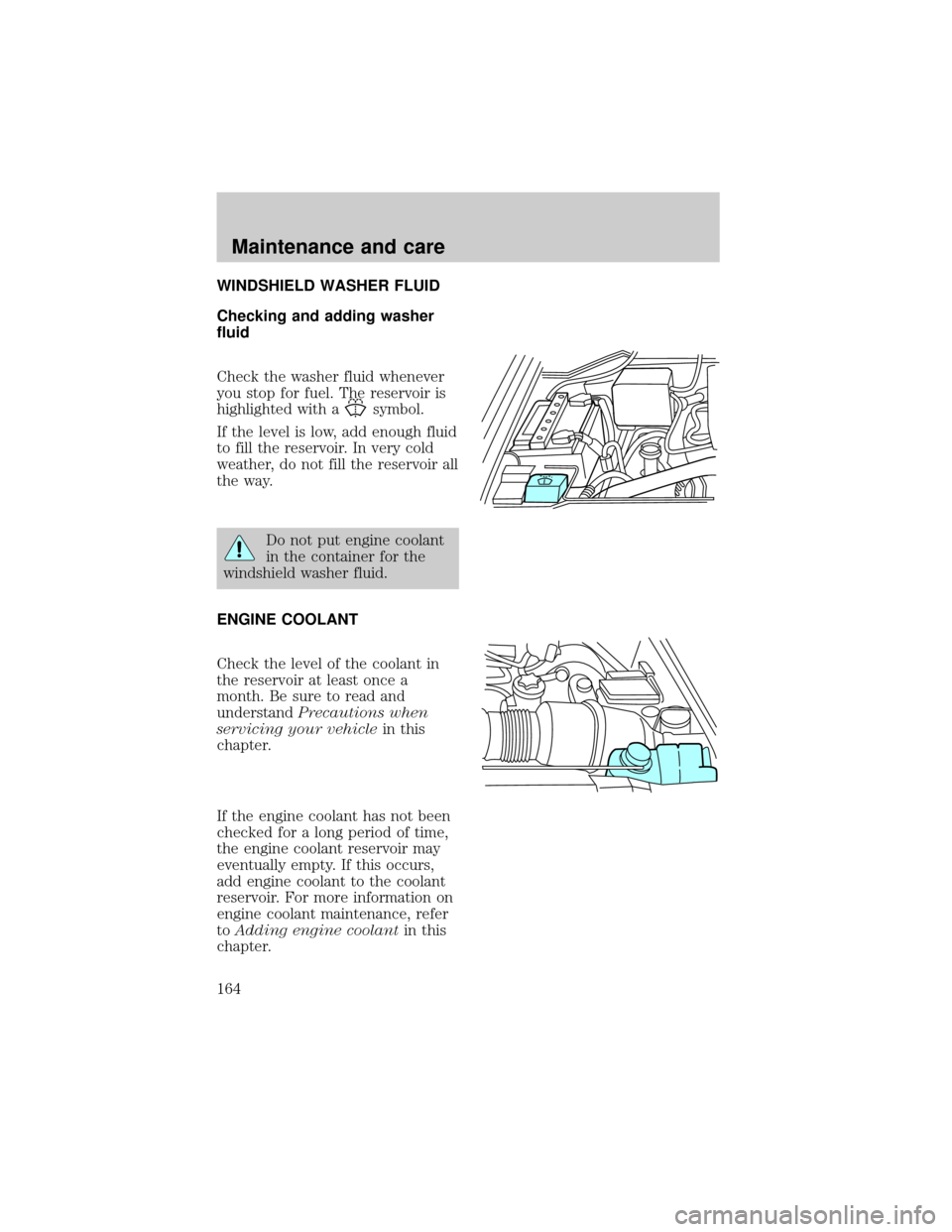
Check the washer fluid whenever
you stop for fuel. The reservoir is
highlighted with a
symbol.
If the level is low, add enough fluid
to fill the reservoir. In very cold
weather, do not fill the reservoir all
the way.
Do not put engine coolant
in the container for the
windshield washer fluid.
ENGINE COOLANT
Check the level of the coolant in
the reservoir at least once a
month. Be sure to read and
understandPrecautions when
servicing your vehiclein this
chapter.
If the engine coolant has not been
checked for a long period of time,
the engine coolant reservoir may
eventually empty. If this occurs,
add engine coolant to the coolant
reservoir. For more information on
engine coolant maintenance, refer
toAdding engine coolantin this
chapter.
Maintenance and care
164
Page 178 of 219
treatments used by commercial car
washes reduce the effectiveness of
wiper blades.
Checking the wiper blades
If the wiper blades do not wipe
properly, clean both the windshield
and wiper blades using undiluted
windshield wiper solution or a mild
detergent. Rinse thoroughly with
clean water. To avoid damaging the
blades, do not use fuel, kerosene,
paint thinner or other solvents.
Changing the wiper blades
When replacing wiper blade
assemblies, always use a
Motorcraft part or equivalent. To
make replacing the wipers easy,
turn the ignition to ACC, then turn
the wipers on. When the wipers
reach the vertical position, turn
the ignition to LOCK.
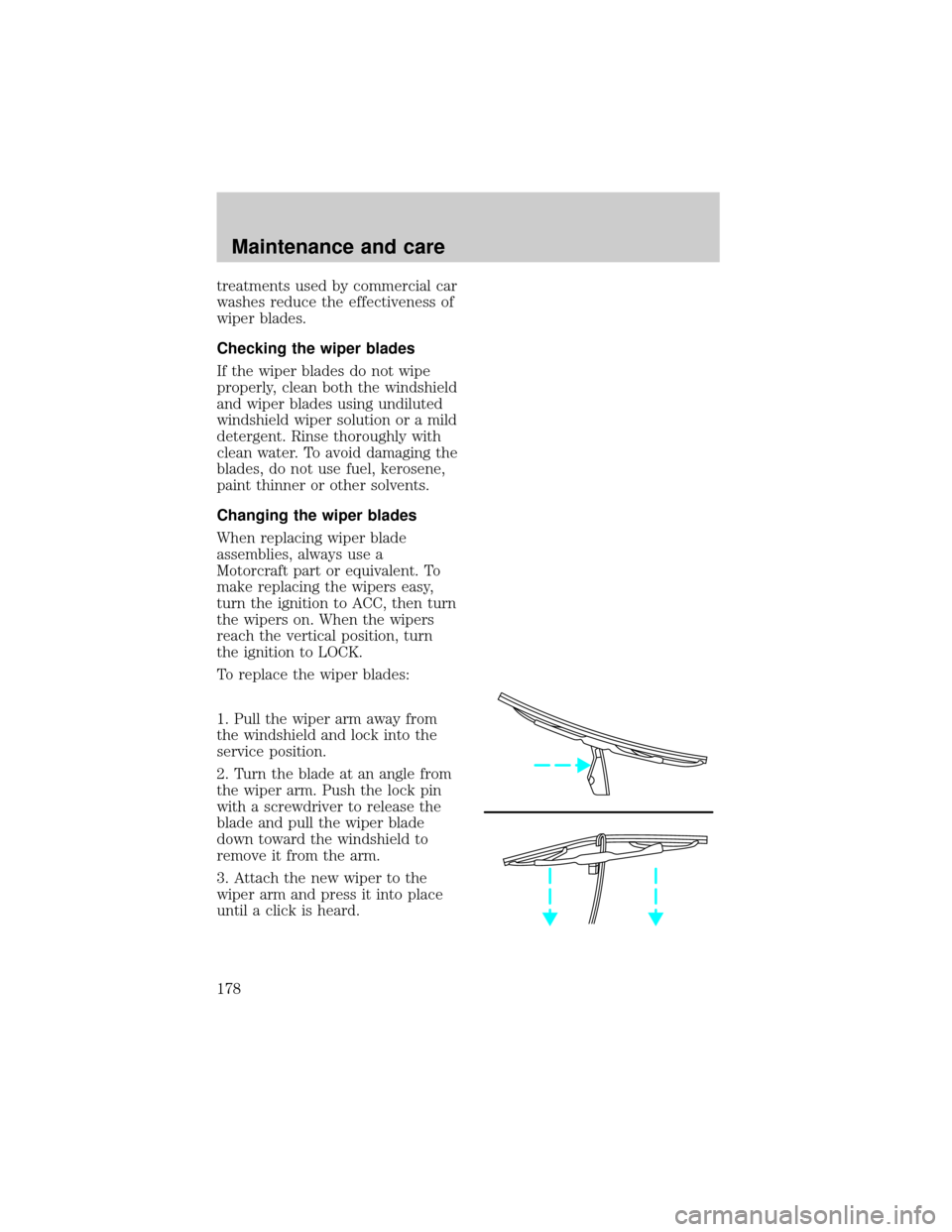
To replace the wiper blades:
1. Pull the wiper arm away from
the windshield and lock into the
service position.
2. Turn the blade at an angle from
the wiper arm. Push the lock pin
with a screwdriver to release the
blade and pull the wiper blade
down toward the windshield to
remove it from the arm.
3. Attach the new wiper to the
wiper arm and press it into place
until a click is heard.
Maintenance and care
178
Page 184 of 219
Follow these guidelines when using
snow tires and chains:
²Use only SAE Class S chains.
²Install chains securely, verifying
that the chains do not touch any
wiring, brake lines or fuel lines.
²Drive cautiously. If you hear the
chains rub or bang against your
vehicle, stop and re-tighten the
chains. If this does not work,
remove the chains to prevent
damage to your vehicle.
²If possible, avoid fully loading
your vehicle.
²Do not use tire chains on
aluminum wheels. Chains may
chip the wheels.
²Remove the tire chains when
they are no longer needed. Do
not use tire chains on dry roads.
²The suspension insulation and
bumpers will help prevent
vehicle damage. Do not remove
these components from your
vehicle when using snow tires
and chains.
WHAT YOU SHOULD KNOW
ABOUT AUTOMOTIVE FUELS
Important safety precautions
Do not overfill the fuel
tank. The pressure in an
overfilled tank may cause
leakage and lead to fuel spray
and fire.
Maintenance and care
184
Page 185 of 219
If you do not use the
proper fuel cap, the
pressure in the fuel tank can
damage the fuel system or cause
it to work improperly in a
collision.
The fuel system may be
under pressure. If the fuel
cap is venting vapor or if you
hear a hissing sound, wait until it
stops before completely
removing the cap.
Automotive fuels can
cause serious injury or
death if misused or mishandled.
Observe the following guidelines
when handling automotive fuel:
²Extinguish all smoking materials
and any open flames before
fueling your vehicle.
²Always turn off the vehicle
before fueling.
²Automotive fuels can be harmful
or fatal if swallowed. If fuel is
swallowed, call a physician
immediately, even if no
symptoms are immediately
apparent. The toxic effects of
fuel may not be visible for
hours.
²Fuels can also be harmful if
absorbed through the skin. If
fuel is splashed on the skin,
Maintenance and care
185
Page 186 of 219

promptly remove contaminated
clothing and wash skin
thoroughly with soap and water.
²If fuel is splashed in the eyes,
remove contact lenses, flush
with water for 15 minutes and
seek medical attention.
²Be particularly careful if you are
taking ªAntabuseº or other
forms of disulfiram for the
treatment of alcoholism.
Breathing gasoline vapors or
skin contact could cause an
adverse reaction. Consult a
physician immediately.
Choosing the right fuel
Use only UNLEADED FUEL. The
use of leaded fuel is prohibited by
law and could damage your
vehicle.
Your vehicle was not designed to
use fuel or fuel additives with
metallic compounds, including
manganese-based compounds
containing MMT.
Vehicles certified to California
emission standards (indicated on
the underhood Vehicle Emissions
Control Information label) are
designed to operate on California
reformulated gasolines. If
California reformulated gasoline is
not available when you refuel, your
vehicle can be operated on
non-California fuels. However, even
though your engine will perform
adequately on other gasolines, the
performance of the emission
Maintenance and care
186