Page 114 of 191
Temporary spare tire
information
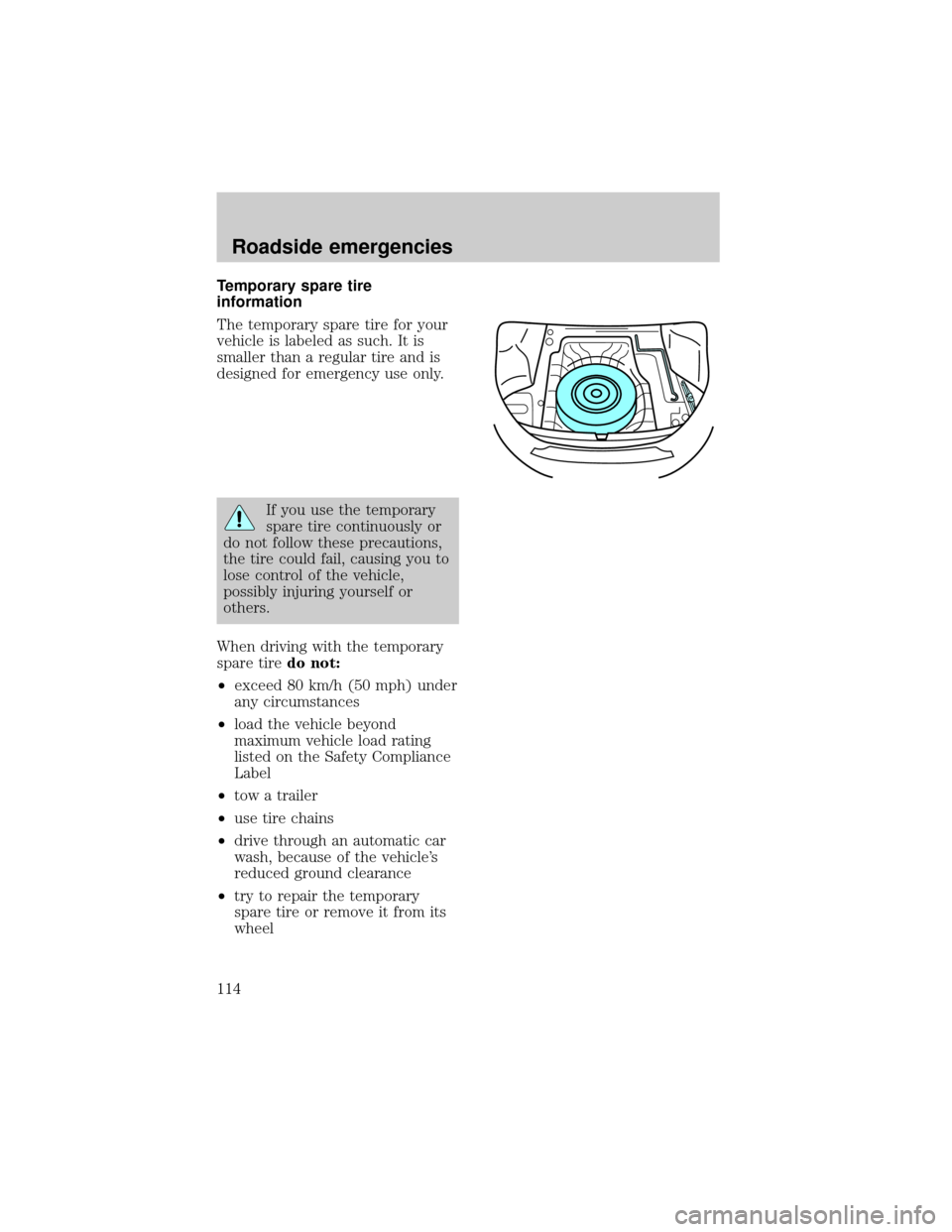
The temporary spare tire for your
vehicle is labeled as such. It is
smaller than a regular tire and is
designed for emergency use only.
If you use the temporary
spare tire continuously or
do not follow these precautions,
the tire could fail, causing you to
lose control of the vehicle,
possibly injuring yourself or
others.
When driving with the temporary
spare tiredo not:
²exceed 80 km/h (50 mph) under
any circumstances
²load the vehicle beyond
maximum vehicle load rating
listed on the Safety Compliance
Label
²tow a trailer
²use tire chains
²drive through an automatic car
wash, because of the vehicle's
reduced ground clearance
²try to repair the temporary
spare tire or remove it from its
wheel
Roadside emergencies
114
Page 115 of 191
²use the wheel for any other type
of vehicle
Tire change procedure
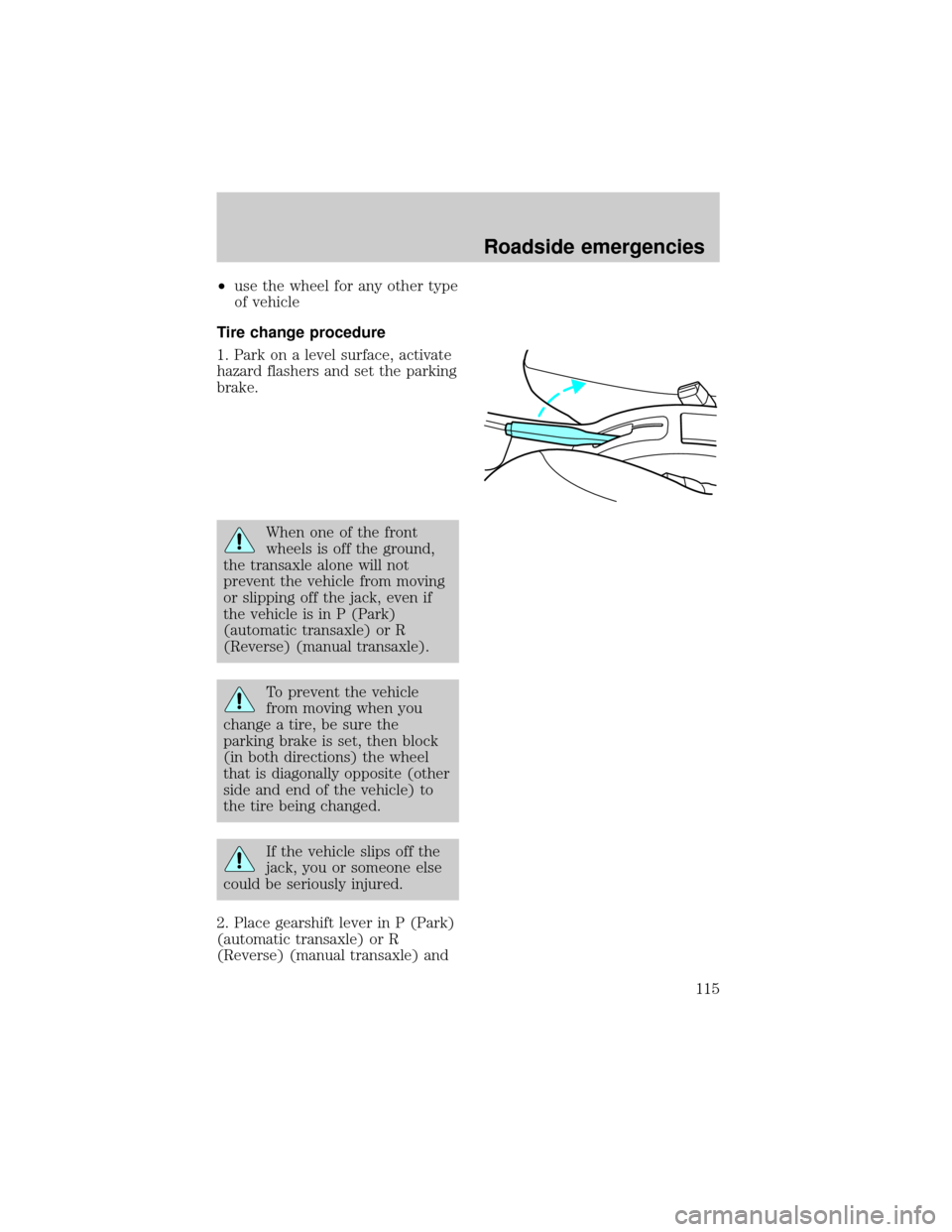
1. Park on a level surface, activate
hazard flashers and set the parking
brake.
When one of the front
wheels is off the ground,
the transaxle alone will not
prevent the vehicle from moving
or slipping off the jack, even if
the vehicle is in P (Park)
(automatic transaxle) or R
(Reverse) (manual transaxle).
To prevent the vehicle
from moving when you
change a tire, be sure the
parking brake is set, then block
(in both directions) the wheel
that is diagonally opposite (other
side and end of the vehicle) to
the tire being changed.
If the vehicle slips off the
jack, you or someone else
could be seriously injured.
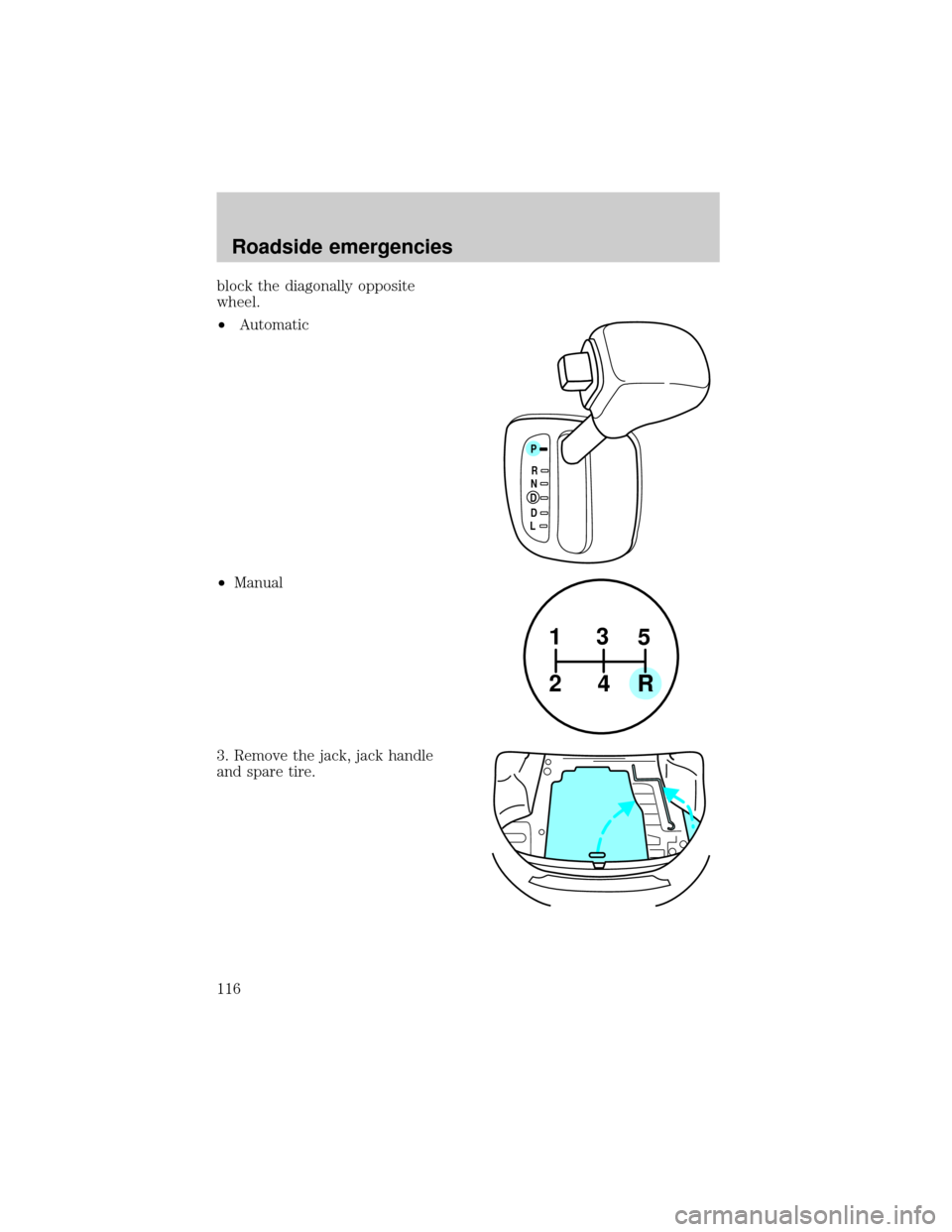
2. Place gearshift lever in P (Park)
(automatic transaxle) or R
(Reverse) (manual transaxle) and
Roadside emergencies
115
Page 116 of 191
block the diagonally opposite
wheel.
²Automatic
²Manual
3. Remove the jack, jack handle
and spare tire.
P
RNDDL
1
24R3
5
Roadside emergencies
116
Page 117 of 191
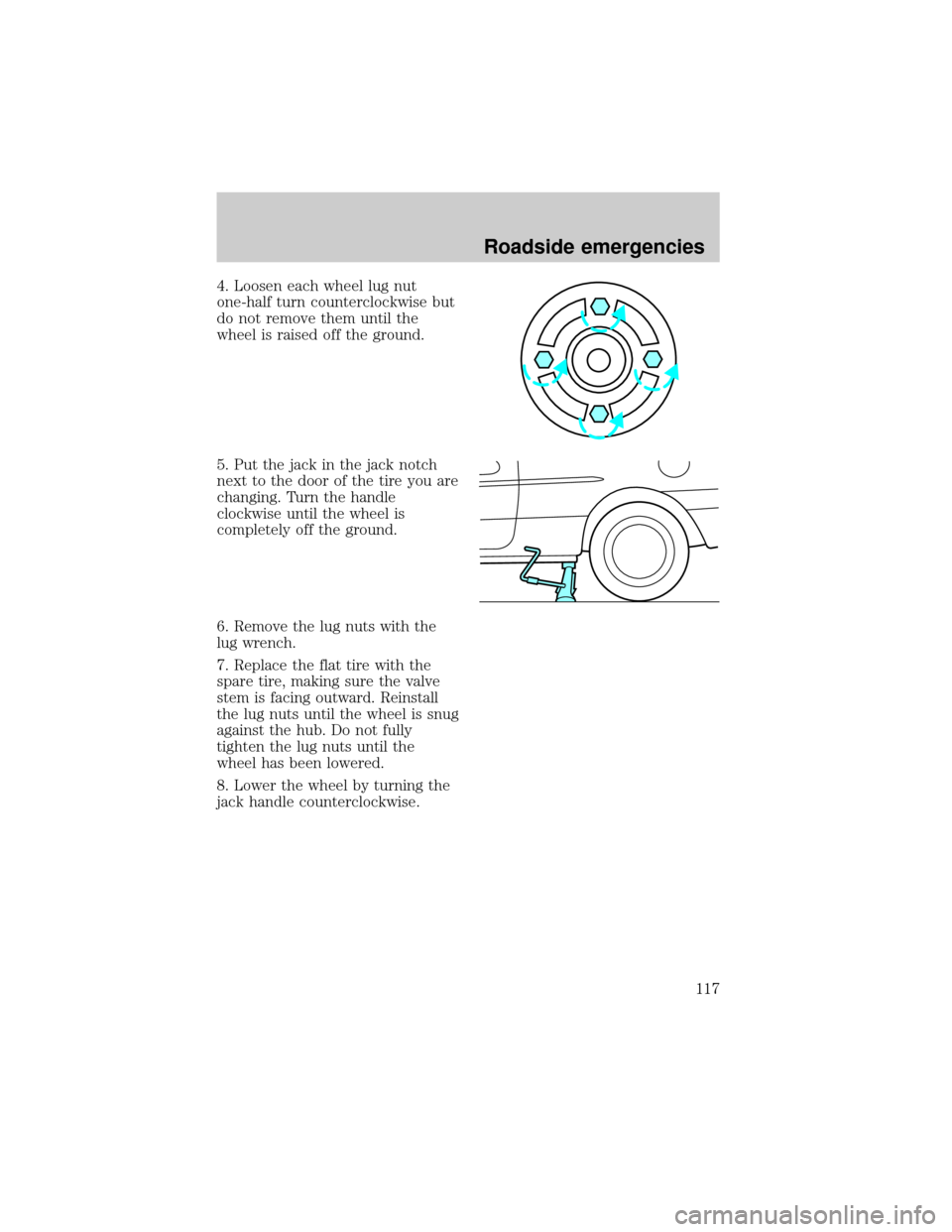
4. Loosen each wheel lug nut
one-half turn counterclockwise but
do not remove them until the
wheel is raised off the ground.
5. Put the jack in the jack notch
next to the door of the tire you are
changing. Turn the handle
clockwise until the wheel is
completely off the ground.
6. Remove the lug nuts with the
lug wrench.
7. Replace the flat tire with the
spare tire, making sure the valve
stem is facing outward. Reinstall
the lug nuts until the wheel is snug
against the hub. Do not fully
tighten the lug nuts until the
wheel has been lowered.
8. Lower the wheel by turning the
jack handle counterclockwise.
Roadside emergencies
117
Page 118 of 191
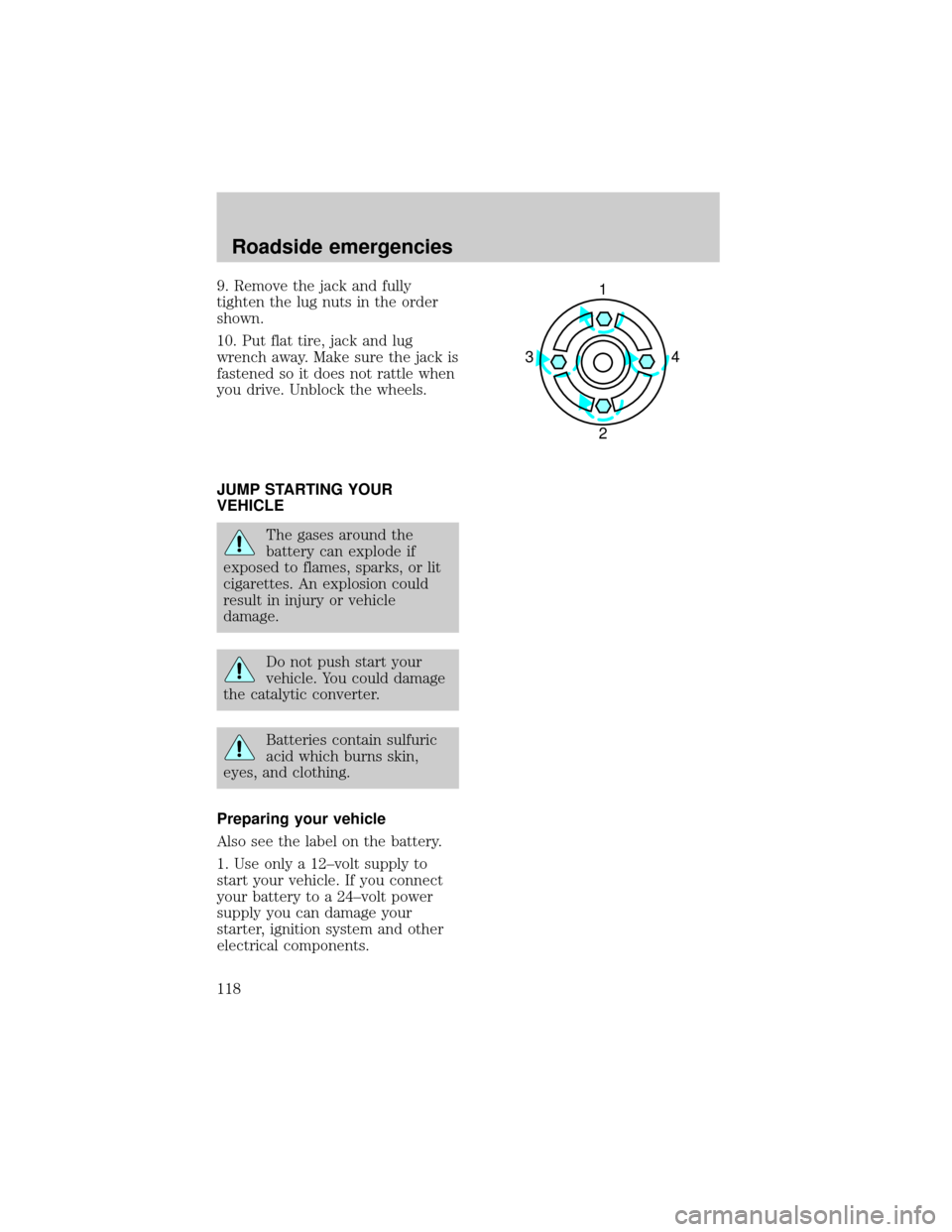
9. Remove the jack and fully
tighten the lug nuts in the order
shown.
10. Put flat tire, jack and lug
wrench away. Make sure the jack is
fastened so it does not rattle when
you drive. Unblock the wheels.
JUMP STARTING YOUR
VEHICLE
The gases around the
battery can explode if
exposed to flames, sparks, or lit
cigarettes. An explosion could
result in injury or vehicle
damage.
Do not push start your
vehicle. You could damage
the catalytic converter.
Batteries contain sulfuric
acid which burns skin,
eyes, and clothing.
Preparing your vehicle
Also see the label on the battery.
1. Use only a 12±volt supply to
start your vehicle. If you connect
your battery to a 24±volt power
supply you can damage your
starter, ignition system and other
electrical components.
1
4 3
2
Roadside emergencies
118
Page 121 of 191
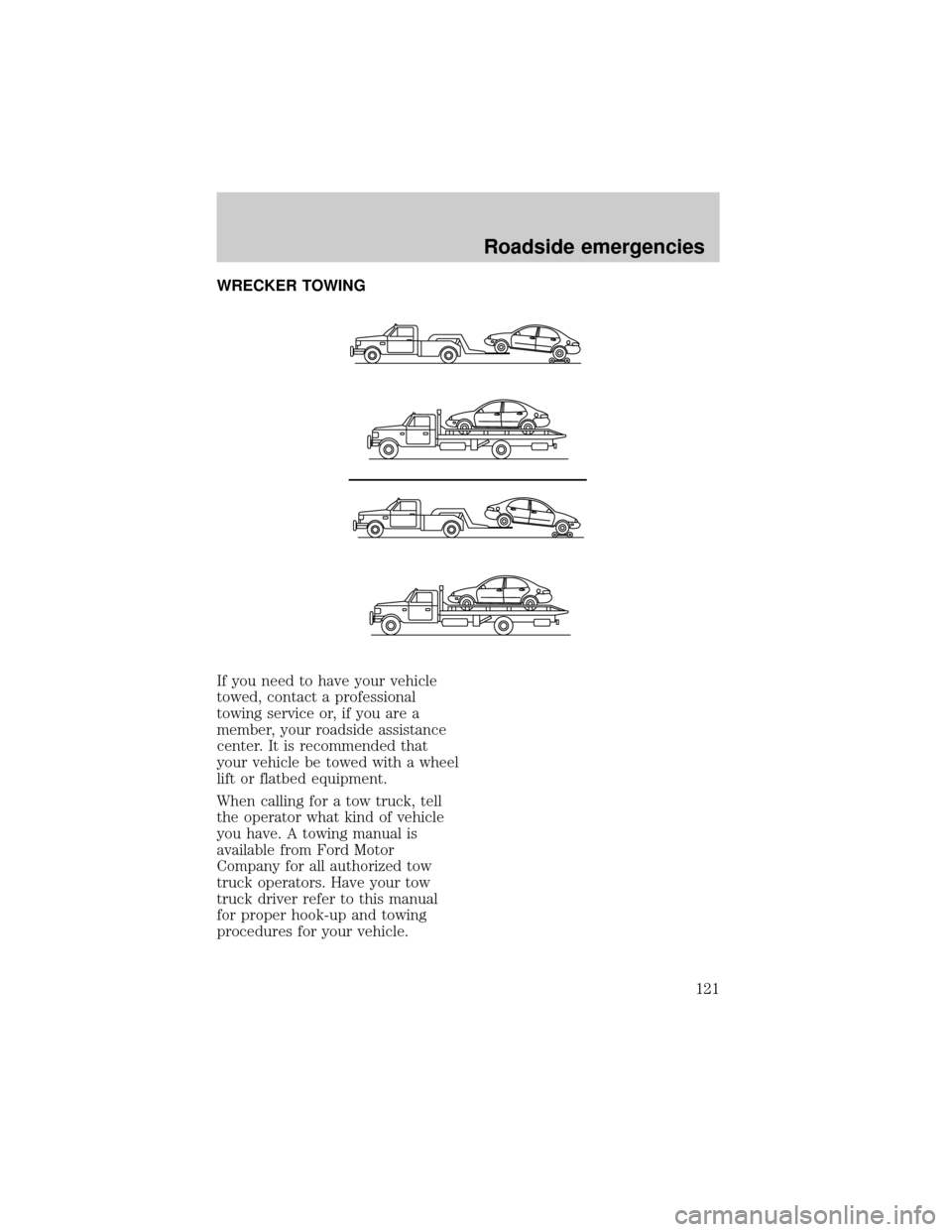
WRECKER TOWING
If you need to have your vehicle
towed, contact a professional
towing service or, if you are a
member, your roadside assistance
center. It is recommended that
your vehicle be towed with a wheel
lift or flatbed equipment.
When calling for a tow truck, tell
the operator what kind of vehicle
you have. A towing manual is
available from Ford Motor
Company for all authorized tow
truck operators. Have your tow
truck driver refer to this manual
for proper hook-up and towing
procedures for your vehicle.
Roadside emergencies
121
Page 122 of 191
TOWING BEHIND ANOTHER
VEHICLE
Do not tow your vehicle behind
another vehicle, such as an RV,
unless front wheel dollies are used.
Your vehicle cannot be flat towed
with all wheels on the ground.
Roadside emergencies
122
Page 125 of 191
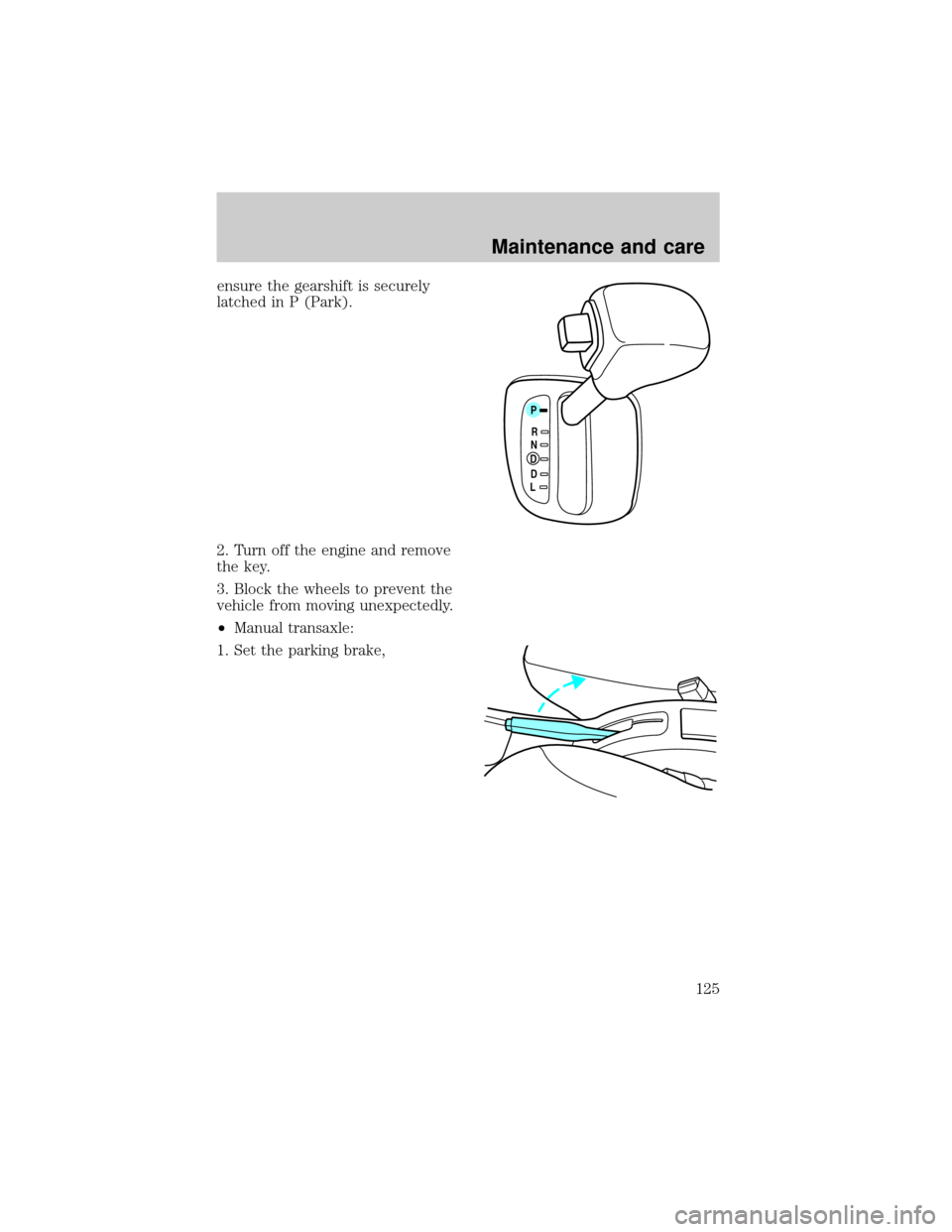
ensure the gearshift is securely
latched in P (Park).
2. Turn off the engine and remove
the key.
3. Block the wheels to prevent the
vehicle from moving unexpectedly.
²Manual transaxle:
1. Set the parking brake,
P
RNDDL
Maintenance and care
125