Page 119 of 192
7. Lower the vehicle by turning the
jack handle counterclockwise.
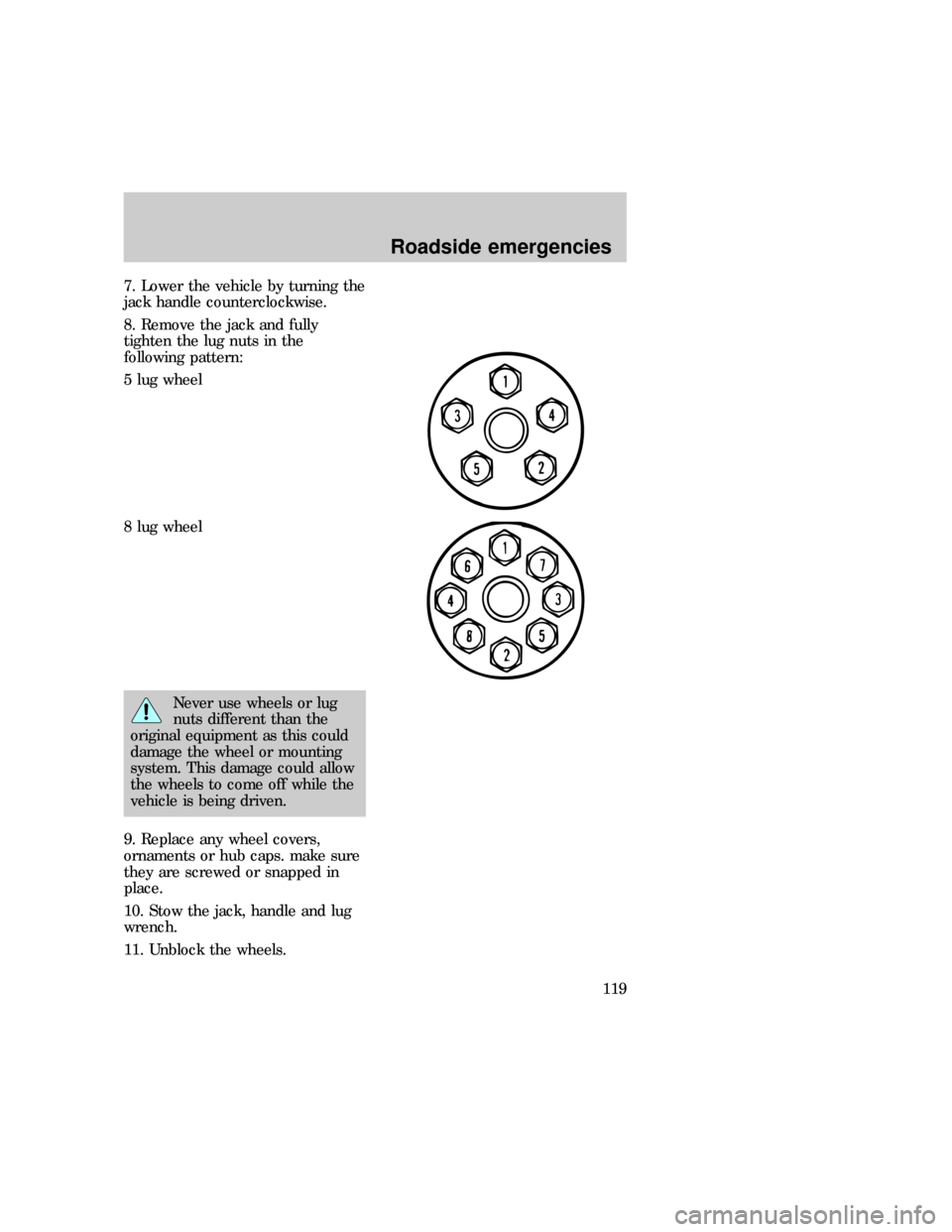
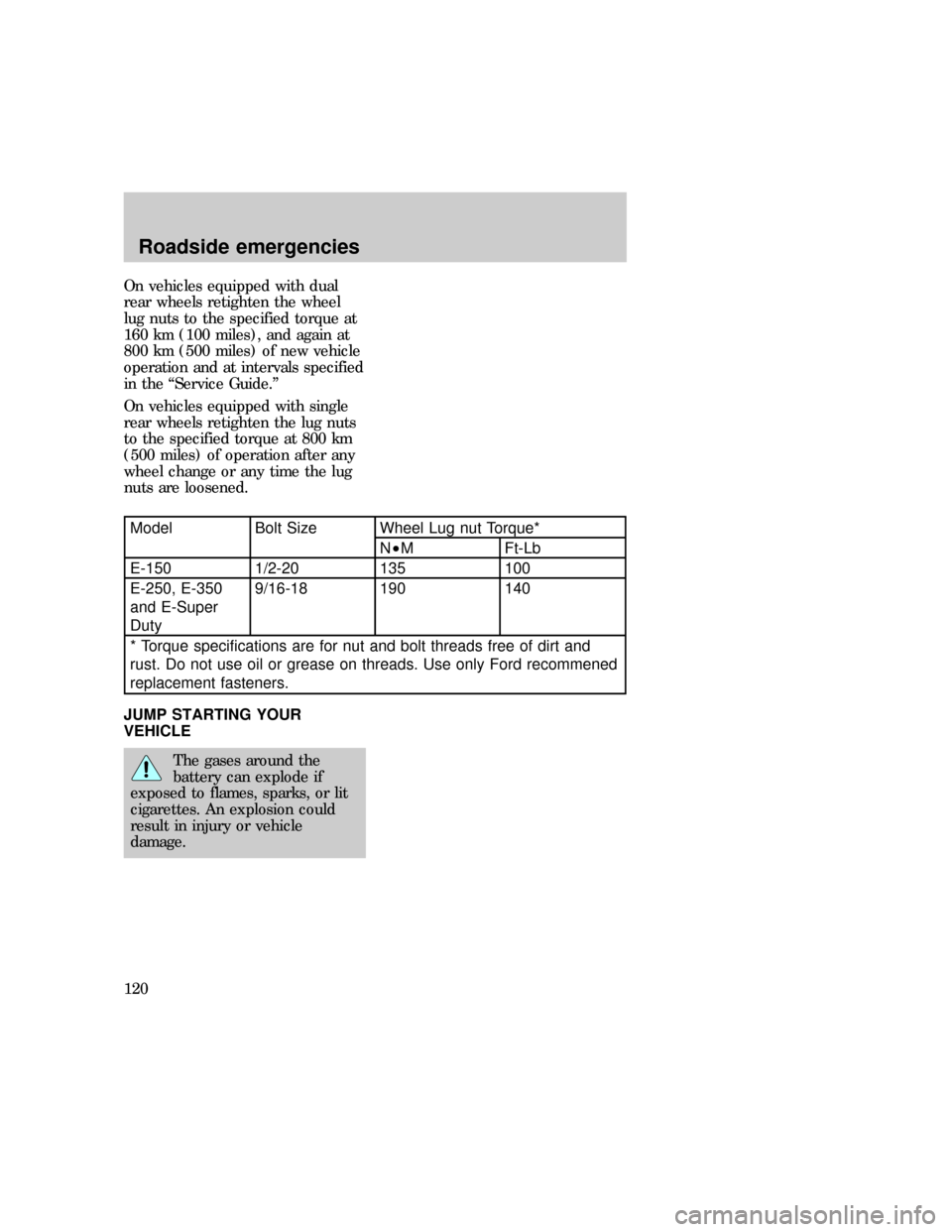
8. Remove the jack and fully
tighten the lug nuts in the
following pattern:
5 lug wheel
8 lug wheel
Never use wheels or lug
nuts different than the
original equipment as this could
damage the wheel or mounting
system. This damage could allow
the wheels to come off while the
vehicle is being driven.
9. Replace any wheel covers,
ornaments or hub caps. make sure
they are screwed or snapped in
place.
10. Stow the jack, handle and lug
wrench.
11. Unblock the wheels.
Roadside emergencies
119
Page 120 of 192
On vehicles equipped with dual
rear wheels retighten the wheel
lug nuts to the specified torque at
160 km (100 miles), and again at
800 km (500 miles) of new vehicle
operation and at intervals specified
in the ªService Guide.º
On vehicles equipped with single
rear wheels retighten the lug nuts
to the specified torque at 800 km
(500 miles) of operation after any
wheel change or any time the lug
nuts are loosened.
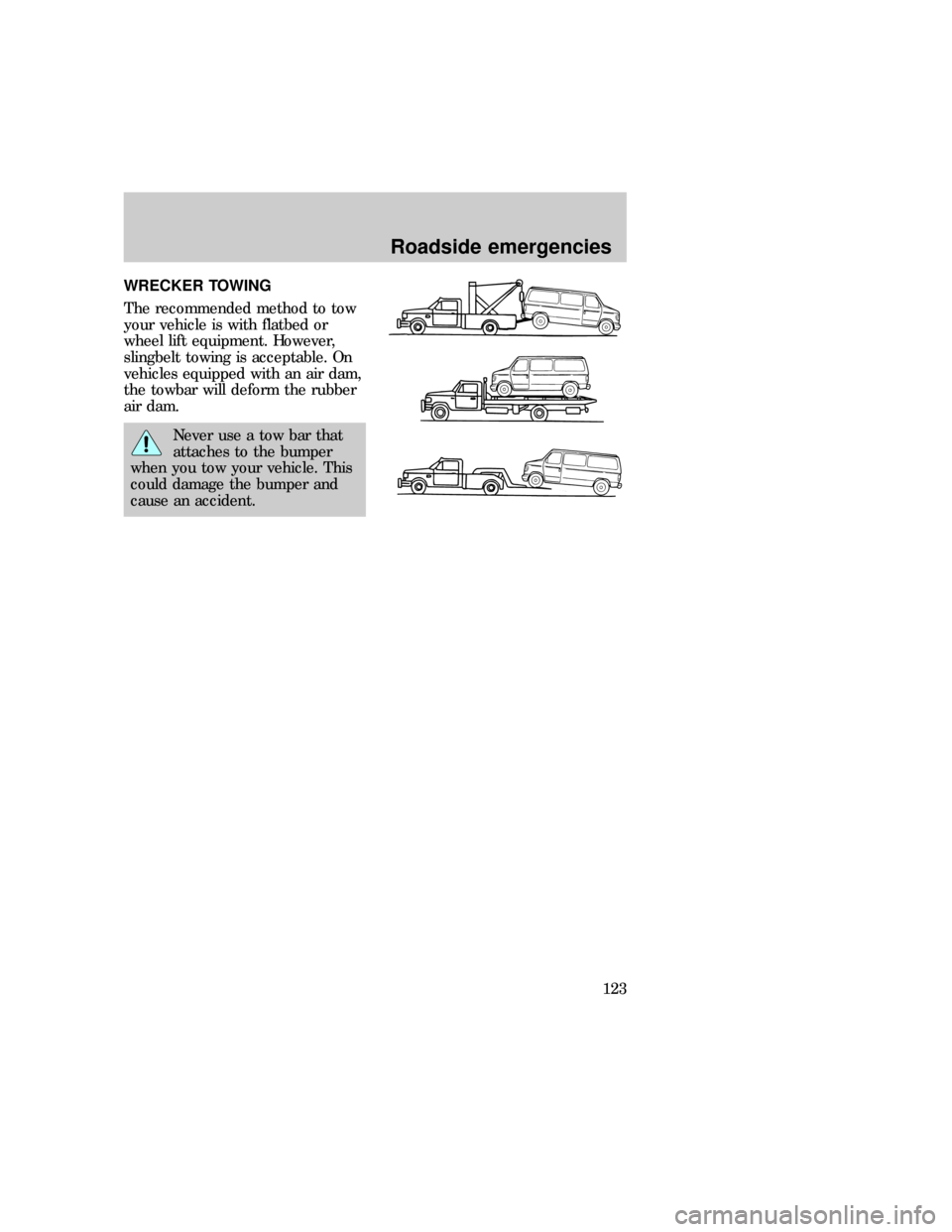
Model Bolt Size Wheel Lug nut Torque*
N²M Ft-Lb
E-150 1/2-20 135 100
E-250, E-350
and E-Super
Duty9/16-18 190 140
* Torque specifications are for nut and bolt threads free of dirt and
rust. Do not use oil or grease on threads. Use only Ford recommened
replacement fasteners.
JUMP STARTING YOUR
VEHICLE
The gases around the
battery can explode if
exposed to flames, sparks, or lit
cigarettes. An explosion could
result in injury or vehicle
damage.
com_jump-starting.01
Roadside emergencies
120
Page 123 of 192
WRECKER TOWING
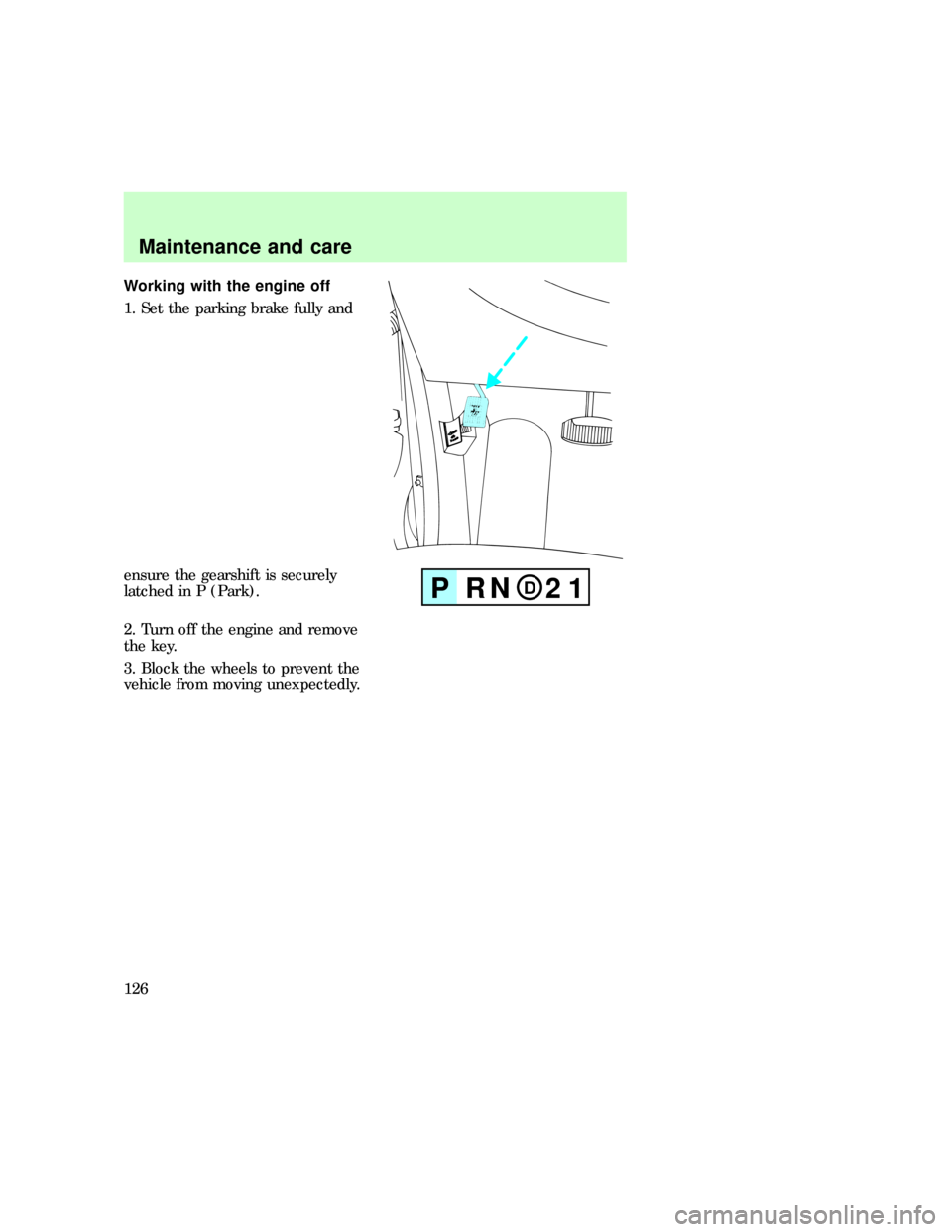
The recommended method to tow
your vehicle is with flatbed or
wheel lift equipment. However,
slingbelt towing is acceptable. On
vehicles equipped with an air dam,
the towbar will deform the rubber
air dam.
Never use a tow bar that
attaches to the bumper
when you tow your vehicle. This
could damage the bumper and
cause an accident.
Roadside emergencies
123
Page 126 of 192
Working with the engine off
1. Set the parking brake fully and
ensure the gearshift is securely
latched in P (Park).
2. Turn off the engine and remove
the key.
3. Block the wheels to prevent the
vehicle from moving unexpectedly.
DPRN 21
com_working_on.01
Maintenance and care
126
Page 127 of 192
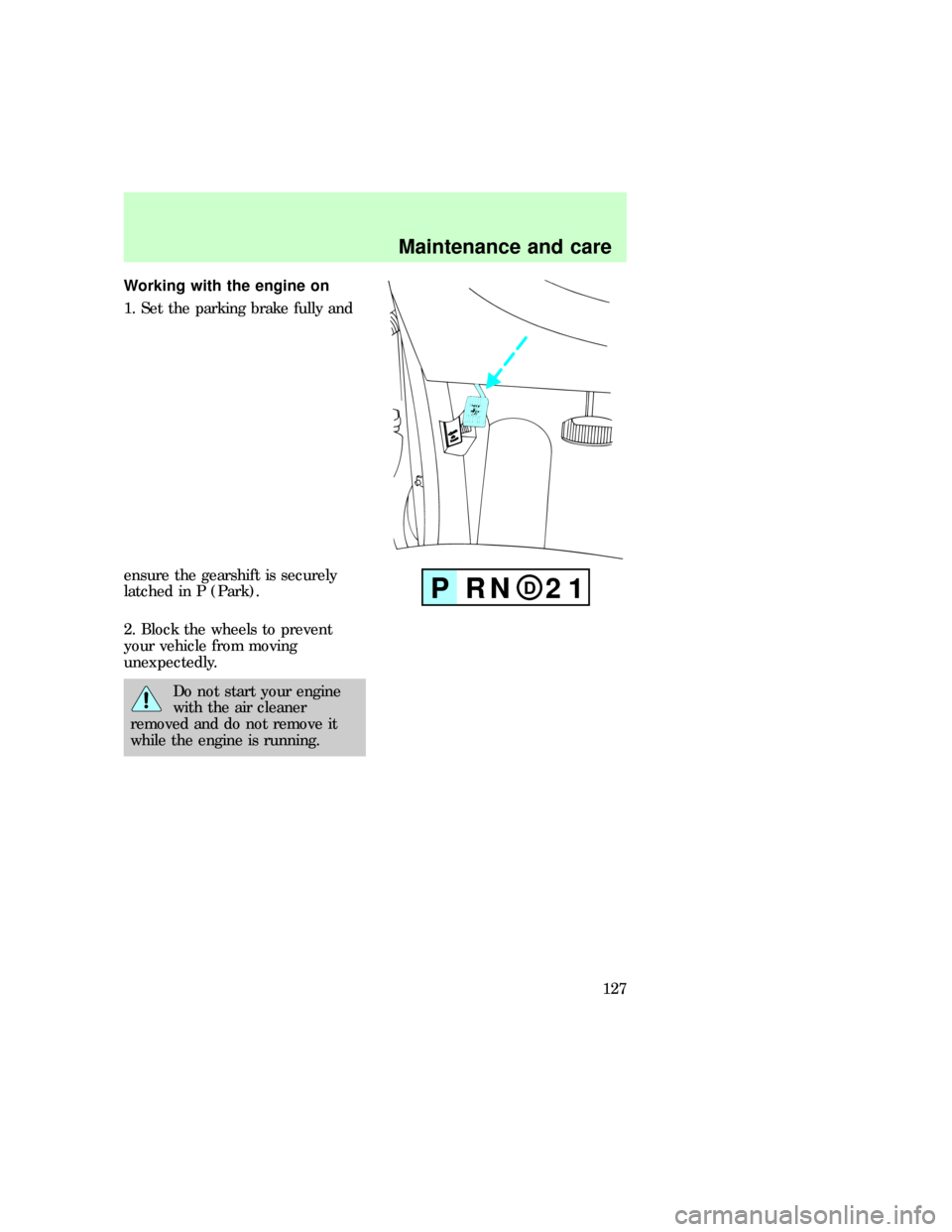
Working with the engine on
1. Set the parking brake fully and
ensure the gearshift is securely
latched in P (Park).
2. Block the wheels to prevent
your vehicle from moving
unexpectedly.
Do not start your engine
with the air cleaner
removed and do not remove it
while the engine is running.
DPRN 21
eco_opening_hood
Maintenance and care
127
Page 152 of 192

conditions of their use, however,
and may depart significantly from
the norm due to variations in
driving habits, service practices,
and differences in road
characteristics and climate.
Traction A B C
The traction grades, from highest
to lowest are A, B, and C, and they
represent the tire's ability to stop
on wet pavement as measured
under test surfaces of asphalt and
concrete. A tire marked C may
have poor traction performance.
Warning: The traction grade
assigned to this tire is based on
braking (straightahead) traction
tests and does not include
cornering (turning) traction.
Temperature A B C
The temperature grades are A (the
highest), B, and C, representing
the tire's resistance to the
generation of heat and its ability to
dissipate heat when tested under
controlled conditions on a
specified indoor laboratory test
wheel. Sustained high temperature
can cause the material of the tire
to degenerate and reduce tire life,
and excessive temperature can
lead to sudden tire failure. The
grade C corresponds to a level of
performance which all passenger
car tires must meet under the
Federal Motor Vehicle Safety
Standard No. 109. Grades B and A
represent higher levels of
performance on the laboratory test
com_traction_abc.01
com_temperature_abc.01
Maintenance and care
152
Page 153 of 192
wheel than the minimum required
by law.
The temperature grade for
this tire is established for a
tire that is properly inflated and
not overloaded. Excessive speed,
underinflation, or excessive
loading, either separately or in
combination, can cause heat
buildup and possible tire failure.
SERVICING YOUR TIRES
Checking the tire pressure
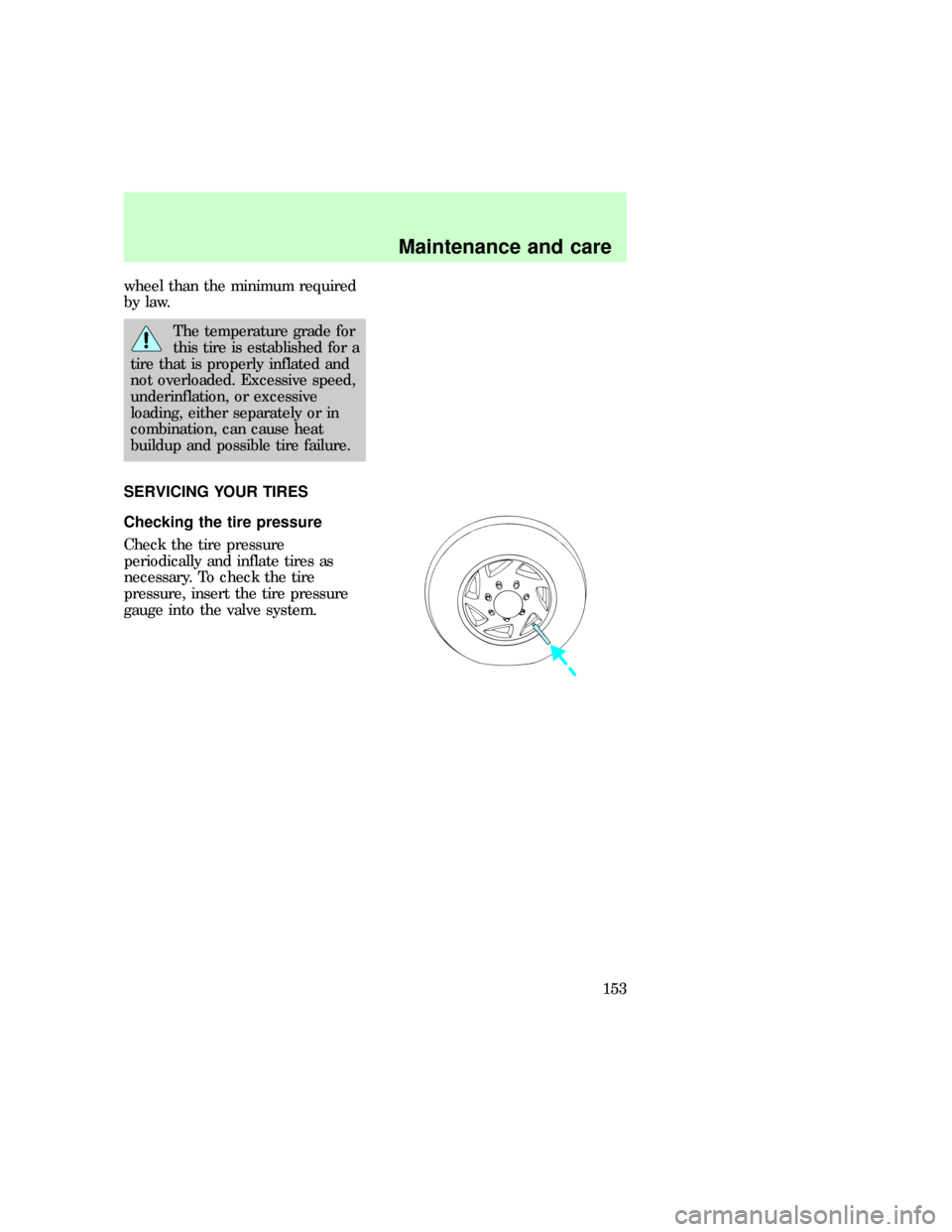
Check the tire pressure
periodically and inflate tires as
necessary. To check the tire
pressure, insert the tire pressure
gauge into the valve system.
eco_tire_service
eco_pressure_checking
Maintenance and care
153
Page 169 of 192
any bugs and tar before waxing
vehicle. Use cleaning fluid or
alcohol with a clean cloth to
remove. Use tar remover to
remove any tar spots.
Repairing paint chips
Minor scratches or paint damage
from road debris may be repaired
with touch-up paint, paint repair
foil or aerosol paint spray from the
Ford accessory line. Observe the
application instructions on the
products.
Remove particles such as bird
droppings, tree sap, insect
remains, tar spots, road salt and
industrial fallout immediately.
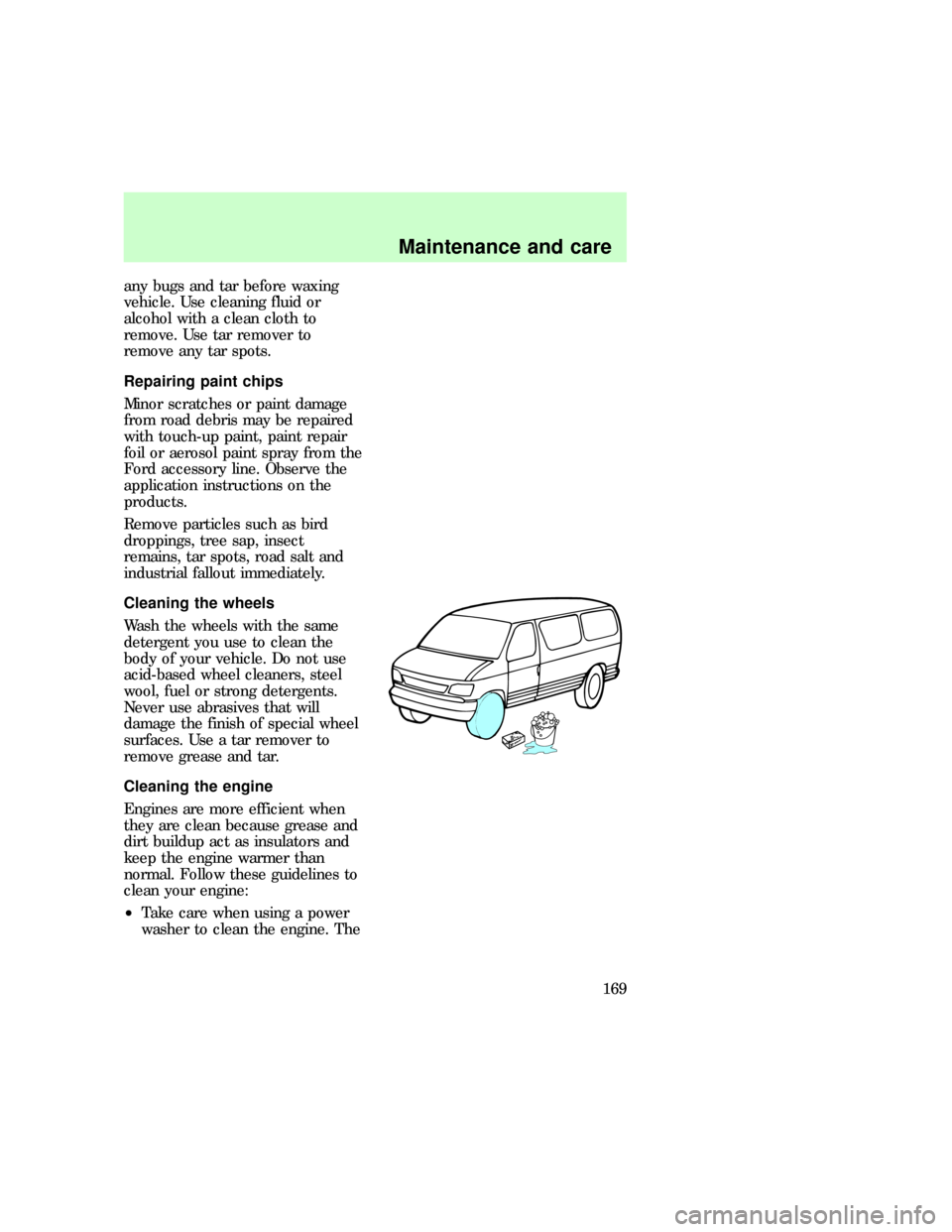
Cleaning the wheels
Wash the wheels with the same
detergent you use to clean the
body of your vehicle. Do not use
acid-based wheel cleaners, steel
wool, fuel or strong detergents.
Never use abrasives that will
damage the finish of special wheel
surfaces. Use a tar remover to
remove grease and tar.
Cleaning the engine
Engines are more efficient when
they are clean because grease and
dirt buildup act as insulators and
keep the engine warmer than
normal. Follow these guidelines to
clean your engine:
²Take care when using a power
washer to clean the engine. The
com_repairing_chips
com_wheels_cleaning.01
com_engine_cleaning.01
Maintenance and care
169