Ventilation Tips
0 Keep the hood and front air inlet free of ice, snow or
any other obstruction, such as leaves. The heater and
defroster will work far better, reducing the chance
of
fogging the inside of your windows.
0 When you enter a vehicle in cold weather, adjust the
mode knob or button to
FLOOR and the fan to the
highest speed for a few seconds before driving off.
This helps clear the intake ducts of snow and
moisture and reduces the chance
of fogging the
inside of your windows.
Keep the air path under the front seats clear of
objects. This helps air to circulate throughout
your vehicle.
Rear Window Defogger
C
J
I
I REAR I
I--1
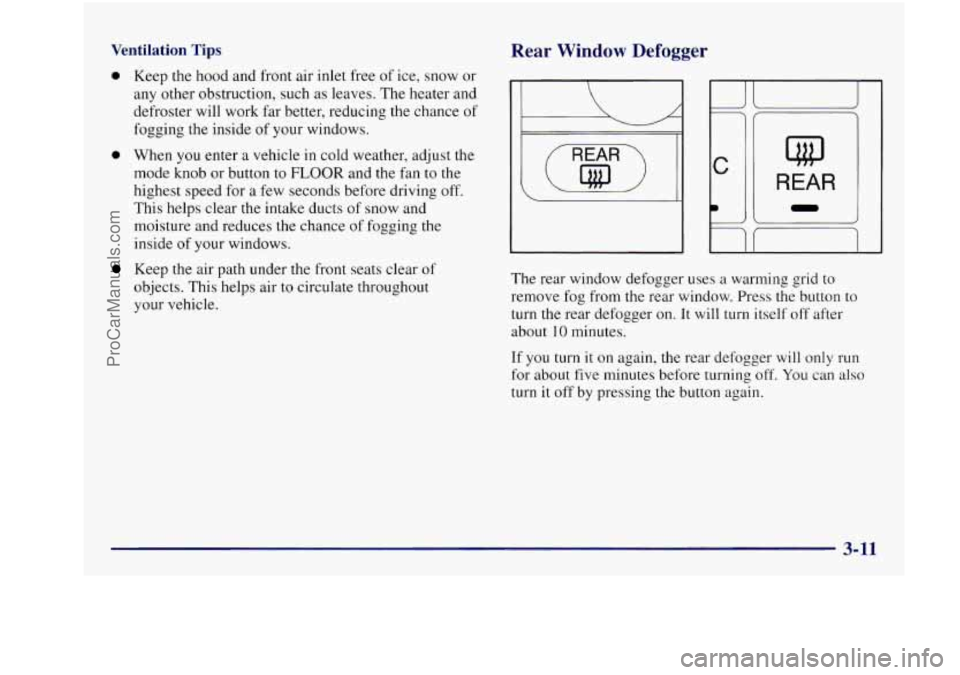
The rear window defogger uses a warming grid to
remove fog from the rear window. Press the button to
turn the rear defogger on. It will turn itself off after
about
10 minutes.
If you turn it on again, the rear defogger will only run
for about five minutes before turning
off. You can also
turn it off by pressing the button again.
ProCarManuals.com
Hydroplaning
Hydroplaning is dangerous. So much water can build up
under your tires that they can actually ride on the water.
This can happen if the road is wet enough and you’re
going fast enough. When your vehicle is hydroplaning,
it has little or no contact with the road.
Hydroplaning doesn’t happen often. But it can if your
tires do not have much tread or if the pressure
in one or
more is low. It can happen
if a lot of water is standing on
the road. If you can see reflections from trees, telephone
poles or other vehicles, and raindrops “dimple” the
water’s surface, there could be hydroplaning.
Hydroplaning usually happens at higher speeds. There
just isn’t a hard and fast rule about hydroplaning. The
best advice is to slow down when it is raining.
Driving Through Deep Standing Water
I NOTICE:
If you drive too quickly through deep puddles or
standing water, water can come in through your
engine’s air intake and badly damage your
engine. Never drive through water that is slightly
lower than the underbody
of your vehicle. If you
can’t avoid deep puddles or standing water, drive
through them very slowly.
Some Other Rainy Weather Tips
0
0
Besides slowing down, allow some extra following
distance. And be especially careful when you pass
another vehicle. Allow yourself more clear
room
ahead, and be prepared to have your view restricted
by road spray.
Have good tires with proper tread depth. (See
“Tires” in the Index.)
4-21
-.
ProCarManuals.com