Page 24 of 488
Rear Seat (Crew Cab)
You can adjust the seat by sliding the lever at the front of the seat toward the
seat
support to unlock it. Then, slide the seat to where you want it. Release
the lever and try
to move the seat with your body, to make sure the seat is
locked into place.
Seatback Latch (Rear Bench Seat Without Center
Armrest)
The rear seatback can be folded forward to let you reach the area behind it.
Your seatback will move back and forth freely, unless you come to a sudden
stop. Then, it will lock into place.
Seatback Latch (Rear Bench Seat With Center
Armrest)
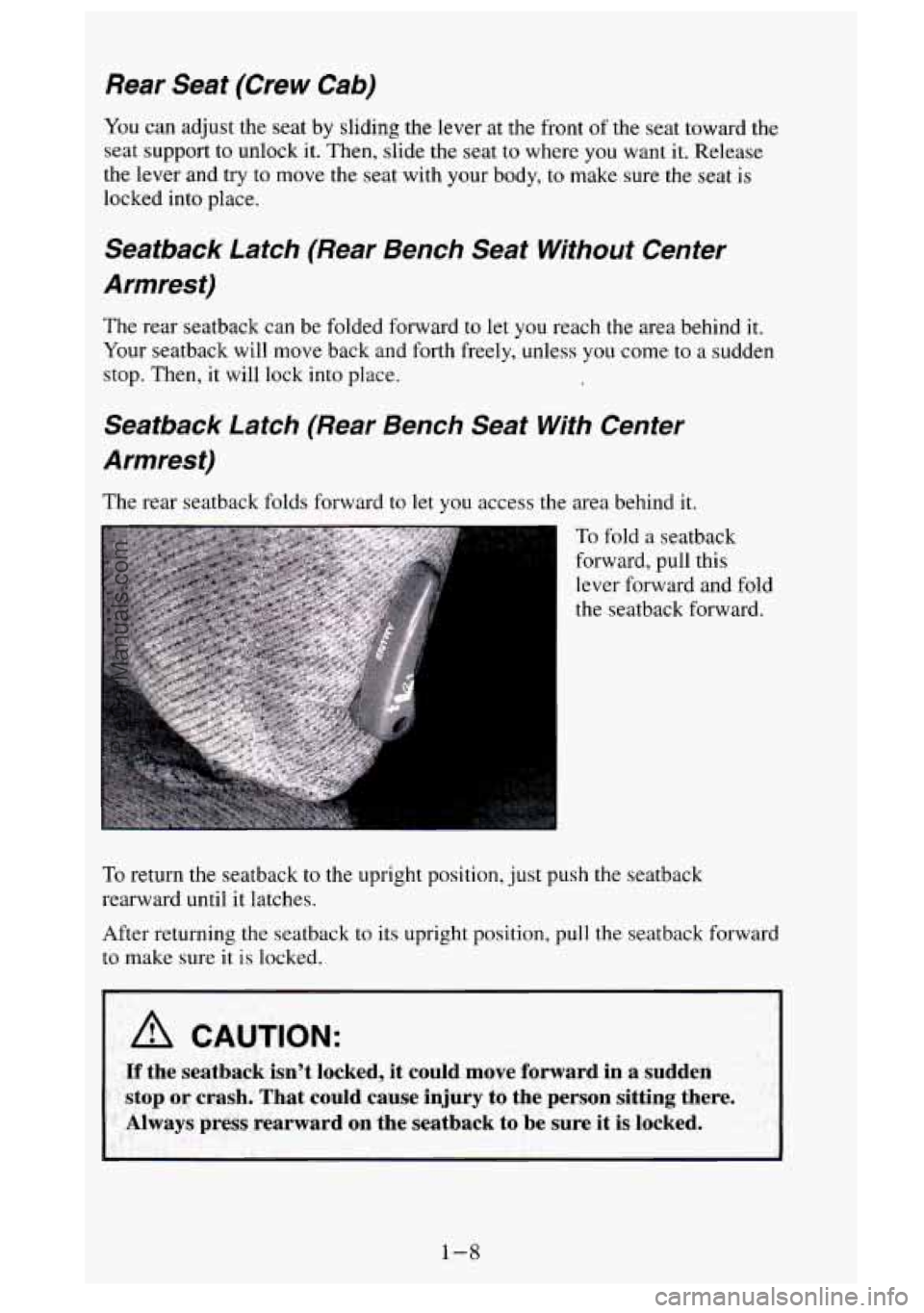
The rear seatback folds forward to let you access the area behind it.
To fold a seatback
forward, pull this
lever forward and fold
the seatback forward.
To return the seatback
to the upright position, just push the seatback
rearward until it latches.
After returning the seatback to its upright position, pull the seatback forward
to make sure it is locked.
A CAUTION:
If the seatback isn’t locked, it could move forward in a sudden
stop
or crash. That could cause injury to the person sitting there.
Always press rearward on the seatback to be sure it
is locked.
1-8
ProCarManuals.com
Page 29 of 488
Driver Position
This part describes the driver’s restraint system.
Lap-Shoulder Belt
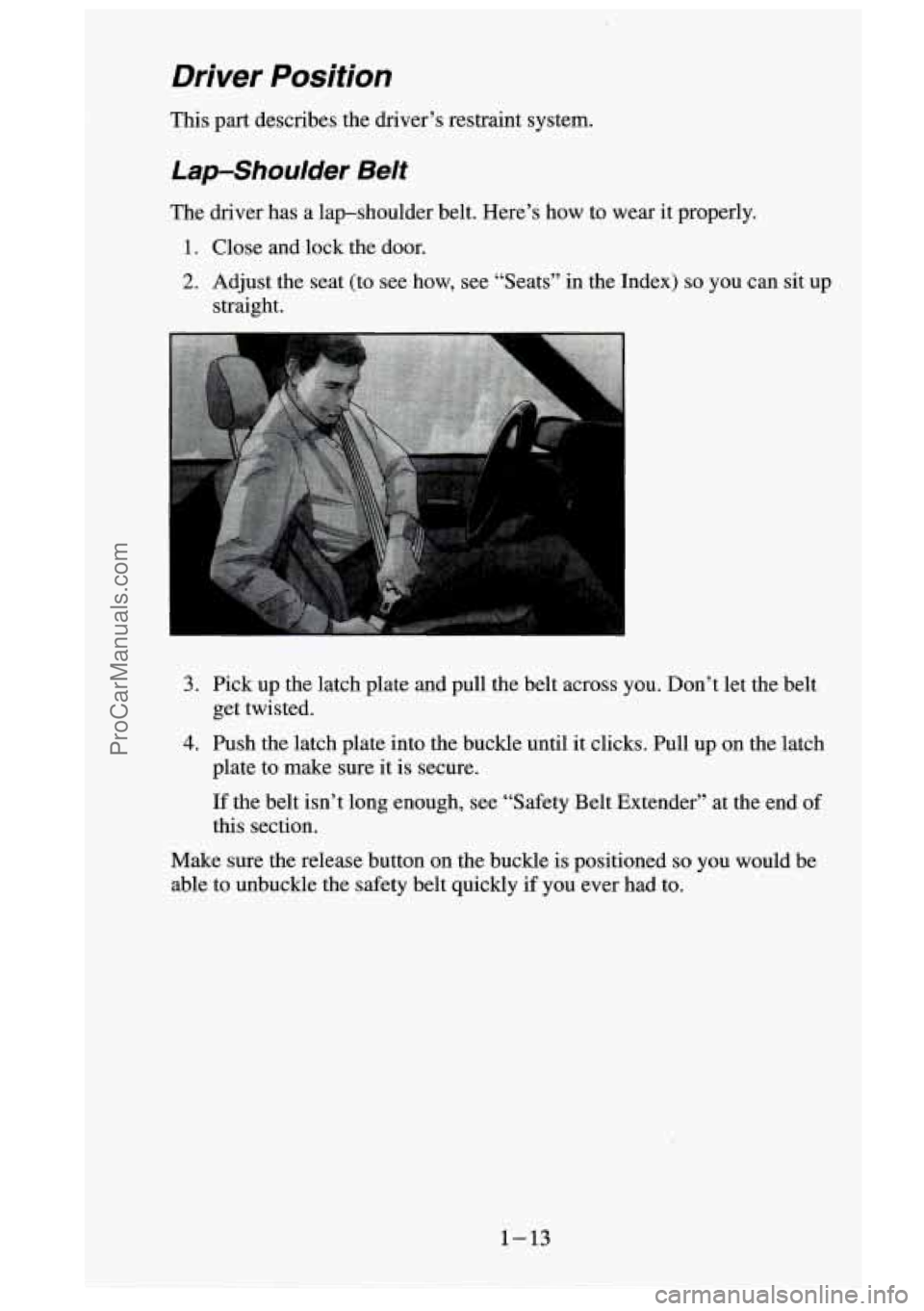
The driver has a lap-shoulder belt. Here’s how to wear it properly.
1. Close and lock the door.
2. Adjust the seat (to see how, see “Seats” in the Index) so you can sit up
straight.
3. Pick up the latch plate and pull the belt across you. Don’t let the belt
4. Push the latch plate into the buckle until it clicks. Pull up on the latch
plate to make sure it is secure.
If the belt isn’t long enough, see “Safety Belt Extender’’ at the end of
this section. get twisted.
Make sure the release button on the buckle is positioned
so you would be
able to unbuckle the safety belt quickly if you ever had to.
1-13
ProCarManuals.com
Page 30 of 488
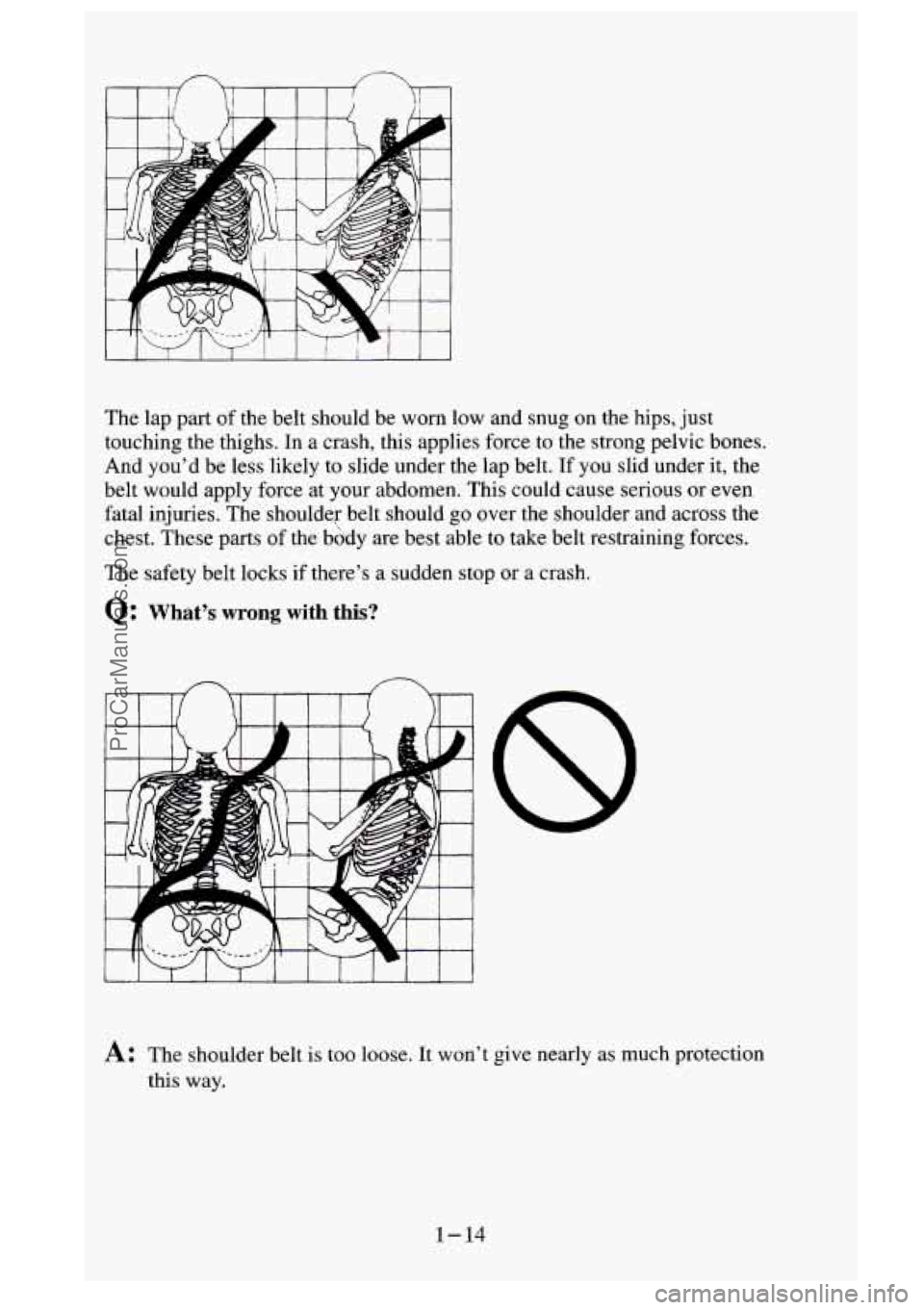
The lap part of the belt should be worn low and snug on the hips, just
touching the thighs. In a crash, this applies force to the strong pelvic bones.
And you’d be less likely to slide under the lap belt. If
you slid under it, the
belt would apply force at your abdomen. This could cause serious
or even
fatal injuries. The shoulder belt should go over the shoulder and across the
chest. These parts of
the bhdy are best able to take belt restraining forces.
The safety belt locks if there’s a sudden stop or a crash.
Q: What’s wrong with this?
A: The shoulder belt is too loose. It won’t give nearly as much protection
this way.
1-14
ProCarManuals.com
Page 41 of 488
Right Front Passenger Position
The right front passenger’s safety belt works the same way as the driver’s
safety belt. See “Driver Position,” earlier
in this section.
When the lap portion
of the belt is pulled out all the way, it will lock. If it
does, let it go back all the way and start again.
Center Passenger Position
Lap Belt
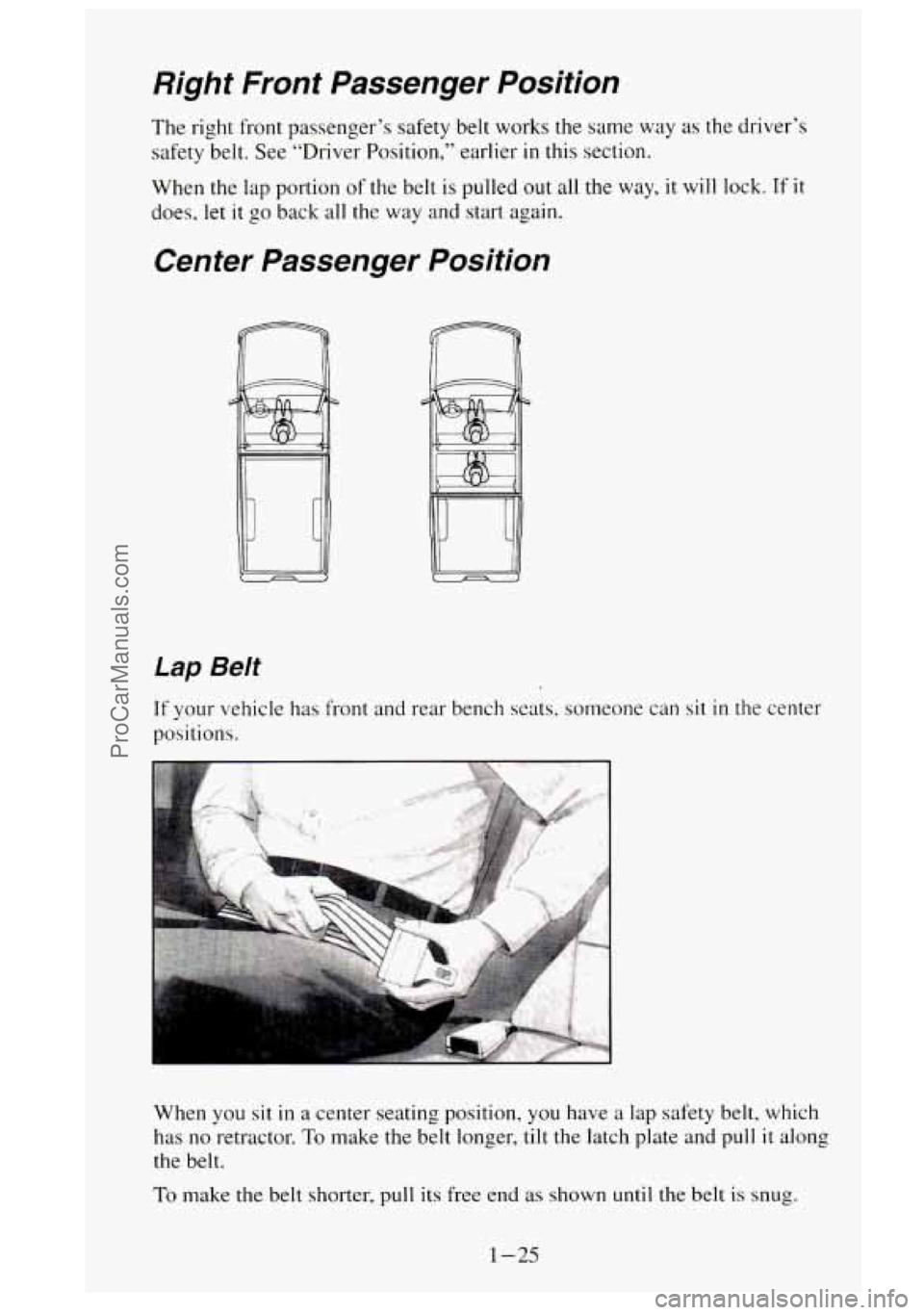
If your vehicle has front and rear bench seats, someone can sit in the center
positions.
When
you sit in a center seating position, you have a lap safety belt, which
has
no retractor. To make the belt longer, tilt the latch plate and pull it along
the belt.
To make the belt shorter, pull its free end as shown until the belt is snug.
1-25
ProCarManuals.com
Page 44 of 488
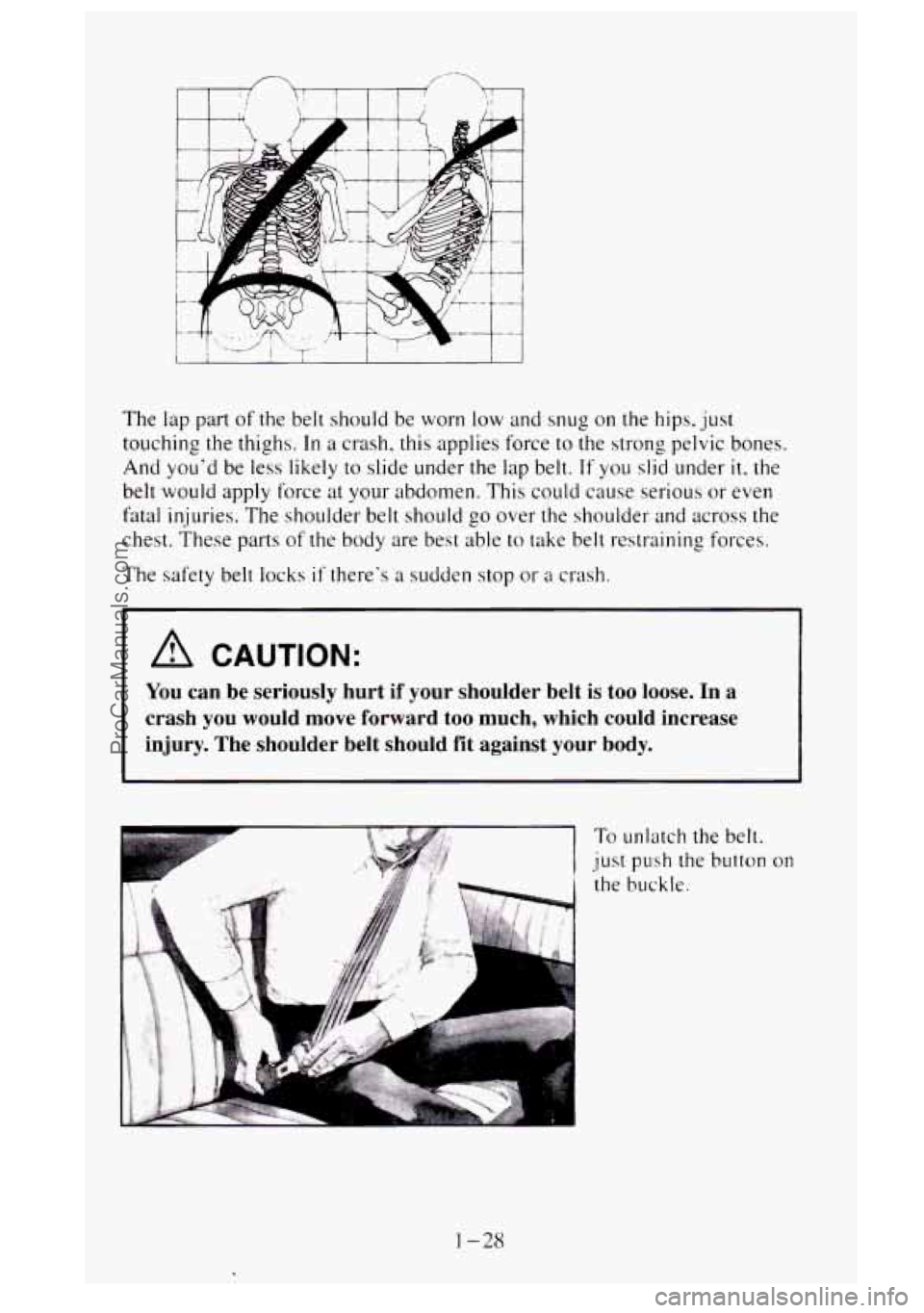
The lap part of the belt should be worn low and snug on the hips. just
touching the thighs.
In a crash, this applies force to the strong pelvic bones.
And you'd be less likely
to slide under the lap belt. If you slid under it, the
belt would apply force at your abdomen. This could cause serious or even
fatal injuries. The shoulder belt should
go over the shoulder and across the
chest. These parts
of the body are best able to take belt restraining forces.
The safety belt locks
if there's a sudden stop or a crash.
A CAUTION:
You can be seriously hurt if your shoulder belt is too loose. In a
crash you would move forward too much, which could increase
injury. The shoulder belt should fit against your body.
To unlatch the belt,
just push the button
the buckle.
on
1-28
ProCarManuals.com
Page 45 of 488
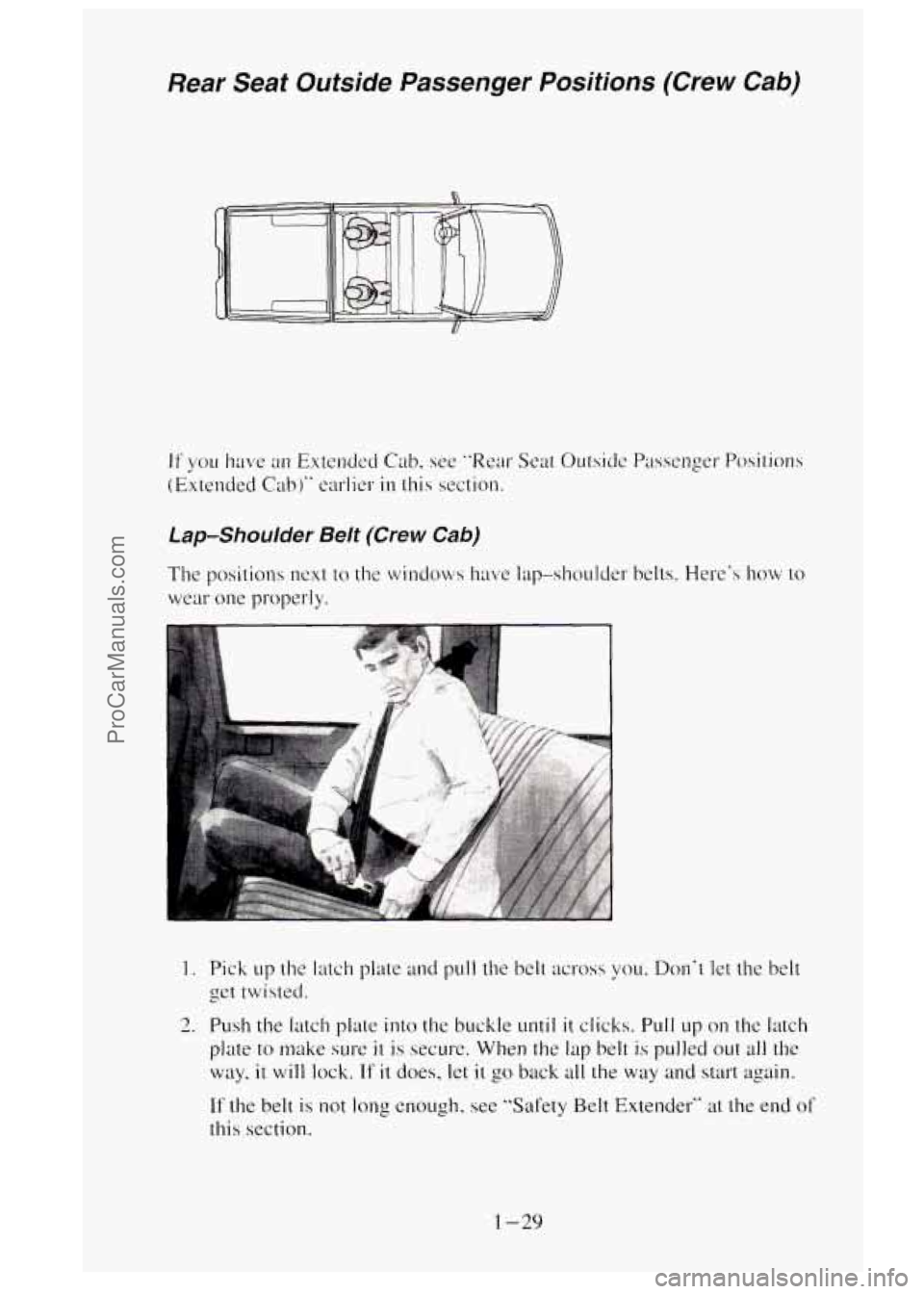
Rear Seat Outside Passenger Positions (Crew Cab)
If you have an Extended Cab, see "Rex Seat Outside Passenger Positions
(Extended
Cab)" earlier in this section.
Lap-Shoulder Belt (Crew Cab)
The positions next to the windows have lap-shoulder belts. Here's how to
wear one properly.
1 . Pick LIP the latch plate and pull the bell ~w-oss you. Don't let the belt
2. Push the latch plate into the buckle until it clicks. Pull up on the latch
get twisted.
plate
to make wre it is secure. When the lap belt is pulled out all the
way,
it will lock. If it does, let it go back all the way and start again.
If the belt is not long enough, see "Safety Belt Extender" at the end of
this section.
1-29
ProCarManuals.com
Page 46 of 488
Make sure the release button on the buckle is positioned so you would
be able to unbuckle the safety belt quickly
if you ever had to.
,' --
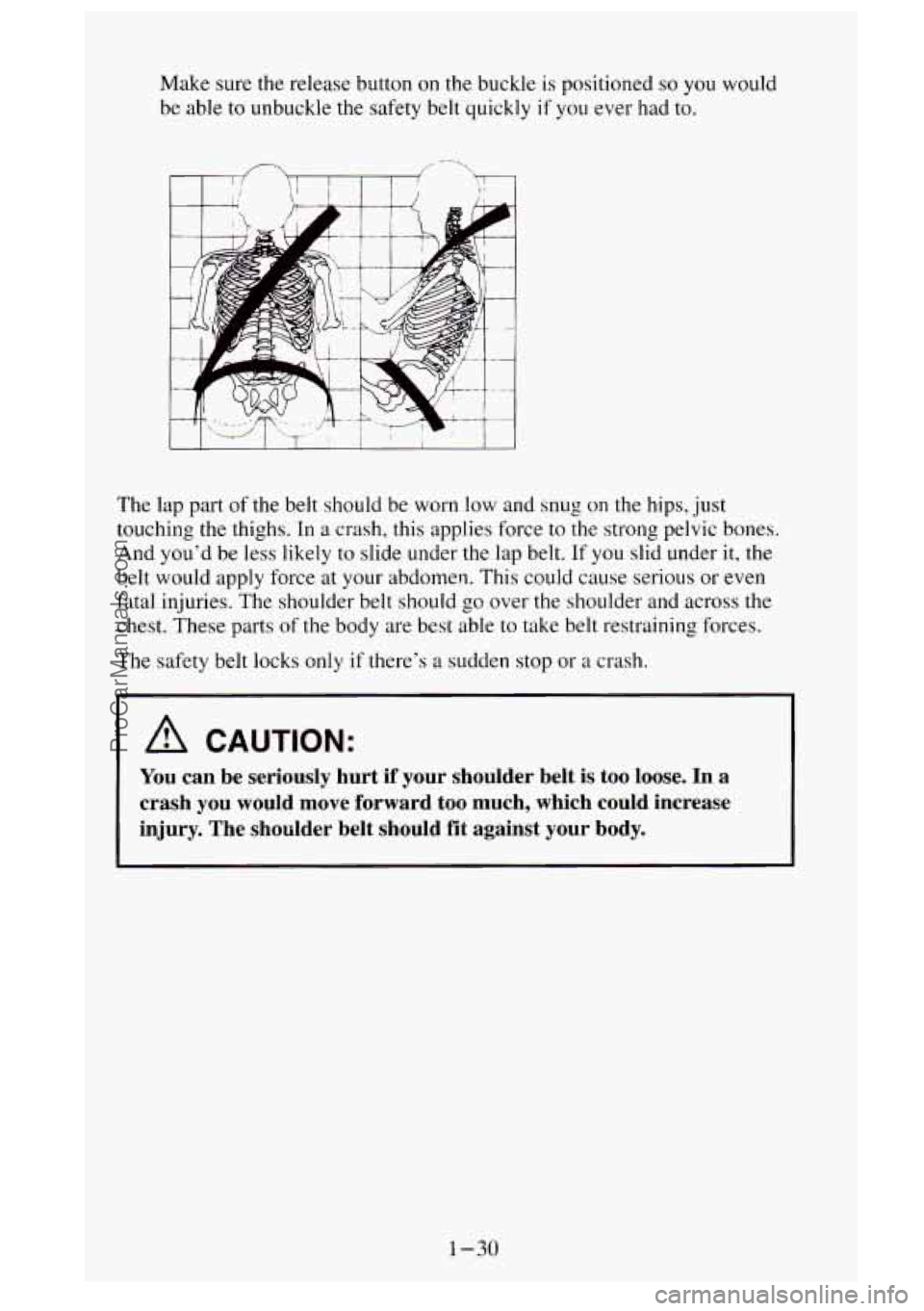
The lap part of the belt should be worn low and snug on the hips, just
touching the thighs.
In a crash, this applies force to the strong pelvic bones.
And you'd be less likely
to slide under the lap belt. If you slid under it, the
belt would apply force at your abdomen. This could cause serious or even
fatal injuries. The shoulder belt should
go over the shoulder and across the
chest. These parts of the body are best able to take belt restraining forces.
The safety belt locks only
if there's a sudden stop or a crash.
A CAUTION:
You can be seriously hurt if your shoulder belt is too loose. In a
crash you would
move forward too much, which could increase
injury. The shoulder belt should
fit against your body.
1-30
ProCarManuals.com
Page 53 of 488
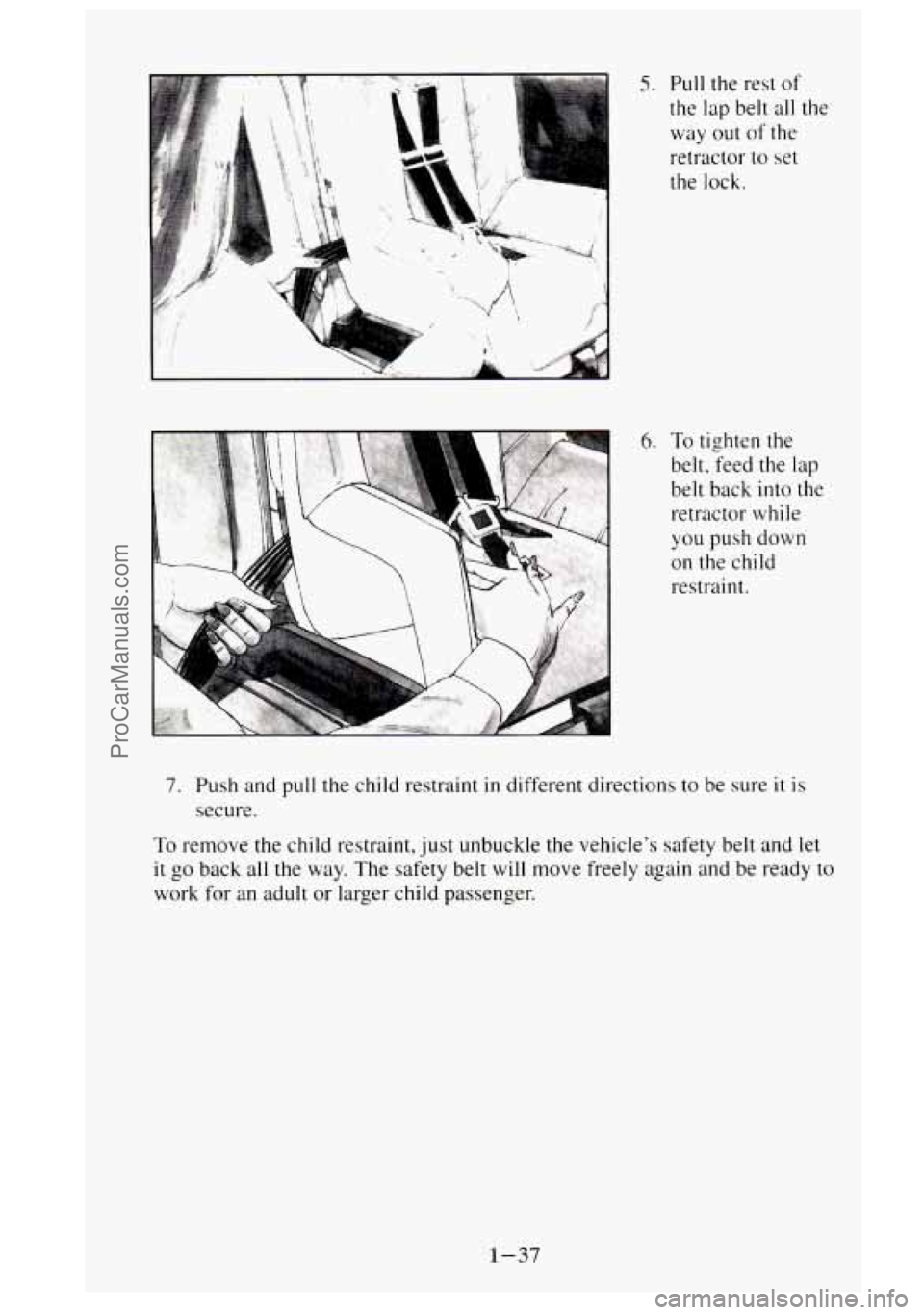
5.
6.
Pull the rest of
the lap belt all
way out of the
retractor
to set
the lock.
the
To tighten the
belt. feed the
lap
belt back into the
retractor while
you push down
on the child
restraint.
7. Push and pull the child restraint in different directions to be sure it is
secure.
To remove the child restraint, just unbuckle the vehicle's safety belt and let
it go back all the way. The safety belt will move freely again and be ready to
work for an adult or larger child passenger.
1-37
ProCarManuals.com