Page 116 of 486
Headlamps-On Reminder
A buzzer will sound when your headlamps are turned on and your ignition is
in OFF, LOCK or ACC. If you need to use your headlamps when the ignition
switch is
in OFF, LOCK or ACC, the buzzer can be turned off by turning the
thumb wheel next to the park/headlamp switch
all the way down.
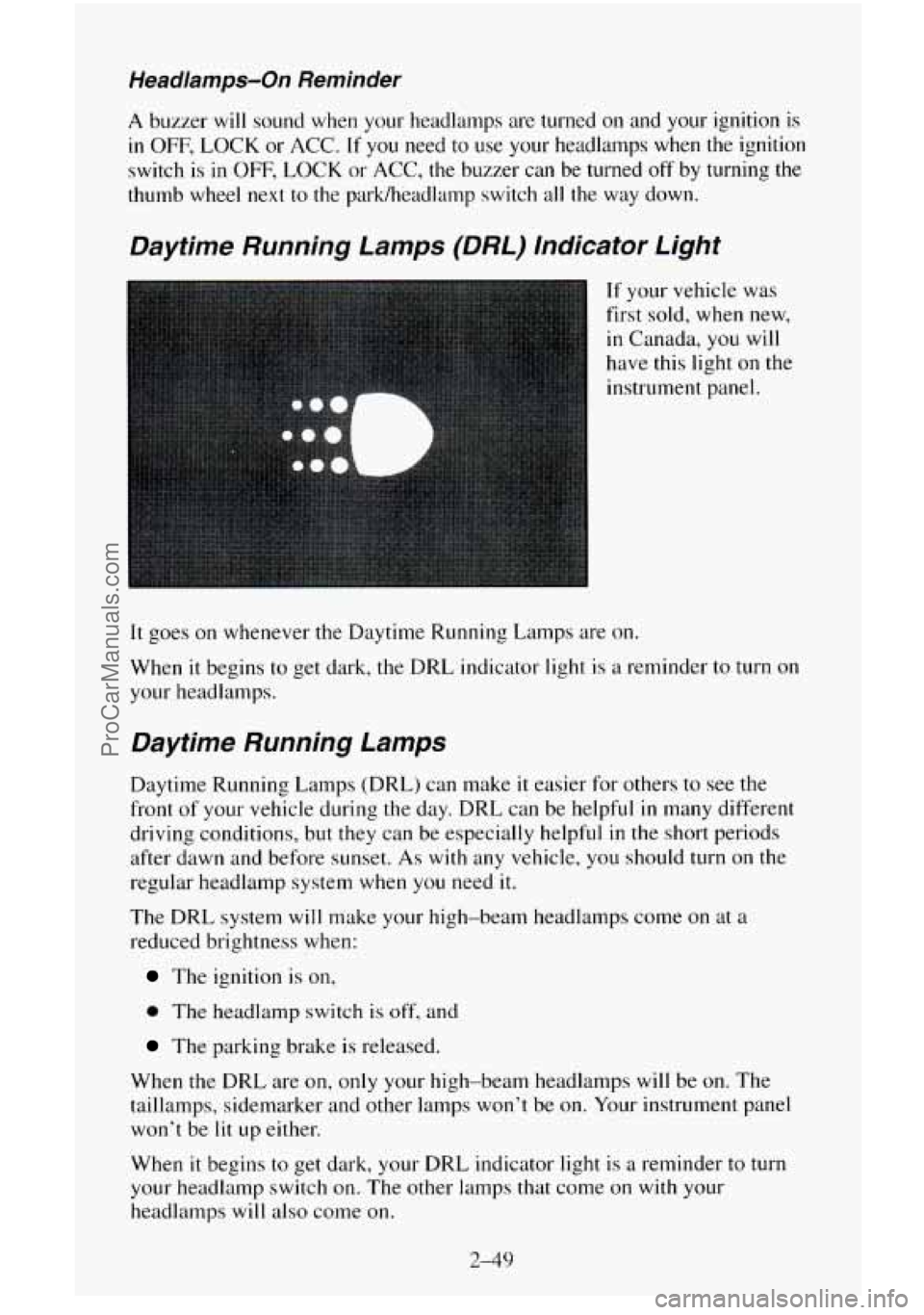
Daytime Running Lamps (DRL) Indicator Light
If your vehicle was
first sold, when new,
in Canada, you will
have this light on the
instrument panel.
It goes on whenever the Daytime Running Lamps are on.
When it begins to get dark,
the DRL indicator light is a reminder to turn on
your headlamps.
Daytime Running Lamps
Daytime Running Lamps (DRL) can make it easier for others to see the
front
of your vehicle during the day. DRL can be helpful in many different
driving conditions, but they can be especially helpful
in the short periods
after dawn and before sunset. As
with any vehicle, you should turn on the
regular headlamp system when you need it.
The DRL system will make your high-beam headlamps come
on at a
reduced brightness when:
The ignition is on,
0 The headlamp switch is off, and
The parking brake is released.
When the DRL are on, only your high-beam headlamps will be on. The
taillamps, sidemarker and other lamps won’t be
on. Your instrument panel
won’t be
lit up either.
When
it begins to get dark, your DRL indicator light is a reminder to turn
your headlamp switch on. The other lamps that come on with your
headlamps will also come on.
2-49
ProCarManuals.com
Page 120 of 486
Compass Operation
When the ignition is on and the mirror switch is in the C/M position, the
compass display will show two character boxes for approximately two
seconds.
If, after two seconds, the display does not show a compass heading
(“N” for North, for example), there may be strong magnetic field interfering
with the compass. Such interference may include magnetic antenna mounts,
a magnetic note pad holder, or a similar magnetic item. If removing these
items does
not correct the condition, see your GM dealer for assistance.
When cleaning
the mirror, use a paper towel or similar material dampened
with glass cleaner.
Do not spray glass cleaner directly on the mirror as that
may cause liquid cleaner
to enter the mirror housing.
Compass Variance
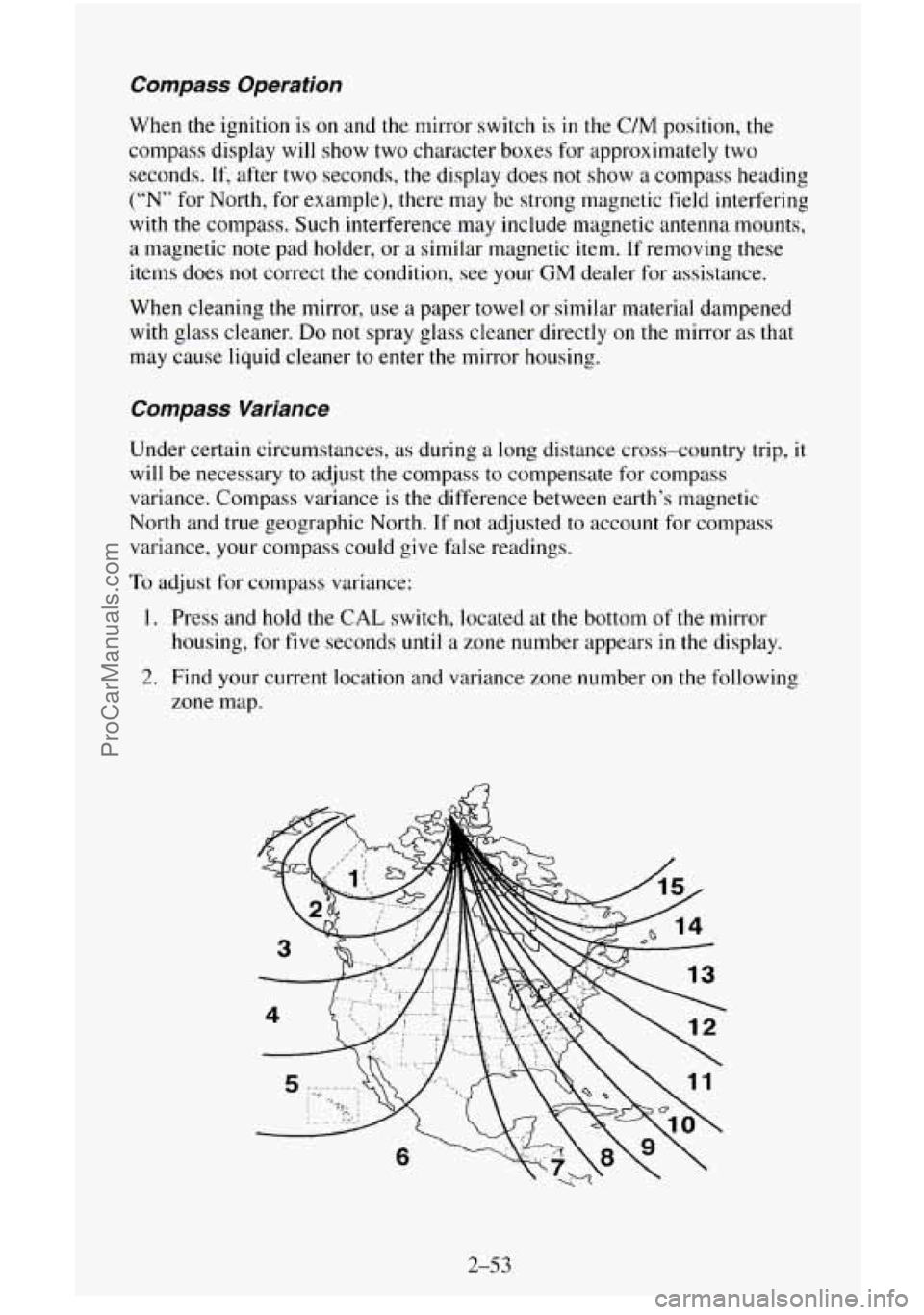
Under certain circumstances, as during a long distance cross-country trip, it
will be necessary to adjust the compass to compensate for compass
variance. Compass variance
is the difference between earth’s magnetic
North and true geographic North.
If not adjusted to account for compass
variance, your compass could give false readings.
To adjust for compass variance:
1. Press and hold the CAL switch, located at the bottom of the mirror
housing, for five seconds
until a zone number appears in the display.
2. Find your current location and variance zone number on the following
zone map.
2-53
ProCarManuals.com
Page 138 of 486
You will see this light flash for a few seconds when you turn your ignition
to RUN or START. Then the light should go out. This means the system is
ready.
If the air bag readiness light doesn’t come on when you start your vehicle,
or stays
on, or comes on when you are driving, your air bag system may not
work properly. Have your vehicle serviced right away.
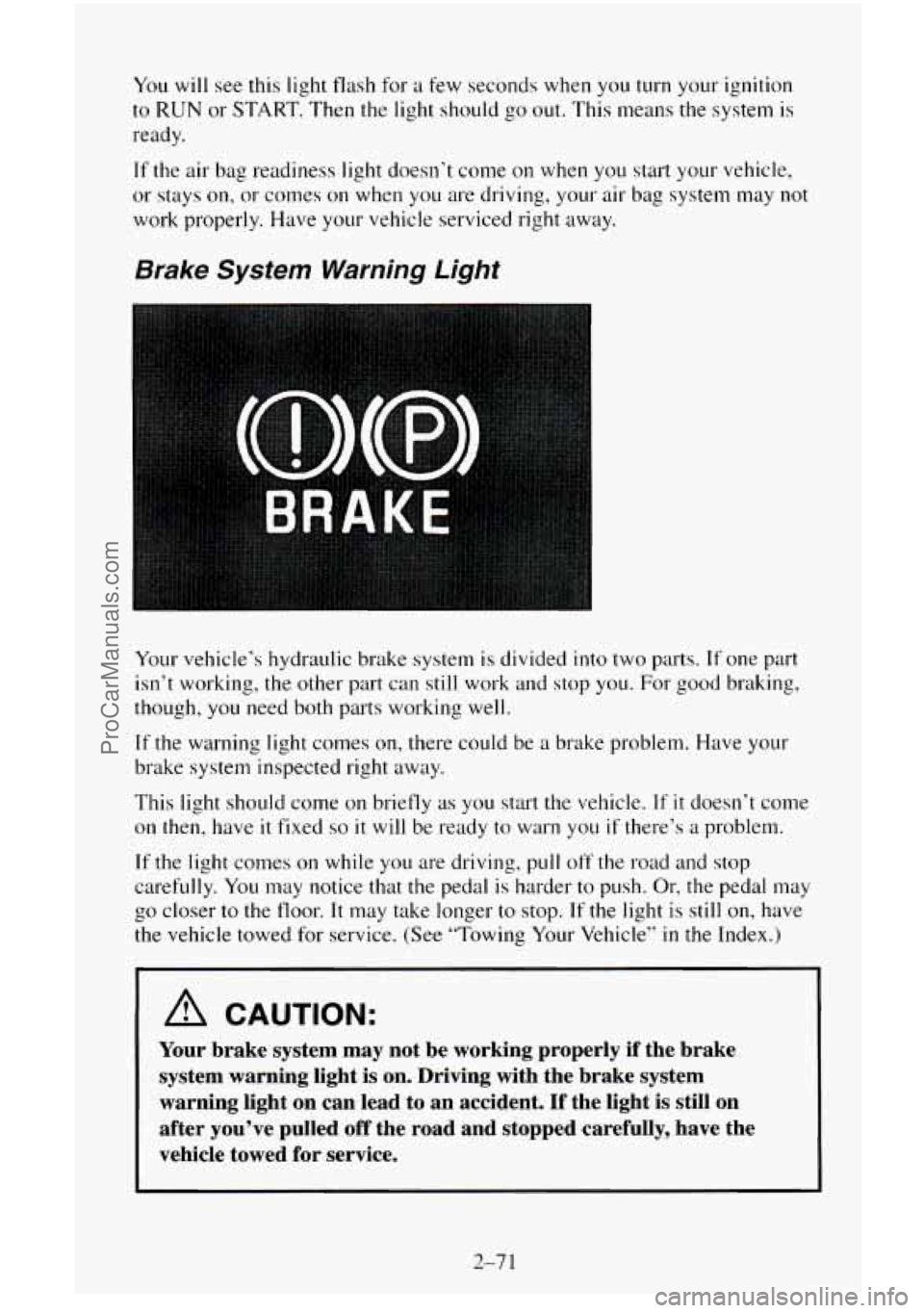
Brake System Warning Light
Your vehicle’s hydraulic brake system is divided into two parts. If one part
isn’t working, the other part can still
work and stop you. For good braking,
though, you need both parts working well.
If the warning light comes on, there could be a brake problem. Have your
brake system inspected right away.
This light should come on briefly as
you start the vehicle. If it doesn’t come
on then, have it fixed so it will be ready to warn you if there’s a problem.
If the light comes on while you are driving, pull off the road and stop
carefully. You may notice that the pedal is harder
to push. Or, the pedal may
go closer
to the floor. It may take longer to stop. If the light is still on, have
the vehicle towed
for service. (See “Towing Your Vehicle” in the Index.)
~~
A CAUTION:
Your brake system may not be working properly if the brake
system warning light is
on. Driving with the brake system
warning light on can lead to an accident. If the light is still on
after you’ve pulled
off the road and stopped carefully, have the
vehicle towed for service.
2-7 1
ProCarManuals.com
Page 140 of 486
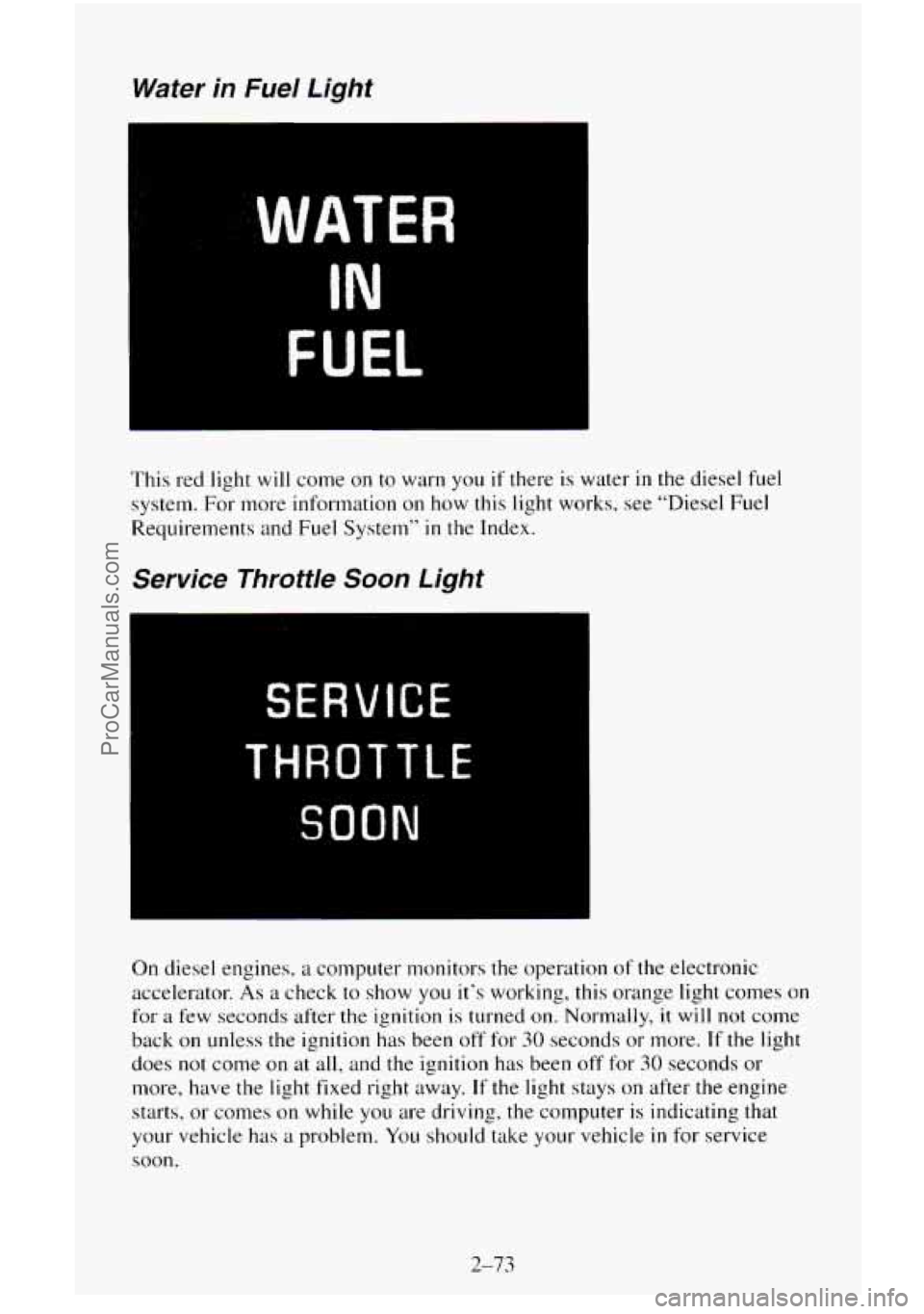
Water in Fuel Light
WATER
IN
FUEL
This red light will come on to warn you if there is water in the diesel fuel
system. For more information
on how this light works, see “Diesel Fuel
Requirements and Fuel System” in the Index.
Service Throttle Soon Light
SERVICE
THROTTLE
SOON
On diesel engines, a computer monitors the operation of the electronic
accelerator.
As a check to show you it’s working, this orange light comes on
for a few seconds after the ignition is turned on. Normally, it will not come
back on unless the ignition has been off for 30 seconds or more. If the light
does not come on at
all, and the ignition has been off for 30 seconds or
more, have the light fixed right away.
If the light stays on after the engine
starts, or comes on while
you are driving, the computer is indicating that
your vehicle
has a problem. You should take your vehicle in for service
soon.
2-73
ProCarManuals.com
Page 141 of 486
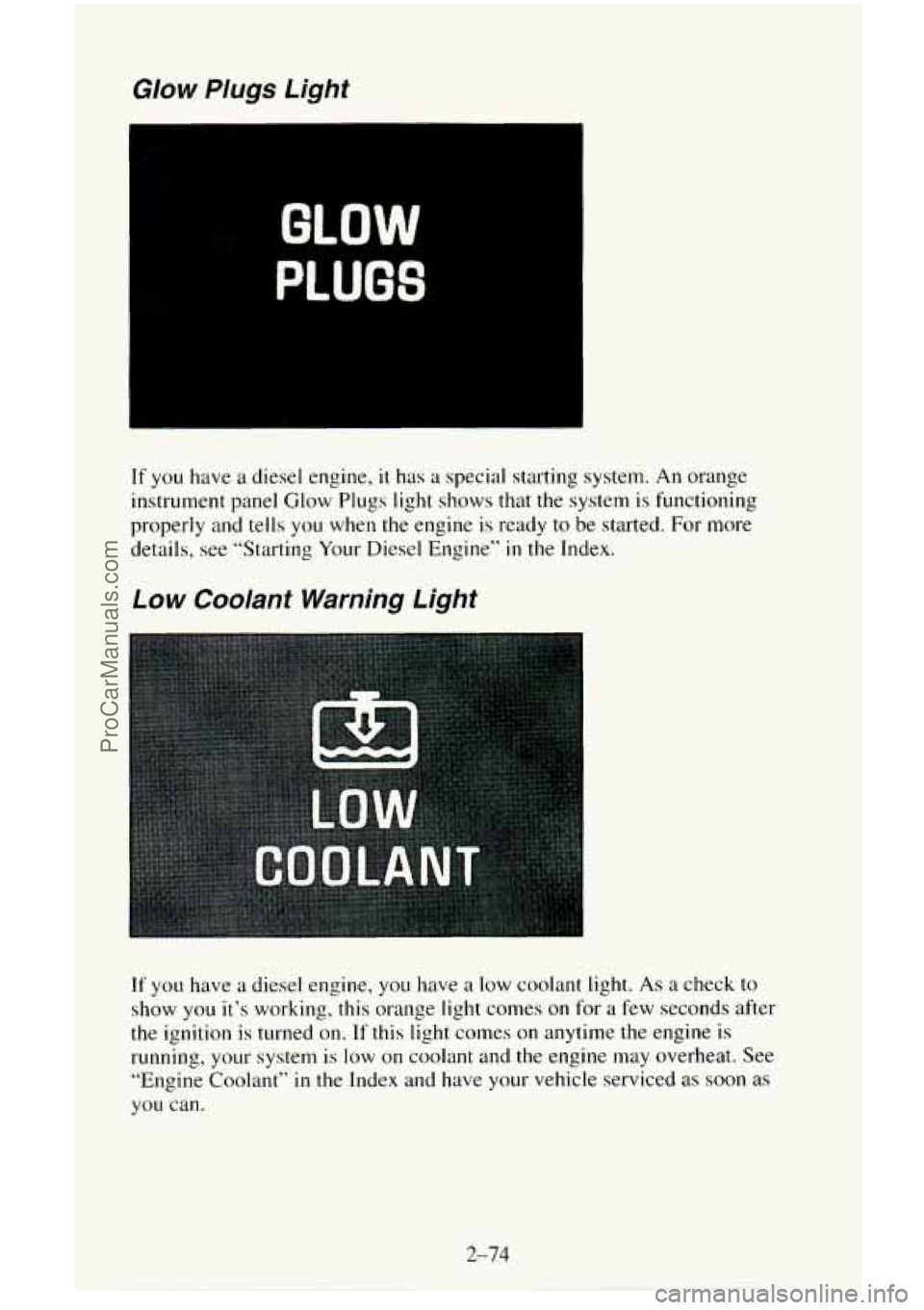
Glow Plugs Light
GLOW
PLUGS
If you have a diesel engine, it has a special starting system. An orange
instrument panel Glow Plugs light shows that the system is functioning
properly and tells you when the engine is ready to be started. For more
details, see “Starting Your Diesel Engine”
in the Index.
Low Coolant Warning Light
If you have a diesel engine, you have a low coolant light. As a check to
show you it’s working, this orange light comes on for a few seconds after
the ignition
is turned on. If this light comes on anytime the engine is
running,
your system is low on coolant and the engine may overheat. See
“Engine
Coolant” in the Index and have your vehicle serviced as soon as
you can.
2-74
ProCarManuals.com
Page 142 of 486
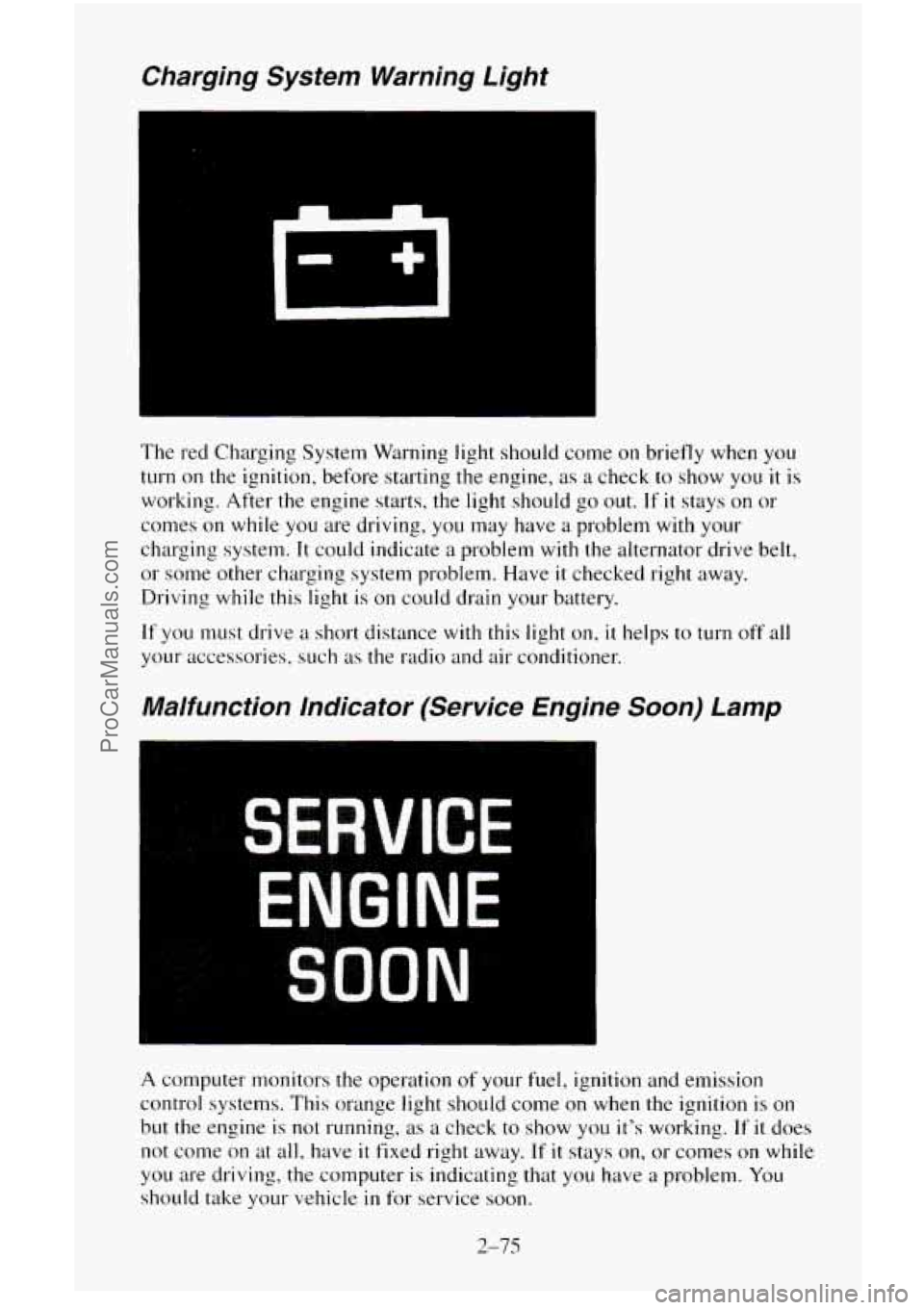
Charging System Warning Light
The red Charging System Warning light should come on briefly when you
turn on the ignition, before starting the engine, as a check to show you it is
working. After the engine starts, the light should go out. If it stays on or
conles on while you are driving, you may have a problem with your
charging system.
It could indicate a problem with the alternator drive belt,
or some other charging system problem. Have
it checked right away.
Driving while this light is on could drain your battery.
If you must drive a short distance with this light on, it helps to turn off all
your accessories, such
as the radio and air conditioner.
Malfunction indicator (Service Engine Soon) Lamp
A computer monitors the operation of your fuel, ignition and emission
control systems.
This orange light should come on when the ignition is on
but the engine is
not running, as a check to show you it’s working. If it does
not come on at all, have
it fixed right away. If it stays on, or comes on while
you are driving, the computer is indicating that you have a problem. You
should take your vehicle in for service soon.
2-75
ProCarManuals.com
Page 145 of 486
Turn Signal and Lane Change lndicator Lights
The green signal indicator will come on whenever you signal a turn or lane
change. See
“Turn Signal and Lane Change Indicator’‘ earlier in this section.
Gages
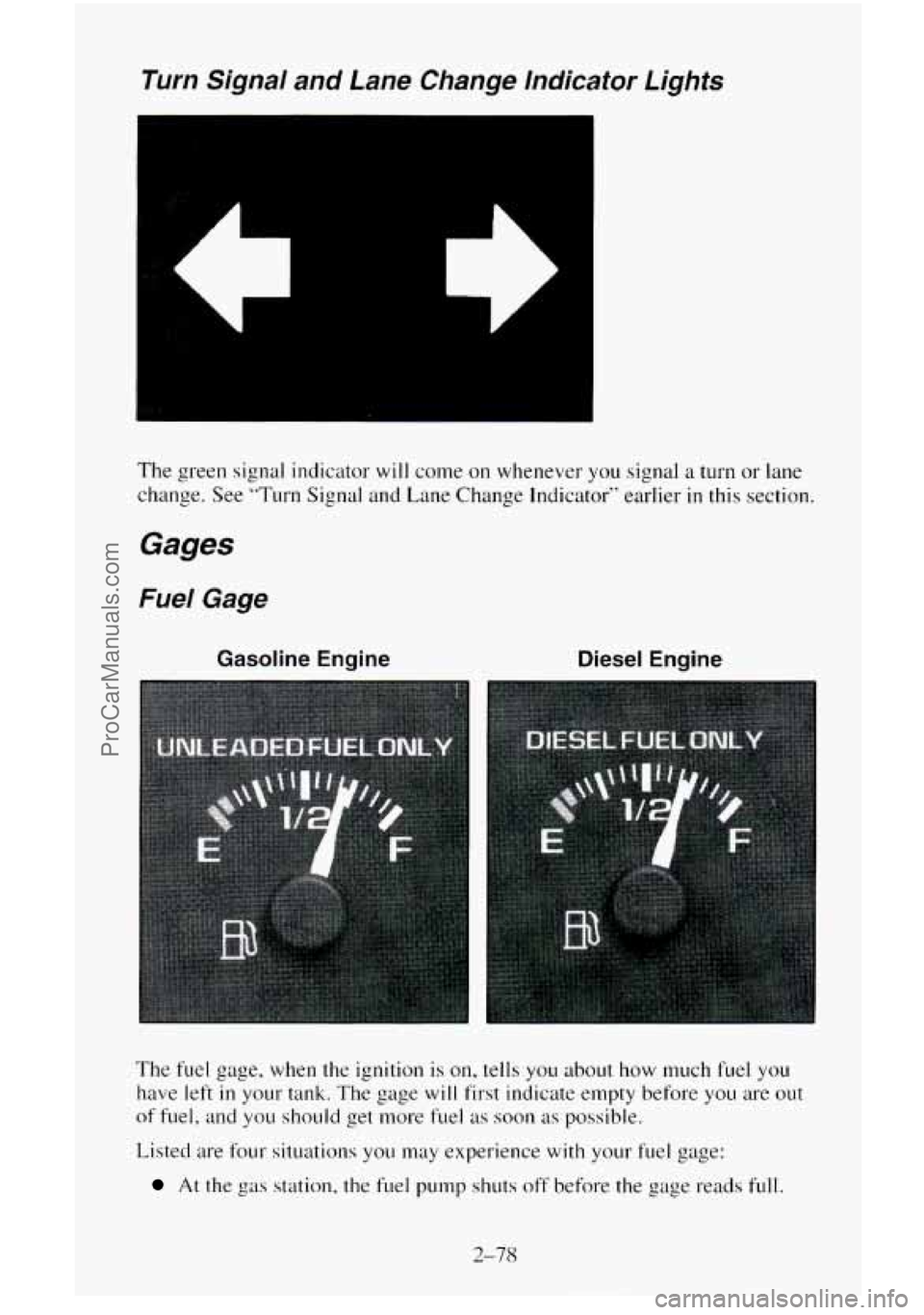
Fuel Gage
Gasoline Engine Diesel Engine
The fuel gage, when the ignition is on, tells you about how much fuel YOLI
have left in your tank. The gage will first indicate empty before you are out
of fuel,
and you should get more fuel as soon as possible.
Listed are
four situations you may experience with your fuel ea tracre:
At the gas station, the fuel pump shuts off before the gage reads ~LIII.
2-78
ProCarManuals.com
Page 146 of 486
It takes a little more or less fuel to fill up than the fuel gage indicated.
For example, the gage may have indicated the tank was half
full, but it
actually took a little more or less than half the tank’s capacity to fill the
tank.
The gage moves a little when you turn a corner or speed up.
0 The gage doesn’t go back to empty when you turn off the ignition.
None of these indicate a problem with the fuel gage.
For information on how to fill your fuel tank, see “Fuel
- Filling Your
Tank”
in the Index.
For your
fuel tank capacity, see “Fuel -Tank Capacity” in the Index.
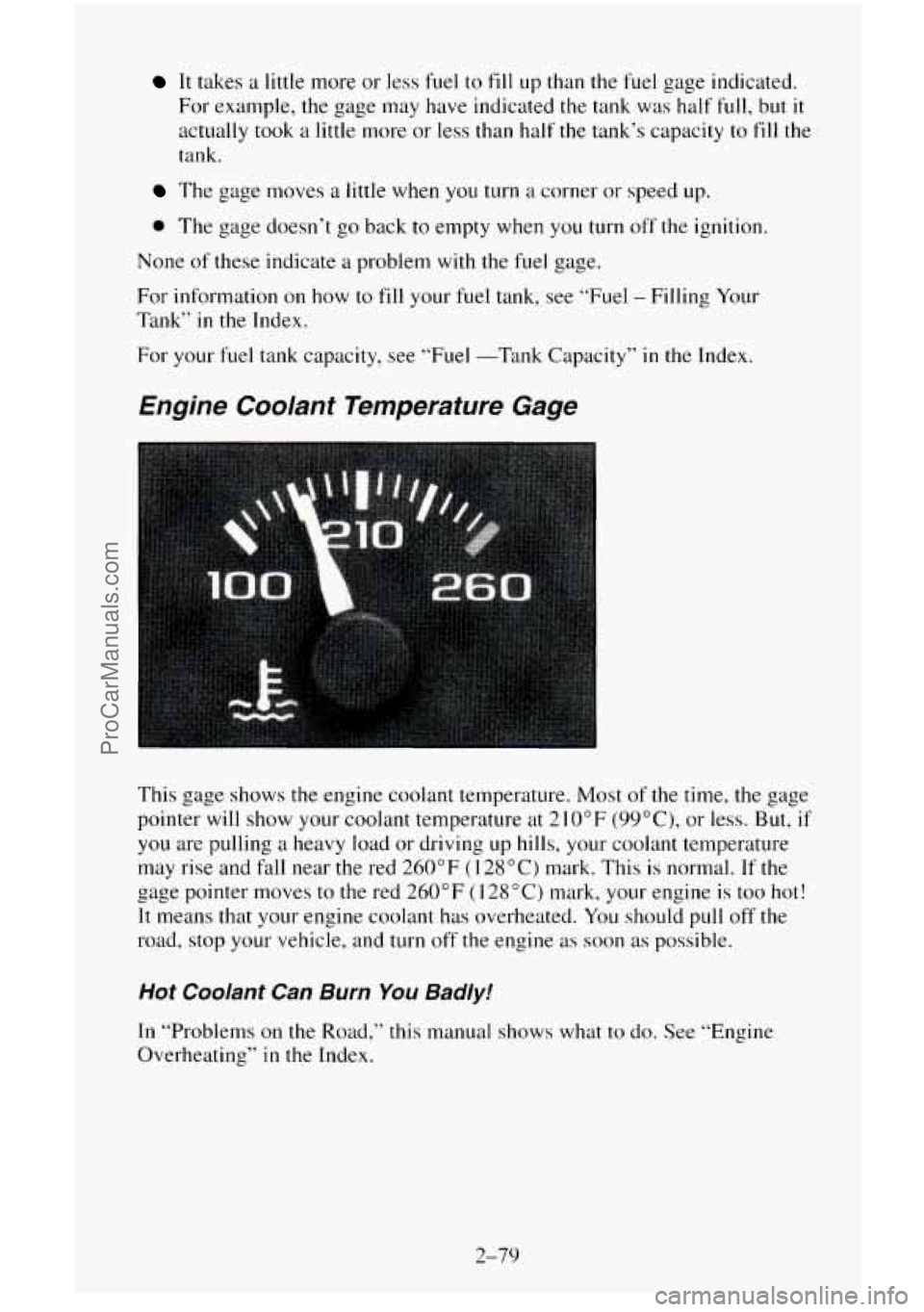
Engine Coolant Temperature Gage
This gage shows the engine coolant temperature. Most of the time, the gage
pointer will show your coolant temperature at 210°F (99”C), or less. But,
if
you are pulling a heavy load or driving up hills, your coolant temperature
may rise and fall near
the red 260°F (1 28°C) mark. This is normal. If the
gage pointer moves
to the red 260°F (1 28°C) mark, your engine is too hot!
It means that your engine coolant has overheated. You should pull off the
road, stop
your vehicle, and turn off the engine as soon as possible.
Hot Coolant Can Burn You Badly!
In “Problems on the Road,” this manual shows what to do. See “Engine
Overheating”
in the Index.
2-79
ProCarManuals.com