Page 117 of 386
Downloaded from www.Manualslib.com manuals search engine ASR (Acceleration Slip Regulation) System
Active Light
ASR
ACTIVE
When your ASR system is
limiting wheel spin, the
ASR ACTIVE light will
come on. Slippery road
conditions may exist
if this
light comes on,
so adjust
your driving accordingly.
The light will stay on for a few seconds after the ASR
system stops limiting wheel spin.
The ASR ACTIVE light also comes on briefly, as a bulb
check, when the engine is started. If the light doesn’t
come on then, have it fixed
so it will be there to tell you
when the system is active.
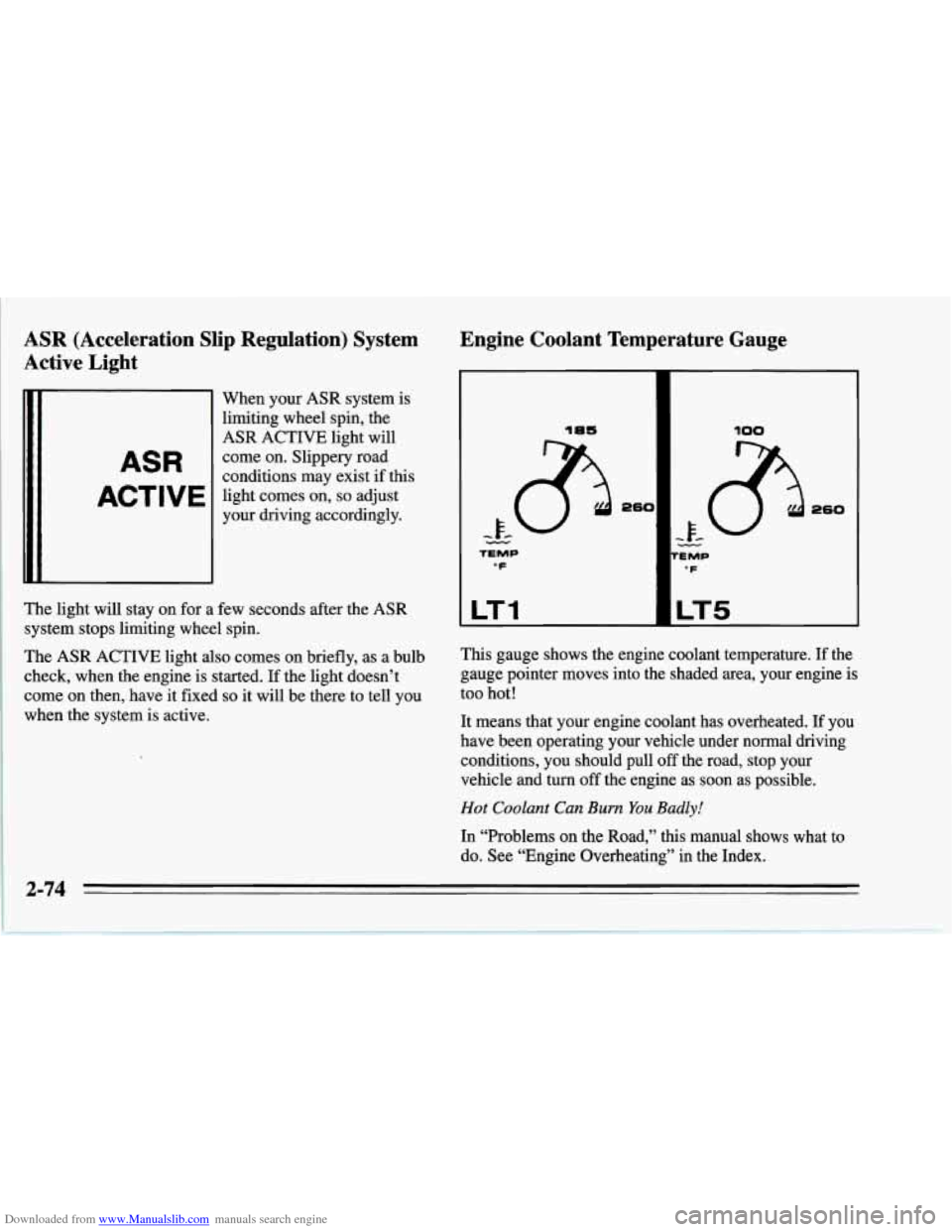
Engine Coolant Temperature Gauge
18s
TEMP
“F
LT1
100
uv
’E MP
‘F
LT5
This gauge shows the engine coolant temperature. If the
gauge pointer moves into the shaded area, your engine is
too hot!
It means that your engine coolant has overheated. If you
have been operating your vehicle under normal driving
conditions, you should pull
off the road, stop your
vehicle and turn
off the engine as soon as possible.
Hot Coolant Can Bum You Badly!
In “Problems on the Road,” this manual shows what to
do. See “Engine Overheating” in the Index.
2-74
Page 118 of 386
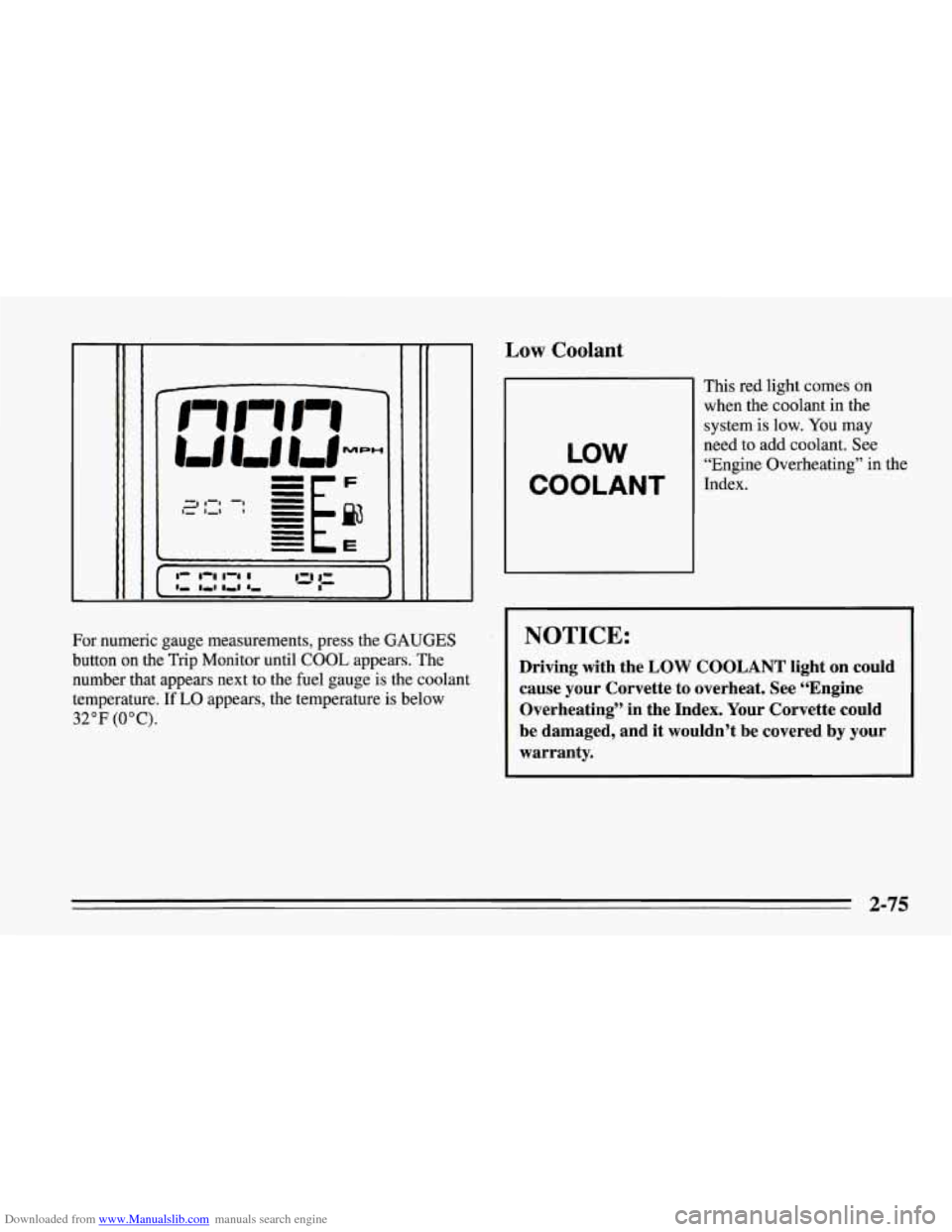
Downloaded from www.Manualslib.com manuals search engine For numeric gauge measurements, press the GAUGES
button on the Trip Monitor until COOL appears. The
number that appears next to the fuel gauge is the coolant
temperature. If
LO appears, the temperature is below
32°F (OOC).
,ow Coolant
1
This red light comes on
when the coolant in the
system is
low. You may
LOW
need to add coolant. See
“Engine Overheating” in the
COOLANT Index-
NOTICE:
Driving with the LOW COOLANT light on could
cause your Corvette
to overheat. See “Engine
Overheating” in the Index. Your Corvette could
be damaged, and it wouldn’t be covered by your warranty.
2-75
Page 124 of 386
Downloaded from www.Manualslib.com manuals search engine NOTICE:
Damage to your engine from neglected oil
problems can be costly and
is not covered by your
warranty.
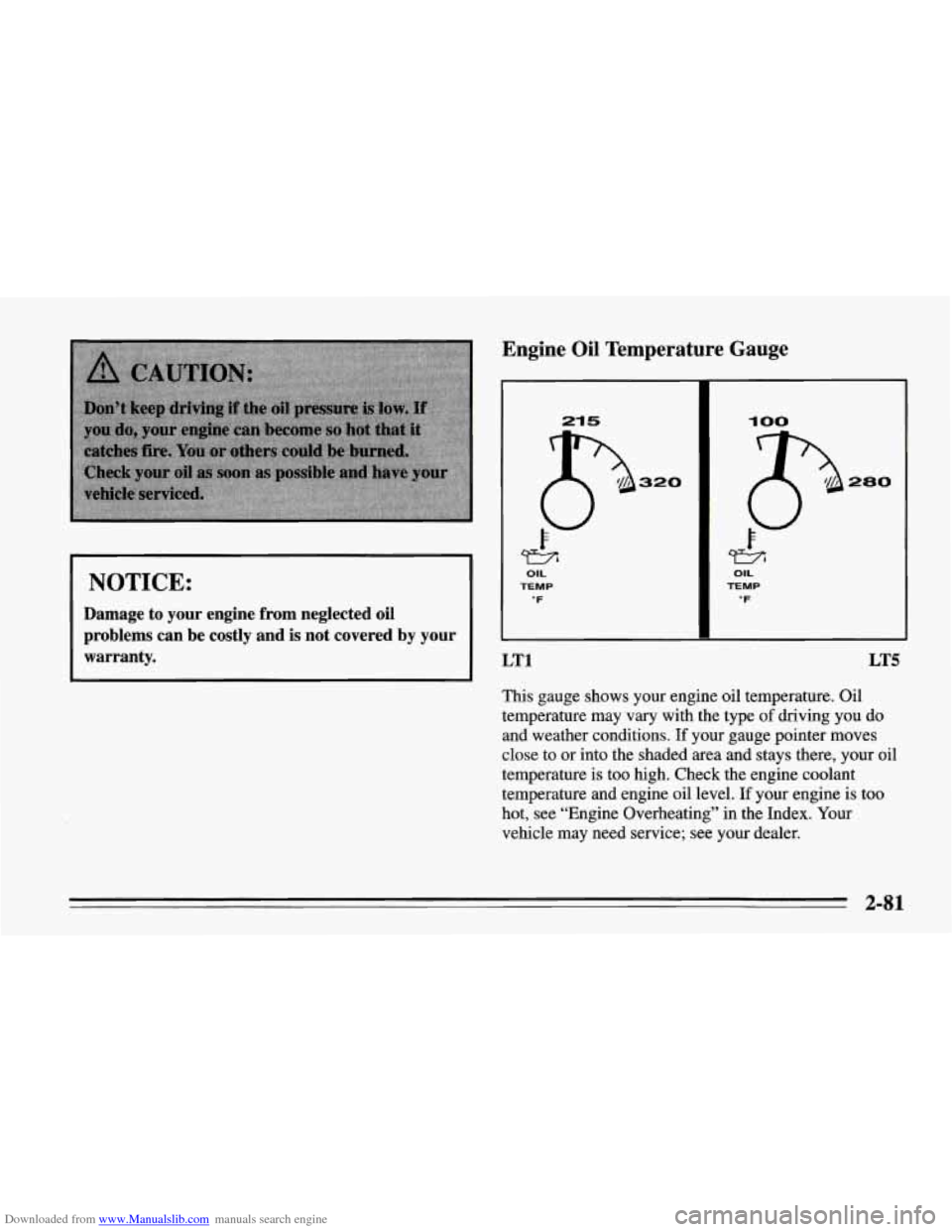
Engine Oil Temperature Gauge
LT1 LT5
This gauge shows your engine oil temperature. Oil
temperature may vary with the type
of driving you do
and weather conditions. If your gauge pointer moves
close to or into the shaded area and stays there, your oil
temperature is too high. Check the engine coolant
temperature and engine oil level. If your engine is too
hot, see “Engine Overheating” in the Index. Your
vehicle may need service; see your dealer.
2-81
Page 144 of 386
Downloaded from www.Manualslib.com manuals search engine Comfort Controls and Audio Systems
In this section you'll find out how to operate the comfort Manual Air Conditioner Controls
control systems and audio systems offered with your
Corvette. Be sure to read about the particular system
supplied with your vehicle.
Comfort Controls
With these systems, you can control the heating, cooling
and ventilation in your Corvette.
Your vehicle also has the flow-through ventilation
system described later in this section.
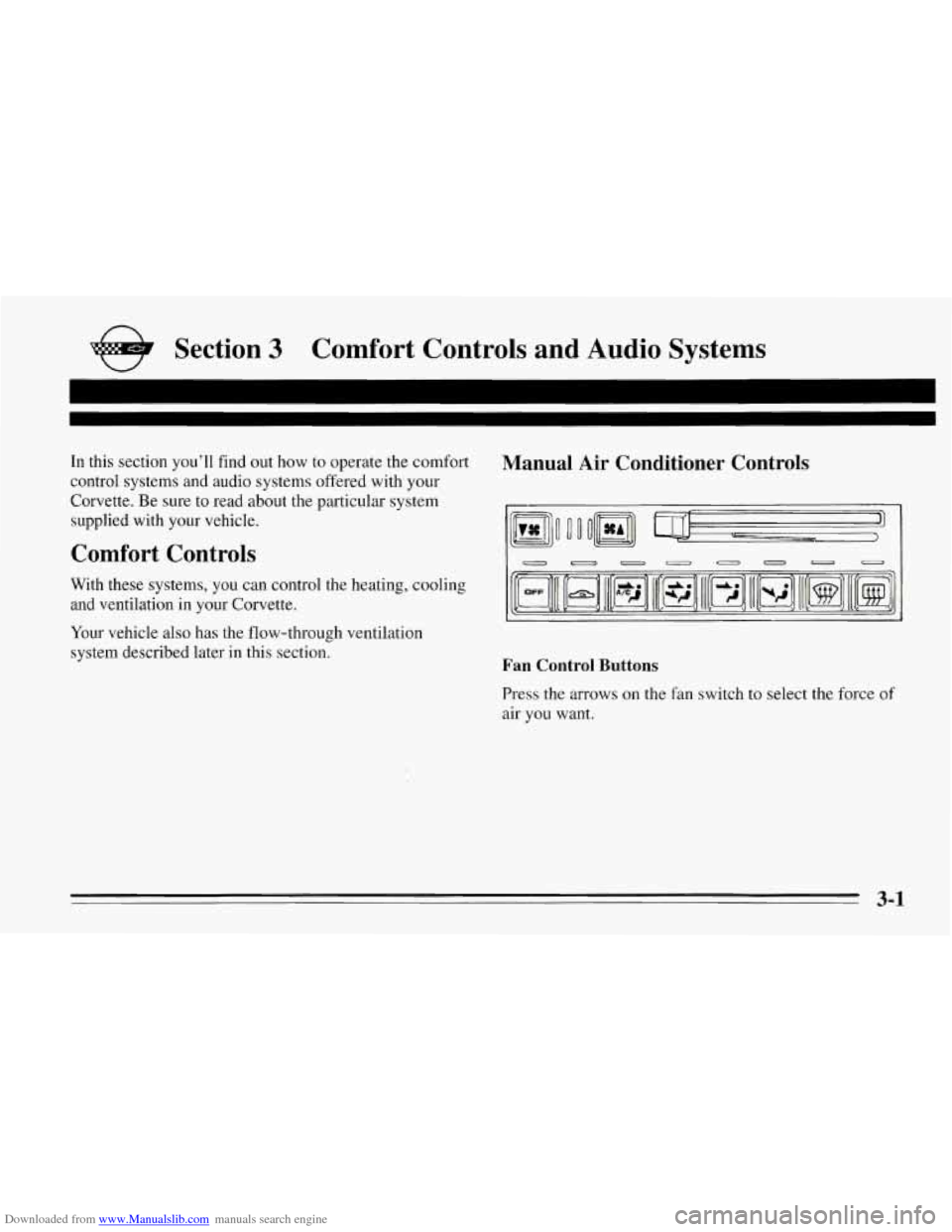
Fan Control Buttons
Press the arrows on the fan switch to select the force of
air you want.
3-1
Page 145 of 386
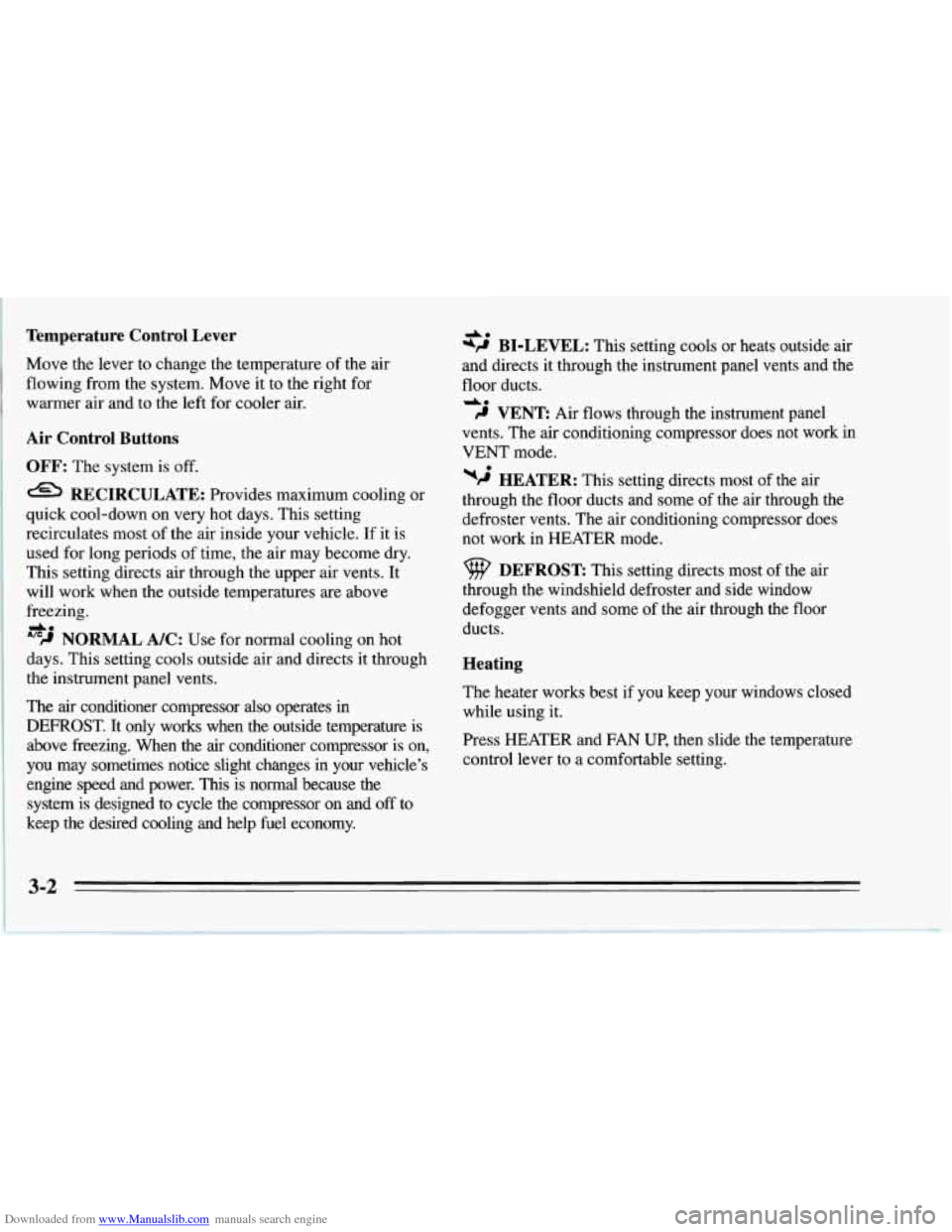
Downloaded from www.Manualslib.com manuals search engine Temperature Control Lever
Move the lever to change the temperature of the air
flowing from the system. Move it to the right for
warmer air and to the left for cooler air.
Air Control Buttons
OFF: The system is off.
RECIRCULATE: Provides maximum cooling or
quick cool-down
on very hot days. This setting
recirculates most of the air inside your vehicle. If it is
used for long periods of time, the air may become dry.
This setting directs air through the upper air vents. It
will work when the outside temperatures are above
freezing.
'''9 NORMAL A/C: Use for normal cooling on hot
days. This setting cools outside air and directs it through
the instrument panel vents.
The air conditioner compressor also operates in
DEFROST. It only works when the outside temperature is
above freezing. When the air conditioner compressor is on,
you may sometimes notice slight changes in your vehicle's
engine speed and power. This is normal because the
system
is designed to cycle the compressor on and off to
keep the desired cooling and help fuel economy.
do
A.
*P@ BI-LEVEL: This setting cools or heats outside air
and directs it through the instrument panel vents and the
floor ducts.
do
9 VENT: Air flows through the instrument panel
vents. The air conditioning compressor does not work in
VENT mode.
wj HEATER: This setting directs most of the air
through the floor ducts and some of the air through the
defroster vents. The air conditioning compressor does
not work in HEATER mode.
DEFROST This setting directs most of the air
through the windshield defroster and side window
defogger vents and some of the air through the floor
ducts.
Heating
The heater works best if you keep your windows closed
while using it.
Press HEATER and FAN UP, then slide the temperature
control lever to a comfortable setting.
3-2
Page 146 of 386
Downloaded from www.Manualslib.com manuals search engine If your vehicle has an engine coolant heater and you use
it in cold weather,
0 “F (- 18 “C) or lower, your heating
system can provide heat more quickly because the
engine coolant is already warmed. See “Engine Coolant
Heater” in the Index.
Bi-Level
You may want to use BI-LEVEL on cool, but sunny
days. This setting directs outside air through the
instrument panel vents and the floor ducts.
Press BI-LEVEL and FAN UP, then slide the
temperature control lever to a comfortable setting.
Ventilation
For mild outside temperatures, when little heating or
cooling is needed, you can still direct outside air through
your vehicle.
Press VENT and FAN UP, then slide the temperature
control lever to a comfortable setting.
Defogging and Defrosting Windows
Your vehicle has several settings for clearing your
windows. The air conditioner compressor will run to
help remove moisture from the air.
To defrost the windshield quickly, press
DEFROST and
FAN UP, then slide the temperature control lever all the
way to the right or to the FULL
HOT position.
To defrost the side windows quickly, press BI-LEVEL
and FAN UP. Then slide the temperature control lever
all the way to the right. Direct airflow through the air
conditioning outlets closest to the side windows.
3-3
Page 147 of 386
Downloaded from www.Manualslib.com manuals search engine Cooling
The air conditioner works best if you keep your
windows closed. On very hot days, open the windows
just long enough for the hot air to escape.
Press RECIRCULATE and
FAN UP, then slide the
temperature control lever to a comfortable setting.
After cool-down, adjust the air control buttons to
another setting. The compressor works in all settings
except VENT and HEATER and at all temperatures
above freezing.
When the air conditioner is on, you may notice slight
changes in your vehicle's engine speed and power. This
is normal because the system is designed to cycle the
compressor on and off to keep the desired temperature
and help fuel economy.
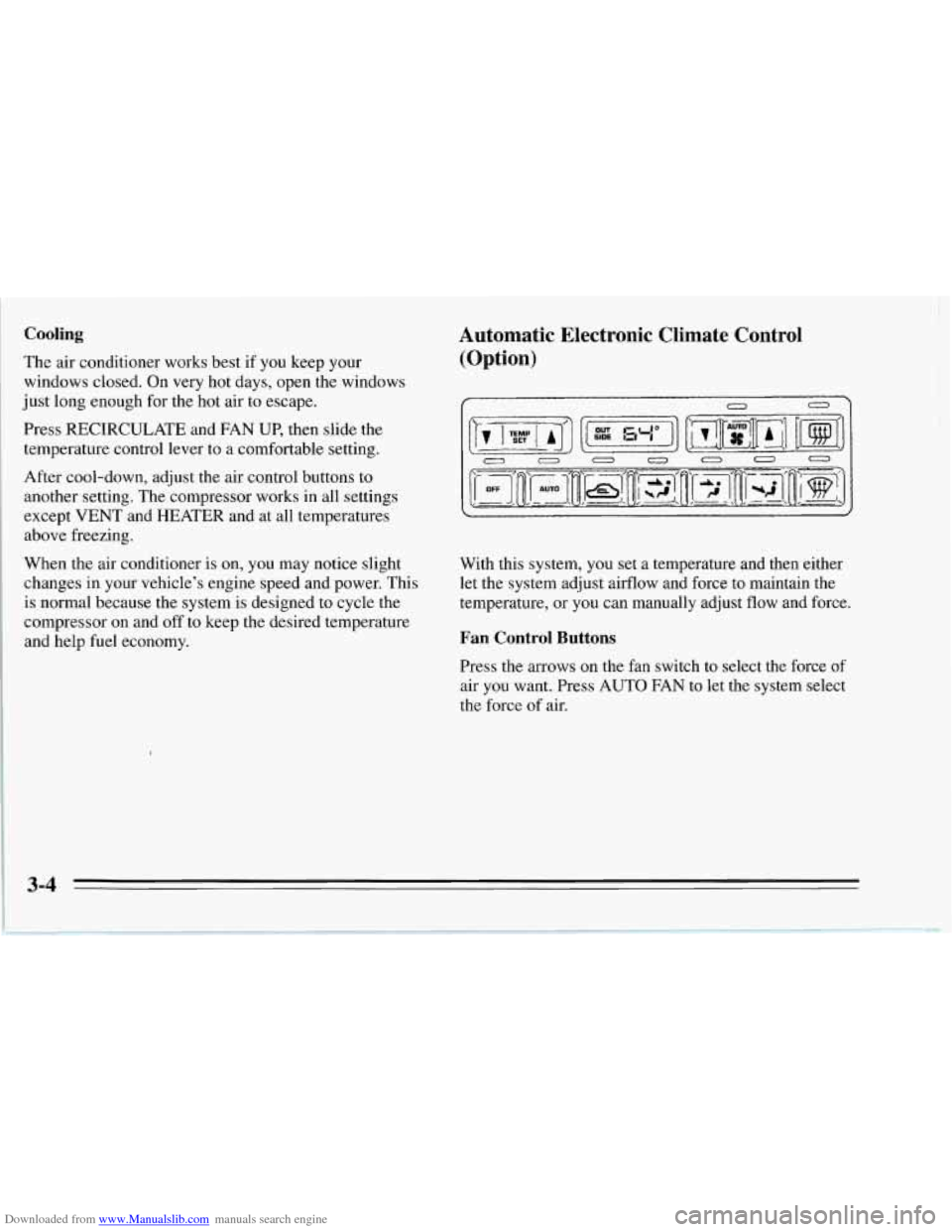
Automatic Electronic Climate Control
(Option)
0
With this system, you set a temperature and then either
let the system adjust airflow and force to maintain the
temperature, or you can manually adjust flow and force.
Fan Control Buttons
Press the arrows on the fan switch to select the force of
air you want. Press
AUTO FAN to let the system select
the force
of air.
3-4
Page 148 of 386
Downloaded from www.Manualslib.com manuals search engine Temperature Control Switch
Press the arrows on the TEMP SET switch to set the
temperature you want in your vehicle. The temperature
you select will show on the display for a few seconds,
then the outside temperature will show.
Air Control Buttons
OFF: The system is off.
AUTO: The system controls airflow.
RECIRCULATE: Provides maximum cooling or
quick cool-down on very hot days. This setting
recirculates most of the air inside your vehicle. If it is
used for long periods
of time, the air may become dry.
This setting directs air through the upper air vents. It
will not work when the outside temperature is above
freezing.
49 BI-LEVEL: This setting directs outside air
through the instrument panel and side window defogger
vents and the floor ducts.
-A*
do
9 VENT Outside air flows through the instrument
panel vents.
w2 HEATER: This setting directs all of the air
through the floor ducts.
DEFROST This setting directs most of the air
through the windshield defroster and side window
defogger vents and some of
the air through the floor
ducts.
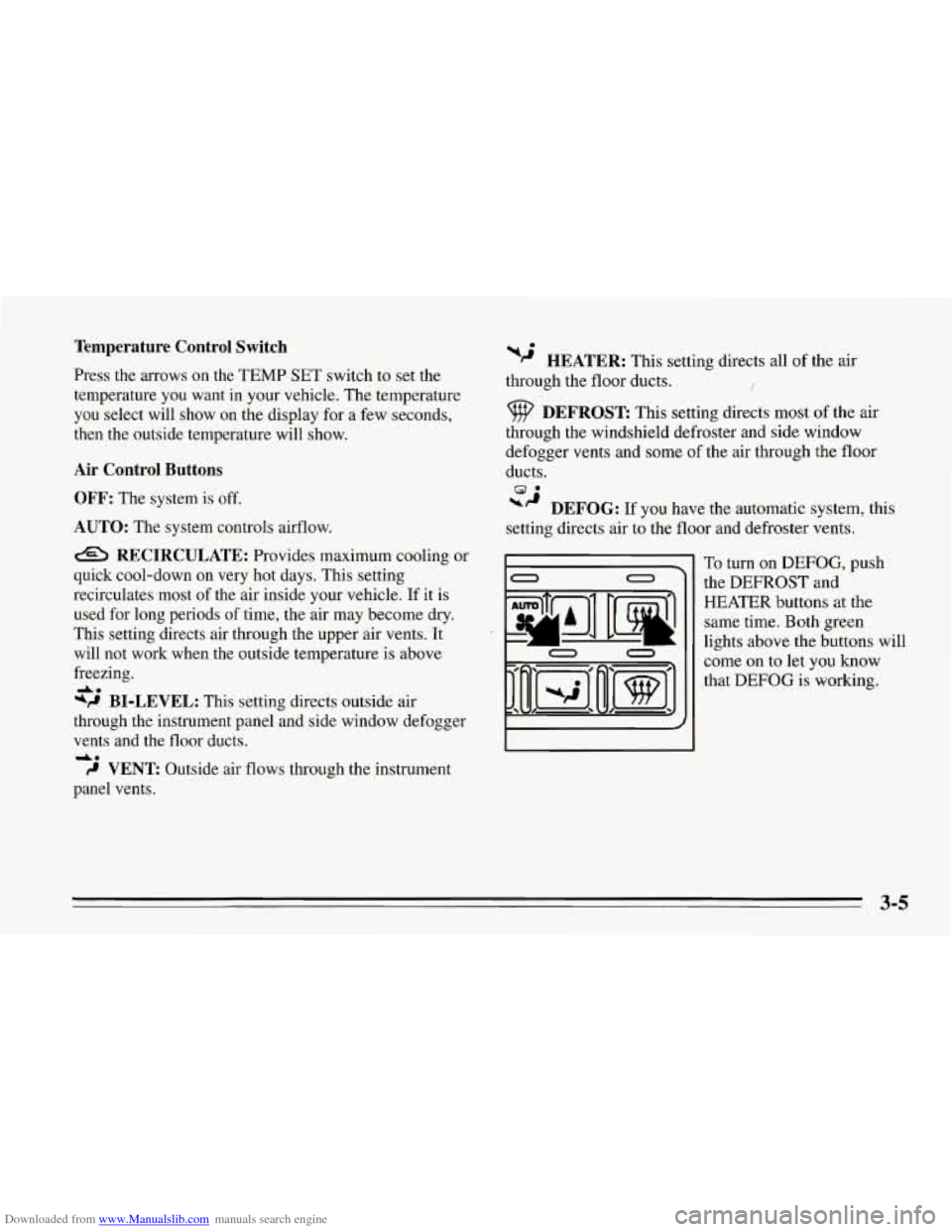
*’ DEFOG: If you have the automatic system, this
setting directs air to the floor and defroster vents.
0 0
E I 0 0
To turn on DEFOG, push
the
DEFROST and
HEATER buttons at the
same time. Both green
lights above the buttons will
come on to let you know
that
DEFOG is working.
3-5