Page 20 of 340
Downloaded from www.Manualslib.com manuals search engine If I’m a good driver, and I never drive far from
home, why should I wear safety belts?
A: You may be an excellent driver, but if you’re in an
accident
-- even one that isn’t your fault -- you and
your passengers can be hurt. Being a good driver
doesn’t protect
you from things beyond your
control, such
as bad drivers.
Most accidents occur within
25 miles (40 km) of
home. And the greatest number of serious injuries
and deaths occur
at speeds of less than 40 mph
(65 km/h).
Safety belts are for everyone.
How to Wear Safety Belts Properly
Adults
This part is only for people of adult size.
Be aware that there are special things to know about
safety belts and children. And there
are different rules
for smaller children and babies. If
a child will be riding
in your Chevrolet, see the part of this manual called
“Children.” Follow those rules for everyone’s
protection.
First, you’ll want to
know which restraint systems your
vehicle has.
We’ll start with the driver position.
Driver Position
This part describes the driver’s restraint system.
Lap-Shoulder Belt
The driver has a lap-shoulder belt. Here’s how to wear it
properly.
1. Close and lock the door.
2. Adjust the seat (to see how, see “Seats” in the Index)
so you can sit up straight.
1-10
Page 40 of 340
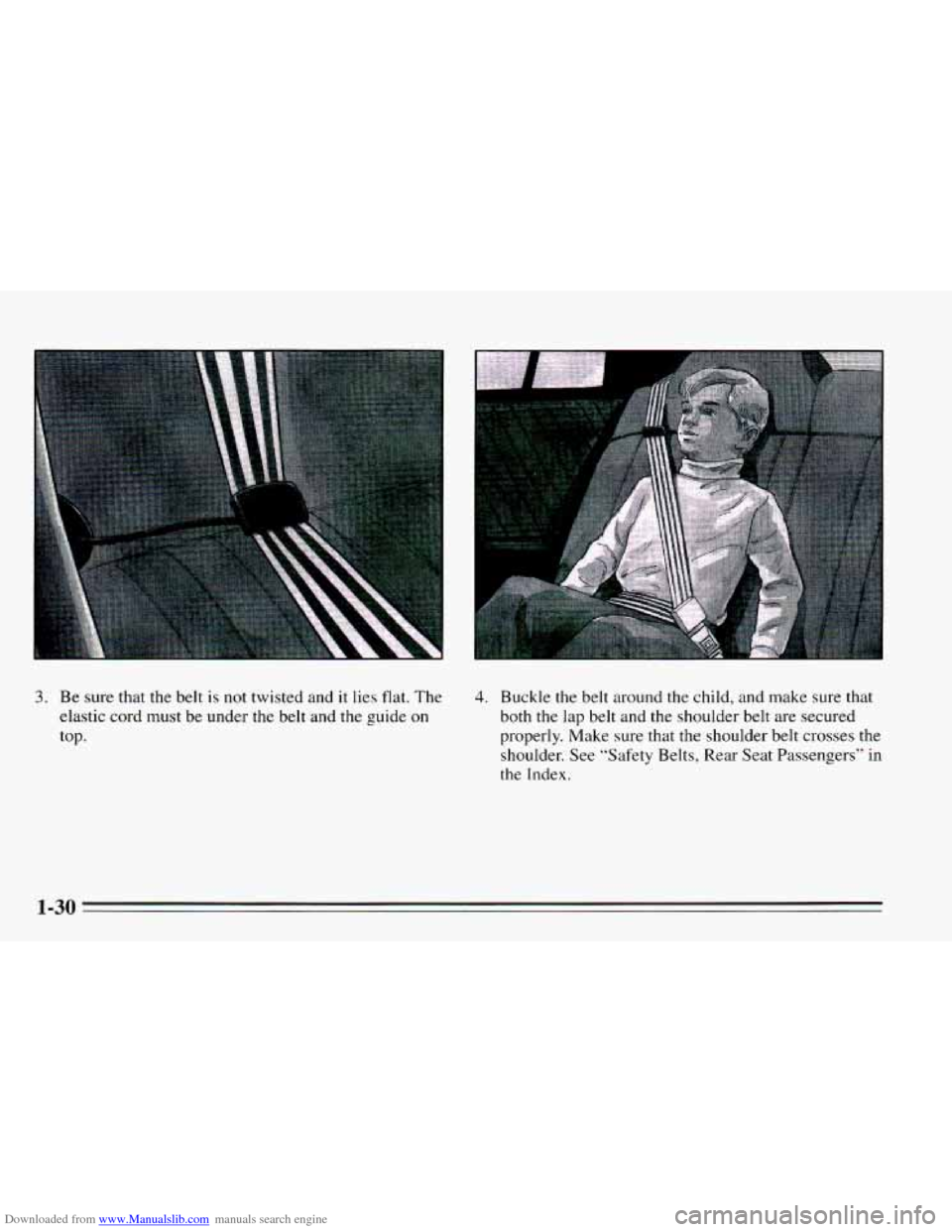
Downloaded from www.Manualslib.com manuals search engine 3. Be sure that the belt is not twisted and it lies flat. The
elastic cord must be under the belt and the guide on
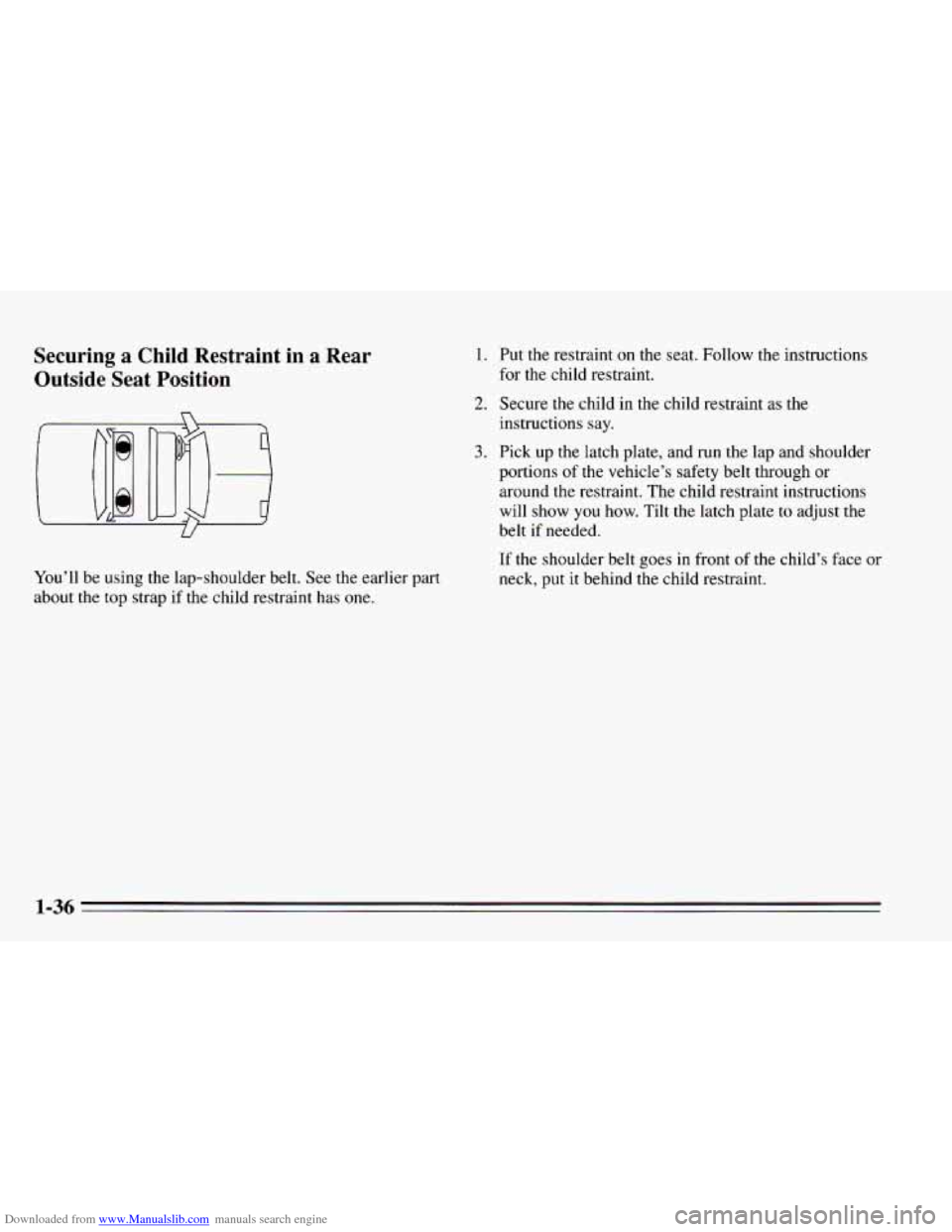
top. 4. Buckle the belt around the child, and make sure that
both the lap belt and the shoulder belt are secured
properly. Make sure that the shoulder belt crosses the
shoulder. See “Safety Belts, Rear Seat Passengers”
in
the Index.
1-30
Page 44 of 340
Downloaded from www.Manualslib.com manuals search engine Child Restraints
Be sure to follow the instructions for the restraint. You
may find these instructions
on the restraint itself or in a
booklet, or both. These restraints use the belt system in
your vehicle, but the child also has to be secured within
the restraint to help reduce the chance
of personal injury.
The instructions that come with the infant or child
restraint will show you how to do that.
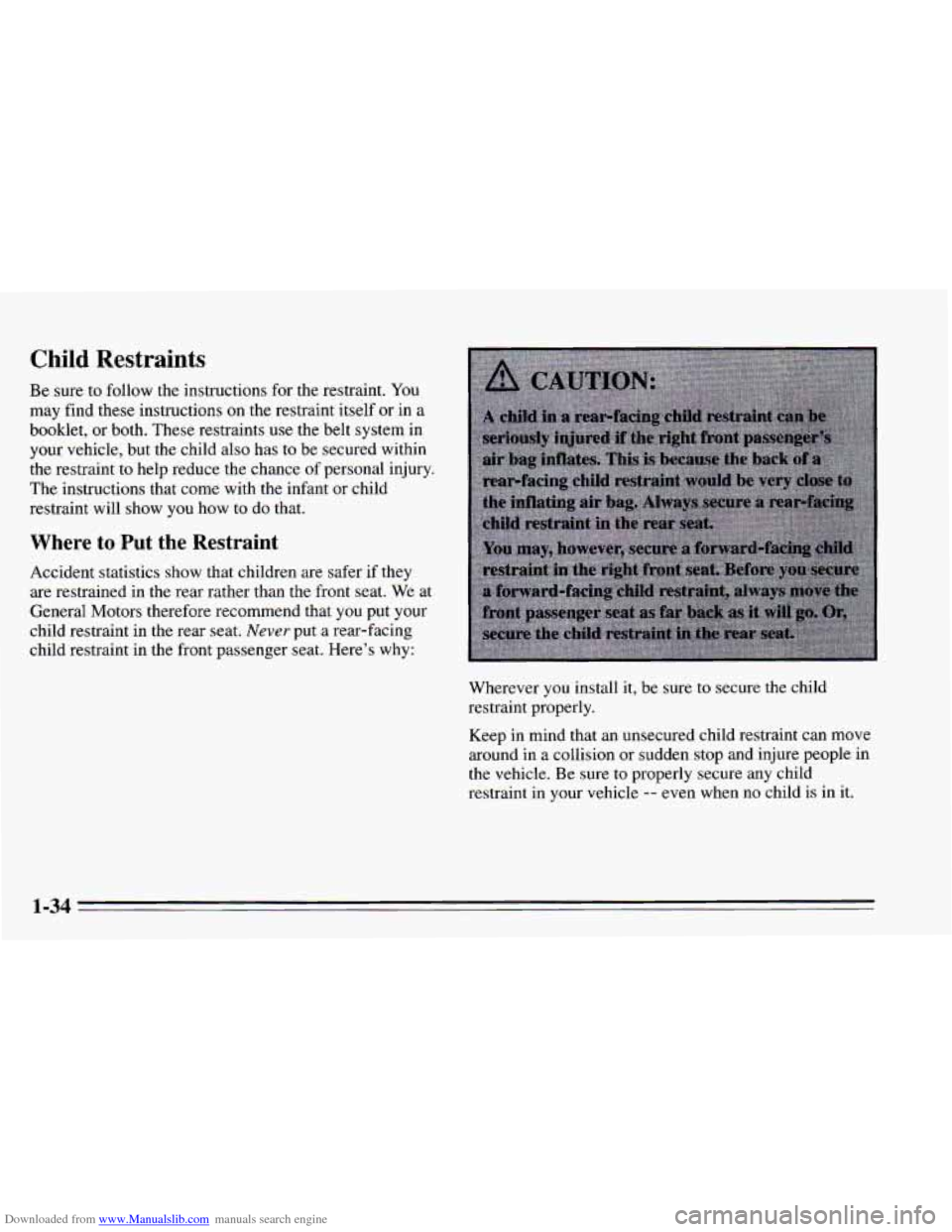
Where to Put the Restraint
Accident statistics show that children are safer if they
are restrained in the rear rather than the front seat. We at
General Motors therefore recommend that
you put your
child restraint in the rear seat.
Never put a rear-facing
child restraint in the front passenger seat. Here’s why:
Wherever
you install it, be sure to secure the child
restraint properly.
Keep
in mind that an unsecured child restraint can move
around in a collision
or sudden stop and injure people in
the vehicle. Be sure
to properly secure any child
restraint in your vehicle
-- even when no child is in it.
1-34
Page 46 of 340
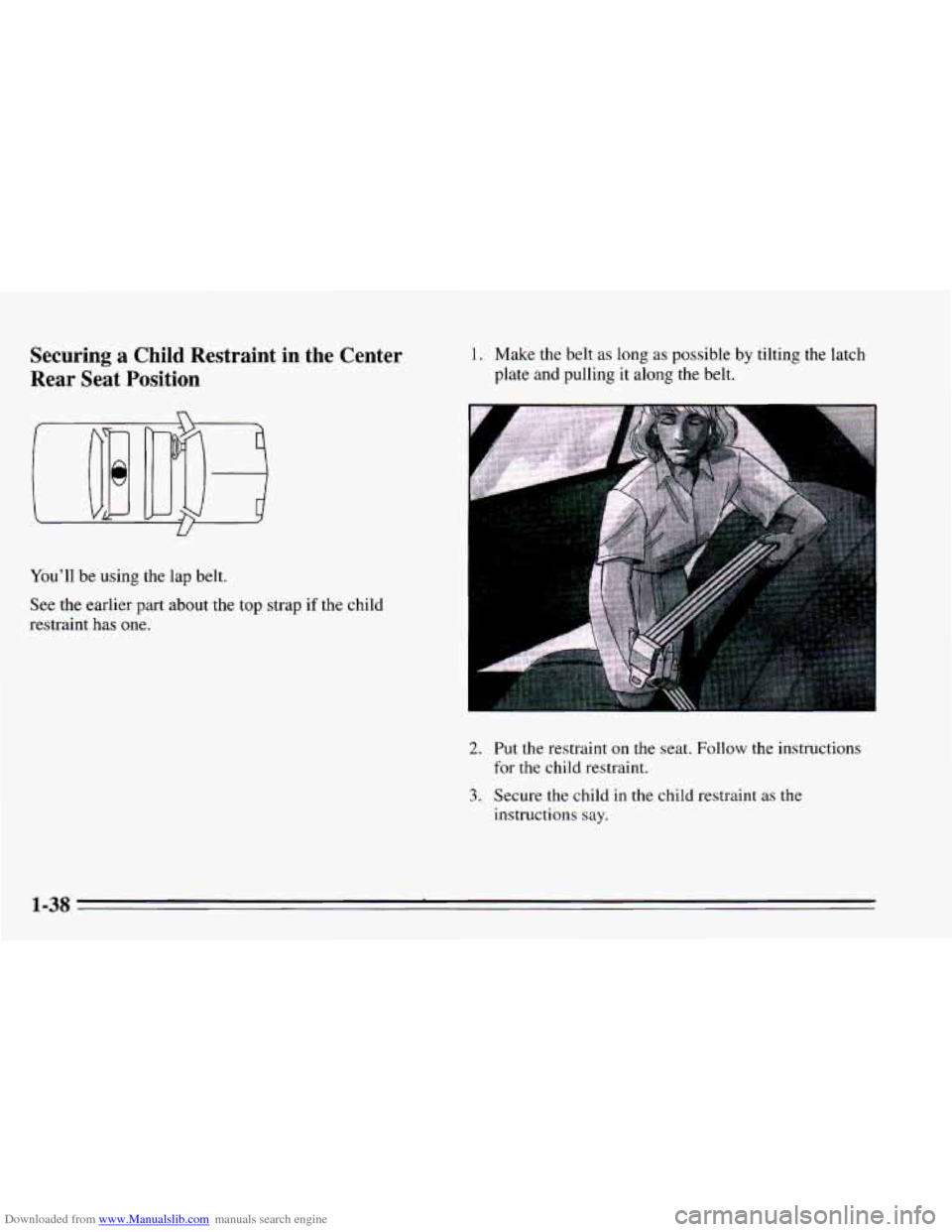
Downloaded from www.Manualslib.com manuals search engine Securing a Child Restraint in a Rear
Outside Seat Position
You’ll be using the lap-shoulder belt. See the earlier part
about the top strap if the child restraint has one.
1. Put the restraint on the seat. Follow the instructions
for the child restraint.
2. Secure the child in the child restraint as the
instructions say.
3. Pick up the latch plate, and run the lap and shoulder
portions
of the vehicle’s safety belt through or
around the restraint. The child restraint instructions
will show you how. Tilt the latch plate to adjust
the
belt if needed.
If the shoulder belt goes in front of the child’s face or
neck, put it behind the child restraint.
1-36
Page 48 of 340
Downloaded from www.Manualslib.com manuals search engine Securing a Child Restraint in the Center
Rear Seat Position
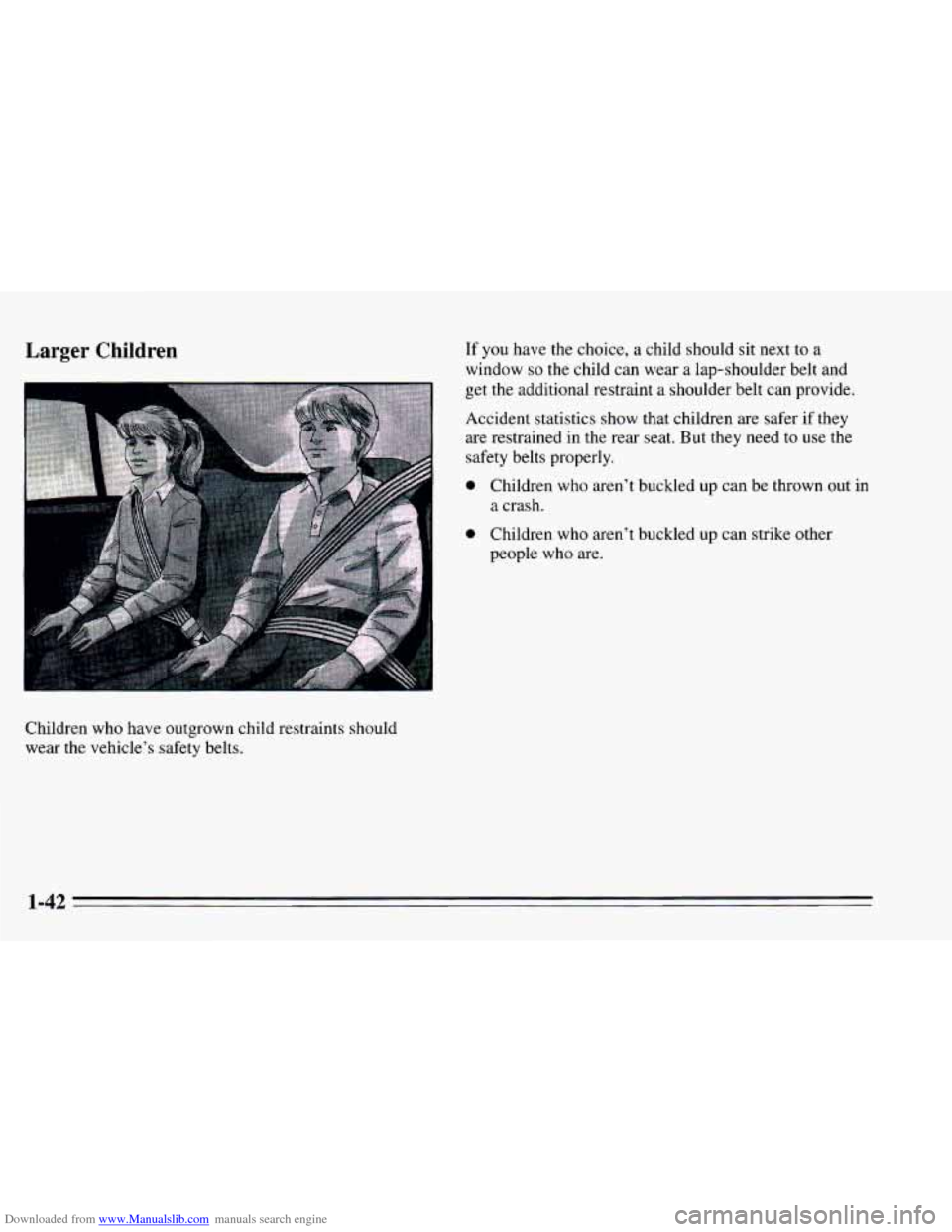
1. Make the belt as long as possible by tilting the latch
plate and pulling
it along the belt.
U
You’ll be using the lap belt.
See the earlier part about the top strap
if the child
restraint has one.
2. Put the restraint on the seat. Follow the instructions
for
the child restraint.
3. Secure the child in the child restraint as the
instructions
say.
1-38
Page 50 of 340
Downloaded from www.Manualslib.com manuals search engine Securing a Child Restraint in the Right
Front Seat Position
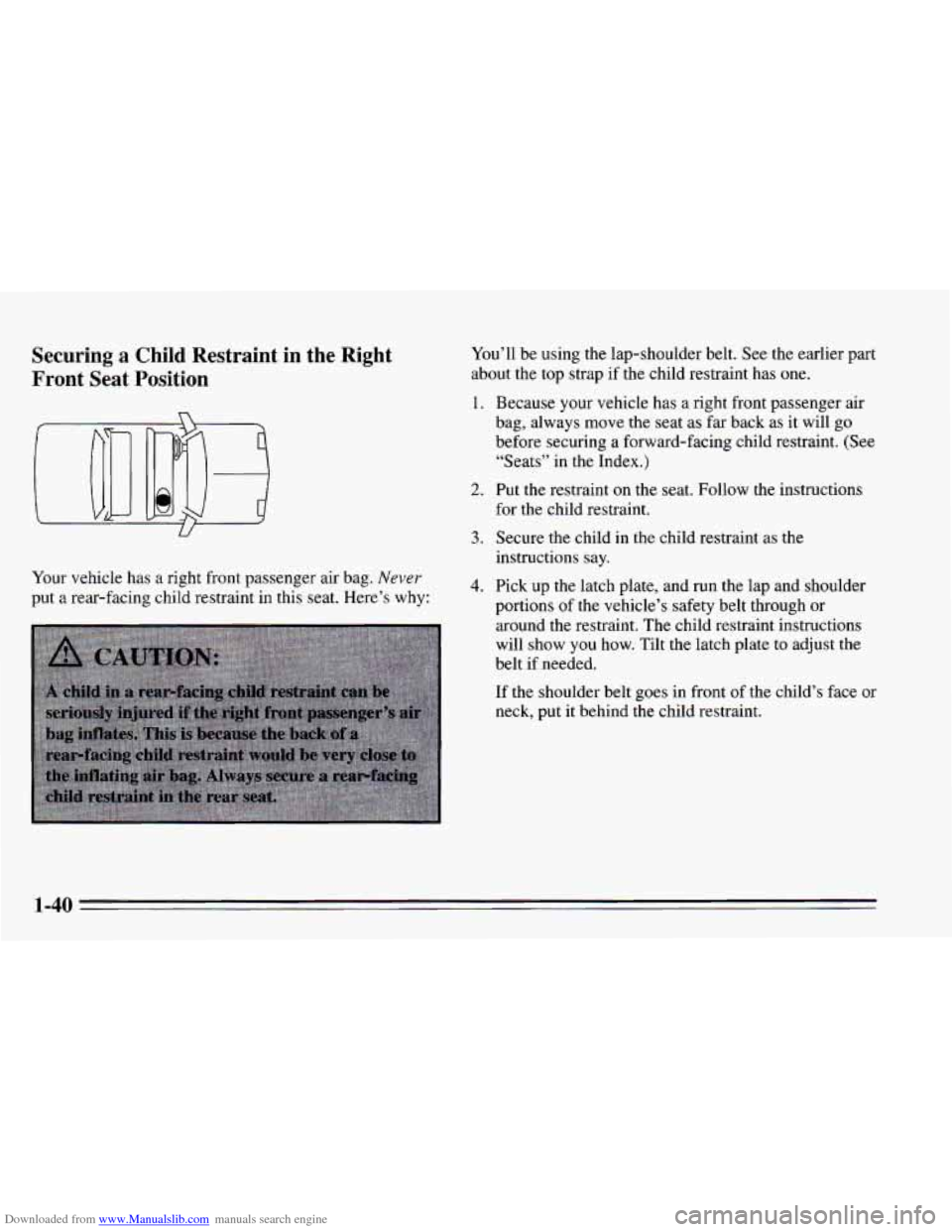
Your vehicle has a right front passenger air bag. Never
put a rear-facing child restraint in this seat. Here’s why: You’ll be
using the lap-shoulder belt. See the earlier part
about the top strap if the child restraint
has one.
1.
2.
3.
4.
Because your vehicle has a right front passenger air
bag, always move the seat as far back as it will go
before securing a forward-facing child restraint. (See
“Seats” in the Index.)
Put the restraint on the seat. Follow
the instructions
for the child restraint.
Secure the child in the child restraint as the
instructions
say.
Pick up the latch plate, and run the lap and shoulder
portions of the vehicle’s safety belt through or
around the restraint. The child restraint instructions
will show
you how. Tilt the latch plate to adjust the
belt if needed.
If the shoulder belt goes in front of the child’s face or
neck, put it behind the child restraint.
1-40
Page 52 of 340
Downloaded from www.Manualslib.com manuals search engine Larger Children If you have the choice, a child should sit next to a
window
so the child can wear a lap-shoulder belt and
get the additional restraint a shoulder belt can provide.
Accident statistics show that children
are safer if they
are restrained in the rear seat. But they need
to use the
safety belts properly.
0 Children who aren’t buckled up can be thrown out in
0 Children who aren’t buckled up can strike other
a crash.
people who are.
Children who have outgrown child restraints should
wear the vehicle’s safety belts.
1-42
Page 53 of 340
Downloaded from www.Manualslib.com manuals search engine . , . , , . ..
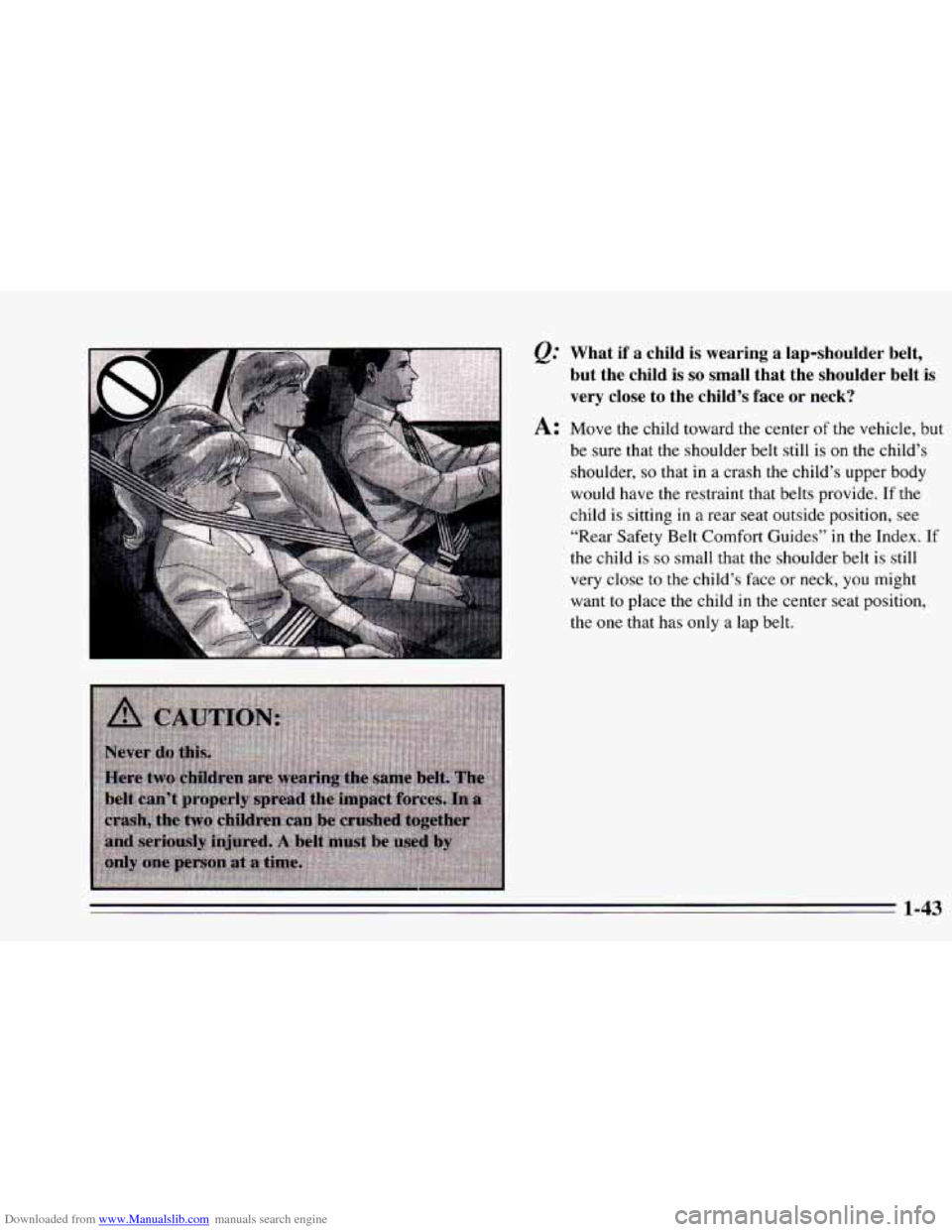
&= What if a child is wearing a lap-shoulder belt,
but the child
is so small that the shoulder belt is
very close to the child’s face or neck?
A: Move the child toward the center of the vehicle, but
be sure that the shoulder belt still is
on the child’s
shoulder,
so that in a crash the child’s upper body
would have the restraint that belts provide.
If the
child
is sitting in a rear seat outside position, see
“Rear Safety Belt Comfort Guides” in the Index.
If
the child is so small that the shoulder belt is still
very close to the child’s face or neck, you might
want
to place the child in the center seat position,
the one that has only a lap belt.
1-43