Page 190 of 340
Downloaded from www.Manualslib.com manuals search engine Cooling System
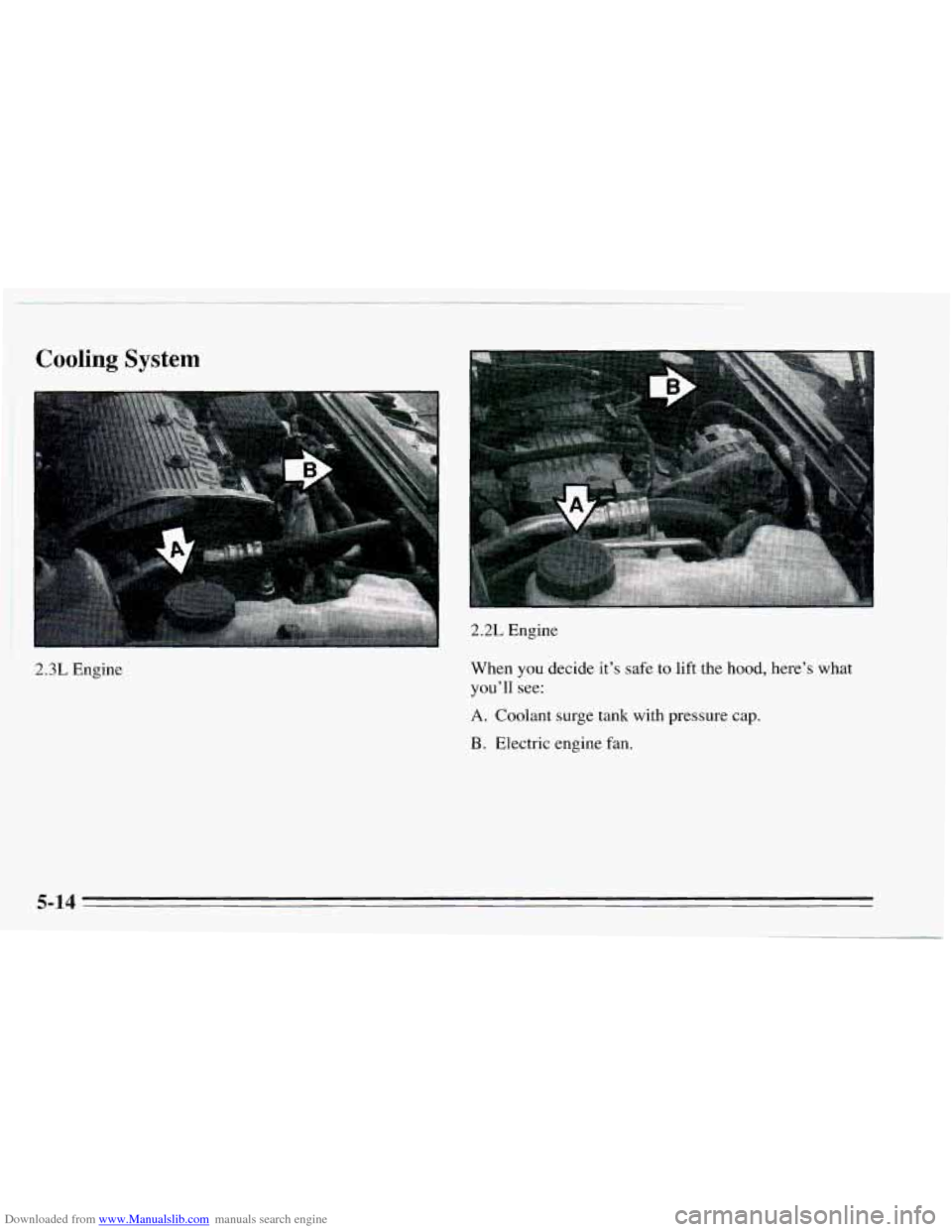
2.3L Engine
2.2L Engine
When
you decide it’s safe to lift the hood, here’s what
you’ll see:
A. Coolant surge tank with pressure cap.
B. Electric engine fan.
5-14
Page 191 of 340
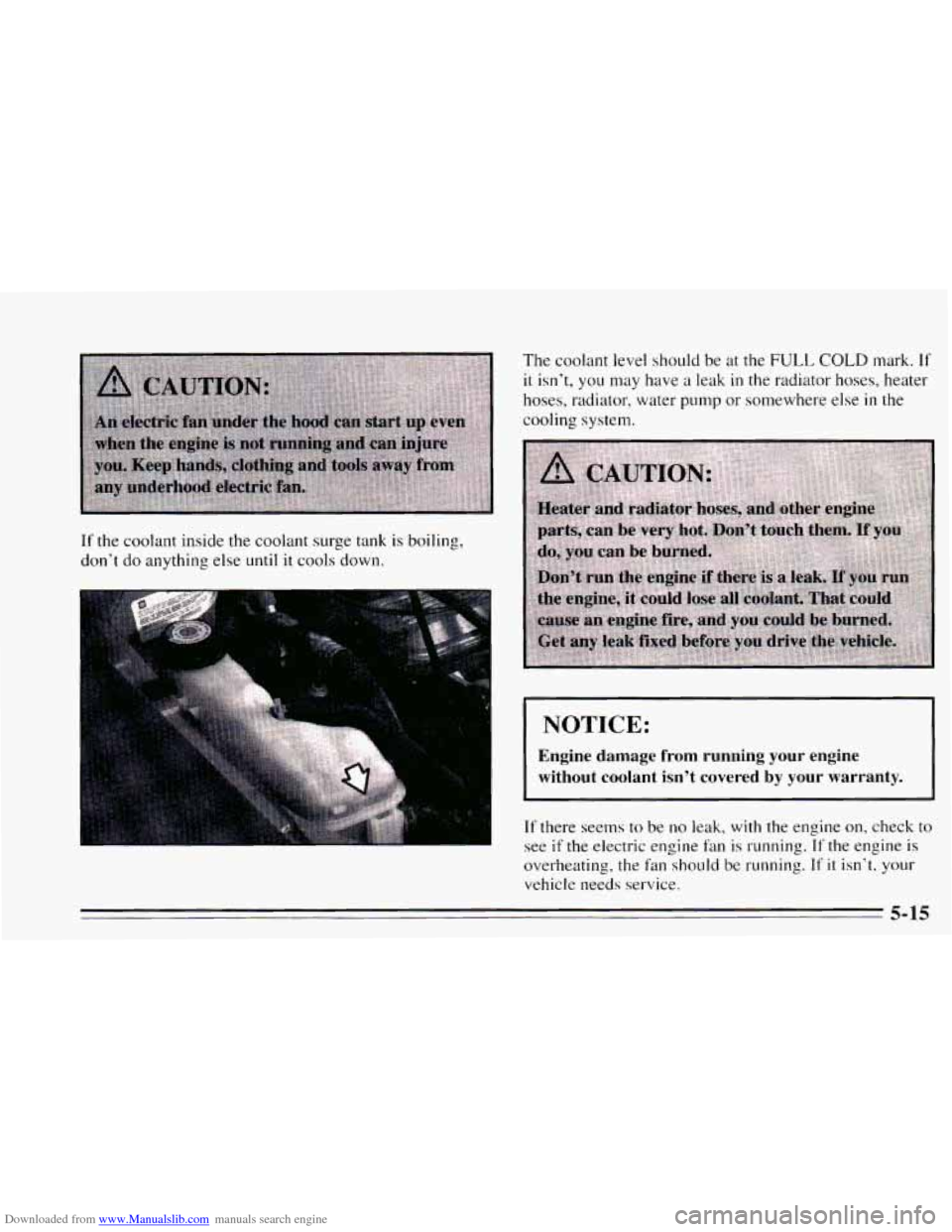
Downloaded from www.Manualslib.com manuals search engine If the coolant inside the coolant surge tank is boiling,
don't do anything else
until it cools down.
I
The coolant level should be at the FULL COLD mark. If
it isn't, you may have a leak in the radiator hoses, heater
hoses, radiator, water
pump or somewhere else in the
cooling system.
I NOTICE:
I
Engine damage from running your engine
without coolant isn't covered by your warranty.
If there seems to be no leak, with the engine on, check to
see
if the electric engine fm is running. If the engine is
overheating, the
fan should be running. If it isn't, your
vehicle needs service.
5-15
Page 192 of 340
Downloaded from www.Manualslib.com manuals search engine How to Add Coolant to the Coolant Surge
Tank
If you haven’t found a problem yet, but the coolant level
isn’t at the
FULL COLD mark, add a 50/50 mixture of
c-lean water (preferably distilled) and a proper antifreeze
at the coolant surge tank, but be sure the cooling system,
including the coolant surge tank pressure cap,
is cool
before you do it. (See “Engine Coolant” in the Index for
more information about
the proper coolant mix.)
5-16
Page 193 of 340
Downloaded from www.Manualslib.com manuals search engine NOTICE:
In cold weather, water can freeze and crack the
engine, radiator, heater core and other parts.
So
use the recommended coolant.
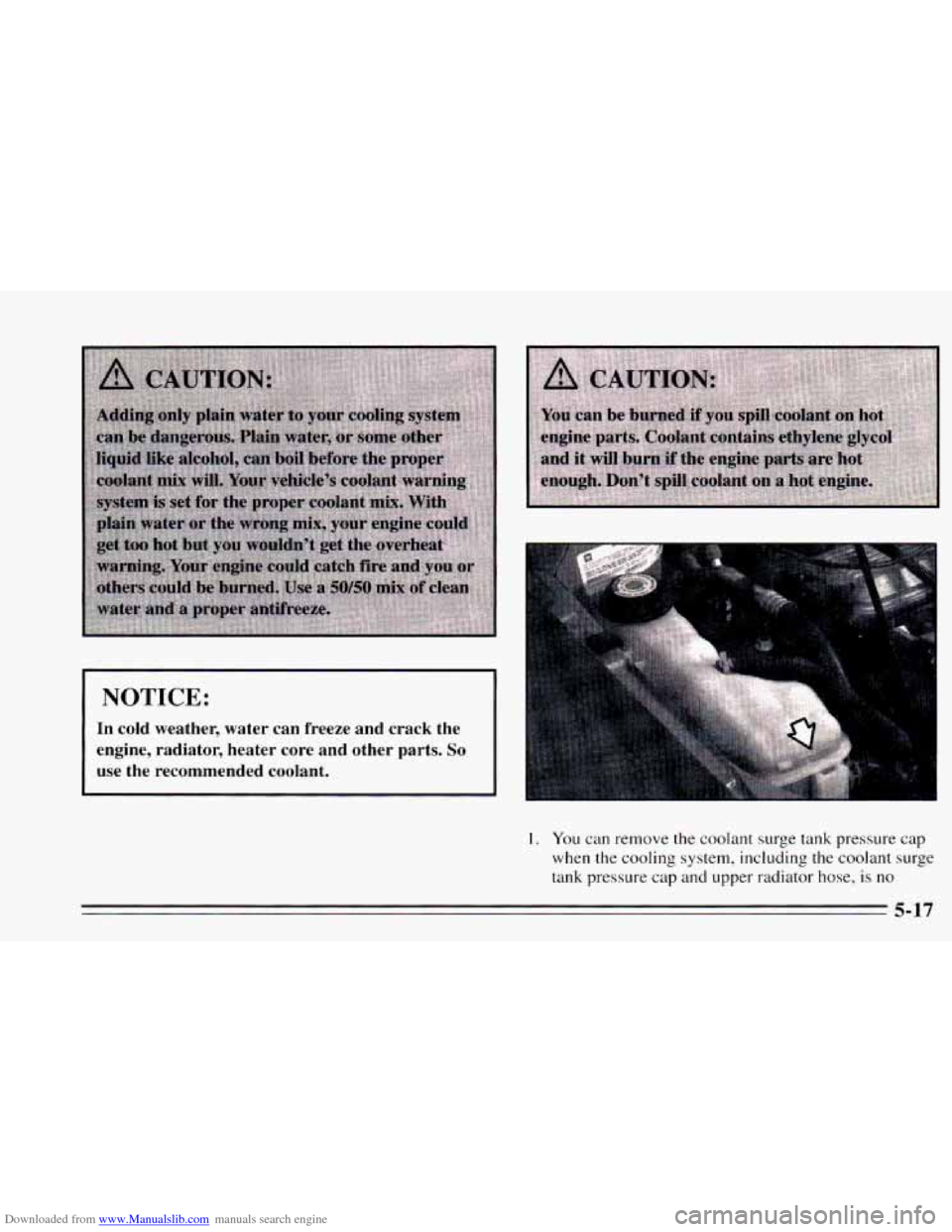
I. You can remove the coolant surge tank pressure cap
when the cooling system, including
the coolant surge
tank pressure cap and upper radiator hose,
is no
5-17
Page 194 of 340
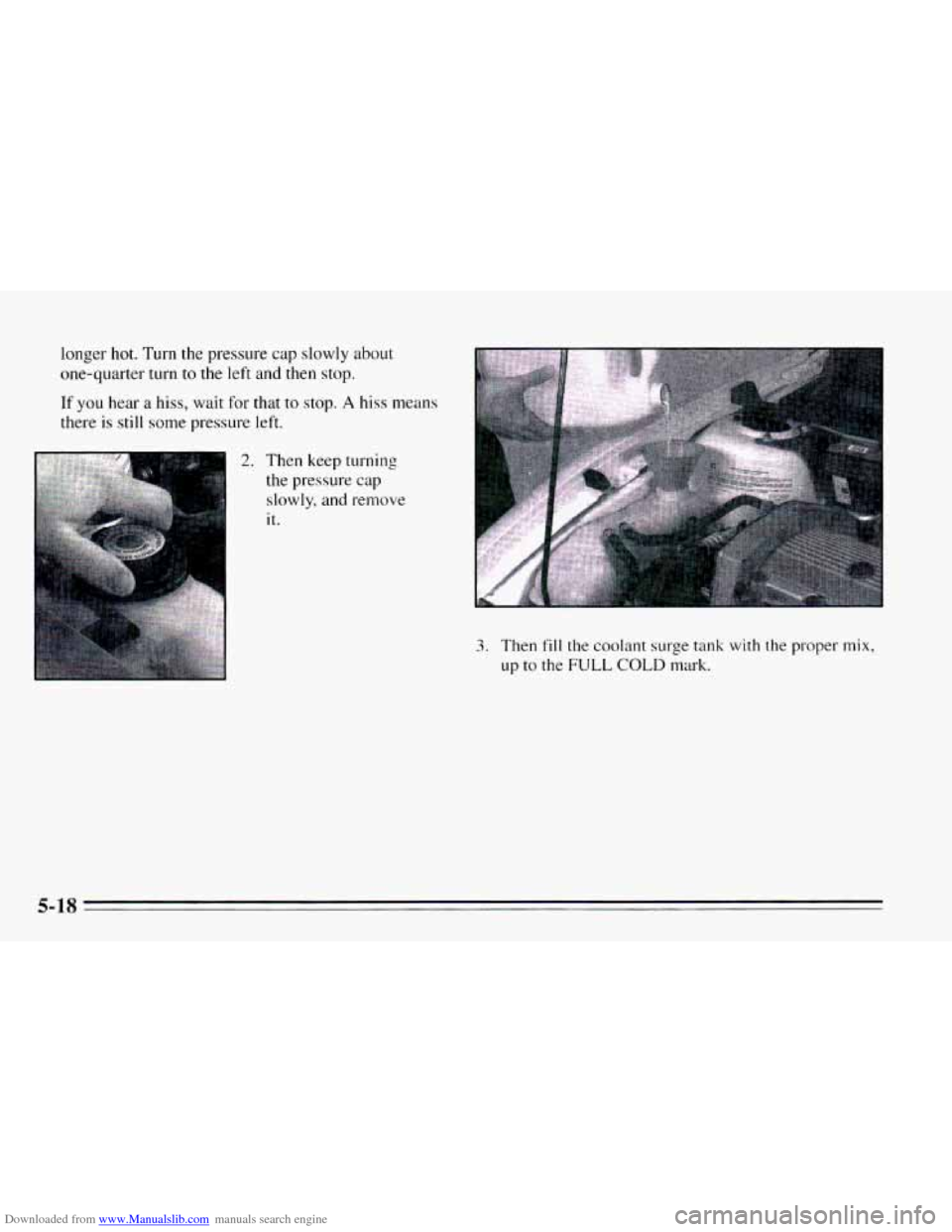
Downloaded from www.Manualslib.com manuals search engine longer hot. Turn the pressure cap slowly about
one-quarter turn
to the left and then stop.
If you hear a hiss, wait for that to stop. A hiss means
there is still some pressure left.
2. Then keep turning
the pressure cap
slowly, and remove
it.
3. Then fill the coolant surge tank with the proper mix,
up to the FULL COLD mark.
5-18
Page 195 of 340
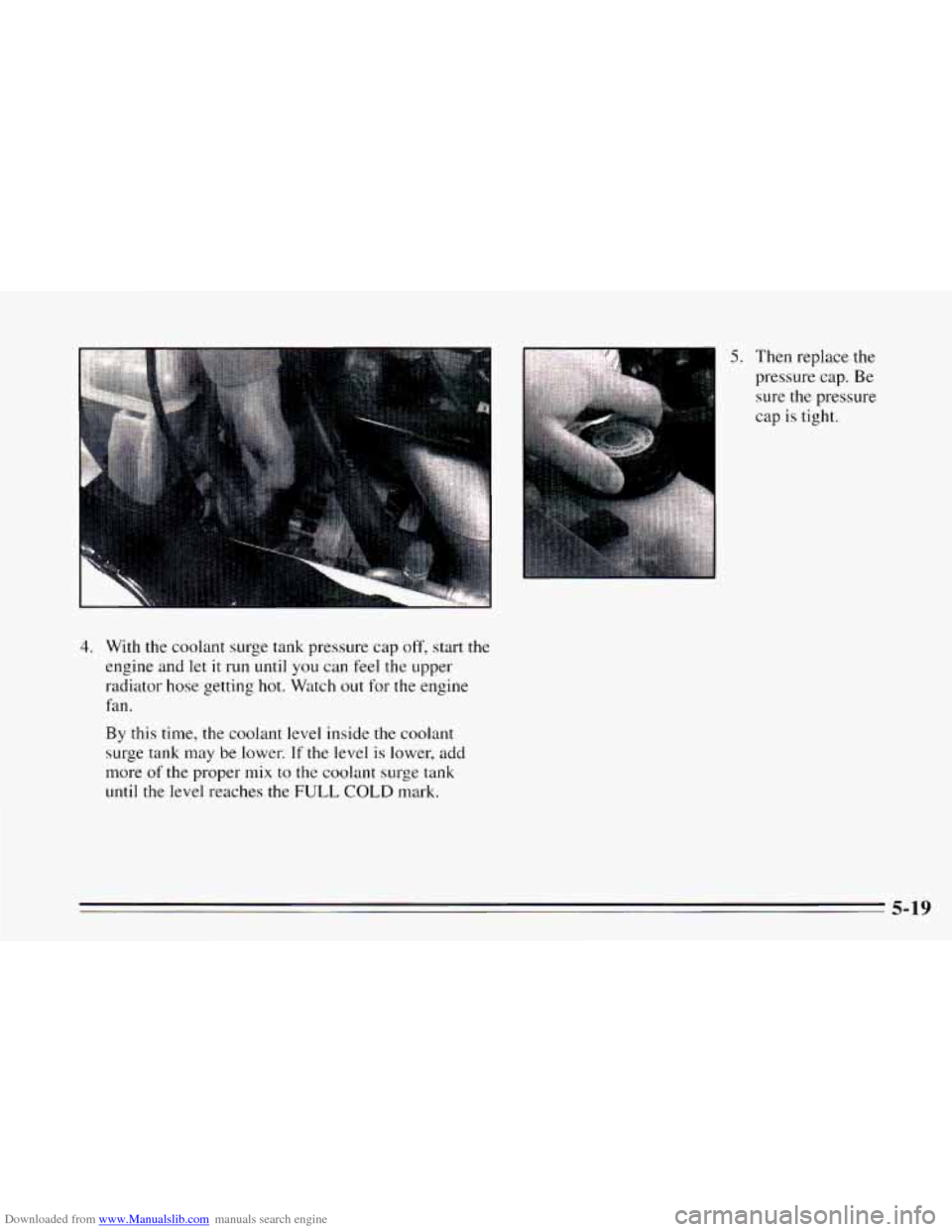
Downloaded from www.Manualslib.com manuals search engine 4. With the coolant surge tank pressure cap off, start the
engine and let
it run until you can feel the upper
radiator hose getting hot. W'ltch
out for the engine
fan.
By this time, the coolant level inside the coolant
surge tank
may be lower. If the level is lower, add
more
of the proper mix to the coolant surge tank
until the level reaches the FULL COLD mark.
5. Then replace the
pressure cap.
Be
sure the pressure
cap is tight.
5-19
Page 212 of 340
Downloaded from www.Manualslib.com manuals search engine Before closing the hood, be sure all the filler caps are on
properly. Then lift the hood to relieve pressure
on the
hood prop. Remove the hood prop from the slot in the
hood and return
the prop to its retainer. Then just let the
hood down and close it firmly.
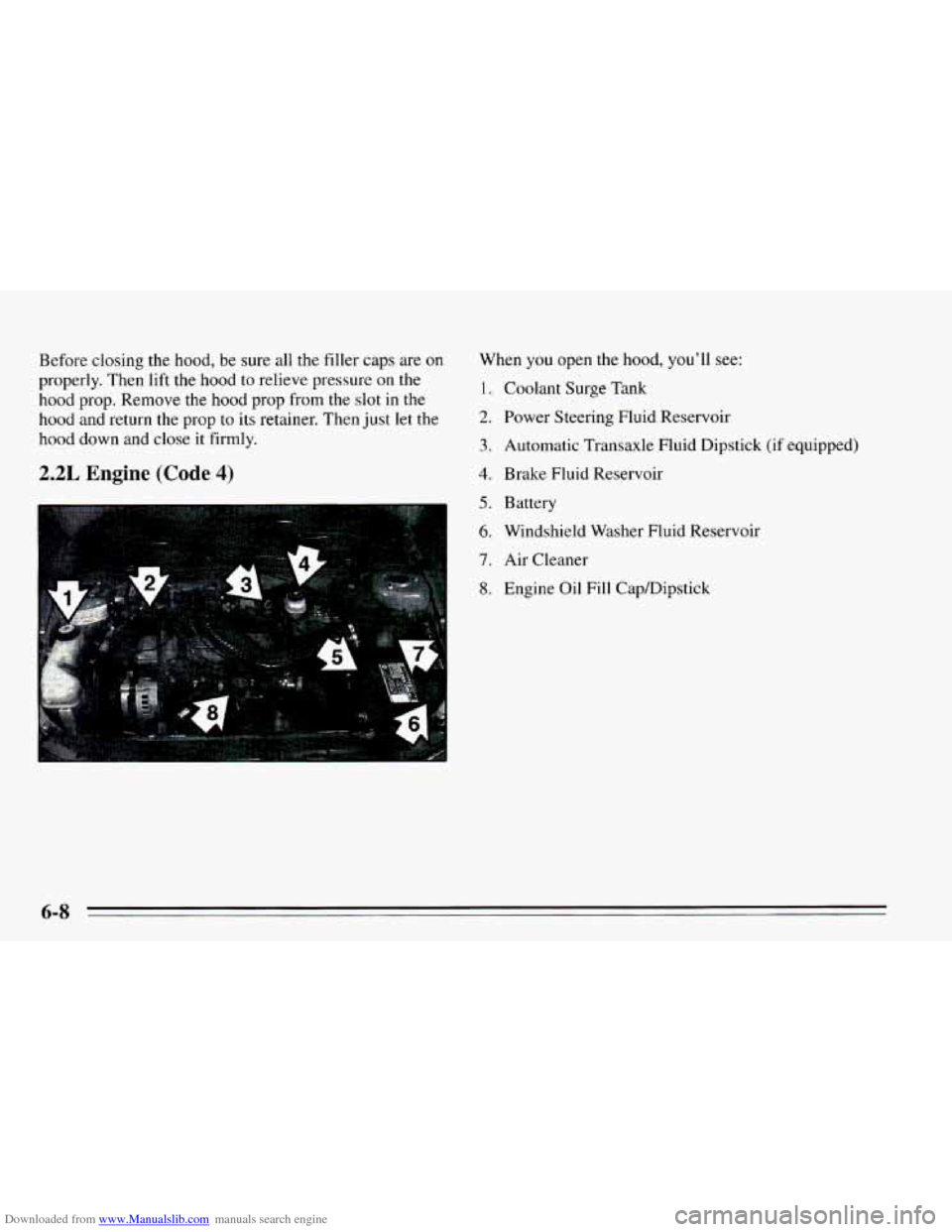
2.2L Engine (Code 4)
When you open the hood, you’ll see:
1. Coolant Surge Tank
2. Power Steering Fluid Reservoir
3. Automatic Transaxle Fluid Dipstick (if equipped)
4. Brake Fluid Reservoir
5. Battery
6. Windshield Washer Fluid Reservoir
7. Air Cleaner
8. Engine Oil Fill Capmipstick
Page 213 of 340
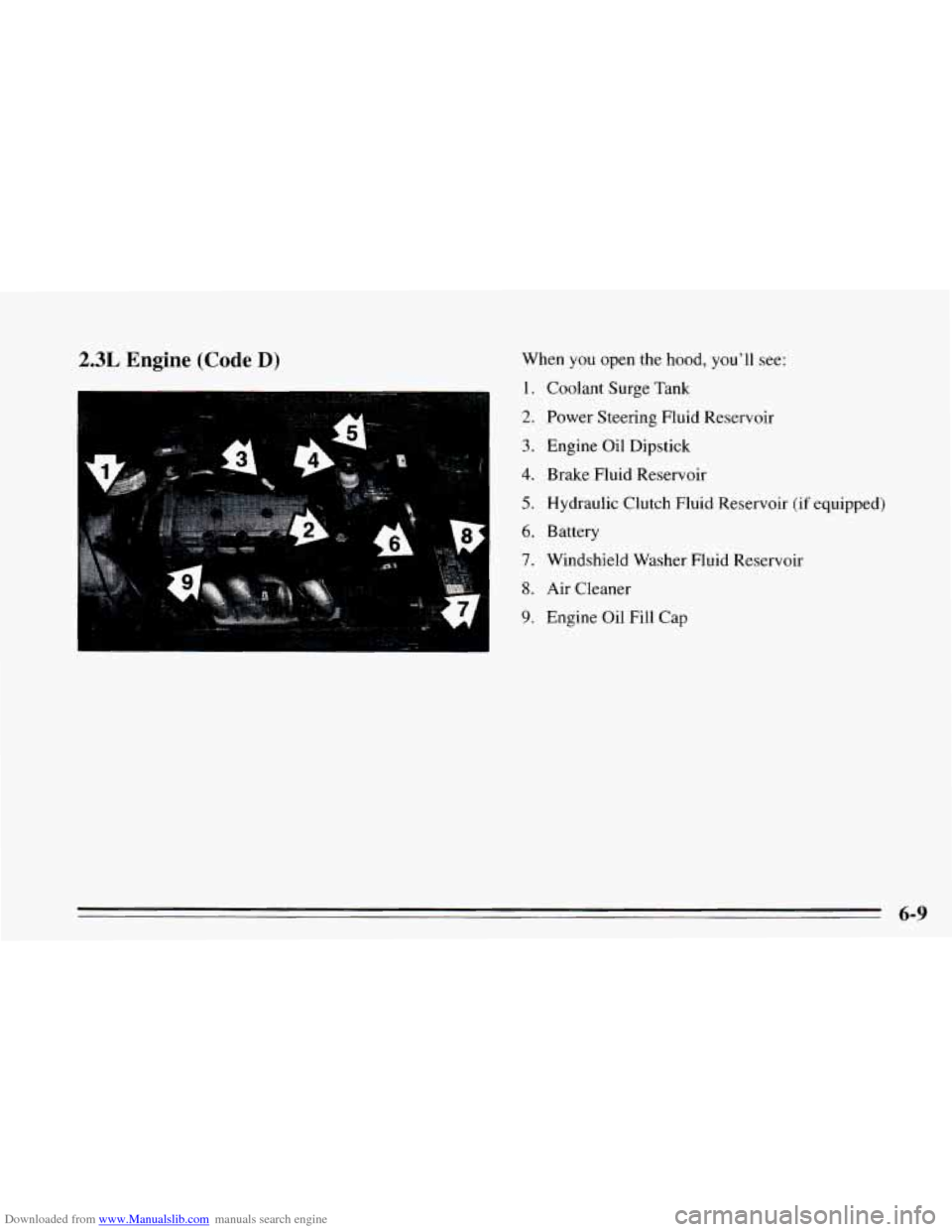
Downloaded from www.Manualslib.com manuals search engine 2.3L Engine (Code D) When you open the hood, you’ll see:
1.
2.
3.
4.
5.
6.
7.
8.
9.
Coolant Surge Tank
Power Steering Fluid Reservoir
Engine
Oil Dipstick
Brake Fluid Reservoir
Hydraulic Clutch Fluid Reservoir
(if equipped)
Battery
Windshield Washer Fluid Reservoir
Air Cleaner
Engine Oil Fill Cap
6-9