Page 241 of 399
Downloaded from www.Manualslib.com manuals search engine In cold weather, water can freeze and crack the engine, radiat\
or, heater core and other parts. Use the recommended coolant.
228
Page 243 of 399
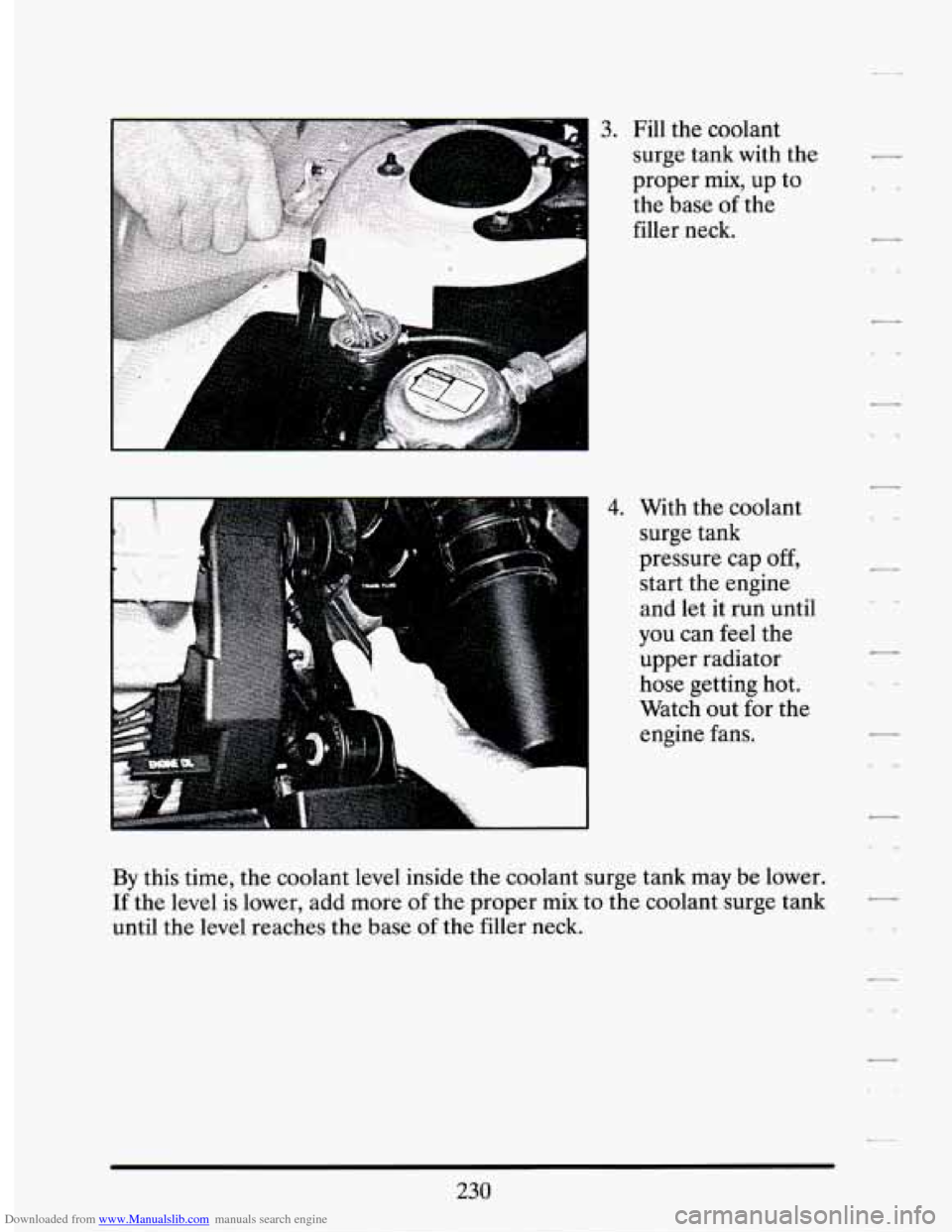
Downloaded from www.Manualslib.com manuals search engine 3. Fill the coolant
surge tank with the
proper
mix, up to
the base of the
filler neck.
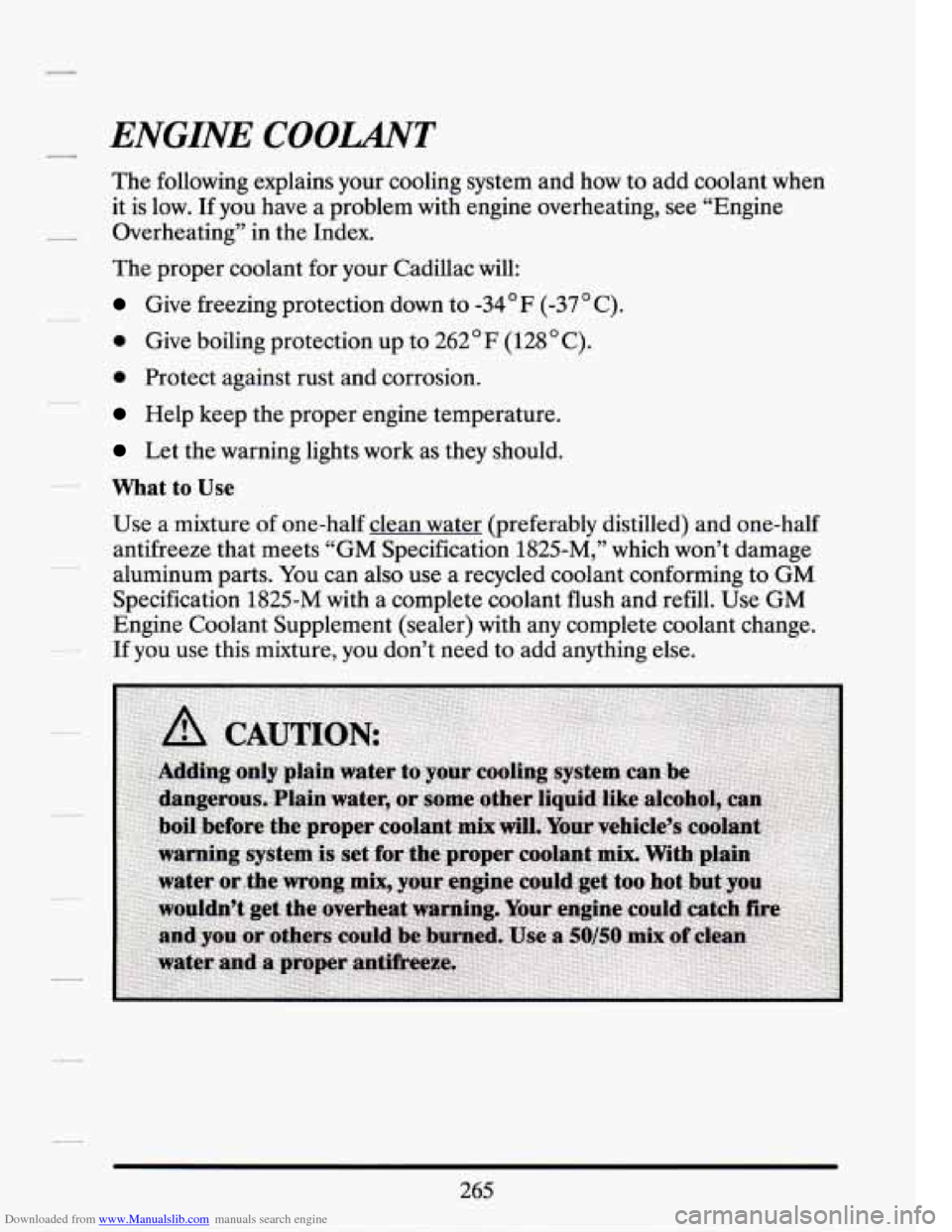
4. With the coolant
surge tank
pressure cap
off,
start the engine
and let it run until
you can feel the
upper radiator
hose getting hot.
Watch out
for the
engine fans.
I
By this time, the coolant level inside the coolant surge tank may be lower.
If the level is lower, add more of the proper mix to the coolant surge tank
until the level reaches the base
of the filler neck.
230
Page 244 of 399
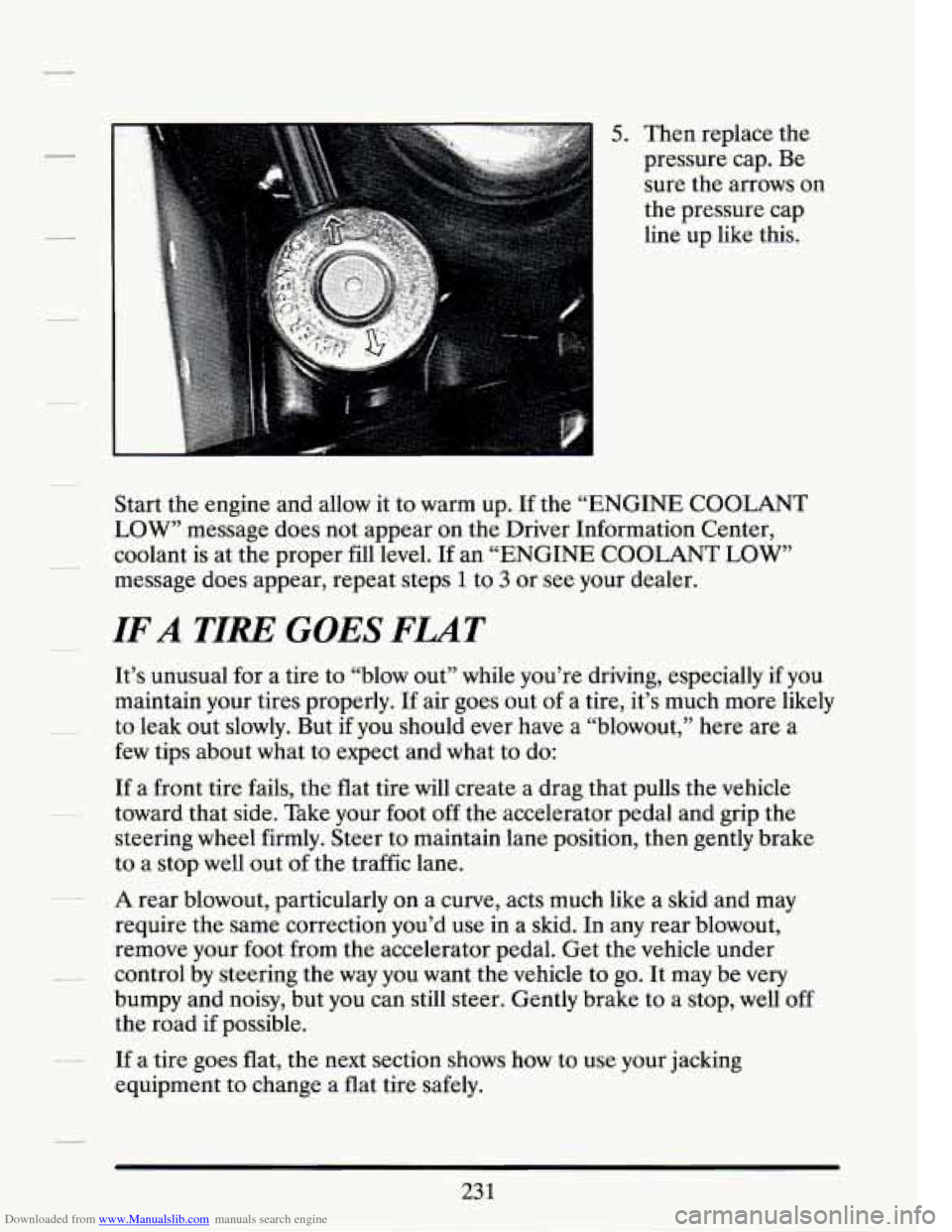
Downloaded from www.Manualslib.com manuals search engine 5. Then replace the
pressure cap. Be
sure the arrows on
the pressure cap
line up
like this.
Start the engine and allow it to warm up. If the “ENGINE COOLANT
LOW” message does not appear on the Driver Information Center,
coolant is at the proper fill level. If an “ENGINE COOLANT
LOW”
message does appear, repeat steps 1 to 3 or see your dealer.
IF A TIRE GOES FLAT
It’s unusual for a tire to “blow out” while you’re driving, especially if you
maintain your tires properly. If air goes out of a tire, it’s much more likely
to leak out slowly. But
if you should ever have a “blowout,” here are a
few tips about what to expect and what to do:
If a front tire fails, the flat tire will create a drag that pulls the vehicle
toward that side. Take your foot
off the accelerator pedal and grip the
steering wheel firmly. Steer
to maintain lane position, then gently brake
to a stop well out of the traffic lane.
A rear blowout, particularly on a curve, acts much like a skid and may
require the same correction you’d use in a skid. In any rear blowout,
remove your foot from the accelerator pedal. Get the vehicle under
control by steering the way you want the vehicle to go. It may be
very
bumpy and noisy, but you can still steer. Gently brake to a stop, well off
the road if possible.
If a tire goes flat, the next section shows how to use your jacking
equipment to change a flat tire safely.
Page 272 of 399
Downloaded from www.Manualslib.com manuals search engine Engine Oil Additives
Don’t add anything to your oil. Your Cadillac dealer is ready to advise if
you think something should be added.
When to Change Engine Oil
Your Cadillac has an “Oil Life Indicator.” This feature will let you know
when to change your oil
-- usually between 3,000 miles (5 000 km) and
7,500 miles (12 500 km) since your last oil change. Under severe
conditions, the indicator may come on before
3,000 miles (5 000 km).
Never drive your vehicle more than 7,500 miles (12 000 km) or 12 months
without an oil change.
The system won’t detect dust in the oil.
So, if you drive in a dusty area, be
sure to change your oil every
3,000 miles (5 000 km) or sooner if the
“Change Oil Soon” light comes on. Remember to reset the Oil Life
Indicator when the oil has been changed. For more information, see “Oil
Life Indicator” in the Index.
How to Reset the Oil Life Indicator
After the oil has been changed, display the “OIL LIFE LEFT” message
by pressing the INFORMATION button. Then press and hold the
RESET button until the display shows “100”. This resets the
oil life index.
The message will remain off until the next oil change
is needed. The
percentage
of oil life remaining may be checked at, any time by pressing
the INFORMATION button several times until the “OIL LIFE LEFT”
message appears. For more information on the Oil Life Index feature,
see
“Oil Life Index” in the Index.
Engine Coolant Heater (Engine Block Heater)
An engine coolant heater can be a big help if you have to park outside in
very cold weather, 0” F (-18OC) or colder. If your vehicle has this option,
see “Engine Coolant Heater” in the Index.
259
Page 278 of 399
Downloaded from www.Manualslib.com manuals search engine ENGINE COOLANT
The following explains your cooling system and how to add coolant when
it is low. If you have a problem with engine overheating, see “Engine
Overheating” in the Index.
The proper coolant for your Cadillac will:
Give freezing protection down to -34OF (-37 C).
0 Give boiling protection up to 262OF (128OC).
0 Protect against rust and corrosion.
Help keep the proper engine temperature.
Let the warning lights work as they should.
What to Use
Use a mixture of one-half clean water (preferably distilled) and one-half
antifreeze that meets “GM Specification 1825-M,” which won’t damage
aluminum parts. You can also use a recycled coolant conforming to GM
Specification 1825-M with a complete coolant flush and refill. Use GM
Engine Coolant Supplement (sealer) with any complete coolant change.
If you use this mixture, you don’t need to add anything else.
265
Page 279 of 399
Downloaded from www.Manualslib.com manuals search engine If you use an improper coolant mix, your engine could overheat
and be badly damaged. The repair cost wouldn’t be covered by
your warranty.
Too much water in the mix can freeze and crack
the engine, radiator, heater core and other parts.
I
l-
Adding Coolant
Your cooling system when hot is under a lot of pressure. If the “ENGINE
COOLANT LOW” message should appear on the Driver Information
Center, you will need to
add coolant.
If the “ENGINE COOLANT LOW” message does not appear, the
coolant is
at the proper fill level.
266
Page 280 of 399
Downloaded from www.Manualslib.com manuals search engine To Add Coolant
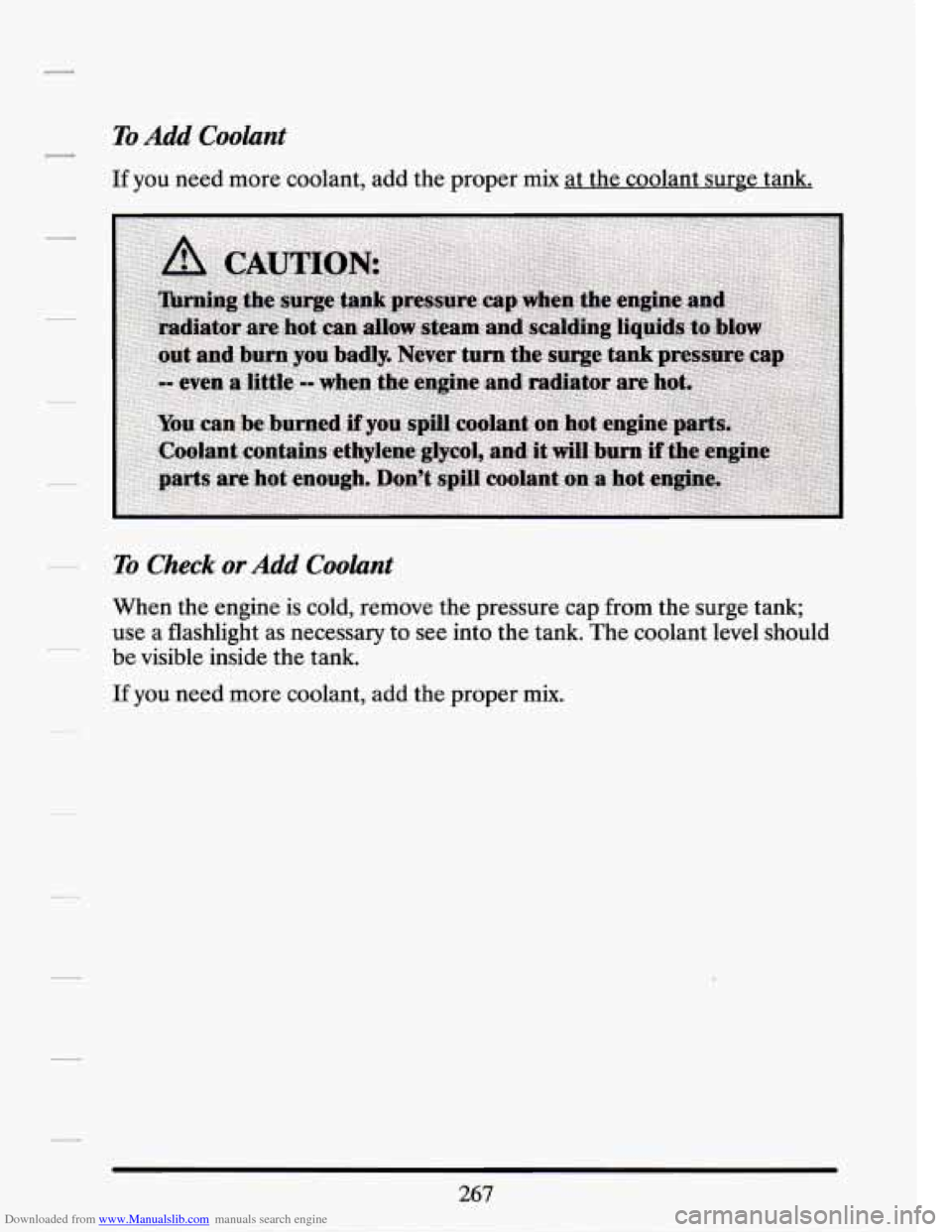
If you need more coolant, add the proper mix at the coolant surge tank.
To Check or Add Coolant
When the engine is cold, remove the pressure cap from the surge tank;
use
a flashlight as necessary to see into the tank. The coolant level should
be visible inside the tank.
If you need more coolant, add the proper mix.
267
Page 281 of 399
Downloaded from www.Manualslib.com manuals search engine SURGE TANK PRESSURE CAP
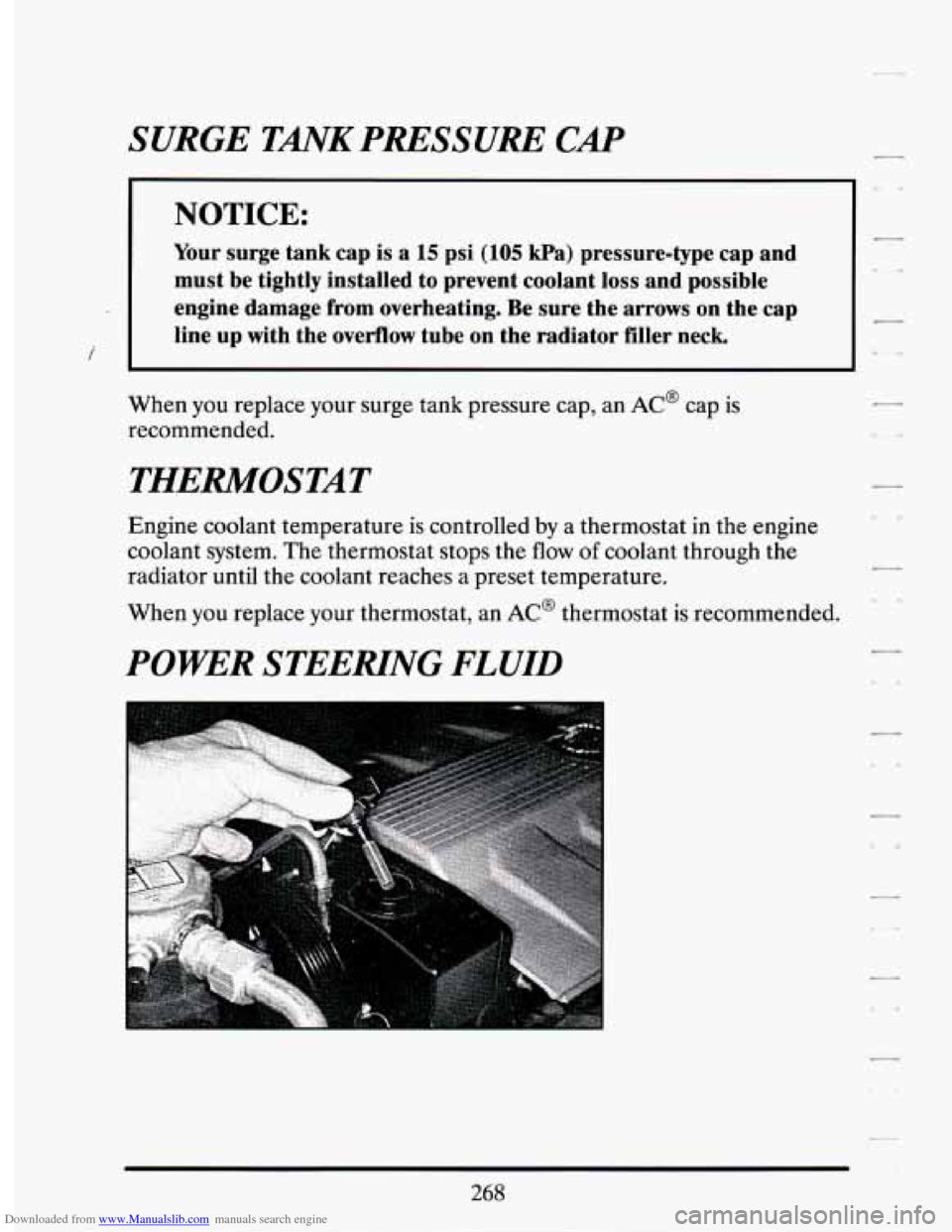
1 NOTICE:
Your surge tank cap is a 15 psi (105 kPa) pressure-type cap and
must be tightly installed to prevent coolant loss and possible
engine damage from overheating. Be sure the arrows on the cap \
line up with the overflow tube on the radiator filler neck.
i
When you replace your surge tank pressure cap, an AC@ cap is
recommended.
THERMOSTAT
Engine coolant temperature is controlled by a thermostat in the engine
coolant system. The thermostat stops the
flow of coolant through the
radiator until the coolant reaches a preset temperature.
When you replace your thermostat, an
AC@ thermostat is recommended.
POWER STEERING FLUID
268