Page 205 of 322
Problems on the Road
Engine Overheating (CONK)
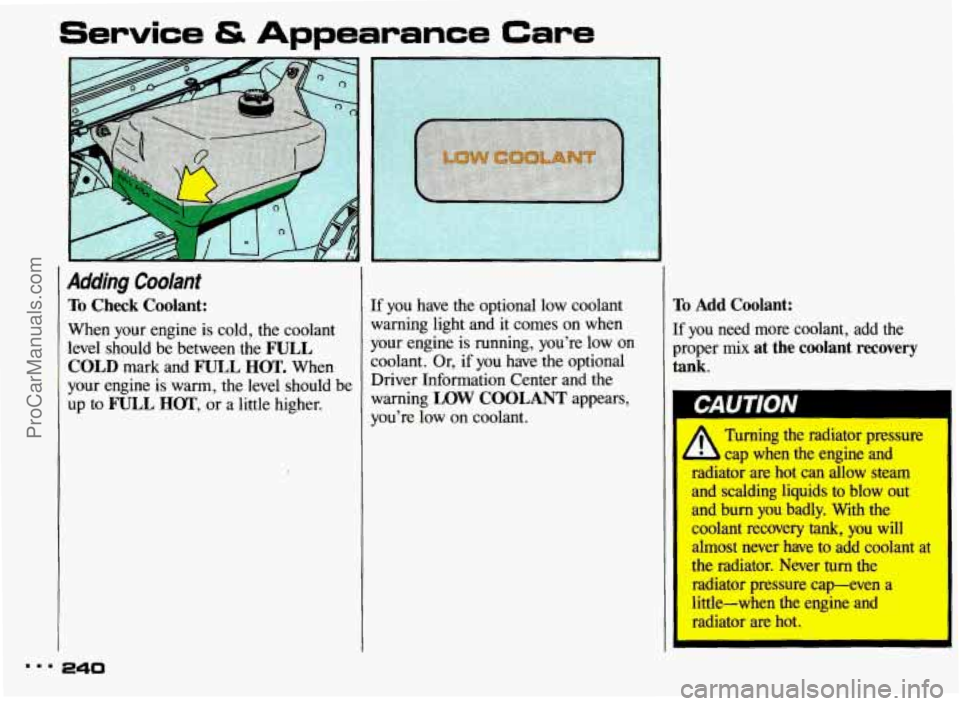
Cooling System
When you decide it’s safe to
lift the
hood, here’s what you’ll see:
(A) Coolant recovery tank
(B) Radiator pressure cap
(C) Electric engine fan
An
electric fan under the hood
h can start up even when the
engine is not running and can
injure
you. Keep hands, clothing
and tools away from any
underhood electric fan.
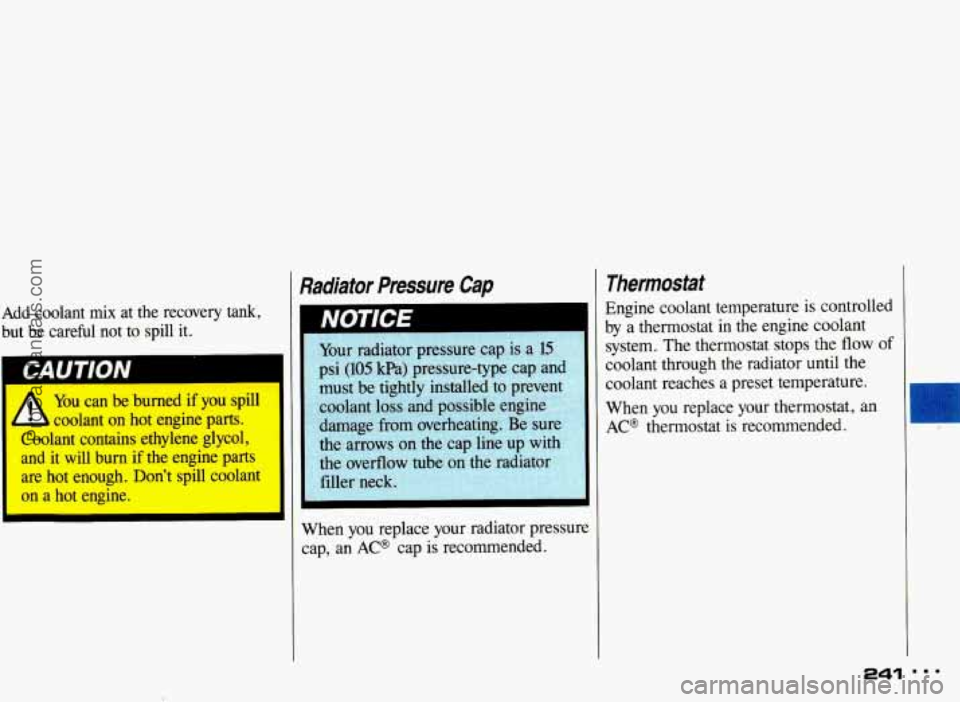
If the coolant inside the coolant
recovery tank is boiling, don’t do
anything else
until it cools down.
The coolant level should be at or above
the
FULL COLD mark. If it isn’t, you
may have a leak
in the radiator hoses,
heater hoses, radiator, water pump or
somewhere else
in the cooling system.
I I 1 Heater and radiator hoses, anc
- other engine parts, can be
very hot. Don’t touch them.
If you
do, you can be burned.
Don’t run the engine if there is a
leak.
If you run the engine, it
could lose all coolant. That could
cause an engine fire, and you could
be burned. Get any leak fixed
before you drive the vehicle.
I
Engine damage from running your
engine without coolant isn’t
covered by your warranty.
.. . 204
ProCarManuals.com
Page 207 of 322
Problems on the Road
i '. 'k
I Engine Overheating (CONT.)
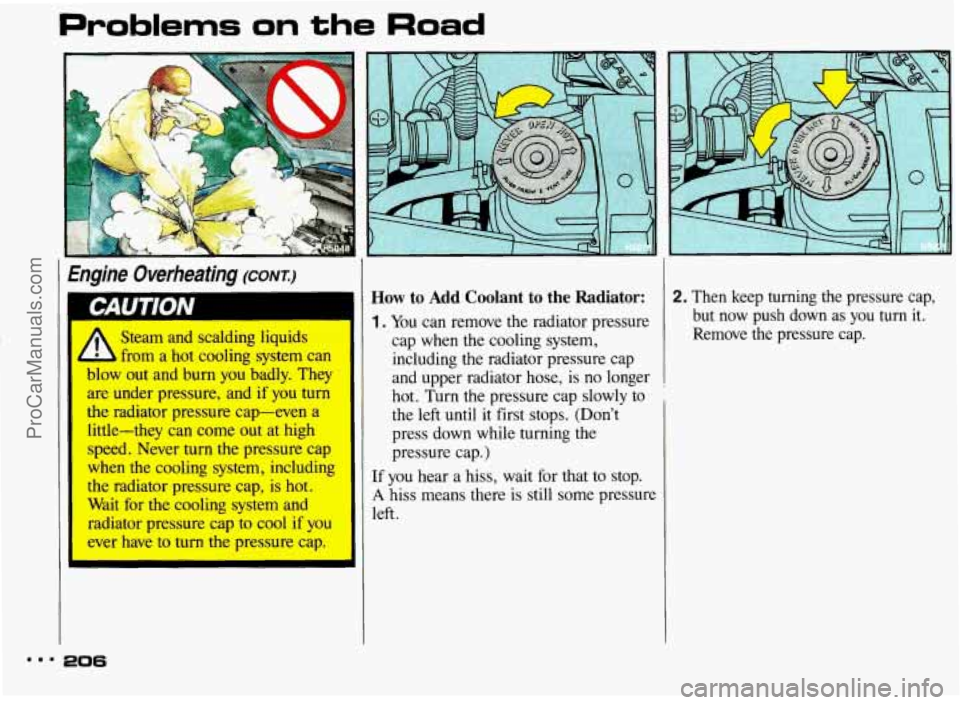
Steam and scalding liquids
From a hot cooling system can
3w out and burn you badly. They
ale under pressure, and if you turn
I thl= radiator pressure cap-even a
tle-they can come out at high
I eed. Never turn the pressure cap
when the cooling system, including
the radiator pressure cap,
is hot.
Wait for the cooling system and
radiator pressure cap to cool if you
ever have to turn. the pressure cap.
How to Add Coolant to the Radiator:
1. You can remove the radiator pressure
cap when the cooling system,
including the radiator pressure cap
and upper radiator hose, is no longer
hot. Turn the pressure cap slowly to
the left
until it first stops. (Don't
press down while turning the
pressure cap.)
If you hear a hiss, wait for that to stop.
A hiss means there is still some pressure
left.
2. Then keep turning the pressure cap,
but now push down as you turn it.
Remove the pressure cap.
ProCarManuals.com
Page 208 of 322
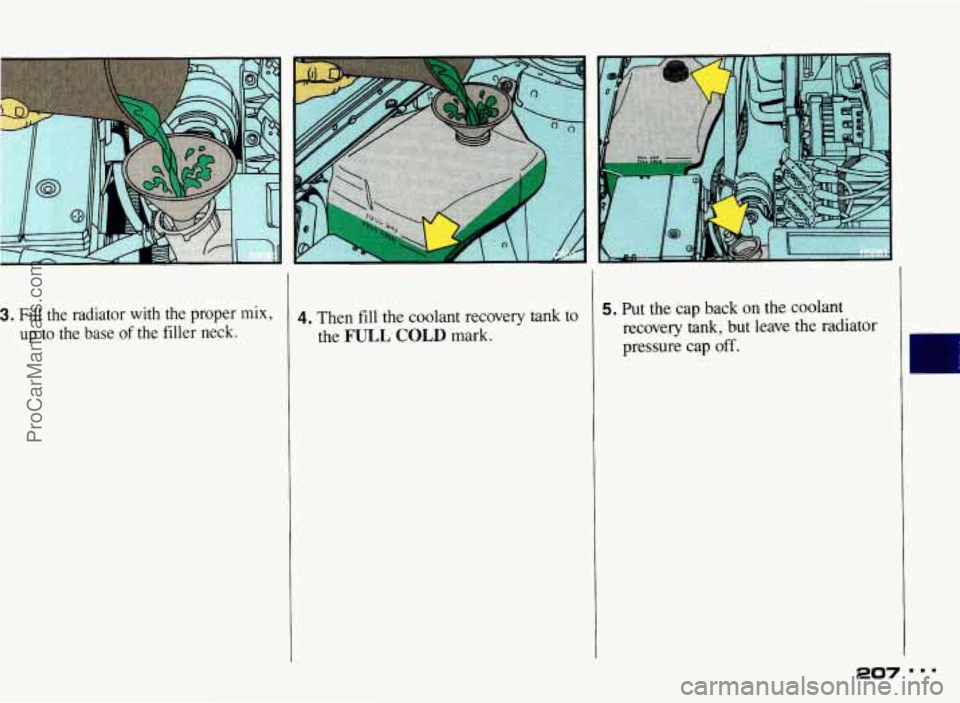
3. Fill the radiator with the proper mix,
up to the base of the filler neck.
4. Then fill the coolant recovery tank to 5. Put the cap back on the coolant
I the FULL COLD mark. recovery
tank, but leave the radiator
pressure cap off.
207 '.
ProCarManuals.com
Page 209 of 322
Problems on the Road
I Engine Overheating (CONT.)
6. Start the engine and let it run until
you can feel the upper radiator hose
getting hot. Watch out for the engine
fan.
7. By this time, the coolant level inside
the radiator filler neck may be lower.
If the level is lower, add more of the
proper mix through the filler neck
until the level reaches the base of the
filler neck.
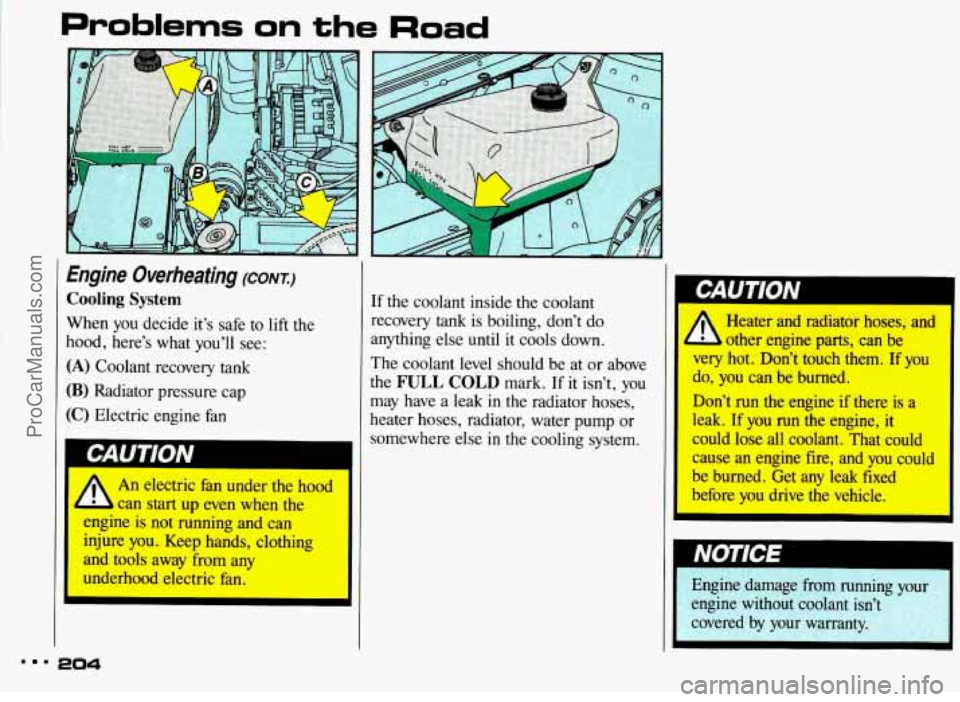
8. Then replace the pressure cap. Be
sure the arrows on the pressure cap
line up like this.
Ifa Tire Goes Flat
It’s unusual for a tire to “blow out”
while you’re driving, especially if you
maintain your tires properly. If air goes
out of a tire, it’s much more likely to
leak out slowly. But
if you should ever 1
have a “blowout:’ here are a few tips
about what to expect and what to do:
If a front tire fails, the flat tire will
create a drag that pulls
the vehicle
toward that side. Take your foot off the accelerator pedal and grip the steering
wheel firmly. Steer
to maintain lane
position,
then gently brake to a stop well
out of the traffic lane.
ProCarManuals.com
Page 230 of 322
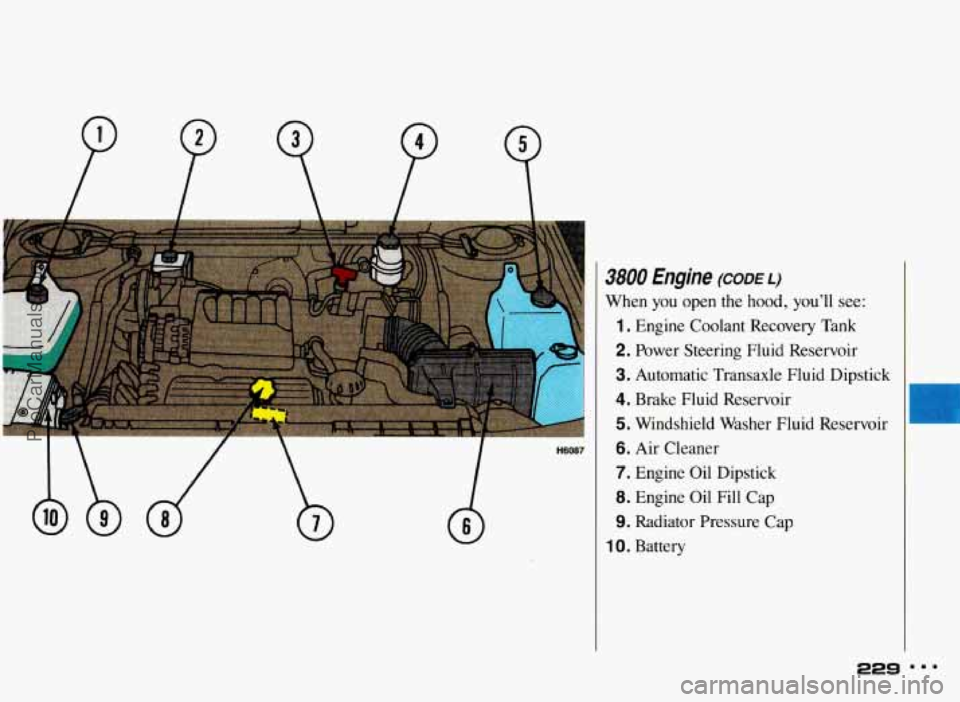
3800 Engine (CODE L)
When you open the hood, you’ll see:
1. Engine Coolant Recovery Tank
2. Power Steering Fluid Reservoir
3. Automatic Transaxle Fluid Dipstick
4. Brake Fluid Reservoir
5. Windshield Washer Fluid Reservoir
6. Air Cleaner
7. Engine Oil Dipstick
8. Engine Oil Fill Cap
9. Radiator Pressure Cap
1 0. Battery
229
ProCarManuals.com
Page 231 of 322
Service & Appearance Care
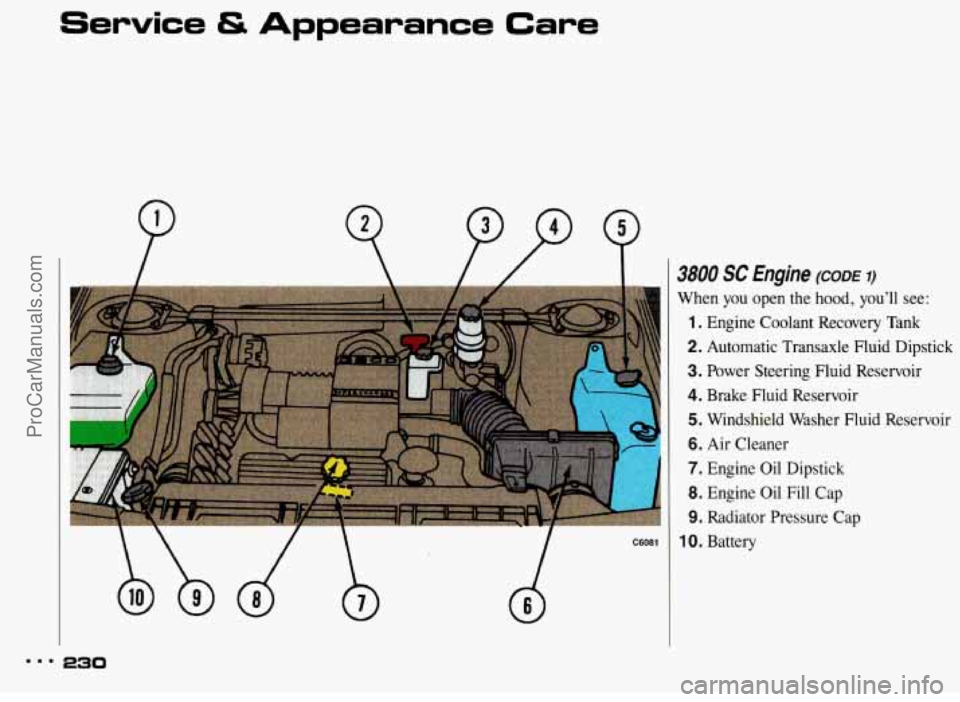
. ... .. . 3800 SC Engine (CODE I)
When you open the hood, you'll see:
1. Engine Coolant Recovery Tank
2. Automatic Transaxle Fluid Dipstick
3. Power Steering Fluid Reservoir
4. Brake Fluid Reservoir
5. Windshield Washer Fluid Reservoir
6. Air Cleaner
7. Engine Oil Dipstick
8. Engine Oil Fill Cap
9. Radiator Pressure Cap
1 0. Battery
ProCarManuals.com
Page 241 of 322
Service & Appearance Care
A’
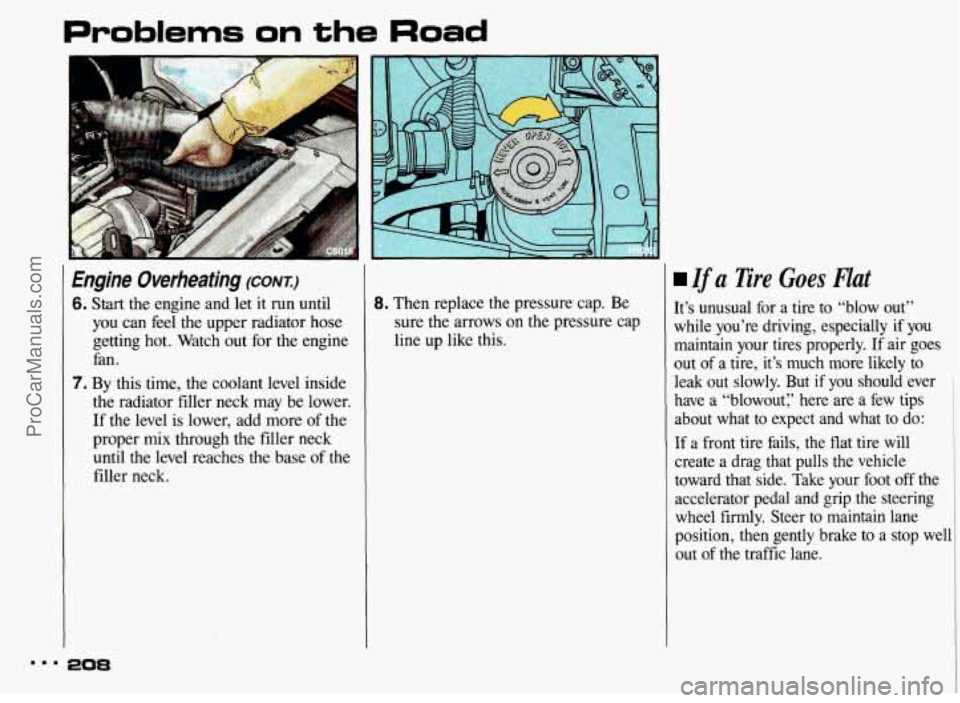
Adding Coolant
To Check Coolant:
When your engine is cold, the coolant
level should be between the
FULL
COLD mark and FULL HOT. When
your engine is warm, the level should be
up
to FULL HOT, or a little higher.
m.. 240
If you have the optional low coolant
warning light and it comes on when
your engine is running, you’re low on
coolant. Or, if you have the optional
Driver Information Center and the
warning
LOW COOLANT appears,
you’re low on coolant.
To Add Coolant:
If you need more coolant, add the
proper
mix at the coolant recovery
tank.
II Turning the radiator pressure 1
- 1 cap when the engine and
raalator are hot can allow steam
and scalding liquids to blow out
and bum
you badly. With the
coolant recovery
tank, you will
almost never have to add coolant at
the radiator. Never
turn the
radiator pressure cap-even a
little-when the engine and
radiator are hot.
ProCarManuals.com
Page 242 of 322
Add coolant mix at the recovery tank,
but be careful not to spill it.
I "-" ""IW
You can be burned if you spill
L coolant on hot engine parts.
Coolant contains ethylene glycol,
and it will burn if the engine parts
are hot enough. Don't spill coolant
on a hot engine. I
Radiator Pressure Cap I Thermostat
1,. Your radiator pressure cap is a 15 psi (105 kPa) pressure-type cap and
must be tightly installed
to prevent
coolant
loss and possible engine i.
damage from overheating. Be sure
the arrows on the cap line up with
the overflow tube on the radiator
..
Engine coolant temperature is controlled
by a thermostat in the engine coolant
system. The thermostat stops the flow
of
coolant through the radiator until the
coolant reaches a preset temperature.
When you replace your thermostat, an
AC@ thermostat
is recommended.
When you replace your radiator pressure
cap, an AC@ cap is recommended.
241
c
ProCarManuals.com