Page 877 of 1333

Fig. 4: 18-Way ECU Connector
Courtesy of Chrysler Motors.
Fig. 5: 24-Way ECU Connector
Courtesy of Chrysler Motors.
Fig. 6: Self-Diagnostic Connector Terminal Identification
Courtesy of Mitsubishi Motor Sales of America.
FAULT CODES
FAULT CODES TABLE���������\
���������\
���������\
���������\
���������\
���������\
�����
Fault Code System Fault Description
11 .................... Open or short in O2 sensor circuit
12 ............... Open or short in airflow sensor circuit
13 ...... Open or short in intake air temp. sensor circuit
14 .......................... Open or short in TPS circuit
15 (1) .... Open or short in motor position sensor circuit
21 ......... Open or short in coolant temp. sensor circuit
22 ........ No voltage change in crank angle sensor signal
23 ............... No voltage change in TDC sensor circuit
24 ( 2) .. No voltage change in vehicle speed sensor signal
25 ........... Open or short in barometric pressure sensor
31 ( 3) ........ Open or short in detonation sensor circuit
41 ..................... Open or short in injector circuit
42 .............. Open or short in fuel pump drive circuit
43 ( 4) ......... Open or short in EGR temp. sensor circuit
Page 881 of 1333
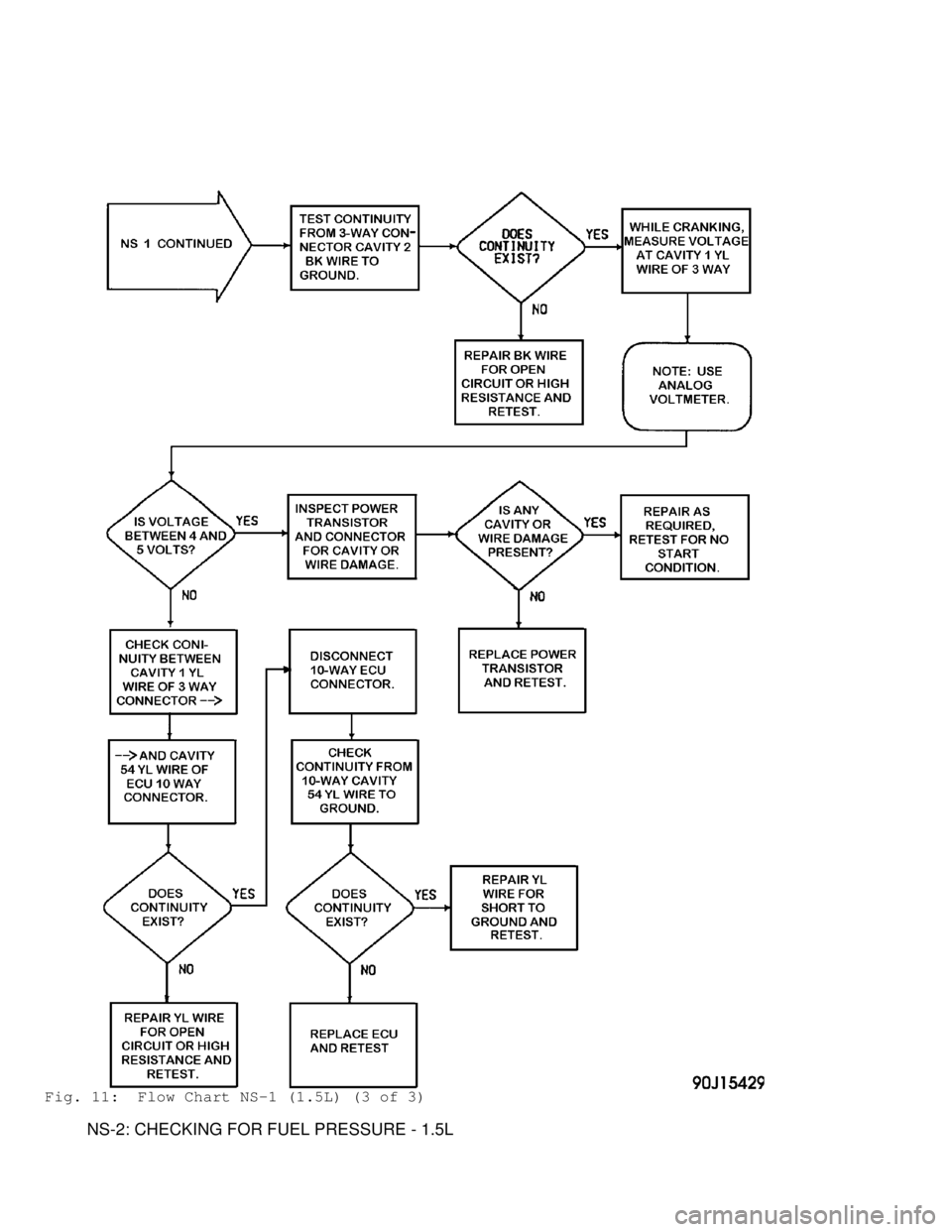
Fig. 11: Flow Chart NS-1 (1.5L) (3 of 3)
NS-2: CHECKING FOR FUEL PRESSURE - 1.5L
Page 937 of 1333

that all of the engine control systems are operating as they were
designed to. Therefore, they are not the cause of the driveability
problem.
The following additional items can not be overlooked as possible
causes of a driveability problem.
1. THROTTLE VALVE AREA - Dirt or ice buildup causing rough idle and
stalling.
2. ENGINE IGNITION TIMING - Must be set with timing terminal
grounded.
3. ENGINE VACUUM - Must be normal for your altitude.
4. ENGINE VALVE TIMING - To specifications.
5. ENGINE COMPRESSION - To specifications.
6. ENGINE P.C.V. SYSTEM - Must flow freely.
7. ENGINE EXHAUST SYSTEM - Must be free of any restrictions.
8. POWER BRAKE BOOSTER - No internal vacuum leaks.
9. TORQUE CONVERTER CONDITION - May cause very low power at breakaway
or high speed (Only 1 condition at a time).
10. FUEL CONTAMINATION - High alcohol or water content.
11. FUEL INJECTORS - Rough idle may be caused by injector wiring not
connected to correct injector.
12. ENGINE SECONDARY IGNITION CHECK - Abnormal scope patterns.
13. TECHNICAL SERVICE BULLETINS - Any that apply to vehicle.
14. All air intake piping and vacuum hoses must be in place and
secure. The proper air filter element must be used.
15. FUEL PRESSURE - Must be correct.
Specification: With no vacuum at the regulator:
48 PSI on V6 & non-turbo 4 Cyl. engines
36 PSI on turbo engines
NS-1: TESTING IGNITION CIRCUIT - 1.6L
Fig. 75: Circuit Diagram NS-1 (1.6L)
Page 1011 of 1333
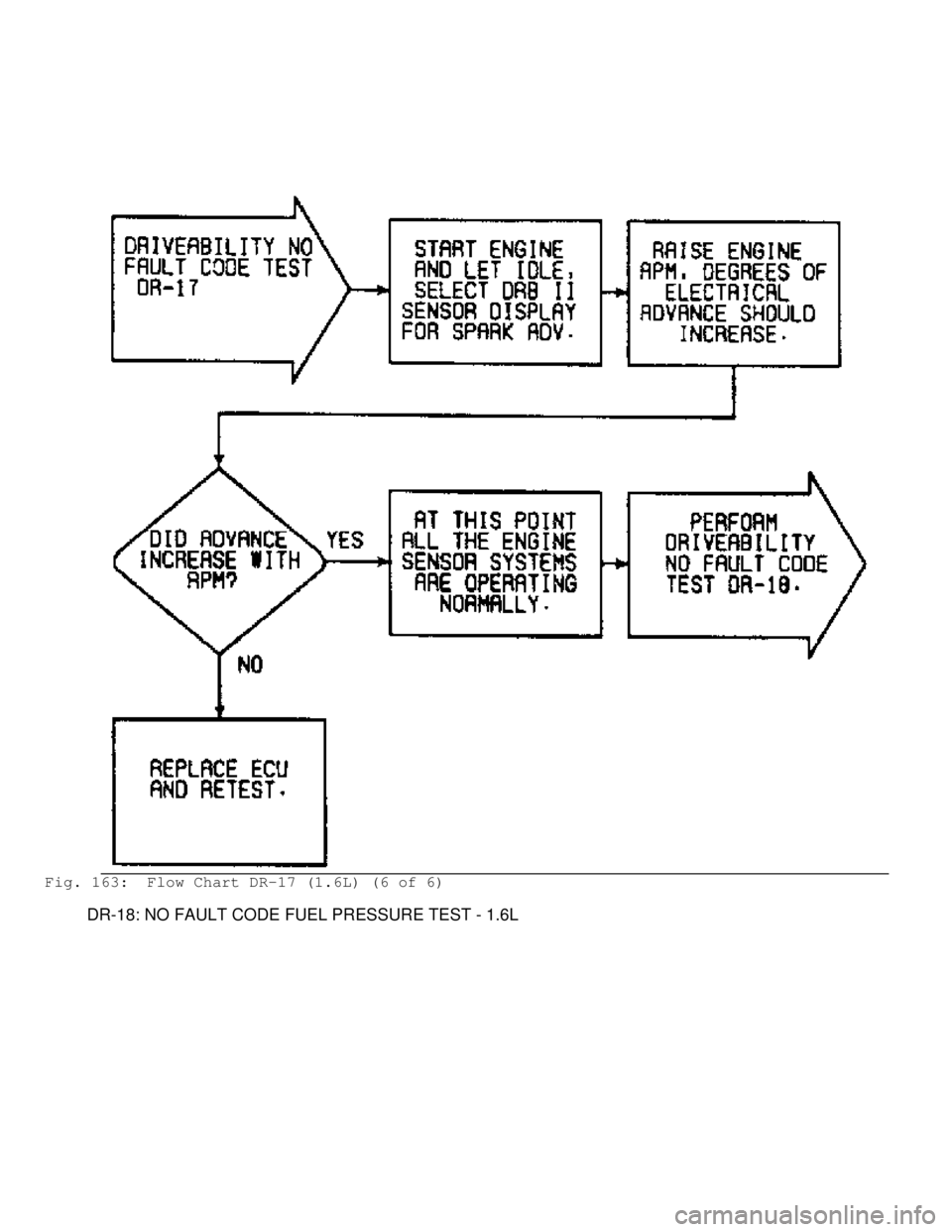
Fig. 163: Flow Chart DR-17 (1.6L) (6 of 6)
DR-18: NO FAULT CODE FUEL PRESSURE TEST - 1.6L
Page 1016 of 1333
The following additional items can not be overlooked as
possible causes of a driveability problem.
1. ENGINE IGNITION TIMING - Must be set with timing terminal
grounded.
2. ENGINE VACUUM - Must be normal for your altitude.
3. ENGINE VALVE TIMING - To specifications.
4. ENGINE COMPRESSION - To specifications.
5. ENGINE P.C.V. SYSTEM - Must flow freely.
6. ENGINE EXHAUST SYSTEM - Must be free of any restrictions.
7. POWER BRAKE BOOSTER - No internal vacuum leaks.
8. TORQUE CONVERTER CONDITION - May cause very low power at breakaway
or high speed (Only 1 condition at a time).
9. FUEL CONTAMINATION - High alcohol or water content.
10. FUEL INJECTORS - Rough idle may be caused by injector wiring not
connected to correct injector.
11. ENGINE SECONDARY IGNITION CHECK - Abnormal scope patterns.
12. TECHNICAL SERVICE BULLETINS - Any that apply to vehicle.
13. All air intake piping and vacuum hoses must be in place and
secure. The proper air filter element must be used.
14. FUEL PRESSURE - Must be correct.
Specification: With no vacuum at the regulator:
48 PSI on V6 & non-turbo 4 Cyl. engines
36 PSI on turbo engines
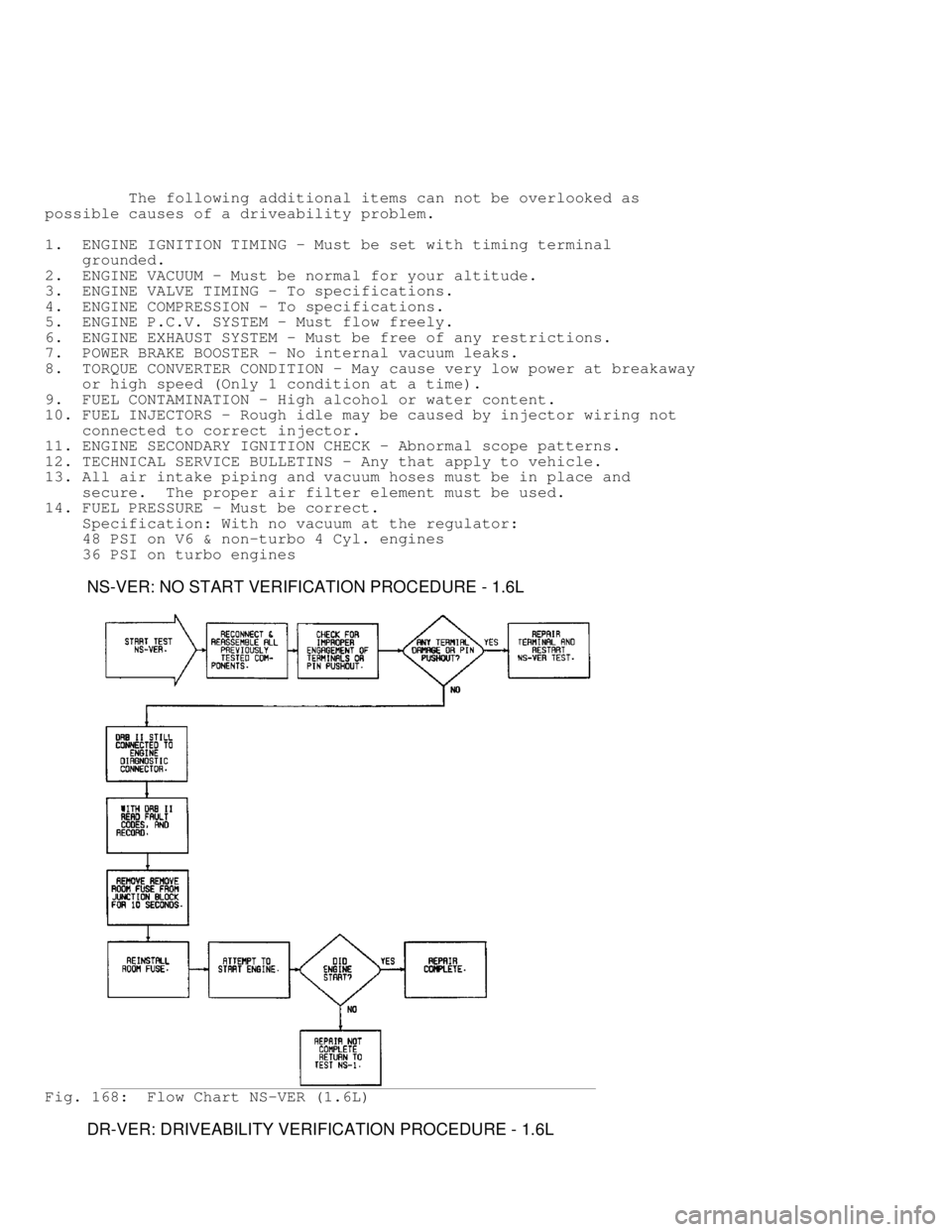
NS-VER: NO START VERIFICATION PROCEDURE - 1.6L
Fig. 168: Flow Chart NS-VER (1.6L)
DR-VER: DRIVEABILITY VERIFICATION PROCEDURE - 1.6L
Page 1071 of 1333
2. ENGINE IGNITION TIMING - Must be set with timing terminal
grounded.
3. ENGINE VACUUM - Must be normal for your altitude.
4. ENGINE VALVE TIMING - To specifications.
5. ENGINE COMPRESSION - To specifications.
6. ENGINE P.C.V. SYSTEM - Must flow freely.
7. ENGINE EXHAUST SYSTEM - Must be free of any restrictions.
8. POWER BRAKE BOOSTER - No internal vacuum leaks.
9. TORQUE CONVERTER CONDITION - May cause very low power at breakaway
or high speed (Only 1 condition at a time).
10. FUEL CONTAMINATION - High alcohol or water content.
11. FUEL INJECTORS - Rough idle may be caused by injector wiring not
connected to correct injector.
12. ENGINE SECONDARY IGNITION CHECK - Abnormal scope patterns.
13. TECHNICAL SERVICE BULLETINS - Any that apply to vehicle.
14. All air intake piping and vacuum hoses must be in place and
secure. The proper air filter element must be used.
15. FUEL PRESSURE - Must be correct.
Specification: With no vacuum at the regulator:
48 PSI on V6 & non-turbo 4 Cyl. engines
36 PSI on turbo engines
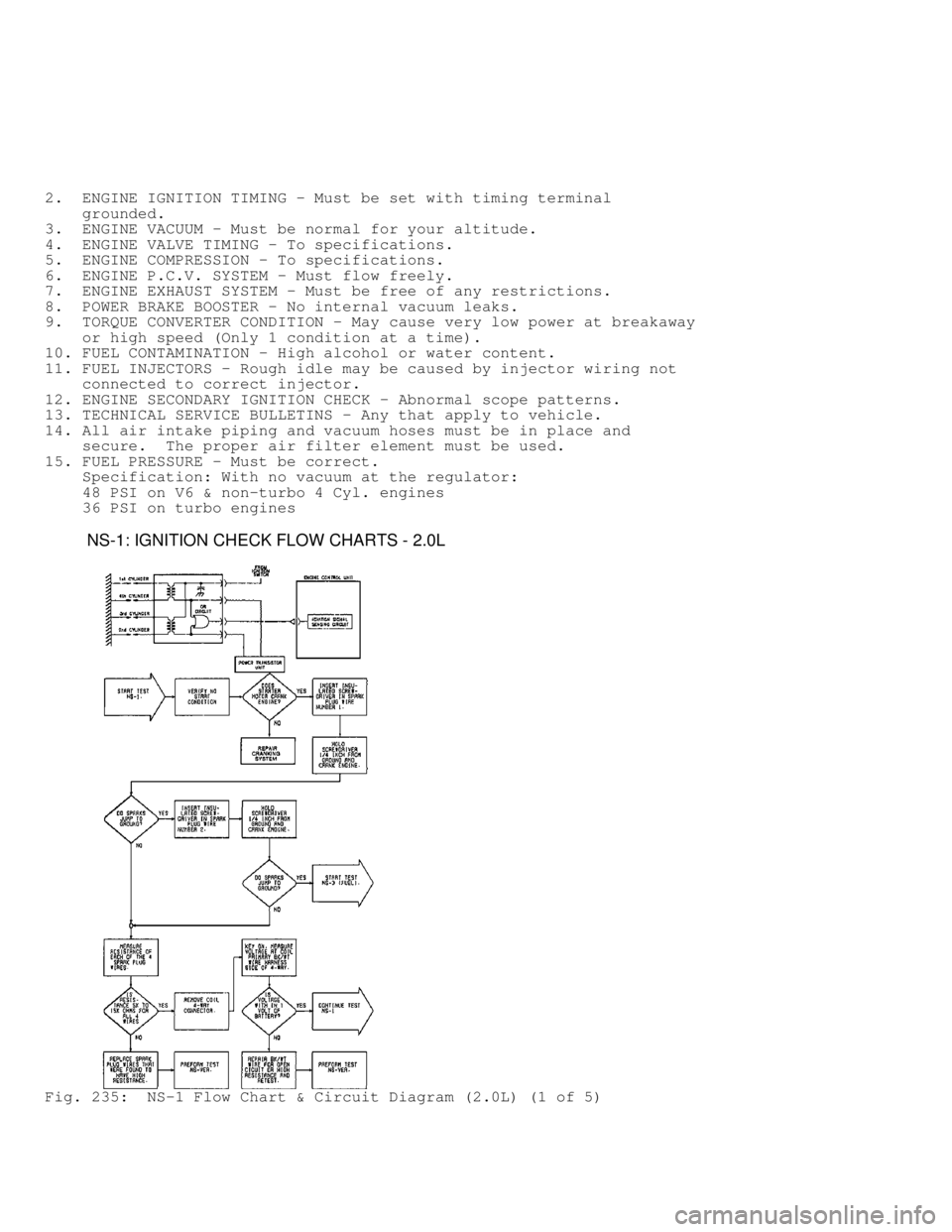
NS-1: IGNITION CHECK FLOW CHARTS - 2.0L
Fig. 235: NS-1 Flow Chart & Circuit Diagram (2.0L) (1 of 5)
Page 1136 of 1333
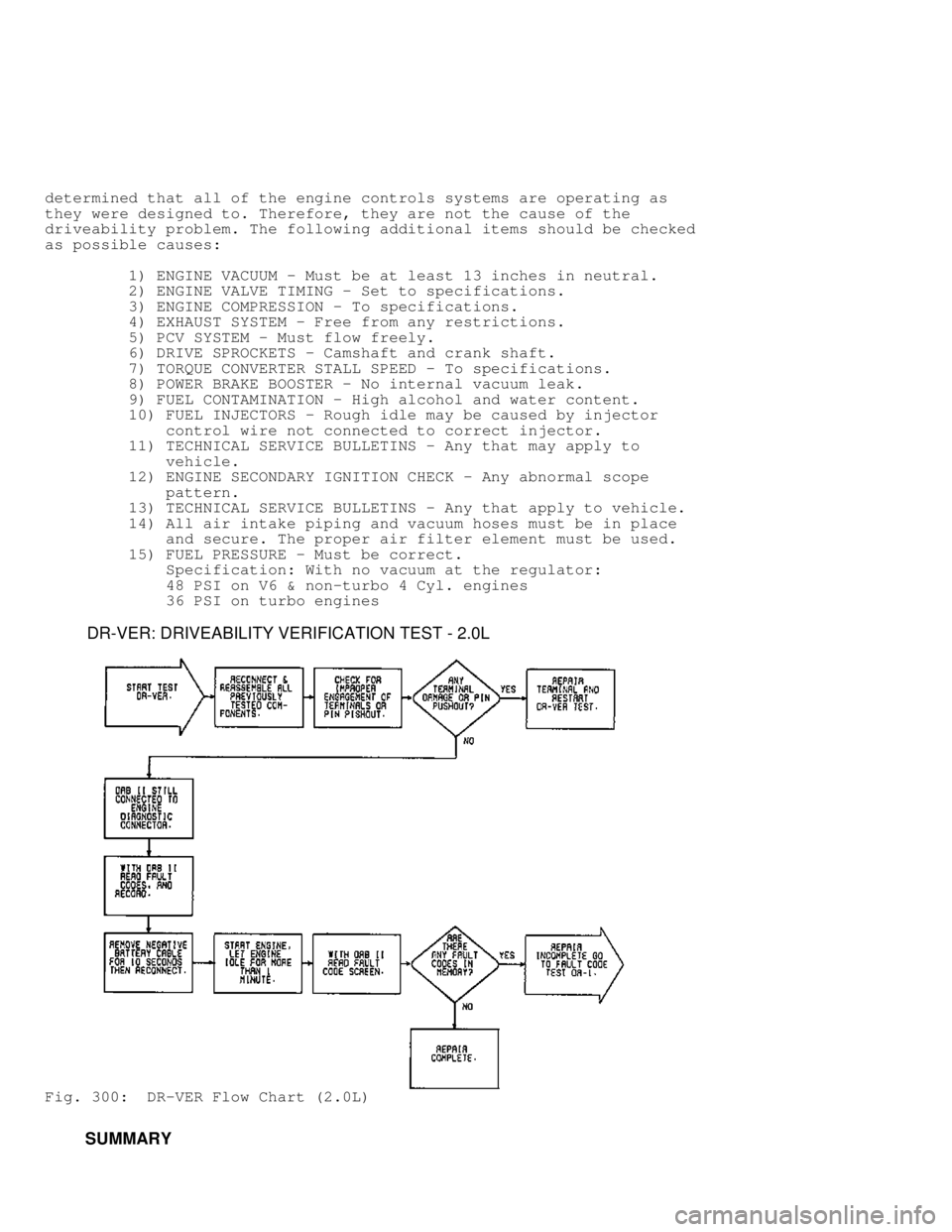
determined that all of the engine controls systems are operating as
they were designed to. Therefore, they are not the cause of the
driveability problem. The following additional items should be checked
as possible causes:
1) ENGINE VACUUM - Must be at least 13 inches in neutral.
2) ENGINE VALVE TIMING - Set to specifications.
3) ENGINE COMPRESSION - To specifications.
4) EXHAUST SYSTEM - Free from any restrictions.
5) PCV SYSTEM - Must flow freely.
6) DRIVE SPROCKETS - Camshaft and crank shaft.
7) TORQUE CONVERTER STALL SPEED - To specifications.
8) POWER BRAKE BOOSTER - No internal vacuum leak.
9) FUEL CONTAMINATION - High alcohol and water content.
10) FUEL INJECTORS - Rough idle may be caused by injector
control wire not connected to correct injector.
11) TECHNICAL SERVICE BULLETINS - Any that may apply to
vehicle.
12) ENGINE SECONDARY IGNITION CHECK - Any abnormal scope
pattern.
13) TECHNICAL SERVICE BULLETINS - Any that apply to vehicle.
14) All air intake piping and vacuum hoses must be in place
and secure. The proper air filter element must be used.
15) FUEL PRESSURE - Must be correct.
Specification: With no vacuum at the regulator:
48 PSI on V6 & non-turbo 4 Cyl. engines
36 PSI on turbo engines
DR-VER: DRIVEABILITY VERIFICATION TEST - 2.0L
Fig. 300: DR-VER Flow Chart (2.0L)
SUMMARY
Page 1139 of 1333
* Check airflow sensor.
* Check coolant temperature sensor.
* Check idle position switch.
* Check power supply to ECU ground.
* Check fuel pressure.
* Check for disconnected or damaged vacuum hoses.
* Check for control relay malfunction.
* Check for PFI system malfunction.
* Check for fuel pump drive control system malfunction.
* Check for ignition coil malfunction.
* Check for ignition timing malfunction.
* Check for power transistor malfunction.
* Check for fuel injector malfunction.
* Check for ECU malfunction.
* Ensure electrical harness, connectors and wires are not
broken or loose.
ROUGH OR UNSTABLE IDLE
* Check intake air temperature sensor.
* Check purge control solenoid valve (if applicable).
* Check vehicle speed sensor.
* Check engine coolant temperature sensor.
* Check barometric pressure sensor.
* Check ignition switch.
* Check idle position switch.
* Check throttle position sensor.
* Check TDC sensor.
* Check crank angle sensor.
* Check power steering oil pressure switch.
* Check A/C switch and power relay (if applicable).
* Check inhibitor switch.
* Check oxygen sensor.
* Check airflow sensor.
* Check motor position sensor (if equipped).
* Check fuel pressure.
* Check for disconnected or damaged vacuum hoses.
* Check PFI system malfunction.
* Check for stepper motor malfunction (if applicable).
* Check for fuel injector malfunction.
* Check for power transistor malfunction.
* Check for vehicle speed switch malfunction.
* Check for ECU malfunction.
* Ensure electrical harness, connectors and wires are not
broken or loose.
ENGINE HESITATES OR POOR ACCELERATION
* Check intake air temperature sensor.
* Check engine coolant temperature sensor.
* Check barometric pressure sensor.
* Check ignition switch.
* Check ignition coil.
* Check EGR control solenoid valve (if applicable).
* Check idle position switch.
* Check throttle position sensor.
* Check TDC sensor.
* Check crank angle sensor.
* Check power steering oil pressure switch.
* Check A/C switch (if applicable).
* Check inhibitor switch (A/T).
* Check oxygen sensor.
* Check airflow sensor.