2021 HYUNDAI ELANTRA SEL warning light
[x] Cancel search: warning lightPage 526 of 570
Maintenance9-40
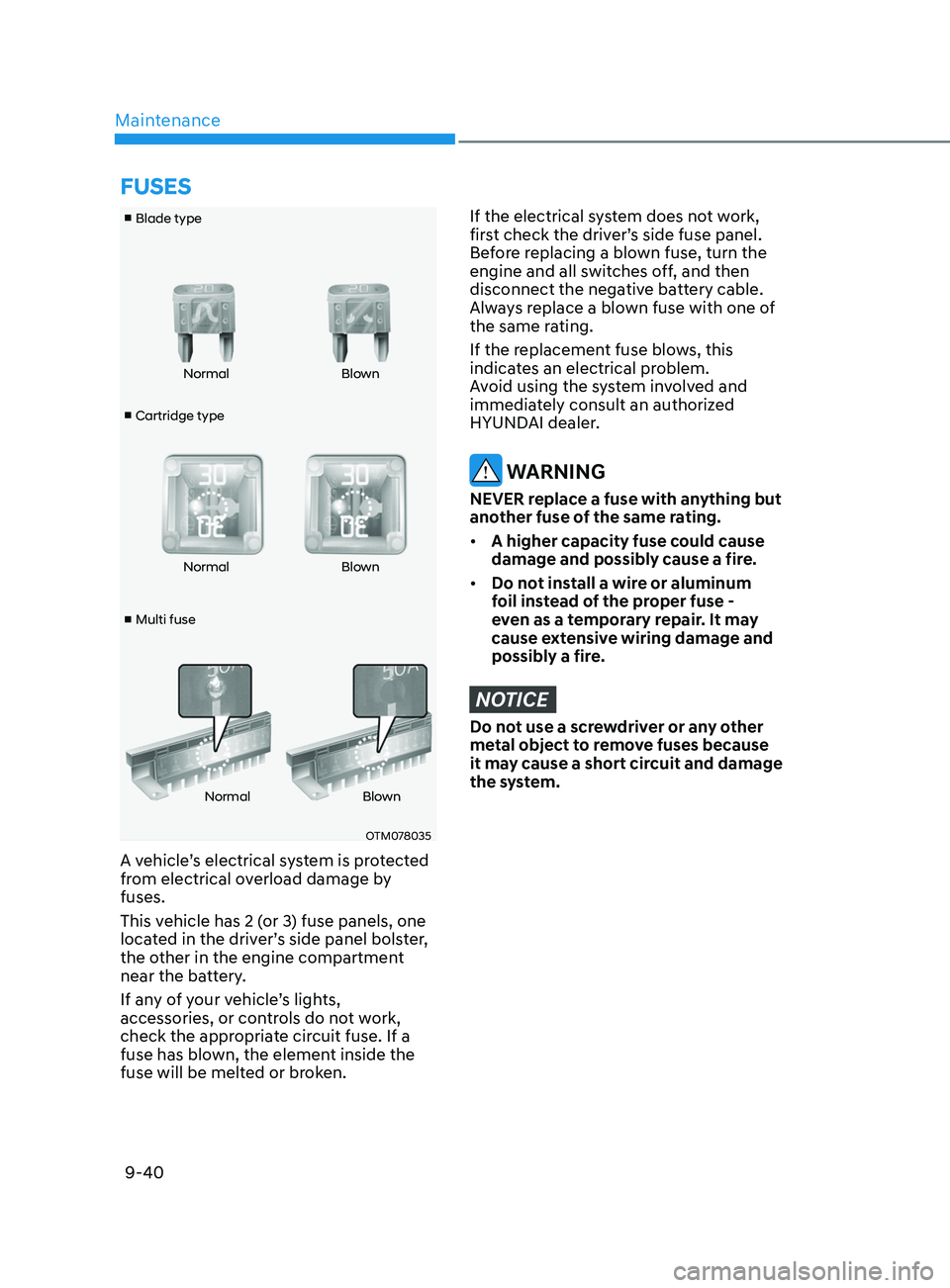
■ Cartridge type
■ Blade type
■ Multi fuse Normal
Blown
Normal Blown
Normal Blown
OTM078035
A vehicle’s electrical system is protected
from electrical overload damage by
fuses.
This vehicle has 2 (or 3) fuse panels, one
located in the driver’s side panel bolster,
the other in the engine compartment
near the battery.
If any of your vehicle’s lights,
accessories, or controls do not work,
check the appropriate circuit fuse. If a
fuse has blown, the element inside the
fuse will be melted or broken.
If the electrical system does not work,
first check the driver’s side fuse panel.
Before replacing a blown fuse, turn the
engine and all switches off, and then
disconnect the negative battery cable.
Always replace a blown fuse with one of
the same rating.
If the replacement fuse blows, this
indicates an electrical problem.
Avoid using the system involved and
immediately consult an authorized
HYUNDAI dealer.
WARNING
NEVER replace a fuse with anything but
another fuse of the same rating.
• A higher capacity fuse could cause
damage and possibly cause a fire.
• Do not install a wire or aluminum
foil instead of the proper fuse -
even as a temporary repair. It may
cause extensive wiring damage and
possibly a fire.
NOTICE
Do not use a screwdriver or any other
metal object to remove fuses because
it may cause a short circuit and damage
the system.
fuSES
Page 536 of 570
Maintenance
9-50
Consult an authorized HYUNDAI dealer
to replace most vehicle light bulbs. It is
difficult to replace vehicle light bulbs
because other parts of the vehicle must
be removed before you can get to the
bulb. This is especially true for removing
the headlamp assembly to get to the
bulb(s).
Removing/installing the headlamp
assembly can result in damage to the
vehicle.
Information
The headlamp and tail lamp lenses could
appear frosty if the vehicle is washed after
driving or the vehicle is driven at night in
wet weather. This condition is caused by
temperature difference between the lamp
inside and outside and does not indicate
a problem with your vehicle. When
moisture condenses in the lamp, it will be
removed after driving with the headlamp
on. The removable level may differ
depending on lamp size, lamp position
and environmental condition. However, if
moisture is not removed, have the vehicle
inspected by an authorized HYUNDAI
dealer.
WARNING
• Prior to replacing a lamp, depress
the foot brake, move the shift button
into P (Park) apply the parking brake,
place the ignition switch to the
LOCK/OFF position, and take the key
with you when leaving the vehicle
to avoid sudden movement of the
vehicle and to prevent possible
electric shock.
• Be aware the bulbs may be hot and
may burn your fingers.
• When the bulb is disconnected or the
lamp connector is removed while the
lamp is operating normally, the fuse
box electronics may recognize the
lamp as a malfunction. Therefore, a
fault record for the lamp may remain
in the Diagnostic Trouble Code (DTC)
recorded in the fuse box.
NOTICE
Be sure to replace the burned-out bulb
with one of the same wattage rating.
Otherwise, it may cause damage to the
fuse or electrical wiring system.
Information
The headlamp aiming should be adjusted
after an accident or after the headlamp
assembly is reinstalled at an authorized
HYUNDAI dealer.
light BulBS
Page 537 of 570
09
9-51
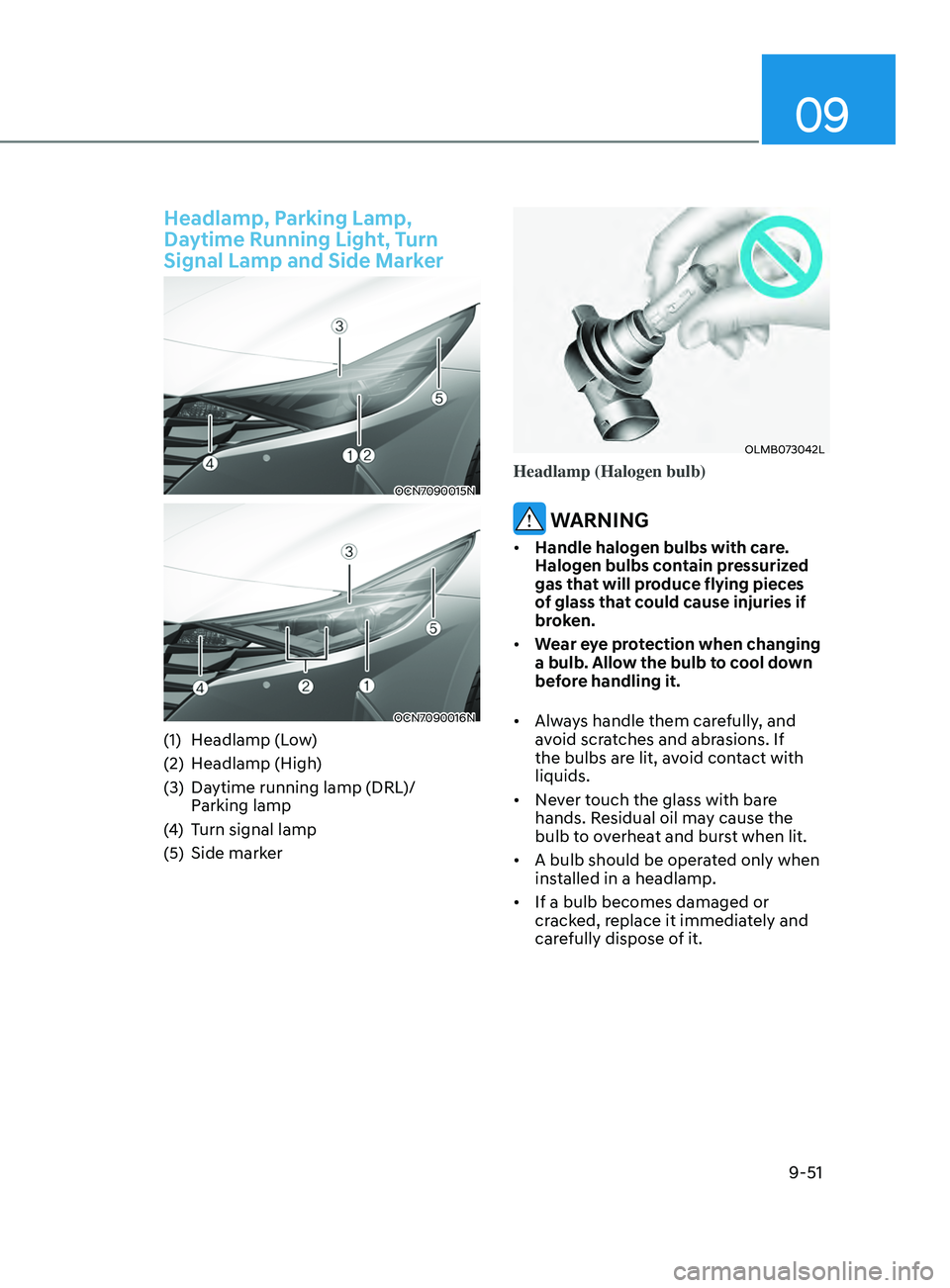
Headlamp, Parking Lamp,
Daytime Running Light, Turn
Signal Lamp and Side Marker
OCN7090015N
OCN7090016N
(1) Headlamp (Low)
(2)
Headlamp (High
)
(3)
Daytime running lamp (DRL
)/
Parking lamp
(4)
Turn signal lamp
(5)
Side marker
OLMB073042L
Headlamp (Halogen bulb)
WARNING
• Handle halogen bulbs with care.
Halogen bulbs contain pressurized
gas that will produce flying pieces
of glass that could cause injuries if
broken.
• Wear eye protection when changing
a bulb. Allow the bulb to cool down
before handling it.
• Always handle them carefully, and
avoid scratches and abrasions. If
the bulbs are lit, avoid contact with
liquids.
• Never touch the glass with bare
hands. Residual oil may cause the
bulb to overheat and burst when lit.
• A bulb should be operated only when
installed in a headlamp.
• If a bulb becomes damaged or
cracked, replace it immediately and
carefully dispose of it.
Page 544 of 570

Maintenance
9-58
Interior Light Bulb Replacement
„„Sunvisor lamp
OCN7050058
„„Trunk room lamp
OCN7050059
„„Map lamp
OCN7080033
„„Room lamp
OCN7080034
1. Using a flat-blade screwdriver, gently pry the lens from the interior lamp housing.
2.
Remo
ve the bulb by pulling it straight out.
WARNING
Prior to working on the Interior Lights, ensure that the “OFF” button is depressed to
avoid burning your fingers or receiving an electric shock.
3.
Install a ne
w bulb in the socket.
4.
Align the lens tabs with the int
erior lamp housing notches and snap the lens into
place.
NOTICE
Use care not to dirty or damage lens, lens tab, and plastic housings.
Page 546 of 570
Maintenance
9-60
WARNING
After washing the vehicle, test the
brakes while driving slowly to see
if they have been affected by water
before getting on the road. If braking
performance is impaired, dry the
brakes by applying them lightly while
maintaining a slow forward speed.
NOTICE
• Do not use strong soap, chemical
detergents or hot water, and do not
wash the vehicle in direct sunlight
or when the body of the vehicle is
warm.
• Be careful when washing the side
windows of your vehicle.
Especially, with high-pressure water,
water may leak through the windows
and wet the interior.
• To prevent damage to the plastic
parts, do not clean with chemical
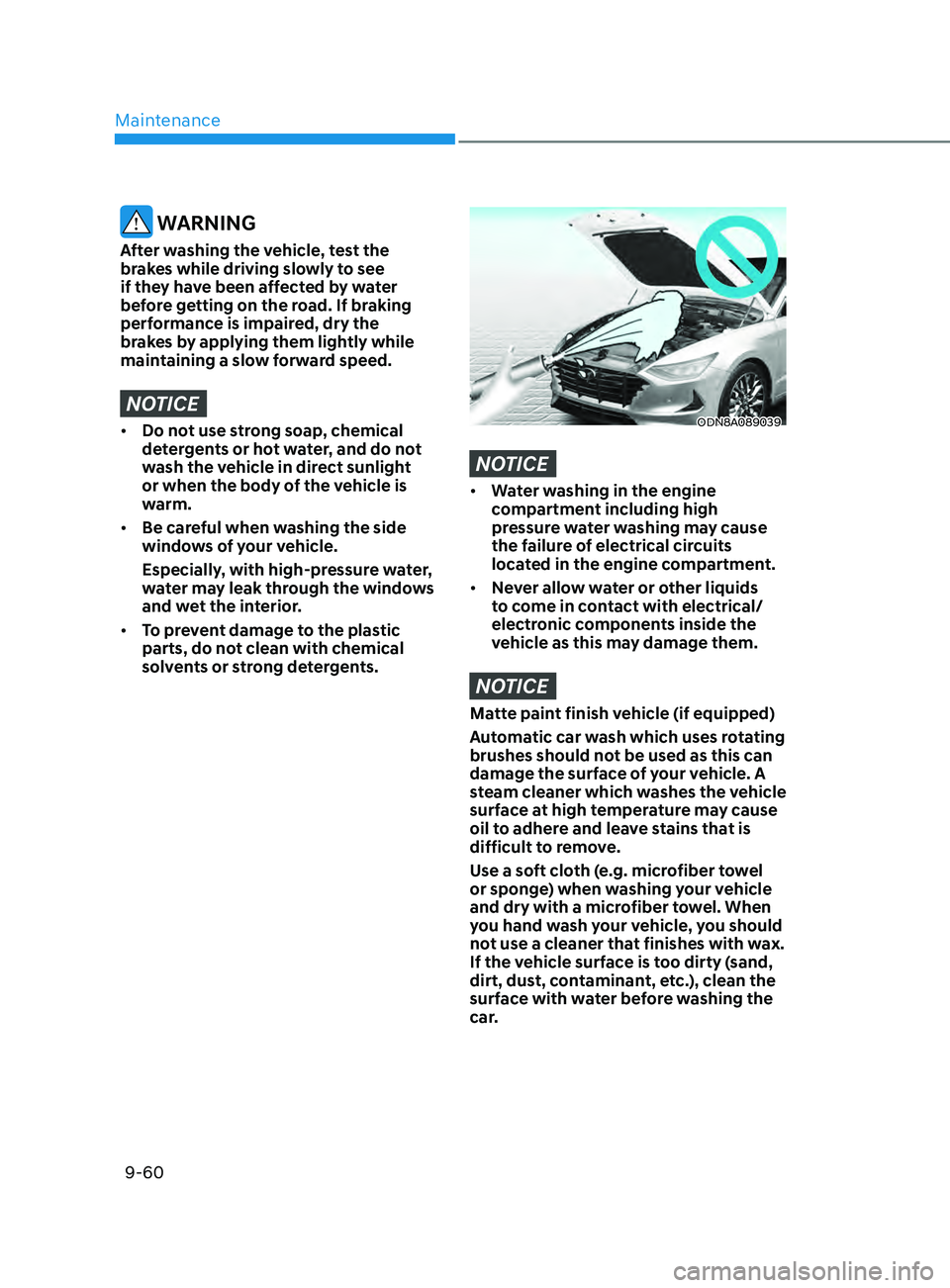
solvents or strong detergents.ODN8A089039
NOTICE
• Water washing in the engine
compartment including high
pressure water washing may cause
the failure of electrical circuits
located in the engine compartment.
• Never allow water or other liquids
to come in contact with electrical/
electronic components inside the
vehicle as this may damage them.
NOTICE
Matte paint finish vehicle (if equipped)
Automatic car wash which uses rotating
brushes should not be used as this can
damage the surface of your vehicle. A
steam cleaner which washes the vehicle
surface at high temperature may cause
oil to adhere and leave stains that is
difficult to remove.
Use a soft cloth (e.g. microfiber towel
or sponge) when washing your vehicle
and dry with a microfiber towel. When
you hand wash your vehicle, you should
not use a cleaner that finishes with wax.
If the vehicle surface is too dirty (sand,
dirt, dust, contaminant, etc.), clean the
surface with water before washing the
car.
Page 548 of 570
Maintenance
9-62
Underbody maintenance
Corrosive materials used for ice and
snow removal and dust control may
collect on the underbody. If these
materials are not removed, accelerated
rusting can occur on underbody parts
such as the fuel lines, frame, floor pan
and exhaust system, even though they
have been treated with rust protection.
Thoroughly flush the vehicle underbody
and wheel openings with lukewarm or
cold water once a month, after off-road
driving and at the end of each winter. Pay
special attention to these areas because
it is difficult to see all the mud and dirt.
It will do more harm than good to wet
down the road grime without removing
it. The lower edges of doors, rocker
panels, and frame members have drain
holes that should not be allowed to clog
with dirt; trapped water in these areas
can cause rusting.
WARNING
After washing the vehicle, test the
brakes while driving slowly to see if
they have been affected by water. If
braking performance is impaired, dry
the brakes by applying them lightly
while maintaining a slow forward
speed.
Aluminum wheel maintenance
The aluminum wheels are coated with a
clear protective finish.
NOTICE
• Do not use abrasive cleaner,
polishing compound, solvent, or wire
brushes on aluminum wheels.
• Clean the wheel when it has cooled.
• Use only a mild soap or neutral
detergent, and rinse thoroughly with
water. Also, clean the wheels after
driving on salted roads.
• Do not wash the wheels with high-
speed car wash brushes.
• Do not use any cleaners containing
acid or alkaline detergents.
Page 564 of 570

I
I -7
Instrument Cluster ........................................................................\
.........................4-4
Gauges and Meters ........................................................................\
.....................4-5
Instrument Cluster Control ........................................................................\
.........4-5
LCD Display Messages ........................................................................\
............ 4-19
Transmission shift indicator ........................................................................\
.......4-9
Warning and Indicator Lights ........................................................................\
.....4-9
Instrument Panel Overview
........................................................................\
........... 2-5
Intelligent Speed Limit
Assist (ISLA)
................................................................ 7-66
Function malfunction and limitations ..............................................................7-69
Function operation ........................................................................\
.................... 7-67
Function settings ........................................................................\
...................... 7-66
Intelligent
Variable Transmission
........................................................................\
6-12
Good driving practices ........................................................................\
............. 6-18
Intelligent variable transmission operation ......................................................6-12
Parking ........................................................................\
..................................... 6-17
Interior Features
........................................................................\
......................... 5
-111
Clock ........................................................................\
......................................5-1
16
Clothes Hanger ........................................................................\
.......................5-1
16
Cup Holder ........................................................................\
.............................5
-111
Power Outlet ........................................................................\
...........................5-1
12
Sunvisor ........................................................................\
..................................5-1
12
USB Charger ........................................................................\
..........................5-1
13
Wireless Cellular Phone Char
ging System
..................................................... 5-1
14
Interior Lights
........................................................................\
.............................. 5-75
Front lamps ........................................................................\
............................... 5-75
Interior lamp AUT
O cut
........................................................................\
........... 5-75
Luggage compartment lamp ........................................................................\
.....5-77
Rear lamp ........................................................................\
................................. 5-76
Vanity mirror lamp ........................................................................\
...................5-77
Welcome system ........................................................................\
....................... 5-78
Interior Overview
........................................................................\
........................... 2-4
ISG (Idle Stop and Go) system
........................................................................\
.... 6-35
Battery Sensor Deactivation ........................................................................\
..... 6-38
ISG System Malfunction ........................................................................\
.......... 6-37
To
Activate the ISG System
........................................................................\
..... 6-35
To Deactivate the ISG System ........................................................................\
6-37
Page 567 of 570
Index
I-10
Recommended Lubricants and Capacities ...........................................................2-1 1
Recommended SAE V
iscosity Number
........................................................... 2-12
Reporting Safety Defects
........................................................................\
............. 2-16
Reverse Parking Collision-A
voidance Assist (PCA)
.........................................7-142
Function malfunction and limitations ............................................................ 7-146
Function operation ........................................................................\
.................. 7-145
Function settings ........................................................................\
.................... 7-143
Reverse Parking Distance
Warning (PDW)
...................................................... 7-139
Function malfunction and precautions .......................................................... 7-140
Function operation ........................................................................\
.................. 7-140
System settings ........................................................................\
....................... 7-139
S
Safe Exit
Warning (SEW)
........................................................................\
........... 7-58
Function malfunction and limitations ..............................................................7-61
Function operation ........................................................................\
.................... 7-60
Function settings ........................................................................\
...................... 7-59
Safety Messages
........................................................................\
............................. 1-4
Scheduled Maintenance Services
........................................................................\
.. 9-7
Maintenance Under Severe Usage Conditions .................................................9-1
1
Normal Maintenance Schedule (Smartstream G2.0 Atkinson) ..........................9-8
Seat Belts
........................................................................\
..................................... 3-17
Additional Seat Belt Safety Precautions ..........................................................3-23
Care of Seat Belts ........................................................................\
..................... 3-25
Seat Belt Restraint System ........................................................................\
.......3-18
Seat Belt Safety Precautions ........................................................................\
....3-17
Seat belt warning light ........................................................................\
.............. 3-18
Seats
........................................................................\
............................................... 3-3
Front Seats ........................................................................\
..................................3-5
Head Restraints ........................................................................\
........................3-1
1
Rear Seats ........................................................................\
.................................3-10
Safety Precautions ........................................................................\
......................3-4
Seat Warmers ........................................................................\
............................ 3-15
Smart Cruise Control (SCC)
........................................................................\
....... 7-81
Function display and control ........................................................................\
....7-86
Function malfunction and limitations ..............................................................7-91
Function operation ........................................................................\
.................... 7-85
Function settings ........................................................................\
...................... 7-82