2018 DODGE CHALLENGER warning lights
[x] Cancel search: warning lightsPage 170 of 516
•As the air bags deflate, you may see some smoke-like
particles. The particles are a normal by-product of the
process that generates the non-toxic gas used for air bag
inflation. These airborne particles may irritate the skin,
eyes, nose, or throat. If you have skin or eye irritation,
rinse the area with cool water. For nose or throat
irritation, move to fresh air. If the irritation continues,
see your doctor. If these particles settle on your clothing,
follow the garment manufacturer ’s instructions for
cleaning.
Do not drive your vehicle after the air bags have deployed.
If you are involved in another collision, the air bags will
not be in place to protect you.
WARNING!
Deployed air bags and seat belt pretensioners cannot
protect you in another collision. Have the air bags, seat
belt pretensioners, and the seat belt retractor assem-
blies replaced by an authorized dealer immediately.
Also, have the Occupant Restraint Controller System
serviced as well. NOTE:
•
Air bag covers may not be obvious in the interior trim,
but they will open during air bag deployment.
• After any collision, the vehicle should be taken to an
authorized dealer immediately.
Enhanced Accident Response System
In the event of an impact, if the communication network
remains intact, and the power remains intact, depending
on the nature of the event, the ORC will determine whether
to have the Enhanced Accident Response System perform
the following functions:
• Cut off fuel to the engine (If Equipped)
• Cut off battery power to the electric motor (If Equipped)
• Flash hazard lights as long as the battery has power
•
Turn on the interior lights, which remain on as long as the
battery has power or for 15 minutes from the intervention
of the Enhanced Accident Response System.
• Unlock the power door locks.
168 SAFETY
Page 171 of 516

Your vehicle may also be designed to perform any of these
other functions in response to the Enhanced Accident
Response System:
•Turn off the Fuel Filter Heater, Turn off the HVAC
Blower Motor, Close the HVAC Circulation Door
• Cut off battery power to the:
• Engine
• Electric Motor (if equipped)
• Electric power steering
• Brake booster
• Electric park brake
• Automatic transmission gear selector
• Horn
• Front wiper
• Headlamp washer pump
NOTE: After an accident, remember to cycle the ignition to
the STOP (OFF/LOCK) position and remove the key from
the ignition switch to avoid draining the battery. Carefully
check the vehicle for fuel leaks in the engine compartment
and on the ground near the engine compartment and fuel
tank before resetting the system and starting the engine. If
there are no fuel leaks or damage to the vehicle electrical devices (e.g. headlights) after an accident, reset the system
by following the procedure described below.
Enhanced Accident Response System Reset
Procedure
In order to reset the Enhanced Accident Response System
functions after an event, the ignition switch must be
changed from ignition START or ON/RUN to ignition OFF.
Carefully check the vehicle for fuel leaks in the engine
compartment and on the ground near the engine compart-
ment and fuel tank before resetting the system and starting
the engine.
Maintaining Your Air Bag System
WARNING!
•
Modifications to any part of the air bag system could
cause it to fail when you need it. You could be
injured if the air bag system is not there to protect
you. Do not modify the components or wiring, in-
cluding adding any kind of badges or stickers to the
steering wheel hub trim cover or the upper passenger
side of the instrument panel. Do not modify the front
(Continued)
5
SAFETY 169
Page 221 of 516
SERVICE SYSTEM” message is displayed within the in-
strument cluster display, this indicates the vehicle needs to
be taken to the dealer for service. Refer to “Warning Lights
And Messages” in “Getting To Know Your Instrument
Panel” for further information.
NOTE:
•Even if the power steering assistance is no longer
operational, it is still possible to steer the vehicle. Under
these conditions there will be a substantial increase in
steering effort, especially at low speeds and during
parking maneuvers.
• If the condition persists, see your authorized dealer for
service.
If the Steering icon is displayed and the “POWER STEER-
ING SYSTEM OVER TEMP” message is displayed on the
instrument cluster screen, they indicate that extreme steer-
ing maneuvers may have occurred which caused an over
temperature condition in the power steering system. Once
driving conditions are safe, pull over and let the vehicle
idle for a few moments until the icon and message turn off.
SPEED CONTROL — IF EQUIPPED
When engaged, the Speed Control takes over accelerator
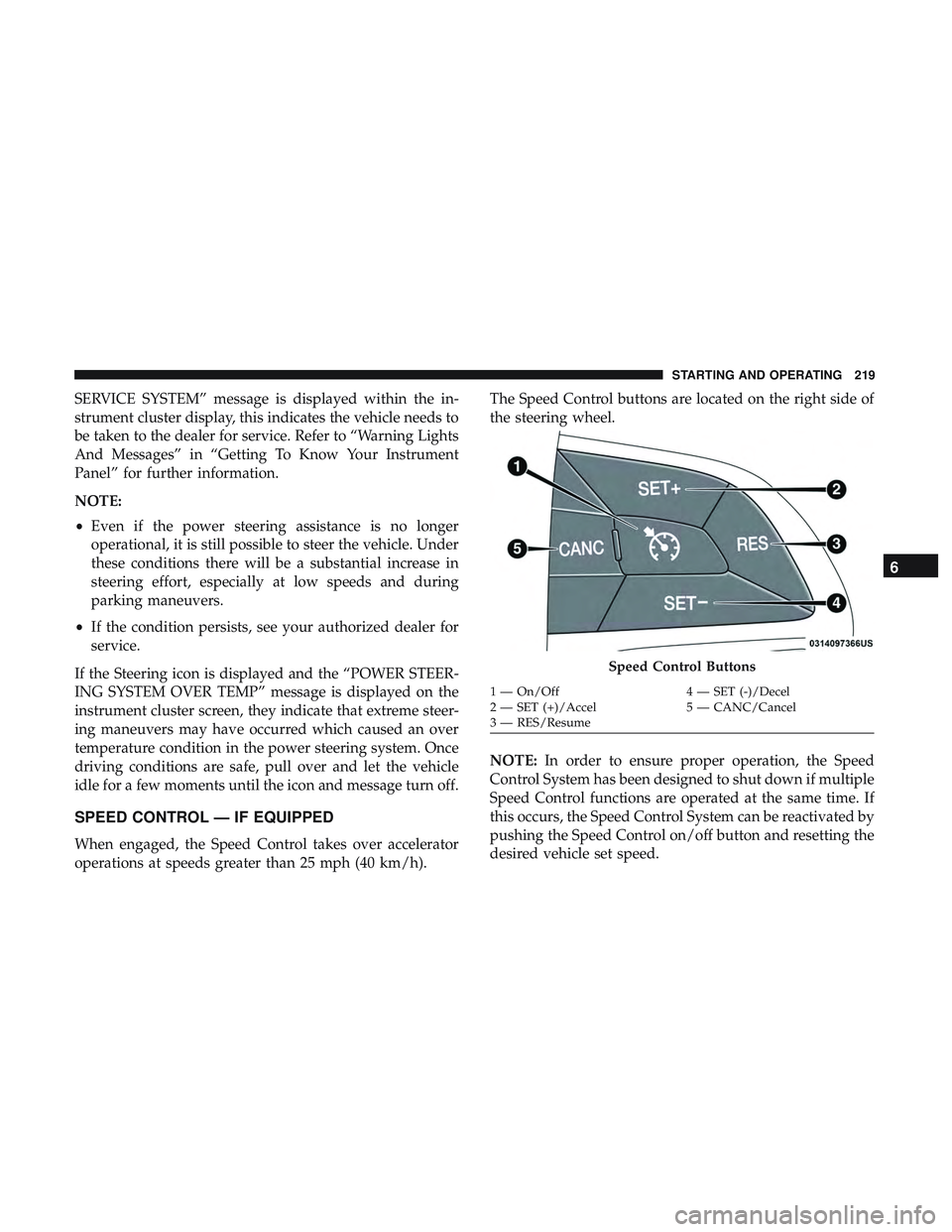
operations at speeds greater than 25 mph (40 km/h). The Speed Control buttons are located on the right side of
the steering wheel.
NOTE:
In order to ensure proper operation, the Speed
Control System has been designed to shut down if multiple
Speed Control functions are operated at the same time. If
this occurs, the Speed Control System can be reactivated by
pushing the Speed Control on/off button and resetting the
desired vehicle set speed.
Speed Control Buttons
1 — On/Off 4 — SET (-)/Decel
2 — SET (+)/Accel 5 — CANC/Cancel
3 — RES/Resume
6
STARTING AND OPERATING 219
Page 233 of 516

To increase the distance setting, push the Distance Setting —
Increase button and release. Each time the button is pushed,
the distance setting increases by one bar (longer).
To decrease the distance setting, push the Distance Setting —
Decrease button and release. Each time the button is pushed,
the distance setting decreases by one bar (shorter).
If there is no vehicle ahead, the vehicle will maintain the set
speed. If a slower moving vehicle is detected in the same
lane, the instrument cluster display will show the “SensedVehicle Indicator” icon, and the system adjusts vehicle
speed automatically to maintain the distance setting, re-
gardless of the set speed.
The vehicle will then maintain the set distance until:
•
The vehicle ahead accelerates to a speed above the set
speed.
• The vehicle ahead moves out of your lane or view of the
sensor.
• The distance setting is changed.
• The system disengages. (Refer to the information on
ACC Activation).
The maximum braking applied by ACC is limited; how-
ever, the driver can always apply the brakes manually, if
necessary.
NOTE: The brake lights will illuminate whenever the ACC
system applies the brakes.
A Proximity Warning will alert the driver if ACC predicts
that its maximum braking level is not sufficient to maintain
the set distance. If this occurs, a visual alert “BRAKE” will
flash in the instrument cluster display and a chime will
sound while ACC continues to apply its maximum braking
capacity.
Distance Setting 1 Bar (Short)
6
STARTING AND OPERATING 231
Page 503 of 516

Cybersecurity............................ .404
Daytime Running Lights ......................55
Dealer Service ............................ .334
Deck Lid Power Release ...........................79
Defroster, Windshield ....................... .189
Delay (Intermittent) Wipers ....................61
Diagnostic System, Onboard ...................118
Dimmer Switch Headlight ...............................55
Dipsticks Oil (Engine) ........................... .332
Disable Vehicle Towing ..................... .313
Disposal Antifreeze (Engine Coolant) .................352
Disturb ................................. .484
Door Ajar ................................112
Door Ajar Light ............................112
Door Locks Automatic ..............................39
Door Opener, Garage .........................82
Doors ....................................32
Drag And Drop Menu ...................... .403
Drive Modes ............................. .458Driver ’s Seat Back Tilt
........................39
Driving Through Flowing, Rising, Or Shallow Standing
Water ................................ .264
Electrical Power Outlets .......................91
Electric Brake Control System ..................123
Anti-Lock Brake System ....................122
Electronic Roll Mitigation ...............124, 131
Electric Remote Mirrors .......................52
Electronic Power Distribution Center (Fuses) .......280
Electronic Speed Control (Cruise Control) ......220, 222
Electronic Stability Control (ESC) ...............125
Electronic Throttle Control Warning Light .........111
Emergency, In Case Of Freeing Vehicle When Stuck .................311
Jacking ........................... .290, 358
Jump Starting ....................305, 306, 307
Towing ............................... .313
Emission Control System Maintenance ............119
Engine .......................... .329, 330, 331
Air Cleaner ............................ .339
Block
Heater ........................... .199
Break-In Recommendations .................200
Checking Oil Level ...................... .332
12
INDEX 501
Page 504 of 516

Compartment....................329, 330, 331
Compartment Identification .................329
Coolant (Antifreeze) ...................349, 398
Cooling .............................. .349
Exhaust Gas Caution ...................188, 396
Fails To Start ........................... .199
Flooded, Starting ........................ .199
Fuel Requirements ....................... .391
Jump Starting ....................305, 306, 307
Oil ........................... .335, 396, 398
Oil Filler Cap ....................... .329, 337
Oil Filter .............................. .339
Oil Selection ........................ .335, 396
Oil Synthetic ........................... .337
Overheating ........................... .308
Starting ........................... .196, 197
Engine Oil Viscosity .....................336, 337
Engine Oil Viscosity Chart ....................336
Enhanced Accident Response Feature .........168, 315
Ethanol ................................. .394
Exhaust Gas Cautions ....................188, 396
Exhaust System ....................... .188, 347
Exterior Lighting ............................54
Exterior Lights ......................... .54, 191Filler Location Fuel
........................ .250
Filters Air Cleaner ............................ .339
Air Conditioning ..................... .72, 341
Engine Oil ......................... .339, 398
Engine Oil Disposal ...................... .339
Flashers ................................ .269
Hazard Warning ........................ .269
Turn Signals ..................... .58, 117, 191
Flash-To-Pass ..............................55
Flooded Engine Starting ..................... .199
Fluid, Brake .......................... .398,
400
Fluid Capacities ........................... .396
Fluid Leaks .............................. .191
Fluid Level Checks Brake ................................ .353
Cooling System ......................... .349
Engine Oil ............................ .332
Transfer Case .......................... .357
Fluids And Lubricants ...................... .398
Fog Lights ................................57
Fold-Flat Seats .......................... .39, 45
Forward Collision Warning ....................139
Freeing A Stuck Vehicle ......................311
Fuel ................................... .391
502 INDEX
Page 505 of 516
Additives............................. .393
Clean Air ............................. .393
Ethanol .............................. .394
Filler Cap (Gas Cap) ..................... .250
Gasoline .............................. .391
Materials Added ........................ .393
Methanol ............................. .394
Octane Rating ....................... .391, 398
Requirements .......................... .391
Specifications .......................... .398
Tank Capacity .......................... .396
Fueling ................................. .250
Fuses .................................. .278
Garage Door Opener (HomeLink) ................82
Gas Cap (Fuel Filler Cap) .....................250
Gasoline, Clean Air ........................ .393
Gasoline, Reformulated ..................... .393
Gear Ranges ..............................211
Glass Cleaning ........................... .386
Gross Axle Weight Rating .................252, 254
Gross Vehicle Weight Rating ...............252, 253
GVWR ................................. .252Hazard
Driving Through Flowing, Rising, Or Shallow
Standing Water ......................... .264
Hazard Warning Flashers .....................269
Headlights Automatic ..............................56
Cleaning .............................. .383
High Beam/Low Beam Select Switch ...........55
Lights On Reminder .......................57
On With Wipers ..........................56
Passing ................................55
Switch .................................54
Time Delay ..............................56
Washers .............................. .333
Head Restraints ......................... .46, 47
Head Rests ............................ .46, 47
Heated Mirrors .............................52
Heater ...................................64
Heater
, Engine Block ....................... .199
High Beam/Low Beam Select (Dimmer) Switch ......55
Hill Start Assist ........................... .129
Hitches Trailer Towing .......................... .256
HomeLink (Garage Door Opener) ................82
Hood Prop ................................78
12
INDEX 503
Page 506 of 516

Hood Release..............................78
Ignition ..................................23
Switch .................................23
Information Center, Vehicle ....................99
Inside Rearview Mirror ....................50, 269
Instrument Cluster Descriptions ......................... .96, 117
Display .............................. .102
Instrument Panel Lens Cleaning ................386
Interior Appearance Care .....................385
Interior Lights ..............................58
Intermittent Wipers (Delay Wipers) ...............61
Introduction ................................4
iPod/USB/MP3 Control ..................... .469
Bluetooth Streaming Audio .................469
Jacking Instructions ........................ .293
Jack Location ............................ .291
Jack Operation ........................ .293, 358
Jump Starting ..................... .305, 306, 307
Key Fob Arm The System ..........................31
Panic Alarm .............................19 Programming Additional Key Fobs
..........22, 30
Unlatch The Trunk ........................19
Key Fob Battery Service (Remote Keyless Entry) .....20
Key Fob Programming (Remote Keyless Entry) ......22
Key-In Reminder ............................25
Keyless Enter-N-Go ..........................34
Enter The Trunk ..........................19
Keys ....................................17
Replacement ......................... .22, 30
Lane Change And Turn Signals .................58
Lane Change Assist ..........................58
Lap/Shoulder Belts ........................ .150
Latches ................................. .191
Hood ..................................78
Lead Free Gasoline ........................ .391
Leaks, Fluid ............................. .191
Life Of Tires ............................. .372
Light Bulbs .......................... .191, 275
Lights .................................. .191
AirBag ........................ .108, 158, 188
Automatic
Headlights ......................56
Brake Assist Warning ..................... .128
Brake Warning ...................... .109, 389
Bulb Replacement ....................... .275
504 INDEX