2017 KIA Sportage ESP
[x] Cancel search: ESPPage 469 of 595
Maintenance
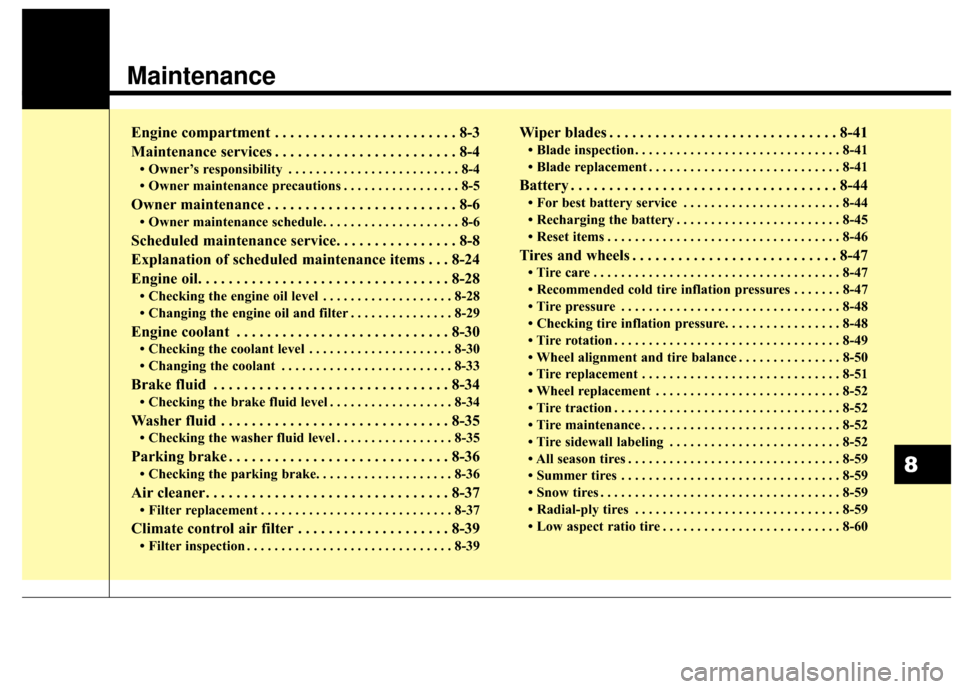
Engine compartment . . . . . . . . . . . . . . . . . . . . . . . . 8-3
Maintenance services . . . . . . . . . . . . . . . . . . . . . . . . 8-4
• Owner’s responsibility . . . . . . . . . . . . . . . . . . . . . . . . . 8-4
• Owner maintenance precautions . . . . . . . . . . . . . . . . . 8-5
Owner maintenance . . . . . . . . . . . . . . . . . . . . . . . . . 8-6
• Owner maintenance schedule. . . . . . . . . . . . . . . . . . . . 8-6
Scheduled maintenance service. . . . . . . . . . . . . . . . 8-8
Explanation of scheduled maintenance items . . . 8-24
Engine oil. . . . . . . . . . . . . . . . . . . . . . . . . . . . . . . . . 8-28
• Checking the engine oil level . . . . . . . . . . . . . . . . . . . 8-28
• Changing the engine oil and filter . . . . . . . . . . . . . . . 8-29
Engine coolant . . . . . . . . . . . . . . . . . . . . . . . . . . . . 8-30
• Checking the coolant level . . . . . . . . . . . . . . . . . . . . . 8-30
• Changing the coolant . . . . . . . . . . . . . . . . . . . . . . . . . 8-33
Brake fluid . . . . . . . . . . . . . . . . . . . . . . . . . . . . . . . 8-34
• Checking the brake fluid level . . . . . . . . . . . . . . . . . . 8-34
Washer fluid . . . . . . . . . . . . . . . . . . . . . . . . . . . . . . 8-35
• Checking the washer fluid level . . . . . . . . . . . . . . . . . 8-35
Parking brake . . . . . . . . . . . . . . . . . . . . . . . . . . . . . 8-36
• Checking the parking brake. . . . . . . . . . . . . . . . . . . . 8-36
Air cleaner. . . . . . . . . . . . . . . . . . . . . . . . . . . . . . . . 8-37
• Filter replacement . . . . . . . . . . . . . . . . . . . . . . . . . . . . 8-37
Climate control air filter . . . . . . . . . . . . . . . . . . . . 8-39
• Filter inspection . . . . . . . . . . . . . . . . . . . . . . . . . . . . . . 8-39
Wiper blades . . . . . . . . . . . . . . . . . . . . . . . . . . . . . . 8-41
• Blade inspection . . . . . . . . . . . . . . . . . . . . . . . . . . . . . . 8-41
• Blade replacement . . . . . . . . . . . . . . . . . . . . . . . . . . . . 8-41
Battery . . . . . . . . . . . . . . . . . . . . . . . . . . . . . . . . . . . 8-\
44
• For best battery service . . . . . . . . . . . . . . . . . . . . . . . 8-44
• Recharging the battery . . . . . . . . . . . . . . . . . . . . . . . . 8-45
• Reset items . . . . . . . . . . . . . . . . . . . . . . . . . . . . . . . . . . 8-46\
Tires and wheels . . . . . . . . . . . . . . . . . . . . . . . . . . . 8-47
• Tire care . . . . . . . . . . . . . . . . . . . . . . . . . . . . . . . . . . . . \
8-47
• Recommended cold tire inflation pressures . . . . . . . 8-47
• Tire pressure . . . . . . . . . . . . . . . . . . . . . . . . . . . . . . . . 8-48
• Checking tire inflation pressure. . . . . . . . . . . . . . . . . 8-48
• Tire rotation . . . . . . . . . . . . . . . . . . . . . . . . . . . . . . . . . 8-49
• Wheel alignment and tire balance . . . . . . . . . . . . . . . 8-50
• Tire replacement . . . . . . . . . . . . . . . . . . . . . . . . . . . . . 8-51
• Wheel replacement . . . . . . . . . . . . . . . . . . . . . . . . . . . 8-52
• Tire traction . . . . . . . . . . . . . . . . . . . . . . . . . . . . . . . . . 8-52
• Tire maintenance . . . . . . . . . . . . . . . . . . . . . . . . . . . . . 8-52
• Tire sidewall labeling . . . . . . . . . . . . . . . . . . . . . . . . . 8-52
• All season tires . . . . . . . . . . . . . . . . . . . . . . . . . . . . . . . 8-59
• Summer tires . . . . . . . . . . . . . . . . . . . . . . . . . . . . . . . . 8-59
• Snow tires . . . . . . . . . . . . . . . . . . . . . . . . . . . . . . . . . . . 8-\
59
• Radial-ply tires . . . . . . . . . . . . . . . . . . . . . . . . . . . . . . 8-59
• Low aspect ratio tire . . . . . . . . . . . . . . . . . . . . . . . . . . 8-60
8
Page 472 of 595
Maintenance
48
MAINTENANCE SERVICES
You should exercise the utmost care
to prevent damage to your vehicle
and injury to yourself whenever per-
forming any maintenance or inspec-
tion procedures.
Should you have any doubts con-
cerning the inspection or servicing of
your vehicle, we strongly recom-
mend that you have an authorized
Kia dealer perform this work.
An authorized Kia dealer has factory-
trained technicians and genuine Kia
parts to service your vehicle proper-
ly. For expert advice and quality serv-
ice, see an authorized Kia dealer.
Inadequate, incomplete or insuffi-
cient servicing may result in opera-
tional problems with your vehicle that
could lead to vehicle damage, an
accident, or personal injury.Owner’s responsibility
✽ ✽NOTICE
Maintenance Service and Record
Retention are the owner's responsi-
bility.
You should retain documents that
show proper maintenance has been
performed on your vehicle in accor-
dance with the scheduled mainte-
nance service charts shown on the
following pages. You need this infor-
mation to establish your compliance
with the servicing and maintenance
requirements of your vehicle war-
ranties.
Detailed warranty information is
provided in your Warranty &
Consumer Information manual.
Repairs and adjustments required as
a result of improper maintenance or
a lack of required maintenance are
not covered.
We recommend you have your vehi-
cle maintained and repaired by an
authorized Kia dealer. An authorized
Kia dealer meets Kia’s high service
quality standards and receives tech-
nical support from Kia in order to pro-
vide you with a high level of service
satisfaction.
Page 473 of 595
85
Maintenance
Owner maintenance precau-
tions
Improper or incomplete service may
result in problems. This section gives
instructions only for the maintenance
items that are easy to perform.
As explained earlier in this section,
several procedures can be done only
by an authorized Kia dealer with spe-
cial tools.
✽ ✽NOTICE
Improper owner maintenance dur-
ing the warranty period may affect
warranty coverage. For details, read
the separate Warranty & Consumer
Information manual provided with
the vehicle. If you're unsure about
any servicing or maintenance proce-
dure, have it done by an authorized
Kia dealer.
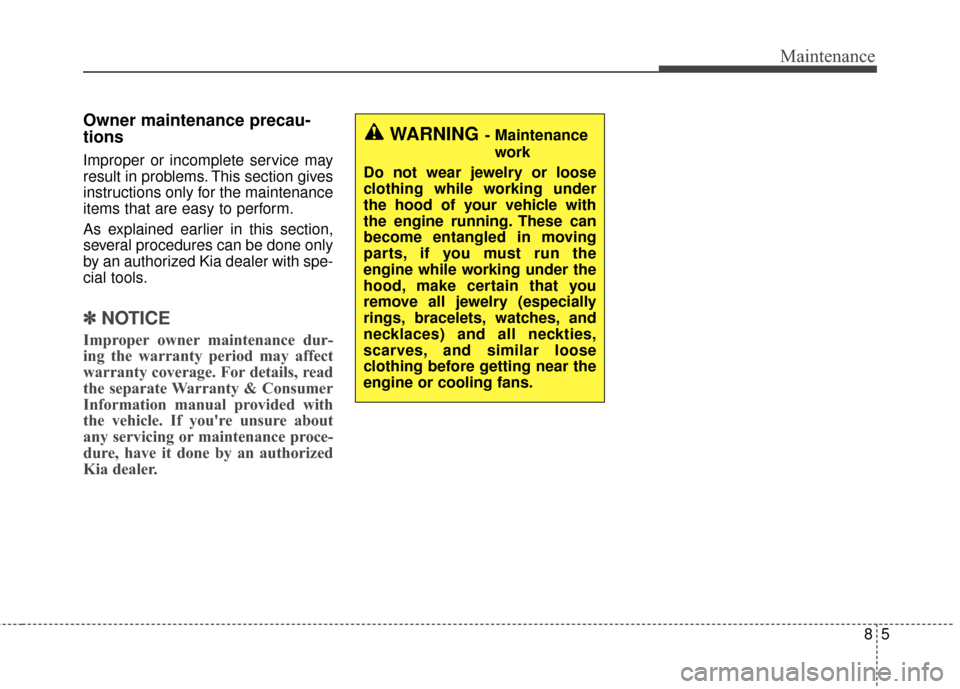
WARNING- Maintenance
work
Do not wear jewelry or loose
clothing while working under
the hood of your vehicle with
the engine running. These can
become entangled in moving
parts, if you must run the
engine while working under the
hood, make certain that you
remove all jewelry (especially
rings, bracelets, watches, and
necklaces) and all neckties,
scarves, and similar loose
clothing before getting near the
engine or cooling fans.
Page 521 of 595
853
Maintenance
2. Tire size designation
A tire’s sidewall is marked with a tire
size designation. You will need this
information when selecting replace-
ment tires for your car. The following
explains what the letters and num-
bers in the tire size designation
mean.
Example tire size designation:
(These numbers are provided as an
example only; your tire size designa-
tor could vary depending on your
vehicle.)
P205/55R16 89H
P - Applicable vehicle type (tiresmarked with the prefix “P’’ are
intended for use on passenger
vehicles or light trucks; however,
not all tires have this marking).
205 - Tire width in millimeters.
55 - Aspect ratio. The tire’s section height as a percentage of its
width.
R - Tire construction code (Radial).
16 - Rim diameter in inches. 89 - Load Index, a numerical code
associated with the maximum
load the tire can carry.
H - Speed Rating Symbol. See the speed rating chart in this section
for additional information.
Wheel size designation
Wheels are also marked with impor-
tant information that you need if you
ever have to replace one. The follow-
ing explains what the letters and
numbers in the wheel size designa-
tion mean.
Example wheel size designation:
6.0JX16
6.0 - Rim width in inches.
J - Rim contour designation.
16 - Rim diameter in inches. Tire speed ratings
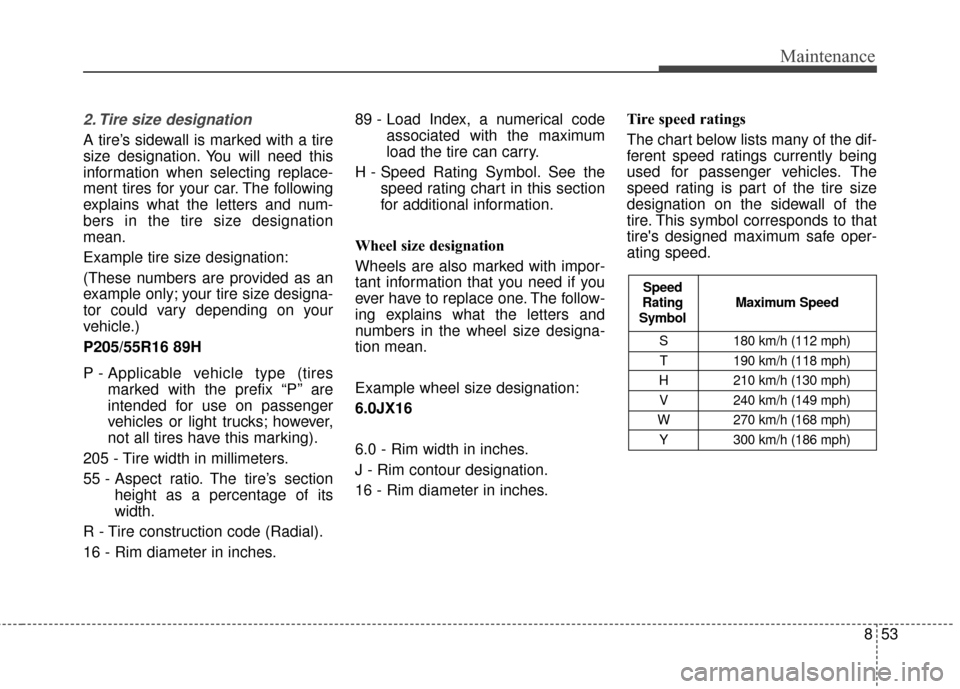
The chart below lists many of the dif-
ferent speed ratings currently being
used for passenger vehicles. The
speed rating is part of the tire size
designation on the sidewall of the
tire. This symbol corresponds to that
tire's designed maximum safe oper-
ating speed.
S 180 km/h (112 mph)
T 190 km/h (118 mph)
H 210 km/h (130 mph) V 240 km/h (149 mph)
W 270 km/h (168 mph) Y 300 km/h (186 mph)
Maximum Speed
Speed
Rating
Symbol
Page 523 of 595
855
Maintenance
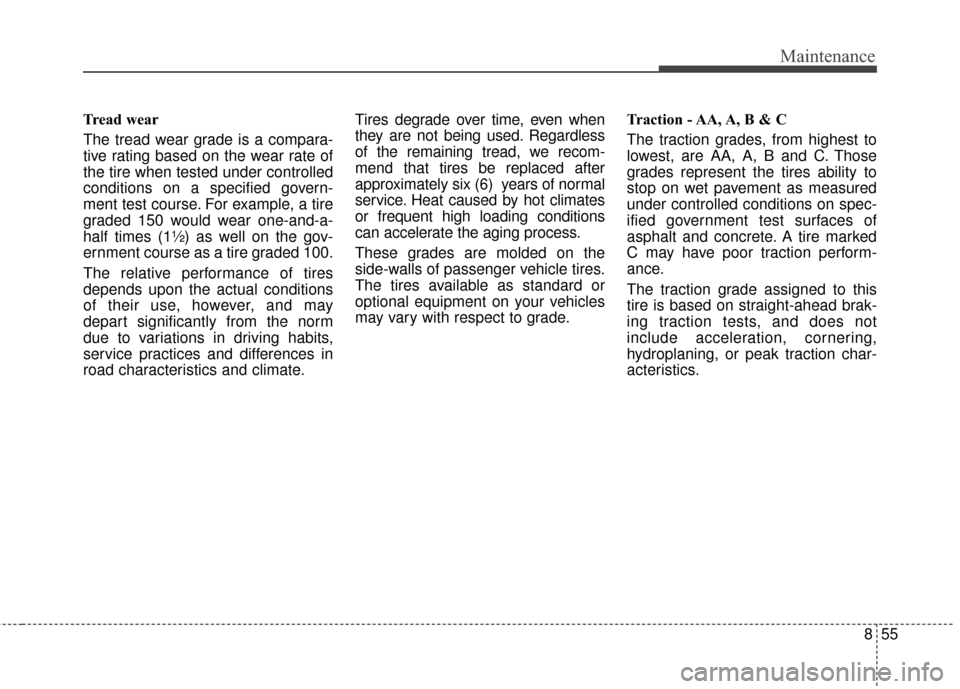
Tread wear
The tread wear grade is a compara-
tive rating based on the wear rate of
the tire when tested under controlled
conditions on a specified govern-
ment test course. For example, a tire
graded 150 would wear one-and-a-
half times (1½) as well on the gov-
ernment course as a tire graded 100.
The relative performance of tires
depends upon the actual conditions
of their use, however, and may
depart significantly from the norm
due to variations in driving habits,
service practices and differences in
road characteristics and climate.Tires degrade over time, even when
they are not being used. Regardless
of the remaining tread, we recom-
mend that tires be replaced after
approximately six (6) years of normal
service. Heat caused by hot climates
or frequent high loading conditions
can accelerate the aging process.
These grades are molded on the
side-walls of passenger vehicle tires.
The tires available as standard or
optional equipment on your vehicles
may vary with respect to grade.
Traction - AA, A, B & C
The traction grades, from highest to
lowest, are AA, A, B and C. Those
grades represent the tires ability to
stop on wet pavement as measured
under controlled conditions on spec-
ified government test surfaces of
asphalt and concrete. A tire marked
C may have poor traction perform-
ance.
The traction grade assigned to this
tire is based on straight-ahead brak-
ing traction tests, and does not
include acceleration, cornering,
hydroplaning, or peak traction char-
acteristics.
Page 549 of 595
881
Maintenance
If you don’t have the necessary tools,
the correct bulbs and the expertise,
consult an authorized Kia dealer. In
many cases, it is difficult to replace
vehicle light bulbs because other
parts of the vehicle must be removed
before you can get to the bulb. This is
especially true if you have to remove
the headlamp assembly to get to the
bulb(s).
Removing/installing the headlamp
assembly can result in damage to
the vehicle.
If non-genuine parts or substandard
bulbs are used, it may lead to blow-
ing a fuse or other wiring damages.
Do not install extra lamps or LEDs to
the vehicle. If additional lights are
installed, it may lead to lamp mal-
functions and flickering. Additionally,
the fuse box and other writing may
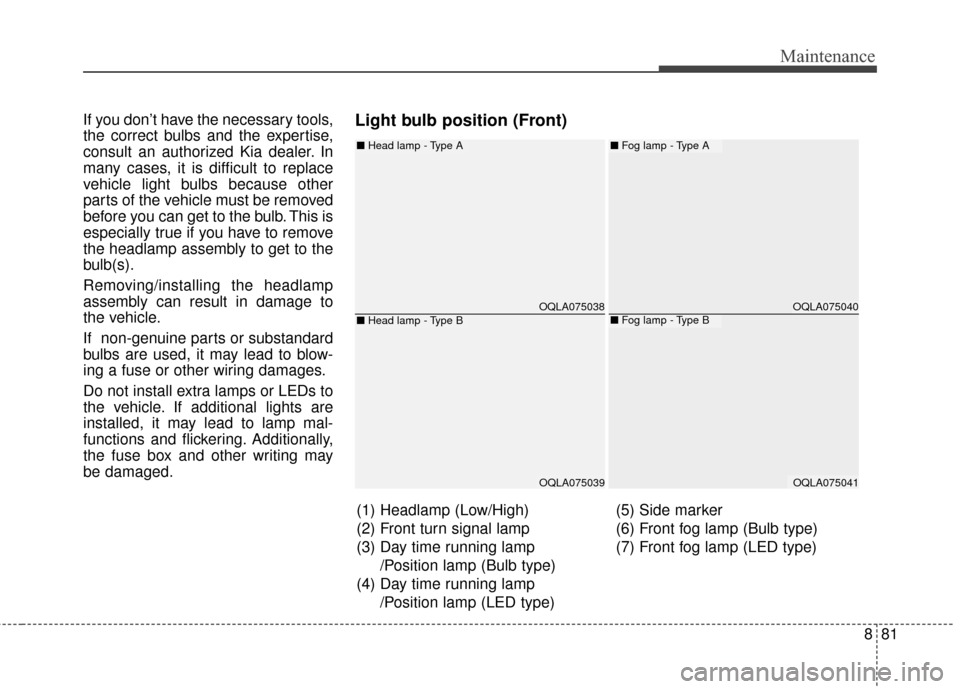
be damaged.Light bulb position (Front)
OQLA075038
OQLA075039
■Head lamp - Type A
■Head lamp - Type BOQLA075040
OQLA075041
■Fog lamp - Type A
■Fog lamp - Type B
(1) Headlamp (Low/High)
(2) Front turn signal lamp
(3) Day time running lamp
/Position lamp (Bulb type)
(4) Day time running lamp /Position lamp (LED type) (5) Side marker
(6) Front fog lamp (Bulb type)
(7) Front fog lamp (LED type)
Page 577 of 595
93
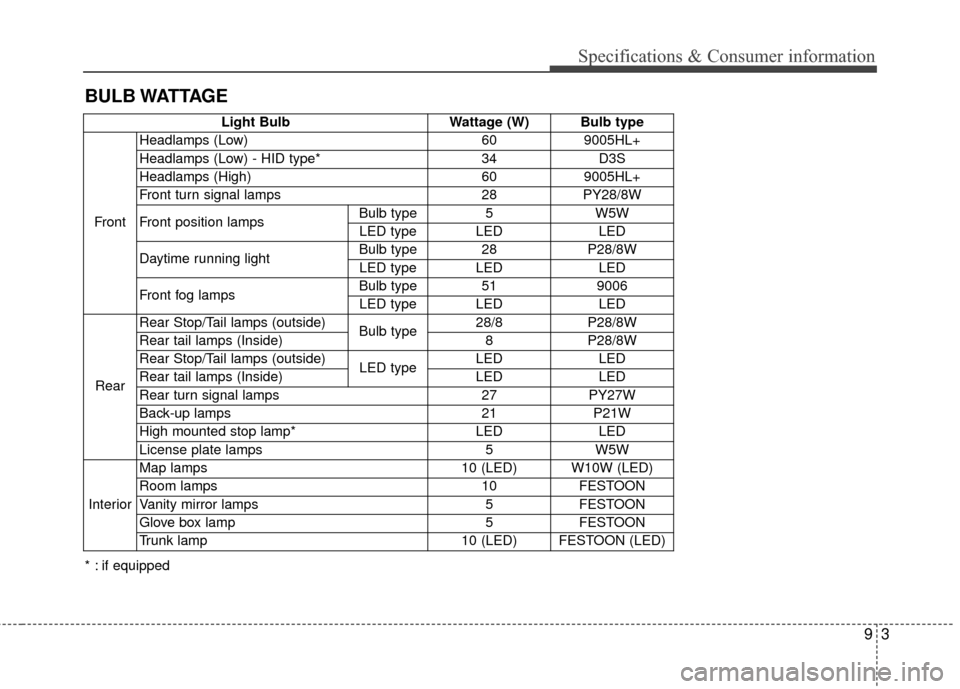
BULB WATTAGESpecifications & Consumer information
Light Bulb
Wattage (W) Bulb type
Front Headlamps (Low)
609005HL+
Headlamps (Low) - HID type* 34D3S
Headlamps (High) 609005HL+
Front turn signal lamps 28PY28/8W
Front position lamps Bulb type 5
W5W
LED type LED LED
Daytime running light Bulb type 28
P28/8W
LED typeLEDLED
Front fog lampsBulb type519006
LED typeLEDLED
Rear Rear Stop/Tail lamps (outside)
Bulb type28/8 P28/8W
Rear tail lamps (Inside) 8 P28/8W
Rear Stop/Tail lamps (outside) LED typeLED LED
Rear tail lamps (Inside) LED LED
Rear turn signal lamps 27 PY27W
Back-up lamps 21 P21W
High mounted stop lamp* LED LED
License plate lamps 5 W5W
Interior Map lamps 10 (LED) W10W (LED)
Room lamps 10 FESTOON
Vanity mirror lamps 5 FESTOON
Glove box lamp 5 FESTOON
Trunk lamp 10 (LED) FESTOON (LED)
* : if equipped
Page 583 of 595
99
Specifications & Consumer information
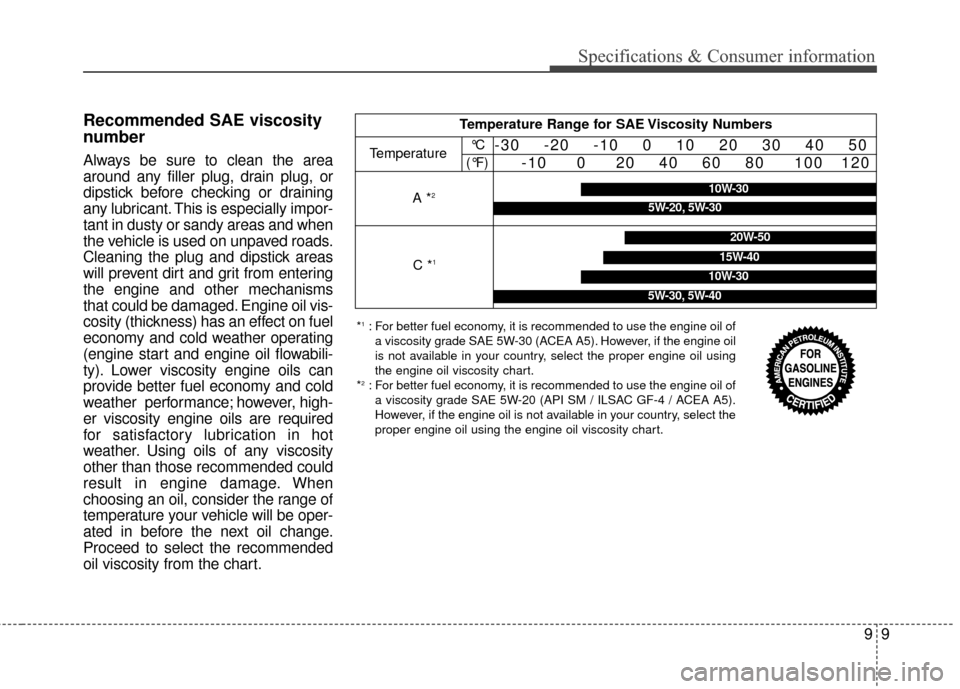
Recommended SAE viscosity
number
Always be sure to clean the area
around any filler plug, drain plug, or
dipstick before checking or draining
any lubricant. This is especially impor-
tant in dusty or sandy areas and when
the vehicle is used on unpaved roads.
Cleaning the plug and dipstick areas
will prevent dirt and grit from entering
the engine and other mechanisms
that could be damaged. Engine oil vis-
cosity (thickness) has an effect on fuel
economy and cold weather operating
(engine start and engine oil flowabili-
ty). Lower viscosity engine oils can
provide better fuel economy and cold
weather performance; however, high-
er viscosity engine oils are required
for satisfactory lubrication in hot
weather. Using oils of any viscosity
other than those recommended could
result in engine damage. When
choosing an oil, consider the range of
temperature your vehicle will be oper-
ated in before the next oil change.
Proceed to select the recommended
oil viscosity from the chart.
Temperature Range for SAE Viscosity Numbers
Temperature°C
(°F)-30 -20 -10 0 10 20 30 40 50 -10 0 20 40 60 80 100 120
C *1
20W-50
10W-30
15W-40
5W-30, 5W-40
*1: For better fuel economy, it is recommended to use the engine oil of
a viscosity grade SAE 5W-30 (ACEA A5). However, if the engine oil
is not available in your country, select the proper engine oil using
the engine oil viscosity chart.
*
2: For better fuel economy, it is recommended to use the engine oil of a viscosity grade SAE 5W-20 (API SM / ILSAC GF-4 / ACEA A5).
However, if the engine oil is not available in your country, select the
proper engine oil using the engine oil viscosity chart.
A *210W-30
5W-20, 5W-30