2017 KIA Sorento child
[x] Cancel search: childPage 318 of 576

55
Driving your vehicle
WARNING- Check sur-roundings
Always check the surrounding
areas near your vehicle for peo-
ple, especially children, before
putting a vehicle into D (Drive)
or R (Reverse).
WARNING- Fire risk
When you intend to park or stop
the vehicle with the engine on,
be careful not to depress the
accelerator pedal for a long
period of time. It may overheat
the engine or exhaust system
and cause fire.WARNING- Loose objects
Securely store items in your
vehicle. When you make a sud-
den stop or turn the steering
wheel rapidly, loose objects
may drop on the floor and it
could interfere with the opera-
tion of the foot pedals, possibly
causing an accident.WARNING- Driving while intoxicated
Do not drive while intoxicated.
Drinking and driving is danger-
ous. Even a small amount of
alcohol will affect your reflexes,
perceptions and judgment.
Driving while under the influ-
ence of drugs is as dangerous
as or more dangerous than driv-
ing drunk.
Page 325 of 576

Driving your vehicle
12
5
If the battery is weak or the smart
key does not work correctly, you
can start the engine by pressing
the engine start/stop button with
the smart key.
The side with the lock button
should contact the engine
start/stop button directly.
When you press the engine
start/stop button directly with the
smart key, the smart key should
contact the button at a right angle. When the stop lamp fuse is blown,
you can't start the engine normally.
Replace the fuse with a new one. If
it is not possible, you can start the
engine by pressing the ENGINE
START/STOP button for 10 sec-
onds while it is in the ACC posi-
tion. The engine can start without
depressing the brake pedal. But for
your safety always depress the
brake pedal before starting the
engine.
Do not press the ENGINE START/
STOP button for more than 10 sec-
onds except when the stop lamp fuse
is blown.
WARNING - Unintended
vehicle movement
Never leave the smart key in the
vehicle with children or vehicle
occupants who are unfamiliar
with the vehicle operation.
Pushing the ENGINE
START/STOP button while the
smart key is in the vehicle may
result in unintended engine
activation and/or unintended
vehicle movement.
OUM054005
Page 432 of 576
5119
Driving your vehicle
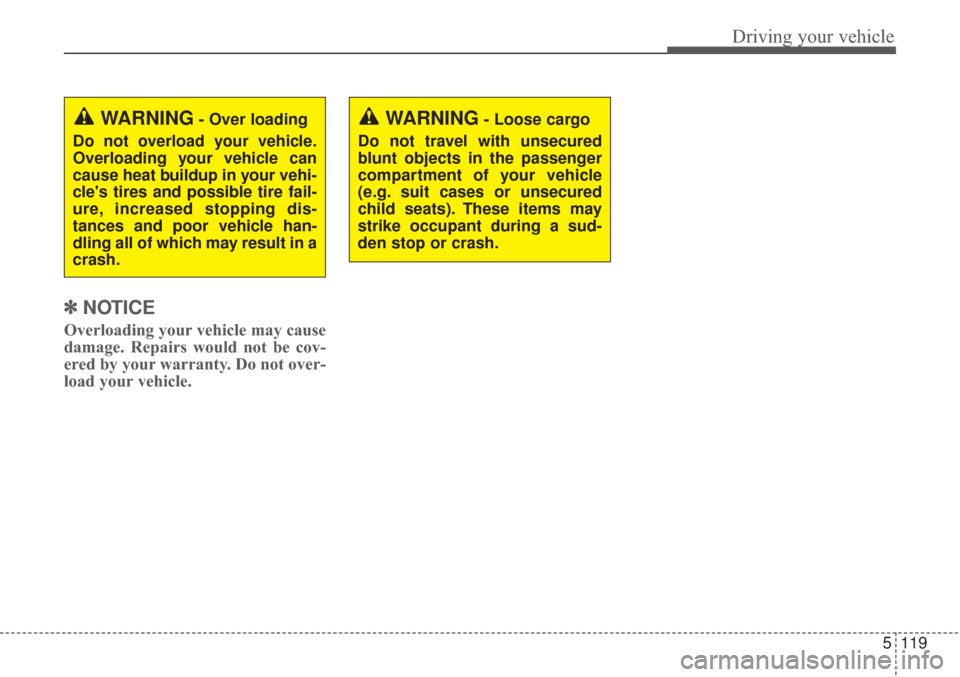
✽ ✽NOTICE
Overloading your vehicle may cause
damage. Repairs would not be cov-
ered by your warranty. Do not over-
load your vehicle.
WARNING- Loose cargo
Do not travel with unsecured
blunt objects in the passenger
compartment of your vehicle
(e.g. suit cases or unsecured
child seats). These items may
strike occupant during a sud-
den stop or crash.WARNING- Over loading
Do not overload your vehicle.
Overloading your vehicle can
cause heat buildup in your vehi-
cle's tires and possible tire fail-
ure, increased stopping dis-
tances and poor vehicle han-
dling all of which may result in a
crash.
Page 441 of 576

What to do in an emergency
86
IF YOU HAVE A FLAT TIRE
Jack and tools
The jack and wheel lug nut wrench
are stored in the luggage compart-
ment.
Remove the panel indicated in the
illustration.
(1) Jack handle
(2) Jack
(3) Wheel lug nut wrench
(4) Socket
Jacking instructions
The jack is provided for emergency
tire changing only.
To prevent the jack from “rattling”
while the vehicle is in motion, store it
properly.
Follow jacking instructions to reduce
the possibility of personal injury. Always move the vehicle complete-
ly off the road and onto the shoul-
der before trying to change a tire.
The jack should be used on a firm
level ground. If you cannot find a
firm, level place off the road, call a
towing service company for assis-
tance.
Be sure to use the correct front and rear jacking positions on the vehi-
cle; never use the bumpers or any
other part of the vehicle for jack
support.
Do not allow anyone to remain in the vehicle while it is on the jack.
Make sure any children present are in a secure place away from
the road and from the vehicle to be
raised with the jack.
WARNING- Changingtires
Never attempt vehicle repairs in
the traffic lanes of a public road
or highway.
OUM064003
WARNING- Tire Jack
Do not place any portion of your
body under a vehicle that is
only supported by a jack since
the vehicle can easily roll off the
jack. Use vehicle support
stands.
Page 501 of 576
749
Maintenance
BATTERY
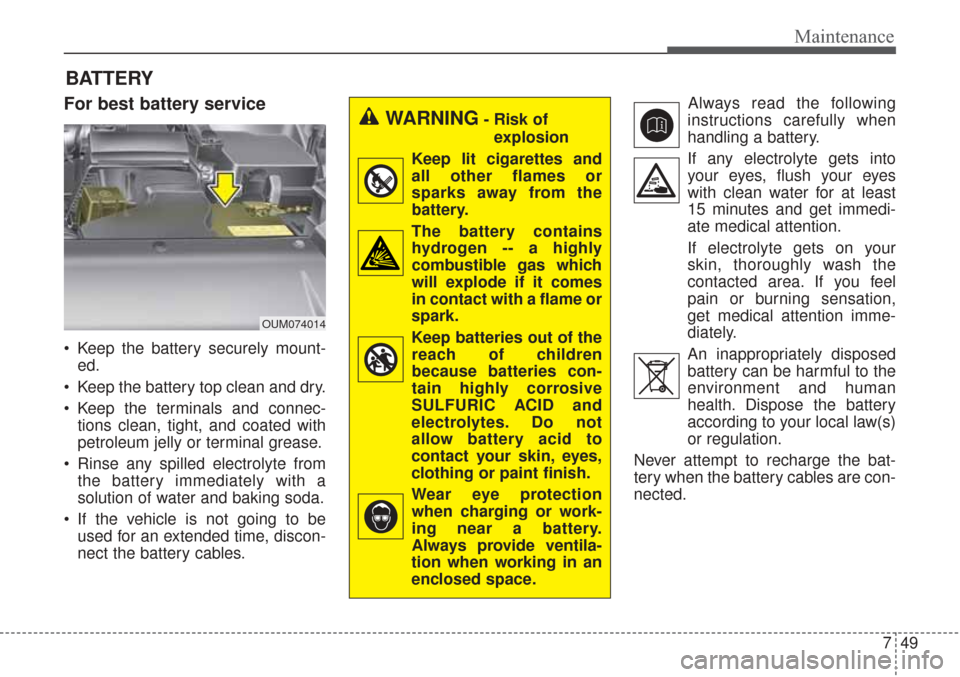
For best battery service
Keep the battery securely mount-ed.
Keep the battery top clean and dry.
Keep the terminals and connec- tions clean, tight, and coated with
petroleum jelly or terminal grease.
Rinse any spilled electrolyte from the battery immediately with a
solution of water and baking soda.
If the vehicle is not going to be used for an extended time, discon-
nect the battery cables. Always read the following
instructions carefully when
handling a battery.
If any electrolyte gets into your eyes, flush your eyes
with clean water for at least
15 minutes and get immedi-
ate medical attention.
If electrolyte gets on your
skin, thoroughly wash the
contacted area. If you feel
pain or burning sensation,
get medical attention imme-
diately.
An inappropriately disposed battery can be harmful to the
environment and human
health. Dispose the battery
according to your local law(s)
or regulation.
Never attempt to recharge the bat-
tery when the battery cables are con-
nected.
WARNING- Risk of explosion
Keep lit cigarettes and
all other flames or
sparks away from the
battery.
The battery contains hydrogen -- a highly
combustible gas which
will explode if it comes
in contact with a flame or
spark.
Keep batteries out of the reach of children
because batteries con-
tain highly corrosive
SULFURIC ACID and
electrolytes. Do not
allow battery acid to
contact your skin, eyes,
clothing or paint finish.
Wear eye protection when charging or work-
ing near a battery.
Always provide ventila-
tion when working in an
enclosed space.
OUM074014
Page 568 of 576

Index
2I
Advanced smart cruise control system (ASCC) . . . . . . 5-65Limitations of the system . . . . . . . . . . . . . . . . . . . . . 5-75
Speed setting (ASCC) . . . . . . . . . . . . . . . . . . . . . . . 5-66
To adjust the sensitivity of advanced smartcruise control . . . . . . . . . . . . . . . . . . . . . . . . . . . . . 5-74
To convert to cruise control mode . . . . . . . . . . . . . . 5-75
Vehicle to vehicle distance setting (ASCC) . . . . . . . 5-70
Air bag - advanced supplemental restraint system . . . 3-44 Air bag warning label. . . . . . . . . . . . . . . . . . . . . . . . 3-68
Air bag warning light . . . . . . . . . . . . . . . . . . . . . . . . 3-47
Curtain air bag . . . . . . . . . . . . . . . . . . . . . . . . . . . . . 3-61
Do not install a child restraint on the frontpassenger’s seat . . . . . . . . . . . . . . . . . . . . . . . . . . . 3-47
Driver's and passenger's front air bag . . . . . . . . . . . 3-57
How does the air bag system operate . . . . . . . . . . . 3-45
Inflation and non-inflation conditions of the air bag . . 3-62
Occupant Detection System (ODS) . . . . . . . . . . . . . 3-51
Side air bag. . . . . . . . . . . . . . . . . . . . . . . . . . . . . . . . 3-59
SRS Care . . . . . . . . . . . . . . . . . . . . . . . . . . . . . . . . . 3-67
SRS components and functions . . . . . . . . . . . . . . . . 3-48
Air cleaner . . . . . . . . . . . . . . . . . . . . . . . . . . . . . . . . . . 7-42\
Filter replacement. . . . . . . . . . . . . . . . . . . . . . . . . . . 7-42
Air conditioning system . . . . . . . . . . . . . . . . . . . . . . . . . 8-5
All wheel drive (AWD) . . . . . . . . . . . . . . . . . . . . . . . . 5-20 All wheel drive (AWD) transfer mode selection . . . 5-22
For safe all wheel drive operation . . . . . . . . . . . . . . 5-23
Tight corner brake effect . . . . . . . . . . . . . . . . . . . . . 5-21 Appearance care . . . . . . . . . . . . . . . . . . . . . . . . . . . . . . 7-91
Exterior care . . . . . . . . . . . . . . . . . . . . . . . . . . . . . . . 7-91
Interior care . . . . . . . . . . . . . . . . . . . . . . . . . . . . . . . 7-98
Autonomous Emergency Braking (AEB)/ Forward Collision Warning (FCW) . . . . . . . . . . . . 5-50
AEB warning message and system control . . . . . . . 5-52
Brake operation . . . . . . . . . . . . . . . . . . . . . . . . . . . . 5-54
Limitation of the system . . . . . . . . . . . . . . . . . . . . . 5-56
Recognizing pedestrians. . . . . . . . . . . . . . . . . . . . . . 5-59
Sensor to detect the distance from the vehicle in front (front radar) . . . . . . . . . . . . . . . . . . . . . . . . 5-54
System malfunction . . . . . . . . . . . . . . . . . . . . . . . . . 5-55
System setting and activation. . . . . . . . . . . . . . . . . . 5-50
Audio system . . . . . . . . . . . . . . . . . . . . . . . . . . . . . . . 4-172 Antenna . . . . . . . . . . . . . . . . . . . . . . . . . . . . . . . . . 4-172
AUX, USB and iPod
®port . . . . . . . . . . . . . . . . . . 4-174
How vehicle audio works. . . . . . . . . . . . . . . . . . . . 4-175
Steering wheel remote controller . . . . . . . . . . . . . . 4-173
Using iPod
®device . . . . . . . . . . . . . . . . . . . . . . . . 4-180
Using the USB device . . . . . . . . . . . . . . . . . . . . . . 4-179
Automatic climate control system . . . . . . . . . . . . . . . 4-141 3rd row air conditioning. . . . . . . . . . . . . . . . . . . . . 4-149
Automatic heating and air conditioning. . . . . . . . . 4-143
Checking the amount of air conditionerrefrigerant and compressor lubricant . . . . . . . . . . 4-153
Climate control air filter. . . . . . . . . . . . . . . . . . . . . 4-152
Manual heating and air conditioning . . . . . . . . . . . 4-144
System operation . . . . . . . . . . . . . . . . . . . . . . . . . . 4-150
A
Page 569 of 576

I3
Index
Automatic transaxle . . . . . . . . . . . . . . . . . . . . . . . . . . . 5-13Automatic transaxle operation . . . . . . . . . . . . . . . . . 5-13
Good driving practices . . . . . . . . . . . . . . . . . . . . . . . 5-19
Battery. . . . . . . . . . . . . . . . . . . . . . . . . . . . . . . . . . . . \
. . 7-49 Battery recharging . . . . . . . . . . . . . . . . . . . . . . . . . . 7-50
For best battery service . . . . . . . . . . . . . . . . . . . . . . 7-49
Recharging battery . . . . . . . . . . . . . . . . . . . . . . . . . . 7-51
Reset items . . . . . . . . . . . . . . . . . . . . . . . . . . . . . . . . 7-51
Before driving . . . . . . . . . . . . . . . . . . . . . . . . . . . . . . . . . 5-4 Before entering vehicle . . . . . . . . . . . . . . . . . . . . . . . 5-4
Before starting . . . . . . . . . . . . . . . . . . . . . . . . . . . . . . 5-4
Necessary inspections . . . . . . . . . . . . . . . . . . . . . . . . 5-4
Blind spot detection system (BSD) . . . . . . . . . . . . . . . 5-84 BSD (Blind Spot Detection) /LCA (Lane Change Assist) . . . . . . . . . . . . . . . . . . 5-85
Non-operating condition . . . . . . . . . . . . . . . . . . . . . 5-90
RCTA (Rear Cross Traffic Alert) . . . . . . . . . . . . . . . 5-88
Brake fluid . . . . . . . . . . . . . . . . . . . . . . . . . . . . . . . . . . 7-39\
Checking the brake fluid level . . . . . . . . . . . . . . . . . 7-39
Brake system. . . . . . . . . . . . . . . . . . . . . . . . . . . . . . . . . 5-27 Anti-lock brake system (ABS) . . . . . . . . . . . . . . . . . 5-40
AUTO HOLD. . . . . . . . . . . . . . . . . . . . . . . . . . . . . . 5-37
Electronic parking brake (EPB) . . . . . . . . . . . . . . . . 5-30
Electronic stability control (ESC) . . . . . . . . . . . . . . 5-42
Good braking practices . . . . . . . . . . . . . . . . . . . . . . 5-48 Hill-start assist control (HAC) . . . . . . . . . . . . . . . . . 5-47
Parking brake – Foot type . . . . . . . . . . . . . . . . . . . . 5-29
Power brakes . . . . . . . . . . . . . . . . . . . . . . . . . . . . . . 5-27
Vehicle stability management (VSM) . . . . . . . . . . . 5-46
Bulb wattage . . . . . . . . . . . . . . . . . . . . . . . . . . . . . . . . . . 8-3
Child restraint system . . . . . . . . . . . . . . . . . . . . . . . . . . 3-36 Child restraint system. . . . . . . . . . . . . . . . . . . . . . . . 3-37
Lower anchor system . . . . . . . . . . . . . . . . . . . . . . . . 3-42
Tether anchor system . . . . . . . . . . . . . . . . . . . . . . . . 3-41
Clean air . . . . . . . . . . . . . . . . . . . . . . . . . . . . . . . . . . . 4-\
158
Climate control air filter . . . . . . . . . . . . . . . . . . . . . . . . 7-44 Filter inspection . . . . . . . . . . . . . . . . . . . . . . . . . . . . 7-44
Cruise control system . . . . . . . . . . . . . . . . . . . . . . . . . . 5-61 To cancel cruise control . . . . . . . . . . . . . . . . . . . . . . 5-63
To decrease the cruising speed. . . . . . . . . . . . . . . . . 5-63
To increase cruise control set speed. . . . . . . . . . . . . 5-62
To resume cruising speed . . . . . . . . . . . . . . . . . . . . . 5-64
To set cruise control speed . . . . . . . . . . . . . . . . . . . . 5-62
To temporarily accelerate with the cruise control on. . . . . . . . . . . . . . . . . . . . . . . . 5-63
To turn cruise control off . . . . . . . . . . . . . . . . . . . . . 5-64
C
B
Page 570 of 576

Index
4I
Defroster . . . . . . . . . . . . . . . . . . . . . . . . . . . . . . . . . . 4-12\
9Rear window defroster . . . . . . . . . . . . . . . . . . . . . . 4-129
Dimensions . . . . . . . . . . . . . . . . . . . . . . . . . . . . . . . . . . . 8-\
2
Door locks . . . . . . . . . . . . . . . . . . . . . . . . . . . . . . . . . . 4-22\
Child-protector rear door lock . . . . . . . . . . . . . . . . . 4-25
Impact sensing door unlock system . . . . . . . . . . . . . 4-24
Operating door locks from inside the vehicle . . . . . 4-23
Operating door locks from outside the vehicle . . . . 4-22
Drive mode integrated control system . . . . . . . . . . . . . 5-81 Drive mode . . . . . . . . . . . . . . . . . . . . . . . . . . . . . . . . 5-81
Economical operation . . . . . . . . . . . . . . . . . . . . . . . . . . 5-96
Emergency starting . . . . . . . . . . . . . . . . . . . . . . . . . . . . . 6-5 Jump starting . . . . . . . . . . . . . . . . . . . . . . . . . . . . . . . 6-5
Push-starting . . . . . . . . . . . . . . . . . . . . . . . . . . . . . . . . 6-6
Emission control system . . . . . . . . . . . . . . . . . . . . . . . 7-101 Crankcase emission control system . . . . . . . . . . . . 7-101
Evaporative emission control (including ORVR:Onboard refueling vapor recovery) system . . . . . 7-101
Exhaust emission control system . . . . . . . . . . . . . . 7-102
Engine . . . . . . . . . . . . . . . . . . . . . . . . . . . . . . . . . . . . \
. . . 8-2
Engine compartment . . . . . . . . . . . . . . . . . . . . . . . . . . . . 2-6
Engine compartment . . . . . . . . . . . . . . . . . . . . . . . . . . . . 7-3
Engine coolant . . . . . . . . . . . . . . . . . . . . . . . . . . . . . . . 7-36 Changing the coolant . . . . . . . . . . . . . . . . . . . . . . . . 7-38
Checking the coolant level . . . . . . . . . . . . . . . . . . . . 7-36
Engine number . . . . . . . . . . . . . . . . . . . . . . . . . . . . . . . 8-10
Engine oil . . . . . . . . . . . . . . . . . . . . . . . . . . . . . . . . . . . 7-\
34 Changing the engine oil and filter . . . . . . . . . . . . . . 7-35
Checking the engine oil level. . . . . . . . . . . . . . . . . . 7-34
ENGINE START/STOP button . . . . . . . . . . . . . . . . . . . 5-9 ENGINE START/STOP button position . . . . . . . . . . 5-9
Illuminated ENGINE START/STOP button . . . . . . . 5-9
Starting the engine with a smart key . . . . . . . . . . . . 5-11
Explanation of scheduled maintenance items . . . . . . . 7-29
Exterior features . . . . . . . . . . . . . . . . . . . . . . . . . . . . . 4-171 Roof rack . . . . . . . . . . . . . . . . . . . . . . . . . . . . . . . . 4-171
Exterior overview . . . . . . . . . . . . . . . . . . . . . . . . . . . . . . 2-2
Folding key . . . . . . . . . . . . . . . . . . . . . . . . . . . . . . . . . . . 4-\
5 Battery replacement . . . . . . . . . . . . . . . . . . . . . . . . . . 4-8
Immobilizer system . . . . . . . . . . . . . . . . . . . . . . . . . . 4-9
Key operations . . . . . . . . . . . . . . . . . . . . . . . . . . . . . . 4-5
Record your key number . . . . . . . . . . . . . . . . . . . . . . 4-5
Transmitter precautions . . . . . . . . . . . . . . . . . . . . . . . 4-7
Fuel filler lid . . . . . . . . . . . . . . . . . . . . . . . . . . . . . . . . . 4-45 Closing the fuel filler lid . . . . . . . . . . . . . . . . . . . . . 4-45
Emergency fuel filler lid release . . . . . . . . . . . . . . . 4-48
Opening the fuel filler lid. . . . . . . . . . . . . . . . . . . . . 4-45
Fuel requirements . . . . . . . . . . . . . . . . . . . . . . . . . . . . . . 1-2
F
E
D