2017 CITROEN BERLINGO ELECTRIC tyre pressure
[x] Cancel search: tyre pressurePage 170 of 328

168
Berlingo-2-VU_en_Chap09_Caract_technique_ed01-2015Berlingo-2-VU_en_Chap09_Caract_technique_ed01-2015
IDEnTIFICATIOn MARKInGS
A. Manufacturer's plate.C. Tyres and paint colour code.
B. Serial number.
This is located on the right-hand
middle pillar.
1 - VF… Type serial number.
2 - Gross vehicle weight (GVW).
3 - Gross train weight (GTW).
4.1 - Maximum weight on front axle.
4.2 - Maximum weight on rear axle. This is engraved on the front right
wheelarch.
The label C, on the front door gives:
-
the wheel and tyre sizes,
-
the tyre pressures, laden and
unladen
-
the tyre pressure for the spare
wheel,
-
the paint colour code.The tyre pressures should be
checked when the tyres are cold,
at least once a month.
Identification markings
Page 270 of 328
12
ECO-DRIVING
Practical advice
Adopt a gentle driving style
the electrical consumption of your
vehicle depends very strongly on the
route you take, you style of driving and
your speed.
In all cases, adopt a gentle driving
style.
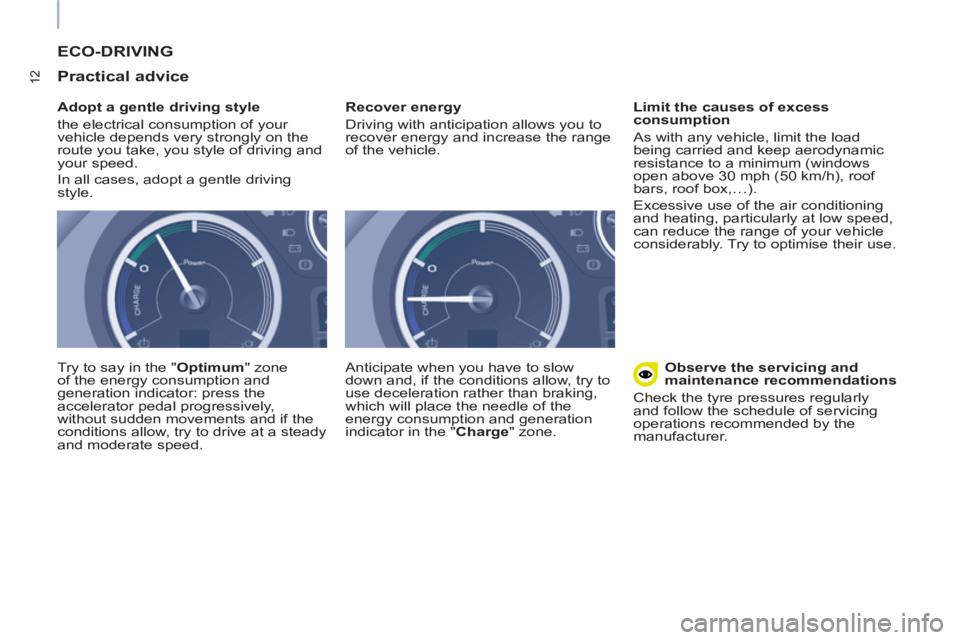
Try to say in the " Optimum
" zone
of the energy consumption and
generation indicator: press the
accelerator pedal progressively,
without sudden movements and if the
conditions allow, try to drive at a steady
and moderate speed.
Recover energy
Driving with anticipation allows you to
recover energy and increase the range
of the vehicle.
Anticipate when you have to slow
down and, if the conditions allow, try to
use deceleration rather than braking,
which will place the needle of the
energy consumption and generation
indicator in the " Charge
" zone.
Limit the causes of excess
consumption
As with any vehicle, limit the load
being carried and keep aerodynamic
resistance to a minimum (windows
open above 30 mph (50 km/h), roof
bars, roof box,…).
Excessive use of the air conditioning
and heating, particularly at low speed,
can reduce the range of your vehicle
considerably. Try to optimise their use.
Observe the servicing and
maintenance recommendations
Check the tyre pressures regularly
and follow the schedule of servicing
operations recommended by the
manufacturer.
Page 282 of 328

24
In the event of an accident or impact
under the vehicle or to one of the
charging fl aps
In the event of an accident or an
impact to the underbody of the vehicle
(for example: contact with a milestone,
a raised kerb or other urban roadside
fi xture) or in the event of an impact,
even slight, to one of the charging
fl aps, these circumstances may
have serious repercussions for your
vehicle's electrical system or traction
battery and cause damage to them.
Have your vehicle checked as soon as
possible by a franchised dealer or a
qualifi ed workshop.
Never touch the "300 Volt" components
of the orange cables exposed and
visible inside or outside of the vehicle.
In the case of serious damage to the
traction battery:
- do not try to do anything to the
vehicle yourself,
- never touch liquids coming from
the traction battery and in the event
of contact between your body and
these products, wash abundantly
with water and contact a doctor as
soon as possible.
For washing the bodywork, do
not use a pressure greater than
80 bar.
In the event of exposure to a fi re
In the event of exposure to a fi re,
leave and have everybody leave the
vehicle immediately. Never intervene
yourself (risk of electrocution). You
must contact the emergency services
immediately. Warn them that your
vehicle is electric.
Audible environment
Outside
The driver should be particularly
vigilant when driving the electric
vehicle, as it makes very little noise
when moving.
Inside
While it is operating you may hear
noises that are specifi c to an electric
vehicle, such as:
- the traction battery relays when
starting,
- the vacuum pump when braking,
- tyre or wind noise from the vehicle
when driving.
When parking on a slope, it is
recommended that you apply the
parking brake before placing the drive
selector at P
. When moving off, o
knock may be felt, which is normal.
Washing precautions
Never wash the vehicle while the
battery is on charge.
Before washing the vehicle, check
that the access fl aps are closed and
the cover on each charging socket is
closed.
In order to avoid damaging the electric
units, the use of a high pressure jet
wash is strictly forbidden:
- under the bonnet,
- under the vehicle, around the
battery packs.
Long term
When your vehicle is to be laid up
for an indeterminate period, carry out
a complete recharge of the traction
battery every three months (following
the normal charging procedure). Before
carrying out the charging operation,
ensure that the 12 V ancillaries battery
is not disconnected or discharged. If
this is the case, refer to the "Ancillaries
battery" section for information on
connecting or charging it.
Laying up the vehicle
Precautions to take when
charging the battery
- Do not stay inside or near the
vehicle.
Particularly if you wear a pacemaker
or other medial electric device.
For complete information on the
precautions to take, contact your
doctor.
- Never do any work under the
bonnet as there is a risk of serious
injury.
Risk of cuts as the fan may start
turning at any time. Risk of burns
as some areas remain very hot for
even an hour after the end of the the
charging operation.
Page 290 of 328

32
IDENTIFICATION MARKINGS
A. Manufacturer's plate.
This is located on the right-hand
middle pillar.
1 - VF Type serial number.
2 - Gross vehicle weight (GVW).
3 - Gross train weight (GTW).
4.1 - Maximum weight on front axle.
4.2 - Maximum weight on rear axle.
B. Serial number.
This is engraved on the front right
wheelarch.
C. Tyres and paint colour
code.
The label C
, on the front door gives:
- the wheel and tyre sizes,
- the brands of tyres approved by the
manufacturer,
- the tyre pressures (the tyre
pressures must be checked when
the tyres are cold, at least once a
month),
- the paint colour code.
Page 306 of 328
12
ECO-DRIVING
Practical advice
Adopt a gentle driving style
the electrical consumption of your
vehicle depends very strongly on the
route you take, you style of driving and
your speed.
In all cases, adopt a gentle driving
style.
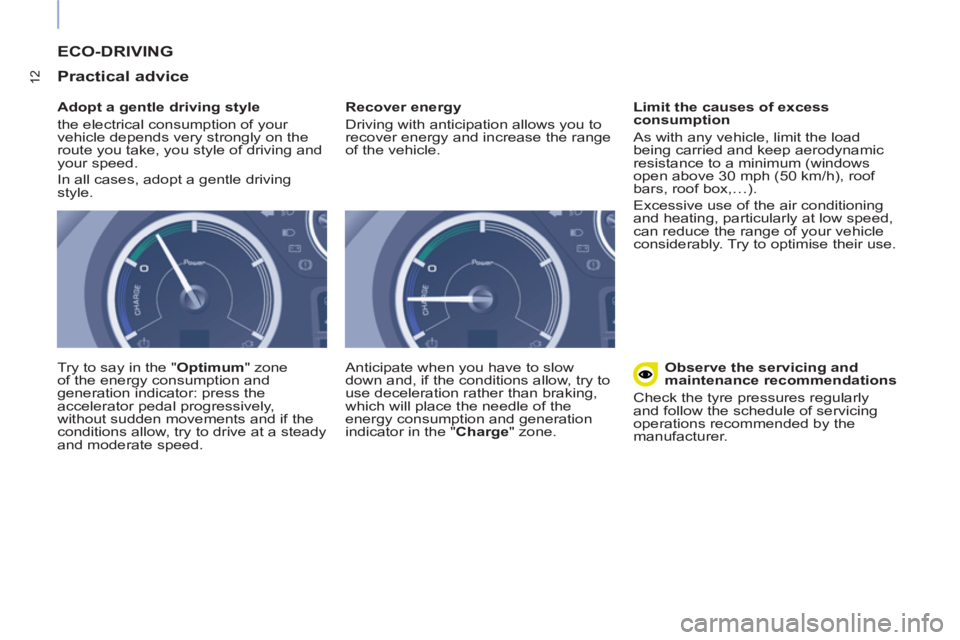
Try to say in the " Optimum
" zone
of the energy consumption and
generation indicator: press the
accelerator pedal progressively,
without sudden movements and if the
conditions allow, try to drive at a steady
and moderate speed.
Recover energy
Driving with anticipation allows you to
recover energy and increase the range
of the vehicle.
Anticipate when you have to slow
down and, if the conditions allow, try to
use deceleration rather than braking,
which will place the needle of the
energy consumption and generation
indicator in the " Charge
" zone.
Limit the causes of excess
consumption
As with any vehicle, limit the load
being carried and keep aerodynamic
resistance to a minimum (windows
open above 30 mph (50 km/h), roof
bars, roof box,…).
Excessive use of the air conditioning
and heating, particularly at low speed,
can reduce the range of your vehicle
considerably. Try to optimise their use.
Observe the servicing and
maintenance recommendations
Check the tyre pressures regularly
and follow the schedule of servicing
operations recommended by the
manufacturer.
Page 318 of 328

24
In the event of an accident or impact
under the vehicle or to one of the
charging fl aps
In the event of an accident or an
impact to the underbody of the vehicle
(for example: contact with a milestone,
a raised kerb or other urban roadside
fi xture) or in the event of an impact,
even slight, to one of the charging
fl aps, these circumstances may
have serious repercussions for your
vehicle's electrical system or traction
battery and cause damage to them.
Have your vehicle checked as soon as
possible by a franchised dealer or a
qualifi ed workshop.
Never touch the "300 Volt" components
of the orange cables exposed and
visible inside or outside of the vehicle.
In the case of serious damage to the
traction battery:
- do not try to do anything to the
vehicle yourself,
- never touch liquids coming from
the traction battery and in the event
of contact between your body and
these products, wash abundantly
with water and contact a doctor as
soon as possible.
For washing the bodywork, do
not use a pressure greater than
80 bar.
In the event of exposure to a fi re
In the event of exposure to a fi re,
leave and have everybody leave the
vehicle immediately. Never intervene
yourself (risk of electrocution). You
must contact the emergency services
immediately. Warn them that your
vehicle is electric.
Audible environment
Outside
The driver should be particularly
vigilant when driving the electric
vehicle, as it makes very little noise
when moving.
Inside
While it is operating you may hear
noises that are specifi c to an electric
vehicle, such as:
- the traction battery relays when
starting,
- the vacuum pump when braking,
- tyre or wind noise from the vehicle
when driving.
When parking on a slope, it is
recommended that you apply the
parking brake before placing the drive
selector at P
. When moving off, o
knock may be felt, which is normal.
Washing precautions
Never wash the vehicle while the
battery is on charge.
Before washing the vehicle, check
that the access fl aps are closed and
the cover on each charging socket is
closed.
In order to avoid damaging the electric
units, the use of a high pressure jet
wash is strictly forbidden:
- under the bonnet,
- under the vehicle, around the
battery packs.
Long term
When your vehicle is to be laid up
for an indeterminate period, carry out
a complete recharge of the traction
battery every three months (following
the normal charging procedure). Before
carrying out the charging operation,
ensure that the 12 V ancillaries battery
is not disconnected or discharged. If
this is the case, refer to the "Ancillaries
battery" section for information on
connecting or charging it.
Laying up the vehicle
Precautions to take when
charging the battery
- Do not stay inside or near the
vehicle.
Particularly if you wear a pacemaker
or other medial electric device.
For complete information on the
precautions to take, contact your
doctor.
- Never do any work under the
bonnet as there is a risk of serious
injury.
Risk of cuts as the fan may start
turning at any time. Risk of burns
as some areas remain very hot for
even an hour after the end of the the
charging operation.
Page 326 of 328

32
IDENTIFICATION MARKINGS
A. Manufacturer's plate.
This is located on the right-hand
middle pillar.
1 - VF Type serial number.
2 - Gross vehicle weight (GVW).
3 - Gross train weight (GTW).
4.1 - Maximum weight on front axle.
4.2 - Maximum weight on rear axle.
B. Serial number.
This is engraved on the front right
wheelarch.
C. Tyres and paint colour
code.
The label C
, on the front door gives:
- the wheel and tyre sizes,
- the brands of tyres approved by the
manufacturer,
- the tyre pressures (the tyre
pressures must be checked when
the tyres are cold, at least once a
month),
- the paint colour code.