2016 RENAULT KANGOO battery
[x] Cancel search: batteryPage 67 of 173

special features of diesel versions........ (up to the end of the DU)2.5
ENG_UD7279_1
Particularités versions diesel (X76 - Renault)
ENG_NU_854-2_X76LL_Renault_2
Special features of diesel versions
Do not park the vehicle or
run the engine in locations
where combustible sub-
stances or materials such as
grass or leaves can come into con-
tact with the hot exhaust system.
Precautions to be taken in
winter
To avoid any faults in icy weather:
– make sure that the battery is always
fully charged;
–
always keep the diesel tank rela -
tively full to avoid water vapour con-
densing in it and accumulating at the
bottom of the tank.
Diesel engine speed
Diesel engines are fitted with injection
equipment incorporating a mechanical
regulator which prevents overrevving
of the engine irrespective of the gear
in use.
Running out of fuel
You may start the engine normally after
refilling the fuel tank even if you have
completely run out of fuel , provided
that the battery is well-charged.
However, if the engine fails to start after
a few seconds and several attempts,
contact an approved Dealer.
SPEcIAl fEAtURES of DIESEl vERSIoNS
Page 71 of 173
 2.9
ENG_UD14461_2
Environnement (X35 - X44 - X65 - X73 - X77 - X81 - X84 - E84 - L84 - X8\
5 - X91 - B91 - K91 - D91 -")
environment .......................................... (up to the end of the DU) 2.9
ENG_UD14461_2
Environnement (X35 - X44 - X65 - X73 - X77 - X81 - X84 - E84 - L84 - X8\
5 - X91 - B91 - K91 - D91 - X70 - X76 - X83 - X61 - F61 - K61 - X95 - B9\
5 - D95 - K95 - J95 -
ENG_NU_854-2_X76LL_Renault_2
Environment
ENvIRoNMENt
Make your contribution towards pro-
tecting the environment too.
–
Worn parts replaced in the course of
routine vehicle maintenance (vehi-
cle battery, oil filter, air filter, batter-
ies, etc.) and oil containers (empty or
filled with used oil) must be disposed
of through specialist organisations.
–
At the end of the vehicle’s service
life, it should be sent to approved
centres to ensure that it is recycled.
–
In all cases, comply with local legis -
lation.
Recycling
Your vehicle is 85% recyclable and
95% recoverable, in line with European
requirements that will come into force
in 2015.
To achieve these objectives, many of
the vehicle components have been de-
signed to enable them to be recycled.
The materials and structures have been
carefully designed to allow these com-
ponents to be easily removed and re-
processed by specialist companies.
In order to preserve raw material re-
sources, this vehicle incorporates nu-
merous parts made from recycled plas-
tics or renewable materials (vegetable
or animal-derived materials such as
cotton or wool).
Your vehicle has been designed with
respect for the environment in mind for
its entire service life: during production,
use and at the end of its life.
Manufacture
Your vehicle has been manufactured in
a factory which complies with the strict-
est environmental standards.
Furthermore, a system has been imple-
mented for checking all of the vehicle
components.
Emissions
Your vehicle is equipped with a parti-
cle filter system including
a catalytic
converter, an oxygen sensor and an
active carbon filter (the latter prevents
vapour from the petrol tank being re-
leased into the open air).
For certain diesel vehicles, this system
also has a particle filter to reduce the
volume of soot particles emitted.
Page 90 of 173

cigar lighter ........................................... (up to the end of the DU)
ashtrays ................................................ (up to the end of the DU)
3.16
ENG_UD14028_2
Cendriers - Allume-cigares (X76 - Renault)
ENG_NU_854-2_X76LL_Renault_3
Ashtrays/cigar lighter/accessories socket
Cigar lighter
With the ignition on, push in the cigar
lighter
1.
It will spring back with a click when it is
ready. Pull it out to use. After use, re-
place it without pushing it all the way
in.
AsHtrA ys/CiGAr LiGHter/ACCessOries sOCket
2
1
3
removable ashtray(depending on vehicle)
This is a removable ashtray which can
be placed in the cup holders
2.
Ashtray in rear panel
To empty the ashtray, lift cover 3 and
pull it up to release it from the armrest.
Accessories socket
You can use the cigar lighter socket 1.
It is designed for connecting acces-
sories with a maximum power rating
of 120 watts (voltage: 12V) which
have been approved by our Technical
Department.
Depending on the battery charge, the
accessories socket may stop working.
Only connect accessories
with a maximum power of
120 Watts.
Fire hazard.
Page 99 of 173

ENG_NU_854-2_X76LL_Renault_4
Section 4: Maintenance
Bonnet . . . . . . . . . . . . . . . . . . . . . . . . . . . . . . . . . . . . \
. . . . . . . . . . .")
4.1
ENG_UD14021_2
Sommaire 4 (X76 - Renault)
ENG_NU_854-2_X76LL_Renault_4
Section 4: Maintenance
Bonnet . . . . . . . . . . . . . . . . . . . . . . . . . . . . . . . . . . . . \
. . . . . . . . . . . . . . . . . . . . . . . . . . . . . . . . . . . . 4.2
Engine oil level . . . . . . . . . . . . . . . . . . . . . . . . . . . . . . . . . . . .\
. . . . . . . . . . . . . . . . . . . . . . . . . . . . . 4.3
general information . . . . . . . . . . . . . . . . . . . . . . . . . . . . . . . . . . . .\
. . . . . . . . . . . . . . . . . . . . 4.3
topping up/filling . . . . . . . . . . . . . . . . . . . . . . . . . . . . . . . . . . . . \
. . . . . . . . . . . . . . . . . . . . . . . 4.5
Engine oil change . . . . . . . . . . . . . . . . . . . . . . . . . . . . . . . . . . . .\
. . . . . . . . . . . . . . . . . . . . . . . . . . . 4.6
Level, filters . . . . . . . . . . . . . . . . . . . . . . . . . . . . . . . . . . . . \
. . . . . . . . . . . . . . . . . . . . . . . . . . . . . . . . 4.7
Battery . . . . . . . . . . . . . . . . . . . . . . . . . . . . . . . . . . . . \
. . . . . . . . . . . . . . . . . . . . . . . . . . . . . . . . . . . . 4.10
Bodywork maintenance . . . . . . . . . . . . . . . . . . . . . . . . . . . . . . . . . . . . \
. . . . . . . . . . . . . . . . . . . . . . . 4.1
1
Interior trim maintenance . . . . . . . . . . . . . . . . . . . . . . . . . . . . . . . . . . . . \
. . . . . . . . . . . . . . . . . . . . . . 4.13
Page 108 of 173
4.10
ENG_UD14326_1
Batterie (X76 - Renault)
ENG_NU_854-2_X76LL_Renault_4
Battery
BA tteR y
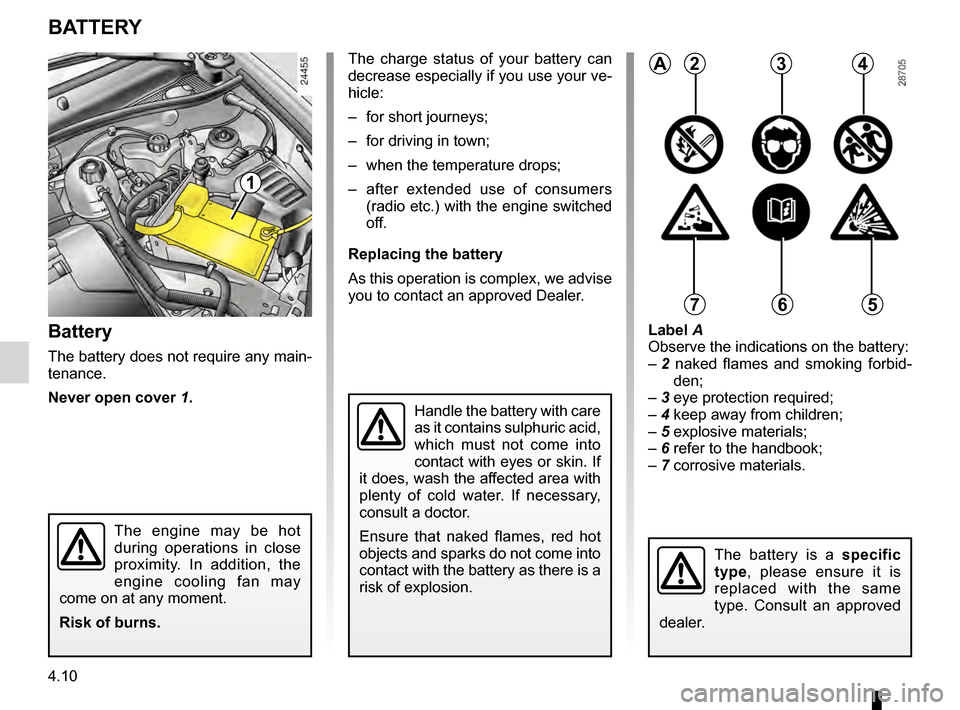
1
Battery
The battery does not require any main-
tenance.
n
ever open cover 1.
The engine may be hot
during operations in close
proximity. In addition, the
engine cooling fan may
come on at any moment.
Risk of burns.
Label A
Observe the indications on the battery:
– 2 n
aked flames and smoking forbid-
den;
–
3 eye protection required;
–
4 keep away from children;
–
5 explosive materials;
–
6 refer to the handbook;
–
7 corrosive materials.
The charge status of your battery can
decrease especially if you use your ve-
hicle:
–
for short journeys;
– for driving in town;
– when the temperature drops;
– after extended use of consumers
(radio etc.) with the engine switched
off.
Replacing the battery
As this operation is complex, we advise
you to contact an approved Dealer.
2A34
657
Handle the battery with care
as it contains sulphuric acid,
which must not come into
contact with eyes or skin. If
it does, wash the affected area with
plenty of cold water. If necessary,
consult a doctor.
Ensure that naked flames, red hot
objects and sparks do not come into
contact with the battery as there is a
risk of explosion.
The battery is a specific
type , please ensure it is
replaced with the same
type. Consult an approved
dealer.
Page 113 of 173

ENG_NU_854-2_X76LL_Renault_5
Section 5: Practical advice
Puncture . . . . . . . . . . . . . . . . . . . . . . . . . . . . . . . . . . . .\
. . . . . . .")
5.1
ENG_UD14022_2
Sommaire 5 (X76 - Renault)
ENG_NU_854-2_X76LL_Renault_5
Section 5: Practical advice
Puncture . . . . . . . . . . . . . . . . . . . . . . . . . . . . . . . . . . . .\
. . . . . . . . . . . . . . . . . . . . . . . . . . . . . . . . . . 5.2
Wheel trims . . . . . . . . . . . . . . . . . . . . . . . . . . . . . . . . . . . .\
. . . . . . . . . . . . . . . . . . . . . . . . . . . . . . . . 5.3
Changing a wheel . . . . . . . . . . . . . . . . . . . . . . . . . . . . . . . . . . . .\
. . . . . . . . . . . . . . . . . . . . . . . . . . . 5.4
Tyres . . . . . . . . . . . . . . . . . . . . . . . . . . . . . . . . . . . .\
. . . . . . . . . . . . . . . . . . . . . . . . . . . . . . . . . . . .\
. 5.5
Changing bulbs . . . . . . . . . . . . . . . . . . . . . . . . . . . . . . . . . . . .\
. . . . . . . . . . . . . . . . . . . . . . . . . . . . . 5.8
Front lights . . . . . . . . . . . . . . . . . . . . . . . . . . . . . . . . . . . . \
. . . . . . . . . . . . . . . . . . . . . . . . . . . 5.8
Fog lights . . . . . . . . . . . . . . . . . . . . . . . . . . . . . . . . . . . .\
. . . . . . . . . . . . . . . . . . . . . . . . . . . . 5.10
Rear lights: changing bulbs . . . . . . . . . . . . . . . . . . . . . . . . . . . . . . . . . . . . \
. . . . . . . . . . . . . . . . . . . . 5.1
1
Indicator lights . . . . . . . . . . . . . . . . . . . . . . . . . . . . . . . . . . . .\
. . . . . . . . . . . . . . . . . . . . . . . . 5.14
Interior lighting . . . . . . . . . . . . . . . . . . . . . . . . . . . . . . . . . . . .\
. . . . . . . . . . . . . . . . . . . . . . . . 5.15
Luggage compartment light . . . . . . . . . . . . . . . . . . . . . . . . . . . . . . . . . . . . \
. . . . . . . . . . . . . . . . . . . . 5.18
Battery: troubleshooting. . . . . . . . . . . . . . . . . . . . . . . . . . . . . . . . . . . . \
. . . . . . . . . . . . . . . . . . . . . . . 5.19
Fuses . . . . . . . . . . . . . . . . . . . . . . . . . . . . . . . . . . . . \
. . . . . . . . . . . . . . . . . . . . . . . . . . . . . . . . . . . . \
. 5.21
Wiper blades . . . . . . . . . . . . . . . . . . . . . . . . . . . . . . . . . . . .\
. . . . . . . . . . . . . . . . . . . . . . . . . . . . . . . 5.24
Towing: breakdown . . . . . . . . . . . . . . . . . . . . . . . . . . . . . . . . . . . .\
. . . . . . . . . . . . . . . . . . . . . . . . . . 5.26
Towing: towing equipment . . . . . . . . . . . . . . . . . . . . . . . . . . . . . . . . . . . . \
. . . . . . . . . . . . . . . . . . . . . 5.27
Fitting a radio . . . . . . . . . . . . . . . . . . . . . . . . . . . . . . . . . . . . \
. . . . . . . . . . . . . . . . . . . . . . . . . . . . . . . 5.28
Accessories . . . . . . . . . . . . . . . . . . . . . . . . . . . . . . . . . . . . \
. . . . . . . . . . . . . . . . . . . . . . . . . . . . . . . . 5.29
Fuel cut-off system in the event of a severe impact . . . . . . . . . . . . . . . . . . . . . . . . . . . . . . . . . . . .\
. 5.30
Radio frequency remote control: batteries. . . . . . . . . . . . . . . . . . . . . . . . . . . . . . . . . . . . \
. . . . . . . . . 5.31
Diesel filter . . . . . . . . . . . . . . . . . . . . . . . . . . . . . . . . . . . . \
. . . . . . . . . . . . . . . . . . . . . . . . . . . . . . . . . 5.32
Operating faults . . . . . . . . . . . . . . . . . . . . . . . . . . . . . . . . . . . . \
. . . . . . . . . . . . . . . . . . . . . . . . . . . . . 5.33
Page 131 of 173

batterytroubleshooting ............................... (up to the end of the DU)
practical advice ..................................... (up to the end of the DU) 5.19
ENG_UD14324_2
Batterie : dépannage (X76 - Renault)
ENG_NU_854-2_X76LL_Renault_5
Battery: troubleshooting
BA ttEry : troubleshooting (1/2)
Handle the battery with care
as it contains sulphuric acid,
which must not come into
contact with eyes or skin. If
it does, wash the affected area with
plenty of cold water. If necessary,
consult a doctor.
Ensure that naked flames, red hot
objects and sparks do not come into
contact with the battery as there is a
risk of explosion.
The engine may be hot when car-
rying out operations in close prox-
imity. In addition, the engine cooling
fan can come on at any moment.
Risk of injury.
t o avoid all risk of sparks:
– Ensure that any consumers (cour-
tesy lights, etc.) are switched off
before disconnecting or reconnect-
ing the battery.
–
When charging, stop the charger
before connecting or disconnecting
the battery.
–
Do not place metal objects on the
battery to avoid creating a short cir-
cuit between the terminals.
–
Always wait at least twenty seconds
after the engine has been switched
off before disconnecting a battery.
–
Make sure that you reconnect the
battery terminals after refitting.
As the battery is specific
to
the vehicle (presence of
a ventilation pipe to expel
corrosive and explosive
gases), make sure that it is replaced
with a battery that enables this pipe
to be connected. Consult an ap-
proved Dealer.
Page 132 of 173
5.20
ENG_UD14324_2
Batterie : dépannage (X76 - Renault)
ENG_NU_854-2_X76LL_Renault_5
BA ttEry: troubleshooting (2/2)
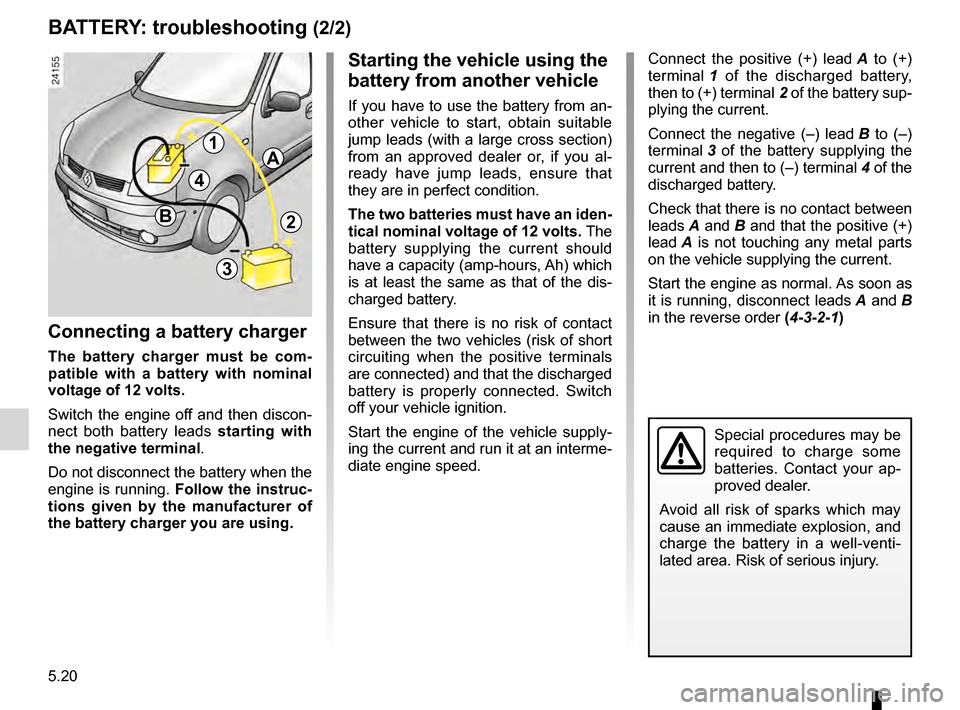
Connect the positive (+) lead A to (+)
t
erminal 1 of the discharged battery,
then
to (+) terminal 2 of the battery sup-
plying the current.
C
onnect the negative (–) lead B to (–)
t
erminal 3 of the battery supplying the
current
and then to (–) terminal 4 of the
discharged battery.
Check that there is no contact between
leads
A and B and that the positive (+)
l
ead A is not touching any metal parts
on the vehicle supplying the current.
Start the engine as normal. As soon as
it
is running, disconnect leads A and B
in the reverse order (4-3-2-1)
connecting a battery charger
the battery charger must be com-
p
atible with a battery with nominal
voltage
of 12 volts.
Switch the engine off and then discon-
nect both battery leads s
tarting with
the
negative terminal .
Do not disconnect the battery when the
engine is running. Follow
the instruc-
t
ions given by the manufacturer of
the
battery charger you are using.
starting the vehicle using the
battery
from another vehicle
If you have to use the battery from an-
other vehicle to start, obtain suitable
jump leads (with a large cross section)
from an approved dealer or, if you al-
ready have jump leads, ensure that
they are in perfect condition.
t
he two batteries must have an iden -
tical
nominal voltage of 12 volts. The
battery supplying the current should
have a capacity (amp-hours, Ah) which
is at least the same as that of the dis-
charged battery.
Ensure that there is no risk of contact
between the two vehicles (risk of short
circuiting when the positive terminals
are connected) and that the discharged
battery is properly connected. Switch
off your vehicle ignition.
Start the engine of the vehicle supply-
ing the current and run it at an interme-
diate engine speed.
Special procedures may be
required to charge some
batteries. Contact your ap-
proved dealer.
Avoid all risk of sparks which may
cause an immediate explosion, and
charge the battery in a well-venti-
lated area. Risk of serious injury.
1A
2
4
B
3