631
What to do in an emergency
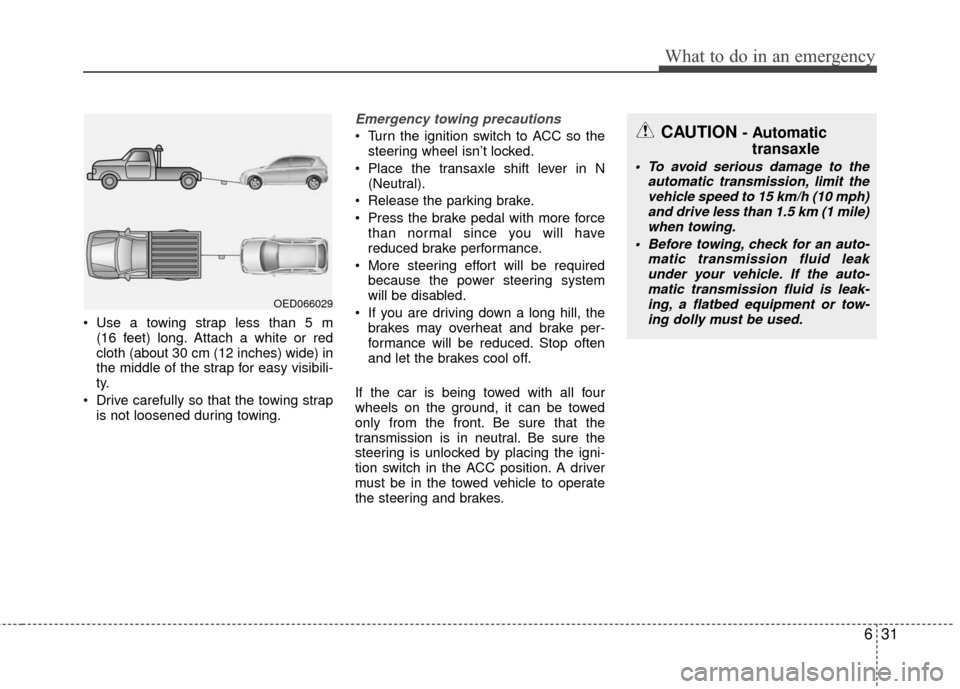
Use a towing strap less than 5 m (16 feet) long. Attach a white or red
cloth (about 30 cm (12 inches) wide) in
the middle of the strap for easy visibili-
ty.
Drive carefully so that the towing strap is not loosened during towing.
Emergency towing precautions
Turn the ignition switch to ACC so thesteering wheel isn’t locked.
Place the transaxle shift lever in N (Neutral).
Release the parking brake.
Press the brake pedal with more force than normal since you will have
reduced brake performance.
More steering effort will be required because the power steering system
will be disabled.
If you are driving down a long hill, the brakes may overheat and brake per-
formance will be reduced. Stop often
and let the brakes cool off.
If the car is being towed with all four
wheels on the ground, it can be towed
only from the front. Be sure that the
transmission is in neutral. Be sure the
steering is unlocked by placing the igni-
tion switch in the ACC position. A driver
must be in the towed vehicle to operate
the steering and brakes.CAUTION - Automatic transaxle
To avoid serious damage to the
automatic transmission, limit thevehicle speed to 15 km/h (10 mph)and drive less than 1.5 km (1 mile)when towing.
Before towing, check for an auto- matic transmission fluid leakunder your vehicle. If the auto- matic transmission fluid is leak-ing, a flatbed equipment or tow- ing dolly must be used.
OED066029
Maintenance
30
7
MAINTENANCE ITEMMAINTENANCE
OPERATIONMAINTENANCE INTERVALSDRIVING
CONDITION
MANUAL TRANSAXLE OIL*REVERY 120,000 kmC, D, E, F, G, H, I, J
AUTOMATIC TRANSAXLE FLUID*REVERY 96,000 kmA, C, E, F, G, H, I
CLIMATE CONTROL AIR FILTER
(FOR EVAPORATOR AND BLOWER UNIT)RMORE FREQUENTLYC, E
SEVERE DRIVING CONDITIONS
A - Repeatedly driving shorts distances of less than 8 km in normal
temperature or less than 16 km in freezing temperature
B - Extensive engine idling or low speed driving for long distances
C - Driving on rough, dusty, muddy, unpaved, graveled or salt-spread roads
D - Driving in areas using salt or other corrosive materials or in very cold weather E - Driving in sandy areas
F - Driving in heavy traffic area over 32°C (90°F)
G - Driving on uphill, downhill, or mountain road
H - Towing a Trailer, or using a camper, or roof rack
I - Driving as a patrol car, taxi, other commercial use or vehicle towing
J - Driving over 170 km/h
K - Frequently driving in stop-and-go conditions
* : if equipped
737
Maintenance
For mixture percentage, refer to the fol-
lowing table.Turn the engine off and wait until it cools
down. Use care when removing the radi-
ator cap. Wrap a thick towel around it,
and turn it counterclockwise slowly to the
first stop. Step back while the pressure is
released from the cooling system. When
you are sure all the pressure has been
released, press down on the cap, using a
thick towel, and continue turning counter-
clockwise to remove it.
-15°C (5°F) 3565
-25°C (-13°F) 40 60
-35°C (-31°F) 50 50
-45°C (-49°F) 60 40
Ambient
Temperature Mixture Percentage (volume)
Antifreeze Water
WARNING
Radiator cap
Do not remove the radiator cap
when the engine and radiator are
hot. Scalding hot coolant and
steam may blow out under pres-
sure.
OAM072006
CAUTION- Removing radi-
ator cap
Never attempt to remove
the radiator cap while the engine is operatingor hot. Doing so mightlead to cooling systemand engine damage.
Index
8I
THEFT-ALARM SYSTEM··················\
··················\
·······4-13Armed stage ··················\
··················\
··················\
···········4-13
Disarmed stage ··················\
··················\
··················\
······4-14
Theft-alarm stage ··················\
··················\
··················\
···4-14
Tire Pressure Monitoring System (TPMS) ··················\
····6-9 Changing a tire with TPMS··················\
··················\
·····6-12
Low tire pressure telltale ··················\
··················\
·········6-10
TPMS (Tire Pressure Monitoring System)malfunction indicator ··················\
··················\
············6-11
Tire specification and pressure label ··················\
···········8-10
Tires and Wheels ··················\
··················\
··················\
·····7-48 All season tires ··················\
··················\
··················\
·····7-58
Checking tire inflation pressure ··················\
················7-49
Low aspect ratio tire ··················\
··················\
················7-59
Radial-ply tires ··················\
··················\
··················\
······7-59
Recommended cold tire inflation pressures ················7-48
Snow tires ··················\
··················\
··················\
··············7-59
Summer tires··················\
··················\
··················\
··········7-58
Tire care ··················\
··················\
··················\
·················7-48\
Tire maintenance ··················\
··················\
··················\
···7-52
Tire replacement ··················\
··················\
··················\
····7-51
Tire rotation ··················\
··················\
··················\
···········7-50
Tire sidewall labeling ··················\
··················\
··············7-53
Tire traction ··················\
··················\
··················\
···········7-52
Wheel alignment and tire balance ··················\
·············7-51
Wheel replacement ··················\
··················\
··················\
7-52
Tires and wheels ··················\
··················\
··················\
········8-5 Towing ··················\
··················\
··················\
··················\
···6-28
Emergency towing ··················\
··················\
··················\
·6-30
Removable towing hook (Front) ··················\
···············6-29
Towing service··················\
··················\
··················\
·······6-28
Trunk (4 Door)··················\
··················\
··················\
·········4-20 Closing the trunk ··················\
··················\
··················\
···4-21
Emergency trunk safety release··················\
·················4-21\
Opening the trunk ··················\
··················\
··················\
··4-20
Vehicle break-in process ··················\
··················\
··············1-5
Vehicle certification label ··················\
··················\
············8-9
Vehicle data collection and event data recorders·············1-6
Vehicle identification number (VIN) ··················\
·············8-9
Vehicle load limit ··················\
··················\
··················\
·····5-53 Certification label ··················\
··················\
··················\
··5-56
Tire and loading information label ··················\
············5-53
Vehicle weight ··················\
··················\
··················\
·········5-58
Washer fluid ··················\
··················\
··················\
·············7-40 Checking the washer fluid level ··················\
················7-40
Weight/Volume ··················\
··················\
··················\
··········8-6
Windows ··················\
··················\
··················\
··················\
4-24 Manual windows ··················\
··················\
··················\
···4-27
Power windows··················\
··················\
··················\
······4-25
V
W