2016 HYUNDAI TUCSON engine overheat
[x] Cancel search: engine overheatPage 481 of 642
5-97
Driving your vehicle
5
Maintenance when trailer tow- ing
Your vehicle will need service more
often when you regularly pull a trail-
er. Important items to pay particularattention to include engine oil, auto-
matic transmission fluid, axle lubri-
cant and cooling system fluid. Brake
condition is another important item to
frequently check. If you’re trailering,
it’s a good idea to review these items
before you start your trip. Don't forget
to also maintain your trailer and
hitch. Follow the maintenance sched-
ule that accompanied your trailer and
check it periodically. Preferably,
inspect the vehicle and trailer at the
start of each day's driving. Inspect
the hitch mounting to make sure the
hitch is properly secured to the vehi-
cle. Inspect the trailer electrical
wiring to make sure brake lights, turn
signal lights, running lights, and haz-
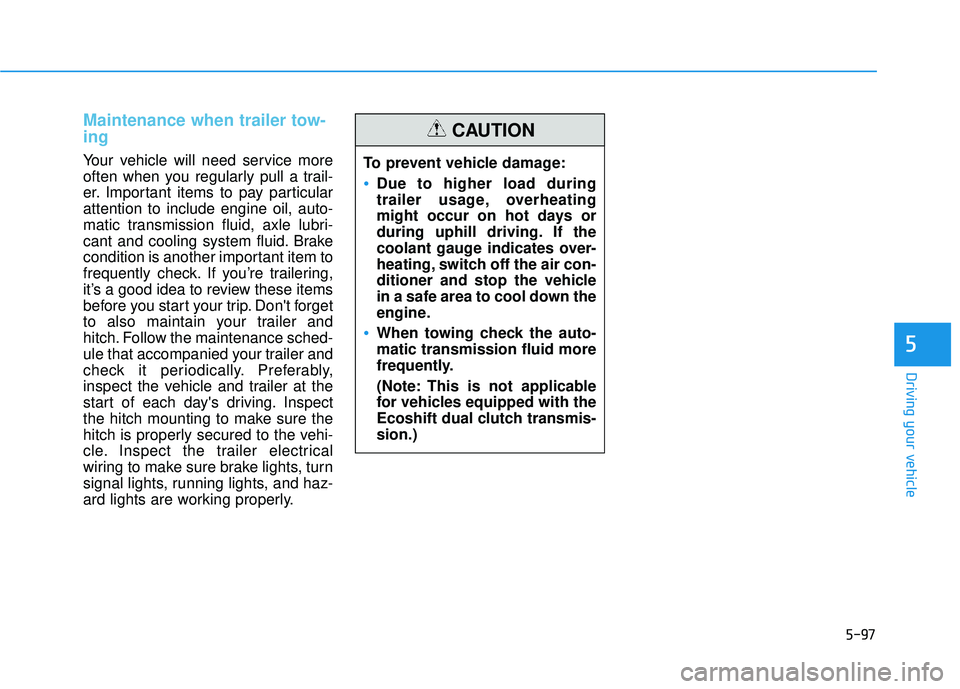
ard lights are working properly.To prevent vehicle damage:
Due to higher load during
trailer usage, overheating
might occur on hot days or
during uphill driving. If the
coolant gauge indicates over-
heating, switch off the air con-
ditioner and stop the vehicle
in a safe area to cool down the
engine.
When towing check the auto- matic transmission fluid more
frequently.
(Note: This is not applicable
for vehicles equipped with the
Ecoshift dual clutch transmis-sion.)
CAUTION
Page 488 of 642

What to do in an emergency
6
Hazard warning flasher ........................................6-2
In case of an emergency while driving ..............6-2
If the Engine Stalls While Driving .................................6-2
If the Engine Stalls at a Crossroad or Crossing ........6-2
If you Have a Flat Tire While Driving ..........................6-3
If the engine will not start ..................................6-3
If the Engine Doesn't Turn Over or Turns
Over Slowly .........................................................................6-3
If the Engine Turns Over Normally but
Doesn't Start ......................................................................6-3
Jump starting ..........................................................6-4
If the engine overheats ........................................6-7
Tire pressure monitoring system (TPMS) ..........6-9
Check Tire Pressure .........................................................6-9
Tire Pressure Monitoring System ...............................6-10
Low tire pressure indicator ..........................................6-11
Low tire pressure LCD display with position
indicator.............................................................................6-11
TPMS (Tire Pressure Monitoring System)
Malfunction Indicator.....................................................6-12
Changing a Tire with TPMS..........................................6-13
If you have a flat tire..........................................6-15
Towing ...................................................................6-23
Towing service .................................................................6-23
Removable towing hook ................................................6-24
Emergency towing ..........................................................6-25
Tie-down hook ................................................................6-26
Page 494 of 642
6-7
What to do in an emergency
6
If your temperature gauge indicates
overheating, you experience a loss
of power, or hear loud pinging or
knocking, the engine may be over-
heating. If this happens, you should:
1. Pull off the road and stop as soonas it is safe to do so.
2. Place the shift lever in P (Park) and set the parking brake. If the air
conditioning is ON, turn it OFF.
3. If engine coolant is running out under the vehicle or steam is com-ing out from the hood, stop the
engine. Do not open the hood until
the coolant has stopped running
or the steaming has stopped. If
there is no visible loss of engine
coolant and no steam, leave the
engine running and check to be
sure the engine cooling fan is
operating. If the fan is not running,
turn the engine off. 4. Check for coolant leaking from the
radiator, hoses or under the vehi-
cle. (If the air conditioning had
been in use, it is normal for cold
water to be draining from it when
you stop.)
5. If engine coolant is leaking out, stop the engine immediately and
call the nearest authorized
HYUNDAI dealer for assistance.
IIFF TT HH EE EE NN GGIINN EE OO VVEERR HH EEAA TTSS
While the engine is
running, keep hands,
clothing and tools
away from the mov-
ing parts such as thecooling fan and drive
belt to prevent seri-
ous injury.
WARNING
Page 495 of 642
6-8
What to do in an emergency
6. If you cannot find the cause of theoverheating, wait until the engine
temperature has returned to nor-
mal. Then, if coolant has beenlost, carefully add coolant to the
reservoir to bring the fluid level in
the reservoir up to the halfway
mark.
7. Proceed with caution, keeping alert for further signs of overheat-
ing. If overheating happens again,
call an authorized HYUNDAI deal-
er for assistance.
Serious loss of coolant indi-cates a leak in the cooling sys-
tem and should be checked as
soon as possible by an author-
ized HYUNDAI dealer.
CAUTION
Your vehicle is equipped with a pres-
surized coolant
reserve tank. NEVER
remove the coolant
reserve tank cap or the radiatordrain plug while the engine and
radiator are HOT. Hot coolant
and steam may blow out under
pressure, causing serious
injury.
Turn the engine off and wait
until the engine cools down.
Use extreme care when remov-
ing the coolant reserve tank
cap. Wrap a towel or thick rag
around it, and turn it counter-
clockwise slowly to release
some of the pressure from the
system. Step back while thepressure is released.
When you are sure all the pres-
sure has been released, contin-ue turning the cap counter-
clockwise to remove it.
WARNING
Page 546 of 642
7-33
7
MaintenanceThe electric motor for the cooling fan
is controlled by engine coolant tem-
perature, refrigerant pressure and
vehicle speed. As the engine coolant
temperature decreases, the electric
motor will automatically shut off. This
is a normal condition. If your vehicle
is equipped with GDI, the electric
motor for the cooling fan may begin
to operate at any time and continue
to operate until you disconnect the
negative battery cable.
Never remove the
coolant cap or thedrain plug while theengine and radiator
are hot. Hot coolant
and steam may blow out under
pressure, causing serious
injury.
Turn the engine off and wait
until the engine cools down.
Use extreme care when remov-
ing the coolant cap. Wrap a
thick towel around it, and turn it
counterclockwise slowly to the
first stop. Step back while the
pressure is released from the
cooling system. When you aresure all the pressure has been
released, press down on the
cap, using a thick towel, and
continue turning counterclock-
wise to remove it.
WARNING
The electric motor for
the cooling fan may
continue to operate
or start up when theengine is not running
and can cause serious injury.
Keep hands, clothing and tools
away from the rotating fan
blades of the cooling fan.
WARNING
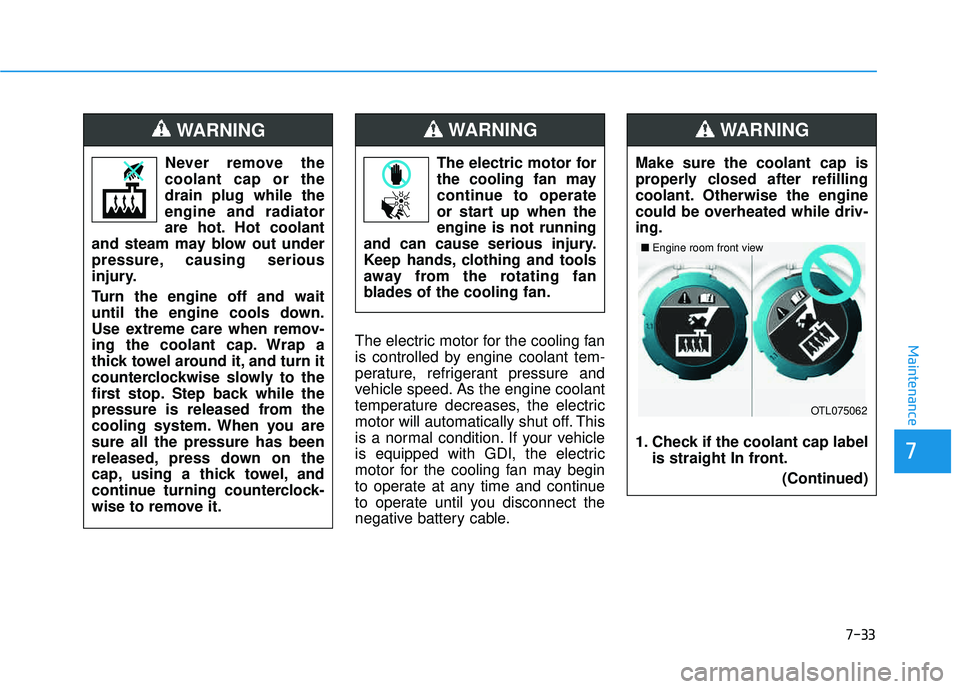
Make sure the coolant cap is
properly closed after refilling
coolant. Otherwise the engine
could be overheated while driv-ing.
1. Check if the coolant cap label is straight In front.
(Continued)
WARNING
OTL075062
■Engine room front view
Page 637 of 642
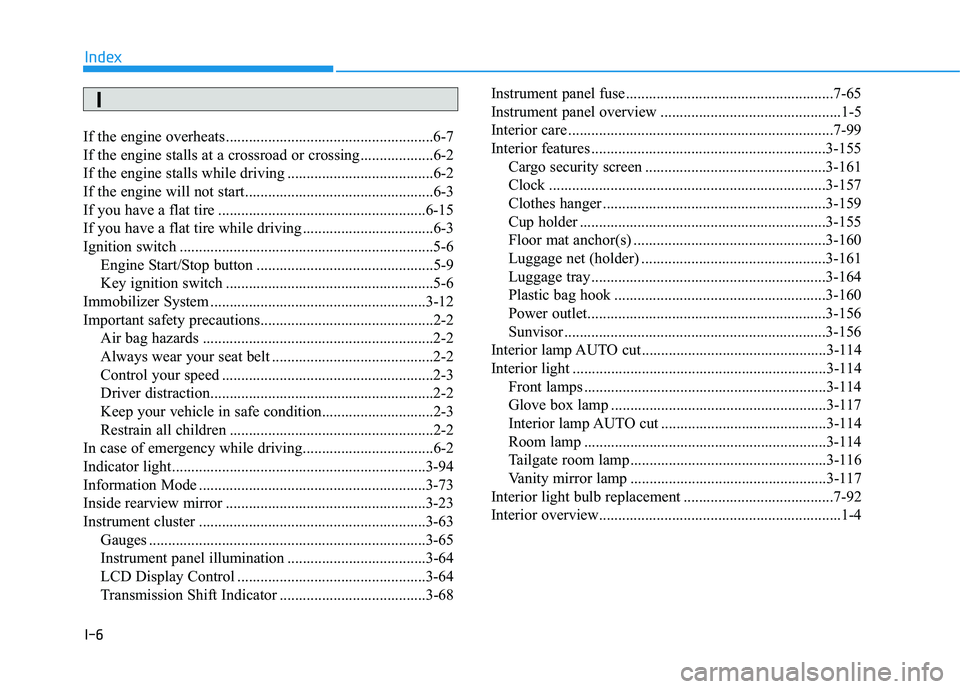
I-6
If the engine overheats ......................................................6-7
If the engine stalls at a crossroad or crossing...................6-2
If the engine stalls while driving ......................................6-2
If the engine will not start.................................................6-3
If you have a flat tire ......................................................6-15
If you have a flat tire while driving ..................................6-3
Ignition switch ..................................................................5-6Engine Start/Stop button ..............................................5-9
Key ignition switch ......................................................5-6
Immobilizer System ........................................................3-12
Important safety precautions.............................................2-2 Air bag hazards ............................................................2-2
Always wear your seat belt ..........................................2-2
Control your speed .......................................................2-3
Driver distraction..........................................................2-2
Keep your vehicle in safe condition.............................2-3
Restrain all children .....................................................2-2
In case of emergency while driving..................................6-2
Indicator light..................................................................3-94
Information Mode ...........................................................3-73
Inside rearview mirror ....................................................3-23
Instrument cluster ...........................................................3-63 Gauges ........................................................................3-65
Instrument panel illumination ....................................3-64
LCD Display Control .................................................3-64
Transmission Shift Indicator ......................................3-68 Instrument panel fuse......................................................7-65
Instrument panel overview ...............................................1-5
Interior care .....................................................................7-99
Interior features .............................................................3-155
Cargo security screen ...............................................3-161
Clock ........................................................................3-157
Clothes hanger ..........................................................3-159
Cup holder ................................................................3-155
Floor mat anchor(s) ..................................................3-160
Luggage net (holder) ................................................3-161
Luggage tray.............................................................3-164
Plastic bag hook .......................................................3-160
Power outlet..............................................................3-156
Sunvisor ....................................................................3-156
Interior lamp AUTO cut ................................................3-114
Interior light ..................................................................3-114
Front lamps ...............................................................3-114
Glove box lamp ........................................................3-117
Interior lamp AUTO cut ...........................................3-114
Room lamp ...............................................................3-114
Tailgate room lamp...................................................3-116
Vanity mirror lamp ...................................................3-117
Interior light bulb replacement .......................................7-92
Interior overview...............................................................1-4
Index
I