2016 AUDI RS7 SPORTBACK tow
[x] Cancel search: towPage 108 of 282
Automatic transmission
rm Transmi ssi on malfunction: You can continue
driving
There is a system malfunc tion in the t ransm is
sion . Yo u may con tinue dr iving . Drive to your au
thor ized Audi dealer or qualified repair fac ility
soon to have th e malfunction cor rected.
rm Transmi ssion malfunction: You can continue
driving with limited functionality
There is a system malfunct ion i n the transm is
sion . T he transmission is sw itching to emergency
mo de. This mode only shifts in to certa in gears o r
will no longer shift at all. The engine may st all.
Drive to you r aut ho rized Aud i dea ler o r q ualified
repair faci lity immediately to have the malfunc
tion corrected .
rm Transmission malfunction: Stop vehicle and
shift to P
D o not cont inue d riving. Select the P se lector lev
er position and see yo ur author ized Aud i de aler
or qu alified repa ir fa cility for assis tance .
(D Note
If the tran smissi on switches to emergency
m ode, you s ho uld t ake the veh icle to an au
t hori zed A udi dealer sh ip a s soon as po ssible
t o have the condi tion corrected.
Selector lever emergency release
If the vehicle's power supply fails, the sele ctor
lever can be released in an emerg ency .
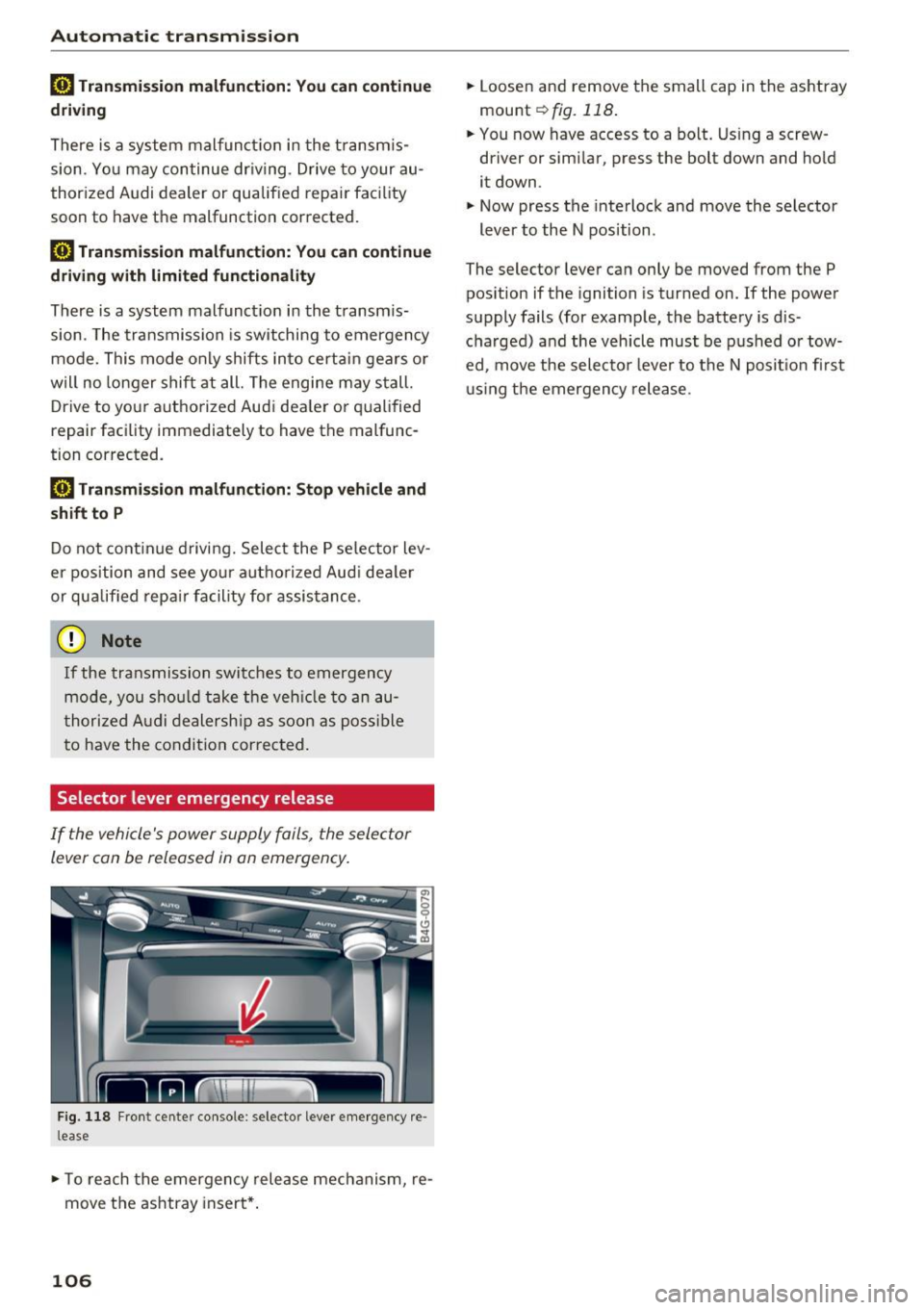
Fig . 118 Fro nt cen te r co nso le : selec to r lever e mergency re
l ease
.,. To re ach the emergency rele ase mech anism, re
move t he ashtray insert* .
106
.,. Loosen and remove the small cap in the as htray
mou nt
~ fig. 118 .
.,. You now have access to a bo lt. Using a screw
driver or simi lar , press the bolt down and hold
it down .
.,. Now press t he interlock and move the selector
lever to the N position .
The selector lever can only be moved from the P pos ition if the ignition is tur ned on.
If the powe r
supply fails (for examp le, the battery is d is
cha rged) and the veh icle must be p ushed o r tow
ed, move the selecto r lever to the N posit io n firs t
u sing the emergen cy rele ase .
Page 112 of 282
Parking systems
-The camera lens enlarges and distorts the
field of vision. The object appears both al
tered and inaccurate on the screen.
- In certain situations, people or objects in
the display appear closer or farther away:
- For objects that do not touch the ground,
such as the bumper of a parked vehicle, a
trailer hitch or the rear of a truck. Do not
use the help lines in this case.
- If driven from a level surface onto an in
cline, or a downward slope.
- If driven toward protruding objects.
- If the vehicle is carrying too much load in
the rear.
(D Note
- Always read and follow the applicable warn
ings r::!>(D
in General information on
page 107 .
-The orange colored orientation lines in the
Infotainment display show the vehicle path
depending on the steering wheel angle. The
front of the vehicle swings out more than
the rear of the vehicle. Maintain plenty of
distance so that your outside mirror or a
corner of your vehicle does not collide with
any obstacles.
Switching on/off
Applies to: vehicles with rearview camera
Switching on
.,. Shift into reverse, or
.,. Press the
P,,, A button in the center console
r:=> page 108, fig. 120. A short confirmation
tone sounds and the LED in the button turns
on.
Switching between the rearview camera and
optical display
.,. Press the Graphic control button ®
r:=> page 110, fig. 125 to see the optical display .
.,. Press the
Rear view control button to see the
. . rearv1ew camera image.
Switching off
.,. Drive forward faster than 10 km/h, or
.,. press the
P,1
1.A button, or
110
.,. Switch the ignition off.
@ Tips
- The visual display in the left part of the dis
play should help you detect the critical vehi
cle areas.
- You can change the volume and pitch of the
signals as well as the display
r:=> page 116.
Cross parking
Applies to: vehicles with rearview camera
This view may be used when parking in a garage
or in a parking space.
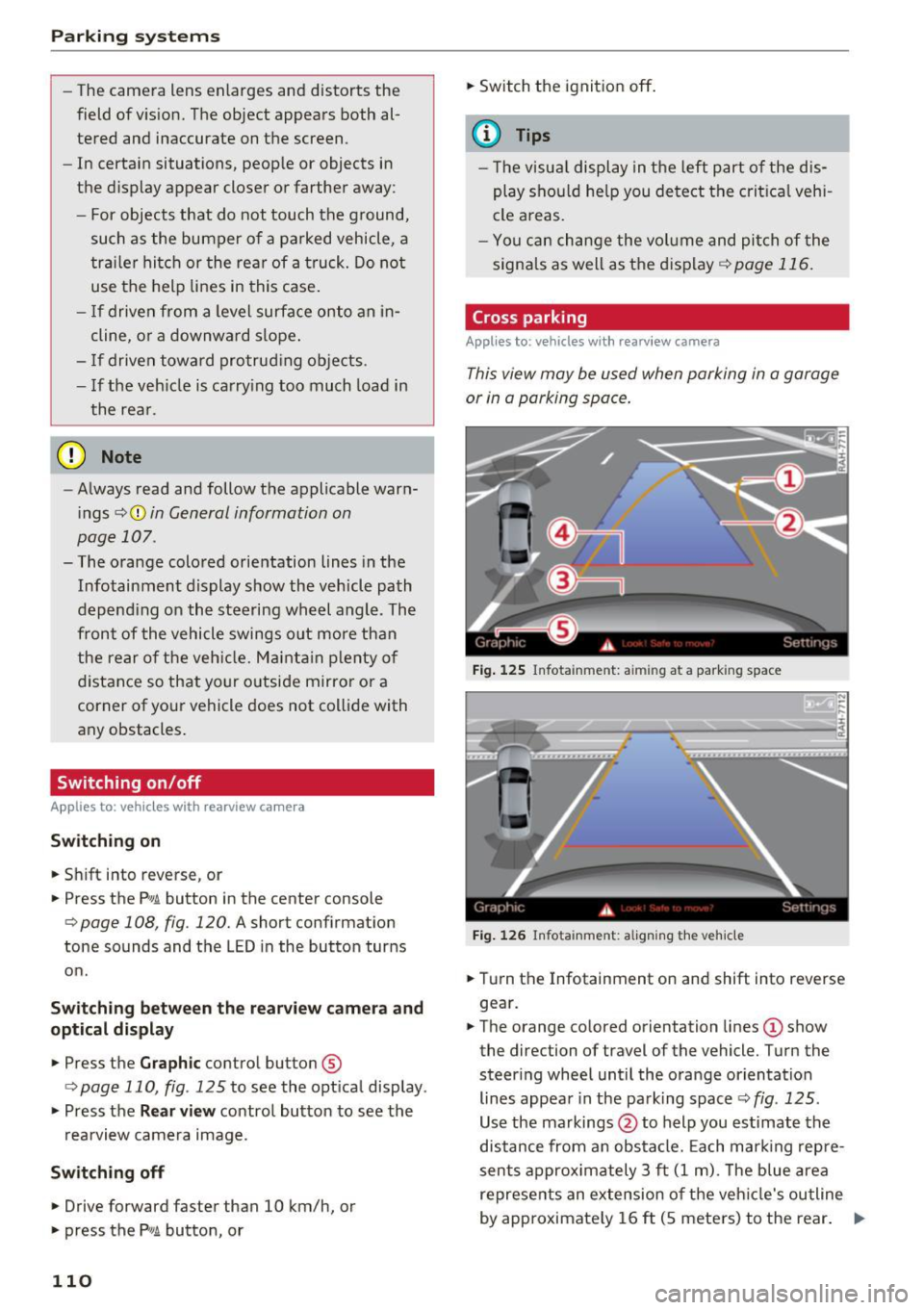
Fig. 125 Infotainment: aiming at a parking space
Fig. 126 Infota inment: aligning the vehicle
.,. Turn the Infotainment on and shift into reverse
gear.
.,. The orange colored orientation lines
(D show
the direction of travel of the vehicle. Turn the
steer ing wheel until the orange orientation
lines appear in the parking space r::!>
fig. 125 .
Use the markings @to help you estimate the
distance from an obstacle. Each marking repre
sents approximately 3 ft
(1 m). The blue area
represents an extension of the vehicle's outline
by approximately
16 ft (5 meters) to the rear. ..,.
Page 116 of 282
Parking system s
Corner view (front)/corner view (rear)
Applies to: vehicles with peripheral cameras
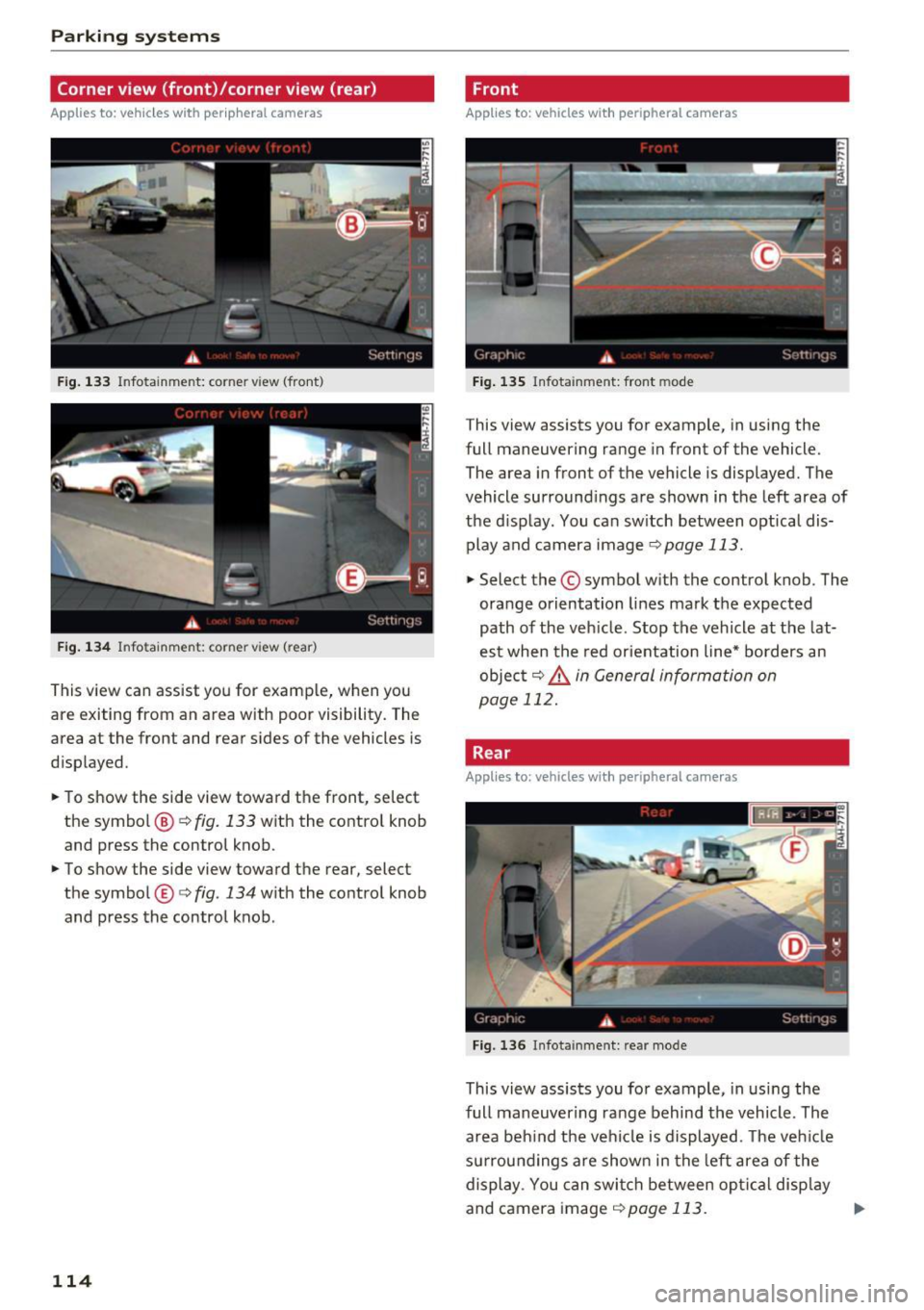
Fig . 1 33 In fo ta inme nt: co rner v iew (front )
Fig . 134 In fo tainme nt: corner vie w (r ea r)
This view can assist you for examp le, when you
are exiting from an area with poor visibility. The
area at the front and rear sides of the vehicles is
d isp layed.
~ To show the side view toward the front, se lect
the symbol @¢
fig. 133 with the contro l knob
and press the control knob.
~ To show the side view toward the rear, selec t
the symbol ®¢
fig. 134 w ith the control knob
and press the control knob .
114
Front
Applies to: vehicles with peripheral cameras
Fig . 135 Infot ainm ent: fro nt m ode
This view assists you for example, in using the
full maneuve ring range in front of the vehicle.
The area in front of the vehicle is displayed. The
vehicle surround ings are shown in the left area of
the d isplay . You can sw itch between optical dis·
play and camera image
¢ page 113.
~ Select the © symbol with the con trol knob . The
orange orientation lines mark the expected
path of the veh icle . Stop the vehicle at the lat·
est when the red orientation line* borders an
objec t
9 &. in General information on
page 112.
Rear
Applies to: vehicles with peripheral cameras
F ig. 136 Infota inmen t: rea r mo de
This view assists you fo r example, in usi ng the
full maneuver ing ra nge behind the vehicle. The
area beh ind the vehicle is displayed . T he ve hicle
su rrou nd ings a re shown in the left area of the
display . You can swi tch between op tical disp lay
and camera image
9 page 113. ..,.
Page 122 of 282
Driving safety
"' Always keep both feet in the footwell so that
you are in control of the vehicle at all times.
For detailed information on how to adjust the
driver's seat, see
c;, page 53.
A WARNING
Drivers who are unbelted, out of position or
too close to the airbag can be seriously in
jured by an airbag as it unfolds . To help re
duce the risk of serious personal injury:
- Always adjust the driver's seat and the
steering wheel so that there are at least
10 inches (25 cm) between your breastbone
and the steering wheel.
- Always adjust the driver's seat and the
steering wheel so that there are at least
4 inches (10 cm) between the knees and the
lower part of the instrument panel.
- Always hold the steering wheel on the out
side of the steering wheel rim with your
hands at the 9 o'clock and 3 o'clock posi
tions to help reduce the risk of personal in
jury if the driver's airbag inflates.
- Never hold the steering wheel at the
12 o'clock position or with your hands at
other positions inside the steering wheel
rim or on the steering wheel hub. Holding
the steering wheel the wrong way can cause
serious injuries to the hands, arms and head if the driver's airbag inflates.
- Pointing the steering wheel toward your
face decreases the ability of the su pplemen
tal driver's airbag to protect you in a colli
sion.
- Always sit in an upright position and never lean against or place any part of your body
too close to the area where the airbags are
located .
- Before driving, always adjust the front seats
properly and make sure that all passengers
are properly restrained .
- For adjustable head restraints: before driv
ing, always also adjust the head restraints
properly .
- Never adjust the seats while the vehicle is
moving. Your seat may move unexpectedly
and you could lose control of the vehicle.
120
-
-Never drive with the backrest reclined or
tilted far back! The farther the backrests are
tilted back, the greater the risk of injury due
to incorrect positioning of the safety belt
and improper seating position .
- Children must always ride in child seats
c:;, page 159 . Special precautions apply
when installing a child seat on the front
passenger seat
c:;, page 135.
Proper seating position for the front
passenger
The proper front passenger seating position is
important for safe, relaxed driving.
For your own safety and to reduce the risk of in
jury in the event of an accident , we recommend
that you adjust the seat for the front passenger
to the following position:
"'Adjust the angle of the seatback so that it is in
an upright position and your back comes in full
contact with it whenever the vehicle is moving.
"'For adjustable head restraints: adjust the head
restraint so the upper edge is as even as possi
ble with the top of your head. If that is not pos
sible, try to adjust the head restraint so that it
is as close to this position as possible
c:;, page 121 . Move the head restraint so that it
is as close to the back of the head as possible.
"' Keep both feet flat on the floor in front of the
front passenger seat .
"' Fasten and wear safety belts correctly
c;,page 130.
For detailed information on how to adjust the
front passenger's seat, see
c:;, page 52 .
A WARNING
Front seat passengers who are unbelted, out
of position or too close to the airbag can be
seriously injured or killed by the airbag as it
unfolds. To help reduce the risk of serious
personal injury:
- Passengers must always sit in an upright po
sition and never lean against or place any part of their body too close to the area
where the airbags are located.
Ill-
Page 126 of 282
Driving safety
moving. Objects can becom e trapped under
the brake pedal and accelerator pedal caus ing a loss of vehicle control.
Storing cargo correctly
loading the luggage compartment
All luggage and other objects must be properly
stowed and secured in the luggage compart
ment .
Loose items in the luggage compartment can
shift suddenly, changing vehicle handling charac
teristics . Loose items can also increase the risk of
serious personal injury in a sudden vehicle ma neuver or in a collision.
.., Distribute the load evenly in the luggage com
partment.
.., Always place and properly secure heavy items in
the luggage compartment as far forward as
possible.
... Secure luggage using the tie-downs provided
c::;, page 62, Luggag e compartm ent.
... Make sure that the rear seatback is securely
la tched in place .
A WARNING
Improperly stored luggage or other items can
fly through the vehicle causing serious per sonal injury in the event of hard braking or an
accident . To help reduce the risk of serious
personal injury :
- Always put objects , for example, luggage or
other heavy items in the luggage compart
ment.
- Always secure objects in the luggage com
partment using the tie-down hooks and
suitable straps.
A WARNING
Heavy loads will influence the way your vehi
cle handles. To help reduce the risk of a loss
of control leading to serious personal injury:
- Always keep in mind when transporting
heavy objects, that a change in the center of
gravity can also cause changes in vehicle
handling:
124 -
Always distribute the load as evenly as
possible.
- Place heavy objects as far forward in the
luggage compartment as possible .
- Never exceed the Gross Axle Weight Rating
or the Gross Vehicle Weight Rating specified
on the safety compliance sticker on the left
door jamb. Exceeding permissible weight
standards can cause the vehicle to slide and
handle differently.
- Please observe information on safe driving
c::;,page 118.
A WARNING
To help prevent poisonous exhaust gas from
being drawn into the vehicle, always keep the
rear lid closed while driving .
- Never transport objects larger than those fitting completely into the luggage area be
cause the rear lid cannot be fully closed.
-If you absolutely must drive with the rear lid
open, observe the following notes to reduce
the risk of poisoning:
- Close all windows,
- Close the power roof*,
- Open all air outlets in the instrument pan-
el,
- Switch off the air recirculation,
- Set the fresh air fan to the highest speed.
A WARNING
-
Always make sure that the doors, all win
dows, the power roof* and the rear lid are se
curely closed and locked to reduce the risk of
injury when the vehicle is not being used.
- After closing the rear lid, always make sure
that it is properly closed and locked .
- Never leave your vehicle unattended espe
cially with the rear lid left open. A child
could crawl into the vehicle through the lug
gage compartment and close the rear lid be
coming trapped and unable to get out. Be ing trapped in a vehicle can lead to serious
personal injury.
- Never let children play in or around the vehi
cle.
Page 134 of 282

Safe ty belts
Pregnant women must also be correctly
restrained
The best way to protect the fetus is to make sure
that expectant mothers always wear safety belts
corre ctly -throughout the pregnancy.
Fig. 151 Safety belt pos ition during pregnancy
To provide maximum protection, safety belts
must always be posit ioned correctly on the wear
er's body
¢ page 131.
... Adjust the front seat and ad justable head re
straint* correctly ¢
page 52, General informa
tion .
... Hold the belt by the tongue and pull it evenly
across the chest and pelv is
r::;, fig. 151 , ¢ _&..
... Inse rt the tongue into the correct buckle of
your seat until you hear it latch secure ly
¢page 130, fig. 149.
... Pull on t he be lt to make sure that it is securely
latched in the buck le .
A WARNING
Improperly pos itioned safety be lts can cause
ser ious persona l injury in an accident.
- Expectant mothers must a lways wear the
lap portion of the safety belt as low as pos
sible across the pelvis and below the round ing of the abdomen .
- Always read and heed all WARNINGS and
other important information¢ &.
in Fasten
ing safety belts on page 131.
132
Unfastening safety belts
Unbuckle the safety belt with the red release
button only ofter the vehicle hos stopped.
.,,
Fig . 15 2 Releasing the tongue from the buckle
... Push the red re lease button on the buck le
r:::;, fig. 152. The belt tongue wi ll spring out of
the buck le
r::;, A .
... Let the belt wind up on the retractor as yo u
guide the belt tongue to its stowed position .
A WARNING
Never unfasten safety belt while the vehicle is
moving . Do ing so will increase your r isk of be
ing inj ured or killed .
Adjusting safety belt he ight
With the aid of the safety belt height adjust
ment, the three point safety belt strop routing
con be fitted to the shoulder area, according to
body size.
F ig . 153 Safety belt height adj ustment for the front seats
- loop -around fittings
0 ,-. N 0 :i: .. m
The shoulder be lt shou ld lie as close to the center
of the co llar bo ne as poss ible and s hou ld fit well
o n the body
r::;, .&. in Safe ty belt posi tion on
page 131. ..,,.
Page 146 of 282

Airbag syste m
manufacturer's instructions require the use
of a towel, foam cushion or someth ing else
to properly pos ition the child restraint,
make certain that the
PAS SENGE R A IR BAG
OFF
light comes on and stays on whenever
the chi ld restraint is installed on the front
passenge r seat.
- If the
PASSEN GER AIR BAG OFF light does
not come on and stay on, immediately in
sta ll child restraint in a rear seating position
and have the airbag system inspected by
your Audi dealer.
_& WARNING
If the front passenger seat gets wet, dry it im
mediately .
- If liquid soaks into the fron t passenger sea t,
t h is can keep the a irbag system from work
ing properly and may, for instance, deacti
vate the passenger frontal airbag. If this
happens, the
PA SSENGER AIR BAG OFF
light will come on and stay on together with
the airbag indicator light
fl (USA models)/
El (Canada models) in the instrument clus
te r.
- If liquid is pooled on the seat, but has not
soaked in, this may also keep the airbag sys
tem from working properly and ca use the
passenge r frontal a irbag to be e nabled
(tu rned on), even though there is a properly
ins talled chi ld restraint system on the seat.
Wet towe ls or other wet things on the seat
cushion can have the same effect. If the
front passenger frontal airbag is turned on,
the
PAS SENGER AIR BAG OFF light will go
out.
How the Advanced Airbag System
components work together
The front Advanced Airbag System and the side
ai rbags s upplement the protection offered by the
front three-po int safety belts with pretensioners
and load limiters and the adjustable head re
stra ints* to help reduce the risk of injury in a
wide range of accident and crash situations. Be sure to read the important information about
safety and heed the WARNINGS in th is chapter.
144
Deployment of the Advanced A irbag System and
the activation of the safety belt pretensioners de
pend on the dece leration measured by the crash
sensors and registered by the electronic contro l
unit. Crash severity depends on speed and decel
e ration as well as the mass and stiffness of the
vehicle or object involved in the crash .
On the passenger side, regard less of safety belt
use, the front passenger frontal airbag will be
turned off if the e lectr ica l capacitance measured
by the capacitive passenger detection system on
the front passenger seat is less than the amount programmed in the elec tron ic cont rol unit . The
front passenger fron tal a irbag w ill also be turned
off if the capacitance measured by the system for
the front passenger seat equals that of an infant
of about one year of age in one of the child seats
that was used to certify the Advanced Airbag Sys
tem under Federal Motor Vehicle Safety Standard 208. The
PAS SENGER AIR BAG OFF light comes
on and stays on to tell you when the front Ad
vanced Airbag System on the passenger side has been tu rned off
c:> page 147 .
_& WARNING
To reduce the ris k of injury when an airbag in
flates, always we ar safe ty belts prope rly.
- If you are un restrai ned, leaning forward, sit
ting sideways or out of posi tion in any way,
your r isk o f injury is much highe r.
- You will a lso receive ser ious injuries and
co uld even be killed if yo u are up agains t the
ai rbag or too close to it when i t inflates -
even with an Advanced Airbag
c:> page 135.
More important things to know about front
airbags
Fig . 156 Inflated front a irbags
" "' 0 ± ., a,
Page 150 of 282

Airbag system
restraints that were used to certify your vehi
cle's compliance with the U.S . Safety Standard
~ page 161.
-will go out if the front passenger seat is occu
pied by an adult as registered by the capacitive
passenger detection system.
- The
PASSENGER AIR BAG OFF light must come
on and stay on if the ignition is on and ...
- a car bed has been installed on the front pas
senger seat, or
- a rearward -facing child restraint has been in
sta lled on the front passenger seat, or
- a fo rwa rd-facing child restraint has been instal
led on the front passenger seat,
- and if the electrica l capacitance registered on
the front passenger seat is equa l to or less than
the comb ined capacitance of a typica l 1 year
o ld infant and one of the rearward-facing or
forward-facing child restraints listed in Federal
Motor Vehicle Safety Standard 208 with which
the Advanced Airbag System in your vehicle was
certified.
If the front passenger seat is not occupied, the
front airbag w ill not deploy, and the
PASSENGER
AIR BAG OFF light will stay on. Never install a
rearward-fac ing ch ild restraint on the front pas
senger seat, the safest place for a child in any
kind of child restraint is at one of the seating po
sitions on the rear seat~
page 136, Child re
straints on the front seat -some important
things to know
and ¢ page 159, Child safety .
If the PASSENGER AIR BAG light comes
on ...
If the PASSENGER AIR BAG OFF light comes on
when one of the conditions listed above is met,
be sure to check the light regularly to make cer
tain that the
PASSENGER AIR BAG OFF light
stays on continuous ly whenever the ign ition is
on. If the
PASSENGER AIR BAG OFF light does
not appear on and does not stay on all the time,
stop as soon as it is safe to do so and
- reactivate the system by turning the ignition off for more than 4 seconds and then turning it
on again;
- remove and reinstall the child restraint. Make
sure that the child restraint is properly instal-
148
led and that the safety belt for the front pas
senger seat has been correctly routed through
the child restraint as described in the child re
straint manufacturer's instructions;
- make sure that the convertible locking retrac
tor on the safety belt for the front passenger
seat has been activated and that the safety belt
has been pulled tight.
- make sure that no electrical device (such as a laptop, CD player, electron ic games device,
power inverter or seat heater for child seats) is
placed or used on the front passenger seat if
the device is connected to the 12-volt socket or
the cigarette lighter socket;
- make sure that no seat heater has been retro
fitted or otherw ise added to the front passen
ger seat;
- make sure that noth ing can interfere with the
safety belt buckles and that they are not ob
structed;
- make sure that there are no wet objects (such
as a wet towe l) and no water or other liquids on
the front passenger seat cushion.
If the PASSENGER AIR BAG light still does
not come on ...
If the PASSENGER AIR BAG OFF light still does
not come on and does not stay on continuously
(when the ignition is switched on),
- take the child restra int off the front passenger
seat and insta ll it p roperly at one of the rear
seat positions. Have the airbag system inspect
ed by yo ur Audi dealer immediate ly.
- move the child to a rear seat position and make
sure that the child is properly restrained in a
child restraint that is appropriate for its size
and age .
The PASSENGER AIR BAG light should NOT
come on .. .
The PASSENGER AIR BAG OFF light should NOT
come on when the ignition is on and an adu lt is
sitting in a proper seating position on the front
passenger seat. If the
PASSENGER AIR BAG OFF
light comes on and stays on or flashes for about
5 seconds while dr iv ing, under these c ircumstan-
ces, make sure that: ..,.