Page 69 of 211
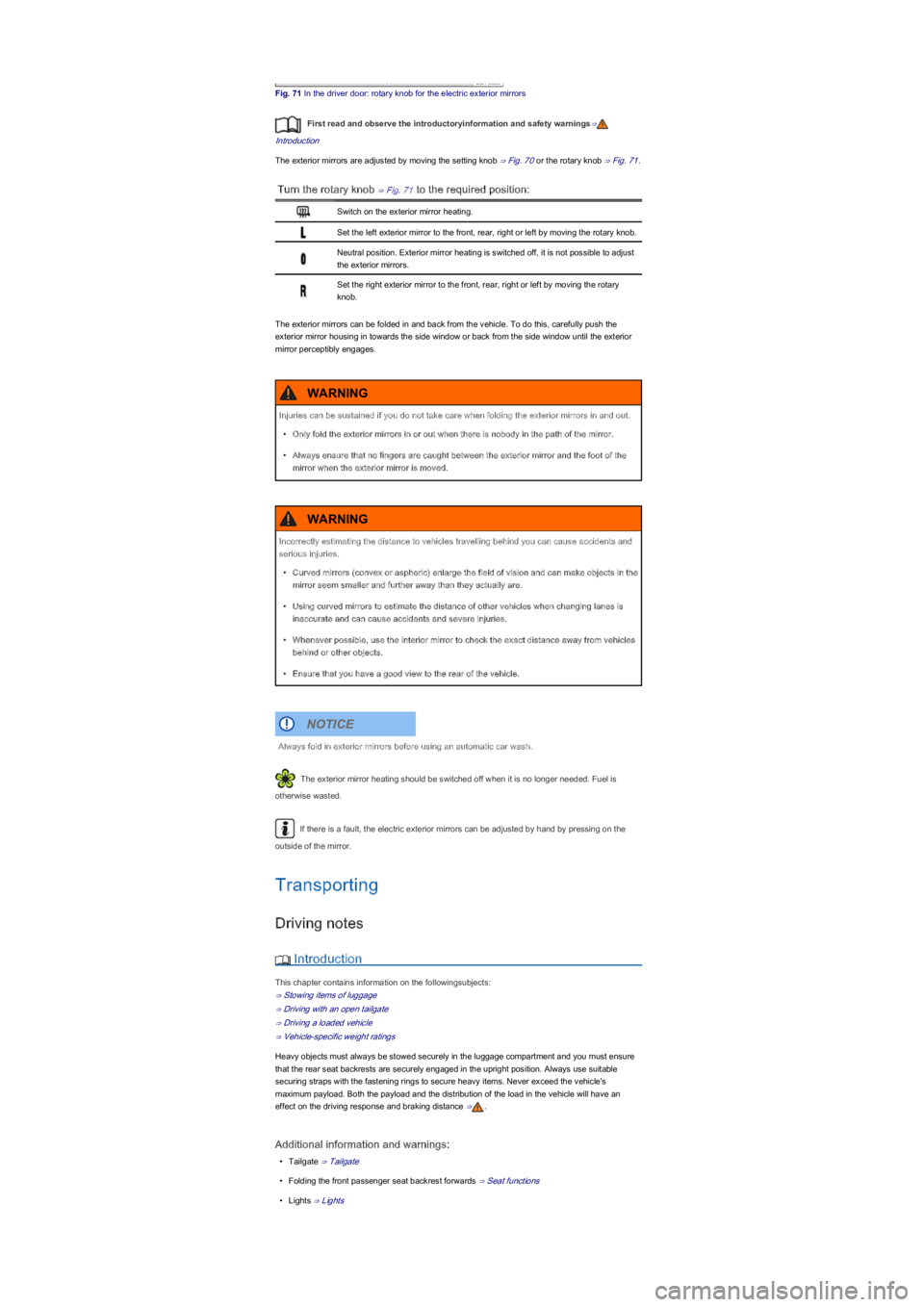
Fig. 71 In the driver door: rotary knob for the electric exterior mirrors
First read and observe the introductoryinformation and safety warnings⇒
Introduction
The exterior mirrors are adjusted by moving the setting knob ⇒ Fig. 70 or the rotary knob ⇒ Fig. 71.
Turn the rotary knob ⇒ Fig. 71 to the required position:
Switch on the exterior mirror heating.
Set the left exterior mirror to the front, rear, right or left by moving the rotary knob.
Neutral position. Exterior mirror heating is switched off, it is not possible to adjust
the exterior mirrors.
Set the right exterior mirror to the front, rear, right or left by moving the rotary
knob.
The exterior mirrors can be folded in and back from the vehicle. To do this, carefully push the
exterior mirror housing in towards the side window or back from the side window until the exterior
mirror perceptibly engages.
The exterior mirror heating should be switched off when it is no longer needed. Fuel is
otherwise wasted.
If there is a fault, the electric exterior mirrors can be adjusted by hand by pressing on the
outside of the mirror.
Transporting
Driving notes
Introduction
This chapter contains information on the followingsubjects:
⇒ Stowing items of luggage
⇒ Driving with an open tailgate
⇒ Driving a loaded vehicle
⇒ Vehicle-specific weight ratings
Heavy objects must always be stowed securely in the luggage compartment and you must ensure
that the rear seat backrests are securely engaged in the upright position. Always use suitable
securing straps with the fastening rings to secure heavy items. Never exceed the vehicle's
maximum payload. Both the payload and the distribution of the load in the vehicle will have an
effect on the driving response and braking distance ⇒.
Additional information and warnings:
\f
Page 73 of 211
The ventilation openings between the rear window and the luggage compartment cover must
not be covered as this would prevent stale air escaping from the vehicle.
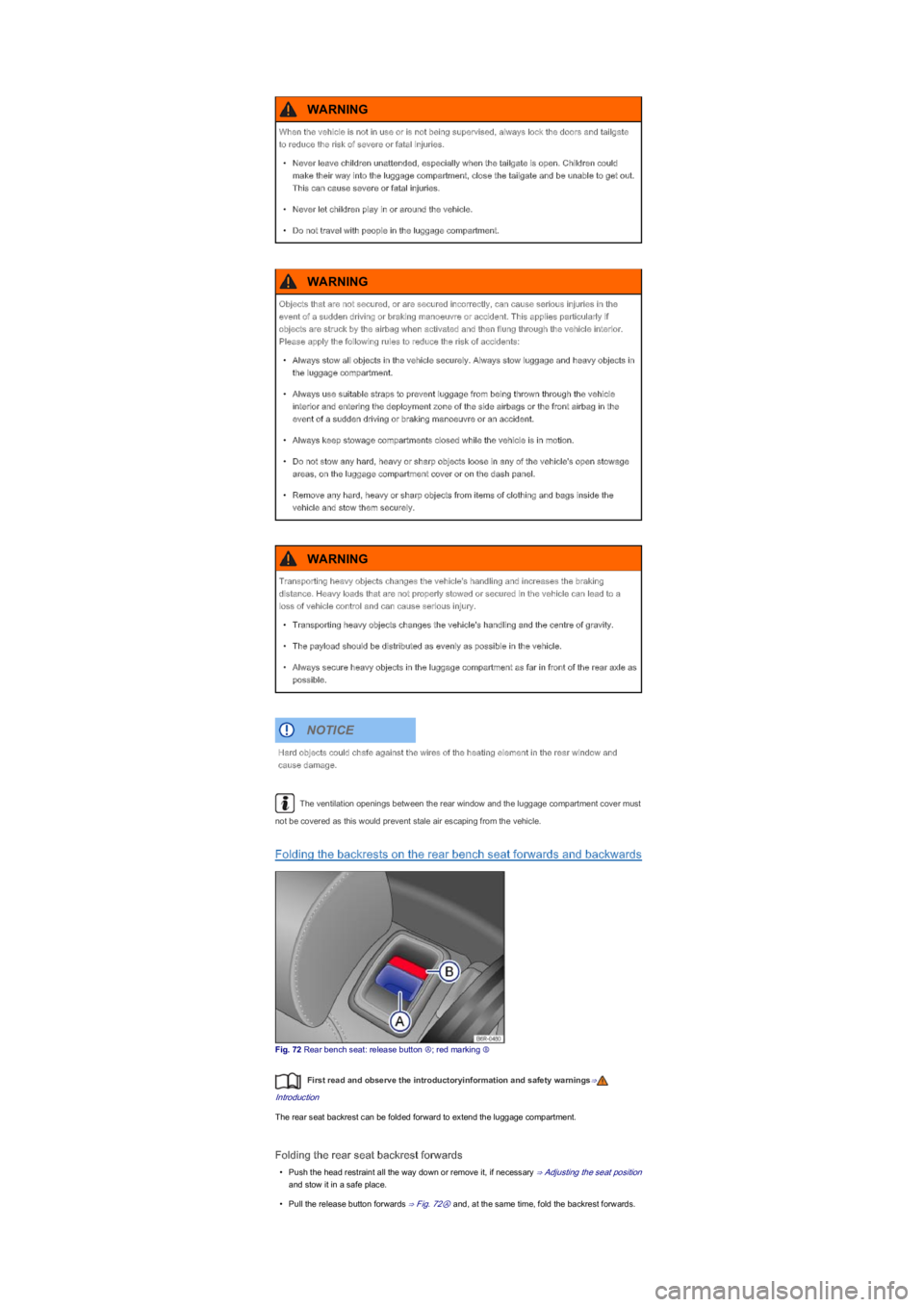
Folding the backrests on the rear bench seat forwards and backwards
Fig. 72 Rear bench seat: release button Ⓐ; red marking Ⓑ
First read and observe the introductoryinformation and safety warnings⇒
Introduction
The rear seat backrest can be folded forward to extend the luggage compartment.
Folding the rear seat backrest forwards
\f
Page 82 of 211
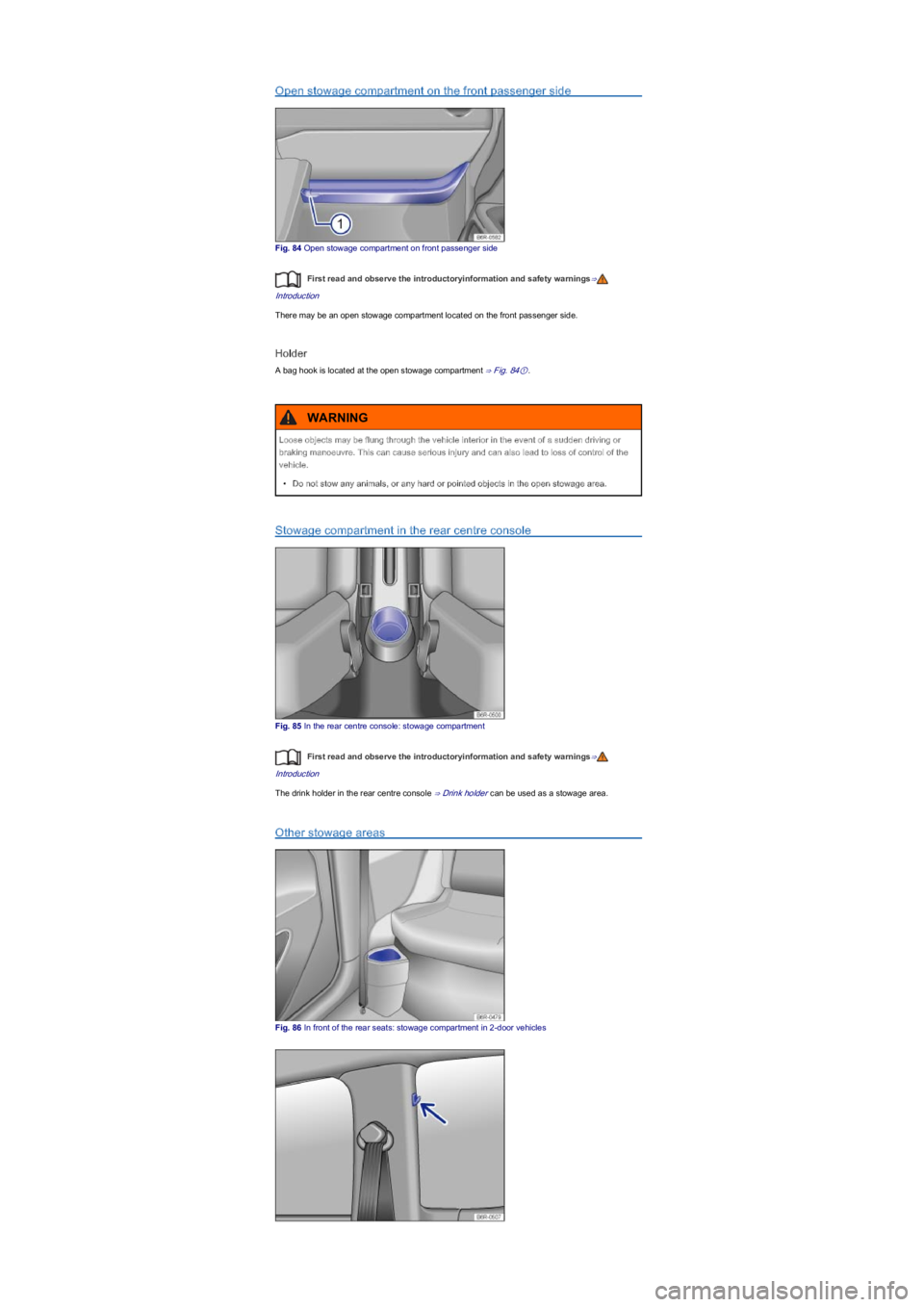
Open stowage compartment on the front passenger side
Fig. 84 Open stowage compartment on front passenger side
First read and observe the introductoryinformation and safety warnings⇒
Introduction
There may be an open stowage compartment located on the front passenger side.
Holder
A bag hook is located at the open stowage compartment ⇒ Fig. 84①.
Stowage compartment in the rear centre console
Fig. 85 In the rear centre console: stowage compartment
First read and observe the introductoryinformation and safety warnings⇒
Introduction
The drink holder in the rear centre console ⇒ Drink holder can be used as a stowage area.
Other stowage areas
Fig. 86 In front of the rear seats: stowage compartment in 2-door vehicles
Loose objects may be flung through the vehicle interior in the event of a sudden driving or
braking manoeuvre. This can cause serious injury and can also lead to loss of control of the
vehicle.
\f
Page 99 of 211
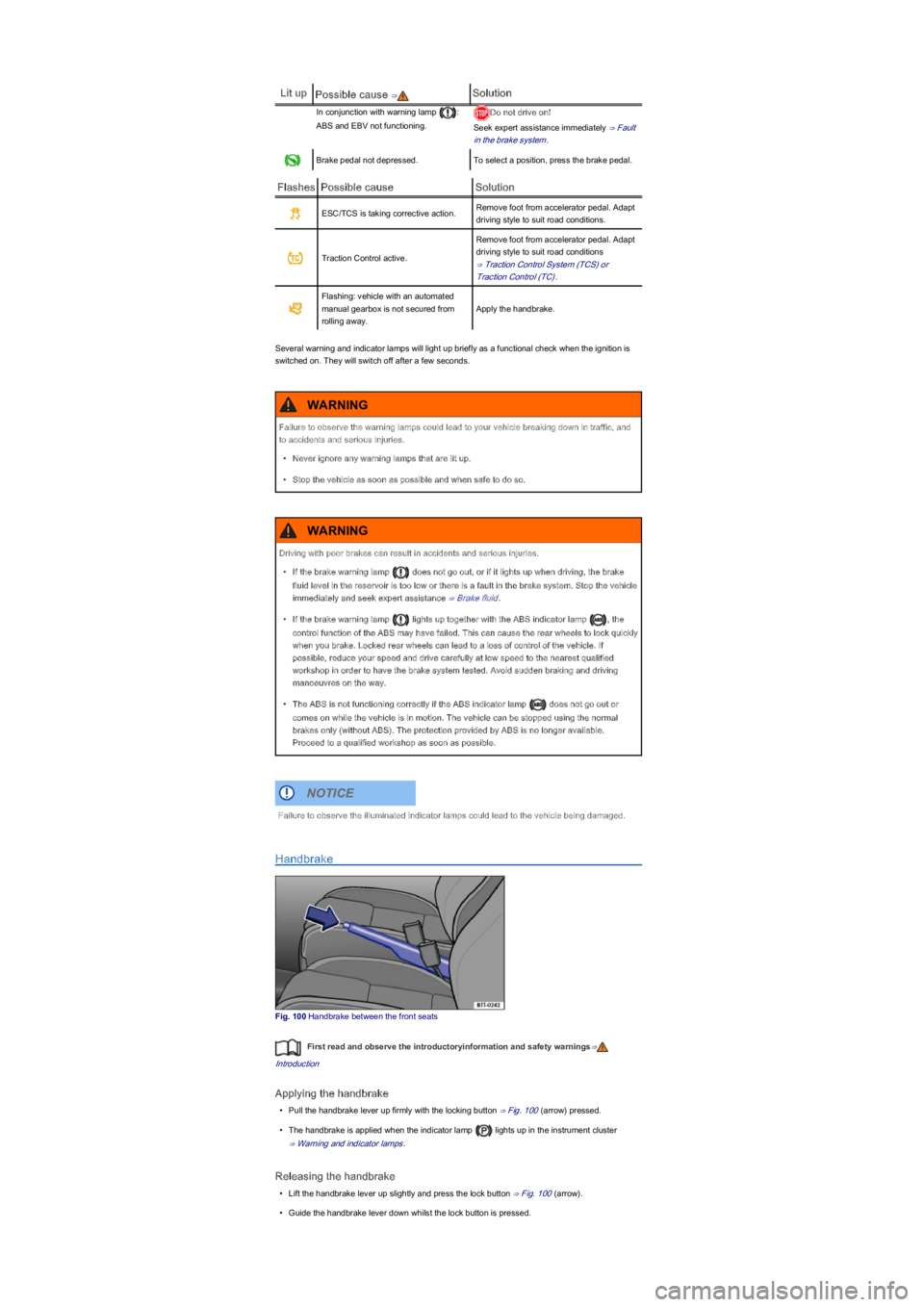
Lit upPossible cause ⇒Solution
In conjunction with warning lamp :
ABS and EBV not functioning.
Do not drive on!
Seek expert assistance immediately ⇒ Fault
in the brake system.
Brake pedal not depressed.To select a position, press the brake pedal.
FlashesPossible causeSolution
ESC/TCS is taking corrective action.Remove foot from accelerator pedal. Adapt
driving style to suit road conditions.
Traction Control active.
Remove foot from accelerator pedal. Adapt
driving style to suit road conditions
⇒ Traction Control System (TCSyf�RU
Traction Control (TCyf.
Flashing: vehicle with an automated
manual gearbox is not secured from
rolling away.
Apply the handbrake.
Several warning and indicator lamps will light up briefly as a functional check when the ignition is
switched on. They will switch off after a few seconds.
Handbrake
Fig. 100 Handbrake between the front seats
First read and observe the introductoryinformation and safety warnings⇒
Introduction
Applying the handbrake
\f
Page 152 of 211
recommends that the protective coating on the underside of the vehicle and on the running gear
should be checked regularly and repaired if necessary.
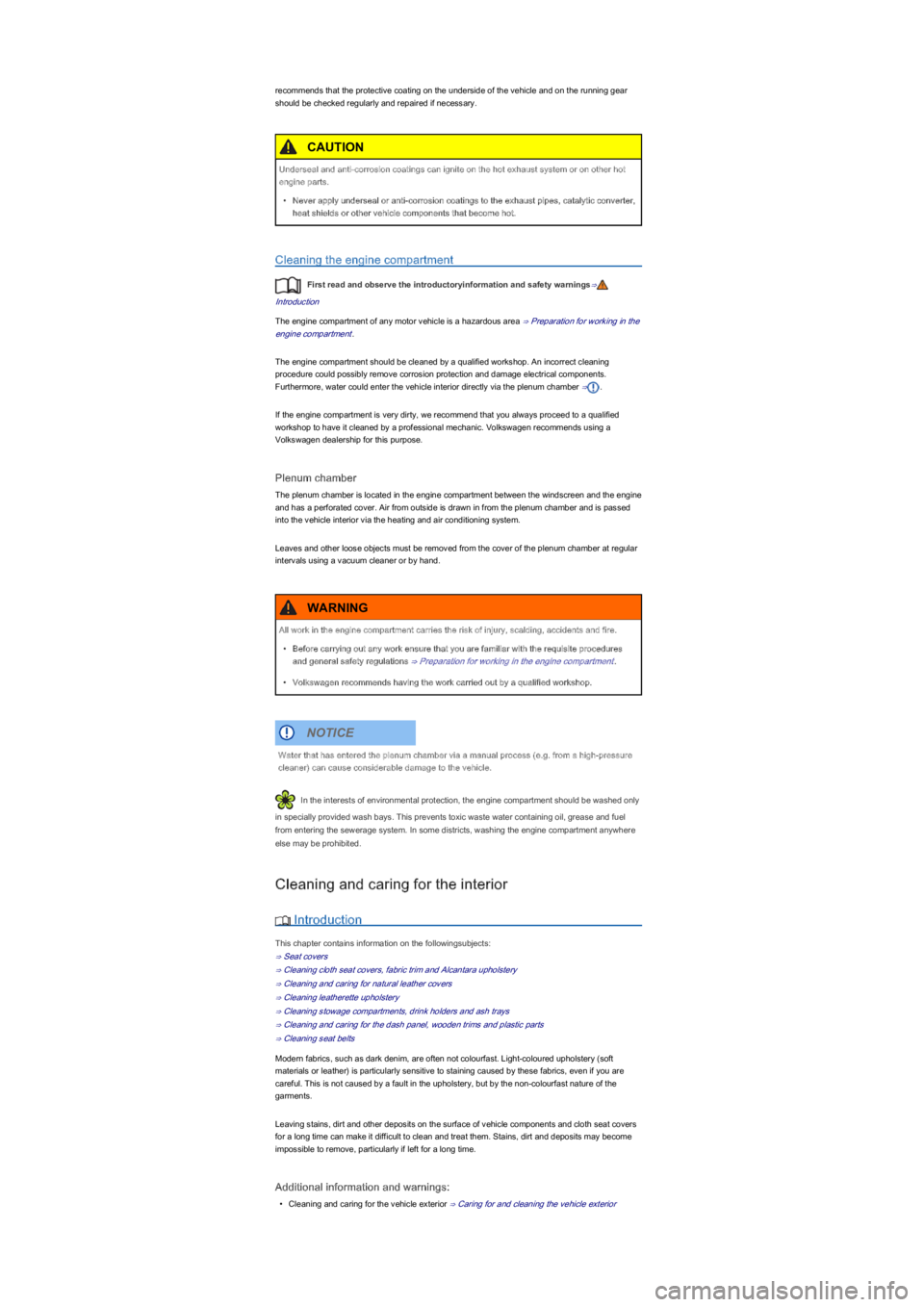
Cleaning the engine compartment
First read and observe the introductoryinformation and safety warnings⇒
Introduction
The engine compartment of any motor vehicle is a hazardous area ⇒ Preparation for working in the
engine compartment.
The engine compartment should be cleaned by a qualified workshop. An incorrect cleaning
procedure could possibly remove corrosion protection and damage electrical components.
Furthermore, water could enter the vehicle interior directly via the plenum chamber ⇒.
If the engine compartment is very dirty, we recommend that you always proceed to a qualified
workshop to have it cleaned by a professional mechanic. Volkswagen recommends using a
Volkswagen dealership for this purpose.
Plenum chamber
The plenum chamber is located in the engine compartment between the windscreen and the engine
and has a perforated cover. Air from outside is drawn in from the plenum chamber and is passed
into the vehicle interior via the heating and air conditioning system.
Leaves and other loose objects must be removed from the cover of the plenum chamber at regular
intervals using a vacuum cleaner or by hand.
In the interests of environmental protection, the engine compartment should be washed only
in specially provided wash bays. This prevents toxic waste water containing oil, grease and fuel
from entering the sewerage system. In some districts, washing the engine compartment anywhere
else may be prohibited.
Cleaning and caring for the interior
Introduction
This chapter contains information on the followingsubjects:
⇒ Seat covers
⇒ Cleaning cloth seat covers, fabric trim and Alcantara upholstery
⇒ Cleaning and caring for natural leather covers
⇒ Cleaning leatherette upholstery
⇒ Cleaning stowage compartments, drink holders and ash trays
⇒ Cleaning and caring for the dash panel, wooden trims and plastic parts
⇒ Cleaning seat belts
Modern fabrics, such as dark denim, are often not colourfast. Light-coloured upholstery (soft
materials or leatheryf�LV�SDUWLFXODUO\�VHQVLWLYH�WR�VWDLQLQJ�FDXVHG�E\�WKHVH�IDEULFV��HYHQ�LI�\RX�DUH
careful. This is not caused by a fault in the upholstery, but by the non-colourfast nature of the
garments.
Leaving stains, dirt and other deposits on the surface of vehicle components and cloth seat covers
for a long time can make it difficult to clean and treat them. Stains, dirt and deposits may become
impossible to remove, particularly if left for a long time.
Additional information and warnings:
\f
Page 153 of 211
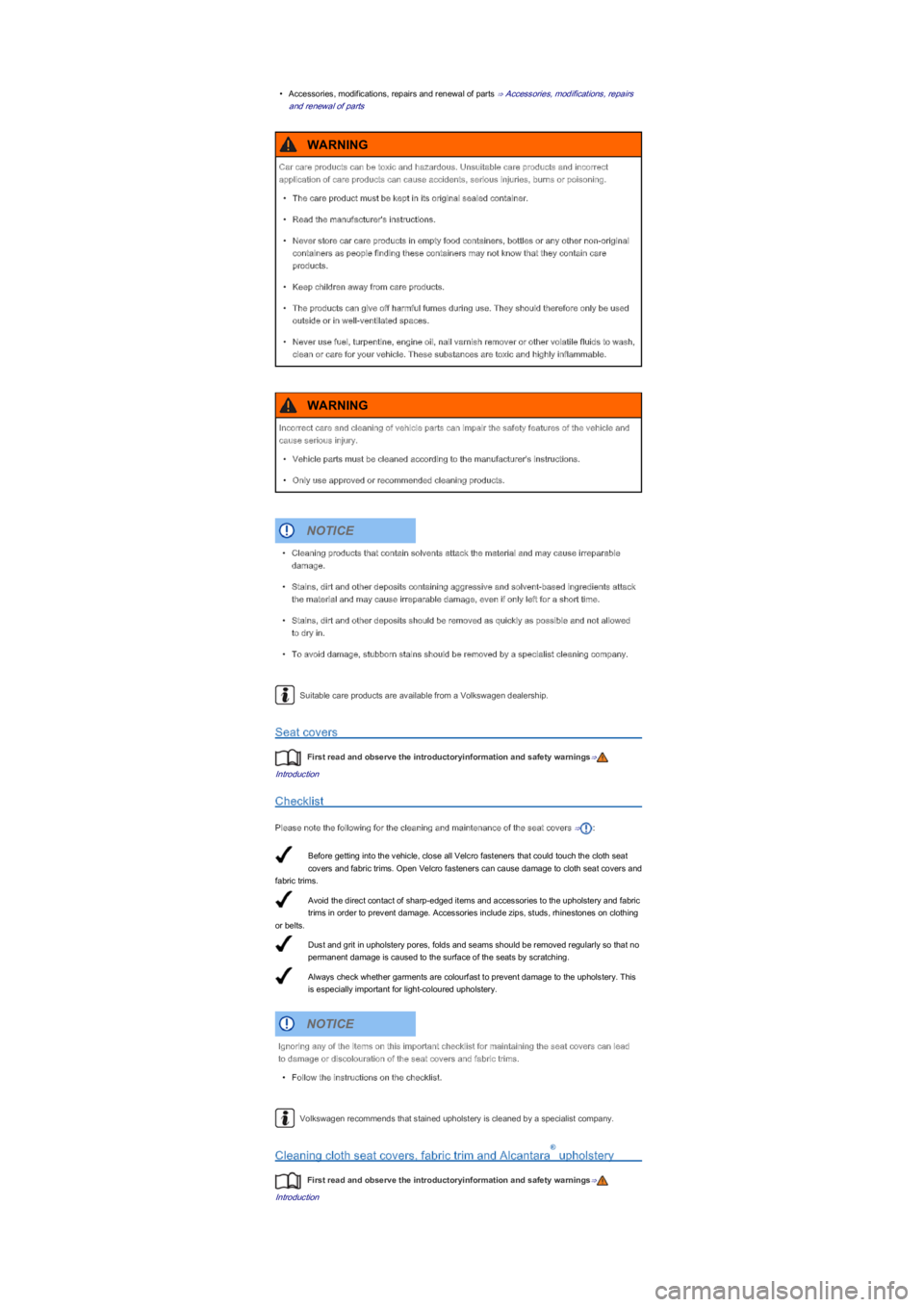
Before getting into the vehicle, close all Velcro fasteners that could touch the cloth seat
covers and fabric trims. Open Velcro fasteners can cause damage to cloth seat covers and
fabric trims.
Avoid the direct contact of sharp-edged items and accessories to the upholstery and fabric
trims in order to prevent damage. Accessories include zips, studs, rhinestones on clothing
or belts.
Dust and grit in upholstery pores, folds and seams should be removed regularly so that no
permanent damage is caused to the surface of the seats by scratching.
Always check whether garments are colourfast to prevent damage to the upholstery. This
is especially important for light-coloured upholstery.
\f
Page 154 of 211
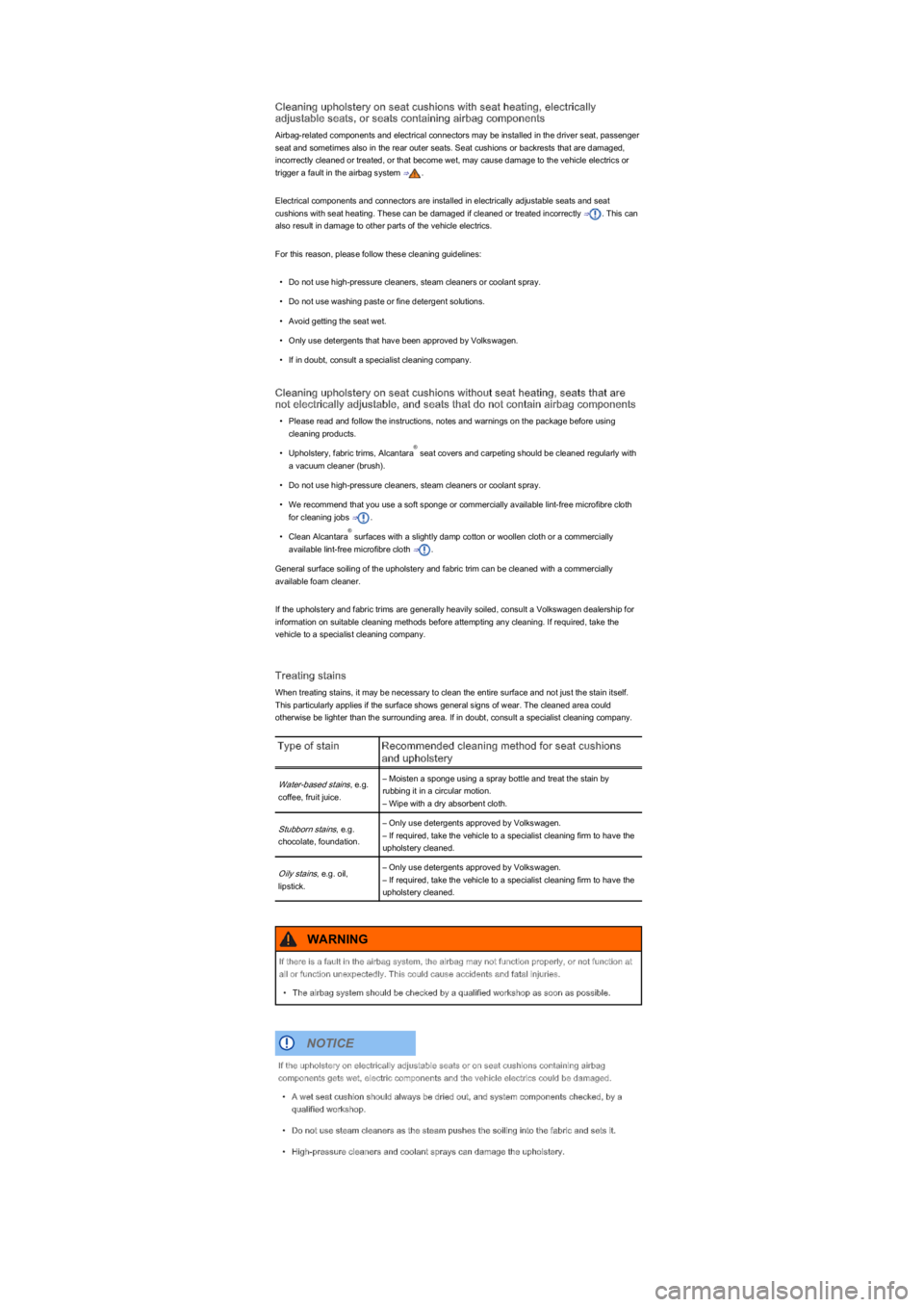
Cleaning upholstery on seat cushions with seat heating, electrically
adjustable seats, or seats containing airbag components
Airbag-related components and electrical connectors may be installed in the driver seat, passenger
seat and sometimes also in the rear outer seats. Seat cushions or backrests that are damaged,
incorrectly cleaned or treated, or that become wet, may cause damage to the vehicle electrics or
trigger a fault in the airbag system ⇒.
Electrical components and connectors are installed in electrically adjustable seats and seat
cushions with seat heating. These can be damaged if cleaned or treated incorrectly ⇒. This can
also result in damage to other parts of the vehicle electrics.
For this reason, please follow these cleaning guidelines:
\f
Page 156 of 211
However, slight colour variations will arise in normal use.
Mild soap solution: two tablespoons neutral soap diluted in one litre of water.
Cleaning leatherette upholstery
First read and observe the introductoryinformation and safety warnings⇒
Introduction
Please observe the following notes prior to cleaning the leatherette upholstery ⇒ Cleaning
upholstery on seat cushions with seat heating, electrically adjustable seats, or seats containing
airbag components.
Only use water and neutral detergents to clean the leatherette upholstery.
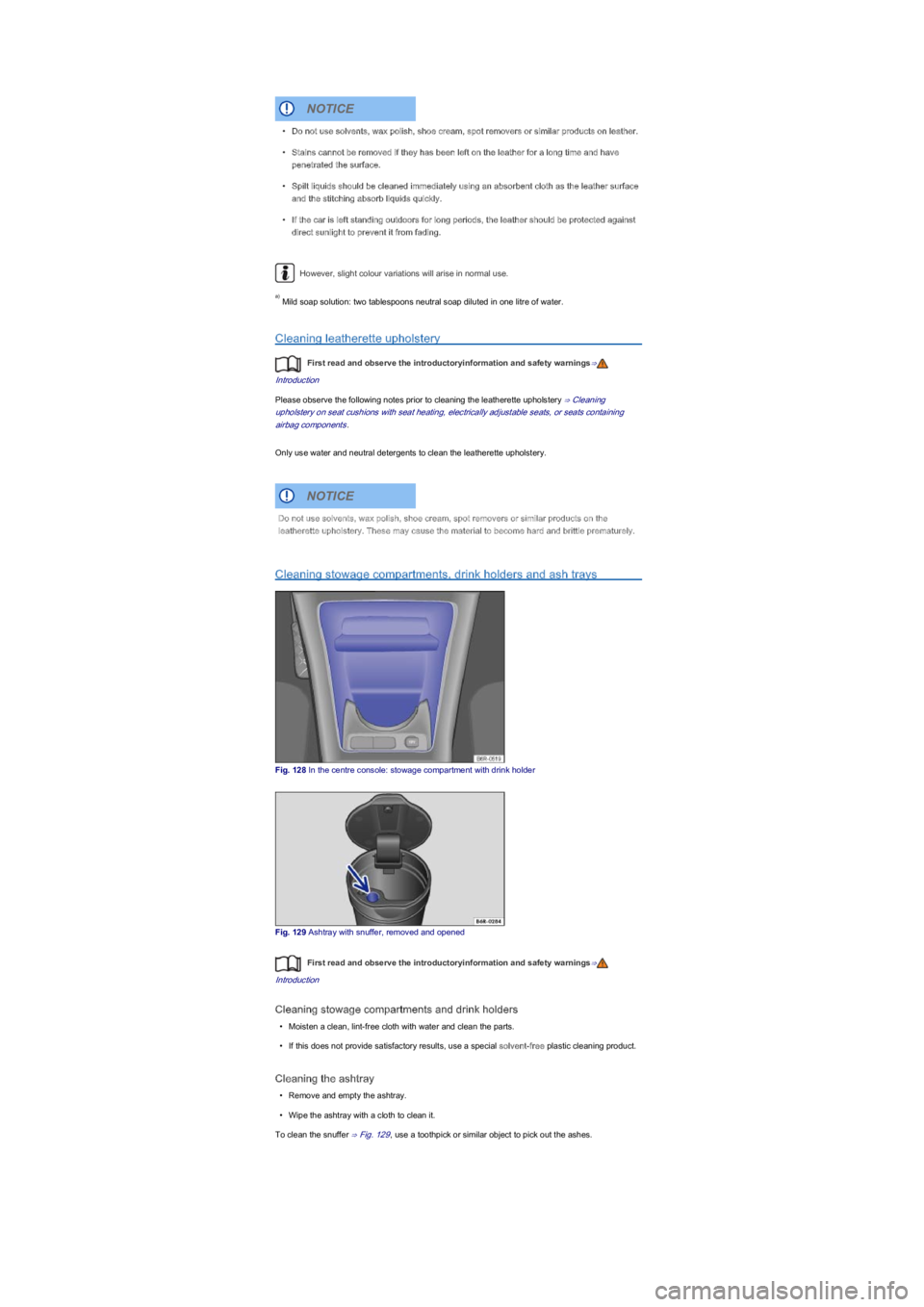
Cleaning stowage compartments, drink holders and ash trays
Fig. 128 In the centre console: stowage compartment with drink holder
Fig. 129 Ashtray with snuffer, removed and opened
First read and observe the introductoryinformation and safety warnings⇒
Introduction
Cleaning stowage compartments and drink holders
\f