Page 183 of 364
1835-3. Using the interior lights
5
Interior features
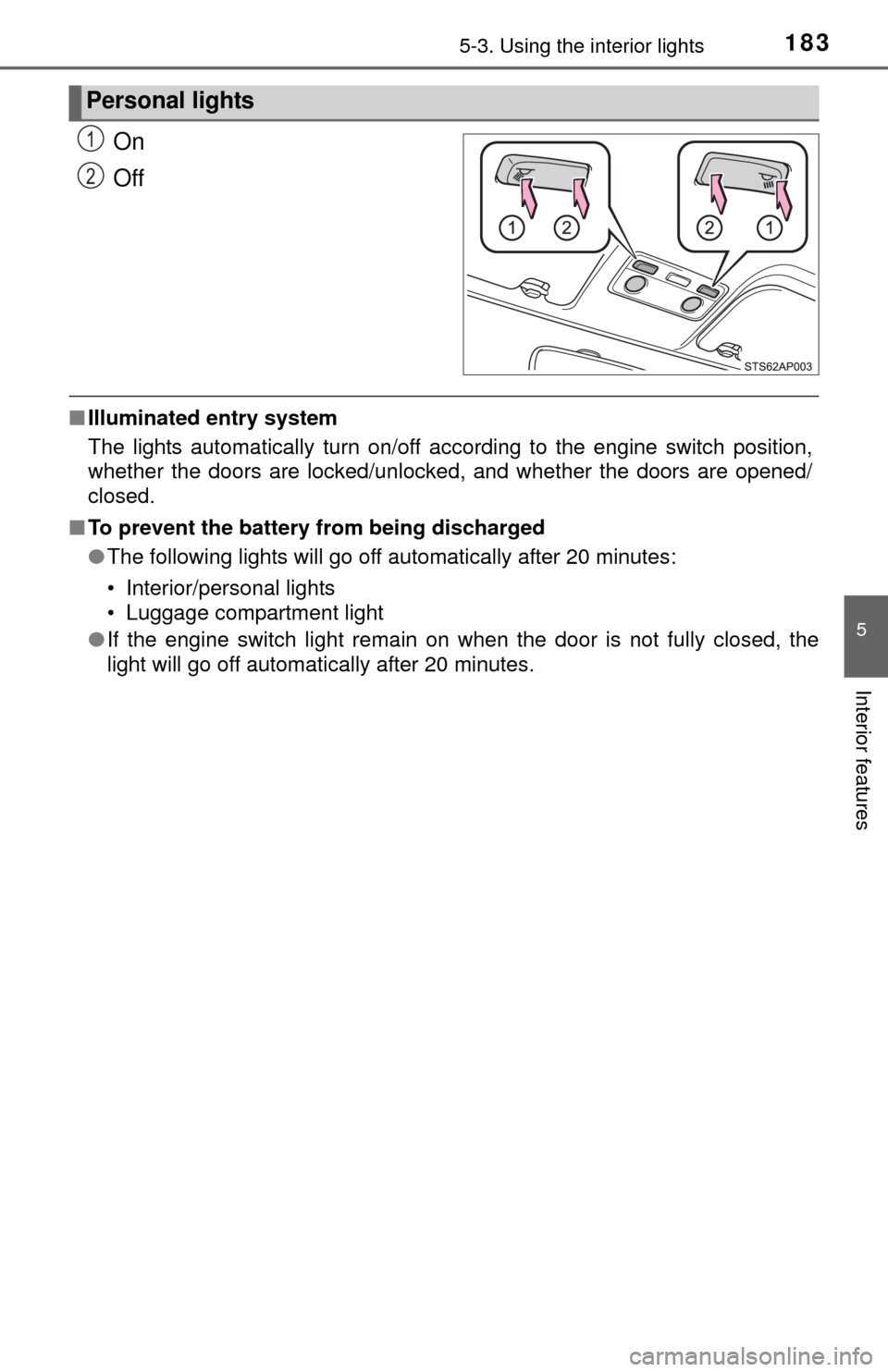
On
Off
■Illuminated entry system
The lights automatically turn on/off according to the engine switch position,
whether the doors are locked/unlocked, and whether the doors are opened/
closed.
■ To prevent the battery from being discharged
●The following lights will go off automatically after 20 minutes:
• Interior/personal lights
• Luggage compartment light
● If the engine switch light remain on when the door is not fully closed, \
the
light will go off automatically after 20 minutes.
Personal lights
1
2
Page 193 of 364
193
6Maintenance and care
6-1. Maintenance and careCleaning and protecting the vehicle exterior .......... 194
Cleaning and protecting the vehicle interior ........... 197
6-2. Maintenance Maintenance requirements ................... 200
General maintenance........ 202
Emission inspection and maintenance (I/M)
program .......................... 205
6-3. Do-it-yourself maintenance Do-it-yourself service precautions ..................... 206
Hood ................................. 209
Positioning a floor jack ...... 211
Engine compartment ......... 213
Tires .................................. 223
Tire inflation pressure ....... 231
Wheels .............................. 235
Air conditioning filter.......... 238
Wireless remote control battery ............................. 240
Checking and replacing fuses ............................... 243
Light bulbs......................... 248
Page 221 of 364
2216-3. Do-it-yourself maintenance
6
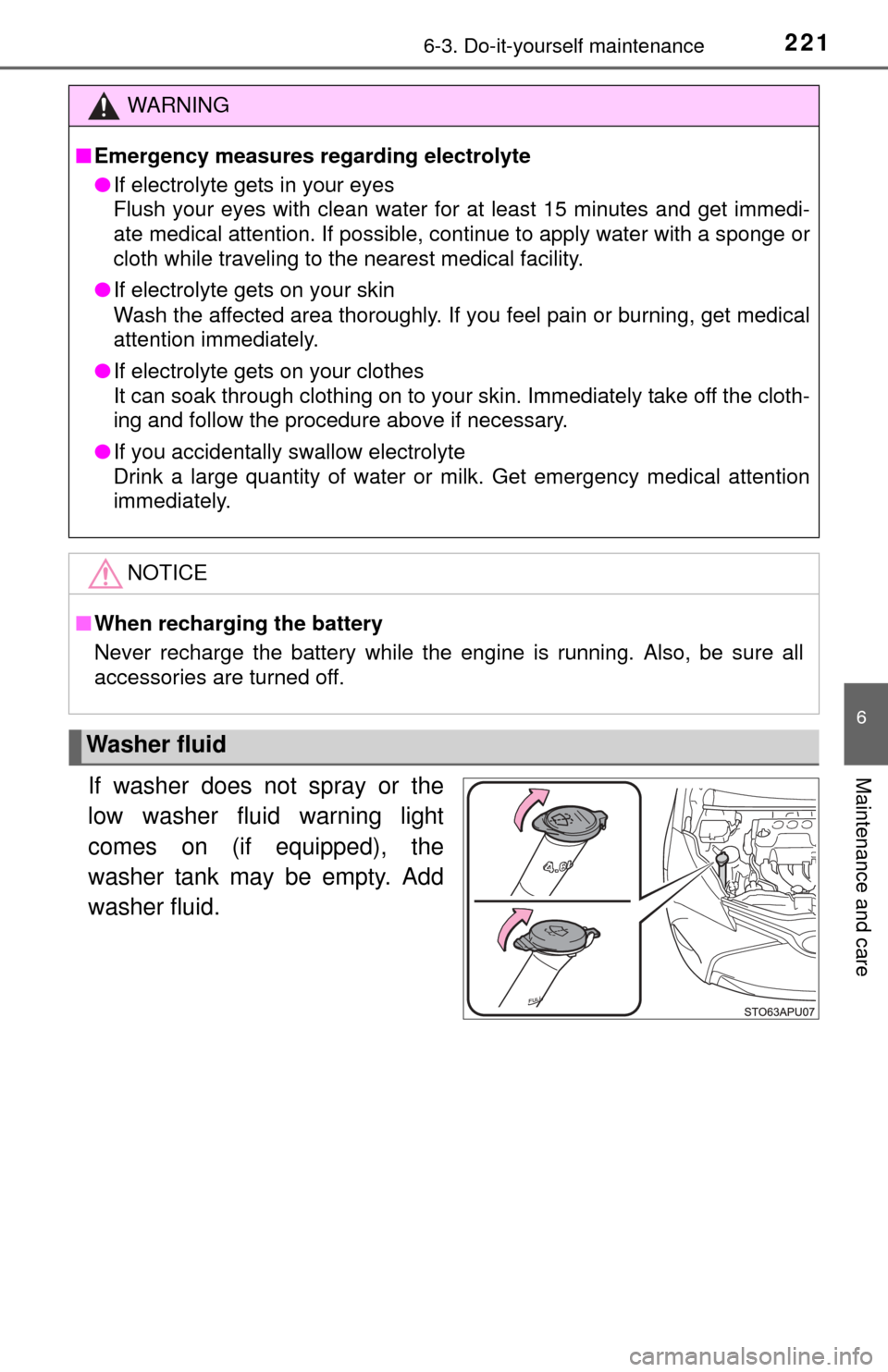
Maintenance and careIf washer does not spray or the
low washer fluid warning light
comes on (if equipped), the
washer tank may be empty. Add
washer fluid.
WARNING
■Emergency measures regarding electrolyte
● If electrolyte gets in your eyes
Flush your eyes with clean water for at least 15 minutes and get immedi-
ate medical attention. If possible, continue to apply water with a sponge or
cloth while traveling to the nearest medical facility.
● If electrolyte gets on your skin
Wash the affected area thoroughly. If you feel pain or burning, get medical
attention immediately.
● If electrolyte gets on your clothes
It can soak through clothing on to your skin. Immediately take off the cloth-
ing and follow the procedure above if necessary.
● If you accidentally swallow electrolyte
Drink a large quantity of water or milk. Get emergency medical attention
immediately.
NOTICE
■When recharging the battery
Never recharge the battery while the engine is running. Also, be sure all
accessories are turned off.
Washer fluid
Page 225 of 364
2256-3. Do-it-yourself maintenance
6
Maintenance and care
■How to initialize the tire pressure warning systemPark the vehicle in a safe place and turn the engine switch to the
“LOCK” position.
Initialization cannot be performed while the vehicle is moving.
Adjust the tire pressure to the specified cold tire inflation pres-
sure level. ( P. 315)
Make sure to adjust the tire pressu re to the specified cold tire infla-
tion pressure level. The tire pressure warning system will operate
based on this pressure level.
Turn the engine switch to the “ON” position.
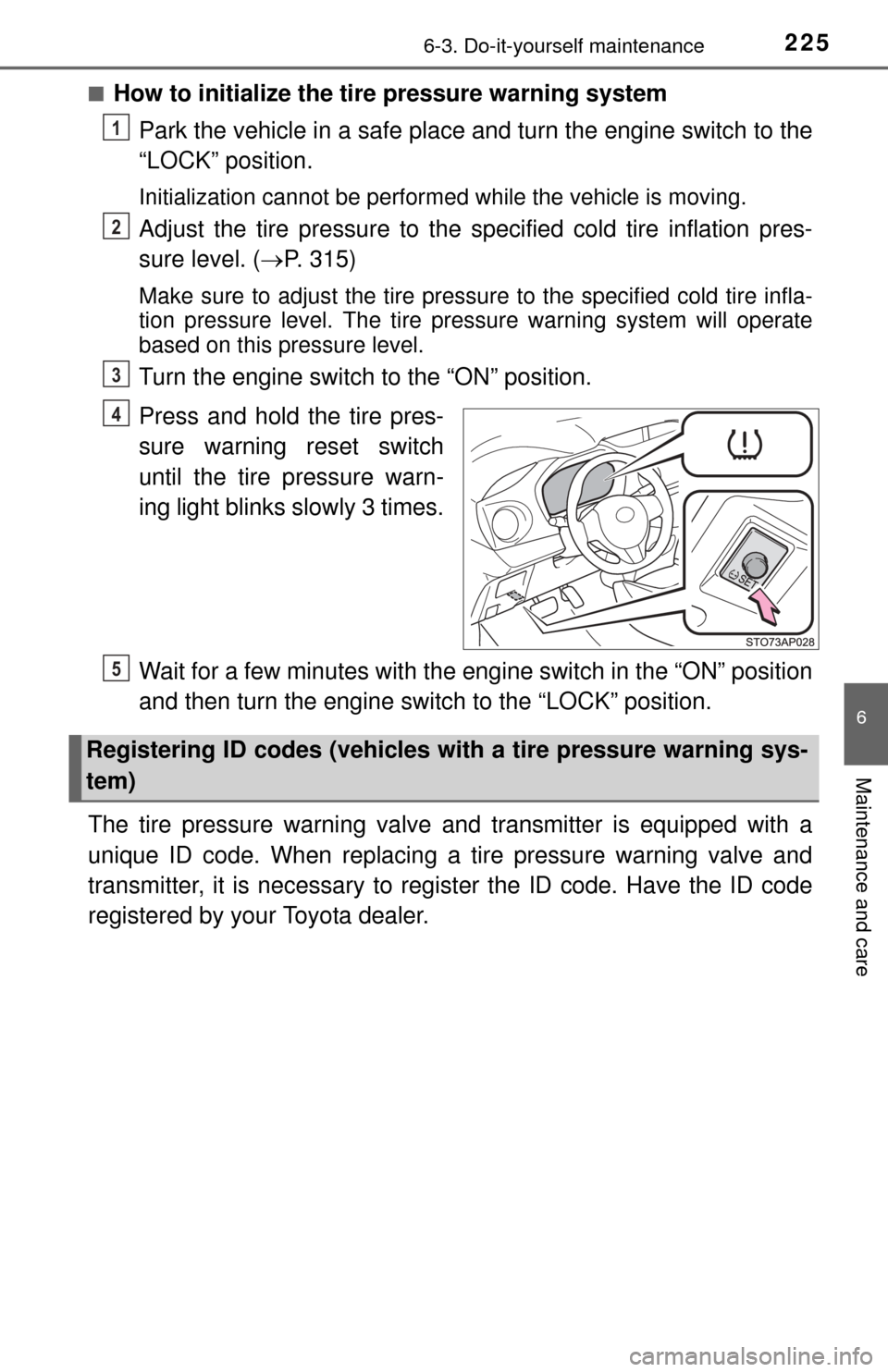
Press and hold the tire pres-
sure warning reset switch
until the tire pressure warn-
ing light blinks slowly 3 times.
Wait for a few minutes with the eng ine switch in the “ON” position
and then turn the engine switch to the “LOCK” position.
The tire pressure warning valve and transmitter is equipped with a
unique ID code. When replacing a tire pressure warning valve and
transmitter, it is necessary to register the ID code. Have the ID code
registered by your Toyota dealer.
1
2
3
4
Registering ID codes (vehicles with a tire pressure warning sys-
tem)
5
Page 261 of 364
261
7When trouble arises
7-1. Essential informationEmergency flashers .......... 262
If your vehicle has to be stopped in
an emergency ................. 263
7-2. Steps to take in an emergency
If your vehicle needs to be towed ......................... 265
If you think something is wrong .............................. 270
Fuel pump shut off system ............................ 271
If a warning light turns on or a warning buzzer
sounds ............................ 272
If you have a flat tire.......... 281
If the engine will not start .. 294
If the shift lever cannot be shifted from P (vehicles
with an automatic
transmission) .................. 296
If the vehicle battery is discharged ...................... 297
If your vehicle overheats ... 300
If the vehicle becomes stuck ............................... 303
Page 262 of 364
2627-1. Essential information
Emergency flashers
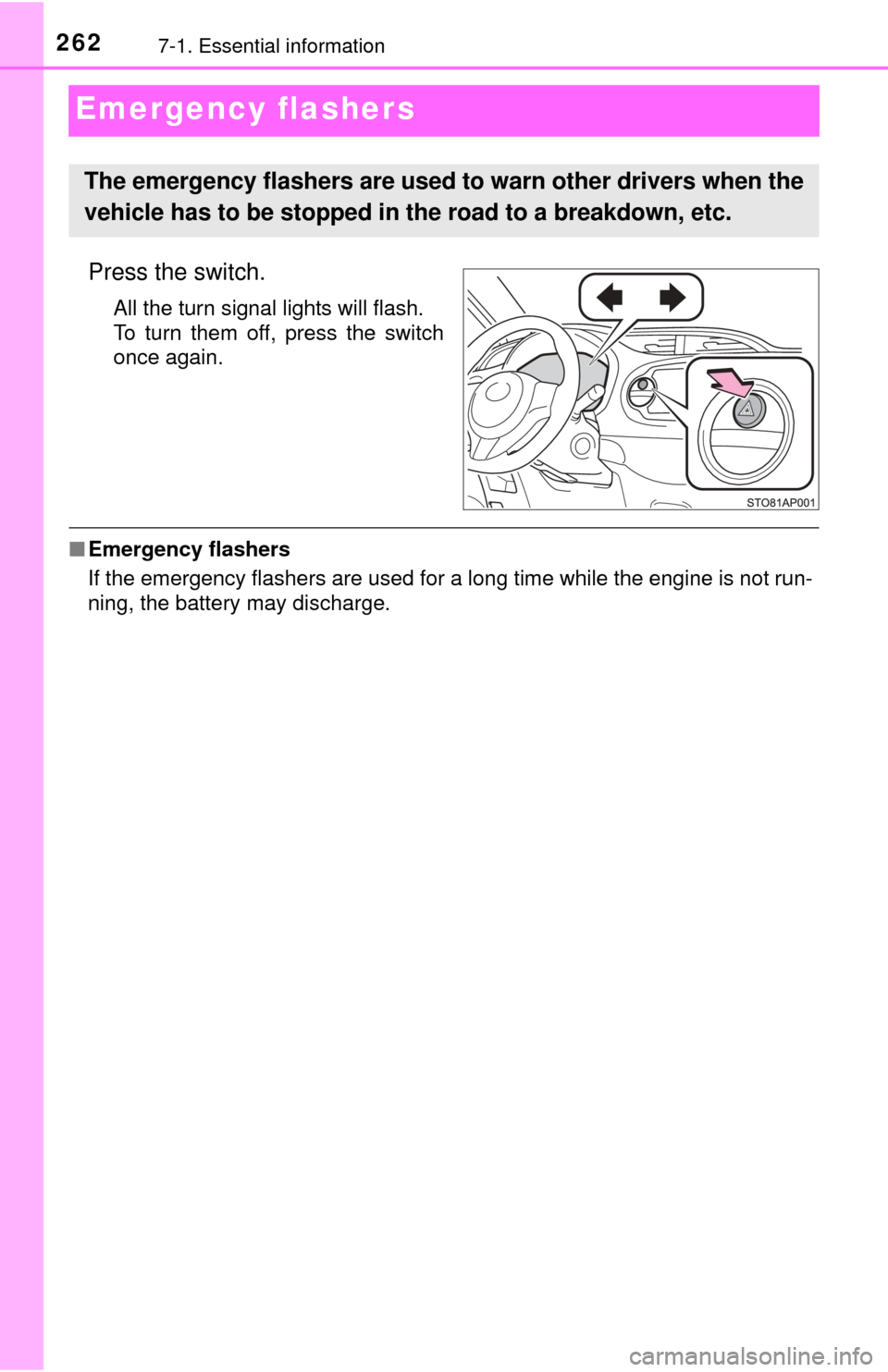
Press the switch.
All the turn signal lights will flash.
To turn them off, press the switch
once again.
■Emergency flashers
If the emergency flashers are used for a long time while the engine is n\
ot run-
ning, the battery may discharge.
The emergency flashers are used to warn other drivers when the
vehicle has to be stopped in the road to a breakdown, etc.
Page 270 of 364
2707-2. Steps to take in an emergency
If you think something is wrong
●Fluid leaks under the vehicle
(Water dripping from the air co nditioning after use is normal)
● Flat-looking tires or uneven tire wear
● High engine coolant temperature warning light flashes or comes on
● Low engine coolant temperature indicator comes on or does not
come on continuously
● Changes in exhaust sound
● Excessive tire squeal when cornering
● Strange noises related to the suspension system
● Pinging or other noises related to the engine
● Engine misfire, stumbling or running roughly
● Appreciable loss of power
● Vehicle pulls heavily to one side when braking
● Vehicle pulls heavily to one side when driving on a level road
● Loss of brake effectiveness, spon gy feeling, pedal almost touches
the floor
If you notice any of the follow ing symptoms, your vehicle proba-
bly needs adjustment or repair. Contact your Toyota dealer as
soon as possible.
Visible symptoms
Audible symptoms
Operational symptoms
Page 272 of 364
2727-2. Steps to take in an emergency
If a warning light turns on or a warning
buzzer sounds
Calmly perform the following actions if any of the warning lights
comes on or flashes. If a light comes on or flashes, but then
goes off, this does not necessarily indicate a malfunction in the
system. However, if this continues to occur, have the vehicle
inspected by your Toyota dealer.
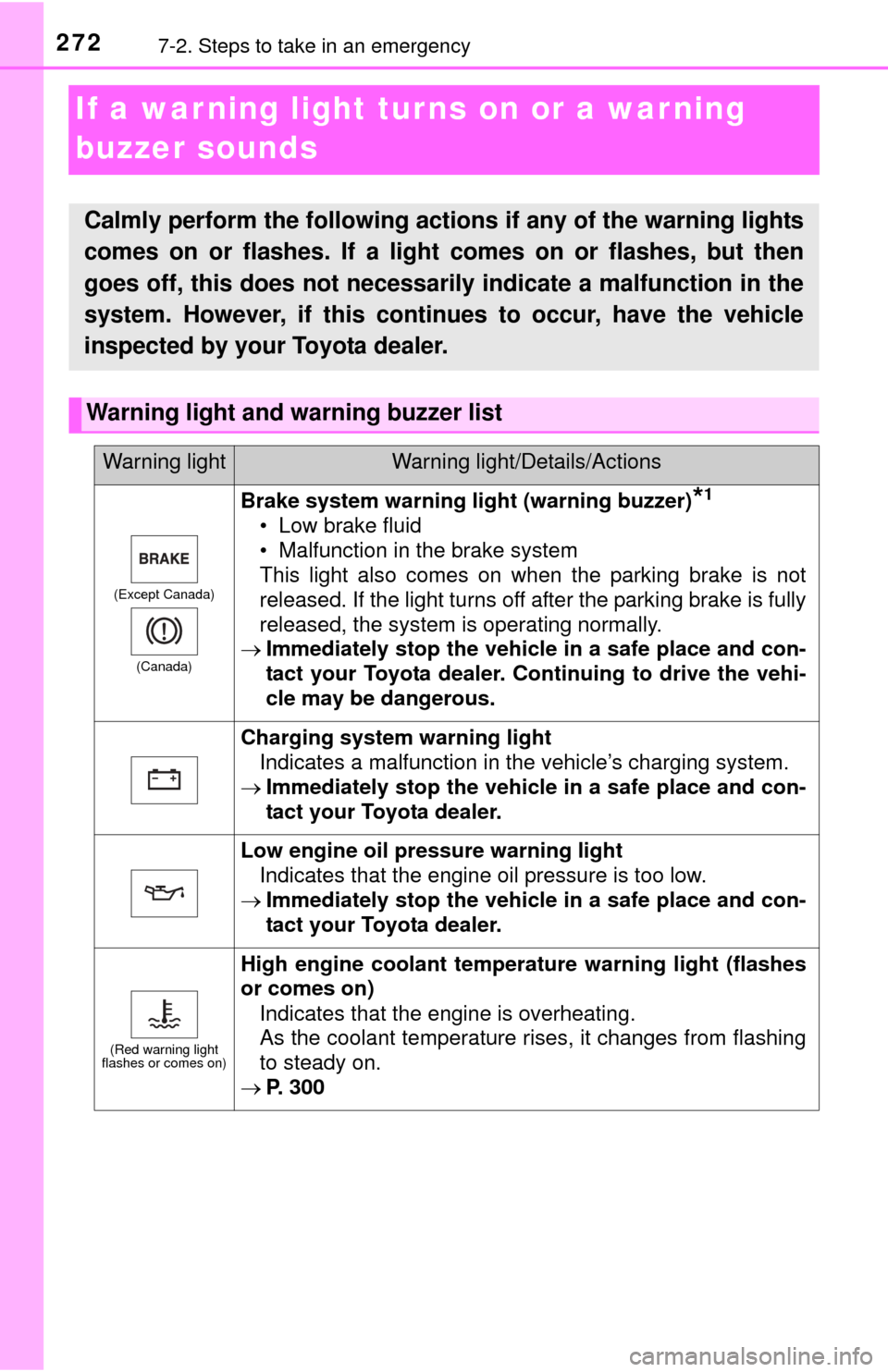
Warning light and warning buzzer list
Warning lightWarning light/Details/Actions
(Except Canada)
(Canada)
Brake system warning light (warning buzzer)*1
• Low brake fluid
• Malfunction in the brake system
This light also comes on when the parking brake is not
released. If the light turns off after the parking brake is fully
released, the system is operating normally.
Immediately stop the vehicle in a safe place and con-
tact your Toyota dealer. Continuing to drive the vehi-
cle may be dangerous.
Charging system warning light
Indicates a malfunction in the vehicle’s charging system.
Immediately stop the vehicle in a safe place and con-
tact your Toyota dealer.
Low engine oil pressure warning light
Indicates that the engine oil pressure is too low.
Immediately stop the vehicle in a safe place and con-
tact your Toyota dealer.
(Red warning light
flashes or comes on)
High engine coolant temperature warning light (flashes
or comes on)
Indicates that the engine is overheating.
As the coolant temperature rises, it changes from flashing
to steady on.
P. 300