2015 KIA PICANTO brake
[x] Cancel search: brakePage 401 of 846
769
Maintenance
Exterior care
Exterior general caution
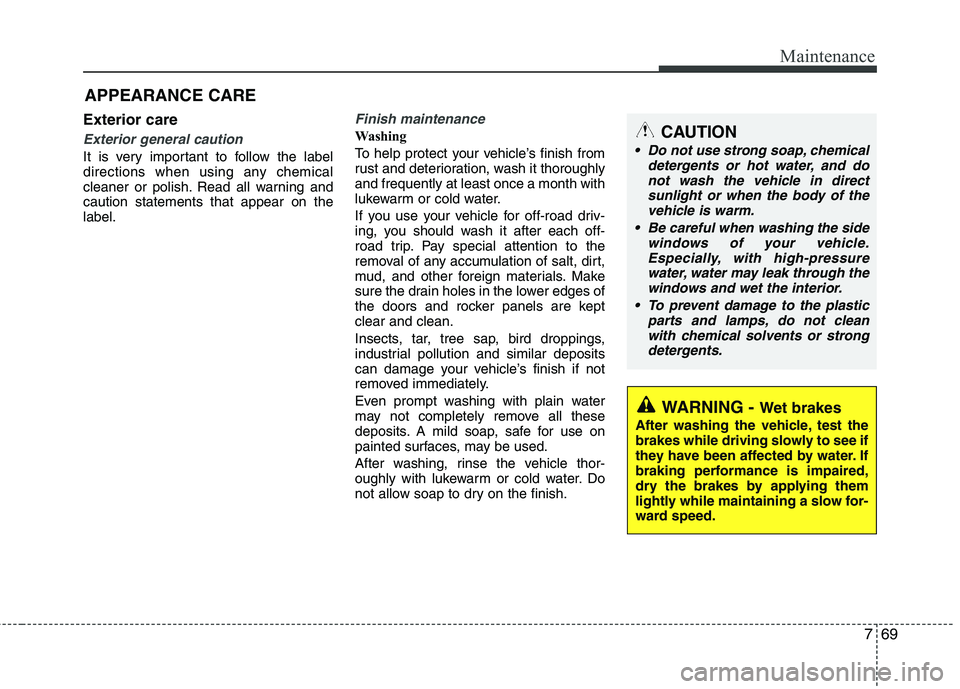
It is very important to follow the label
directions when using any chemical
cleaner or polish. Read all warning andcaution statements that appear on thelabel.
Finish maintenance
Washing
To help protect your vehicle’s finish from
rust and deterioration, wash it thoroughlyand frequently at least once a month with
lukewarm or cold water.
If you use your vehicle for off-road driv-
ing, you should wash it after each off-
road trip. Pay special attention to the
removal of any accumulation of salt, dirt,
mud, and other foreign materials. Make
sure the drain holes in the lower edges of
the doors and rocker panels are keptclear and clean.
Insects, tar, tree sap, bird droppings,
industrial pollution and similar deposits
can damage your vehicle’s finish if not
removed immediately.
Even prompt washing with plain water
may not completely remove all these
deposits. A mild soap, safe for use on
painted surfaces, may be used.
After washing, rinse the vehicle thor-
oughly with lukewarm or cold water. Do
not allow soap to dry on the finish.
APPEARANCE CARECAUTION
Do not use strong soap, chemical
detergents or hot water, and do
not wash the vehicle in direct sunlight or when the body of thevehicle is warm.
Be careful when washing the side windows of your vehicle.Especially, with high-pressurewater, water may leak through the windows and wet the interior.
To prevent damage to the plastic parts and lamps, do not cleanwith chemical solvents or strongdetergents.
WARNING - Wet brakes
After washing the vehicle, test the
brakes while driving slowly to see if
they have been affected by water. If
braking performance is impaired,
dry the brakes by applying them
lightly while maintaining a slow for-
ward speed.
Page 403 of 846
771
Maintenance
Bright-metal maintenance
To remove road tar and insects, use atar remover, not a scraper or other
sharp object.
To protect the surfaces of bright-metal parts from corrosion, apply a coating of
wax or chrome preservative and rub to
a high luster.
During winter weather or in coastal areas, cover the bright metal parts with
a heavier coating of wax or preserva-
tive. If necessary, coat the parts with
non-corrosive petroleum jelly or other
protective compound.
Underbody maintenance
Corrosive materials used for ice and
snow removal and dust control may col-
lect on the underbody. If these materials
are not removed, accelerated rusting can
occur on underbody parts such as the
fuel lines, frame, floor pan and exhaust
system, even though they have been
treated with rust protection.
Thoroughly flush the vehicle underbody
and wheel openings with lukewarm or
cold water once a month, after off-road
driving and at the end of each winter. Payspecial attention to these areas because
it is difficult to see all the mud and dirt. It
will do more harm than good to wet down
the road grime without removing it. The
lower edges of doors, rocker panels, and
frame members have drain holes that
should not be allowed to clog with dirt;
trapped water in these areas can cause
rusting.WARNING
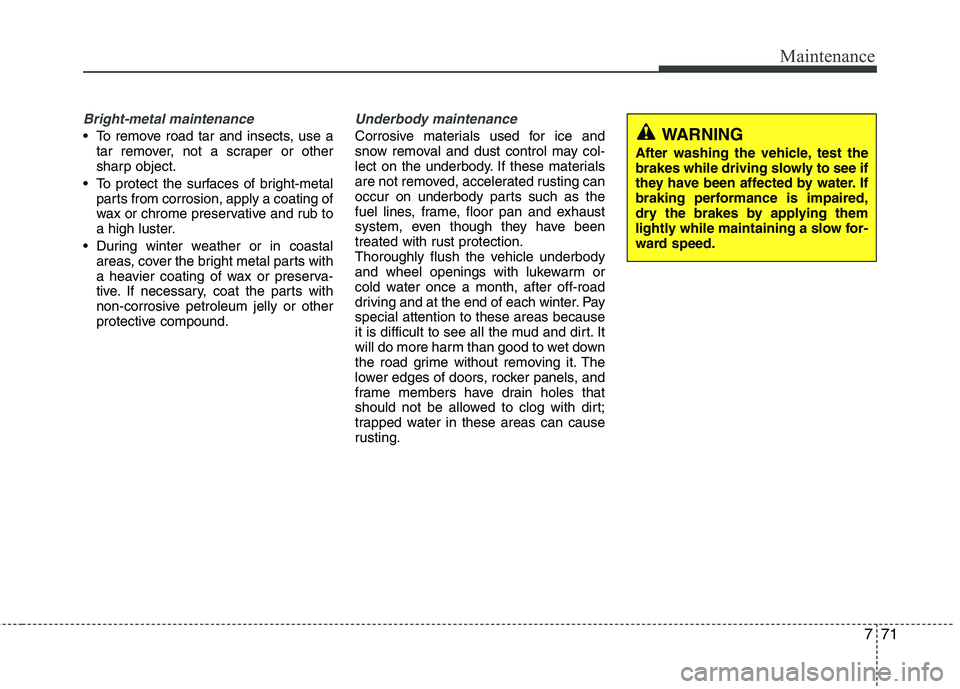
After washing the vehicle, test the
brakes while driving slowly to see if
they have been affected by water. If
braking performance is impaired,
dry the brakes by applying them
lightly while maintaining a slow for-
ward speed.
Page 413 of 846
Specifications & Consumer information
4
8
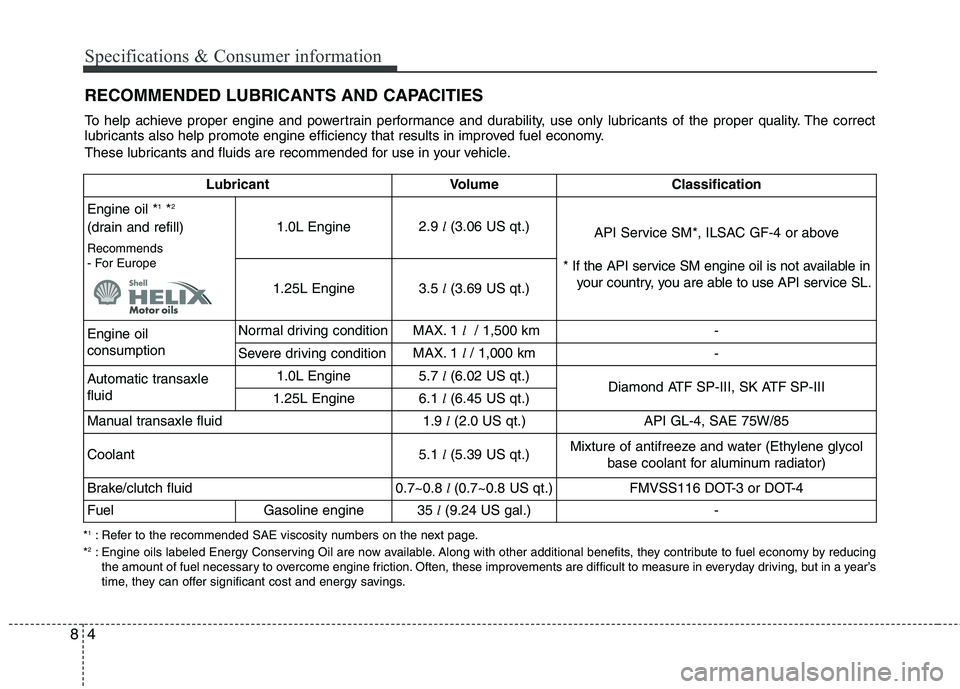
RECOMMENDED LUBRICANTS AND CAPACITIES
* 1
: Refer to the recommended SAE viscosity numbers on the next page.
* 2
: Engine oils labeled Energy Conserving Oil are now available. Along with other additional benefits, they contribute to fuel economy by reducing
the amount of fuel necessary to overcome engine friction. Often, these improvements are difficult to measure in everyday driving, but in a year’s
time, they can offer significant cost and energy savings.
To help achieve proper engine and powertrain performance and durability, use only lubricants of the proper quality. The correct
lubricants also help promote engine efficiency that results in improved fuel economy.
These lubricants and fluids are recommended for use in your vehicle.
Lubricant Volume Classification
Engine oil * 1
*2
(drain and refill) Recommends
- For Europe 1.0L Engine
2.9
l(3.06 US qt.)
API Service SM*, ILSAC GF-4 or above
* If the API service SM engine oil is not available in your country, you are able to use API service SL.
1.25L Engine3.5 l(3.69 US qt.)
Engine oil consumption Normal driving condition
MAX. 1
l/ 1,500 km
-
Severe driving condition MAX. 1
l/ 1,000 km
-
Automatic transaxlefluid 1.0L Engine
5.7
l(6.02 US qt.)
Diamond ATF SP-III, SK ATF SP-III
1.25L Engine 6.1
l(6.45 US qt.)
Manual transaxle fluid 1.9
l(2.0 US qt.)
API GL-4, SAE 75W/85
Coolant 5.1
l(5.39 US qt.) Mixture of antifreeze and water (Ethylene glycol
base coolant for aluminum radiator)
Brake/clutch fluid 0.7~0.8
l (0.7~0.8 US qt.)
FMVSS116 DOT-3 or DOT-4
Fuel Gasoline engine 35
l(9.24 US gal.)
-
Page 419 of 846

Index
2
I
Air bags..........................................................................3-39
Air bag warning label ..............................................3-61
Air bag warning light ..............................................3-42
Curtain air bag..........................................................3-52
Driver's and passenger's front air bag ......................3-46
Side air bag ..............................................................3-51
Air cleaner ....................................................................7-30
Air conditioner compressor label ....................................8-7
Antenna ........................................................................4-109
Anti-lock brake system (ABS) ......................................5-29
Appearance care ............................................................7-69 Exterior care ............................................................7-69
Interior care ..............................................................7-74
Ashtray ........................................................................4-103
Audio system ..............................................................4-109 Antenna ..................................................................4-109
Aux, USB and iPod................................................4-111
Steering wheel audio control ................................4-110
Automatic climate control system ................................4-92 Air conditioning ......................................................4-97
Automatic heating and air conditioning ..................4-93
Manual heating and air conditioning ......................4-94
Automatic transaxle ......................................................5-20 Shift lock system ......................................................5-23 Base curb weight ..........................................................5-56
Battery............................................................................7-36
Battery saver function ....................................................4-69
Before driving ..................................................................5-3
Bottle holders, see cup holders ....................................4-104
Brake system..................................................................5-26
Anti-lock brake system (ABS) ................................5-29
Electronic stability program (ESP) ..........................5-31
Hill-start assist control (HAC) ................................5-35
Emergency Stop Signal (ESS) ................................5-36
Parking brake ..........................................................5-27
Power brakes ............................................................5-26
Vehicle stability management (VSM) ......................5-35
Brake fluid ....................................................................7-26
Bulb replacement ..........................................................7-61
Bulb wattage ....................................................................8-2
Button start/stop, see engine start/stop button ................5-6
Capacities (Lubricants) ....................................................8-4 Care Exterior care ..............................................................7-69
Interior care ..............................................................7-74
Tire care ....................................................................7-40
AB
C
Page 421 of 846

Index
4
I
Economical operation ....................................................5-38
Electronic power steering ..............................................4-35
Electronic stability program (ESP) ................................5-31
Emergency starting ..........................................................6-5
Jump starting ..............................................................6-5
Push starting ................................................................6-6
Emergency stop signal (ESS) ........................................5-36
Emergency towing ..........................................................6-30
Emergency while driving ..................................................6-3
Emergency commodity ..................................................6-32
Emission control system ................................................7-75 Crankcase emission control system ..........................7-75
Evaporative emission control system ........................7-75
Exhaust emission control system ..............................7-76
Engine compartment..................................................2-4, 7-2
Engine coolant ................................................................7-23
Engine number ..................................................................8-7
Engine oil ........................................................................7-21
Engine overheats ..............................................................6-7
Engine start/stop button ....................................................5-6
Engine will not start..........................................................6-4
Evaporative emission control system..............................7-75
Exhaust emission control system ....................................7-76
Explanation of scheduled maintenance items ................7-18
Exterior care....................................................................7-69 Flat tire ..............................................................................6-8
Changing tires ............................................................6-9
Jack and tools ..............................................................6-8
Removing and storing the spare tire ..........................6-9
Fluid Automatic transaxle fluid ..........................................7-27
Washer fluid ..............................................................7-29
Brake fluid ................................................................7-26
Folding the rear seat........................................................3-11
Front seat adjustment - manual ........................................3-4
Fuel filler lid ..................................................................4-28
Fuel gauge ......................................................................4-44
Fuel requirements ............................................................1-2
Fuses ..............................................................................7-50 Fuse/relay panel description......................................7-54
Instrument panel fuse ................................................7-51
Multi fuse ..................................................................7-53
Memory fuse ............................................................7-52
Gauge Fuel gauge ................................................................4-44
Glassroof, see sunroof ....................................................4-31
Glove box ......................................................................4-102
F
G
E
Page 424 of 846
I7
Index
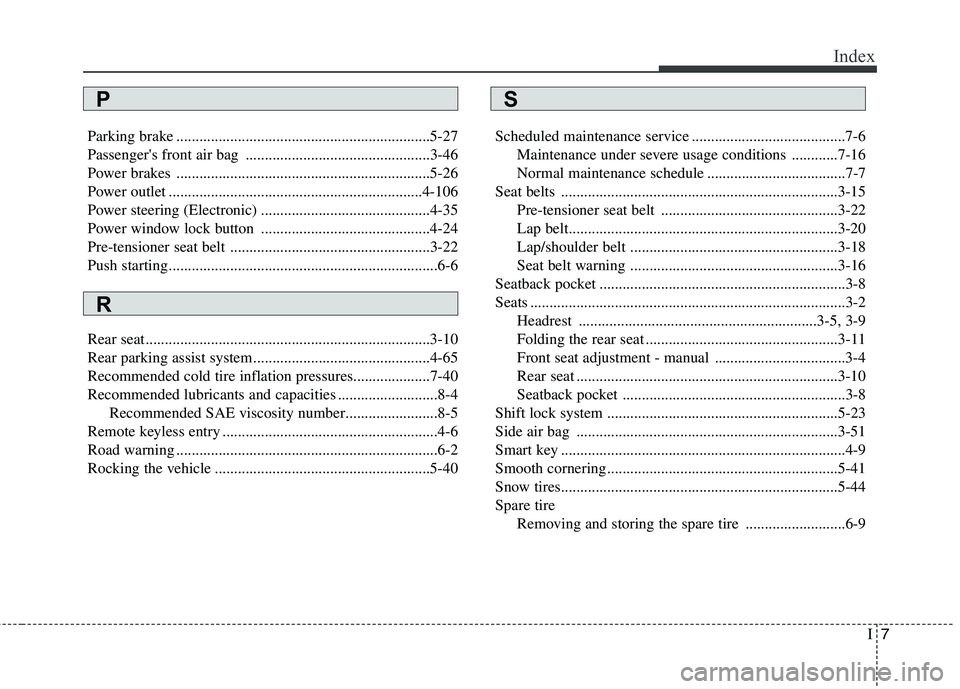
Parking brake ..................................................................5-27
Passenger's front air bag ................................................3-46
Power brakes ..................................................................5-26
Power outlet ..................................................................4-106
Power steering (Electronic) ............................................4-35
Power window lock button ............................................4-24
Pre-tensioner seat belt ....................................................3-22
Push starting......................................................................6-6
Rear seat..........................................................................3-10
Rear parking assist system ..............................................4-65Recommended cold tire inflation pressures....................7-40
Recommended lubricants and capacities ..........................8-4
Recommended SAE viscosity number........................8-5
Remote keyless entry ........................................................4-6
Road warning ....................................................................6-2
Rocking the vehicle ........................................................5-40 Scheduled maintenance service ........................................7-6
Maintenance under severe usage conditions ............7-16Normal maintenance schedule ....................................7-7
Seat belts ........................................................................3-15 Pre-tensioner seat belt ..............................................3-22
Lap belt......................................................................3-20
Lap/shoulder belt ......................................................3-18
Seat belt warning ......................................................3-16
Seatback pocket ................................................................3-8
Seats ..................................................................................3-2 Headrest ..............................................................3-5, 3-9
Folding the rear seat ..................................................3-11
Front seat adjustment - manual ..................................3-4
Rear seat ....................................................................3-10
Seatback pocket ..........................................................3-8
Shift lock system ............................................................5-23
Side air bag ....................................................................3-51
Smart key ..........................................................................4-9
Smooth cornering............................................................5-41
Snow tires........................................................................5-44Spare tire Removing and storing the spare tire ..........................6-9
P
R
S
Page 433 of 846

Introduction
4
1
Use of MTBE
Kia recommends avoiding fuels contain-
ing MTBE (Methyl Tertiary Butyl Ether)
over 15.0% vol. (Oxygen Content 2.7%
weight) in your vehicle.
Fuel containing MTBE over 15.0% vol.
(Oxygen Content 2.7% weight) may
reduce vehicle performance and produce
vapour lock or hard starting.
Do not use methanol
Fuels containing methanol (wood alco-
hol) should not be used in your vehicle.
This type of fuel can reduce vehicle per-
formance and damage components ofthe fuel system, engine control systemand emission control system.
Fuel Additives
Kia recommends that you use unleaded
gasoline which has an octane rating of
RON (Research Octane Number) 95 /
AKI (Anti Knock Index) 91 or higher (for
Europe) or Octane Rating of RON(Reasearch Octane Number) 91 / AKI
(Anti-Knock Index)87 or higher (exceptEurope).
For customers who do not use good
quality petrols including fuel additives
regularly, and have problems starting or
the engine does not run smoothly, one
bottle of additives added to the fuel tank
at every 15,000km (For Europe and NewZealand)/ 5,000km (Except Europe and
New Zealand). Additives are available
from your authorised Kia dealer along
with information on how to use them. Do
not mix other additives.
Operation in foreign countries
If you are going to drive your vehicle in
another country, be sure to:
Observe all regulations regarding reg-
istration and insurance.
Determine that acceptable fuel is avail- able. No special break-in period is needed. By
following a few simple precautions for the
first 1,000 km (600 miles) you may add to
the performance, economy and life of
your vehicle.
Do not race the engine.
Whilst driving, keep your engine speed
(rpm, or revolutions per minute)
between 2,000 rpm and 4,000 rpm.
Do not maintain a single speed for long periods of time, either fast or slow.
Varying engine speed is needed to
properly break-in the engine.
Avoid hard stops, except in emergencies, to allow the brakes to seat properly.
Don't tow a trailer during the first 2,000 km (1,200 miles) of operation.
VEHICLE BREAK-IN PROCESS
CAUTION
Your New Vehicle Limited Warranty
may not cover damage to the fuelsystem and any performance prob-lems that are caused by the use offuels containing methanol or fuels
containing MTBE (Methyl TertiaryButyl Ether) over 15.0% vol. (Oxygen Content 2.7% weight.)
Page 434 of 846
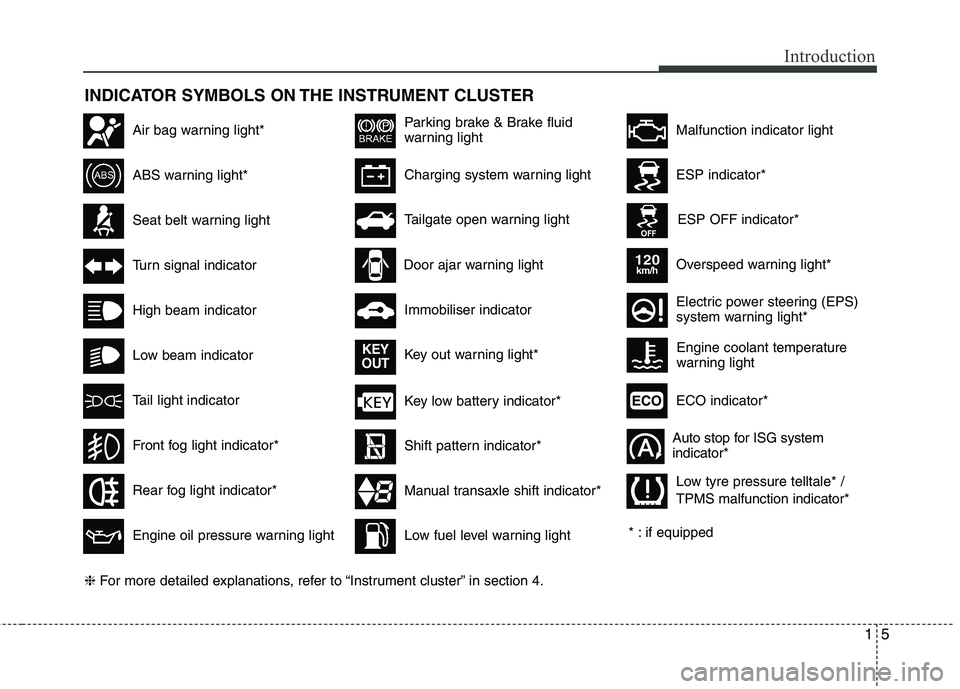
15
Introduction
INDICATOR SYMBOLS ON THE INSTRUMENT CLUSTER
Seat belt warning light
High beam indicator
Turn signal indicator
ABS warning light*
Parking brake & Brake fluid
warning light
Engine oil pressure warning light
ESP indicator*
ESP OFF indicator*
Malfunction indicator lightAir bag warning light*
Immobiliser indicator
Low fuel level warning light* : if equipped
Charging system warning light
Overspeed warning light*
120km/h
Tail light indicator
Tailgate open warning light
Front fog light indicator*
Electric power steering (EPS)
system warning light*
Key low battery indicator*
Rear fog light indicator*
Door ajar warning light
Shift pattern indicator*
Manual transaxle shift indicator*
Key out warning light*
KEY
OUT
ECO indicator*ECO
Auto stop for ISG system indicator*
Low beam indicator Engine coolant temperature
warning light
❈
For more detailed explanations, refer to “Instrument cluster” in section 4. Low tyre pressure telltale* / TPMS malfunction indicator*