2015 AUDI TT ROADSTER four wheel drive
[x] Cancel search: four wheel drivePage 144 of 244
142 Intelligent technology
switched on all the time. In certain situations
when you need less traction, you can switch
off ESC by pressing the button
l!l . Be sure to
switch ESC on again when you no longer need
less traction.
Anti -toc k brak ing system (ABS)
ABS prevents the wheels from lock ing up
when braking . The vehicle can still be steered
even during hard brak ing . Apply steady pres
sure to the brake pedal. Do not pump the ped
al. A puls ing in the brake pedal ind icates that
the system is he lp ing you to brake the vehicle .
Brake assist sy stem
The brake assist system can decrease braking
d istance. It increases braking power when the
driver presse s the brake pedal quickly in emer
gency si tuations. You must press and hold the
brake peda l until the situation is over .
Anti-slip regulation (ASR)
ASR reduces engine power when the drive
wheels begin to spin and adapts the force to the road conditions . This makes it easier to
start, accelerate and drive up hills.
E lectronic differential lock (EDL )
The ED L brakes wheels that are spinning and
transfers the drive power to the other drive
wheel or whee ls if the vehicle is equipped with
all-wheel drive*. This function is available up
to about 60 mph (100 km/h) .
In extreme cases, EDL a utomatica lly switches
off to help keep the brake on the braked whee l
from overheating. EDL will switch on aga in au
tomatically when conditions have returned to normal.
A WARNING
- ESC, ABS, ASR and ED L can not ove rcome
t h e laws of phy sics. This is espe cial ly im
por tant on slip pery or wet ro ads .
If th e
sys tems begin a ct in g to stab ilize your ve
hicle, you shou ld imme diately change
yo ur speed to match the road and traffic
condit ions. Do not let the inc reased safe
ty provided by these systems tempt you to take risks. Do
ing so w ill increase the
risk of a loss of veh icle control, co llision
and serious pe rsonal injuries .
- Always adapt your speed to road, traffic
and weather conditions. The risk of los
ing control of t he vehicle increases when
driving too fast, espec ially through
curves and on slippe ry or wet roads, and
wh en dr iv ing too clos e to vehicl es u p
ahead. ESC, A BS, the brake ass ist sys
tem, ED L and ASR cannot p reven t coll i
si ons .
- Always acceler ate wi th sp ecial c are on
even, smoo th s urfaces such as those th at
are wet or covered with ice and snow .
The drive wheels can spin even with
these assistance systems that cannot al ways he lp to reduce the risk of loss of ve
h icle co ntrol.
(D Tips
- ABS an d ASR only wo rk correct ly when
all four whee ls are equipped with identi
cal tires . D ifferent tire si zes can lead to a
reduction in engine powe r.
- Yo u may hear noises when the systems
descr ibed are working.
- If the ind icator light Ii) or II (USA
mode ls)/ Ei] (Canada models) appears,
there may be a malfunction
¢ page 18,
¢ page 17.
Switching on and off
£SC turns on automatically when you start
the engine.
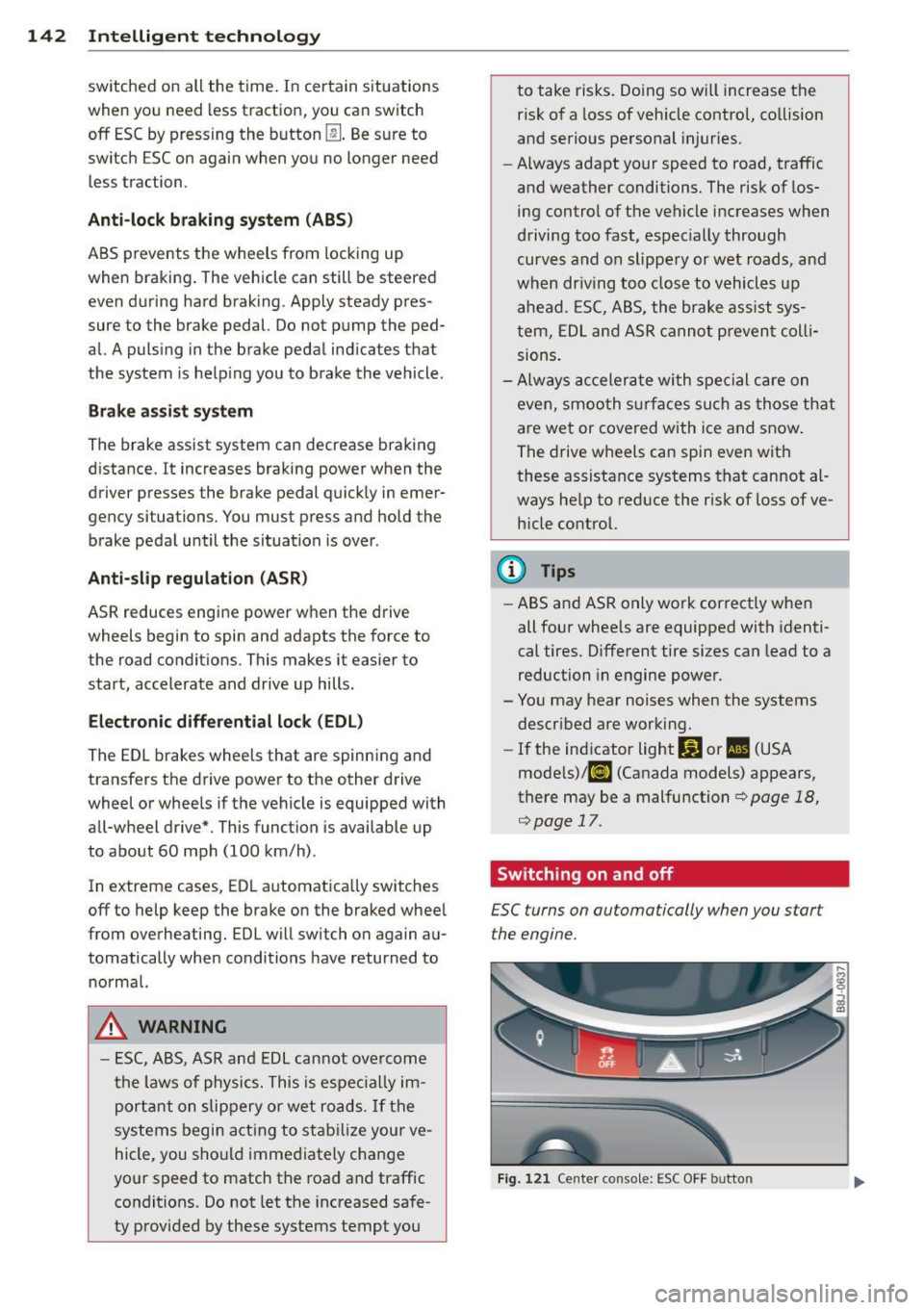
Fig . 12 1 Ce nte r conso le: ESC OFF b utto n
Page 148 of 244
146 Intellig ent technolog y
-If the power steering system should fail,
or if the eng ine is not running (for exam
ple, while being towed), yo u wi ll st ill be
able to steer the veh icle. However, more
effort will be requ ired to do so .
- If the power steering system is not func
tioning properly, contact your authorized
Audi dealer immediately .
Driving with your
quattro
App lies to vehicles: with all-wheel drive
With all-wheel drive, all four wheels are driv
en.
General information
W ith all-whee l drive , power is distributed to
a ll four wheels . This happens automa tica lly
depending on your dr iv ing sty le and the road
conditions at the time. See also ~
page 141.
The all-wheel drive concept is designed for
high engine powe r. You r vehicle is exception
ally powerful and has ex ce ll ent dr iving charac
teristics bot h under normal driving conditions
and on snow and ice. Always read and fo llow
safety precautions ¢
.&..
Winter ti re s
When dr iving in the w inte r, your ve hicle w ith
a ll-wheel d rive has an advantage, even with
regular tires . In winter road conditions it may
be advisable to mount winter tires (or all-sea
son tir es) for improv ed driveability and brak
ing: these tires must be mounted on
a ll fo ur
wheels . See also ¢ page 195, Win ter tires.
Snow cha in s
Where tire chains are mandatory on certain roads, this normally a lso applies to vehicles
with a ll-wheel drive¢
page 196, Snow
chains.
Replacing whe els /t ires
Vehicles wit h all-wheel drive mus t always
have tires of the same size . Also avoid tires
with different tread depths. For details see page
q page 191, New tires and replacing
tires and wheels .
Off-Road driving ?
Your Aud i does no t have enough g round clear
ance to be used as an off-road vehicle. It is
therefore bes t to avoid rough tracks and un
even terrain as much as possib le . Also refer to
¢ page 150 .
A WARNING
-Always ad just your dr iv ing to road and traf-
f ic conditions. Do not let the extra safety
afforded by all-wheel drive tempt you into
taking extra risks.
- Although the all-wheel drive is very ef
fective, always remember that braking capacity is lim ited by tire t raction . You
should therefore not d rive at excessive
speeds on icy or slippe ry road surfaces.
- On wet road surfaces, be careful not to
d rive too fast because the front whee ls
could begin to slide o n top of the water
(aquaplan ing). If th is should occur, yo u
will have no warning from a s udden in
crease in eng ine speed as wit h a front
wheel drive vehicle. Always drive at
speeds which are su ited to the road con
d itions. -risk of crash.
Energy management
Starting ability is optimized
Energy management controls the distribution
of electrical energy and thus optimizes the
availability of electrical energy for starting the engine.
If a vehicle with a conventional energy system
is not driven for a long per iod of t ime, the bat
te ry is discharged by idling cur rent consume rs
(e .g. immobili zer) . In cert ain circumstances it
can resu lt in the re being insufficient energy
available to start the eng ine.
Intelligent energy management in you r vehi
cle h andles the dis trib ution of e lectr ica l ene r
gy. Start ing ability is ma rkedly improved and
the life of the battery is extended . .,._
Page 185 of 244
Speed rating (letter code)
means the speed at wh ich a tire is des igned to
be driven for extended periods of t ime . The
ratings range from 93 mph (150 km/h) to
186 mph (298 km/h)
¢page 192. You may
not find this information on all tires because
it is not required by law.
The speed rating letter code, where applica b le, is molded on the tire sidewall and indi
cates the maximum permissible road speeds
¢ &. in Winter tires on page 196.
Tire pressure monitoring system
means a system that detects when one or
more of a vehicle's tires are underinflated and
illuminates a low tire pressure warn ing te ll
tale .
Tread
means that portion of a tire that comes into
contact with the road.
Tread separation
means pulling away of the tread from the tire
carcass .
Treadwear indicators (TWI)
means the projections within the princ ipal
grooves designed to give a visual indication of
the degrees of wear of the tread. See
¢
page 190, Tread Wear Indicator (TWI) for
more informat ion on measuring tire wear.
Uniform Tire Quality Grading
is a tire information system developed by the
United States National Highway Traffic Safety
Admin istration (NHTSA) that is designed to
h elp buyers make relative comparisons among
tires . Th e U TQG is not a safety rating and not a
g uar antee that a tire will last for a prescribed
number of mi les or per form in a certain way.
It simply gives tire buyers additional informa
tion to combine with other considerations,
Tires and wheels 183
such as price, brand loyalty and dealer recom
mendations . Under UTQG, tires are graded by
the tire manufact urers in three areas: tread
wear, traction and temperature resistance .
The UTQG informat ion on the tires, molded in
to the sidewalls .
U.S. DOT Tire Identification Number (TIN)
This is the tire's "serial number" It begins
with the letters "DOT" and indicates that the
tire meets all federa l standards. The next two
numbers or letters ind icate the plant where it
was manufactured, and the last four numbers
represent the week and year of manufacture.
For example,
DOT ... 2213 ...
means that the tire was produced in the 22nd
week of 2013. The other numbers are market
ing codes that may or may not be used by the
tire manufacturer. This information is used to
contact consumers if a tire defect requires a
recall.
Vehicle capacity weight
means the rated cargo and luggage load plus
150 lbs . (68 k ilograms) times the vehicle's to
tal seating capacity as listed on the label lo
cated on the driver's side B -pillar .
Vehicle maximum load on the tire
means that load on an individual tire that is
determined by distributing to each axle its
share of the maximum loaded vehicle weight
and dividing by two.
Vehicle normal load on the tire
means that load on an individual tire that is
determined by distributing to each ax le its
share of the curb weight, accessory weight,
and normal occupant weight (distr ibuted in
accordance with table below¢
page 184)
and dividing by two.
•
•
Page 192 of 244
190 Tires and wheels
Tire service life
The service life of tires depends on a lot of
different things including proper installation
and balancing, correct tire pressure and driv
ing style.
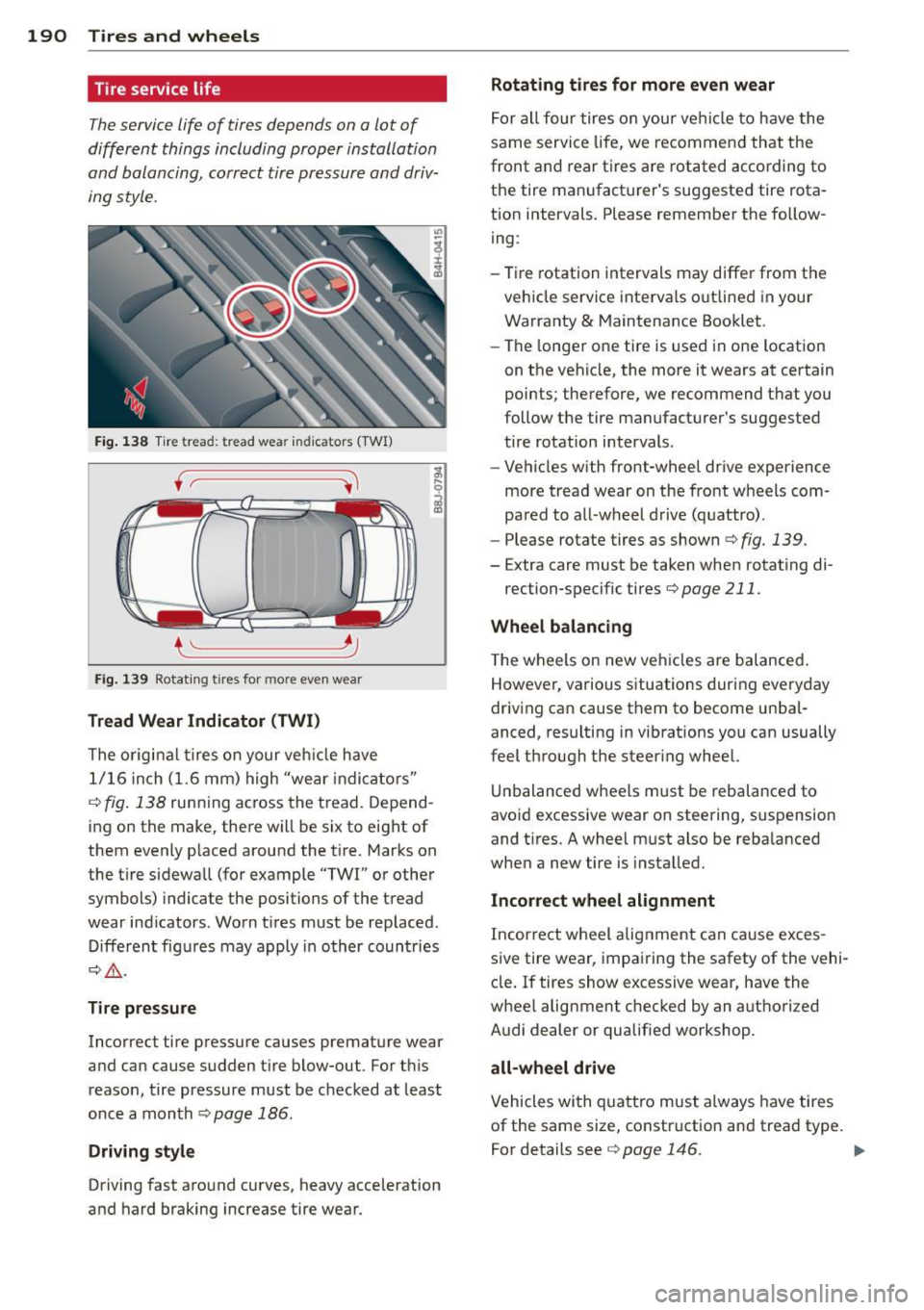
Fig. 138 Tire tread: tre ad wea r ind icators (TWI)
f ~----~
~ ..__ ____ __,
Fig. 139 Rotating t ires for more ev en wea r
Tread Wear Indicator (TWI)
The origina l tires on your veh icle have
1/16 inch (1.6 mm) high "wear indicators"
c::> fig . 138 running across the tread. Depend
i ng on the make, there will be six to eight of
them evenly placed around the tire. Marks on
the tire sidewa ll (for example "TWI" or other
symbols) indicate the positions of the tread
wear ind icators . Worn tires must be replaced .
Different figures may apply in other countries
c::> & .
Tire pressure
Incorrect tire pressure causes premature wear
and can cause sudden t ire blow-out. For th is
reason, tire pressure must be checked at least
once a month
c::> page 186.
Driving style
Driving fast around curves, heavy acceleration
and hard braking increase tire wear.
Rotating tires for more even wear
For all four tires on your vehicle to have the
same service life, we recommend that the
front and rear tires are rotated according to
the tire manufacturer's suggested tire rota
tion intervals. Please remember the follow
ing :
- Tire rotation intervals may differ from the
vehicle service interva ls outlined in your
Warranty
& Maintenance Booklet.
- The longer one tire is used in one location
on the vehicle, the more it wears at certain
points; therefore, we recommend that you
follow the tire manufacturer's suggested
tire rotation intervals .
- Vehicles with front-wheel drive experience
more tread wear on the front wheels com
pa red to all-wheel drive (quattro) .
- Please rotate tires as shown
c::> fig. 139.
-Extra care must be taken when rotating di-
rection-specific tires
c::> page 211 .
Wheel balancing
The wheels on new vehicles are balanced.
However, various situations during everyday
driving can cause them to become unbal
anced, re sulting in vibrat ions you can usually
feel through the steer ing wheel.
Unbalanced wheels must be rebalanced to
avoid excessive wear on steering, suspension
and tires. A wheel must also be rebalanced
when a new tire is installed.
Incorrect wheel alignment
Incorrect wheel alignment can cause exces
sive tire wear, impairing the safety of the veh i
cle. If tires show excessive wear, have the
whee l alignment checked by an authori zed
Audi dealer or qualified workshop.
all-wheel drive
Vehicles with quattro must always have tires
of the same size, construction and tread type .
For details see
c::> page 146 . ..,.
Page 196 of 244
194 Tire s and wheel s
Driving with different tires reduces vehi
cle handling and can lead to a loss of
co ntrol.
- If the spare tire is not the same as the
t ires that are mounted on the veh icle -
for example with winter tires - on ly use
the spare tire for a short period of time
and dr ive with extra ca re. Refit the nor
ma l road whee l as soon as safely possi
ble.
- Never drive faste r than the maximum
speed for which the tires o n your veh icle
are ra ted because ti res th at are driven
faster than their rated speed can fail
sudden ly .
- Over loading t ires c ause heat b uild- up,
sudden tire failure, including a blowout
and sudden deflation and loss of control.
- T emperature grades app ly to tires t hat
are properly inflated and not over o r un
derinflated.
- F or technical reasons it is not a lways
possible to use wheels from other
vehicles -in some cases not even w heels
from the same vehicle model.
- If you insta ll wheel trim discs on t he ve
hicle whee ls, make sure that the air f low
to the brakes is not blocked. Reduced air
flow to the brakes can them to overheat, increasing stopping distances and caus
ing a collision.
- Run flat t ires may on ly be used on
vehicles that were equ ipped w it h them
at the facto ry. The vehicle must have a
chassis des igned for run f lat t ires and a
fac to ry-installed t ire p ress ure moni to r
ing system that ind ic a tes a loss of tire
pressure. Incorrect use of run flat tires
can lead to vehicle damage or accidents .
Check with an a uth orized Audi dea ler or
t i re spec ialist to see i f your vehicle can be
equipped with run flat tires. If r un flat
t ires a re used, they must be installed on
all four wheels . M ixing tire types is not
permitted . (D Note
-For technical reasons, it is not generally
poss ible to use the w heel rims from oth
er ve hicles. T his can hold tr ue for wheels
of the same vehicle type.
- If the spare tire is diffe rent from the
tires that you have mounted on your ve
hicle (for example winter tires or wide
profi le tires), then use the spare tire for a
short period of time only and drive w ith
extra care. Replace the flat tire w it h the
ti re mat ching the othe rs on your vehicle
as soon as possi ble.
- N ever d rive without the valve stem cap.
T he v alves co ul d get damaged.
@ For the sake of the environment
Dis pose of o ld tires in accordance w ith the
l ocal requirements.
Uniform tire quality grading
- Tread wear
- Tra ction AA A B (
- Temperature ABC
Quality grades can be found where applicab le
o n the tire s ide wall between tread shoulder
and maximum section width
¢ page 191,
fig . 140 .
For example: Tread wear 200 , Traction AA,
Temperature A.
All passenger car ti res must conform to Feder
al Safety Req uirements in add ition to these
grades .
Tread wear
The tread wear g rade is a comparative rating
based on the wear rate of the tire when tested
u nder contro lled conditions o n a specified
government test course.
F o r example, a tire gra ded 150 wo uld wear
one and one ha lf (11/2) times as well on the
government course as a ti re graded 100.
Page 197 of 244
The relative perform a nee of ti res depends
upon the actua l conditions of their use, how
ever, and may depart sign ificantly from the
norm due to var iat ions in dr iving habits, serv
ice practices and differences in road character
istics and climate .
Trac tion
The traction grades, from highest to lowest,
are AA, A, Band
C. Those grades represent the
tire's ability to stop on wet pavement as measured under controlled cond itions on
specified government test surfaces of asphalt
and concrete . A tire marked C may have poor
traction performance ¢,&. .
Temp erature
The temperature grades are A (the h ighest),
B, and
C, representing the t ire's resistance to
the generat ion of heat and its ability to dissi
pate heat when tested under controlled condi
tions on a specified i ndoor laboratory test
wheel.
Sustained high temperature can cause the
materia l of the tire to degenerate and reduce
tire life, and excessive temperature can lead
to sudden ti re fa ilu re ¢ ,&. .
The grade
C corresponds to a level of perform
ance which all passenger car tires must meet
u nder the Federa l Moto r Veh icle Safety Stand
a rd No.
1 09. G rades Band A represent h igher
l eve ls of perfo rmance on the laboratory tes t
wheel than the m inimum required by law .
A WARNING
The traction grade assigned to this ti re is
based on stra ight-ahead b raking t raction
tests, and does not include acceleration,
cornering, hydrop lan ing or peak traction
character istics.
A WARNING
The temperature grade for this t ire is es
tablished for a t ire that is p roperly inflated
and not overloaded. Excessive speed, un
derinflation, or excessive loading, either
-
Tire s an d wheel s 195
separately or in combinat ion, can ca use
heat bui ldup and possible tire failure.
Winter tires
Winter tires can improve vehicle handling on
snow and ice. At temperatures below 45 °F (7 °C) we recommend changing to winter
tires.
In some heavy snow areas, local governments
may require true winter o r "snow" tires, those
with very deeply cut tread. These tires should
o nly be used in pairs and be installed o n all
four wheels . Make sure you purchase snow
t ires that are the same size and construction
type as the other tires on you r vehicle.
If your vehicle is equipped w ith all-whee l
drive*, th is w ill improve traction during winter
driv ing, even with the standa rd tires. Howev
er, we stro ngly recommend that you always
equip all fou r whee ls o n your veh icle w ith co r
rect ly fi tted winter tires o r all-season tires,
when w inter road condit ions are expe cted .
T his also improves the veh icle's b raking per
formance and reduces stopping distances.
Summe r tires provide less grip on i ce and
snow.
Winter tires (snow tires) must always be fitted
o n all fo ur wheels .
Ask your authorized Audi dealer or qualified
workshop for permitted
winter tire size s. Use
o nly rad ial w inter t ires.
Winter tires lose their effectiveness when the
tread is worn down to a depth of
0 .157 inch
(4 mm) .
Only drive w ith w inter t ires under w inter con
dit ions. Summer t ires handle better when
there is no snow or ice on the roads and the
temperature is above 45 °F (7 °() .
If you have a flat tire, see notes on spare
whee l
¢page 191.
Please a lways remember that winter tires may
have a lowe r speed rating than the tires o rigi -
nally installed on your vehicle at the time it .,.
•
•
Page 201 of 244

remain continuous ly illuminated . This se
quence will continue upon subsequent vehicle
start-ups as long as the ma lfunction ex ists.
When the malfunct ion indicator is ill uminat
ed, the system may not be able to detect or
signa l low tire pressure as intended. TPMS
malfunct ions may occur for a variety of rea
sons, including the installat ion of replace
ment or alternate tires or wheels on the veh i
cle that prevent the TPMS from funct io ni ng
properly. Always check the TPMS malfunct ion
tellta le afte r replacing one or more t ires or
wheels on your veh icle to ensure that the re
p lacement or a lternate tires and wheels allow
the TPMS to continue to function properly.
Tire pressure indicator appears
Applies to vehicles: with tire pressure monitoring system
The tire pressure indicator in the instrument
cluster informs you if the tire pressure is too
low or if there is a system malfunction.
F ig. 1 41 Disp lay : under in fla tion warn ing
Using the ABS sensors, the tire pressure moni
toring system compares the t ire tread circum
fe rence and vibration characteristics of the in
d iv idual tires . If the pressure decreases in one
or mo re tires, th is is indicated in the instru
ment clus ter with a warning symbol
[I] and a
message
'* fig. 141. The dr iver message in the
d isp lay goes out after 5 seconds . The driver
message can be d isplayed again by pressing
the
! CHECK I button @¢ page 10, fig . 3 . If on
ly one tire is affected, the display will indicate
its pos ition.
The ti re pressure monito ring m ust be reset in
the menu display each time the pressures are
ad justed (e.g. when switching between parti-
Tire s an d wheel s 199
al and fu ll load pressure) or after changing o r
replacing a tire on your vehicle '*
page 200.
The TPMS indicator on ly mon itors the t ire
pressure that you have previously stored . You
can f ind the recommended tire pressures for
your vehicle on the label on the driver's door
pillar ¢
page 184 .
Tire tread circumference and vibration charac
teristics can change and cause a tire pressure
warning if:
- the t ire press ure in one or more tires is too
low,
- the tire has structural damage,
- the t ire press ure was changed, wheels rotat -
ed or rep laced but the TPMS was not reset
¢ page 200.
Warning symbo ls
[I] Loss of press ure in at least one tire'*& .
Check the tire or tires and rep lace or repa ir if
necessary . The indicator light
[I] in the instru
ment cluster a lso i lluminates
¢ page 13.
Check/correct the press ures of all four tires
and reset TPMS in the menu display .
mm (T ire Pressure Monitoring System) Ti re
pre ssure! System malfun ction . Ifll appears
after switching the ign it ion on or while dr iving
and the indicator light
[I] in the instrument
clus ter blinks fo r approximately one m inute
and then stays on, there is a system malfunc
tion . Attemp t to store the correct t ire pres
su re '*
page 200 . If the ind icator light does
not turn off or if i t turns on shortly thereafte r,
immedia tely drive your vehicle to an au thor
ized Audi dea ler or author ized repai r fac ility to
have the malfunction corrected .
A WARNING
=
-If the tire pressure indicator appears in
the instrument cluster display, one or
more of your t ires is significant ly under
inflated. Reduce your speed immediately
and avoid any hard steer ing or b rak ing
maneuvers. Stop as soon as possib le and
check the tires and their pressu res . In
flate the tire pressure to the prope r pres-
sure as indicated on the vehicle's tire .,..
•
•