2015 AUDI S3 SEDAN door lock
[x] Cancel search: door lockPage 82 of 282
Driving
Starting from a stop
The start assist function ensures that the park
ing brake is released automatically upon start
ing.
Stopp ing and appl ying parking br ake
.,. Pu ll the switch @q page 78, fig. 71 to set the
parking brake.
Starting and aut omatically rel ea sing the
pa rking br ake
Requirement: The driver 's door must be closed.
.,. When you press the accelerato r pedal, the park
ing brake is automatically released and your ve
hicle begins to move.
When stopp ing at a traffic signa l o r stopp ing in
city traffic, the parking brake can be applied . The
vehicle does not have to be held with the brake
pedal. The parking brake e liminates the tendency
to creep when a selector lever position is engag
ed. As soon as you press the accelerator pedal,
the park ing brake releases automatically and the
veh icle starts to move.
St arting on slope s
When starting on inclines, the h ill start ass ist
prevents the vehicle from unintentionally rolling
back . The braking force of the parking brake is
not released unt il sufficient d riving force has
been b uilt up at the whee ls .
(0 Tips
For safety reasons, the park ing brake only re
leases automat ica lly when the driver's door is
closed .
Emergency braking function
In the event that the conventional brake system
fails or locks .
.,. To brake your vehicle in an emergency, pull the
@ switch
q page 78, fig. 71 and hold it pulled.
.,. As soon as you release the @switch or acceler
ate, the braking process stops.
Pulling and holding the@switch while driving at
a speed of about 2 mph (3 km/h) or h igher in i-
80
tiates the emergency b rak ing function . The veh i
cle is braked at all four whee ls by activating the
hydraulic brake system . The brake performance is
s imilar to heavy brak ing.
q &
To he lp prevent activating the emergency braking
by mistake, an audib le wa rning tone (buzzer)
sounds when the @switch is pu lled . Emergency
braking stops as soon as the @switch is released
or the accelerator pedal is pressed.
A WARNING
Emergency braking should only be used in an
emergency, when the norma l brake pedal has
failed or the bra ke pedal is obstructed. During
emergen cy bra king, your ve hicl e will bra ke
similar to he avy braking. ESC and the asso ci
ated components (ABS, ASR, EDL) canno t
overcome the laws of physics. In corners and
when road o r weathe r cond itions are bad, a
fu ll brake applicat ion can cause the veh icle to
skid or the rear end to break away, which in
creases the risk of an accident.
Hill hold
App lies to vehicles: wit h Hill Hold
Hill hold makes it easier to start on hills.
Req uirement: The driver door must be closed and
the engine must be running.
The system is activa ted when the brake peda l is
pressed whi le the vehicle is statio nary .
To prevent the vehicle from roll ing ba ck when
st art ing, the brake power is held fo r a b rief mo
ment afte r releas ing the b rake pedal. During this
time, you can easily begin to move your vehicle.
A WARNING
-The inte lligent technology of Hill Hold can
not overcome the limitations imposed by
natura l physical laws. The increased comfort
offered by Hill Hold shou ld not cause you to
take safety r isks.
- Hill Hold cannot hold the vehicle in all hill
start sit uat ions (for example, if the ground
is s lippery or icy).
Page 86 of 282

Automatic transmission
than approximately 2 seconds when the brake
pedal is not pressed.
Interlock button
The interlock butto n in the selector lever handle
p revents you from moving the selector lever in
advertently while in some selector lever posi
t ions . The positions that require the interlock
button to be pressed are marked in co lor in the il
lustration
c::> fig. 73.
Ignition key safety interlock*
You can only remove the key from the ignition af
ter sw itching the ign ition off if the selector lever
is in the P position. The selector lever will be
locked in the P posit ion as long as the key is not
in the ignition .
A WARNING
Read and following all WARNINGS. c::> & in Se
lector lever positions on page 82.
@ Tips
- If the selector lever does not engage, there
is a malfunction. The engine is disabled to
prevent the vehicle from driving off uninten
tionally. Press the brake pedal br iefly to al
low the selector lever lock to engage again.
- If the vehicle does not move forward or in
reverse even though a drive position is se
lected, proceed as follows:
- >If the vehicle does not move in the desired
direct ion, the system may not have engaged
the drive pos ition correctly. Press the brake
pedal and select the drive position again.
- >If the veh icle still does not move in the de
sired direct ion, there is a system malfunc
tion. See an authorized Audi dealer or au
thorized Audi Service Facility for ass istance
to have the system checked.
84
Driving tips
Applies to vehicles: with S tronic transmissio n
The transmission shifts up and down automati
cally when in the driving gears .
Fig. 74 Sec tion of t he ce nter conso le: se le ct or lever with
interloc k button
The engine will only be able start when the selec
tor lever is in the P or N positions . At low temper
atures (be low 14 °F (-10 °C)), the engine can only
be started when the selector lever is in the P po
sition.
Starting from a stop
"' Press and hold the brake pedal.
"' Press and hold the interlock button in the selec
tor lever hand le, select the desired selector lev
er position such as D
c::> page 82 and release the
lock button.
"' Wait a moment until the transmission shifts .
You will notice a slight movement when the
gear engages .
"' Release the brake peda l and press the accelera
tor pedal
c::> ,&. .
Stopping temporarily
"'Keep the veh icle stationary using the braking
pedal, for example at traff ic lights .
"' Do not press the accelerator peda l when doing
this.
"' To prevent the vehicle from rolling when you
start driving, set the parking brake when stop
ping on steep incl ines
c::> ,&. .
"'The parking brake will release automat ically
and the vehicle will start moving once you press
the acce lerator pedal. Requirement: The door
must be closed.
Page 87 of 282
M N
0 > co ,...., \!) ..,.,
..,.,
..,., ,....,
Stopp ing /p ark in g
If the se lector lever is not in the P position when
you open the driver's door, the vehicle cou ld roll.
In vehicles with a convenience key*, the message:
Shift t o P, o ther wis e vehi cle c an roll away .
D oo rs do not lo ck if l ever i s not i n P
appears . You
will also hear a warning tone.
~ Press and ho ld the brake pedal c:> A
~ Set the parking brake.
~ Se lect the P selector lever pos ition.
Stopping on an incline
~ Always press the b rake pedal to hold the vehi
cle in place and prevent it from "rolling back"
c:> A -Do not try to prevent the vehicle from
"rolling back" when a gear is engaged by in
creasing the engine speed
c:> @ .
Starting on an incline in vehicl es without H ill
H old *
~ Set the parking brake.
~ With the driving gear se lected, press the accel
erator pedal carefully. The parking brake releas
es automatically . Requ irement: The door must
be closed .
Starting o n an incline in veh icles with Hill
Hol d*
~ With the driving gear selected, remove your
foot from the brake pedal and press the accel
erator pedal
c:> page 80, Hill hold.
Under certain circumstances, (such as driving in
the mountains or towing a tra iler), it may be use
ful to sw itch temporarily to the manual sh ift pro
gram in order to adjust the gears to the driving
conditions by hand~
page 87.
When parking on a level surface, simply place the
selector lever in the P position. On inclines, acti
vate the parking brake first and then move the
selecto r lever to the P position~
page 78. This
prevents the locking me chanism from being load
ed too heavi ly and wi ll make it easier to move the
selector lever out of the P posit ion .
Aut omatic transm issio n
A WARNING
-The vehicle can roll even when the engine is
sw itched off.
- Unintended vehicle movement can lead to
serious injuries.
- Never leave your vehicle with the engine running while in gear. If you must leave your
veh icle when the engine is running, set the
parking brake and move the selector lever to
the P position.
- Power is still transferred to the wheels when
the eng ine is running at idle. To prevent the
veh icle from "creeping", you must keep your
foot on the brake when the engine is run
n ing and the selec to r l ever is in the D, Sor R
position or "tiptronic" mode is selected .
- Do not inadvertently press the accelera tor
pedal when the vehicle is stationa ry. Other
wise the vehicle will start to move immedi
ately, even if the parking brake is set. This
could res ult in a crash.
- Do not press the accelerator pedal when
changing the se lector lever position while
the vehicle is stationary and the eng ine is
running.
- Never engage the R or P selector level pos i
tions while dr iv ing.
It could cause a crash.
- Before driving down a steep s lope, reduce
your speed and shift into a lower gear with
"t iptronic".
- Do not ride the brakes or press the brake
pedal too often or too long when driving
down a hill. Constant braking causes the
brakes to overheat and substantially re
duces braking performance, increases brak
ing d istance or causes comp lete failure of
the brake system.
- If you must stop on an incline, always hold
the vehicle in place with the foot brake or pa rking brake to prevent it from ro lling
back.
- Never hold the vehicle on an incline with a slipping clut ch. The cl utch opens au tomati
cally when it becomes too hot from the
overload . The
mJ indicator light turns on
and a message appears
c:> page 88 when
the clutch is overloaded .
85
Page 88 of 282

Automatic transmission
-If the engine must run while you are work
ing in the engine compartment with the
hood open, make sure a gear is not engag
ed . The selector lever must be firmly in the
P position and locked in place and the park
ing brake must be set ¢
page 198. Other
wise, the vehicle could begin moving when
the engine speed is high, even with the
parking brake set.
0 Note
- When stopping on an incline, do not try to
hold the vehicle in place by pressing the ac
celerator pedal while a driving gear is se
lected. This can cause the automatic trans
mission to overheat and can damage it. Ac
tivate the parking brake or press the brake
pedal to prevent the vehicle from rolling.
- Allowing the vehicle to roll when the engine
is stopped and the selector lever is in the N
position will damage the automatic trans
mission because it is not lubricated under
those circumstances.
- The transmission can overheat and be dam
aged under certain driving and traffic condi
tions such as frequent starts, creeping for a
long time, or stop-and-go traffic . When the
5] or. indicator light turns on, stop the
vehicle at the next opportunity and let the
transmission cool¢
page 88.
-Allowing the vehicle to roll when the engine
is stopped will damage the S tronic trans
mission because it is not lubricated
¢ page 2 54, Towing with a tow truck.
(D Tips
For safety reasons, the parking brake only re
leases automatically when the driver's door is
closed.
Hill descent control
Applies to veh icles: w ith S tron ic transm ission
The hill descent control system assists the driv
ing when driving down declines.
Hill descent control is activated when the selec
tor lever is in the Dor S position and you press
86
the brake pedal. The transmission automatically
selects a gear that is suitable for the incline. Hill
descent control tries to maintain the speed ach
ieved at the time of braking, within physical and
technical limitations. If may still be necessary to
adjust the speed with the brakes. Because hill de
scent control cannot shift down farther than 3rd
gear, it may be necessary to shift into tiptronic
mode in very steep areas . In this case, shift into
1st or 2nd gear in tiptronic mode to use the en
gine's braking force to relieve the brakes.
Hill descent control switches off once the decline
levels out or you press the accelerator pedal.
On vehicles with a cruise control system*
¢
page 94, hill descent control is also activated
when the speed is set .
&_ WARNING
Hill descent control cannot overcome physical
limitations, so it may not be able to maintain
a constant speed under all conditions. Always
be ready to apply the brakes.
Page 139 of 282
M N
0 > co ..... \!) 1.1"1
1.1"1
1.1"1
.....
-Please observe information on safe driving
~page 130.
A WARNING
To help prevent poisonous exhaust gas from
being drawn into the vehicle, always keep the
rear lid closed while driving .
- Never transport objects larger than those
fitting completely into the luggage area be
cause the rear lid cannot be fully closed.
- If you absolutely must drive with the rear lid
open, observe the following notes to reduce
the risk of poisoning:
- Close all windows,
- Close the power roof*,
- Open all air outlets in the instrument pan-
el,
- Switch off the air recirculation,
- Set the fresh air fan to the highest speed.
A WARNING
Always make sure that the doors, all windows,
the power roof* and the rear lid are securely
closed and locked to reduce the risk of injury
when the vehicle is not being used.
-After closing the rear lid, always make sure
that it is properly closed and locked.
- Never leave your vehicle unattended espe
cially with the rear lid left open . A child
could crawl into the vehicle through the lug
gage compartment and close the rear lid be
coming trapped and unable to get out. Be
ing trapped in a vehicle can lead to serious
personal injury.
- Never let children play in or around the vehi
cle.
- Never let passengers ride in the luggage
compartment. Vehicle occupants must al
ways be properly restrained in one of the ve hicle's seating positions.
(D Tips
- Air circulation helps to reduce window fog
ging. Stale air escapes to the outside
through vents in the trim panel. Be sure to keep these slots free and open.
Driving safety
-The tire pressure must correspond to the
load. The tire pressure is shown on the tire
pressure label. The tire pressure label is lo
cated on the driver's side B-pillar. The tire
pressure label lists the recommended cold
tire inflation pressures for the vehicle at its
maximum capacity weight and the tires that
were on your vehicle at the time it was man ufactured. For recommended tire pressures
for normal load conditions, please see chap
ter ~
page 224.
' Tie-downs
The luggage compartment is equipped with four
tie-downs to secure luggage and other items.
Use the tie-downs to secure your cargo properly
~page 136, Loading the luggage compartment.
In a collision, the laws of physics mean that even
smaller items that are loose in the vehicle will
become heavy missiles that can cause serious in
jury. Items in the vehicle possess energy which
vary with vehicle speed and the weight of the
item. Vehicle speed is the most significant factor.
For example, in a frontal collision at a speed of
30 mph (48 km/h) , the forces acting on a 10-lb
(4.5 kg) object are about 20 times the normal
weight of the item. This means that the weight
of the item would suddenly be about
200 lbs. (90 kg). You can imagine the injuries
that a 200 lbs. (90 kg) item flying freely through
the passenger compartment could cause in a col
lision like this.
A WARNING
-Weak, damaged or improper straps used to
secure items to tie-downs can fail during hard
braking or in a collision and cause serious per
sonal injury .
- Always use suitable mounting straps and
properly secure items to the tie-downs in
the luggage compartment to help prevent
items from shifting or flying forward as dan
gerous missiles.
- When the rear seat backrest is folded down,
always use suitable mounting straps and
properly secure items to the tie-downs in
137
Page 178 of 282
Child safet y
"'When using the vehicle safety be lt to insta ll a
child safety seat, you must first activate the
convertible locking retractor on the safety belt
to prevent the ch ild safety seat from moving
¢ page 182.
"' Push the child safety seat down with your full
weight to get the safety belt really tight so that
the seat cannot move forward or sideways more
than one inch (2.5 cm).
"' Secu re unused safety belts on the rear seat
¢ page 177 .
Always remember: Even thoug h your veh icle is
eq uipped w ith an Advanced Ai rbag system, all
chi ldren, espec ia lly those 12 years and yo unger,
should always ride in the back seat properly re
strained for their age and s ize.
A WARNING
Not using a chi ld safety seat, using the wrong
child safety seat or improperly insta lling a
child restraint increases the r isk of serious
personal injury and death .
- All veh icle occupants and especially children
must be restra ined properly whenever riding
in a vehicle. An unrestrained or improperly
restrained child could be injured by striking
the interior or by being ejected from the ve
hicle du ring a sudden maneuver or impact.
An unrestrained or improperly restrained
child is also at greater risk of injury or death
thro ugh contact with an inflat ing airbag .
- Commercially avai lab le child safety seats
are required to comply with U.S . Fede ral Mo
tor Vehicle Safety Standard ( FMVSS) 213 (in
Canada CMVSS 213).
- When buying a ch ild restraint, select one
that fits your child and the vehicle.
- On ly use child restra int systems that fully
contact the flat port ion of the seat cush
ion. The ch ild restra int must not tip o r
lean to either s ide. Audi does no t recom
mend using child safety seats that res t on
legs o r tube -like frames. They do not pro
vide adequate contact with the seat.
- Always heed all legal requirements pe r
taining to the installation and use of ch ild
safety seats and carefully follow the in-
176
str uctions provided by the manufacturer
of the seat you are using.
- Never allow children under 57 inches
(1.45 meters) to wear a norma l safety belt.
They must always be restrained by a proper
child restraint system. Otherwise, they
could sustain injuries to the abdomen and
neck areas during sudden braking maneu
vers or accidents.
- Never let more than one child occupy a child safety seat.
- Never let babies or o lder children ride in a
veh icle wh ile sitting on the lap of another
passenger .
- Holding a child in your arms is never a sub
stitute for a child restraint system.
- The strongest pe rson could not hold the
child with the forces that exist in an acci
dent. The child will strike the interior of
the veh icle and can also be struck by the
passenger.
- The child and the passenger can also in jure each other in an accident .
- Never install rear-facing child safety seats or
infant carriers on the front passenger seat.
A child will be serious ly injured and can be
killed when the passenger airbag inflates -
even with an Advanced Airbag System .
- The inflating airbag will h it the ch ild safety
seat or infant carr ier with great force and
will smash the child safety seat and child
aga inst the backrest, center armrest, door
or roof.
- Always install rear-facing ch ild safety seats
or infant car riers on the rear sea t.
- Forwa rd-facing child safety seats instal led
on the front passenger's seat can inte rfe re
wit h the airbag when it inflates and cause
serious injury to the child. A lways install fo r
ward-facing child sa fety seats on the rear
seat.
- If except ional circumstances req uire the use
of a fo rward-facing child restraint on the
front passenger's seat, the child's safety
and well-be ing require that the following
special precautions be taken : ..,.
Page 180 of 282
Child safety
_& WARNING
A child in a child safety seat installed with the LATCH lower anchorages or with the standard
safety belt or a child in a booster seat on the
rear seat cou ld play with unused rear seat
safety belts and become entangled. This
could cause the child serious personal injury
and even death.
- Always secure unused rear seat safety belts
out of reach of children in child seats such
as by properly routing them around the
head restraint of the seat where the child re
straint is installed.
- Never activate the convertible locking re tractor when routing the safety belts around
the head restraints.
- Never let anyone sit at the center rear seat
ing position if the center rear safety belt has
been routed around a rear head restraint.
Child seats
Infant seats
Babies and infants up to about one year old and
20 lbs. or 9 kg need special rearward-facing
child restraints that support the back, neck and
head in a crash.
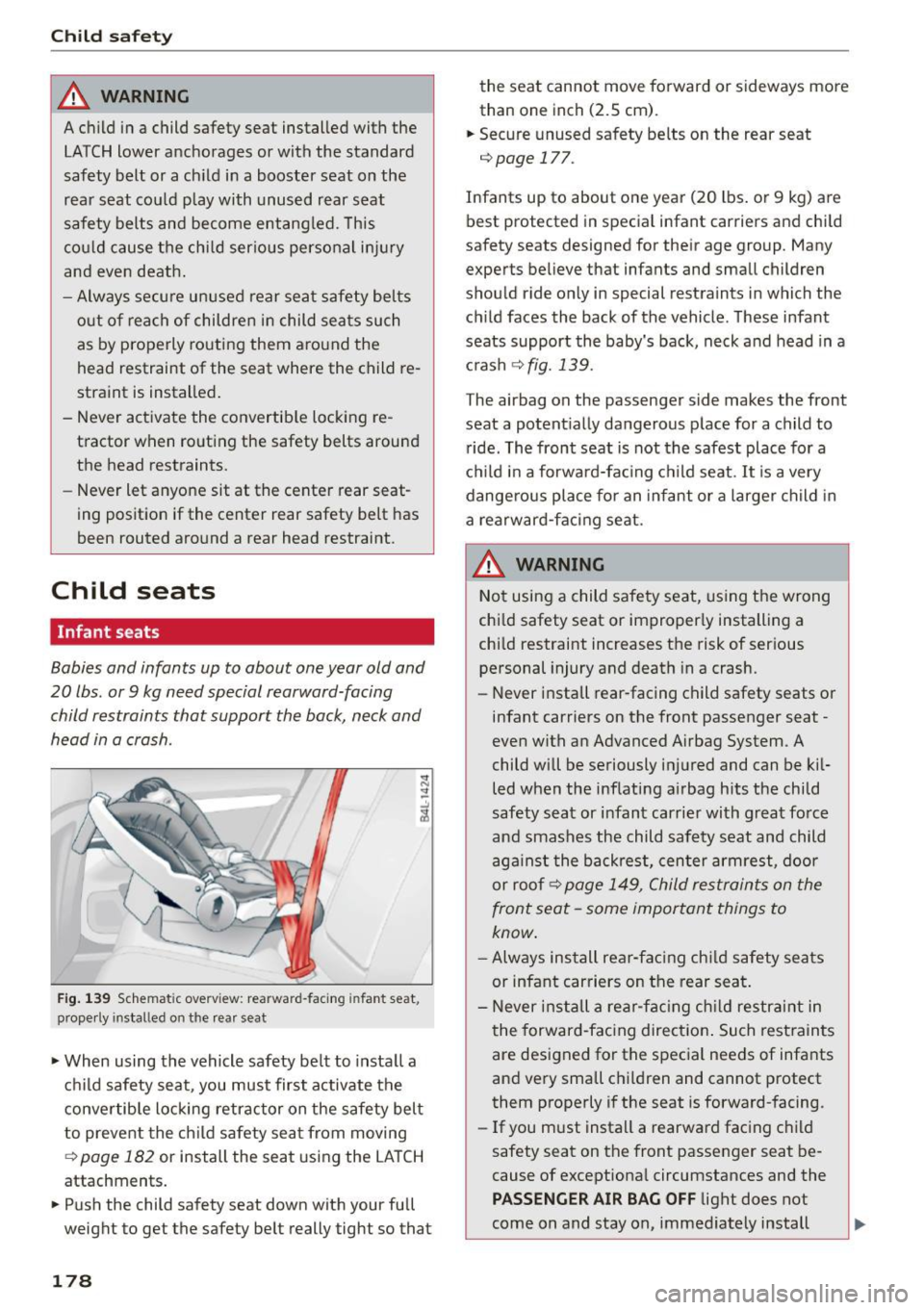
Fig. 139 Schematic overview: rearward-facing infant seat,
properly installed on the rear seat
.. When using the vehicle safety be lt to install a
child safety seat, you must first activate the
convertible locking retractor on the safety belt
to prevent the child safety seat from moving
c::> page 182 or install the seat using the LATCH
attachments.
.. Push the child safety seat down with your full
weight to get the safety belt really tight so that
178
the seat cannot move forward or sideways more
than one inch (2.5 cm).
.. Secure unused safety belts on the rear seat
c::>page 177.
Infants up to about one year (20 lbs. or 9 kg) are
best protected in special infant carriers and child
safety seats designed for their age group. Many
experts believe that infants and small children
should ride only in special restraints in which the
ch ild faces the back of the vehicle. These infant
seats support the baby's back, neck and head in a
crash
c::> fig. 139.
The airbag on the passenger side makes the front
seat a potent ially dangerous place for a child to
ride . The front seat is not the safest place for a
child in a forward-facing ch ild seat.
It is a very
dangerous place for an infant or a Larger child in
a rearward-facing seat.
_& WARNING
Not using a child safety seat, using the wrong
child safety seat or improperly installing a
child restraint increases the risk of serious personal injury and death in a crash.
- Never install rear-facing child safety seats or
infant carriers on the front passenger seat -
even with an Advanced Airbag System. A
child will be seriously injured and can be kil led when the inflating airbag hits the child
safety seat or infant carrier with great force
and smashes the child safety seat and child
against the backrest, center armrest, door
or roof
c::> page 149, Child restraints on the
front seat -some important things to
know .
-Always install rear-facing chi ld safety seats
or infant carriers on the rear seat.
- Never install a rear-fac ing ch ild restraint in
the forward-facing direction. Such restraints
are designed for the special needs of infants
and very small children and cannot protect
them properly if the seat is forward-facing.
- If you must install a rearward facing child
safety seat on the front passenger seat be
cause of exceptional circumstances and the
PASSENGER AIR BAG OFF light does not
come on and stay on, immediately install
~
Page 185 of 282
M N
0 > co ,...., \!) ..,.,
..,.,
..,., ,....,
children, especially those 12 years and younger,
should always ride in the back seat properly re
strained for their age and size.
A WARNING
-
Improperly installed child safety seats in
crease the risk of serious personal injury and
death in a collision.
- Always make sure that the safety belt re
tractor is locked when installing a child safe
ty seat. An unlocked safety belt retractor
cannot hold the child safety seat in place
during normal driving or in a crash.
- Always buckle the child safety seat firmly in
place even if a child is not sitting in it . A
loose child safety seat can fly around during
a sudden stop or in a collision.
- Always make sure that the rear seat back
rest to which the center rear safety belt* is
attached is securely latched whenever the
rear center safety belt is being used to se
cure a child restraint.
- If the backrest is not securely latched, the
child and the child restraint will be thrown
forward together with the backrest and will strike parts of the vehicle interior. The child
can be seriously injured or killed.
- Never install rear-facing child safety seats or
infant carriers on the front passenger seat.
A child will be seriously injured and can be killed when the passenger airbag inflates.
- The inflating airbag will hit the child safety seat or infant carrier with great force and
will smash the child safety seat and child
against the backrest, center armrest, door
or roof.
- Always install rear-facing child safety seats or infant carriers on the rear seat.
- Forward-facing child safety seats or infant
carriers installed on the front passenger's
seat may interfere with the deployment of
the airbag and cause serious injury to the child.
- It is safer to install a forward-facing child
safety seat on the rear seat.
- Always read and heed all WARNINGS when
ever using a child restrained in a vehicle is
being used
r:::> page 172 . Special precautions
Child safety
apply when installing a child safety seat on
the front passenger seat
r:::> page 149, Child
restraints on the front seat -some impor
tant things to know .
A WARNING
Always take special precautions if you must
install a forward or rearward-facing child re
straint on the front passenger's seat in excep
tional situations:
- Whenever a forward or rearward-facing
child restraint is installed on the front pas
senger seat, the
PASSENGER AIR BAG OFF
light must come on and stay on whenever
the ignition is switched on.
- If the
PASSENGER AIR BAG OFF light does
not come on and stay on, perform the
checks described
r:::> page 160, Monitoring
the Advanced Airbag System.
- Take the child restraint off the front passen
ger seat and install it properly at one of the
rear seat positions if the
PASSENGER AIR
BAG OFF
light does not stay on whenever
the ignition is switched on.
- Improper installation of child restraints can
reduce their effectiveness or even prevent
them from providing any protection.
-An improperly installed child restraint can interfere with the airbag as it deploys and
seriously injure or even kill the child.
-Always carefully follow the manufacturer's
instructions provided with the child safety
seat or carrier.
- After checking to make sure that the child
restraint is properly installed, make certain
that the child restraint is correctly recog nized by the capacitive passenger detection
system in the front passenger seat and that
the
PASSENGER AIR BAG OFF light signals
the correct front passenger frontal airbag
status.
A WARNING
Forward-facing child restraints:
-
183