2014 HYUNDAI IX35 inflation pressure
[x] Cancel search: inflation pressurePage 342 of 1534

Maintenance
48
7
4. Tyre ply composition and material
The number of layers or plies of rub-
ber-coated fabric are in the tyre. Tyre
manufacturers also must indicate the
materials in the tyre, which include
steel, nylon, polyester, and others.
The letter "R" means radial ply con-
struction; the letter "D" means diago-
nal or bias ply construction; and theletter "B" means belted-bias ply con-
struction.
5. Maximum permissible inflation
pressure
This number is the greatest amount of air pressure that should be put in
the tyre. Do not exceed the maximum
permissible inflation pressure. Refer
to the Tyre and Loading Information
label for recommended inflation
pressure.
6. Maximum load rating
This number indicates the maximum
load in kilograms and pounds that
can be carried by the tyre. When
replacing the tyres on the vehicle,
always use a tyre that has the same
load rating as the factory installed
tyre.
7. Uniform tyre quality grading
Quality grades can be found where
applicable on the tyre sidewall
between tread shoulder and maxi-
mum section width.
For example:
TREADWEAR 200
TRACTION AA
TEMPERATURE A Tread wear
The tread wear grade is a compara-
tive rating based on the wear rate ofthe tyre when tested under controlled
conditions on a specified govern-
ment test course. For example, a tyre
graded 150 would wear one-and-a-
half times (1½) as well on the gov-
ernment course as a tyre graded100.
The relative performance of tyres depends upon the actual conditions
of their use, however, and may
depart significantly from the norm
because of variations in driving
habits, service practices and differ-
ences in road characteristics and cli-
mate.
These grades are molded on the
side-walls of passenger vehicle
tyres. The tyres available as standard
or optional equipment on your vehi-
cles may vary with respect to grade.
WARNING - Tyre age
Tyres degrade over time, even
when they are not being used.
Regardless of the remaining
tread, it is recommended that
tyres generally be replaced
after six (6) years of normal
service. Heat caused by hot cli-mates or frequent high loadingconditions can accelerate the
aging process. Failure to follow
this Warning can result in sud-
den tyre failure, which could
lead to a loss of control and an
accident involving serious
injury or death.
EL(FL) Aust 7.QXP 7/26/2013 2:24 PM Page 48
Page 384 of 1534
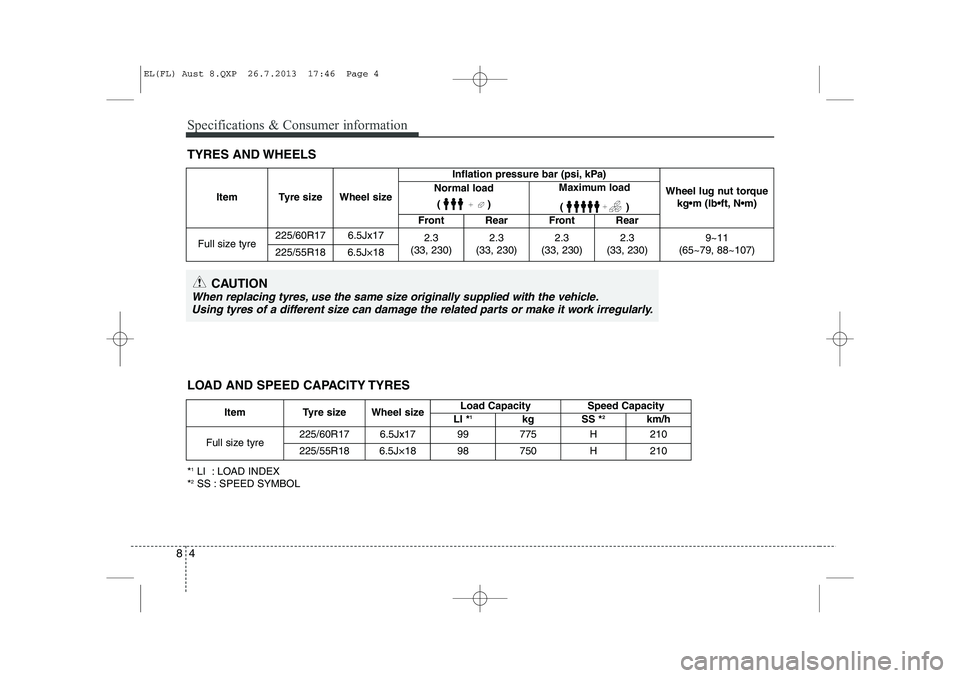
Specifications & Consumer information
4
8
TYRES AND WHEELS
Item Tyre size Wheel size Inflation pressure bar (psi, kPa)
Wheel lug nut torquekg•m (lbft, Nm)
Normal load
()
Maximum load
()
Front Rear Front Rear
Full size tyre 225/60R17 6.5Jx17
2.3
(33, 230) 2.3
(33, 230) 2.3
(33, 230) 2.3
(33, 230) 9~11
(65~79, 88~107)
225/55R18 6.5J×18
CAUTION
When replacing tyres, use the same size originally supplied with the vehicle.
Using tyres of a different size can damage the related parts or make it work irregularly.
* 1
LI : LOAD INDEX
* 2
SS : SPEED SYMBOL Item Tyre size Wheel size
Load Capacity Speed Capacity
LI * 1
kg SS * 2
km/h
Full size tyre 225/60R17 6.5Jx17 99 775 H 210
225/55R18 6.5J×18 98 750 H 210
LOAD AND SPEED CAPACITY TYRES
EL(FL) Aust 8.QXP 26.7.2013 17:46 Page 4
Page 400 of 1534
I3
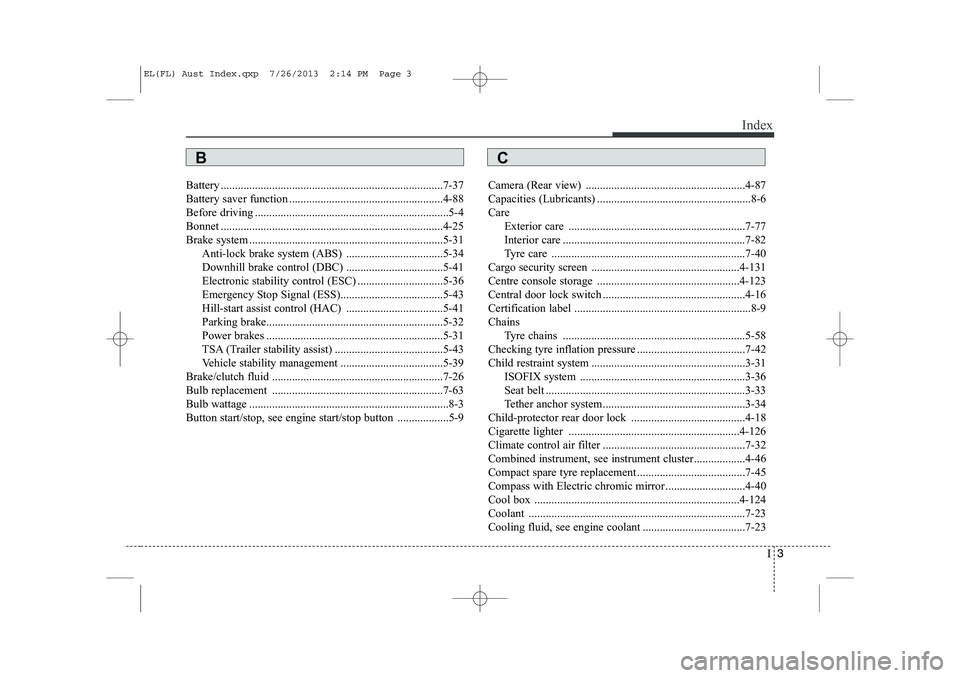
Index
Battery ..............................................................................7-37
Battery saver function ......................................................4-88
Before driving ....................................................................5-4
Bonnet ..............................................................................4-25
Brake system ....................................................................5-31
Anti-lock brake system (ABS) ..................................5-34
Downhill brake control (DBC) ..................................5-41
Electronic stability control (ESC) ..............................5-36
Emergency Stop Signal (ESS)....................................5-43
Hill-start assist control (HAC) ..................................5-41
Parking brake..............................................................5-32
Power brakes ..............................................................5-31
TSA (Trailer stability assist) ......................................5-43
Vehicle stability management ....................................5-39
Brake/clutch fluid ............................................................7-26
Bulb replacement ............................................................7-63
Bulb wattage ......................................................................8-3
Button start/stop, see engine start/stop button ..................5-9 Camera (Rear view) ........................................................4-87
Capacities (Lubricants) ......................................................8-6Care
Exterior care ..............................................................7-77
Interior care ................................................................7-82
Tyre care ....................................................................7-40
Cargo security screen ....................................................4-131
Centre console storage ..................................................4-123
Central door lock switch ..................................................4-16
Certification label ..............................................................8-9Chains Tyre chains ................................................................5-58
Checking tyre inflation pressure ......................................7-42
Child restraint system ......................................................3-31 ISOFIX system ..........................................................3-36
Seat belt ......................................................................3-33
Tether anchor system..................................................3-34
Child-protector rear door lock ........................................4-18
Cigarette lighter ............................................................4-126
Climate control air filter ..................................................7-32
Combined instrument, see instrument cluster..................4-46
Compact spare tyre replacement ......................................7-45
Compass with Electric chromic mirror ............................4-40
Cool box ........................................................................4-124
Coolant ............................................................................7-23
Cooling fluid, see engine coolant ....................................7-23
BC
EL(FL) Aust Index.qxp 7/26/2013 2:14 PM Page 3
Page 405 of 1534

Index
8
I
Moonroof, see panorama sunroof ....................................4-30
Multi fuse ........................................................................7-55
Odometer..........................................................................4-50
Oil (Engine) ....................................................................7-22
Outside mirror defroster ................................................4-103
Outside rearview mirror ..................................................4-43
Outside Temperature Gauge ............................................4-51
Overheats ..........................................................................6-7
Owner maintenance ..........................................................7-7
Panorama sunroof ............................................................4-30
Parking assist system ......................................................4-82
Parking brake ..................................................................5-32
Parking light position ......................................................4-89
Power brakes ....................................................................5-31
Power outlet ..................................................................4-128
Power window lock button ..............................................4-24
Pre-tensioner seat belt ......................................................3-24 Rear seat ..........................................................................3-12
Rear view camera ............................................................4-87
Rear window wiper and washer ......................................4-98
Recommended cold tyre inflation pressures ....................7-40
Recommended lubricants and capacities ..........................8-6
Recommended SAE viscosity number ........................8-8
Reducing the risk of a rollover ........................................5-28
Remote keyless entry ........................................................4-7
Replacement light bulb ....................................................7-63
Road warning ....................................................................6-2
Rocking the vehicle ........................................................5-53
Roof rack........................................................................4-133
Room lamp ....................................................................4-100
Rotation (Tyre) ................................................................7-43
O
P
R
EL(FL) Aust Index.qxp 7/26/2013 2:14 PM Page 8
Page 407 of 1534

Stowing the rear seat belt ................................................3-23
Sun visor ........................................................................4-127
Sunglass holder ..............................................................4-124
Sunroof, see panorama sunroof ......................................4-30
Tachometer ......................................................................4-48
Tailgate ............................................................................4-19
Tether anchor system ......................................................3-34
Theft-alarm system ..........................................................4-13
Tilt steering ......................................................................4-35
Towing..............................................................................6-14
Trailer towing ..................................................................5-61
TransaxleAutomatic transaxle....................................................5-18
Manual transaxle ........................................................5-15
Transaxle Shift Indicator..................................................4-52
Trip A/B ..........................................................................4-64
Trip computer ..................................................................4-63 Fuel Economy ............................................................4-65
Trip A/B ......................................................................4-64
TSA (Trailer stability assist) ............................................5-43
Turn signals ......................................................................4-91
Tyre chains ......................................................................5-58
Tyre rotation ....................................................................7-43
Tyre specification and pressure label ..............................8-10
Tyres and wheels ......................................................7-40, 8-4 Checking tyre inflation pressure ................................7-42
Compact spare tyre replacement ................................7-45
Recommended cold tyre inflation pressures ..............7-43
Tyre care ....................................................................7-43
Tyre maintenance ......................................................7-46
Tyre replacement ........................................................7-44
Tyre rotation ..............................................................7-43
Tyre sidewall labeling ................................................7-46
Tyre traction ..............................................................7-46
Wheel alignment and tyre balance ............................7-44
Wheel replacement ....................................................7-45
User Settings Mode ..........................................................4-55
Vanity mirror lamp ........................................................4-100
Vehicle run-in process ........................................................1-6
Vehicle certification label ..................................................8-9
Vehicle handling instructions ............................................1-6
Vehicle identification number (VIN) ................................8-9
Vehicle stability management ..........................................5-39
Vehicle weight..................................................................5-71
I 10
Index
V
T
U
EL(FL) Aust Index.qxp 7/26/2013 2:14 PM Page 10
Page 473 of 1534

Safety features of your vehicle
48
3
Upon deployment, tear seams molded
directly into the pad covers will separate
under pressure from the expansion of the
air bags. Further opening of the covers
then allows full inflation of the air bags. A fully inflated air bag, in combination
with a properly worn seat belt, slows the
driver's or the passenger's forward
motion, reducing the risk of head and
chest injury. After complete inflation, the air bag
immediately starts deflating, enabling the
driver to maintain forward visibility and
the ability to steer or operate other con-
trols.
B240B02LB240B03L
Driver’s front air bag (2)Driver’s front air bag (3)
B240B05L
Passenger’s front air bag
WARNING
Do not install or place any acces- sories (drink holder, cassette
holder, sticker, etc.) on the front
passenger's panel above the
glove box in a vehicle with a pas-
senger's air bag. Such objects
may become dangerous projec-
tiles and cause injury if the pas-
senger's air bag inflates.
When installing a container of liq- uid air freshener inside the vehi-
cle, do not place it near the
instrument cluster nor on the
instrument panel surface.
It may become dangerous projec-
tiles and cause injury if the pas-
senger's air bag inflates.
EL(FL) Eng 3.QXP 7/11/2013 10:57 AM Page 48
Page 809 of 1534

555
Driving your vehicle
ECONOMICAL OPERATION
Your vehicle's fuel economy depends
mainly on your style of driving, where you
drive and when you drive.
Each of these factors affects how many
kilometers (miles) you can get from a
liter (gallon) of fuel. To operate your vehi-
cle as economically as possible, use the
following driving suggestions to help
save money in both fuel and repairs:
Drive smoothly. Accelerate at a moder- ate rate. Don't make "jack-rabbit" starts or full-throttle shifts and maintain a
steady cruising speed. Don't race
between stoplights. Try to adjust your
speed to the traffic so you don't have to
change speeds unnecessarily. Avoid
heavy traffic whenever possible.
Always maintain a safe distance from
other vehicles so you can avoid unnec-
essary braking. This also reduces
brake wear.
Drive at a moderate speed. The faster you drive, the more fuel your vehicle
uses. Driving at a moderate speed,
especially on the highway, is one of the
most effective ways to reduce fuel con-sumption. Don't "ride" the brake or clutch pedal.
This can increase fuel consumption
and also increase wear on these com-
ponents. In addition, driving with your
foot resting on the brake pedal may
cause the brakes to overheat, which
reduces their effectiveness and may
lead to more serious consequences.
Take care of your tires. Keep them inflated to the recommended pressure.
Incorrect inflation, either too much or
too little, results in unnecessary tire
wear. Check the tire pressures at leastonce a month.
Be sure that the wheels are aligned correctly. Improper alignment can
result from hitting curbs or driving too
fast over irregular surfaces. Poor align-
ment causes faster tire wear and may
also result in other problems as well as
greater fuel consumption. Keep your vehicle in good condition.
For better fuel economy and reduced
maintenance costs, maintain your vehi-cle in accordance with the mainte-
nance schedule in Section 7. If you
drive your vehicle in severe conditions,more frequent maintenance is required
(see Section 7 for details).
Keep your vehicle clean. For maximum service, your vehicle should be kept
clean and free of corrosive materials. It
is especially important that mud, dirt,
ice, etc. not be allowed to accumulate
on the underside of the vehicle. This
extra weight can result in increased
fuel consumption and also contributeto corrosion.
Travel lightly. Don't carry unnecessary weight in your vehicle. Weight reduces
fuel economy.
Don't let the engine idle longer than necessary. If you are waiting (and not
in traffic), turn off your engine and
restart only when you're ready to go.
EL(FL) Eng 5.QXP 7/11/2013 11:04 AM Page 55
Page 814 of 1534

Driving your vehicle
60
5
Highway driving
Tires:
Adjust the tire inflation pressures to
specification. Low tire inflation pressures
will result in overheating and possible
failure of the tires.
Avoid using worn or damaged tires which
may result in reduced traction or tire fail-
ure.
✽✽
NOTICE
Never exceed the maximum tire inflation
pressure shown on the tires.
Fuel, engine coolant and engine oil:
High speed travel consumes more fuel
than urban motoring. Do not forget to
check both engine coolant and engineoil.
Drive belt:
A loose or damaged drive belt may result
in overheating of the engine.
1VQA1004
WARNING
Underinflated or overinflated tires can cause poor handling,
loss of vehicle control, and sud-den tire failure leading to acci-
dents, injuries, and even death.
Always check the tires for proper
inflation before driving. For prop-
er tire pressures, refer to section
8, “Tires and wheels”.
Driving on tires with no or insuffi- cient tread is dangerous. Worn-out tires can result in loss of
vehicle control, collisions, injury,
and even death. Worn-out tiresshould be replaced as soon as
possible and should never be
used for driving. Always check
the tire tread before driving your
vehicle. For further information
and tread limits, refer to section
7, “Tires and wheels”.
EL(FL) Eng 5.QXP 7/11/2013 11:04 AM Page 60