Page 67 of 590
WARNING!(Continued)
•Your vehicle is equipped with SABIC air bags, do
not have any accessory items installed which will
alter the roof, including adding a sunroof to your
vehicle. Do not add roof racks that require perma-
nent attachments (bolts or screws) for installation
on the vehicle roof. Do not drill into the roof of the
vehicle for any reason.
SAB and SABIC air bags are a supplement to the seat belt
restraint system. Occupants, including children who are
up against or very close to SAB or SABIC air bags can be
seriously injured or killed. Occupants, especially chil-
dren, should not lean on or sleep against the door, side
windows, or area where the SAB or SABIC air bags
inflate, even if they are in an infant or child restraint.
Always sit upright as possible with your back against the
seat back, use the seat belts properly, and use the appropriate sized child restraint, infant restraint or
booster seat recommended for the size and weight of the
child.
Supplemental Driver Side Knee Air Bag
The Supplemental Driver Side Knee Air Bag provides
enhanced protection and works together with the Driver
Advanced Front Air Bag during a frontal impact.
Knee Impact Bolsters
The Knee Impact Bolsters help protect the knees of the
driver and front passenger, and position the front occu-
pants for the best interaction with the Advanced Front
Air Bags.
Along with seat belts and pretensioners, Advanced Front
Air Bags and the Supplemental Driver Side Knee Air Bag
work with the knee impact bolsters to provide improved
protection for the driver and front passenger.
2
THINGS TO KNOW BEFORE STARTING YOUR VEHICLE 65
Page 79 of 590
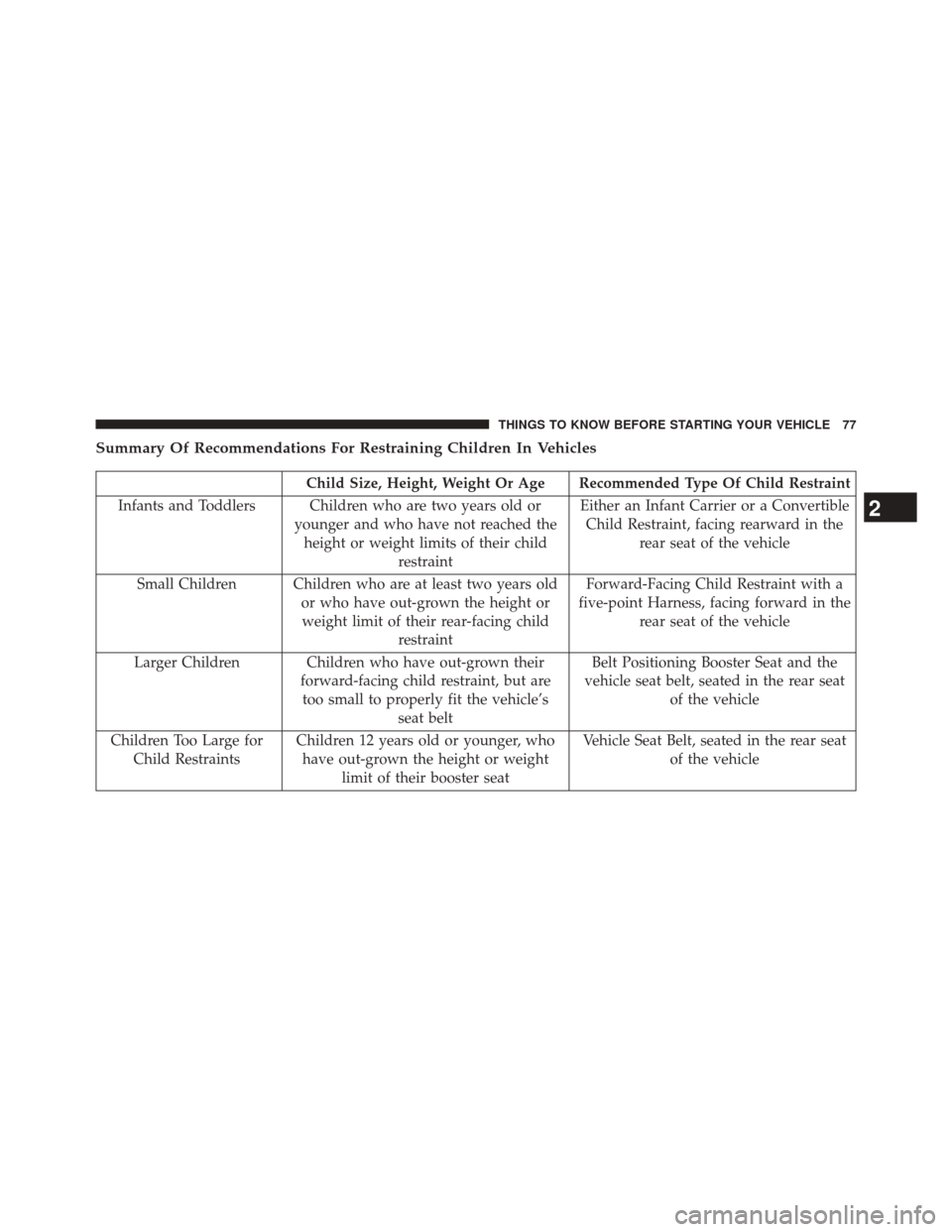
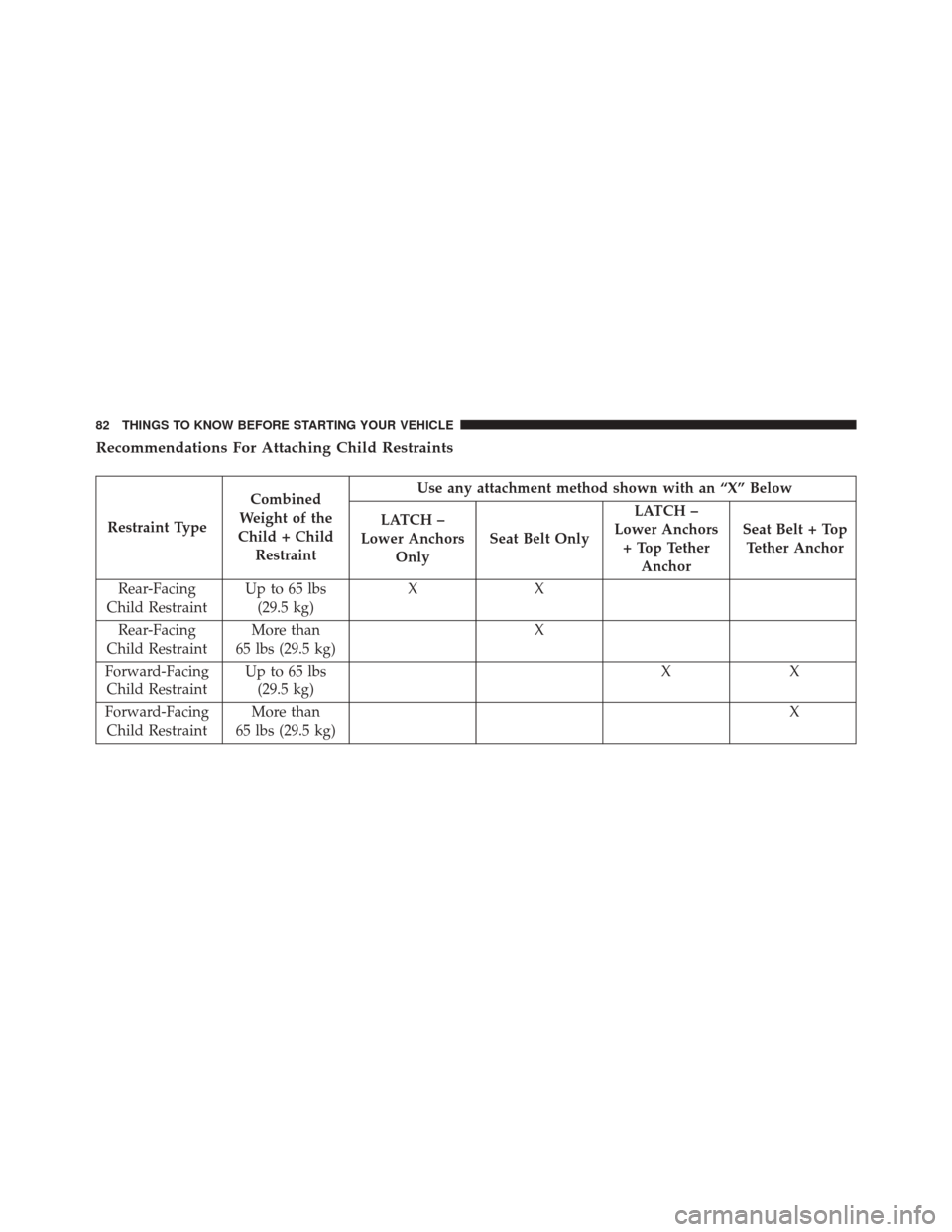
Summary Of Recommendations For Restraining Children In Vehicles
Child Size, Height, Weight Or Age Recommended Type Of Child Restraint
Infants and Toddlers Children who are two years old or younger and who have not reached theheight or weight limits of their child restraint Either an Infant Carrier or a Convertible
Child Restraint, facing rearward in the rear seat of the vehicle
Small Children Children who are at least two years old or who have out-grown the height orweight limit of their rear-facing child restraint Forward-Facing Child Restraint with a
five-point Harness, facing forward in the rear seat of the vehicle
Larger Children Children who have out-grown their forward-facing child restraint, but aretoo small to properly fit the vehicle’s seat belt Belt Positioning Booster Seat and the
vehicle seat belt, seated in the rear seat of the vehicle
Children Too Large for Child Restraints Children 12 years old or younger, who
have out-grown the height or weight limit of their booster seat Vehicle Seat Belt, seated in the rear seat
of the vehicle
2
THINGS TO KNOW BEFORE STARTING YOUR VEHICLE 77
Page 80 of 590
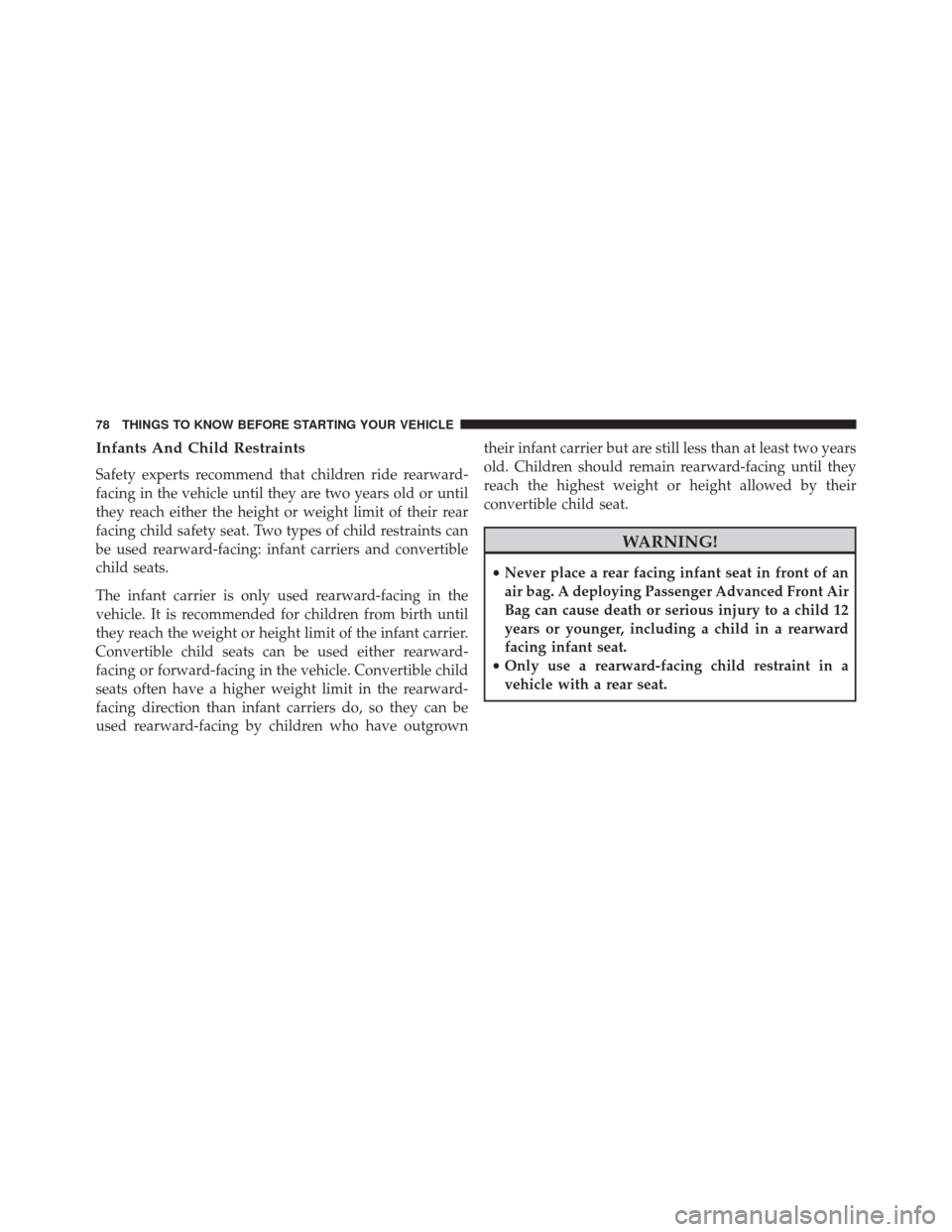
Infants And Child Restraints
Safety experts recommend that children ride rearward-
facing in the vehicle until they are two years old or until
they reach either the height or weight limit of their rear
facing child safety seat. Two types of child restraints can
be used rearward-facing: infant carriers and convertible
child seats.
The infant carrier is only used rearward-facing in the
vehicle. It is recommended for children from birth until
they reach the weight or height limit of the infant carrier.
Convertible child seats can be used either rearward-
facing or forward-facing in the vehicle. Convertible child
seats often have a higher weight limit in the rearward-
facing direction than infant carriers do, so they can be
used rearward-facing by children who have outgrowntheir infant carrier but are still less than at least two years
old. Children should remain rearward-facing until they
reach the highest weight or height allowed by their
convertible child seat.
WARNING!
•
Never place a rear facing infant seat in front of an
air bag. A deploying Passenger Advanced Front Air
Bag can cause death or serious injury to a child 12
years or younger, including a child in a rearward
facing infant seat.
• Only use a rearward-facing child restraint in a
vehicle with a rear seat.
78 THINGS TO KNOW BEFORE STARTING YOUR VEHICLE
Page 81 of 590
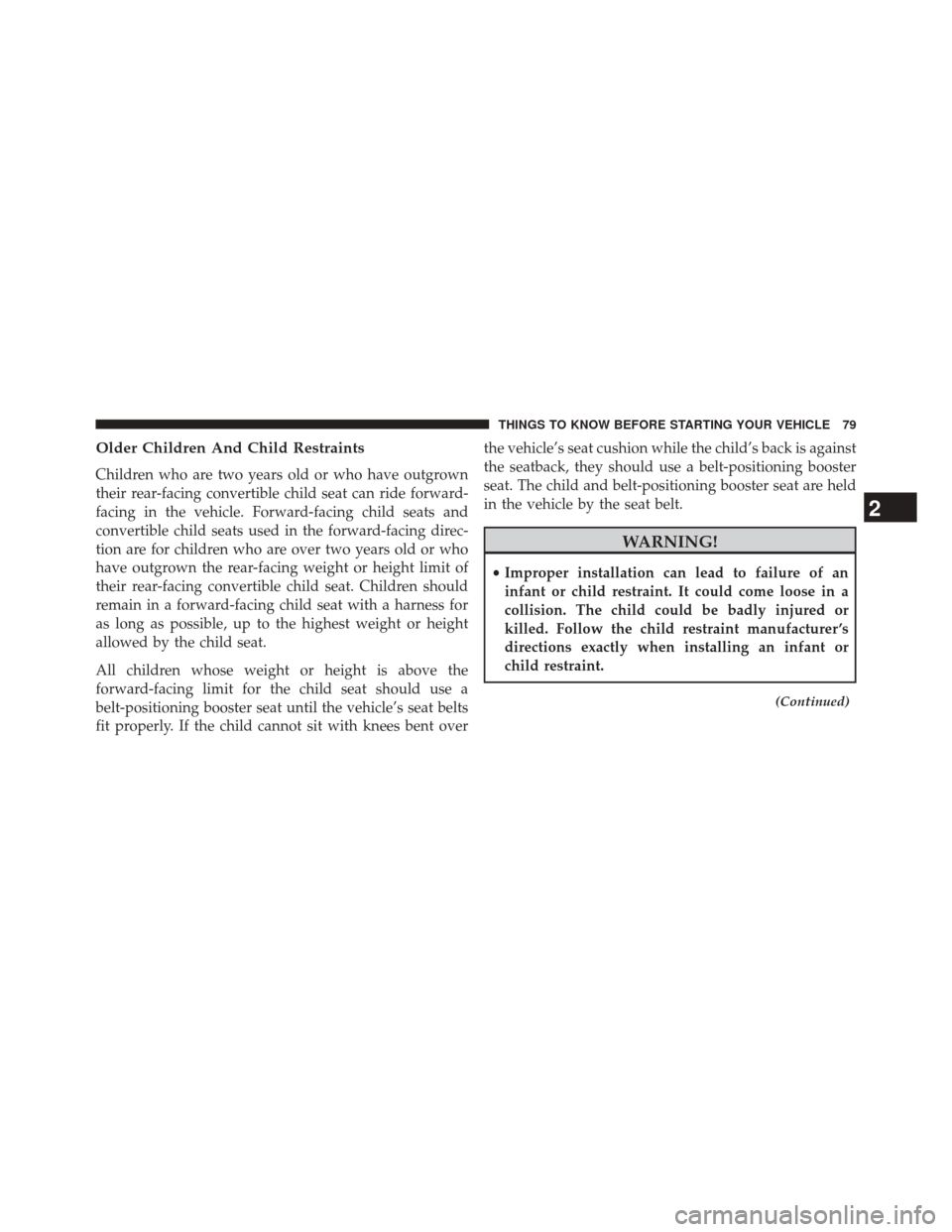
Older Children And Child Restraints
Children who are two years old or who have outgrown
their rear-facing convertible child seat can ride forward-
facing in the vehicle. Forward-facing child seats and
convertible child seats used in the forward-facing direc-
tion are for children who are over two years old or who
have outgrown the rear-facing weight or height limit of
their rear-facing convertible child seat. Children should
remain in a forward-facing child seat with a harness for
as long as possible, up to the highest weight or height
allowed by the child seat.
All children whose weight or height is above the
forward-facing limit for the child seat should use a
belt-positioning booster seat until the vehicle’s seat belts
fit properly. If the child cannot sit with knees bent overthe vehicle’s seat cushion while the child’s back is against
the seatback, they should use a belt-positioning booster
seat. The child and belt-positioning booster seat are held
in the vehicle by the seat belt.
WARNING!
•
Improper installation can lead to failure of an
infant or child restraint. It could come loose in a
collision. The child could be badly injured or
killed. Follow the child restraint manufacturer ’s
directions exactly when installing an infant or
child restraint.
(Continued)
2
THINGS TO KNOW BEFORE STARTING YOUR VEHICLE 79
Page 84 of 590
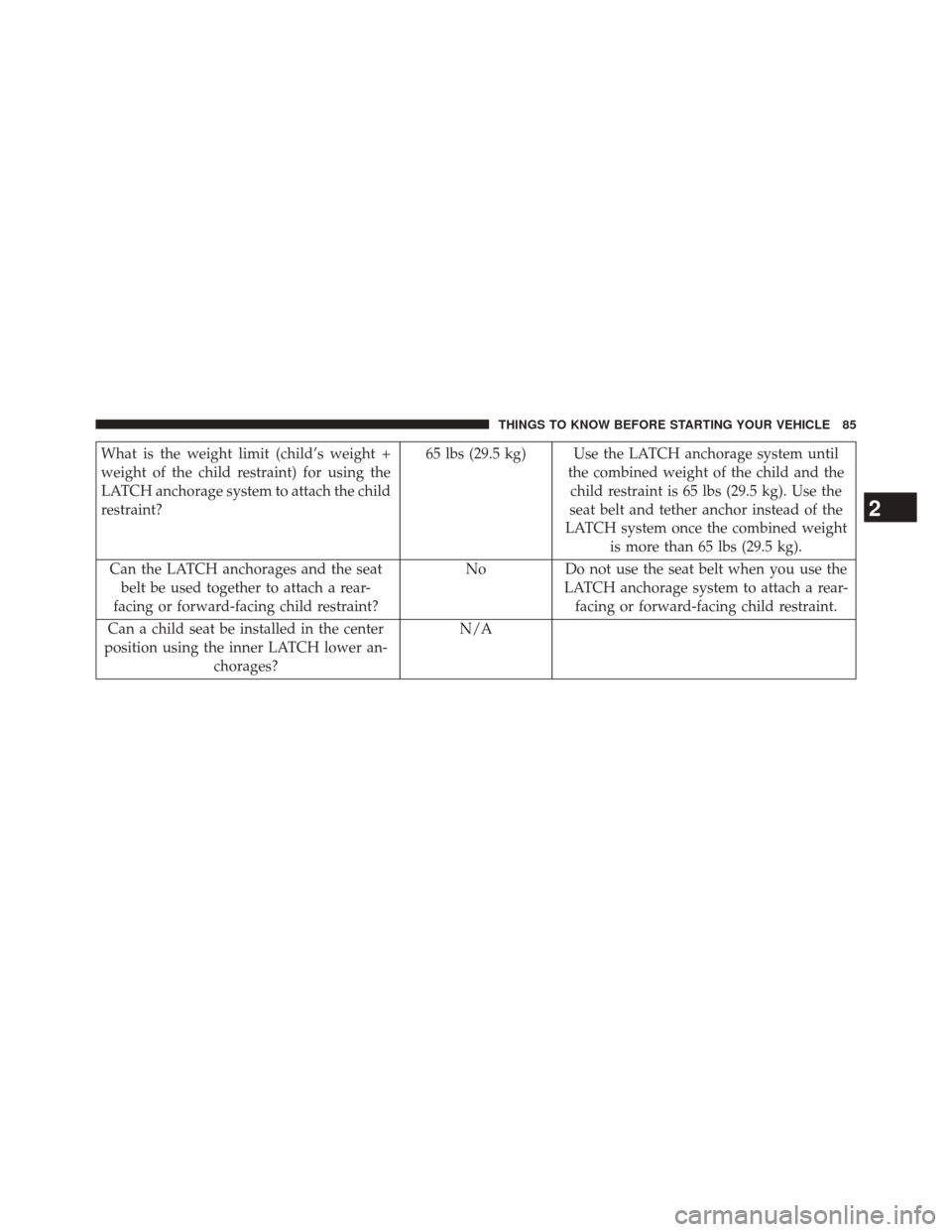
Recommendations For Attaching Child Restraints
Restraint TypeCombined
Weight of the
Child + Child Restraint Use any attachment method shown with an “X” Below
LATCH –
Lower Anchors Only Seat Belt Only LATCH –
Lower Anchors + Top Tether Anchor Seat Belt + Top
Tether Anchor
Rear-Facing
Child Restraint Up to 65 lbs
(29.5 kg) XX
Rear-Facing
Child Restraint More than
65 lbs (29.5 kg) X
Forward-Facing Child Restraint Up to 65 lbs
(29.5 kg) XX
Forward-Facing Child Restraint More than
65 lbs (29.5 kg) X
82 THINGS TO KNOW BEFORE STARTING YOUR VEHICLE
Page 87 of 590
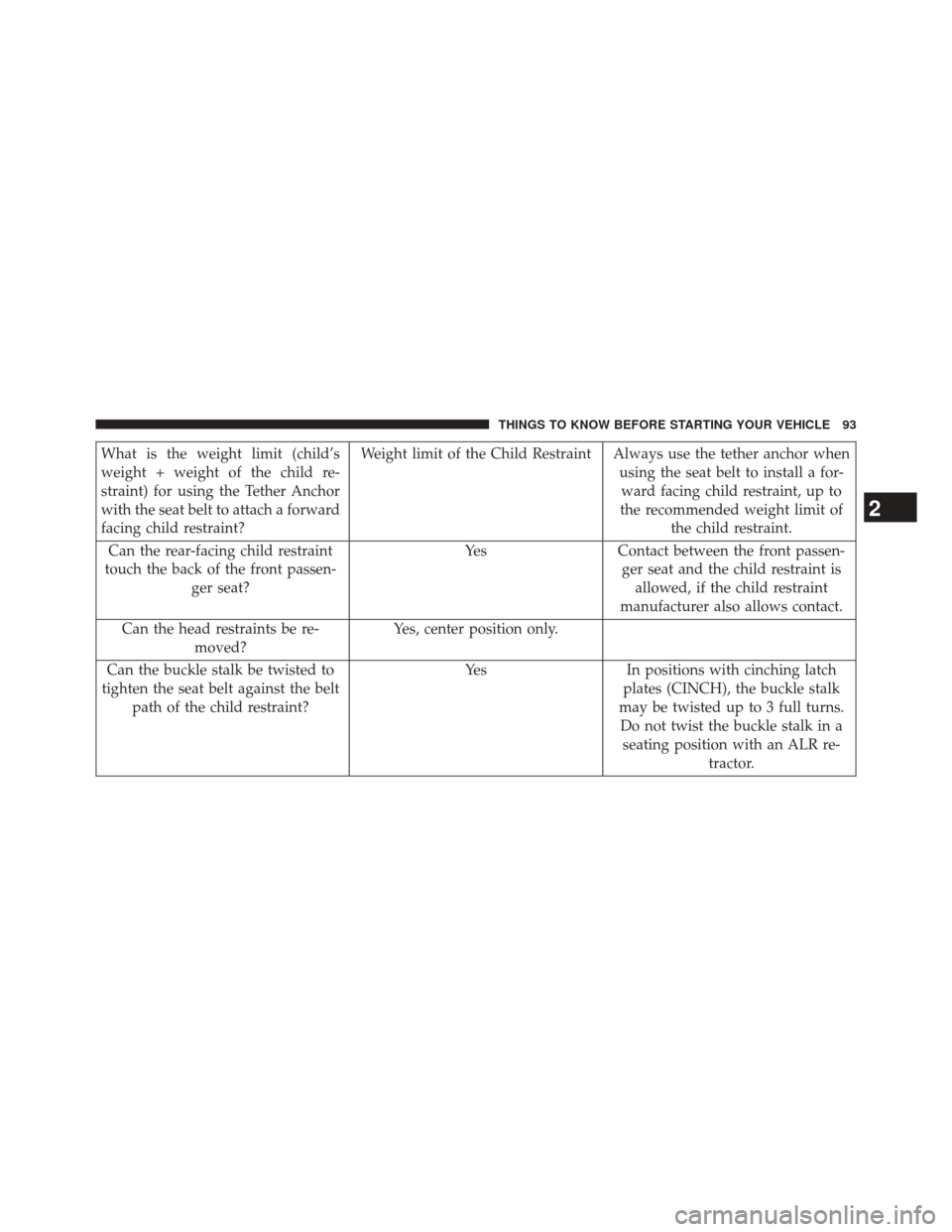
What is the weight limit (child’s weight +
weight of the child restraint) for using the
LATCH anchorage system to attach the child
restraint?65 lbs (29.5 kg) Use the LATCH anchorage system until
the combined weight of the child and thechild restraint is 65 lbs (29.5 kg). Use the
seat belt and tether anchor instead of the
LATCH system once the combined weight is more than 65 lbs (29.5 kg).
Can the LATCH anchorages and the seat belt be used together to attach a rear-
facing or forward-facing child restraint? No
Do not use the seat belt when you use the
LATCH anchorage system to attach a rear- facing or forward-facing child restraint.
Can a child seat be installed in the center
position using the inner LATCH lower an- chorages? N/A
2
THINGS TO KNOW BEFORE STARTING YOUR VEHICLE 85
Page 95 of 590
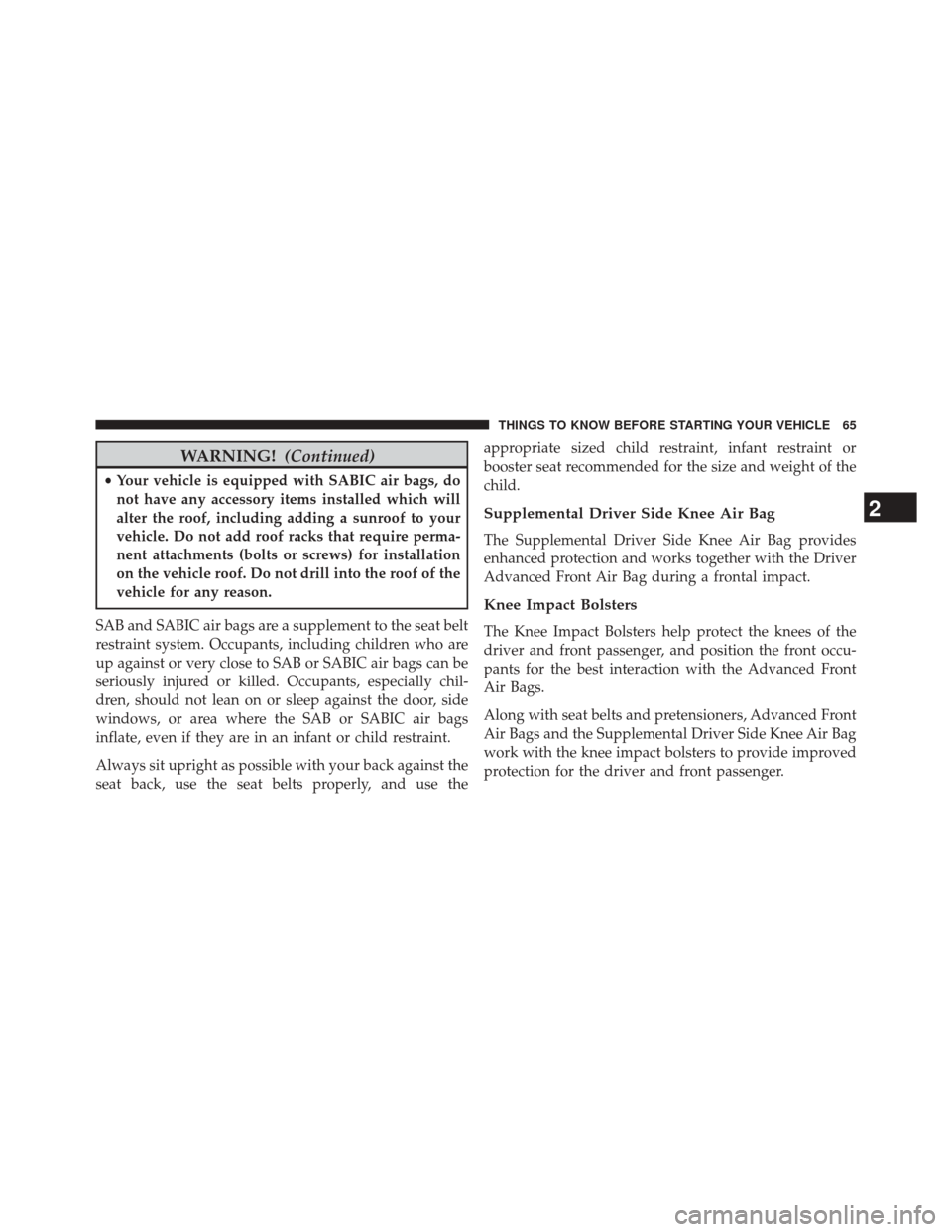
What is the weight limit (child’s
weight + weight of the child re-
straint) for using the Tether Anchor
with the seat belt to attach a forward
facing child restraint?Weight limit of the Child Restraint Always use the tether anchor when
using the seat belt to install a for-ward facing child restraint, up to
the recommended weight limit of the child restraint.
Can the rear-facing child restraint
touch the back of the front passen- ger seat? Yes
Contact between the front passen-
ger seat and the child restraint is allowed, if the child restraint
manufacturer also allows contact.
Can the head restraints be re- moved? Yes, center position only.
Can the buckle stalk be twisted to
tighten the seat belt against the belt path of the child restraint? Yes
In positions with cinching latch
plates (CINCH), the buckle stalk
may be twisted up to 3 full turns. Do not twist the buckle stalk in a seating position with an ALR re- tractor.
2
THINGS TO KNOW BEFORE STARTING YOUR VEHICLE 93
Page 242 of 590
Adding A Trailer Hitch
The weight of a trailer/hitch may affect the performance
of ACC. If there is a noticeable change in performance
following the installation of a trailer/hitch, or if the ACC
performance does not return to normal after removing
the trailer/hitch see your authorized dealer.
Offset Driving
ACC may not detect a vehicle in the same lane that is
offset from your direct line of travel, or a vehicle merging
in from a side lane. There may not be sufficient distance
to the vehicle ahead. The offset vehicle may move in and
out of the line of travel, which can cause your vehicle to
brake or accelerate unexpectedly.
Turns And Bends
In turns or bends, ACC may detect a vehicle ahead too
late or too early. This may cause your vehicle to brake late
or unexpectedly. Give extra attention in curves and be
ready to apply the brakes if necessary. Be sure to select an
appropriate speed while driving in curves.
Offset Driving Condition Example
240 UNDERSTANDING THE FEATURES OF YOUR VEHICLE