2014 AUDI A8 Media
[x] Cancel search: MediaPage 185 of 314
Child safety seats
Infant seats
Babies and infants up to about one year old
and 20 lbs. or 9 kg need special rearward -fac
ing child restraints that support the back,
neck and head in a crash.
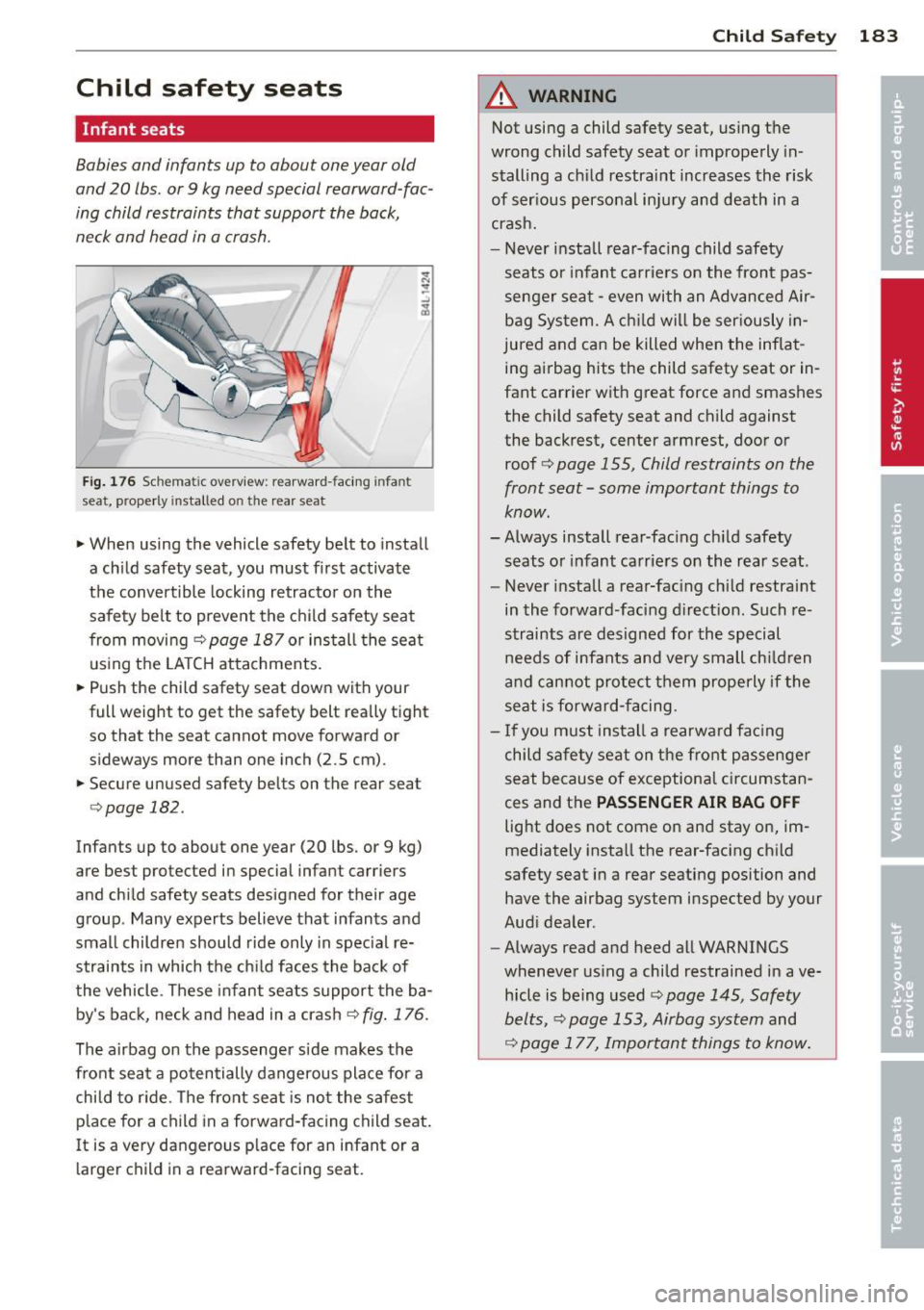
Fig . 176 Sche matic overv iew: rearward-fac ing infant
seat, properly installed o n the rear seat
.,. When using the vehicle safety belt to install
a ch ild safety seat, you must first activate
the convertible locking retracto r on the
safety be lt to prevent the child safety seat
from moving
¢ page 187 or install the seat
using the LA T CH attachments.
.,. Push the child safety seat down with your
full weight to get the safety belt rea lly tight
so that the seat cannot move forward or
sideways more than one inch (2.5 cm).
.,. Secure unused safety belts on the rear seat
¢page 182.
Infants up to about one year (20 lbs. or 9 kg)
are best protected in special infan t carriers
and child safety seats designed for their age
group . Many experts believe that infants and
small children should ride only in spec ial re
straints in which the ch ild faces the back of
the vehicle. These infant seats support the ba
by's back, neck and head in a crash ¢
fig. 176.
The airbag on the passenger side makes the
front seat a po tentially dangerous place for a
child to r ide . The front seat is not the safest
p lace for a child in a forward -facing child seat.
It is a very dangerous p lace for an infant or a
l arger ch ild in a rearward-facing seat.
Child Safety 183
A WARNING
Not using a child safety seat, using t he
wrong child safety seat or improperly in
stall ing a ch ild restraint increases the risk
of ser ious personal injury and death in a
crash.
- Never install rear-facing child safety
seats or infant ca rr ie rs on the front pas
senger seat -even with an Advanced Air
bag Sys tem. A ch ild will be ser iously in
jured and ca n be killed when the inflat
ing airbag hits the child safety seat or in
fant carrier with great force and smashes the child safety seat and child against
the backrest, center armrest, door or
roof ¢
page 155, Child restraints on the
front seat- some important things to
know .
-Always install rear-fac ing ch ild safety
seats or infant carriers on the rear seat .
- Never install a rear-fac ing ch ild restraint
in the forward-fac ing d irect ion. Such re
straints are designed for the special needs of infants and very small ch ild ren
and cannot prote ct them properly if the
seat is forward- facing.
- If you mus t insta ll a rearward fac ing
child sa fety seat on the fro nt passenger
seat because of exceptiona l circumstan
ces and t he
PASSENGER AIR BAG OFF
light does not come on and stay on, im
mediately insta ll the rear -fac ing ch ild
safety seat in a rear seating position and
have the airbag system inspected by your
Aud i dea ler .
- Always read and heed all WARNINGS
wheneve r us ing a child restrained in ave
hicle is being used¢
page 145 , Safety
belts, ¢ page 153, Airbag system
and
¢ page 177, Important things to know.
Page 186 of 314

184 Child Safet y
Convertible child safety seats
Properly used convertible child safety seats
can help protect toddlers and children over
age one who weigh between
20 and 40 lbs. (9
and 18 kg) in a crash.
Fig . 177 Schematic overv iew: installat ion of the at
t a chments appl icable to a LATCH seat
Fig. 178 Schematic overview: in stalla tion of t he sea t
using the vehicle's safety be lt system
.. When using the vehicle safety be lt to insta ll
a chi ld safety seat, you must f irst activate
the convertible locking feature on the safety
belt to prevent the child safety seat from
moving
c::> page 187 or insta ll the seat using
the LATCH attachments.
.. Push the child safety seat down with your
full weight to get the safety belt really t ight
so that the seat cannot move forward or s ideways more than one inch (2.5 cm)
c::>page 187.
.. If the child safety seat is eq uipped w ith a
tether strap, attach it to the tether anchors
¢page 194.
.. Secure unused safety belts on the rear seat
c::> page 182.
A toddler or child is usually too large for an in
fant restra int if it is more than one year o ld
and weighs more than 20 lbs. (9 kg) . T
oddlers and children who are older than one
year up to about 4 years old and weigh more
than 20 lbs (9 kg) up to 40 lbs. ( 18 kg) must
always be properly restrained in a child safety
seat certified for their size and weight
c::> fig. 177 and c::> fig . 178 .
The airbag on the passenger side makes the
front seat a potentia lly dangerous place for a
child to ride. The front seat is not the safest
place for a child in a forward-facing child safe
ty seat . It is a very dangerous place for a n in
fant or a larger ch ild in a rearward-facing seat.
_&. WARNING
No t using a child safety seat, us ing t he
wrong child safety seat o r imprope rly in
stalling a chi ld restraint increases the risk
of serious personal injury and death in a
collision or other emergency situat ion .
- Chi ld ren on the front seat of any ca r,
-
even with Advanced Airbags, can be seri
ously injured or even killed when an air
bag inflates . A ch ild in a rearward-facing
child safety seat installed on the front
passenger seat will be serious ly injured
and can be killed if the front airbag in
f lates -even with an Advanced Airbag
System .
- The inflating airbag will h it the ch ild
safety seat or infant carrie r with great
force and will smash the child safety seat and child aga inst the back rest, center
a rm rest, door or roo f.
- Always ins tall rear-fa cing ch ild safety
seats on the rear seat .
- If you must insta ll a rearwa rd fa cing
child safe ty seat on the fro nt passenger
seat because of exceptiona l circumstan
ces and the
PA SSENGER AIR BAG OFF
light does not come on and stay on, im
mediately insta ll the rear-fac ing child
safety seat in a rear seating position and
have the airbag system inspected by your
Aud i deale r.
- The rear side of the child safety seat
should be pos itioned as close as possib le ..,.
Page 199 of 314

Audi pre sense Preventative passenger
protection
App lies to veh icles: with Audi p re se nse
Audi pre sen se can ini tiate steps to help pro
t ect vehicle occupants in certain situations.
The funct ions descr ibed depend on equipment
installed in your vehicle:
Audi pre sense basic
The following functions can be triggered in
cert ain driving situations :
- Tightening of the safety belts (for example,
during heavy braking) : the front safety belts
have reversible belt pretensioners. If a colli
sion does not occur, the safety belts loosen
slightly and are ready to be tightened again .
- Closing the windows and the sunroof* : the
windows and the sunroof" close leaving a
small open gap .
Audi pre sense basic functions can be trig
gered at speeds above 20 mph (30 km/h) .
Vehicles with Audi drive select*: the deploy
ment time is adapted in dynamic mode.
Audi pre sense front (vehicles with
adaptive cruise control*)
Audi pre sense front includes the functions in
Audi pre sense basic. In addition, within the
limits of the system, the likelihood of a colli
sion with the vehicle immediately ahead is al
so calculated . If the system senses an immi
nent collision the following functions can be
tr iggered:
- Braking guard
¢ page 100
-Tightening the safety belts
- Closing the windows and the sunroof* ( leav-
ing a small open gap)
Audi pre sense rear (vehicles with Audi
side assist*)
Audi pre sense rear includes the functions in
Audi pre sense basic. In addition, the likeli
hood of a rear-end col lision with the vehicle
coming from behind is also calculated. If the
Audi pre sense 197
risk of a collision is detected, the following
functions can be triggered :
- Tightening the safety belts
- Closing the windows and the sunroof* (leav-
ing a small open gap)
- Adjusting the seats: the settings for the
power head restrains, the upper sections of
the backrests and the pneumatic side bol
sters* are optim ized for the front seats and
the outboard rear seats*. If a collision does
not occur, the previous seat settings are re
stored.
Audi pre sense plus
Audi pre sense plus includes the funct ions in
Audi pre sense front and Audi pre sense rear.
Error message
Audi pre sense: not available
Preventative passenger protection is not avail
able. See your authorized Audi dealer immedi
ately to have the malfunction corrected .
A WARNING
Audi pre sense cannot overcome the laws
of physics.
It cannot prevent a collision. Do
not let the increased safety provided
tempt you to take risks. This will increase
the risk of a collision and serious personal
injuries.
- The sensors cannot always detect all ob
jects . This increases the risk of a colli
sion.
-Audi pre sense does not detect people or
animals or objects that are crossing the
veh icle's path ¢
page 94.
- The radar sensor's vision can be reduced
by heavy rain, ice, snow, heavy road spray
and reflections from guard rails, tunnel
entrances, etc. These and similar condi
tions can prevent vehicles from be ing ac
curately detected and in some cases they
may not be detected at all.
Ill-
•
•
Page 202 of 314

200 Intellig ent technol ogy
ESC includes and/or works together with the
anti-lock braking system (ABS), brake assist
system, anti-slip regulat ion (ASR), electronic
d ifferential lock (EDL), dynamic steering* and
electronic interaxle differential lock*. ESC is
switched on all the time. In certain situations
when you need less tract ion, you ca n sw itch
off ASR by pressing the button above
~ page 201, fig. 188 the se lector lever. Be
sure to sw itch ASR on aga in when you no lon
ger need less traction.
Anti -lock braking system (ABS )
ABS prevents the wheels from locking up
when braking. The vehicle can still be steered
even du ring ha rd b raking . Apply steady pres
sure to the brake pedal. Do not pump the ped
a l. A pulsing in the brake peda l indicates that
the system is he lping you to brake the vehicle.
Br ake assist system
The brake assist system can decrease brak ing
d istance. It increases braking power when the
d river p resses the brake pedal q uick ly in emer
gency situations. You must press and hold the brake peda l until the situation is over. In
vehicles with adaptive cruise control*, the brake assist system is more sensitive if the
d istance detected to the vehicle ahead is too
small.
Anti- slip regulati on (ASR )
ASR reduces engine power when the drive
wheels begin to spin and adapts the force to
the road condit ions. This makes it easier to
start, accelerate and drive up hills.
El ectronic diff erential lo ck (EDL )
The ED L brakes wheels that are spinning and
transfers the drive power to the other drive
wheel or whee ls if the vehicle is equipped with
all whee l drive*. This funct ion is available up
to about 7S mph (120 km/h).
In extreme cases, EDL a utomatica lly switches
off to help keep the brake on the braked whee l
from overheating. EDL will switch on again au
tomatically when conditions have returned to normal.
Dynamic ste ering *
On vehicles with dynamic s teering, ES C helps
stabilize the steering in certain situations.
Electronic interaxle differential lock
function*
T he electronic interaxle differentia l lock f unc
tion activates when driving thro ugh curves.
Braking is targeted toward the wheels on the
inside of the curve as needed . This he lps to
minimize front whee l skid, improves traction
and allows for more precise driving through
curves .
A WARNING
- ESC, ABS, ASR, EDL, dynamic steering*
and the electronic interaxle differential loc k function* cannot overcome the laws
of physics. This is espec ially impo rtant
on slippery o r we t roads.
If the systems
begin acting to stabilize your vehicle, you
should immediately change yo ur speed
to match the road and traffic conditions .
Do not let the increased safety provided
by these systems tempt you to take risks. Doing so will increase the risk of a loss of
veh icle control, collision and ser ious per
sonal injur ies.
-Always adapt your speed to road, traffic and weather conditions. The risk of losing control of the vehicle increases when
d riving too fast, espec ially through
curves and on slippery or wet roads, and
when driving too close to vehicles up
ahead. ESC, ABS, the brake ass ist sys
tem, EDL, ASR, dynamic steering * and
the electron ic interaxle differential lock
function* cannot prevent collisions.
- Always accelerate with special care on
even, smooth s urfaces such as those that
are wet or covered with ice and snow.
The drive wheels can spin even w ith
these assistance systems that cannot al
ways he lp to red uce the risk of loss of ve
h icle control.
-
Page 205 of 314

Clean off accumulated salt coating from
brake discs and pads with a few careful
brake applicat ions .
-If you damage the front spoiler, or if you
install a different spoiler, be sure the air
flow to the front brakes is not obstruct ed . Otherwise the brake system could
overheat reducing the effectiveness of
the ent ire brake system.
- Failure of one brake c ircuit will impair
the braking capability resulting in an in
cr eased stopp ing distance. Avoid driv ing
the vehicle and have it towed to the near est Aud i dea ler or q ualified wor kshop .
- Never let the vehicle rol l to a stop w ith
t he engine shu t off.
- If the brake booster is not work ing, the
brake pedal must be pressed conside ra
bly harder to make up for the lac k of
booster assistance.
Brake booster
The brake booster adds extra braking power.
The brake booster works w ith vacuum pres
sure which is created only when the engine is
ru nning
9 ,&. .
,&. WARNING
-Never le t the vehicle ro ll to a stop w ith
t he engine shu t off.
- If the brake booster is not work ing, fo r
ex ample when towing your ve hicl e, or
because the b rake booste r has somehow
been damaged, the brake pedal must be
pressed considerab ly harder to make up
for the lack of booster assistance.
Servotronic - advanced
power steering system
-
The power steering systems use the power of
the running engine to allow precise steering
with little effort.
The advanced Servotronic power steering sys
tem senses the road speed and electron ically
ad ju sts powe r ass istance to provide comfor ta-
Int ellig ent technolog y 203
ble and safe steering response exactly match
ed to th e vehicle speed .
Power steer ing will not work if the engine is
off . As a result, the steering wheel will be h ard
to tu rn.
T he powe r stee ring fluid level is checked d ur
i ng t he sched uled maintena nce services.
(D Note
If there is an e lectronic malfunction, ser
votronic
will s till fu nction like a conven
tiona l powe r steering system, providing a
constant steering s upport force tha t is no
l onge r proportionate to the vehicle speed.
This is most noticeab le when t urni ng the
steering wheel at low speeds (for example
when parking), -more effort w ill be re
quired than usual.
- Be aware of the different than usual steering response and adjust your steer
ing force accordingly.
- Have the problem checked and set right by an Audi dealer as soon as possible.
(D Tips
-When the engine is running, never hold
the steering wheel turned all the way to
the right or to the left for longer than 15
seconds . The power steering pump will
overheat the hydraulic fluid if yo u keep
holding the stee ring wheel turned all the
way. This is likely to damage the power
steering sys tem.
- If the powe r stee ring system should fa il
entire ly, o r if t he engine is not runn ing
(for example, wh ile be ing towed), you
w ill still be able to steer the veh icle .
However,
considerably more effort will
be required to do so .
- If the powe r steering system sho uld
have a leak, or is not functioning proper
ly, contact your author ized Audi dealer
immediately.
- The power steering system req uires a
specially formu lated hydraulic fluid. The
power steering fluid reservoir is located
in the engine compartment
9 page 233. IJJ,,
•
•
Page 216 of 314

214 Trailer towing
drive at the maximum permissible speed. Re
duce your speed even more if load, weather or
wind condit ions are unfavorable -part icu larly
when going downhill.
Reduce vehicle speed
immedi atel y if the trail
er shows the slightest sign of swaying .
Do not
tr y to stop th e sway ing by acceler ating .
Observe speed limi ts. In some areas, speeds
for vehicles towing trailers are lower than for
regular vehicles .
A lways apply brakes early. When driv ing
downhill, shift into a lower gear to use the en
gine braking effect to slow the vehicle . Use of
the brakes a lone can cause them to overheat
and fail.
Coolant t emperature
The coolant temperature gauge ¢ page 10
must be observed carefully. The coolant tem
perat ure can increase if you drive on long in
clines in a low gear at high engine speeds. Re
duce your speed immediate ly if the L EDs in
the top part of the display turn on.
F or more in formation about indicator lights,
refer to. ¢
page 16.
A WARNING
Anyone not properly restrained in a mov
ing veh icle is at a much greater risk in an
accident . Never let anyone ride in your car
who is not properly wear ing t he restra ints
provided by Aud i.
Trailer towing tips
Important to know
Your vehicle hand les different ly when towing
-
a trailer because of the addit ional weight and
d ifferent weight distribution . Safety, perform
ance and economy w ill greatly depend on how
carefully you load your trailer and operate
your rig.
Before you actually tow your trailer, practice
turning, stopp ing and back ing up in an area
away from traffic . Keep practicing until you have become completely familiar with the way
your vehicle-trailer combination behaves and responds .
Backing up is diffi cult and requ ires practice .
Backing up with a trailer gene rally req uires
steering action opposite to that when backing
up your vehicle without a tra iler.
Maintain a greater d ista nce between you r ve
hicle and the one in front of you . You wi ll need
more room to stop. To compensate for the
trailer, you w ill need a larger than normal
turning rad ius.
When passing, remember that you cannot ac
ce lerate as fast as you norma lly would be
ca use of the added load. Make sure yo u have
enough room to pass. After passing, allow
plenty of room for your trailer be fore chang
ing lanes again .
Avoid jerky starts, sharp turns or rapid lane changes.
(D Tips
- Do not tow a trailer during the break-in
period of your vehicle .
- If you tow a trailer, your Audi may re
quire more frequent maintenance due to
the extra load ¢
page 292.
Parking on a slope
Do not park on a slope with a trailer. If it can
not b e avoided, do so only after doing th e fol
lowing:
When par king:
.,. App ly the foot brake.
.,. Have someone p lace chocks under both the
vehicle and the tra iler wheels .
.,. With chocks in place, slowly release the
brakes unt il the wheel chocks absorb the
load .
.,. Turn the whee ls towards the curb .
.,. Apply the parking brake .
.,. Select the P se lector lever posit ion.
When re starting after parking:
.,. App ly the foot brake.
Page 220 of 314

218 Vehicle care and cleaning
Component Situ ation Solution
Ex haust t ail
Road salt Water,
cleaning solution suitable for stainless steel, if
pipes necessary
Deco rative Dirty Mi
ld soap solutiona), a cleaning solution su itab le for
pa rts/ sta inless steel, if necessary
trim
Paint
Paint damage Refer to the paint number on the veh icle data label, re -
pair with touch up paint ~
page 289
Spilled fuel Rinse with
water immediately
Rust f ilm Rust film remover, then protect with hard wax; for ques-
t ions, refe r to an authorized Audi dea le r or a qua lified
workshop
Corrosion Have it removed by an authorized Audi dealer or a quali-
fied workshop
Water no longe r Protect
with hard wax (at least twice per year)
beads on the surface
of clean paint
No sh ine even Treat with suitable polish; then apply pa int protectant if
though paint has the po lish that was used does not contain any protec-
been protected/ tan t
paint looks poor
C arbon p art s Dirty Clean tlhe same way as painted parts ~page 216, Car
washes
al M ild soap solution: max imu m two tablespo ons neut ral soap in a liter of wate r
Cleaning interior
Component Situation Solution
Wind ows
Dirty Glass cleaner, then wipe dry
Decor ativ e Dirty Mild soap solutional
part s/
trim
Pla st ic pa rt s
Dirty
Damp cloth
H eavily soiled Mi ld soap solutional, solvent-free plastic cleaning solu-
t ion, if necessary
Displ ays Dirty Soft cloth with LCD cleaner
Co nt rols Dirty Soft brush, then a soft cloth with a mild soap
solutiona)
S af ety bel ts Dirty Mild soap solutional, allow to dry before letting them re-
tract
Page 222 of 314

220 Vehicle care and cleaning
-Wheels
-Never use any paint polish or other
abrasive materials.
- Damage to the protective layer on the
rims such as stone chips or scratches
must be repaired immediately.
- Sensors/camera lenses
- Never use warm or hot water to re-
move snow or ice from the camera
lens. This could cause the lens to crack.
- Never use abrasive cleaning materials
or alcohol to clean the camera lens.
This could cause scratches and cracks.
-Windows
- Remove snow and ice on windows and
exterior mirrors with a plastic scraper.
To avoid scratches, move the scraper only in one direction and not back and
forth.
- Never remove snow or ice from win
dows and mirrors using warm or hot
water because this could cause cracks
to form.
- To avoid damage to the rear window
defogger, do not apply any stickers on
the heating wires on the inside of the
window.
- Decorative parts/trim
- Never use chrome care or cleaning
products.
- Paint
-To reduce the risk of scratches, the ve-
hicle must be free of dirt and dust be
fore polishing or waxing.
- To prevent paint damage, do not polish
or wax the vehicle in direct sunlight.
- To reduce the risk of paint damage, do
not polish away rust film.
- Trim
- To reduce the risk of damage, do not
treat the trim around the panorama
sunroof with paint polish.
- Decorative decals
-To reduce the risk of damage, do not
use any rough powder or abrasive
cleaning products. - To reduce the risk of damage, do not
polish decorative parts that have a
matte finish.
-Displays
-To avoid scratches, do not use dry
cleaning methods on displays.
- Controls
- Make sure that no fluids enter the con-
trols, because this could cause dam
age.
- Safety belts
- Do not remove the safety belts to clean
them.
- Never clean safety belts or their com
ponents chemically or with corrosive
fluids or solvents and never allow
sharp objects to come into contact
with the safety belts. This could cause
damage to the belt webbing.
- If there is damage to the webbing, the
connections, the retractors or the buck
les, have them replaced by an author
ized Audi dealer or a qualified work
shop.
- Textiles/Vinyl/Alcantara
- Never treat Vinyl/Alcantara with leath-
er care products, solvents, floor polish,
shoe polish, stain remover or similar products.
- To avoid damage, have stubborn stains
removed by an authorized Audi dealer
or a qualified workshop.
- Never use steam cleaners, brushes,
hard sponges, etc. when cleaning.
- Objects with sharp edges such as zip
pers, rivets on clothing or belts can
cause damage to the surface.
- Open hook and loop fasteners, for ex
ample on clothing, can damage seat
covers. Make sure hook and loop fas
teners are closed .
-Natural leather
- Never treat leather with solvents, floor
polish, shoe polish, stain remover or
similar products.