2013 VOLKSWAGEN GOLF GTI engine
[x] Cancel search: enginePage 196 of 319
Cruise Control System (CCS)
Introduction
In this section you’ll find information about:
Indicator lights
Indicator lights
Cruise control operation
The Cruise Control System (CCS) helps maintain an individually stored constant speed when driving
above about 15 mph (20 km/h).
The CCS slows down the vehicle only by reducing the flow of fuel to the engine, not by braking ⇒ .
More information:
x Shifting gears
x Parts, accessories, repairs and modifications
WARNING
Using the cruise control when it is not possible to drive safely at a constant speed can be
dangerous and can lead to an accident and serious personal injuries.
x Never use cruise control when driving in heavy or varying traffic or when you cannot keep
a safe distance between you and the vehicles ahead of you.
x Never use cruise control on steep, winding, or slippery roads (such gravel roads, wet
roads, or snowy or icy roads) or on roads with standing water.
x Never use cruise control when driving off-road or on unpaved roads.
x Always adjust your speed and the distance you keep between you and the vehicles ahead
of you to the road, traffic, weather, and visibility conditions.
x To help prevent unintended operation of cruise control, switch the system off when it is
not being used.
x It is dangerous to use the Resume feature when the previously set speed is too high for
the existing road, traffic, or weather conditions.
x When going downhill, the cruise control may not be able to maintain a constant speed.
The vehicle will speed up because of its own weight. Downshift and/or use the foot brake to
slow the vehicle.
Applicable only in the United States
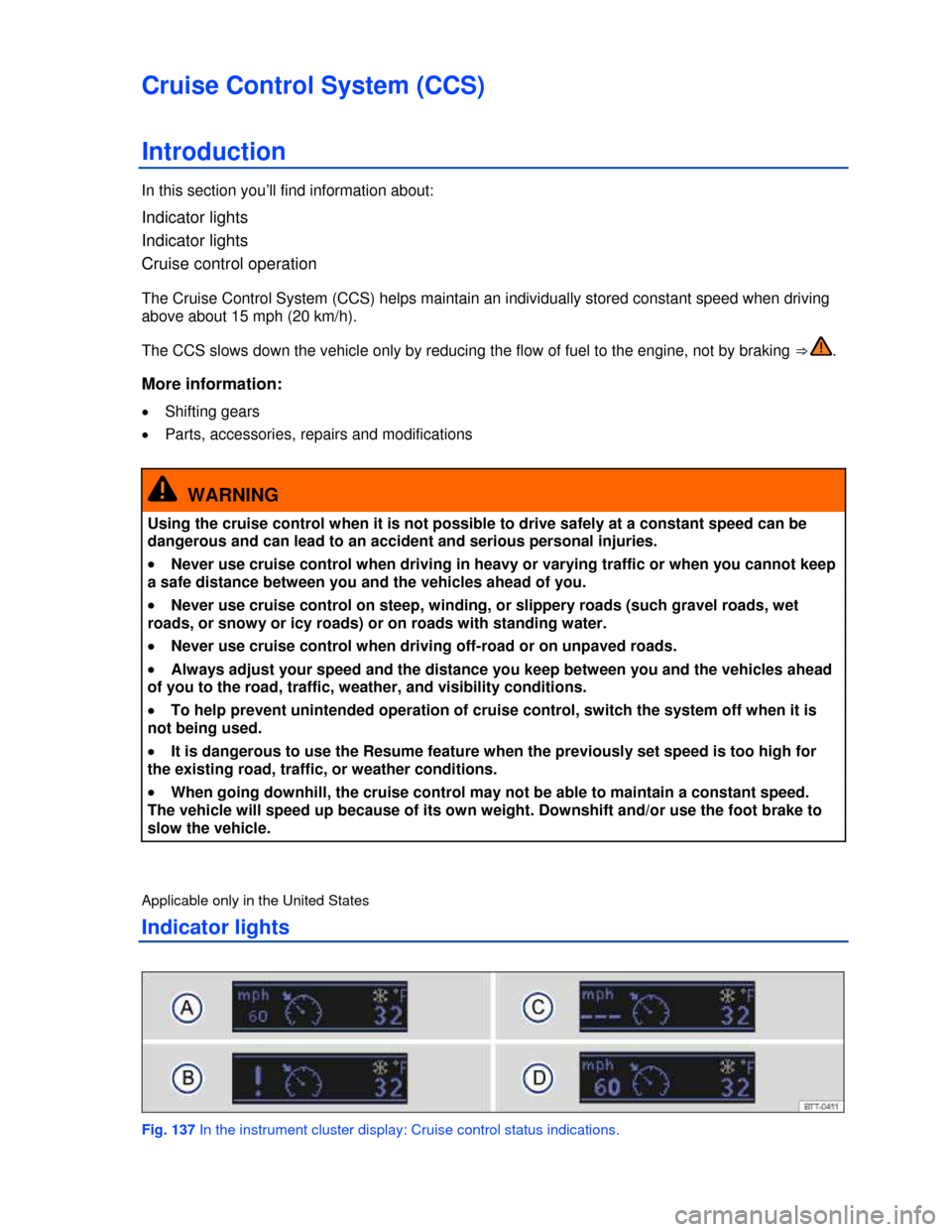
Indicator lights
Fig. 137 In the instrument cluster display: Cruise control status indications.
Page 205 of 319

Applicable only in the United States
Heating and air conditioning
Introduction
In this section you’ll find information about:
Controls
Controls
Air conditioner operation
Air vents
Air recirculation
Air recirculation
Manual air conditioning (AC) and Climatronic
Your vehicle is equipped either with a Manual AC climate control system or a Climatronic
climate control system.
On vehicles with Climatronic climate control, Climatronic information appears in the Climatronic display
and/or on the screen of the factory-installed Radio system or Radio & Navigation system.
The temperature units (Fahrenheit or Celsius) in the factory-installed Radio system or Radio &
Navigation system screen can be changed in the Settings menu in the Premium instrument cluster
display in appropriately equipped vehicles.
The dust and pollen filter
The dust and pollen filter with an activated carbon insert reduces the entry of pollutants into the
passenger compartment.
The dust and pollen filter must be replaced at the intervals recommended in ⇒ Booklet Warranty and
Maintenance so that the air conditioner can work properly.
If the effectiveness of the filter decreases prematurely due to operating the vehicle where the outside
air is heavily polluted, the dust and pollen filter should be replaced more frequently than indicated.
More information:
x Exterior views
x Passenger compartment
x Volkswagen Information System
x Seat functions
x Windshield wiper and washer
x Starting and stopping the engine
x Exterior care and cleaning
Page 206 of 319
WARNING
Poor visibility increases the risk of collisions and other accidents that cause serious
personal injuries.
x Always make sure all windows are clear of ice, snow and condensation for good visibility
to the front, sides, and rear.
x Maximum heating output and defrosting performance are not possible until the engine has
reached operating temperature. Wait until you have good visibility before driving off.
x Always make sure you know how to properly use the climate control system as well as the
rear window defroster that you will need for good visibility.
x Never use air recirculation for long periods of time. When the air conditioner is off and
recirculation mode is on, condensation can quickly form on the windows and greatly reduce
visibility.
x Always switch off recirculation mode when it is not needed.
WARNING
Stale air causes driver fatigue and reduces driver alertness, which can cause accidents,
collisions and serious personal injury.
x Never switch off the fan for a long period of time and never use air recirculation a long
period of time because no fresh air will enter the passenger compartment.
NOTICE
x If you think the air conditioner is not working properly or may be damaged, switch it off to
help prevent more damage. Have the air conditioner checked by an authorized Volkswagen
dealer or an authorized Volkswagen Service Facility.
x Air conditioner repair requires specialized knowledge and special tools. Volkswagen
recommends that you see an authorized Volkswagen dealer or an authorized Volkswagen
Service Facility.
x Do not smoke when air recirculation is switched on. Smoke drawn into the ventilation
system can leave residue on the evaporator and on the dust and pollen active carbon filter,
resulting in permanent odors whenever the air conditioner is switched on.
If the air conditioner is switched off, the fresh outside air will not be dehumidified. To help keep
the windows from fogging over, Volkswagen recommends leaving the air conditioner (compressor)
switched on. Press the !
Page 207 of 319
Emergency starting and starting the engine with a very weak vehicle battery or after the vehicle
battery has been replaced may change or delete system settings (including time, date, personal
convenience settings, and programming). Check the settings and correct as necessary once the
vehicle battery has built up a sufficient charge.
Applicable only in the United States
Controls
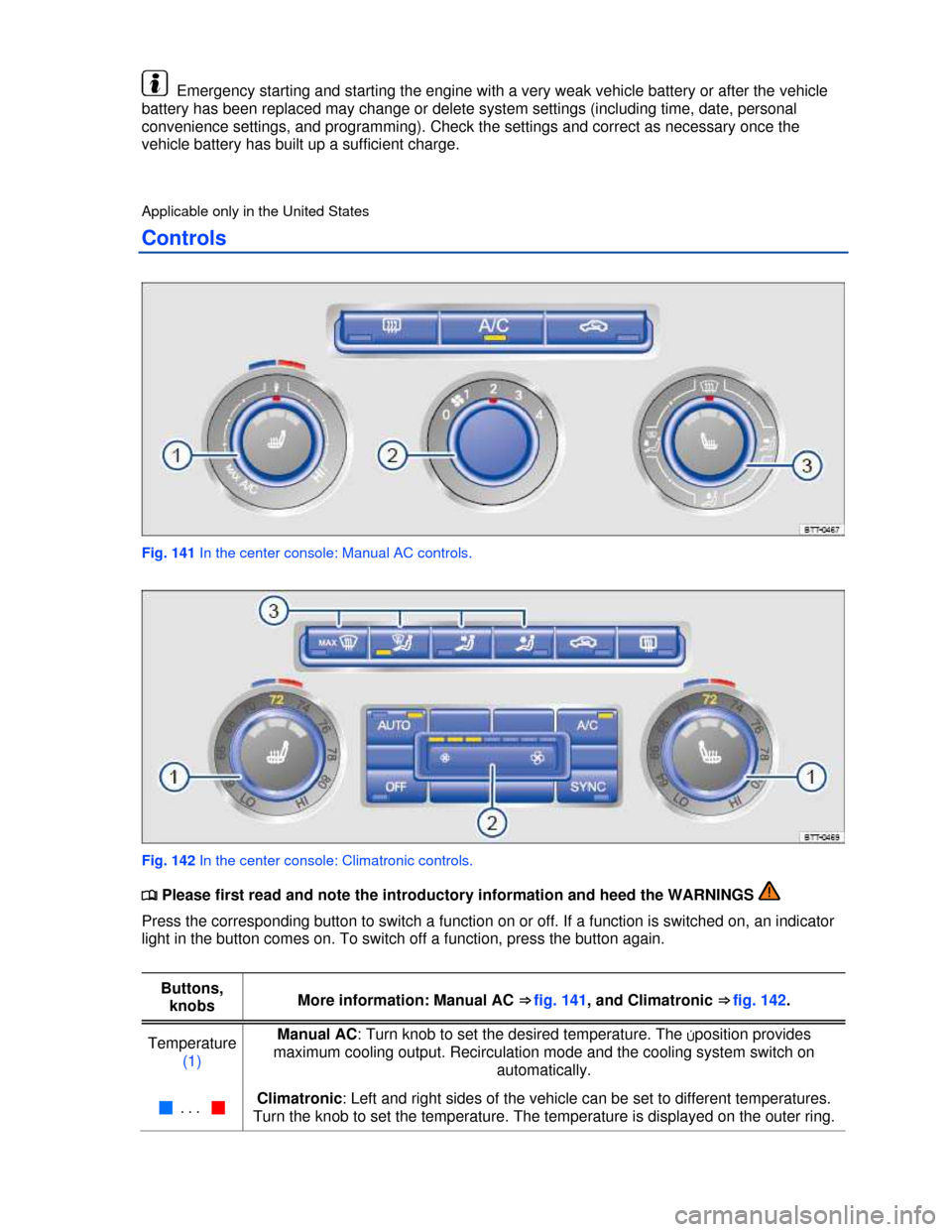
Fig. 141 In the center console: Manual AC controls.
Fig. 142 In the center console: Climatronic controls.
Page 212 of 319
Air conditioner does not work
The air conditioner may not switch on for one of the following reasons:
x The engine is not running.
x The fan is switched off.
x The air conditioner fuse has blown.
x The outside air temperature is colder than about +38 °F (+3 °C).
x The air conditioner compressor has been temporarily switched off due to excessive engine coolant
temperature.
x There is another malfunction in the vehicle. Have the air conditioner checked by an authorized
Volkswagen dealer or authorized Volkswagen Service Facility.
Special considerations
When it is very hot and humid outside, water condensation can drip from the air conditioner
evaporator and form a puddle under the vehicle. This is normal and does not indicate a leak.
The climate control system adjusts the passenger compartment temperature as fast as possible
considering the outside temperature.
Due to residual moisture in the air conditioner, the windshield may fog up after the engine is
started. Switch on the windshield defroster to help evaporate the condensation as quickly as possible.
The air coming out of the vents flows through the passenger compartment and through the vents
under the rear window. Do not cover these slots with clothing or other things.
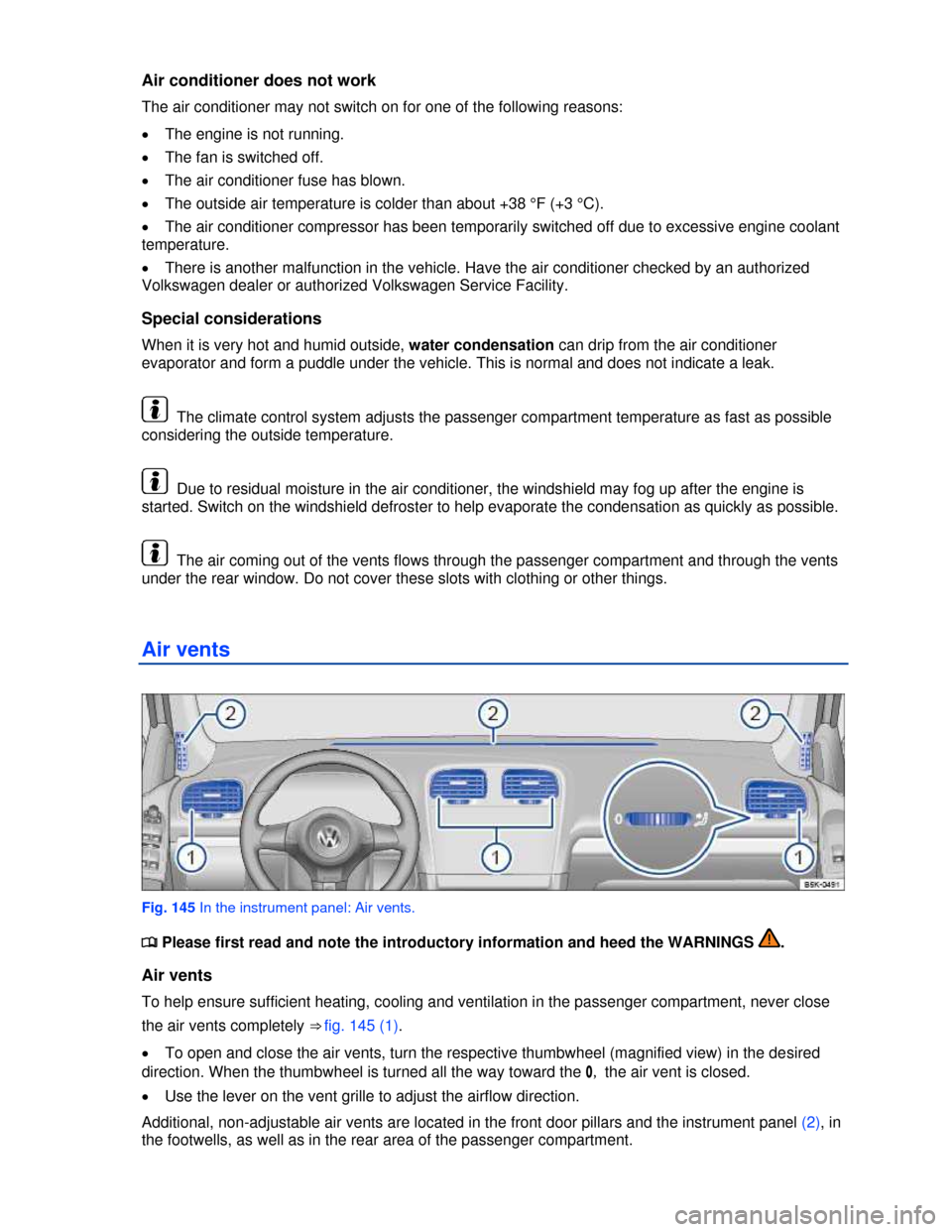
Air vents
Fig. 145 In the instrument panel: Air vents.
Page 216 of 319

Refueling
Introduction
In this section you’ll find information about:
Indicator lights and fuel gauge
Refueling
Fuel capacities
Refueling checklist
The fuel filler flap is located on the rear right side of the vehicle.
More information:
x Exterior views
x Fuel
x Preparations for working in the engine compartment
WARNING
Improper refueling or handling of fuel is dangerous and can cause fire, explosion, and severe
burns.
x Always make sure that the fuel filler cap is screwed on all the way. This helps keep fuel
from spilling out or evaporating.
x Fuel is highly flammable and explosive; it can cause severe burns and other severe
injuries.
x Failure to shut the engine off while refueling and/or to insert the pump nozzle all the way
into the fuel filler neck can cause fuel to overflow and to spray out. Fuel spray and
overflowing fuel are dangerous because they can cause fire and serious personal injury.
x During refueling, the engine and the ignition must be switched off for safety reasons.
x Never use a cellular telephone, CB radio, or other radio equipment while refueling. The
electromagnetic radiation can cause sparks that can ignite fuel vapors and cause a fire.
x Never get back into your vehicle while refueling. If in exceptional circumstances you must
get back in your vehicle while refueling, make certain that you close the door and touch metal
to discharge static electricity before touching the filler nozzle again. This helps avoid the
build-up of static electricity, which can cause sparks that can ignite fuel vapors released
during refueling.
x Never smoke or have an open flame (or sparks, cigarettes, or other smoldering objects)
anywhere in or near your vehicle when refueling or filling a portable fuel container.
x Follow all safety instructions and procedures that apply at the service station where you
refuel.
x Never spill fuel in the vehicle or the luggage compartment.
Page 217 of 319

WARNING
Even if empty, portable fuel containers can leak and cause a fire and serious personal
injuries, especially in a crash.
x For your safety, we strongly recommend that you do not travel with a portable fuel
container in your vehicle.
x If, under exceptional circumstances, you must transport a portable fuel container, please
observe the following:
– Never fill a portable fuel container while it is anywhere in or on the vehicle (for
example, in the luggage compartment). Static electricity can build up while filling and can
ignite fuel vapors, causing a fire.
– Always place a portable fuel container on the ground before filling. Never spill fuel
inside the vehicle or luggage compartment. Fuel vapors are highly flammable.
– Always keep the filler nozzle completely inside the portable container before and
during filling.
– If filling a portable container made of metal, the filler nozzle must always be in contact
with the container. This will help prevent static electricity from discharging and causing a
fire.
– Always observe local and state or provincial laws about the use, storage, and
transportation of portable fuel containers.
– Make certain that the portable fuel container meets industry standards, such as
ANSI/ASTM F852-86.
NOTICE
x Remove fuel spills from the vehicle immediately to help prevent damage to the paint, tires,
and wheel housings.
x Refueling with gasoline when your vehicle has a diesel engine or refueling with diesel fuel
when your vehicle has a gasoline engine can cause very serious and expensive engine and
fuel system damage that is not covered by any Volkswagen Limited Warranty.
x If you put any amount of incorrect fuel in the fuel tank, do not start the engine under any
circumstances. Immediately contact the nearest authorized Volkswagen dealer or authorized
Volkswagen Service Facility for assistance. These fuels contain substances that can severely
damage the fuel system and the engine if the engine is started.
Fuels can pollute the environment. Spilled fuel must be collected and disposed of properly,
following all applicable environmental regulations.
There is no emergency release for the fuel filler flap. Contact an authorized Volkswagen dealer or
an authorized Volkswagen Service Facility for assistance.
Page 219 of 319
WARNING
Driving with a fuel tank that is almost empty can lead to stalling in traffic, a collision, and
serious personal injuries.
x When the fuel tank is almost empty, fuel supply to the engine can be interrupted,
especially when driving over bumps, across slopes, and up and down hills.
x Steering and braking assistance as well as ESC and related systems will not work if the
engine “sputters” or stalls due to lack of fuel.
x Always refuel when the tank is 1/4 full to reduce the risk of running out of fuel and stalling
in traffic.
NOTICE
x Failure to heed warning lights or text WARNINGS can result in vehicle damage.
x Never drive until the fuel tank is completely empty. The irregular fuel supply can cause the
engine to misfire. This allows unburned fuel to get into the exhaust system and damage the
catalytic converter.
The small arrow next to the gas pump symbol in the fuel gauge shows the side of the vehicle with
the fuel filler flap.
Refueling
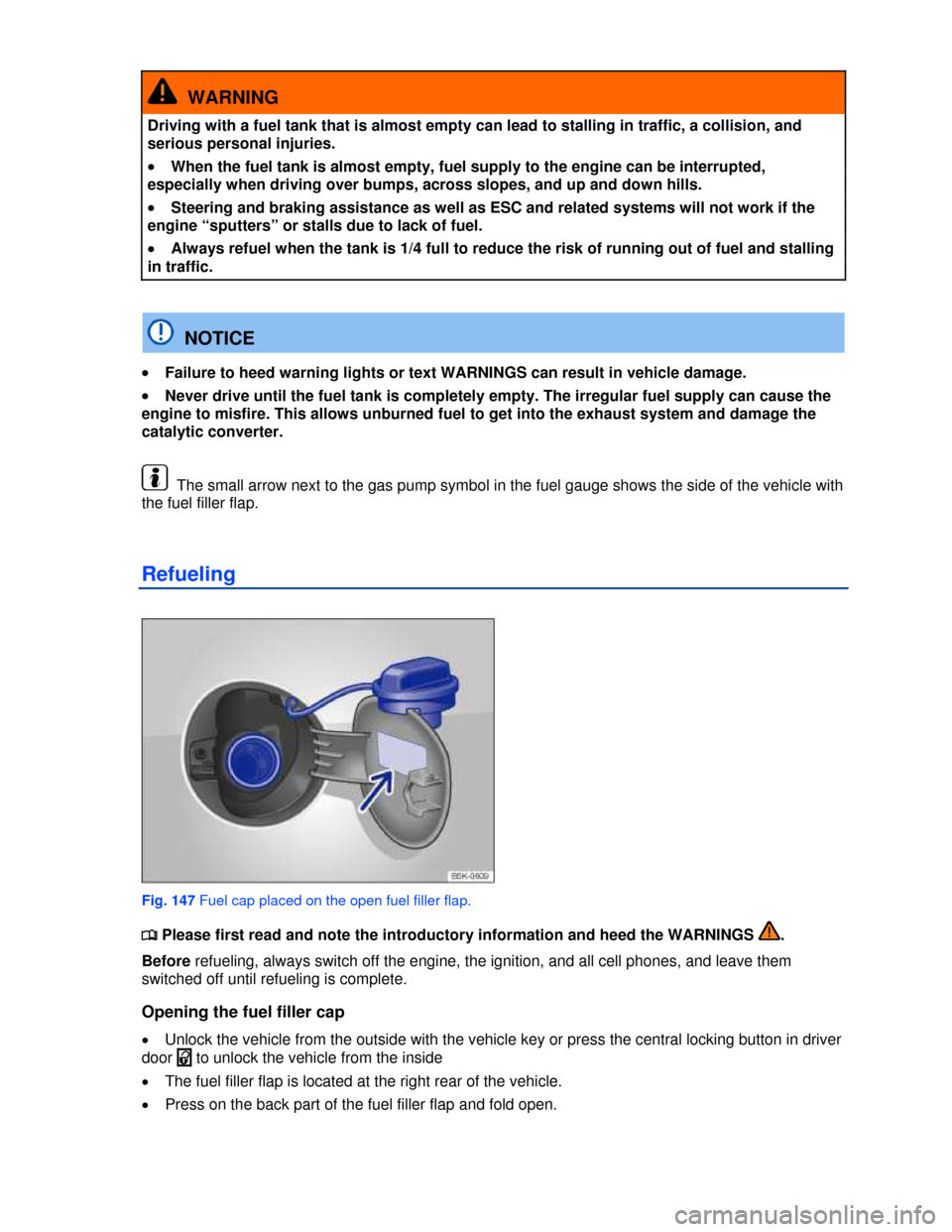
Fig. 147 Fuel cap placed on the open fuel filler flap.