Your vehicle's Tire Pressure Monitoring System (TPMS) uses the Anti-lock Brake System (ABS)
sensors to indirectly check the tire pressure of all 4 tires while you are driving. The sensors monitor the
tread circumference (rolling circumference) and vibration characteristics of the individual tires. TPMS
warns if there is a significant loss of pressure in one or more tires while the vehicle is moving.
Pressure loss is signaled by the indicator light Ç (described below) as well as by acoustic warnings and
text warnings in the instrument cluster display if your vehicle has this display (Multi-Function Indicator -
MFI).
The original benchmark pressure is the recommended maximum load cold tire inflation pressure for
the tires that come with your vehicle. This pressure is listed on the tire pressure label on the driver
door jamb Error! Bookmark not defined.. After adjusting the tire pressures in all 4 tires, you must
confirm and store the new cold inflation pressures by pressing the SET button, which changes the
benchmark pressure to match the current pressure of the tires on your vehicle
Recalibrating the TPMS to reset the benchmark cold tire inflation pressure with proper use of the SET
button is explained below
More information:
x Transporting
x Braking, stopping and parking
x Exterior care and cleaning
x Tires and wheels
x Parts, accessories, repairs and modifications
Do not interrupt the emergency CSC roof closing process once you have initiated it unless this is
absolutely necessary.
If the CSC roof gets stuck while opening or closing, it may be possible to close it using the
emergency process before it lowers itself automatically.
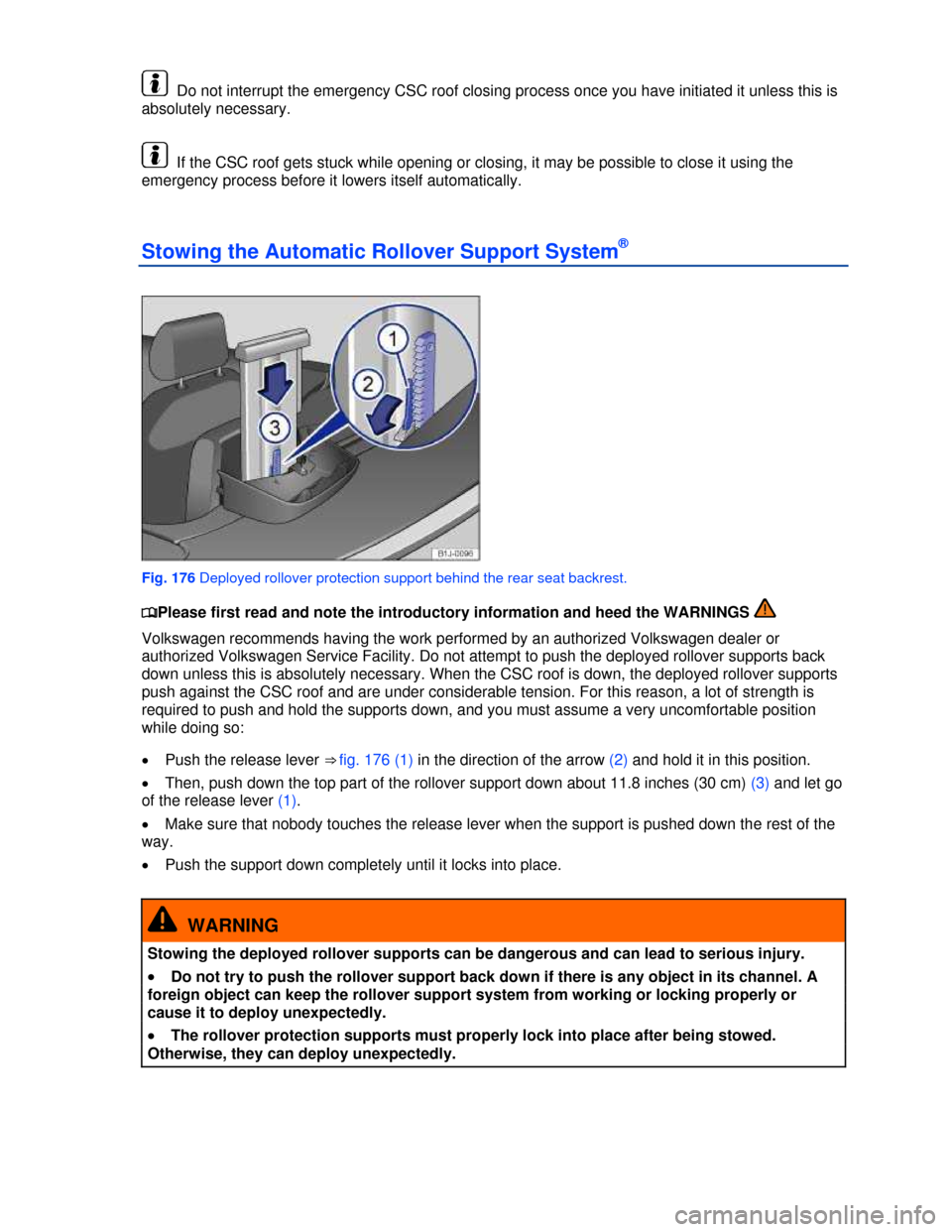
Stowing the Automatic Rollover Support System®
Fig. 176 Deployed rollover protection support behind the rear seat backrest.